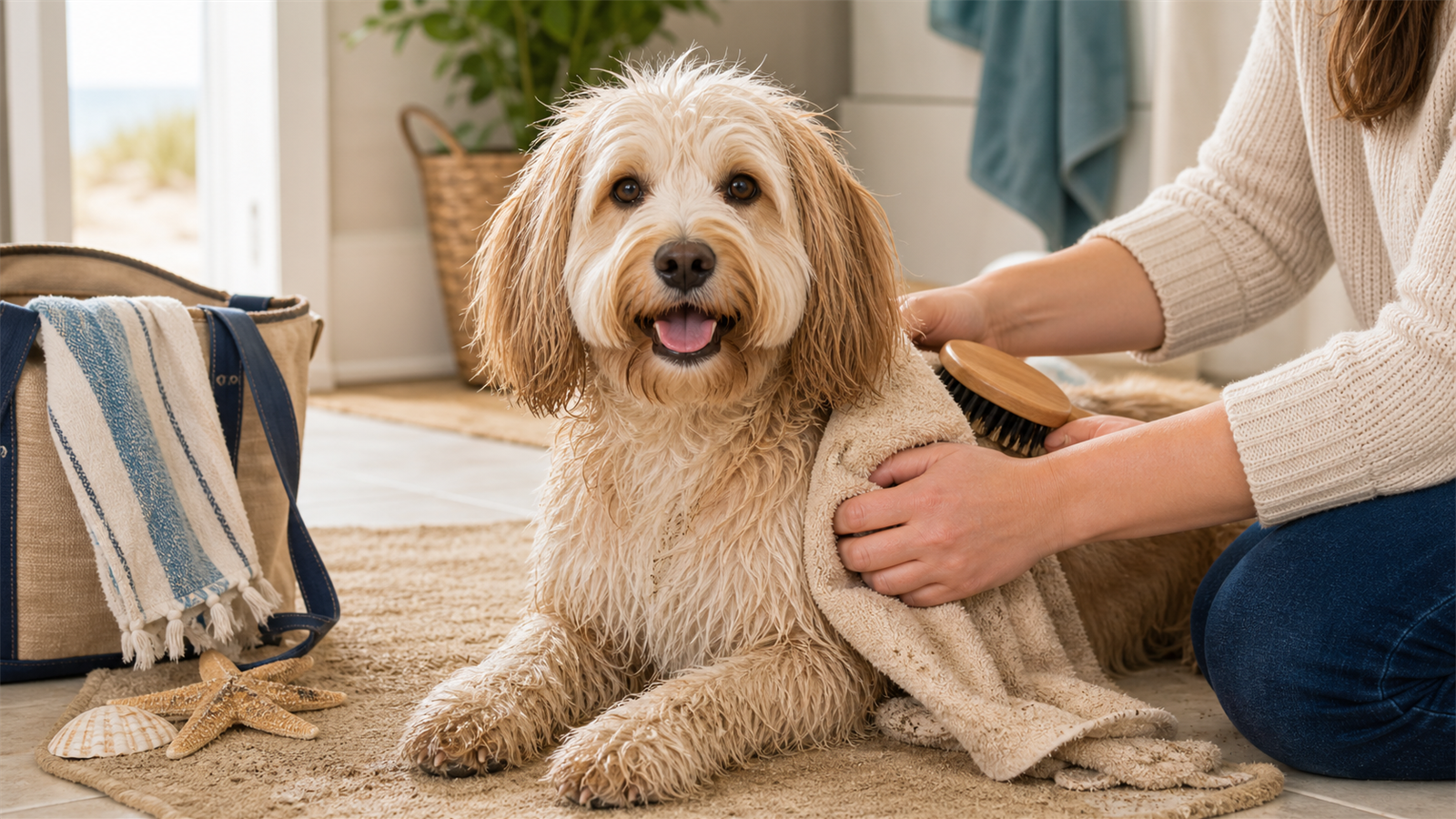

After a beach trip, rinse sand and salt from your dog’s paws, belly, tail, feathering, and collar area before you brush. Dry the coat well, wipe only the outside ear flap if it is damp, and stop for burns, wounds, jellyfish contact, limping, ear symptoms, severe irritation, pain, or distress.
This is routine beach cleanup only. It does not cover medical treatment, ear treatment, burn care, wound care, or unsafe handling.
Beach Cleanup Order
Use a steady order so you do not brush grit deeper into the coat or miss the areas where sand usually hides.
- Let the coat shake off loose dry sand if your dog is comfortable.
- Rinse paws, toes, lower legs, belly, tail, and feathering with fresh water.
- Remove the collar or harness and rinse the contact line.
- Towel-dry the body first, then paws, tail, and long feathering.
- Dry only the outer ear flap and nearby hair if damp.
- Brush or comb only after the grit is gone.
If the beach visit also included swimming, compare this routine with dog grooming after swimming. The beach version adds extra focus on sand, salt, paws, belly, and gear lines.
Paws, Toes, and Belly Come First
Sand and salt collect between toes, around nails, along pad edges, under the belly, and in lower-leg feathering. Rinse with fresh water, wipe gently, and dry fully. Do not dig at embedded material or force a painful paw check.
For a slower paw-only routine, use the same safety limits from cleaning dog paws after a walk: stop for limping, swelling, bleeding, strong pain, or anything stuck in the pad or between toes.
Rinse Salt Before You Decide on a Bath
A freshwater rinse may be enough when the main issue is salt and sand. Use shampoo only if safe grime remains after rinsing, or if the coat has a smell or residue that water cannot remove. Avoid water directly in the eyes, nose, or ear canal.
If you do use shampoo, make the rinse thorough. Leftover shampoo plus salt or sand can make the skin feel worse, so the technique in how to rinse dog shampoo completely is useful after beach days too.
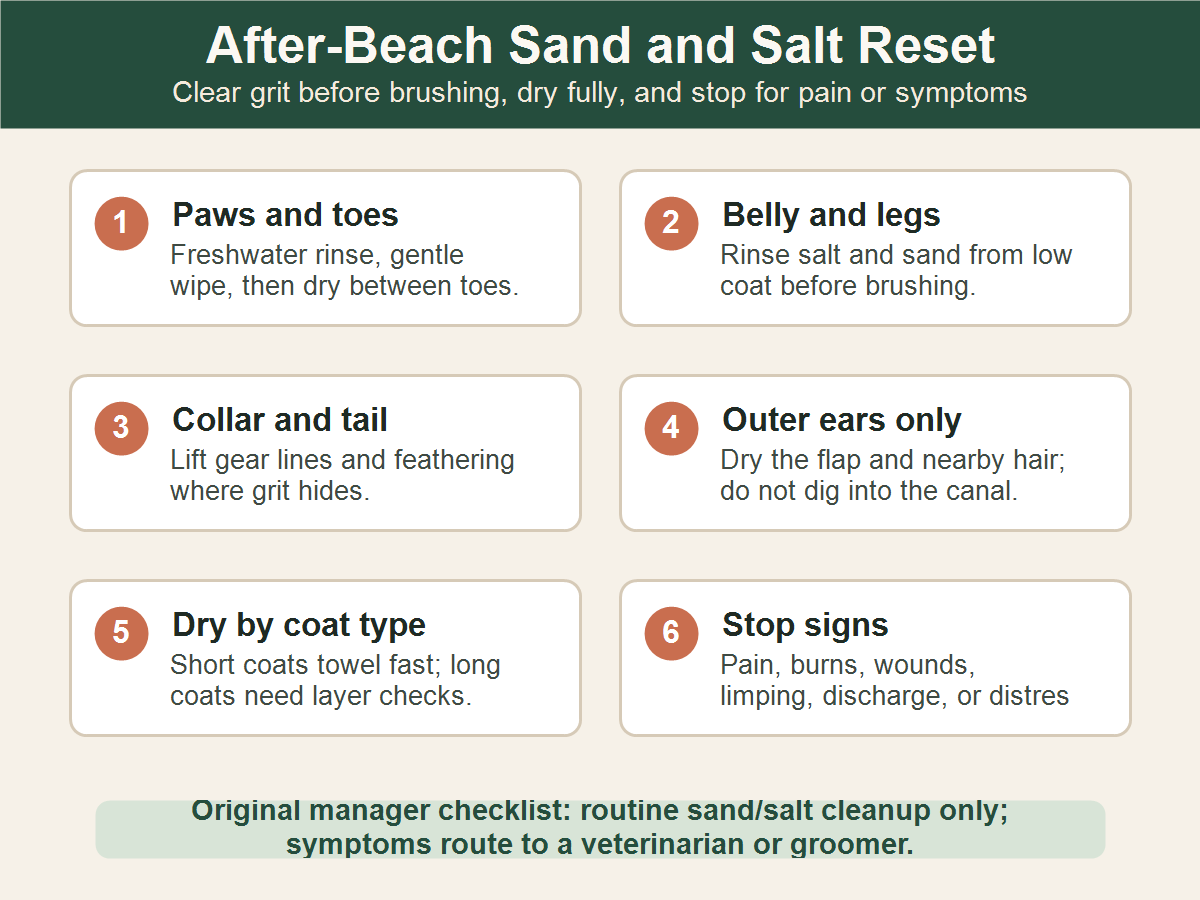
Short Coat vs Long Coat Beach Checks
Short coats usually dry faster, but sand can still sit between toes, under the collar, and along the belly. Long coats, feathered legs, tails, and dense coats need slower section checks because the surface may look clean while grit stays under the top layer.
| Zone | Routine cleanup | Short-coat note | Long-coat note | Stop sign |
|---|---|---|---|---|
| Paws and toes | Freshwater rinse, gentle wipe, full dry | Check pad edges | Separate toe feathering before drying | Limping, swelling, cuts, pain, embedded material |
| Belly and legs | Rinse away salt and grit | Towel usually reaches skin quickly | Check hidden inner-leg coat | Redness, burns, severe irritation |
| Tail and feathering | Rinse, towel-squeeze, then comb when grit is gone | Brief pass may be enough | Sand hides near tail base and long ends | Pain, tight mats, skin pulling |
| Collar or harness line | Remove gear, rinse contact line, dry before replacing | Watch for trapped salt | Lift coat layers around straps | Raw skin, rubbing, distress |
| Outer ear flap | Dry outside flap only | Use a soft towel edge | Dry hair around the flap | Odor, discharge, redness, head shaking, pain |
Outer-Ear Boundary After the Beach
Dry the outside ear flap and the hair around it. Do not push cotton, cloth, or tools into the ear canal, and do not try to treat odor, discharge, redness, swelling, head shaking, or pain during grooming.
If you are also bathing your dog after the beach, follow the same ear-water boundary used when you protect dog ears during a bath.
Drying After Sand and Salt
Towel first. Use gentle airflow only if your dog tolerates it and the air is not hot. Long or dense coats need layer checks so dampness does not sit under the surface. Brush when the coat is free of grit, not while sand is still scraping through the hair.
AKC drying guidance supports avoiding unsafe heat and focusing on safe drying methods. The same common-sense rule applies here: dry the coat, but stop before the dog overheats, panics, or becomes unsafe to handle.
When Beach Cleanup Should Stop
Stop routine grooming and call a veterinarian for burns, wounds, jellyfish contact, limping, painful paws, severe skin irritation, ear odor or discharge, head shaking, vomiting, weakness, heat distress, or strong pain. Use a professional groomer for tight mats, painful tangles, or cleanup you cannot finish safely.
Bottom Line
After the beach, rinse grit before brushing, dry the areas where sand hides, and keep ear care to the outer flap only. Most routine sand and salt can be handled calmly at home, but pain, symptoms, burns, wounds, and unsafe handling are stop signs.
FAQ
Should I rinse my dog after the beach?
Yes. A freshwater rinse helps remove routine sand and salt from paws, belly, feathering, tail, and collar areas.
How do I get sand out of my dog’s paws?
Rinse between toes with fresh water, wipe gently, and dry thoroughly. Stop for pain, limping, swelling, cuts, or anything embedded.
Should I bathe my dog after salt water?
Not always. Rinsing and drying may be enough unless safe-to-wash grime, odor, or residue remains after the rinse.
How do I dry my dog’s ears after the beach?
Dry only the outer ear flap and nearby hair. Ear odor, discharge, redness, pain, or head shaking should be routed to a veterinarian.
When should beach cleanup become a vet call?
Call a veterinarian for burns, wounds, jellyfish contact, ear symptoms, severe irritation, limping, pain, heat distress, or vomiting.
Sources: AKC clean dog paws; AKC dry your dog; ASPCA dog grooming tips.