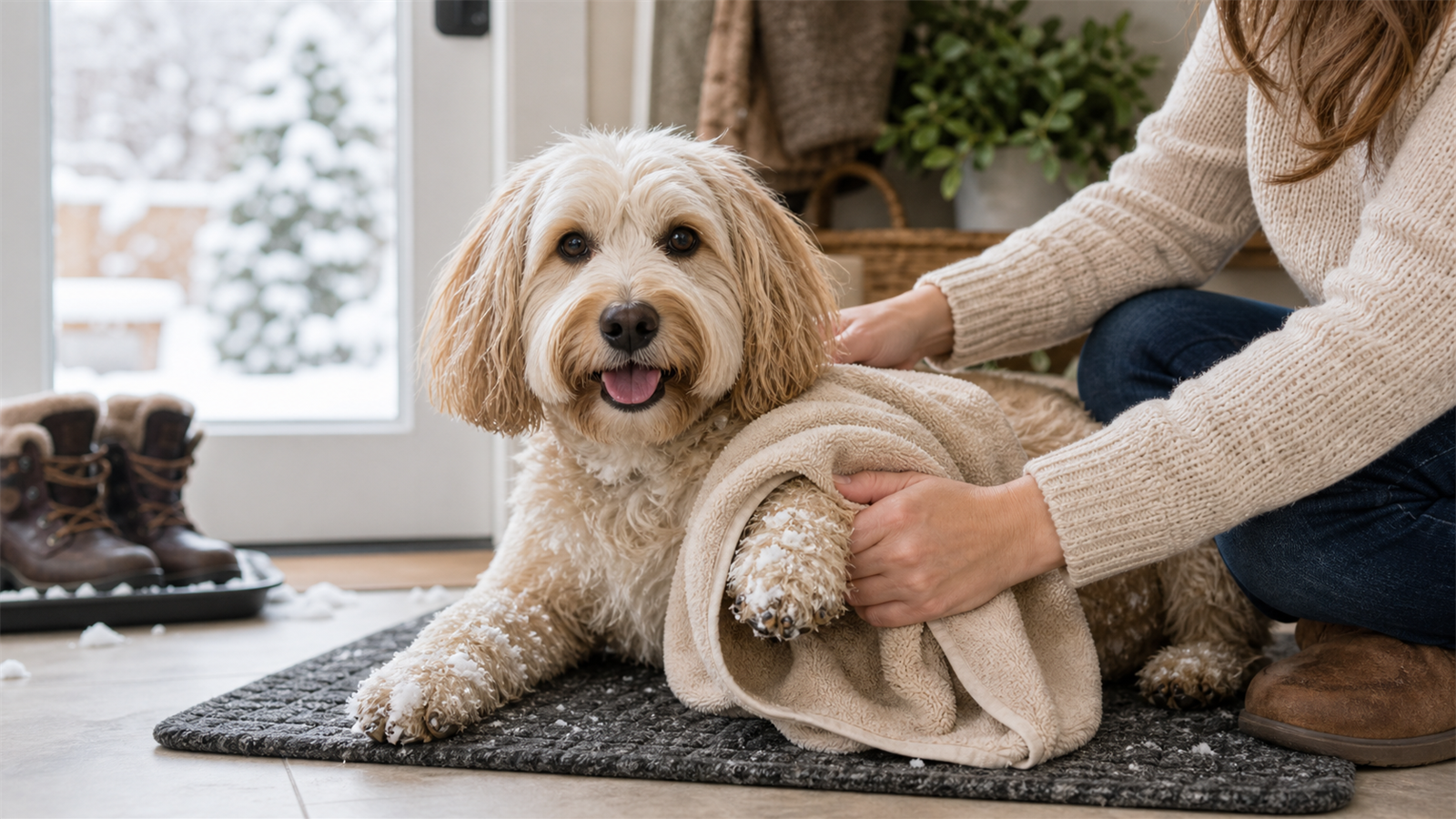

After snow, clean your dog by removing loose snowballs, rinsing or wiping salty paws and belly fur, drying the coat in layers, and checking for stop signs before you continue. Unknown de-icer residue, chemical smell, paw pain, redness, licking, limping, vomiting, distress, wounds, or suspected cold injury should stop the home grooming routine.
This guide is for routine post-snow cleanup only. It does not cover frostbite care, poisoning care, cracked-pad treatment, wound care, pain treatment, or severe-mat cutting.
Post-Snow Cleanup Order
Start at the door, mudroom, bathroom, or another easy-to-clean spot before melted snow spreads through the house.
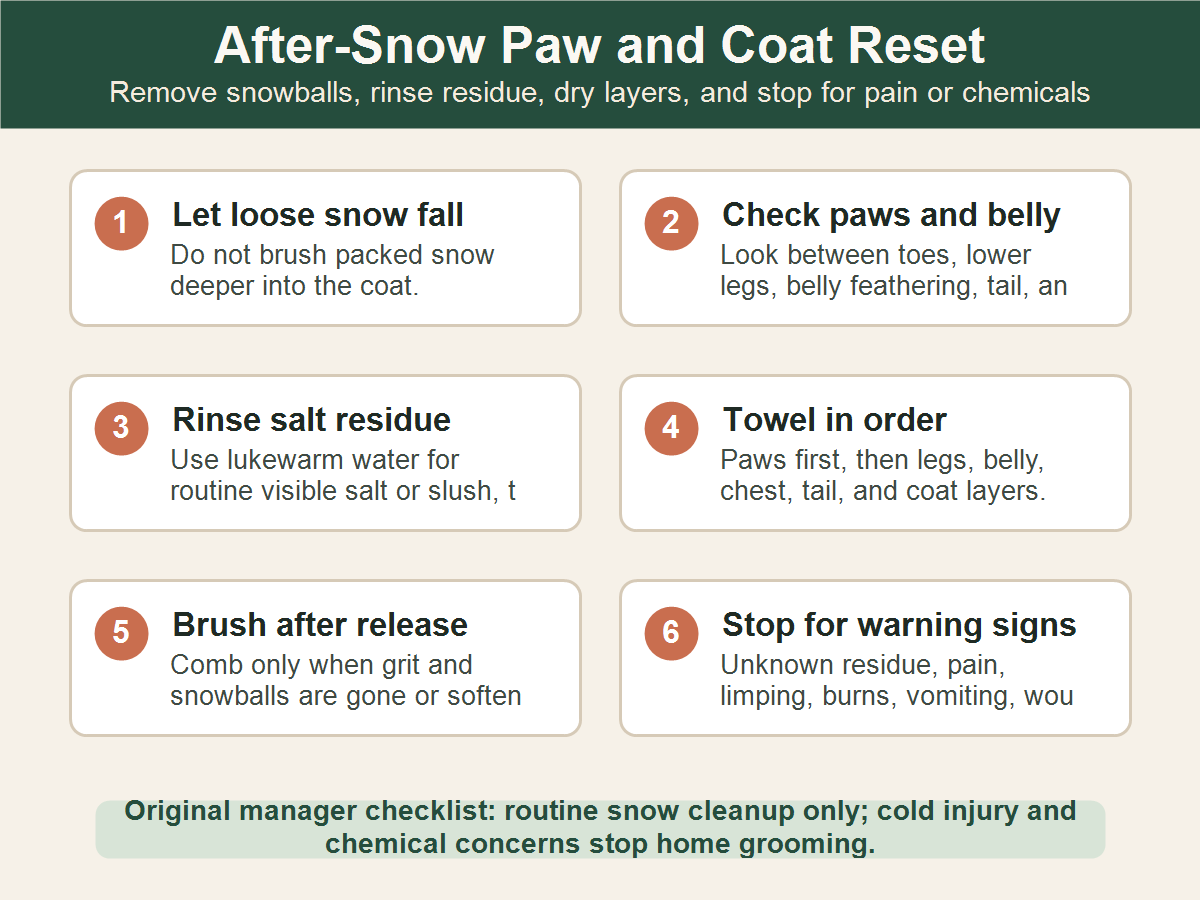
- Let loose snow fall off naturally before brushing.
- Check paws, toes, lower legs, belly feathering, tail, and chest for packed snow.
- Rinse or wipe paws and belly if salt or visible road residue may be present.
- Towel-dry paws first, then legs, belly, chest, tail, and coat layers.
- Brush only after packed snow has softened or released.
- Recheck damp feathering before your dog rests.
For broader winter routine planning, use how to groom a dog in winter. This page stays focused on the cleanup right after a snowy walk or play session.
Paw Rinse and De-Icer Boundary
For routine visible salt or snow residue, use lukewarm water or a damp cloth to clean paw pads, between toes, and the lower belly. Dry each paw well afterward so moisture does not stay trapped between toes.
Stop the routine if residue is unknown, sticky, oily, strongly scented, brightly colored, or linked with pain, redness, licking, limping, vomiting, or distress. Do not scrub sore skin or try to diagnose chemical exposure during grooming.
If paws are the main issue, the slower routine in how to clean dog paws after a walk works well for ordinary snow and salt cleanup too.
Snowballs in Belly, Legs, Tail, and Feathering
Snowballs often cling to long leg feathering, belly fur, tail fur, and dense chest hair. Do not yank them out or cut close to the skin. Warm hands, a towel, or brief lukewarm water contact can help routine snow release before combing.
If snow has tightened around a tangle, pause and separate only loose hair. For painful, tight, or close-to-skin tangles, use the boundaries in dog matting vs tangles and route to a professional groomer when needed.
Coat-Type Drying Priorities
Short coats usually need a careful paw, belly, and towel-dry pass. Long, curly, double, or feathered coats need more time at the legs, belly, tail, chest, and undercoat areas because dampness can hide under the top layer.
| Area | Routine step | Why it matters | Stop sign |
|---|---|---|---|
| Paws and toes | Rinse or wipe, then dry between toes | Salt and dampness can sit in small spaces | Pain, limping, swelling, bleeding, unknown residue |
| Belly and lower legs | Rinse visible slush or salt, then towel well | Low coat collects road residue and packed snow | Redness, burns, strong licking, distress |
| Tail and feathering | Soften snowballs before combing | Pulling can tighten tangles or hurt skin | Skin-tight mats, pain, unsafe handling |
| Dense coat layers | Dry under the top layer where safe | The surface may feel dry while lower coat stays damp | Shivering, pain, panic, cold-injury concern |
When a Full Bath Is Not Needed
A full bath is not always needed after snow. A paw and belly rinse may be enough when the coat is otherwise clean and there is no unknown residue. A routine bath may make sense when slush, mud, or safe-to-rinse grime is spread through the coat.
Do not bathe as a response to chemical-smelling residue, injury, burns, illness, or suspected exposure. Those situations need professional guidance first.
Stop Signs After Snow
Stop grooming and call a veterinarian or qualified professional for suspected frostbite, cracked or bleeding pads, limping, persistent licking, redness, swelling, wounds, vomiting, distress, chemical smell, unknown residue, severe mats, or pain.
The ASPCA winter paw guidance supports washing and drying feet and stomach after winter walks where ice, salt, or chemicals may be present. That is the routine-cleanup lane. Unknown residue, symptoms, or pain belong outside that lane.
Bottom Line
After snow, clean paws first, remove snowballs without pulling, dry belly and coat layers, and stop early for chemicals, cold-injury concerns, wounds, pain, or severe mats. Good winter cleanup is calm, practical, and honest about when grooming is no longer the right tool.
FAQ
Should I clean my dog after walking in snow?
Yes, if snow, salt, or slush touched the paws, belly, legs, or feathering. Routine cleanup can be as simple as a paw wipe, belly rinse, snowball check, and full dry.
How do I remove snowballs from my dog’s coat?
Let loose snow soften or melt, then towel and comb gently. Do not pull hard or cut close to the skin.
Should I rinse my dog’s paws after snow or salt?
Yes, routine salt or visible snow residue can be rinsed or wiped away, then dried carefully. Unknown or chemical-smelling residue is a stop branch.
How dry should my dog be after snow?
Paws, toes, belly, legs, tail, and dense coat areas should feel dry enough that moisture is not trapped against the skin before your dog settles.
When should after-snow grooming become a vet call?
Stop for paw pain, redness, limping, burns, wounds, vomiting, distress, suspected chemical exposure, cracked or bleeding pads, or cold-injury concerns.
Sources: ASPCA winter paw tips; AKC clean dog paws; ASPCA dog grooming tips.