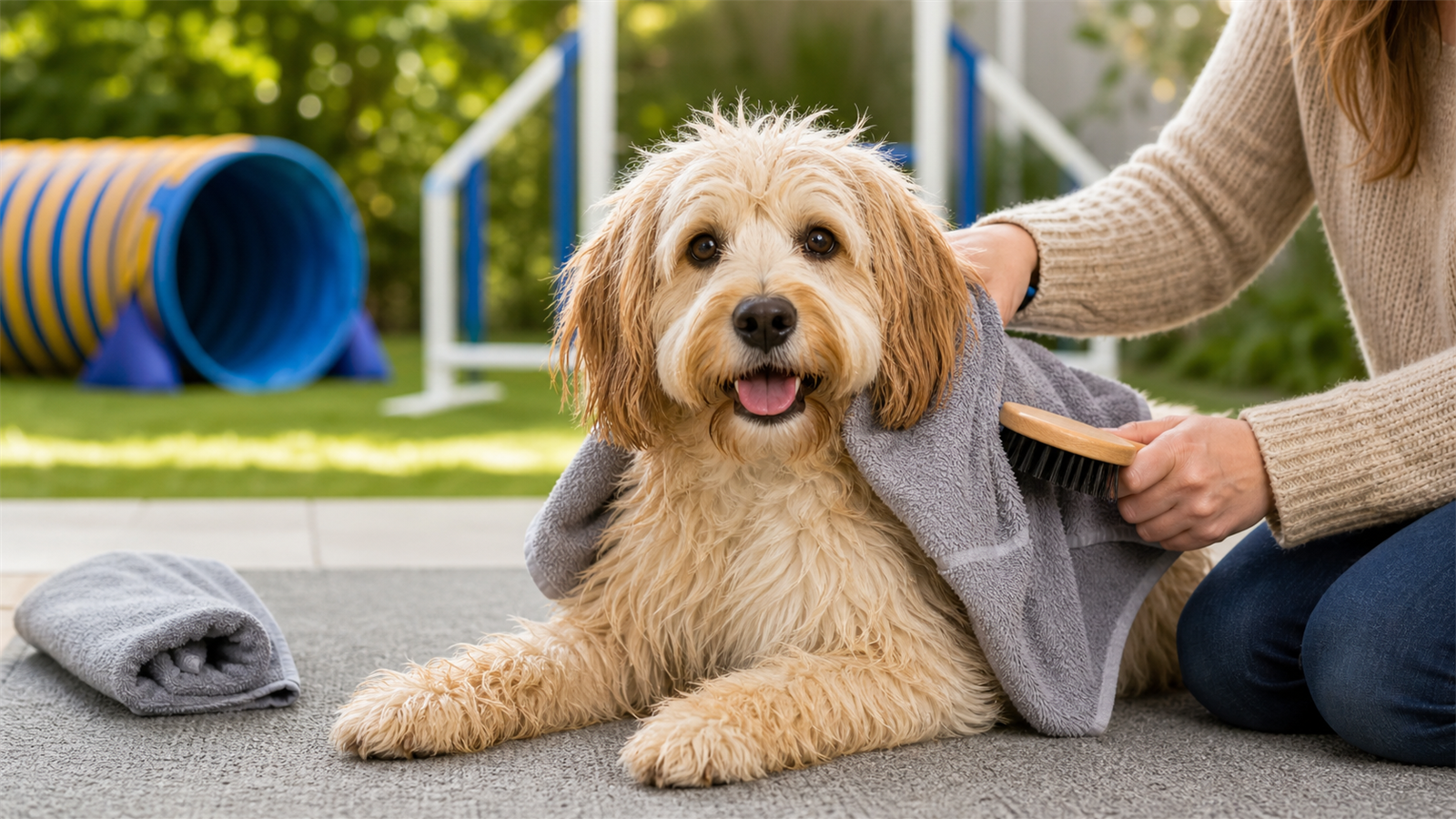

After agility training, and after normal cool-down has already happened separately, do a gentle grooming cleanup of paws, coat dust, belly, collar or harness contact areas, and towels. This article covers grooming cleanup only, not conditioning, cool-down, performance, soreness, lameness, pad injury, muscle strain, heat stress, pain, or treatment.
Stop grooming and seek veterinary or professional guidance for limping, pad injury, muscle strain concern, soreness, wounds, heat-stress concern, pain, distress, or unsafe handling.
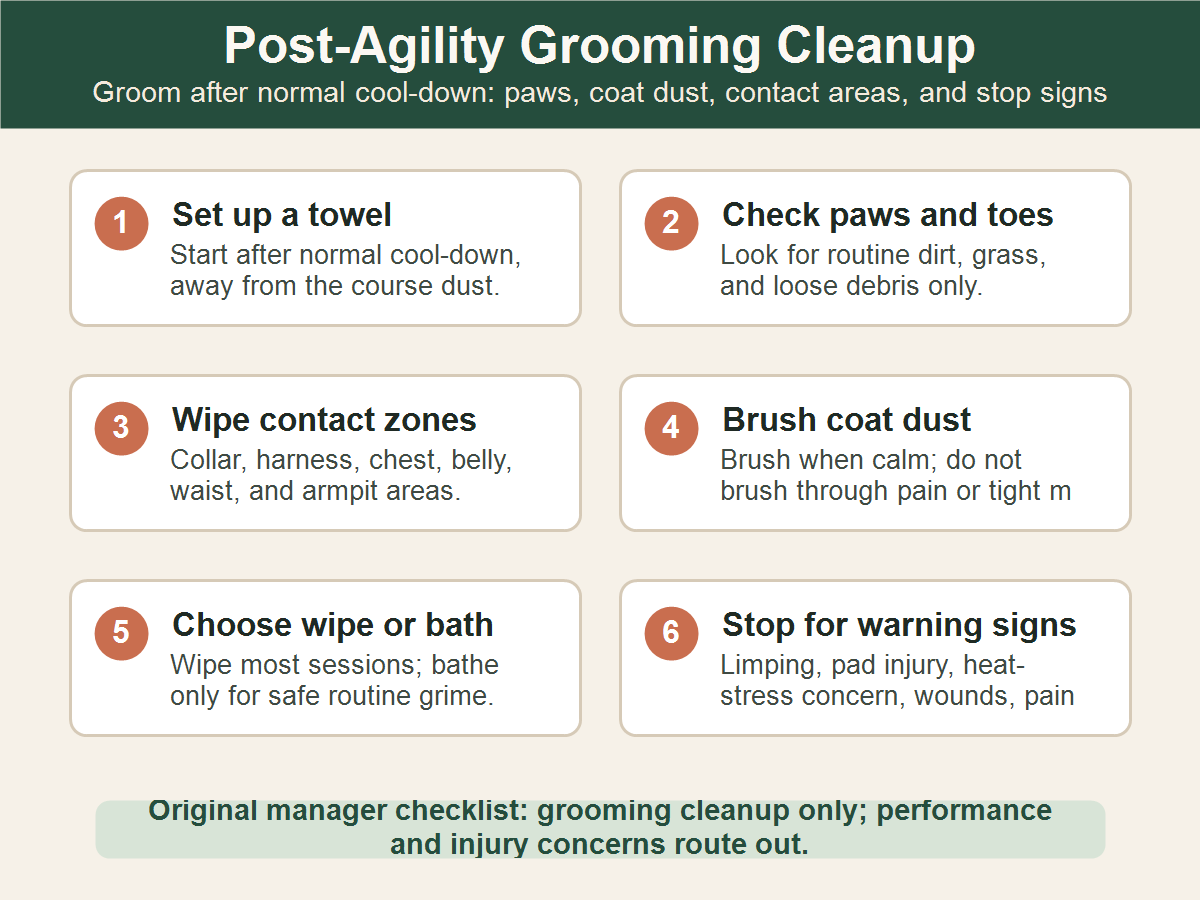
Post-Training Grooming Order
Keep the cleanup short and calm. A tired dog does not need a long grooming session after practice.
- Let normal post-activity cool-down happen outside this grooming workflow.
- Set up a towel or washable mat.
- Check paws, toes, nails, belly, chest, tail, collar line, and harness contact zones.
- Wipe routine dust or dirt.
- Brush coat dust once your dog is calm and comfortable.
- Decide whether wiping is enough or a routine bath is needed.
- Put towels and gear aside for washing or drying.
The AKC describes agility as a fast-paced dog sport with obstacle work. That context matters because this page is about cleanup after activity, not training plans or performance advice.
Paw and Toe Check After Course Work
Look for dirt, grass, dust, or loose debris around toes, pads, nail edges, and lower legs. Clean routine dirt with a damp cloth or rinse, then dry paws well.
For a slower paw-only routine, use how to clean dog paws after a walk. This is only a grooming check. Limping, pad injury, lodged debris, bleeding, swelling, or pain should route out to veterinary or professional guidance.
Coat Dust and Equipment-Mark Cleanup
Course dust and contact marks often show around the chest, belly, collar, harness, shoulder, armpit, and waist areas. Wipe contact lines and brush coat dust gently.
If you need to check the coat in layers, use the same calm approach from how to comb-check a dog coat. Do not treat rubbing, wounds, soreness, or skin injury as routine grooming.
Brush, Wipe, or Bath?
Wiping works for paws and contact marks. Brushing works for dry dust and loose hair. A routine bath may help if dirt is spread through the coat and your dog is comfortable.
| What you notice | First grooming step | When to stop |
|---|---|---|
| Dry course dust | Brush once the dog is calm | Stop for pain, panic, or tight mats |
| Paw dirt or grass | Wipe or rinse, then dry | Stop for limping, swelling, bleeding, or pad injury concern |
| Harness or collar marks | Wipe contact areas and inspect skin | Stop for rubbing, wounds, soreness, or distress |
| General coat grime | Wipe first, bathe only if needed | Skip bath if overheated, painful, injured, or too tired |
Towel and Gear Reset
Dry or wash towels, mats, and fabric gear contact points separately. Keep gear reset generic and non-commercial. The goal is to avoid putting the same dust and grit back onto the coat.
Stress and Handling Stop Signs
If your dog is too tired, tense, avoidant, growling, snapping, shaking, or trying to escape, pause the grooming session. The guide on dog grooming anxiety signs can help separate ordinary impatience from signs that handling should stop.
Stop Signs After Agility Training
Stop grooming for lameness, pad injury, muscle strain concern, soreness, wounds, heat-stress concern, pain, distress, unsafe handling, or severe mats. Those are not grooming problems to push through.
Bottom Line
After agility training, keep grooming practical: paws, contact areas, coat dust, towel reset, and a quick bath decision. Normal cool-down, soreness, lameness, conditioning, and injury concerns belong outside this grooming workflow.
FAQ
Should I groom my dog after agility training?
Yes, a quick routine check and cleanup can remove dust, paw dirt, and gear contact grime after normal cool-down has happened separately.
How do I clean my dog’s paws after agility practice?
Wipe or rinse routine dirt and dry the paws. Stop for limping, injury signs, swelling, bleeding, or pain.
Should I bathe my dog after every agility session?
Usually no. Brush or wipe first. Bathe only when routine dirt remains and your dog is comfortable.
What equipment marks should I check after training?
Check collar, harness, chest, belly, waist, armpit, and shoulder contact zones for routine grime or rubbing stop signs.
When should post-agility grooming stop?
Stop for lameness, pad injury, soreness, heat-stress concern, wounds, pain, distress, or unsafe handling.
Sources: AKC agility; AKC clean dog paws; ASPCA dog grooming tips.