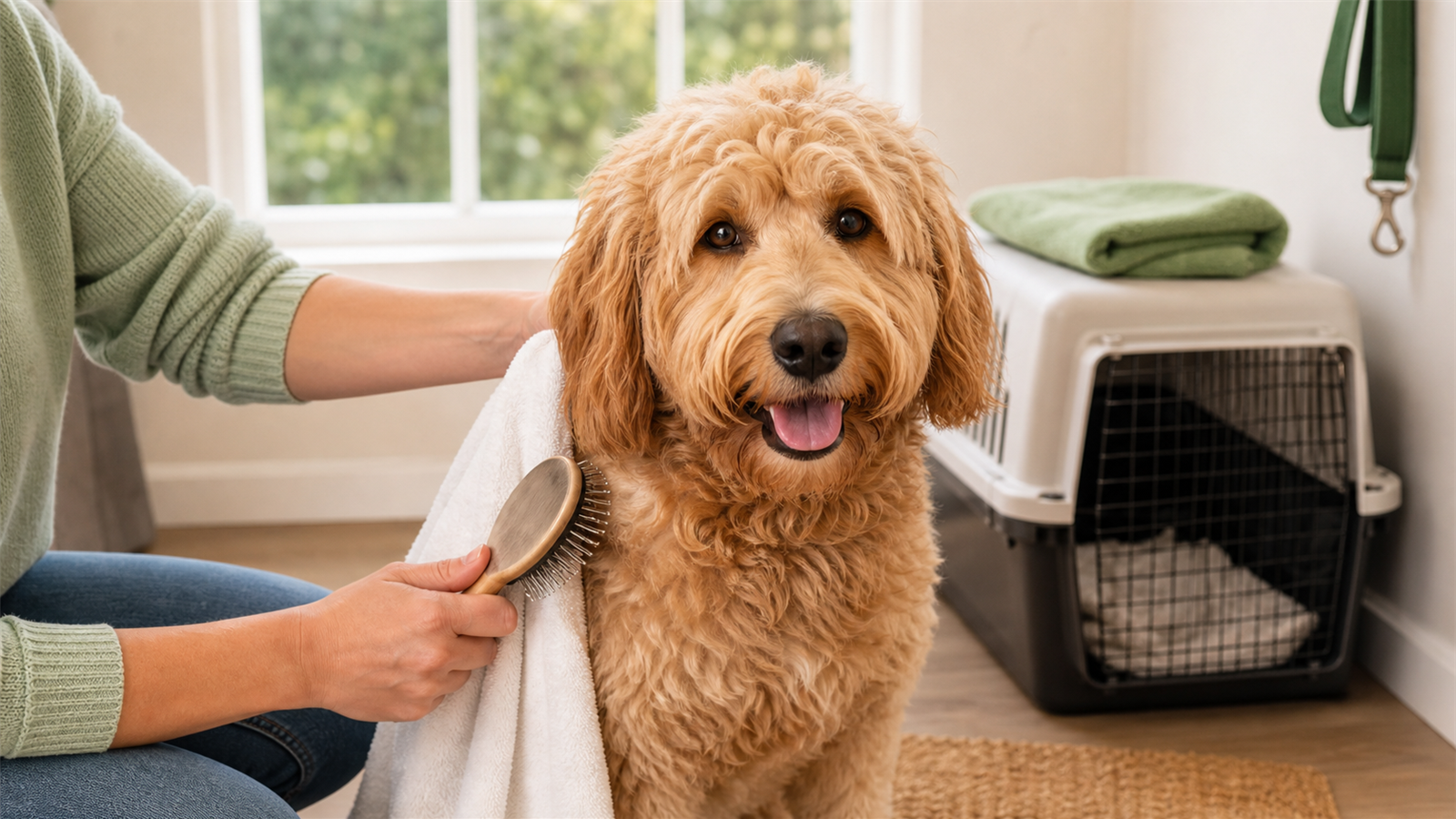

After kennel boarding, inspect your dog before bathing, let them decompress, clean washable items, and groom only if they are stable and comfortable. Do not wash away signs that may matter to a veterinarian or professional groomer.
Coughing, fever concern, nasal or eye discharge, wounds, parasites, diarrhea, vomiting, pain, severe matting, distress, or unsafe handling should pause grooming. The goal is a calm reset, not a same-hour makeover.
Post-Boarding Reset Checklist
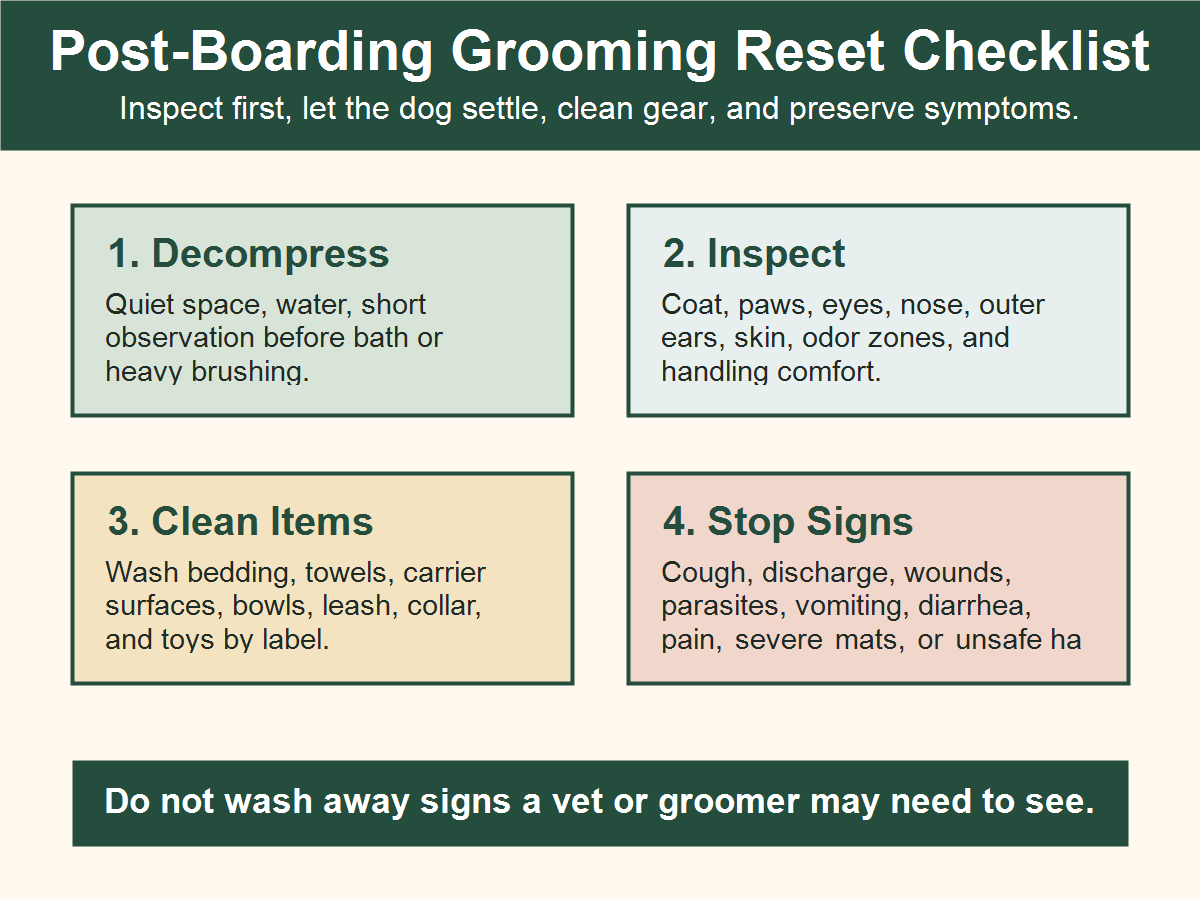
| Reset step | What to do | When to stop |
|---|---|---|
| Decompress | Give a quiet space, water, and a short observation period before a bath. | Panic, aggression, bite risk, collapse, labored breathing, or severe distress. |
| Inspect | Check coat, paws, skin, eyes, nose, outer ears, odor zones, and handling comfort. | Discharge, wounds, swelling, limping, parasites, pain, or severe mats. |
| Clean items | Wash bedding, towels, bowls, carrier surfaces, leash, collar, and toys by label. | Unknown contamination, harsh cleaner exposure, or unsafe residue. |
| Groom lightly | Brush loose coat, wipe mild dirt, or bathe later if the dog is calm and healthy. | Cough, fever concern, vomiting, diarrhea, persistent foul odor, or unsafe handling. |
First Hour Home: Inspect Before Bathing
Start with a quiet check before water, shampoo, or heavy brushing. Boarding can leave a dog tired, overstimulated, dusty, or smelly. It can also reveal signs that grooming should not hide.
Look at breathing and energy first. A dog who is simply tired after pickup can rest before grooming. A dog who is coughing, weak, struggling to breathe, feverish, or collapsing needs professional help, not a bath.
Then check eyes, nose, coat, skin, paws, nails, and handling comfort. Keep the inspection gentle. If your dog is anxious after pickup, use the dog grooming anxiety signs guide to decide whether to pause.
What To Check On Coat, Paws, Ears, Eyes, And Skin
- Coat: loose hair, debris, damp patches, odor zones, tangles, or packed areas.
- Paws: dirt, trapped debris, tenderness, limping, cuts, or swelling.
- Outer ears: debris on the ear flap only. Do not clean deep inside the ear canal.
- Eyes and nose: discharge, swelling, squinting, or irritation as stop signs.
- Skin: redness, sores, swelling, parasites, or painful areas as referral signs.
Do not pick at scabs, remove parasites, treat wounds, flush ears, or cut severe mats. If something looks medical or painful, preserve what you can observe and contact the right professional.
When To Delay A Bath
Delay bathing when your dog is exhausted, anxious, coughing, feverish, vomiting, having diarrhea, limping, painful, or unsafe to handle. Also delay if odor may be connected to skin, ear, wound, or illness signs.
If the dog is stable but tired, a rest period followed by a paw wipe, light brush, or towel rub may be enough for the first day. A full bath can wait until the dog is calm. If bathing is appropriate later, use safe dog bath water temperature and rinse thoroughly.
How To Handle Odor Without Masking Symptoms
Post-boarding odor can come from close quarters, bedding, outdoor play, stress drool, or damp coat areas. Note where the smell is strongest before cleaning. That detail matters if the smell is tied to skin, ears, mouth, rear, wounds, or illness signs.
For routine surface odor, wipe mild dirt, brush loose debris, or bathe only after stop signs are excluded. The ASPCA dog grooming tips support basic bath habits such as brushing before bathing, protecting sensitive areas, rinsing, and drying.
For a sudden surface odor event, use dog grooming after rolling in smell. For mud or outdoor dirt, use dog grooming after mud.
Cleaning Boarding Items And Bedding
Odor and residue can sit on the items that came home with your dog. The CDC pet-supply cleaning guidance supports cleaning bowls, toys, crates, and supplies while following labels and keeping pets safe around cleaners.
- Launder washable bedding, blankets, towels, and soft toys according to labels.
- Wipe hard crates, carriers, and crate trays with label-following methods.
- Clean bowls, food containers, leashes, collars, harnesses, and travel bags.
- Keep pets away from wet cleaners or unsafe residues.
- Wash your hands after handling soiled items.
Do not claim you verified a facility’s rules, cleaning process, or disease risk. This page stays on the owner’s after-home reset.
Matting, Debris, And Stress Boundaries
Small tangles can happen after bedding, play, dampness, or travel. Brush only loose, comfortable areas. Do not force a comb through tight mats or packed coat.
If you are unsure whether the coat has tangles or true mats, use dog matting vs tangles. Severe or painful mats should go to a professional groomer or veterinarian.
Stop Signs After Boarding
Call a veterinarian, professional groomer, or qualified trainer instead of continuing home grooming for:
- Coughing, fever concern, nasal or eye discharge, vomiting, diarrhea, weakness, or abnormal behavior.
- Wounds, bleeding, punctures, swelling, limping, pain, or parasites.
- Severe or extensive mats.
- Ear odor, discharge, head shaking, or pain.
- Panic, aggression, bite risk, or unsafe handling.
Let the professional see the problem rather than washing, cutting, or hiding it.
FAQ
Should I bathe my dog right after boarding?
Not always. Inspect first and let your dog decompress. Bathe only if the dog is stable, comfortable, and free of illness, wound, parasite, severe-mat, pain, or distress signs.
Why does my dog smell after kennel boarding?
Mild odor can come from close quarters, bedding, play, damp coat areas, or stress drool. Odor with discharge, wounds, skin changes, ear signs, illness, or pain should be treated as a stop sign.
What should I check after my dog comes home from boarding?
Check coat, paws, nails, outer ears, eyes, skin, odor zones, energy, breathing, and handling comfort. Preserve symptoms before grooming if anything seems abnormal.
Should I wash my dog’s bedding and toys after boarding?
Yes, washable items can be cleaned according to labels. Keep pets away from unsafe cleaners and use label-following methods for hard supplies.
When should I call a vet after boarding?
Call for coughing, fever concern, discharge, vomiting, diarrhea, wounds, parasites, limping, pain, weakness, severe distress, or any abnormal sign that grooming might hide.