
You've probably put off cleaning your gelding's sheath for way too long. Maybe you're nervous about getting kicked. Maybe you're not sure where everything is, or what's normal and what isn't.
You're not alone. Most horse owners dread this task, but learning how to clean a horse's sheath properly is one of the most important health habits you can build for your gelding.
The good news? It's not as complicated or dangerous as you think. With the right technique, a little patience, and a solid understanding of equine anatomy, you can handle this routine care safely at home.
In our research across veterinary sources and equine health standards, the consensus is clear: most geldings only need this done once or twice a year, as of 2026 guidelines from equine veterinary associations. Let's walk through exactly what you need to know, step by step.
Quick Answer
Clean your horse's sheath with warm water and a pH-balanced equine cleanser. Wear gloves. Let the horse relax and drop naturally.
Gently wipe away smegma. Check for the bean. Rinse thoroughly.
Dry completely. Clean once or twice yearly. Never force retraction.
Call the vet if you see swelling, lumps, or foul discharge.
Why This Matters More Than You Think
The real risks of ignoring sheath hygiene
A neglected sheath doesn't just smell bad. It can cause real medical problems. When smegma builds up excessively, it traps bacteria and debris against sensitive tissue.
This can lead to balanoposthitis, which is inflammation of the penis and sheath lining. You'll notice redness, swelling, discharge, and sometimes difficulty urinating.
The "bean" is another concern. This is a hard, pea-sized or larger accumulation of smegma that lodges in the urethral diverticulum, a small pouch near the tip of the penis. When it grows large enough, it can partially block urine flow.
Your horse might strain to urinate, dribble, or show signs of discomfort under saddle.
Why "just leave it alone" is also bad advice
Some old-school horsemen will tell you to never touch the sheath. Their logic? The horse's natural microbiome keeps things balanced, and cleaning disrupts that.
There's a kernel of truth here. Over-cleaning can strip beneficial bacteria and cause dryness or irritation.
But the opposite extreme is just as harmful. Complete neglect allows smegma to accumulate to unhealthy levels. It can become rock-hard, impossible to remove without veterinary sedation, and increases infection risk.
The right answer sits in the middle: infrequent, gentle, thorough cleaning.
Understanding the difference between routine care and medical intervention
Routine care is proactive. You're removing excess buildup before it causes problems. You're checking for anything unusual.
You're maintaining normal health.
Medical intervention is reactive. Something is already wrong, and you need professional help. Signs include persistent swelling, bleeding, masses, foul odor that doesn't resolve with cleaning, or a horse that suddenly refuses to drop.
Knowing the difference can save you money, stress, and potentially your horse's life.
What's Actually Going On Down There: Anatomy 101
Understanding the sheath and why smegma builds up
The sheath is a fold of skin that protects the penis when it's not in use. Think of it like a warm, dark pocket. Smegma is a natural secretion produced by glands in the skin.
It's waxy, oily, and ranges in color from white to brown to black. In small amounts, it's completely normal and serves a protective function, keeping the skin supple and moisturized.
Problems arise when dead skin cells, dirt, and smegma mix together and accumulate. The environment inside the sheath is warm and humid. That's a perfect breeding ground for bacteria.
Over months, the buildup can become thick, crusty, and difficult to remove.
The "bean": what it is, where it hides, and why it causes trouble
The bean is a concentrated ball of smegma that hardens over time. It forms in the urethral diverticulum, a small blind pouch located just behind the tip of the penis. This pouch is designed to collect urine and debris, but it can also collect smegma.

Image source: Bing (Web (fair-use with source credit))
Beans vary in size from a pea to a golf ball. They're usually dark and hard, with a foul smell. A large bean can press against the urethra, making urination painful or difficult.
Some horses with beans will stretch out to urinate, take a long time, or dribble afterward. You may also notice them suddenly becoming sensitive when touched near the sheath area.
The natural microbiome: why stripping it bare creates more problems
Your horse's sheath hosts a delicate ecosystem of bacteria and yeast. These microorganisms keep each other in check and protect against harmful invaders. When you scrub too aggressively or use harsh soaps, you wipe out this protective layer.
The result? The skin becomes vulnerable. Opportunistic bacteria and fungi move in.
You might see redness, itching, or a secondary infection. Ironically, aggressive cleaning can create the exact problems you were trying to prevent.
This is why veterinary guidance consistently recommends mild, pH-balanced cleansers. Products designed specifically for equine sheath care are formulated to clean without disrupting the natural flora. Human soaps, dish detergents, and even some antibacterial washes are far too harsh for this sensitive tissue.
The American Association of Equine Practitioners (AAEP) emphasizes gentle, infrequent cleaning over aggressive scrubbing.
Step-by-Step Guide: How to Clean a Horse's Sheath Safely
Step 1: Gather your supplies
Before you bring your horse in, have everything ready. Here's what you need:
| Supply | Purpose | Notes |
|---|---|---|
| Disposable latex or nitrile gloves | Protect your hands from smegma and bacteria | Use a fresh pair for each horse |
| Clean bucket | Hold warm water | Dedicated to this task, not shared with feed |
| Warm water | Primary cleaning agent | 98-100°F, roughly body temperature |
| pH-balanced equine cleanser | Cut through heavy buildup | Look for "sheath wash" or "udder wash" formulas |
| Soft cotton cloths or sponges | Gentle wiping | Avoid anything abrasive |
| Clean, dry towel | Final drying | Dedicated to the horse |
| Flashlight | Spot-checking for beans or lesions | Headlamp works even better |
Step 2: Set up a safe, low-stress environment
Your horse needs to feel relaxed for this to work. The penis only drops when the horse is comfortable. If he's anxious, tense, or anticipating pain, he'll keep everything tucked up tight.
Choose a quiet, familiar location. A stall with fresh bedding works well. Cross-ties or a solid tie ring give you safe control.
Make sure the area is well-lit so you can see what you're doing. If your horse is particularly nervous, consider having a second person nearby to help, though they should stand back unless needed.
Step 3: Read your horse's body language before you even touch him
Horses communicate through posture and expression. Before you reach for anything, take a moment to observe. Is he relaxed?
Ears soft, eyes half-closed, hind leg cocked? That's a good sign. Is he tense?
Ears pinned, tail swishing, weight shifting? He's not ready yet.
Start by touching areas he's comfortable with, like his shoulder and flank. Gradually work your way toward the hindquarters and inner thigh. If he stiffens or moves away, pause and give him a moment.
Let him sniff your hand and the gloves. The goal is to make this a non-event, not a battle.
Step 4: Let him drop naturally, never force it
This is the most important rule. Do not pull, tug, or force the penis out. That's a recipe for injury and a horse that learns to dread this process.
Instead, gently massage the area around the sheath. Many horses will relax and drop on their own within a minute or two.
If your horse doesn't drop after a few minutes, don't push it. Try again another day. Some horses simply don't want to drop in a given moment.
Forcing the issue teaches them to resist harder next time. Patience always wins here.
Step 5: The actual cleaning: gentle wiping, not scrubbing
Once the penis has dropped, you'll see the smegma. It might look like a thin, waxy coating or thick, crusty patches. Either way, the approach is the same: gentle, methodical wiping.
Wet a cloth or sponge with warm water. Add a small amount of equine cleanser if needed. Starting at the base of the penis, wipe in one direction, away from the urethral opening.
Use a fresh section of cloth for each pass. Never scrub. This tissue is delicate and easily irritated.
For stubborn buildup, let the cleanser sit for a minute to soften it, then try again. If it's still not budging, soak the area with a warm, wet cloth and wait longer. Rushing this step is how you cause micro-tears and irritation.
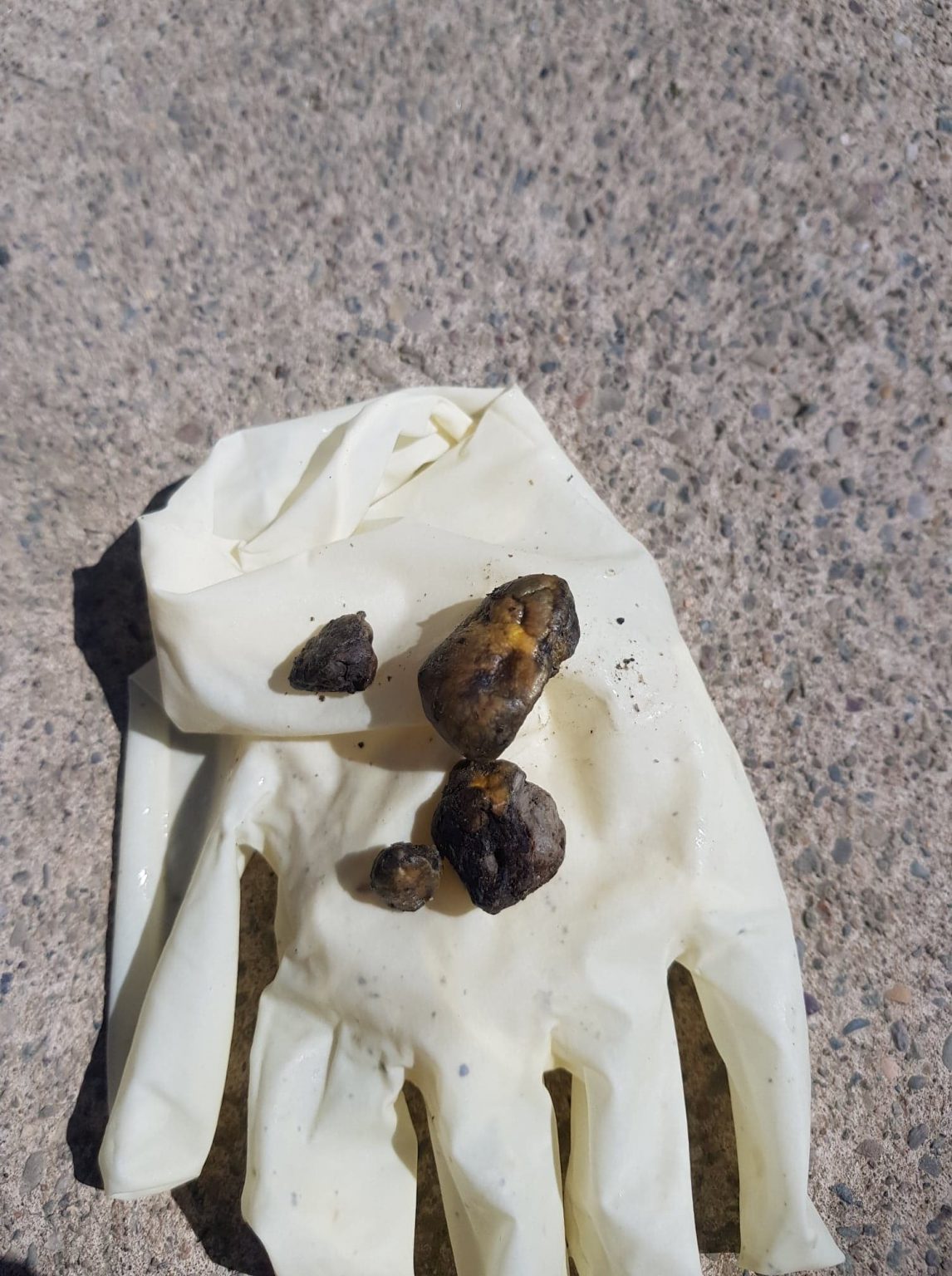
Image source: Bing (Web (fair-use with source credit))
Step 6: Finding and removing the bean
After the visible smegma is gone, it's time to check for the bean. Gently follow the penis toward the tip. You're looking for the urethral diverticulum, a small pouch just behind the urethral opening.
With a gloved finger, carefully probe the area.
If you feel a firm, rounded mass, that's the bean. It may be small and slippery or large and firmly lodged. Gently hook your finger around it and ease it out.
Sometimes it pops free easily. Other times, you'll need to soften it first with warm water or a bit of cleanser.
If the bean is too large or too firmly stuck, stop. Do not dig aggressively. A veterinary professional can handle this safely with sedation if needed.
Persistent digging can damage the sensitive tissue and create a worse problem than the bean itself.
Step 7: Rinsing and drying: the steps everyone forgets
Soap residue is a major cause of post-cleaning irritation. After you've removed the smegma and any bean, rinse thoroughly. Use clean, warm water and a fresh cloth.
Wipe the entire area again, this time with no cleanser. Then rinse once more with plain water, just to be sure.
Allow the area to air-dry or pat it gently with a clean towel. Do not rub. Moisture trapped in the sheath creates an ideal environment for bacterial and fungal growth.
If your horse drops back down before he's dry, that's fine. Just do your best to get him as dry as possible first.
Once he's clean and dry, return him to his stall or pasture. Offer a small treat and some kind words. Positive reinforcement goes a long way toward making future cleanings easier.
Equipment and Cleanser Breakdown: What to Use and What to Avoid
The case for plain warm water: it's usually enough
Here's a fact that might surprise you. Most routine sheath cleanings don't require any cleanser at all. Warm water alone, applied with gentle wiping, handles the majority of smegma buildup.
It's gentle, effective, and eliminates the risk of residue or allergic reactions.
When is water enough? If your horse has a minimal amount of buildup, if you're cleaning on a regular schedule, or if you're dealing with a sensitive horse that reacts to products, plain warm water is your best choice. Many veterinary professionals recommend starting with water and only adding a cleanser if needed.
When a mild equine cleanser actually helps
Some horses accumulate more smegma than others. If your horse has thick, crusty buildup, or if you're doing the first deep clean after years of neglect, a pH-balanced equine cleanser makes the job much easier.
Look for products designed specifically for sheath or udder cleaning. These are formulated to match the skin's natural pH, typically around 5.5 to 6.5. They clean effectively without stripping the protective microbiome.
Popular options include Excalibur, Eqyss, and EQUIDERMA. These are widely available at tack stores and online retailers.

Image source: Bing (Web (fair-use with source credit))
Products to never use: human soaps, antiseptics, and oils that cause burns
This section deserves your full attention. Using the wrong product can cause chemical burns, severe irritation, and long-term damage.
| Product Type | Why It's Dangerous | Safer Alternative |
|---|---|---|
| Human body wash or soap | Wrong pH, harsh detergents strip natural oils | pH-balanced equine cleanser |
| Dish soap (Dawn, etc.) | Degreasing agents destroy the microbiome | Warm water only |
| Chlorhexidine (undiluted) | Chemical burns on mucosal tissue | Diluted per vet instructions, or avoid entirely |
| Iodine scrub | Too harsh, causes drying and peeling | Equine-specific sheath wash |
| Mineral oil or petroleum jelly | Traps bacteria and debris against skin | Nothing, or a water-based lubricant if needed |
| Baby wipes | Fragrances and preservatives irritate sensitive tissue | Soft cloth with warm water |
The bottom line is simple. When in doubt, use warm water. When you need more cleaning power, reach for a product specifically formulated for equine sheath care.
Skip the human products entirely, no matter how gentle they claim to be.
The Biggest Mistakes Owners Make
Over-cleaning: how good intentions cause dermatitis
Here's the irony. The more often you scrub, the more problems you create. Over-cleaning strips the natural oils and protective bacteria from the sheath tissue.
The skin responds by producing more smegma to compensate. Then you clean again, and the cycle continues.
Veterinary dermatologists see this regularly. Owners who clean their horse's sheath monthly, or even weekly, end up with red, inflamed, itchy tissue. The horse becomes sensitive and resistant to handling.
The fix is usually simple: stop cleaning so often. For most geldings, once or twice a year is plenty. If your horse has a healthy, balanced sheath ecosystem, leave it alone.
Incomplete rinsing and the irritation that follows
Cleanser residue is a hidden culprit. You think you've rinsed well, but a thin film of soap remains in the skin folds. Over the next few days, that residue causes itching and irritation.
Your horse rubs his hindquarters, which creates more inflammation.
The solution is simple. Rinse twice, using fresh water each time. Use a clean cloth dedicated solely to rinsing, not the one you used for washing.
If you're in doubt, rinse a third time. It takes thirty seconds and eliminates a whole category of problems.
Forcing retraction and risking real injury
This is the most dangerous mistake on this list. Pulling, tugging, or aggressively manipulating the penis to force it out can cause tearing of the delicate tissue. It can also create a negative association that makes every future cleaning attempt harder.
If your horse won't drop, stop. Walk away. Try again another day.
If he consistently refuses, consider whether he's in pain. Arthritis, back issues, or a previous bad experience can all make him reluctant. A veterinarian can assess whether sedation is appropriate for routine cleanings.
Missing the bean: the most common oversight
Many owners clean the visible smegma and assume they're done. They never probe the urethral diverticulum. Meanwhile, a bean is forming silently.
By the time it causes symptoms, it may be large enough to require veterinary removal.
Make bean checking a non-negotiable part of every cleaning session. It takes less than a minute. If you feel something firm, work it out gently.
If it won't budge, call your vet. Catching a bean early is far easier than dealing with an impacted one later.
When to Call the Vet (Don't Wait for These Signs)
Swelling, redness, or discharge that doesn't resolve
Mild redness immediately after cleaning is normal. It usually fades within a few hours. Persistent swelling, discharge, or redness that lasts more than a day is not.
These could indicate balanoposthitis, a bacterial or fungal infection that requires treatment.
Don't wait to see if it clears up on its own. Infections in this area can spread quickly. Your vet may prescribe a topical or systemic treatment.
Early intervention shortens recovery time and prevents complications.
Foul odor that persists after cleaning
A clean sheath shouldn't smell strongly. If you've cleaned thoroughly and the odor returns within a few days, something is wrong. It could be a retained bean, an infection, or necrotic tissue.
All of these require veterinary attention.
Some owners assume a strong smell is just "how geldings are." That's not true. A healthy sheath has minimal odor. Trust your nose.
If something smells off, it probably is.
Lumps, bumps, or masses: especially in older grey horses
Squamous cell carcinoma is the most common tumor of the equine penis and sheath. Grey horses, particularly those over 15 years old, have a significantly higher risk. Any new lump, bump, or sore that doesn't heal within two weeks warrants a veterinary exam.
Early detection saves lives. A small sarcoid or carcinoma is far easier to treat than an advanced one. Your vet can perform a biopsy to determine the nature of the growth.
In many cases, surgical removal is curative if caught early enough.
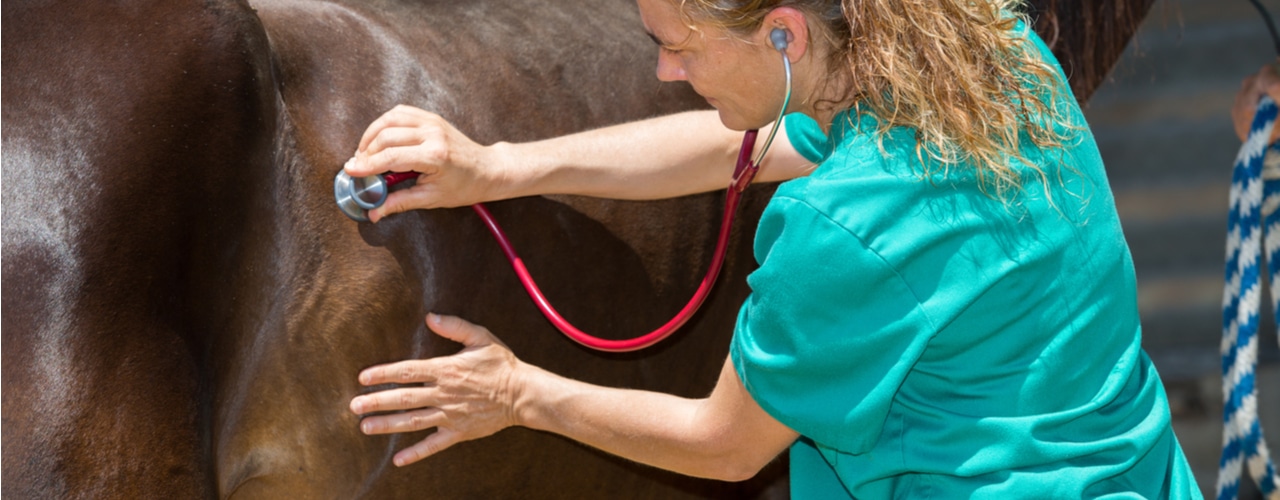
Image source: Bing (Web (fair-use with source credit))
Difficulty urinating or excessive straining
If your horse is stretching out to urinate, taking a long time, or dribbling afterward, he may have a bean or other obstruction. Urinary issues can also indicate neurological problems or kidney disease. Either way, this is not a wait-and-see situation.
Call your vet right away. They can determine whether the issue is a simple bean removal or something more serious. Delaying treatment can lead to a ruptured bladder or kidney damage.
The horse that absolutely won't drop despite patience
Some horses never relax enough to drop in a handling situation. This is more common in young, nervous, or previously traumatized horses. If your horse consistently refuses, don't fight him.
A veterinarian can perform the cleaning under standing sedation.
This is not a failure on your part. Some horses simply need professional handling. The cost of a sedated cleaning is well worth avoiding a serious injury or a horse that becomes dangerous to handle.
How Much Does It Cost: Home vs. Veterinary Cleaning
| Option | Cost Range | What's Included | When to Choose This |
|---|---|---|---|
| DIY at home | $20-$50 | Supplies only, your time and patience | Calm, cooperative horse with no concerning signs |
| Vet visit with sedation | $150-$400 | Full exam, sedation, professional cleaning | First-time owners, unruly horses, any suspicious findings |
| Full veterinary workup | $400+ | Biopsies, imaging, treatment | Any mass, lesion, or suspected infection |
The DIY route makes sense for most horses. Your ongoing costs are minimal. A bottle of equine cleanser lasts months, and gloves and cloths are cheap.
The key is knowing when to upgrade to professional care.
Most veterinarians recommend a full reproductive exam at least once every two years, even for healthy geldings. This catches issues you might miss, including early tumors that aren't yet visible. Consider it a preventive health investment, not an expense.
Real Scenarios: What This Looks Like in Practice
The 14-year-old gelding who's never been cleaned and suddenly can't urinate
Mark bought a previously neglected gelding. The horse was healthy overall, but he'd never had a sheath cleaning in his life. One day, Mark noticed the horse stretching out to urinate and producing only a thin stream.
It was taking over a minute each time.
The vet found a bean the size of a golf ball. It was lodged firmly in the urethral diverticulum. The vet removed it under standing sedation in about ten minutes.
The horse urinated normally within an hour. Mark now schedules a yearly cleaning to prevent recurrence.
The anxious racehorse who kicks: how a vet handles it under sedation
Sarah's Thoroughbred had never been easy to handle. He was fine for farrier work but became anxious whenever anyone approached his hindquarters. She tried the at-home approach twice, and both times he pinned his ears, swished his tail, and threatened to kick.
She called her vet, who administered a mild sedative. The horse relaxed enough for a safe, thorough cleaning. The vet also found a small sarcoid that needed monitoring.
Sarah now schedules a twice-yearly sedated cleaning. It costs more, but it's safe and stress-free for everyone.
The pasture-kept pony who never has buildup: why that's normal
Jenny's Shetland pony gelding is nearly 20 years old. She's never cleaned his sheath, and as far as she can tell, he's never had a problem. Is she neglecting him?
Not necessarily.
Some horses naturally produce minimal smegma. Their sheath ecosystem stays balanced without intervention. For these horses, the "if it ain't broke, don't fix it" approach is perfectly valid.
Jenny still has her vet do a yearly exam, which includes a sheath check. So far, everything looks great.
The grey gelding with a tiny sore that turned out to be a sarcoid
Tom's 17-year-old grey gelding had a small, pink sore near the tip of his sheath. It was barely noticeable, about the size of a dime. Tom assumed it was a minor rub and kept an eye on it.
After a month, it hadn't changed.
His vet biopsied the spot. It was a sarcoid, a type of skin tumor common in horses. The vet removed it surgically, and the margins were clean.
A year later, there's no sign of recurrence. Tom credits his vigilance for catching it early.
Maintenance and Long-Term Optimization
How often you really need to do this
Most geldings need a sheath cleaning once or twice a year. Some need less. Some need a bit more.
The frequency depends on the individual horse's smegma production, his living environment, and any history of problems.
A good approach is to check monthly, not clean monthly. Take a quick look during grooming to assess the level of buildup. When you notice significant accumulation, schedule a thorough cleaning.
This keeps you proactive without over-cleaning.
Seasonal and environmental considerations
Horses in dusty or sandy environments tend to accumulate more debris in the sheath. Stall-bound horses may build up smegma faster than pasture-kept ones because they spend more time lying down in bedding. Adjust your cleaning frequency accordingly.
After heavy rain seasons, hay and mud can increase the amount of debris that ends up in the sheath area. Pay extra attention during these times. A quick visual check can alert you to any issues before they become problems.
Building a routine that fits your horse's lifestyle
Consistency is better than intensity. A short, gentle check every month is more effective than a stressful, marathon cleaning twice a year. Your horse becomes accustomed to the handling and more cooperative over time.
Incorporate sheath checking into your regular grooming ritual. When you're picking hooves or brushing the hindquarters, show him that gentle touch near the sheath is safe and non-threatening. This desensitization makes the full cleaning process much easier when you tackle it.
Expert Tips and Pro Advice
The gentle hands rule
You're not scrubbing a pot. You're handling tissue that's more delicate than a newborn's skin. Use the lightest touch that gets the job done.
If you're using enough pressure to feel resistance, you're using too much.
If you've never done this before, start with just a visual inspection and a few gentle wipes. Build your confidence over multiple sessions. There's no medal for finishing in one attempt.
The two-person approach for nervous horses
Some horses are more comfortable when a trusted handler stands at their head, offering scratches and reassurance. The cleaner works from the side, avoiding standing directly behind the horse's hindquarters.
Communication is key. The handler watches for signs of tension and signals the cleaner to pause. This approach turns a potentially stressful experience into a calm, controlled one.
It's especially useful for young horses or those with a history of trauma.
When to schedule professional cleanings
If your horse is difficult to handle, if you're new to horses, or if you've never done this before, schedule a professional cleaning first. Watch the vet or an experienced tech perform the task. Ask questions.
Learn the technique before you attempt it solo.
The cost of one professional cleaning is a worthwhile investment. You'll learn proper technique, see what a healthy sheath looks like, and have a baseline for comparison. Many owners find that after one guided session, they're confident enough to handle it at home.
Frequently Asked Questions
How often should I clean my horse's sheath?
Most geldings need cleaning once or twice a year. Some horses naturally produce minimal smegma and need even less. Clean when you notice significant buildup, not on a rigid schedule.
Over-cleaning causes more problems than it prevents.
Do mares need sheath cleaning?
No. Mares don't have a sheath or a penis. Their reproductive anatomy is entirely different.
You might notice a waxy discharge around the udder, particularly in lactating mares, but that's a separate grooming consideration with different guidelines.
Can I use baby wipes instead of a dedicated cleanser?
Baby wipes are not suitable for sheath cleaning. The fragrances, preservatives, and skin conditioners in them can irritate the sensitive tissue inside the sheath. Stick to warm water and a soft cloth.
If you need more cleaning power, choose a pH-balanced equine cleanser.
Is some smegma normal, or does it mean my horse is unhealthy?
Small amounts of smegma are completely normal. It's a natural secretion that protects and lubricates the sheath. Problems only arise when buildup becomes excessive or causes odor, inflammation, or discomfort.
Regular checks help you distinguish between healthy and abnormal levels.
What if my horse kicks when I try to clean his sheath?
Stop what you're doing and reassess. Forcing the issue will only make things worse. Start with desensitization exercises during regular grooming.
If your horse continues to be dangerous, schedule a professional cleaning with sedation. Your safety is non-negotiable.
How do I know if my horse has a bean?
The only way to know for sure is to check. After cleaning the visible smegma, gently probe the urethral diverticulum with a gloved finger. You're feeling for a firm, rounded mass.
If you find one, remove it gently. If it's too large or stuck, call your vet.
Final Verdict: The Balanced Approach
The golden rule: gentle, infrequent, and observant
Sheath cleaning doesn't have to be a dreaded chore. With the right technique and mindset, it becomes a simple, routine part of your horse's health care. Clean gently.
Clean infrequently. And always observe, because what you see during cleaning can catch early signs of serious conditions.
A quick checklist for your next cleaning session
- Gather your supplies before you start
- Choose a quiet, familiar environment
- Read your horse's body language
- Let him drop naturally, never force it
- Wipe gently, from base to tip, with warm water
- Use a pH-balanced cleanser only if needed
- Rinse thoroughly, twice at minimum
- Check for the bean every single time
- Dry completely before releasing your horse
- Call the vet if anything looks, feels, or smells wrong
Keep this list handy. The more you do it, the easier it gets. And if you ever feel uncertain, ask your vet for a demonstration.
There's no shame in professional guidance. Your horse's health is worth it.