

Image source: Bing (Web (fair-use with source credit))
Your Beagle's coat might look low-maintenance. Those short, smooth hairs seem like they'd shed less than a Golden Retriever's plume. But anyone who's lived with a Beagle knows the truth: this breed sheds constantly, and their dense double coat requires a specific routine that most generic grooming guides completely miss.
If you've ever wondered how to groom a Beagle without turning your living room into a fur disaster zone, you're in the right place. Our research across veterinary dermatology resources and breed-specific care standards shows that most owners make the same three mistakes: over-bathing, using the wrong brush, and ignoring the ears until an infection forces a vet visit. The American Kennel Club's breed standard describes a Beagle's coat as "close, hard, and medium-length." That sounds simple, but it demands a layered approach.
As of 2026, that standard still drives what professional groomers recommend. Let's walk through the entire process, from the tools you need to the weekly habits that keep your hound healthy.
Quick Answer
Groom a Beagle by brushing twice weekly with a slicker brush. Bathe every four to six weeks with dog-safe shampoo. Clean ears weekly with vet-approved solution.
Trim nails monthly. Check paws and skin during every session.
Never shave a Beagle's double coat. It protects against sun and temperature extremes. Brush daily during spring and fall shedding seasons.
Use a de-shedding tool to manage the undercoat.
Why Grooming a Beagle Is Different
Beagles are scent hounds. They spend hours with their noses to the ground, picking up dirt, debris, and the occasional unidentifiable something they just have to roll in. The breed's short coat protects them from brush and weather.
But that same coat structure creates specific grooming challenges.
The Double Coat Reality
Here's what most owners don't realize: a Beagle has two layers of fur, not one. The topcoat consists of stiff, water-resistant guard hairs. Underneath sits a softer, denser undercoat that acts as insulation.
This double layer is why Beagles handle both cold mornings and warm afternoons on a hunt. It's also why they shed so much.
The undercoat doesn't just fall out on its own. It gets trapped against the topcoat. If you only brush the surface, you're missing the bulk of loose fur hiding underneath.
That trapped undercoat ends up all over your couch, your clothes, and every black item you own.
Manufacturer specifications for de-shedding tools confirm this issue. Tools like undercoat rakes are designed specifically to reach through the topcoat and pull out loose undercoat without damaging guard hairs. A regular brush won't do that.
Why Generic Advice Fails
Generic grooming advice often says to brush your dog once a week and bathe monthly. For a Beagle, that's barely enough to stay ahead of the shedding. It's like trying to empty a bathtub with a teaspoon.
Beagles also have oily skin that produces a distinctive "doggy odor." Bathing too frequently strips natural oils, which makes the skin produce even more oil to compensate. The result? A smellier dog with drier, itchier skin.
Several factors combine to make this breed uniquely demanding:
- Double coat shedding: Two layers of fur that shed independently
- Scent hound odor: Natural oils that require regular, not excessive, bathing
- Floppy ears: A warm, moist environment where infections thrive
- Sensitive skin: Prone to allergies and contact dermatitis
- Fast-growing nails: Active dogs wear them down unevenly
Grooming as Preventive Healthcare
Grooming isn't just about looks. For a Beagle, it's preventive medicine. Every brushing session is a chance to run your hands over your dog's body and catch problems early.
Things to watch for during grooming:
- Lumps or bumps that need veterinary attention
- Ticks, especially after outdoor adventures
- Hotspots or irritated skin patches
- Foreign objects stuck in paw pads
- Ear redness or unusual odor
- Fleas or other parasites in the undercoat
Veterinary sources emphasize that early detection is the single best way to avoid expensive treatments later. Your weekly grooming session doubles as a full-body physical exam. That's a benefit most owners don't consider until it saves them a vet bill.
Before You Start: Tools You Actually Need
You don't need a professional grooming studio to keep your Beagle looking great. But you do need the right tools. Using the wrong equipment on a double coat is like trying to cut steak with a butter knife.
It's frustrating, ineffective, and often ends badly.
The Essential Kit
Here's what our research and aggregate reviews from verified buyers indicate you actually need:
Slicker Brush
A slicker brush features fine, short wires close together on a flat or slightly curved head. It's your primary tool for removing loose fur, tangles, and debris from the topcoat. Look for one with bent wires, which are gentler on sensitive skin.
Bristle Brush
This has softer, natural or synthetic bristles. It's perfect for the finishing pass, distributing natural oils through the coat and giving it that healthy shine. Use it after the slicker brush to catch any remaining loose hairs.
Undercoat Rake
This tool has long, widely spaced teeth that reach through the topcoat to pull out loose undercoat fur. It's essential during shedding season. Some models have rotating pins to reduce pulling and discomfort.
De-shedding Tool
Tools like the FURminator are popular for managing heavy shedding. These feature a stainless-steel edge that reaches deep into the undercoat and removes loose hair without cutting the coat. Use these sparingly, no more than once a week, to avoid irritating the skin.
Dog-Safe Shampoo and Conditioner
Choose a shampoo formulated for sensitive skin, ideally oatmeal-based, which soothes dryness and itching. Hypoallergenic formulas are safer for allergy-prone Beagles. Always follow with a dog-specific conditioner to maintain coat health and reduce static.
Ear Cleaning Solution
A veterinary-grade ear cleaner is non-negotiable. Human products or homemade solutions can disrupt the ear's natural pH balance and cause more problems than they solve. Look for a vet-approved brand with pH-balanced ingredients.
Cotton Balls or Pads
These are for applying ear cleaner and wiping away debris. Never use cotton swabs, which can push wax deeper into the ear canal and damage the eardrum.
Nail Clippers or Grinder
Guillotine-style clippers are common for small to medium dogs. Scissor-style clippers offer more control. A Dremel-style grinder is quieter and reduces the risk of cutting the quick.
Many owners prefer the grinder for anxious dogs.
Styptic Powder
This is your emergency tool. If you accidentally cut the quick and the nail bleeds, styptic powder stops the bleeding quickly. Keep it in your grooming kit at all times.
Dog-Safe Toothpaste and Toothbrush
Dental health is part of grooming. Use only toothpaste formulated for dogs. Human toothpaste contains fluoride and xylitol, both toxic to canines.
Grooming Wipes
Paw wipes and body wipes are handy for quick cleanups between baths. They're especially useful after muddy walks or for cleaning paws before bed.
Low-Heat Blow Dryer
A high-velocity dryer designed for dogs is ideal. A human dryer on the lowest heat setting works in a pinch. Never use high heat on a Beagle's sensitive skin.
What You Can Skip
Not every tool is necessary, especially for a casual owner. Here's what you can skip:
- Grooming table: A non-slip mat on the floor works fine
- Professional-grade clippers: Only needed for medical shaving, which a vet should handle
- Dematting tools: Beagles rarely mat unless severely neglected
- Grooming apron: Protect your clothes with anything you already own
- Fragrance sprays: Regular grooming controls odor better
Choosing Quality Tools
When shopping for grooming tools, the brand matters less than the quality. Aggregate reviews consistently show that mid-priced tools outperform budget versions and match premium ones for most owners. Look for:
- Stainless steel pins on slicker brushes and rakes
- Comfortable, non-slip handles
- Rounded wire tips to prevent skin scratches
- Replaceable heads for de-shedding tools
- Replacement parts availability for clippers and grinders
The image below shows the typical grooming kit you'll want to assemble before your first proper session.

Image source: Bing (Web (fair-use with source credit))
Once you've got your kit together, the next step is learning the actual brushing technique. That's where most owners go wrong, often without realizing it.
Step-by-Step: Brushing and Deshedding Your Beagle
Brushing seems simple. You run a brush over the dog, and fur falls out. But with a double coat, there's a method to it.
Brushing the wrong way can push loose undercoat deeper into the coat, creating mats and irritation.
How to Brush Without Damaging the Topcoat
Start with your slicker brush. Work in the direction of hair growth, using short, gentle strokes. Focus on one section at a time, especially the back, sides, and rump, where shedding is heaviest.
Apply light pressure. The wires should glide through the coat, not scrape against the skin. If you're pulling hard, you're pressing too firmly.
Your Beagle will tell you by trying to escape.
After the slicker brush, switch to the undercoat rake. Work it through the same sections, especially where the coat feels densest. You'll see visible clumps of soft, downy fur coming out.
That's the undercoat, and it's what causes the worst shedding.
Finally, use the bristle brush to smooth everything down and distribute natural oils. This final pass leaves the coat shiny and catches any loose hairs the other brushes missed.
Brushing Frequency by Season
Beagles have two major shedding seasons per year. In spring, they drop their heavy winter undercoat. In fall, they shed the lighter summer coat to make room for winter insulation.
During these periods, brush daily.
Outside of shedding season, twice a week is usually enough to keep fur under control. Dogs that spend more time outdoors or live in homes with forced-air heating may need more frequent brushing.
Here's a quick reference:
| Time of Year | Brushing Frequency | Notes |
|---|---|---|
| Spring (March to May) | Daily | Heavy undercoat loss |
| Summer (June to August) | 2 to 3 times weekly | Moderate shedding |
| Fall (September to November) | Daily | Coat transition period |
| Winter (December to February) | Twice weekly | Indoor heating increases dryness |
Handling the "Blowout" Shedding Seasons
The term "blowout" isn't an exaggeration. During peak shedding, you can fill an entire trash bag with fur from one thorough brushing. It's shocking the first time you experience it.
For the blowout, use a de-shedding tool once a week in addition to your regular brushing routine. Work in sections: back, sides, chest, and rump. Avoid the head, legs, and belly, where the coat is thinner and more sensitive.
One common mistake is brushing too aggressively during the blowout. This irritates the skin and can cause brush burn. If you notice redness or your dog flinching, stop and switch to a softer brush.
Another mistake is brushing a dirty coat. Dirt and debris act as an abrasive, wearing down the topcoat and causing breakage. Always brush before a bath.
For a truly dirty dog, wipe down the coat with grooming wipes or give a quick rinse first.
Bathing Your Beagle the Right Way
Bathing a Beagle is a strategic operation, not a spontaneous act. Do it too often, and you'll dry out the skin. Do it too rarely, and the "Beagle smell" will take over your house.
The sweet spot for most Beagles is every four to six weeks.
How Often to Bathe
Your Beagle's skin produces natural oils that protect the coat and keep it healthy. Shampoo strips those oils. Bathing every week strips them faster than the skin can replenish them.
The skin then overcompensates, producing more oil than necessary. This leads to a greasy coat and a stronger doggy odor. That's the paradox: excessive bathing makes your dog smellier, not cleaner.
Exceptions include dogs with skin conditions, which a veterinarian may advise bathing more frequently with medicated shampoos. Always follow your vet's guidance over a generic schedule.
Step-by-Step Bath Protocol
Follow this process for a safe, effective bath:
1. Brush Before the Bath
Always brush your Beagle thoroughly before getting them wet. Wet fur tangles more easily, and loose hair turns into mats when soaked. Removing loose fur beforehand makes the bath faster and easier.
2. Use Lukewarm Water
Test the water with your wrist. It should feel warm, not hot. The ideal temperature is around 95 to 100 degrees Fahrenheit.
Hot water burns sensitive skin. Cold water causes stress and shivering.
3. Dilute the Shampoo
Never pour shampoo directly onto your dog's back. It concentrates the product in one spot and makes it hard to rinse out. Dilute the shampoo with water in a cup, then work it into a lather with your hands before applying.
4. Work From the Neck Down
Starting at the neck, work the lather through the coat toward the tail. Massage gently with your fingers, working through to the skin. Avoid the face until the end, using a damp washcloth or sponge.
5. Protect the Ears
Beagle ears are floppy and prone to trapping water and shampoo. Place cotton balls at the opening of the ear canal before the bath. This barrier keeps water out and reduces infection risk.
6. Rinse Thoroughly
Rinsing is the most critical step. Soap residue dries out the skin and causes itchiness and irritation. Rinse, then rinse again.
Keep rinsing until the water runs completely clear and no suds remain.
7. Condition, Then Rinse Again
Apply a dog-specific conditioner to restore moisture to the coat. Leave it on for the time specified on the label, usually one to three minutes, then rinse thoroughly.
8. Towel Dry First
Press a large towel against your dog's coat to absorb excess water. Don't rub, as friction can tangle the coat. Beagles have short fur, so they dry relatively quickly, but they're also prone to chilling.
9. Finish With a Low-Heat Blow Dryer
If your dog tolerates it, use a low-heat dryer to finish drying, especially in cooler months. Keep the dryer moving to avoid concentrating heat on one spot. This step is optional for Beagles, unlike long-haired breeds, but it helps loosen any remaining loose fur.
The Face and the "Beagle Smell"
When it comes to the face, be extra careful. Avoid getting water and shampoo in the eyes. Use a damp washcloth to clean around the eyes, muzzle, and wrinkles.
Beagles have facial folds where debris and tear stains accumulate.
As for the "Beagle smell," you can freshen the coat between baths with dry shampoo or waterless shampoo formulated for dogs. Apply it to the coat, massage it in, and brush it out. It freshens without stripping oils.
If your Beagle rolls in something foul during a walk, spot-clean the affected area rather than giving a full bath. Use dog-safe wipes or a mixture of water and a small amount of gentle shampoo, then rinse and dry.
The Critical Ear Care Routine
Beagle ears are iconic. Those long, floppy flaps are adorable. They're also a perfect breeding ground for infection.
The floppy shape restricts airflow, creating a warm, dark, and moist environment where bacteria and yeast thrive.
Why Floppy Ears Mean Trouble
Because air doesn't circulate inside the ear canal the way it does with erect ears, moisture from bathing, swimming, and exercise lingers. That trapped moisture, combined with natural ear wax, creates a favorable environment for infection. Veterinary sources report that ear infections are among the most common health issues for Beagles.
Signs of an ear infection include:
- Head shaking or tilting
- Scratching at the ears
- Redness inside the ear flap
- Unusual odor from the ear
- Discharge or dark brown wax
- Pain when the ear is touched
If you notice these symptoms, do not attempt a deep cleaning at home. See your veterinarian. What looks like wax might be a sign of a yeast or bacterial infection that requires prescription treatment.
Weekly Cleaning: Step-by-Step
You should clean your Beagle's ears at least once a week. After swimming or vigorous outdoor activity, check them sooner and clean if needed.
1. Gather Supplies
You'll need a vet-approved ear cleaning solution and cotton balls. Avoid cotton swabs. Swabs push debris deeper and risk damaging the eardrum.
2. Position Comfortably
Sit with your Beagle on a non-slip surface. Gently hold their head still. Lift the ear flap and fold it back to expose the ear canal.
3. Apply the Cleaner
Fill the ear canal with the cleaning solution, per the product instructions. You may hear a squishing sound when the liquid enters the canal. That's normal.
4. Massage the Base
Hold the base of the ear and massage it gently for 20 to 30 seconds. This loosens wax and debris from deep within the canal.
5. Let Them Shake
Release your Beagle's head and let them shake. They'll naturally expel the loosened debris and excess solution. Then wipe the outer ear flap with a cotton ball.
6. Wipe, Never Probe
Using a fresh cotton ball, gently wipe the visible parts of the ear canal and the inner ear flap. Never push the cotton ball into the ear canal. Only clean what you can see.
7. Dry Thoroughly
After cleaning, dry the ear flap with a clean, dry cotton ball. This is crucial for Beagles because residual moisture can lead to infection.
The photo below shows the correct approach: gently lifting the ear flap and using a cotton ball to apply cleaner and wipe away debris, never probing deep into the canal.

Image source: Bing (Web (fair-use with source credit))
Red Flags: Signs of Infection
When cleaning, pay attention to what comes out. A small amount of light brown or yellowish wax is normal. Anything else is a reason to see a vet.
- Dark brown or black waxy discharge: Often indicates a yeast infection
- Yellow or green pus: Suggests a bacterial infection
- Foul, musty odor: Usually yeast or bacterial overgrowth
- Blood or redness: Indicates inflammation or injury
- Excessive debris: Suggests an underlying condition
Our research indicates that ear infections are easier to treat when caught early. A weekly cleaning routine costs very little and takes just a few minutes. A vet visit for a full-blown infection costs significantly more and causes your dog unnecessary discomfort.
Nail Trimming Without the Drama
Nail trimming is the task most Beagle owners dread. It's also one of the most important for your dog's health. Overgrown nails cause pain, alter gait, and can lead to joint issues over time.
Why Beagle Nails Grow So Fast
Beagles are active dogs, but their activity level rarely matches what their nails need. Running on grass or carpet doesn't wear nails down the way walking on pavement does. If your Beagle mostly exercises on soft surfaces, you'll need to trim nails regularly, typically every three to four weeks.
How to Identify the Quick
The quick is the sensitive tissue inside each nail that contains blood vessels and nerves. Cutting into it causes pain and bleeding. On white or clear nails, the quick is visible as a pink area.
On dark nails, it's much harder to spot.
For dark nails, look at the underside of the nail. You'll often see a small dark dot or line in the center. That's the beginning of the quick.
Trim just ahead of it.
The diagram below shows the internal anatomy of a dog's nail, highlighting exactly where the quick sits and where it's safe to trim.
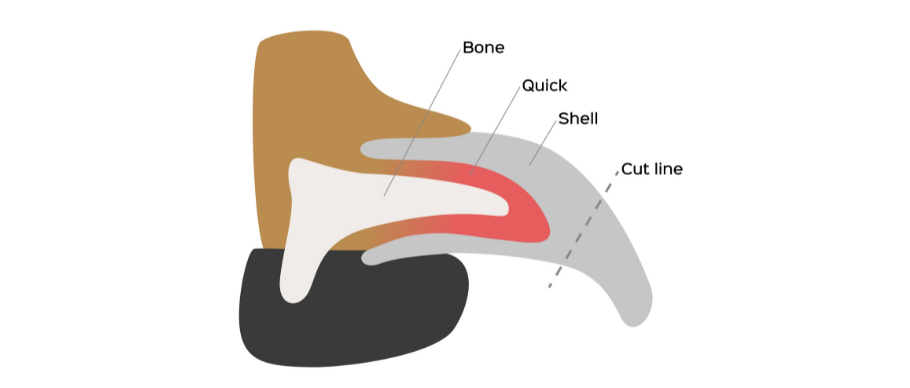
Image source: Bing (Web (fair-use with source credit))
Clipper vs. Grinder: Which Is Better?
Both tools work. Each has its strengths and weaknesses:
| Tool | Pros | Cons |
|---|---|---|
| Guillotine clippers | Quick, clean cut | Higher risk of cutting the quick |
| Scissor-style clippers | More control, good for thick nails | Can crush the nail if dull |
| Rotary grinder | Smooths edges, avoids quicking | Louder, slower process |
Grinders are generally safer for anxious dogs because they remove tiny amounts at a time. The noise takes some getting used to, so introduce it gradually with treats and praise.
What to Do When You Quick the Nail
Accidents happen. Even experienced owners cut the quick sometimes. If it happens, stay calm.
Your dog will react more to your energy than to the pain.
Apply styptic powder to the nail tip immediately. Press it firmly for a few seconds. The bleeding should stop quickly.
If you don't have styptic powder, cornstarch or baking flour works as a temporary substitute.
If bleeding continues for more than five minutes, contact your veterinarian.
Face, Paws, and Wrinkles: The Often-Forgotten Spots
The main coat gets the most attention during grooming. But a Beagle has several other areas that need regular care. Neglecting them leads to problems that are harder to fix later.
Tear Stain Management
Beagles are prone to tear staining, those reddish-brown streaks under the eyes. They're caused by porphyrin, a natural pigment in tears. When tears overflow and sit on the fur, the pigment stains it.
Clean the area gently with a damp washcloth daily. Use a veterinarian-approved eye wipe if staining is persistent. Never use human eye makeup remover or hydrogen peroxide, which irritates the eyes.
Paw Pad Inspection
Check your Beagle's paw pads after every outdoor adventure, especially during hunting season or on rough terrain. Look for:
- Cuts or cracks in the pads
- Small stones or burrs stuck between toes
- Tick bites, especially between the toes
- Dry, peeling pads that need moisturizer
Trim the fur between the toes regularly. This prevents matting and reduces the amount of debris your dog tracks into the house.
Facial Wrinkle Care
Beagles have folds around their nose and mouth where food, dirt, and moisture accumulate. Wipe these folds with a damp cloth during grooming sessions. Dry them thoroughly afterward to prevent skin irritation or yeast growth.
Watch for redness or a musty smell in these folds. That's a sign of developing dermatitis that requires veterinary attention.
Mistakes to Avoid: What Most Owners Get Wrong
Even well-meaning owners make these mistakes. Here's what to avoid:
Over-Bathing and Stripping Natural Oils
We mentioned this earlier, but it deserves emphasis. Bathing more than every three weeks strips the coat's natural protection. Your Beagle's skin will dry out, itch, and produce more oil to compensate.
Shaving the Double Coat
Never shave a Beagle. The double coat regulates body temperature in both hot and cold weather. Shaving destroys this system and exposes the skin to sunburn and insect bites.
The coat also grows back unevenly, often losing its original texture and color.
Using Human Grooming Products
Human shampoo has a different pH balance than dog shampoo. Using it disrupts your Beagle's skin barrier, leading to dryness, itching, and a dull coat. The same applies to human toothpaste, which contains ingredients toxic to dogs.
Pushing Cotton Swabs Into the Ears
Cotton swabs are for cleaning the outer ear only. Inserting them into the canal pushes wax and debris deeper, potentially damaging the eardrum.
Brushing Too Aggressively
Vigorous brushing may seem like it gets the job done faster, but it irritates the skin and can cause brush burn. Gentle, consistent pressure removes just as much fur without the damage.
Grooming as Skin and Health Check
We touched on this in the opening section, but let's go deeper. Regular grooming is your best defense against hidden health problems.
What to Look For
Make it a habit to check your Beagle's skin during every grooming session:
- Lumps and bumps: Any new growth should be examined by a vet
- Red spots or hotspots: These indicate skin irritation or infection
- Dry, flaky patches: May signal nutritional deficiencies or allergies
- Parasites: Fleas, ticks, and mites are easier to spot on a clean coat
- Signs of trauma: Cuts, scrapes, or swelling your dog may be hiding
Allergy-Prone Beagles: Adjusting Your Routine
Beagles are genetically predisposed to certain allergies, including contact dermatitis and atopic dermatitis. If your dog has allergy-prone skin, adjust your grooming routine accordingly:
- Bathe with medicated or hypoallergenic shampoo as directed by your vet
- Brush more gently to avoid irritating sensitive skin
- Wipe paws after outdoor walks to remove allergens
- Consider air purifiers to reduce environmental allergens
When Grooming Problems Mean a Vet Visit
Some issues require professional help. If you notice any of the following during grooming, schedule a vet appointment:
- Persistent scratching or licking in one area
- Hair loss or bald patches
- Crusty, oozing, or bleeding skin
- Lumps that grow or change shape
- Persistent ear odor despite regular cleaning
- Reluctance to be touched in a specific area
Getting Your Beagle to Cooperate
Grooming a wriggling, uncooperative Beagle is frustrating for everyone. Building a routine that works with your dog's temperament makes the process smoother for years to come.
Desensitization and Calm Training
Start grooming sessions when your Beagle is a puppy. Handle their paws, ears, and mouth regularly so they become accustomed to being touched. Pair each session with treats and praise.
If you have an adult Beagle with no grooming history, start slowly. Let them sniff the tools. Offer treats while holding the brush near them.
Reward calm behavior with plenty of praise. Short, frequent sessions work better than one long, stressful session.
Best Handling Positions
Sit on the floor with your Beagle between your legs. This position gives you control while keeping them comfortable. For nail trimming, have someone hold the dog while you work, or use a grooming hammock if your Beagle tolerates it.
When to Skip the DIY
Some situations call for professional help:
- Severe matting you can't safely remove
- Extreme fear or aggression during grooming
- Medical conditions that make handling risky
- Your own physical limitations
Professional groomers charge between $40 and $80 per session, depending on your location and the groomer's experience.
Professional Grooming vs. DIY: What's Worth It
Some owners prefer professional grooming. Others handle everything at home. Both approaches work, but they have different trade-offs.
When DIY Makes Sense
Most Beagle owners can handle the full grooming routine at home. The breed's short coat is forgiving, and weekly brushing prevents the build-up that requires professional intervention. DIY grooming saves money and strengthens your bond with your dog.
What Professionals Handle Better
Professional groomers have experience with difficult dogs and access to professional-grade tools. They can handle:
- Severe matting removal
- Expressing anal glands (though this is controversial and some vets recommend against routine expression)
- Advanced skin care treatments
- Difficult nail trims on resistant dogs
Cost Comparison at a Glance
| Service | Professional Cost | DIY Cost |
|---|---|---|
| Full grooming (bath, brush, nails, ears) | $40 to $80 | $30 to $60 for initial tool investment |
| Nail trim only | $10 to $20 | Included in tool cost |
| Ear cleaning | $10 to $15 | Included in tool cost |
| Annual tool maintenance | N/A | $10 to $30 for replacement parts |
For most owners, the upfront cost of tools pays for itself within the first two or three months.
Quick Reference Grooming Schedule
Consistency is the secret to a well-groomed Beagle. Here's a schedule that works for most dogs:
Daily Tasks
- Check and wipe facial folds
- Wipe paws after outdoor walks
- Brush teeth with a soft toothbrush (or every other day)
Weekly Tasks
- Brush coat thoroughly with slicker brush and bristle brush
- Clean ears and check for signs of infection
- Check skin for lumps, bumps, and parasites
- Inspect paw pads and trim fur between toes
Monthly Tasks
- Trim nails (every 3 to 4 weeks)
- Bathe with dog-safe shampoo and conditioner
- Clean tear stains and touch up any missed areas
Seasonal Deep-Clean
- Daily brushing during spring and fall shedding
- Schedule a professional grooming session if needed
- Change grooming wipes and shampoo for skin needs
Frequently Asked Questions
How often should I bathe my Beagle?
Bathe your Beagle every four to six weeks. Bathing more frequently strips natural oils and causes dry, itchy skin. If your dog gets particularly dirty or smelly between baths, use spot-cleaning with dog-safe wipes rather than a full bath.
Can I use human shampoo on my Beagle?
No. Human shampoo has a different pH balance that disrupts a dog's skin barrier. It leads to dryness, itching, and a dull coat.
Always use shampoo formulated specifically for dogs, ideally one designed for sensitive skin.
Why does my Beagle shed so much even though they have short hair?
Beagles have a double coat with a dense undercoat that sheds seasonally. The undercoat becomes trapped against the topcoat and only comes out with regular brushing. Daily brushing during shedding seasons helps manage the volume.
How do I know if my Beagle has an ear infection?
Signs include head shaking, scratching at ears, redness, unusual odor, discharge, and pain when touched. If you notice these symptoms, see your veterinarian for diagnosis and treatment.
How often should I brush my Beagle's teeth?
Brush your Beagle's teeth at least three times per week. Daily brushing is ideal. Use toothpaste formulated for dogs only, since human toothpaste contains ingredients toxic to canines.
Do Beagles need professional grooming?
Most Beagles don't require professional grooming. Their short coat is easy to maintain at home with weekly brushing and routine nail trims. Professional grooming may be helpful for severe matting, difficult nail trims, or dogs with extreme grooming anxiety.
Is it safe to shave a Beagle to keep them cool?
No. Shaving damages the double coat that regulates their temperature in both hot and cold weather. It exposes skin to sunburn and affects coat regeneration.
Brushing them regularly is safer and more effective.