
Ferrets are wonderful, hilarious, and deeply entertaining pets. But let's be honest: they come with a distinct smell that can sometimes take over a room. If you've been searching for how to reduce ferret odor, you've probably already discovered that the internet is full of conflicting advice, magical sprays, and questionable grooming tips.
Here's the truth: most of it doesn't work, and some of it actively makes the problem worse.
Research and veterinary guidance point to a much simpler reality. Ferret odor mostly comes from their skin oils, their ears, their bedding, and their waste. Bathing them more often doesn't fix it.
In fact, over-bathing triggers the skin to produce even more oil to compensate. As of 2026, the consensus among exotic animal veterinarians is clear: manage the environment, check the ears, and fix the diet. That's where real results come from.
Let's dig into the actual process.

Image source: Bing (Web (fair-use with source credit))
Quick Answer
Reduce ferret odor by washing bedding every 3 to 5 days. Clean the ears every 1 to 2 weeks. Feed a high-protein diet with at least 34% protein content.
Scoop the litter box daily. Bathe only every 4 to 8 weeks. Over-bathing makes smell worse by triggering excess oil production.
Why Ferret Odor Is a Health Signal
Here's the thing about ferret smell that most owners never realize: it's not just cosmetic. A ferret's natural musk comes from sebaceous glands in the skin, and that's normal. You'll never eliminate it completely, and you shouldn't try.
But when the smell shifts from "musky" to "sour" or "overwhelming," that's a signal.
Ferrets are masters at hiding illness. In the wild, showing weakness gets you eaten. So your ferret won't limp, won't cry, and won't show obvious signs of distress until things are advanced.
What they will do is smell different. A sudden spike in odor, especially a sharp, foul note mixed into the usual musk, often points to an underlying health issue.
The most common culprits include ear infections, dental disease, gastrointestinal problems, or adrenal gland disease. Adrenal disease is particularly sneaky in ferrets. It causes hormone imbalances that alter the skin and coat, and one of the first signs owners notice is a change in how the ferret smells.
If you're reaching for air fresheners instead of investigating, you're missing the warning.
That's why this article isn't a "cover the smell with products" guide. It's a "fix the actual causes" guide. You're going to learn what's normal, what's not, and exactly how to clean, feed, and maintain your ferret so the odor stays at a comfortable baseline.
If something goes wrong, you'll know because the baseline changes.
The 4 Pillars of Odor Control
The secret to a good-smelling ferret is not one magic trick. It's four habits stacked together, and honestly, none of them are difficult. They just require consistency.
The order matters, too. Most people start with bathing, which is the least effective thing you can do. The right order, based on what actually impacts odor, is bedding, ears, diet, and cage hygiene.
Your ferret's bedding and hammocks hold the largest concentration of skin oils and dead fur. Washing them every 3 to 5 days is the single biggest win you'll get. Next, clean the ears every 1 to 2 weeks, since ear wax is a major odor amplifier.
Third, feed a high-protein, low-carbohydrate diet, because better digestion means less smelly waste and less oily skin. Finally, keep the cage and litter box on a strict cleaning schedule.
Bathing is the final pillar, and it's the one you'll do least often. Every 4 to 8 weeks is plenty. Bathing too often strips the skin's natural oils, and the ferret's body responds by producing more oil, which means a stronger smell than when you started.
It's counterintuitive, but it's biology.
| Pillar | Frequency | Impact on Odor |
|---|---|---|
| Wash bedding | Every 3-5 days | Highest |
| Clean ears | Every 1-2 weeks | High |
| High-protein diet | Daily | High |
| Cage deep clean | Weekly | Medium |
| Bathing | Every 4-8 weeks | Low (if overdone, negative) |
Stick to those four habits, and the ferret musk stays manageable. Skip one, and the others can't compensate. It really is that simple.
The Real Source of the Smell: Glands, Skin Oils, and Coat Biology
To fix an odor problem, you have to understand where the smell actually comes from. Ferrets have sebaceous glands distributed across their skin. These glands produce a waxy, oily substance called sebum.
That sebum is what gives ferrets their musky scent, and it's completely natural. Every ferret has it, even ones that have been "descented."
Let's clear up a common misconception right now. Descenting, or surgical removal of the anal scent glands, does not eliminate the ferret smell. The anal glands are not the primary source of musk.
The skin's sebaceous glands are. So a descented ferret still smells like a ferret, just maybe slightly less intense than an intact one. If you were thinking of getting a ferret "descented" to fix the smell, save your money.
The second major odor source is the ears. Ferret ears produce an abundance of dark, waxy cerumen. That wax has a very distinct, pungent odor that many people describe as "muskier" than the rest of the ferret.
When owners complain that their ferret reeks even after a bath, dirty ears are often the culprit. The ear wax oils transfer to the fur when the ferret scratches or rubs its head.
The third source is environmental buildup. Ferrets sleep in hammocks and fleece liners. Those fabrics absorb sebum, dander, and dead fur like a sponge.
After a few days, they host a bacteria party, and that's where the "stale" smell comes from. The ferret itself might be fine, but the bedding is absolutely rancid.
So the smell is a three-part equation: skin oils, ear wax, and fabric buildup. You can't remove the first one, and you shouldn't want to. But you can absolutely manage the other two, and that's where the real gains are.
Daily Odor Control Routine
When it comes to odor management, the daily routine is your first line of defense. It's short, it's easy, and it prevents the gross stuff from ever building up. If you're consistent here, the weekly deep clean becomes much less daunting.
Start with the litter box. This is the highest-impact thing you'll do all day. Scoop the soiled litter at least once daily, and don't skip it.
Ammonia from urine is a powerful smell that overwhelms everything else in the cage. A clean litter box also encourages your ferret to use it properly, which means less mess elsewhere.
While you're at it, do a quick visual scan of the cage. Are there any wet spots on the liners? Any food residue in the bowls?
Any signs of diarrhea or abnormal stool? Catching these problems in the moment is much easier than dealing with a caked-on mess at the weekend.
The "sniff test" is a habit I recommend to every ferret owner. Each evening, just take a quick inhale near the ferret's face, ears, and body. You'll quickly learn what "normal" smells like for your specific ferret.
When that baseline changes, you'll notice immediately, and you can troubleshoot before it becomes a health issue.
Finally, spot-clean any visibly soiled areas on the cage bars or tray. A paper towel with warm water is usually enough for the day-to-day. Save the heavy-duty cleaning for the weekly deep clean, but don't let things sit for seven days either.
The Weekly Deep Clean: Cage and Bedding Protocol
This is the big one. Once a week, the cage gets fully sanitized, all fabric items get washed, and the whole setup gets a fresh start. It takes about 30 to 45 minutes, but the payoff in odor reduction is huge.
Begin by removing everything from the cage. Every hammock, every fleece liner, every toy, every food bowl, and the litter box. Take it all out.
Then take the cage itself apart if possible, removing the trays and ramps so you can access every corner.
Now, clean the cage bars and trays. Use a ferret-safe disinfectant or a simple mixture of warm water and white vinegar in a spray bottle. Avoid bleach, harsh chemical cleaners, and anything with a strong fragrance.
These leave residues that are toxic to ferrets and can irritate their respiratory systems. Scrub the bars, trays, and corners thoroughly, then rinse with clean water and dry with a towel.
While the cage is drying, tackle the laundry. All the bedding, hammocks, and fleece liners go into the washing machine. Use hot water and a fragrance-free, dye-free detergent.
Do not use fabric softener, as the residue can irritate the ferret's skin. Add a cup of white vinegar to the rinse cycle if you want extra odor neutralization without chemical perfumes.
Litter box maintenance is its own step. Empty the old litter completely, wash the box with warm soapy water, and dry it before refilling. Adding a thin layer of baking soda under the fresh litter can help absorb odors, but make sure it's fragrance-free and well-covered.
Once everything is clean and dry, reassemble the cage. Put fresh liners and clean hammocks back in place, refill the food and water bowls, and return the toys. The whole process resets the odor baseline, and your ferret will have a fresh, clean space to enjoy.
Ear Cleaning: The Most Overlooked Odor Source
Here's a scenario we hear all the time. An owner baths their ferret, gets everything squeaky clean, and within 48 hours the musk is back with a vengeance. They assume the bath didn't work.
They bathe again. The cycle repeats, and the smell actually gets worse.
The problem isn't the ferret's skin. It's the ears.

Image source: Bing (Web (fair-use with source credit))
Ferrets produce a significant amount of cerumen, which is the medical term for ear wax. This wax is dark, sticky, and incredibly potent. It's also the single most concentrated source of that "ferret smell" you're trying to eliminate.
When a ferret scratches its ears, rubs its head on the cage bars, or simply sleeps, that wax transfers to the fur and bedding.
If you haven't been cleaning your ferret's ears, you're leaving the strongest odor source completely untouched. A bath won't fix this. Shampoo can't penetrate the ear canal, and the wax just keeps producing.
How Often Should You Clean Ferret Ears?
Every 1 to 2 weeks, depending on the individual ferret. Some ferrets produce more wax than others. You'll figure out your ferret's baseline after a few cleanings.
Here's the telltale sign: after you clean the ears, smell the cotton swab. That sharp, musky odor you've been fighting? That's what's been living in your ferret's head.
When you get rid of it, the overall ferret smell drops dramatically.
Step-by-Step Ear Cleaning Technique
You'll need a few supplies before you start. A standard cotton swab works, but we recommend cotton balls or soft gauze wrapped around your finger. You'll also need a ferret-safe ear cleaner.
Look for one specifically formulated for ferrets or small animals. Avoid anything with alcohol, hydrogen peroxide, or strong fragrances, as these irritate the sensitive ear canal.
The process is straightforward. First, gently restrain your ferret. Wrap them in a towel like a burrito, leaving just the head exposed.
This isn't cruel, it's practical. Most ferrets HATE having their ears touched, and they'll wiggle like crazy otherwise.
Second, apply a small amount of the ear cleaner directly into the ear canal. A few drops is plenty. Then gently massage the base of the ear for about 30 seconds.
This helps loosen any wax buildup deep inside.
Third, take your cotton swab or ball and gently wipe the inner ear visible from the outside. Do not push the swab deep into the ear canal. You're cleaning the visible area only.
The wax that's in there is the odor culprit. You'll see it come off as dark brown or black residue.
Finally, let your ferret shake their head. They'll do this naturally to remove excess cleaner. Wipe away any that escapes, and you're done.
Repeat on the other side.
Warning Signs During Ear Cleaning
Normal ear wax is dark brown or black, and it has a musky, slightly sweet smell. It's thick and somewhat sticky. If this is all you're seeing, you're good.
If you notice yellow or green discharge, a crusty buildup, or a foul, yeasty odor, that's not normal. That could indicate an ear infection. If the ear looks red, swollen, or your ferret cries out when you touch it, stop immediately.
Don't keep cleaning. This is a vet visit.
If you notice a black, crumbly discharge that looks like coffee grounds, that could indicate ear mites. This is highly contagious and requires veterinary treatment. Over-the-counter mite treatments are inconsistent, so get a proper diagnosis.
The big warning sign is any excessive scratching after cleaning. Some scratching is normal for a day. If your ferret is frantically scratching their ear, shaking their head constantly, or tilting their head to one side, that could mean you pushed wax deeper or damaged the eardrum.
Contact your exotic vet right away.
Bathing Done Right: Frequency, Shampoo Selection, and Technique
We've mentioned a few times that over-bathing is a problem. Now let's get into the details, because there's a right way to bathe a ferret and a lot of wrong ways.
First, the frequency question. Most ferrets only need a bath every 4 to 8 weeks. Some need it even less frequently.
If your ferret is young and healthy, and you're keeping up with bedding changes and ear cleaning, you might only bathe them every couple of months.
Why so infrequent? Remember the sebaceous glands. When you wash away the skin's natural oils, the body registers "dry skin" and kicks oil production into overdrive.
The result is a ferret that smells stronger a few days after the bath than before it. That's the oil rebound effect, and it's the reason so many ferret owners get stuck in a vicious cycle.
Choosing the Right Shampoo
Avoid anything designed for humans. Human shampoo is formulated for human skin pH levels, which are different from a ferret's. Using it strips the natural oils too aggressively and can cause itchiness and dry skin.
Look for a shampoo specifically formulated for ferrets or small animals. Oatmeal-based shampoos are generally a good choice, as oatmeal is soothing for sensitive skin. Tearless formulas are also useful, since ferrets tend to squirm, and you don't want shampoo in their eyes.
Check the ingredient list carefully. Avoid anything with artificial fragrances, dyes, phthalates, or parabens. All of these can irritate a ferret's delicate skin and respiratory system.
Essential oils are also a no-go. Tea tree oil, in particular, is toxic to ferrets, and even small amounts can cause serious health problems.
The Bathing Process
Get everything ready before you even pick up your ferret. Fill a sink or small tub with lukewarm water, no more than a few inches deep. Test the water temperature with your wrist to make sure it's comfortable.
Too hot will burn your ferret's skin. Too cold will cause stress.
Wet your ferret thoroughly, then apply a small amount of shampoo. Work it into a lather, focusing on the body and tail. Avoid the face as much as possible.
Then rinse thoroughly. Any shampoo residue left behind can cause itching and skin irritation. We can't stress this enough: rinse, rinse, and rinse again.
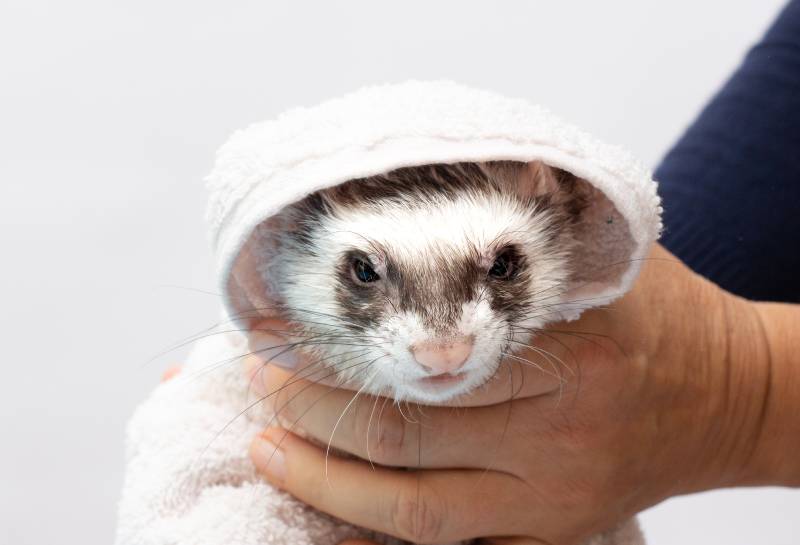
Image source: Bing (Web (fair-use with source credit))
Drying Your Ferret
Drying is just as important as the bath itself. A wet ferret gets cold quickly, which can lead to respiratory issues. Use a thick towel and gently pat your ferret dry.
Don't rub too vigorously, as this can damage the fur and irritate the skin.
Some ferrets tolerate a blow dryer on the lowest heat setting, but most absolutely hate it. Skip the dryer unless your ferret is totally comfortable with it. Towel drying combined with a warm, draft-free room is sufficient.
One final note: during the bath, check the nails. It's easier to trim them when the ferret is wet and distracted. If you're not comfortable trimming nails, do it after the bath when the ferret is tired and less squirmy.
Diet and Digestion: How Food Changes the Way Your Ferret Smells
Here's something that surprises most new ferret owners. What you feed your ferret has a massive impact on how they smell. Not just their waste, but their skin, their coat, and even their breath.
Ferrets are obligate carnivores. Their digestive systems are designed to process animal protein and fat, not carbohydrates and plant matter. When you feed them a high-quality, meat-based diet, their digestion runs efficiently, and their waste is smaller and less pungent.
When you feed them a kibble full of corn, wheat, soy, or other fillers, their bodies can't process it properly. The result is larger, smellier stools, increased gas, and a duller coat that produces more oil. All of that translates to more odor.

Image source: Bing (Web (fair-use with source credit))
What to Look for in Ferret Food
The first ingredient in any ferret food should be a named meat, such as chicken, turkey, lamb, or beef. Look for a protein content of 34% to 40% or higher. Fat content should be around 18% to 22%.
Crude fiber should be below 4%. Anything higher means the food is packed with fillers.
Avoid foods with corn, wheat, soy, or rice as any of the first five ingredients. These are cheap fillers that ferrets can't digest properly. Also avoid fruits and vegetables, which serve no nutritional purpose for ferrets and add unnecessary carbohydrates.
Ferret-specific kibbles are available, but many high-quality cat foods also meet the criteria. Some owners prefer to feed raw or freeze-dried raw diets, which more closely mimic a ferret's natural diet. If you're considering a raw diet, transition gradually over 7 to 10 days to avoid digestive upset.
How Diet Affects Skin Oil Production
Here's the direct link between food and odor. When a ferret eats a poor diet, their body tries to flush out the indigestible components. That increases oil production in the sebaceous glands.
The skin becomes greasier, the coat looks duller, and the classic musk smell becomes stronger.
When you switch to a high-quality diet, the digestive system runs efficiently. Less waste enters the system, so the skin doesn't need to work as hard. The coat becomes softer and shinier.
The natural musk level drops to baseline, which is significantly less intense than a ferret on low-quality kibble.
Aggregate reviews in ferret owner communities consistently report the same thing. Owners who switch to a high-protein diet notice a reduction in odor within 2 to 4 weeks. The "ferret smell" doesn't disappear, but it becomes much more manageable.
Transitioning Diets Safely
Never switch your ferret's food cold turkey. That's a recipe for diarrhea, which is both miserable for your ferret and catastrophic for your odor control efforts. Mix the new food in gradually.
Start with 25% new food, 75% old food for a few days. Then go 50/50. Then 75/25.
Then fully switch over.
If your ferret is a picky eater, don't panic. They won't starve themselves, but they might hold out for a while hoping for the old food. Give it a few days, and they'll eat the new stuff.
If they absolutely refuse, try a different brand that still meets the protein and fat requirements.
Monitor your ferret's poop during the transition. Loose stool is normal for the first few days as their digestive system adjusts. If it persists for more than a week, or if you notice blood or mucus, consult your exotics vet.
Ferret-Safe Odor Neutralizers and Air Purifiers
You've cleaned the bedding. You've checked the ears. You've fixed the diet.
But maybe you still want an extra layer of defense for your living space. That's where odor neutralizers and air purifiers come in.
First, let's talk about what not to use. Standard air fresheners, plug-in deodorizers, and scented candles are not your friends here. They don't eliminate the odor, they just mask it with a stronger scent.
And they release volatile organic compounds (VOCs) into the air, which is bad for both you and your ferret. Ferrets have sensitive respiratory systems, and any environmental irritants can cause coughing, sneezing, and more serious issues.
Enzymatic Cleaners
For cage cleaning and accidents outside the cage, the best tool is an enzymatic cleaner. These cleaners use live enzymes to break down organic matter, including the oils and proteins in urine, feces, and sebum. Instead of covering the smell, they actually destroy it at the source.
Look for a cleaner specifically labeled as "enzymatic" or "enzyme-based." These are commonly sold for pet accidents and are available at most pet stores. They work on both hard surfaces and soft fabrics, though they work best on hard surfaces like cage trays and litter boxes.
The usage method matters. Spray the area thoroughly and let it sit for 10 to 15 minutes. The enzymes need time to work.
Then wipe it away and rinse with water. Do not mix an enzymatic cleaner with other cleaning products, as this can render it ineffective.
Baking Soda in the Litter Box
A simple and surprisingly effective trick is adding a thin layer of baking soda at the bottom of the litter box, underneath the fresh litter. Baking soda is a natural odor absorber. It neutralizes ammonia in urine without adding any fragrance to the air.
Just make sure you use plain baking soda, not a scented version. And while it's effective, it's not a replacement for regular scooping. A clean, scooped litter box is still the number one priority.
HEPA Air Purifiers
If your ferret lives in a small apartment or a room with poor ventilation, a HEPA air purifier can make a world of difference. HEPA stands for High-Efficiency Particulate Air, and these filters capture particles like dander, dust, and other airborne allergens.
Some models also include a carbon filter, which absorbs odors and volatile organic compounds. In our research, ferret owners consistently report that a HEPA purifier with a carbon pre-filter noticeably reduces the smell in the room within a week of continuous operation.
Placement matters. Put the purifier near the cage, but not so close that it bothers your ferret. Keep it running continuously for best results.
Most units need a filter replacement every 6 to 12 months, depending on usage and how many ferrets you have.
Ventilation and Fresh Air
Sometimes the best odor neutralizer is simply fresh air. Open a window for 10 to 15 minutes a day, even in the winter. This flushes out stale air and brings in oxygen, which helps break down airborne odor particles.
If you live in a climate where you can't open a window, use a fan to circulate the air. Moving air prevents odor from settling on walls and fabrics. It also keeps your ferret's respiratory system healthy, which indirectly supports overall wellness and reduces the intensity of their natural scent.
Mistakes That Make Ferret Odor Worse
You've learned the right way to manage ferret smell. Now let's talk about the wrong way. Because here's the reality: most people who complain about ferret odor are making at least one of these mistakes without realizing it.
These aren't random errors. They're common traps that even experienced owners fall into. And each one actively makes the problem worse, not better.
Over-Bathing and the Rebound Effect
Over-bathing is the single most common mistake we see. When you bathe a ferret too frequently, you strip the natural sebum from their skin. The body detects the dryness and overcompensates by producing more oil.
Within 48 hours, the ferret smells stronger than before the bath. So you bathe again. The cycle repeats, and each time the oil production gets more aggressive.
The result is a ferret that smells terrible, a skin condition that's dry and itchy, and an owner who's frustrated. If your ferret's odor has gotten worse since you brought them home, look at your bathing schedule first. If you're bathing more than once a month, that's likely your problem.
Using Human Shampoo
Human shampoo is formulated for human skin. Our pH levels are different from ferrets, and so are our oil production patterns. When you use human shampoo on a ferret, you're stripping too much oil and disrupting the skin's natural balance.
The result is dryness, irritation, and increased oil production. That's the exact opposite of what you want.
The same goes for dish soap, which some owners use as a degreaser. Dish soap is designed to cut through grease on plates, and it's far too harsh for a ferret's delicate skin. It can cause severe irritation and even chemical burns with repeated use.
Ignoring Ear Wax Buildup
If you're cleaning the bedding weekly, bathing monthly, and the smell still lingers, check the ears. Ears are a primary odor source, yet they're also the most overlooked. Many owners simply don't know that ferret ears need regular cleaning.
They think the smell is just "how ferrets are."
If you've never cleaned your ferret's ears, try it. The smell on the cotton swab will tell you everything you need to know.
Leaving Soiled Bedding in the Cage
Ferrets sleep up to 18 hours a day. They spend most of that time in hammocks, fleece liners, and other fabric items. Those fabrics absorb sebum, dead fur, and dander like a sponge.
When you leave soiled bedding in the cage "just one more day," that's a full extra day of bacteria growth. The odor compounds multiply, and the fabric becomes increasingly difficult to clean thoroughly.
The fix is simple. Wash bedding every 3 to 5 days, not once a week or when you "remember." Set a reminder on your phone if you need to.
Using Strong Chemical Cleaners
Bleach, ammonia, and other strong chemicals leave residue on cage bars and trays. That residue is toxic to ferrets, and it doesn't actually neutralize the odor. It just covers it with a chemical smell that mixes badly with the musk.
Worse, ferrets have sensitive respiratory systems. Breathing in chemical fumes can cause coughing, sneezing, and long-term health problems. In severe cases, it can lead to pneumonia.
Instead, use ferret-safe disinfectants or a white vinegar and water solution. These clean effectively without leaving harmful residues.
Masking Odors with Fragranced Sprays
Air fresheners, scented candles, and pet-safe odor sprays don't solve the problem. They just temporarily cover it up. The irony is that these products often make things worse.
The fragrances mix with the musk, creating a bizarre cocktail that's somehow worse than either smell alone. And as we discussed, the VOCs in these products are harmful to your ferret.
If you're reaching for a spray every day, step back and reassess. The smell is telling you something is wrong in your routine. Find the source, don't cover it.
When Odor Means Trouble: Health Red Flags
You've done everything right. The bedding is clean, the ears are checked, the diet is solid. And yet, something still smells off.
Not just muskier than usual, but different.
Trust that instinct. A shift in odor can be the first sign of a health problem.
Ferrets hide illness extremely well. In the wild, showing weakness makes you prey. So they suffer quietly, and by the time you notice symptoms, the condition has often progressed significantly.
Odor changes are one of the few early warning signs they can't hide.
Sour or Unusually Foul Smells
A healthy ferret has a musky scent. It's strong, but it's not offensive. It's the smell you associate with your pet.
A sour, rancid, or unusually foul smell is different. That's not musk. That's something else.
Sour smells often indicate a bacterial infection. This could be in the ears, the skin, the reproductive tract, or the gastrointestinal system. If you notice a sudden, distinct change in odor, especially if it's accompanied by lethargy, appetite loss, or behavioral changes, contact your vet.
Adrenal Gland Disease
Adrenal gland disease is extremely common in ferrets, especially those over three years old. It's caused by tumors in the adrenal glands, which then produce excess hormones. The hormonal imbalance causes a range of symptoms, including hair loss, itching, and changes in skin odor.
Many owners describe a "sickly" or "chemical" smell that wasn't there before. It's subtle at first, but it's persistent and noticeable.
If you notice hair loss, especially around the tail, groin, or shoulders, paired with an odor change, see your exotics vet. Adrenal disease is manageable with medication or surgery, but early detection matters.
Wet Tail and Gastrointestinal Issues
Wet tail, also known as proliferative bowel disease, causes severe diarrhea. The stool is typically greenish, foul-smelling, and watery. The ferret becomes dehydrated quickly, and the smell is unmistakable.
Any episode of severe diarrhea warrants a vet visit, regardless of the cause. Gastrointestinal issues can escalate rapidly in ferrets, and fluid loss can become dangerous within 24 to 48 hours.
Urinary Tract Issues
If the smell is coming from the litter box or from your ferret's rear end, a urinary tract infection could be the culprit. UTIs cause urine to smell stronger and more offensive than usual. You might also notice blood in the urine, straining to urinate, or accidents outside the litter box.
UTIs are treatable with antibiotics, but they require a veterinary diagnosis.
When to Call an Exotic Vet
If you're in doubt, call. Ferrets are not like cats and dogs, and they require a vet with specific exotic animal expertise. A general practice vet might not recognize the subtle signs of ferret-specific diseases.
Look for a veterinarian who is a member of the Association of Exotic Mammal Veterinarians or who has experience treating ferrets specifically.
The rule of thumb is simple: if the odor change is sudden, persistent, or accompanied by other symptoms, seek professional help. It's always better to make an unnecessary trip than to miss a serious condition.
Quick Reference: Routine Schedule and Checklist
Let's put it all together in one place. Here's the complete schedule for odor management, from daily tasks to monthly maintenance.
Print this out. Stick it to your fridge. Set reminders on your phone.
Whatever works for you, just be consistent.
Daily Checklist
These are the tasks you don't skip. They take 5 to 10 minutes total, and they prevent most odor problems before they start.
- Scoop the litter box. This is non-negotiable. Ammonia buildup is the fastest way to wreck your air quality.
- Spot-clean any visibly soiled areas on the cage bars or tray.
- Run the sniff test on your ferret. Get to know their baseline smell.
- Check food and water bowls are full and clean.
Weekly Checklist
These are the deeper cleaning tasks. Set a specific day of the week for these, so they become a routine.
- Deep clean the cage. Remove everything, wash the bars and trays, and dry thoroughly.
- Wash all bedding, hammocks, and fleece liners in hot water with fragrance-free detergent.
- Wash the litter box completely and refill with fresh litter.
- Check the ferret's coat and skin for any abnormalities, like dryness, bald patches, or redness.
- Check for any signs of odor accumulation you might have missed.
Bi-Weekly Checklist
These are the tasks that are easy to forget because they don't need doing as often.
- Clean the ears. Every 1 to 2 weeks is the sweet spot.
- Trim nails if needed. This can be done during the ear cleaning session to save time.
Monthly Checklist
These are the less frequent maintenance tasks.
- Bathe the ferret if needed. Remember, every 4 to 8 weeks is plenty. Most ferrets need it closer to the 8-week mark.
- Wash the water bottle or water bowl thoroughly.
- Inspect the cage for wear and tear, broken parts, or sharp edges.
- Check the air purifier filter, if you have one. Replace if needed.
Product Checklist for New Owners
If you're just setting up a ferret's home, here's the list of supplies you'll need to manage odor effectively.
| Product | Purpose | Frequency of Use |
|---|---|---|
| Enzymatic cleaner | Break down organic stains and odors | Weekly deep clean |
| Ferret-safe disinfectant | Sanitize cage bars and trays | Weekly |
| Fragrance-free laundry detergent | Wash bedding without residue | Every 3-5 days |
| White vinegar | Natural odor neutralizer | Weekly |
| Baking soda | Absorb litter box odors | Weekly |
| Ferret-specific ear cleaner | Manage ear wax buildup | Every 1-2 weeks |
| Ferret-safe shampoo | Occasional bathing | Every 4-8 weeks |
| HEPA air purifier | Filter airborne dander and odors | Continuous operation |
Frequently Asked Questions
How often should I bathe my ferret to reduce odor?
Bathe your ferret every 4 to 8 weeks at most. Bathing more frequently strips natural skin oils, which causes the body to produce excess oil. That excess oil makes the ferret smell stronger, not weaker.
Focus on bedding changes and ear cleaning instead.
Does descenting a ferret eliminate the smell?
No. Descenting removes the anal scent glands, but it doesn't address the primary odor source. Ferret musk comes from sebaceous glands in the skin, not the anal glands.
A descented ferret still has a distinct musky smell. The procedure is also considered unnecessary by many veterinarians.
Can I use human shampoo on my ferret?
No. Human shampoo is formulated for human skin pH levels, which differ from a ferret's. Using it strips natural oils too aggressively, causing dry skin and increased oil production.
Use a shampoo specifically formulated for ferrets or small animals, preferably oatmeal-based and fragrance-free.
How often should I wash my ferret's bedding?
Wash all bedding, hammocks, and fleece liners every 3 to 5 days. Fabric absorbs sebum, dander, and dead fur, which become the primary source of stale odor. Use hot water and a fragrance-free, dye-free detergent.
Add white vinegar to the rinse cycle for extra odor neutralization.
Why does my ferret smell worse after a bath?
This is the oil rebound effect. Bathing strips the skin's natural sebum, and the body responds by overproducing oil to compensate. Within 48 hours, the ferret smells stronger than before.
If this happens, extend the time between baths and focus on other odor sources like ears and bedding.
When should I worry about my ferret's smell?
If the odor changes suddenly, becomes sour or foul, or is accompanied by other symptoms like hair loss, lethargy, or appetite loss, seek veterinary care. These can signal adrenal disease, ear infections, or gastrointestinal issues. Ferrets hide illness well, so odor changes are a valuable early warning sign.
Final Verdict: My Honest Take on Odor Management
So, what's the bottom line here? Can you really reduce ferret odor to a manageable level?
Yes. Absolutely yes. But it takes consistent effort, not a single solution.
Here's what actually works, based on our research and aggregate veterinary guidance. The biggest wins come from washing bedding every 3 to 5 days, cleaning ears every 1 to 2 weeks, and feeding a high-protein diet. These three habits address the actual source of the smell.
Everything else is just fine-tuning.
Bathing is overrated. It should be occasional, not frequent, and it should never be your primary odor control method. If you find yourself bathing more than once a month, you're working against your ferret's biology.
Air purifiers and enzymatic cleaners are useful supplements, but they're not fixes. They help maintain a fresher environment, but they can't compensate for a poor cleaning routine or a bad diet.
What's Overhyped and Unnecessary
Let's be honest about some things you can skip. Scented deodorizing sprays are a waste of money. They don't neutralize odor, and they can harm your ferret.
Overpriced grooming wipes are also mostly unnecessary. A damp towel works just as well for spot cleaning.
Ferret "cologne" or "perfume" products are the biggest waste of all. These are designed to make your ferret smell like lavender or vanilla. But they're just cover-ups, and most ferrets hate the sensation of being sprayed.
Skip them entirely.
The Realistic Expectation
Here's the truth you need to accept before getting a ferret. Ferrets have a natural musky scent. It's part of their biology, and it's not going to disappear completely.
Even with perfect care, you'll have a ferret that smells like a ferret.
That's not a bad thing. It's a manageable scent, not an overwhelming stench. It's the smell of a healthy, well-cared-for animal.
If you want a completely odorless pet, a ferret isn't for you.
But if you can handle a mild, musky baseline, the strategies in this article will keep things under control. You'll have a happy, healthy ferret and a living space that doesn't reek. That's the goal.
And it's completely achievable.
The Bottom Line
Consistency beats intensity. A 5-minute daily routine, a 30-minute weekly deep clean, and the occasional ear cleaning and bath will keep your ferret smelling fresh. Fix the diet, wash the bedding, and check the ears.
Everything else follows from there.
If you do all of this and the smell still seems too strong, don't reach for more products. Talk to your vet. There might be an underlying health issue.
But in most cases, the routine in this article will get you where you need to be.