
Your cat has been obsessively licking, biting, and pulling out chunks of fur. You've found bald patches on their belly, legs, or back, and you're wondering why is my cat pulling out its fur. It's stressful to watch, and it's easy to assume the worst.
But here's the thing: this behavior is common, and in most cases, it's very treatable once you understand the root cause.
The challenge is that fur pulling isn't a single disease. It's a symptom with multiple possible triggers, ranging from a simple flea problem to a behavioral condition called psychogenic alopecia. According to the Cornell University College of Veterinary Medicine, over-grooming is one of the top three reasons cats are brought in for dermatology consults.
So you're not alone, and there's a clear path forward. Let's walk through it step by step, so you can figure out what's going on and get your cat back to a healthy, comfortable coat.

Image source: Bing (Web (fair-use with source credit))
Quick Answer
Cats pull out their fur due to medical issues or stress. Fleas and allergies are the most common culprits. Pain and anxiety also trigger over-grooming.
A vet visit is essential to diagnose the cause. Treatment ranges from flea control to diet changes or medication.
Why This Matters More Than You Think (And When to Worry)
The first thing to understand is that a cat pulling out fur is never "normal" grooming. Cats are meticulous self-groomers, sure, but there's a huge difference between a thorough bath and obsessive, destructive licking. When a cat over-grooms to the point of hair loss, they're telling you something is wrong.
It's their way of coping with irritation, pain, or stress.
Here's why you shouldn't just "wait and see":
- Hairballs and blockages: All that swallowed fur has to go somewhere. Excessive grooming leads to more hairballs, and in severe cases, a gastrointestinal blockage that requires surgery.
- Skin infections: When the skin barrier breaks down from constant licking, bacteria and yeast move in. What started as a simple itch can become a painful, infected mess.
- The underlying issue gets worse: If the cause is medical, like hyperthyroidism or a food allergy, delaying treatment means the cat suffers longer.
- Behavioral habits can become ingrained: The longer a cat practices over-grooming, the more it becomes a hardwired habit, even after the original trigger is resolved.
So, when is it urgent? If your cat is pulling out fur and also showing any of these signs, call your vet the same day:
- Open sores, bleeding, or crusty lesions on the skin
- Lethargy or noticeable weight loss
- Increased thirst and urination
- Vomiting or diarrhea
- A swollen or painful abdomen
- Sudden, dramatic hair loss (large patches overnight)
If it's just gradual thinning or a small bald patch, you have a little more time, but you still shouldn't wait more than a week or two to get it checked. Early diagnosis is always easier and cheaper than treating a secondary infection.
The 5 Most Common Causes of Fur Pulling in Cats
Let's break down the main reasons cats pull out their fur. Understanding these helps you have a smarter conversation with your vet and makes you a better observer of your cat's behavior.
Fleas and Parasites: The #1 Culprit
This is the most common cause, and it's the first thing a vet will rule out. You might be thinking, "But my cat is indoor-only, they can't have fleas." That's the most common misconception in feline medicine. Indoor cats get fleas all the time.
You can track them in on your shoes, pants, or through a screened window. Other pets in the house can bring them in. And it only takes one or two flea bites to trigger a severe allergic reaction.
This is called Flea Allergy Dermatitis (FAD). Most cats eat fleas while grooming, so you might never see a live flea. Instead, you'll see:
- Small bald patches, especially at the base of the tail, lower back, and inner thighs
- Red, raised, crusty bumps (miliary dermatitis)
- Excessive scratching and biting at the skin
- "Flea dirt": tiny black specks that look like ground pepper. If you brush your cat over a white paper towel and dampen the specks, they turn rusty red, that's digested blood.
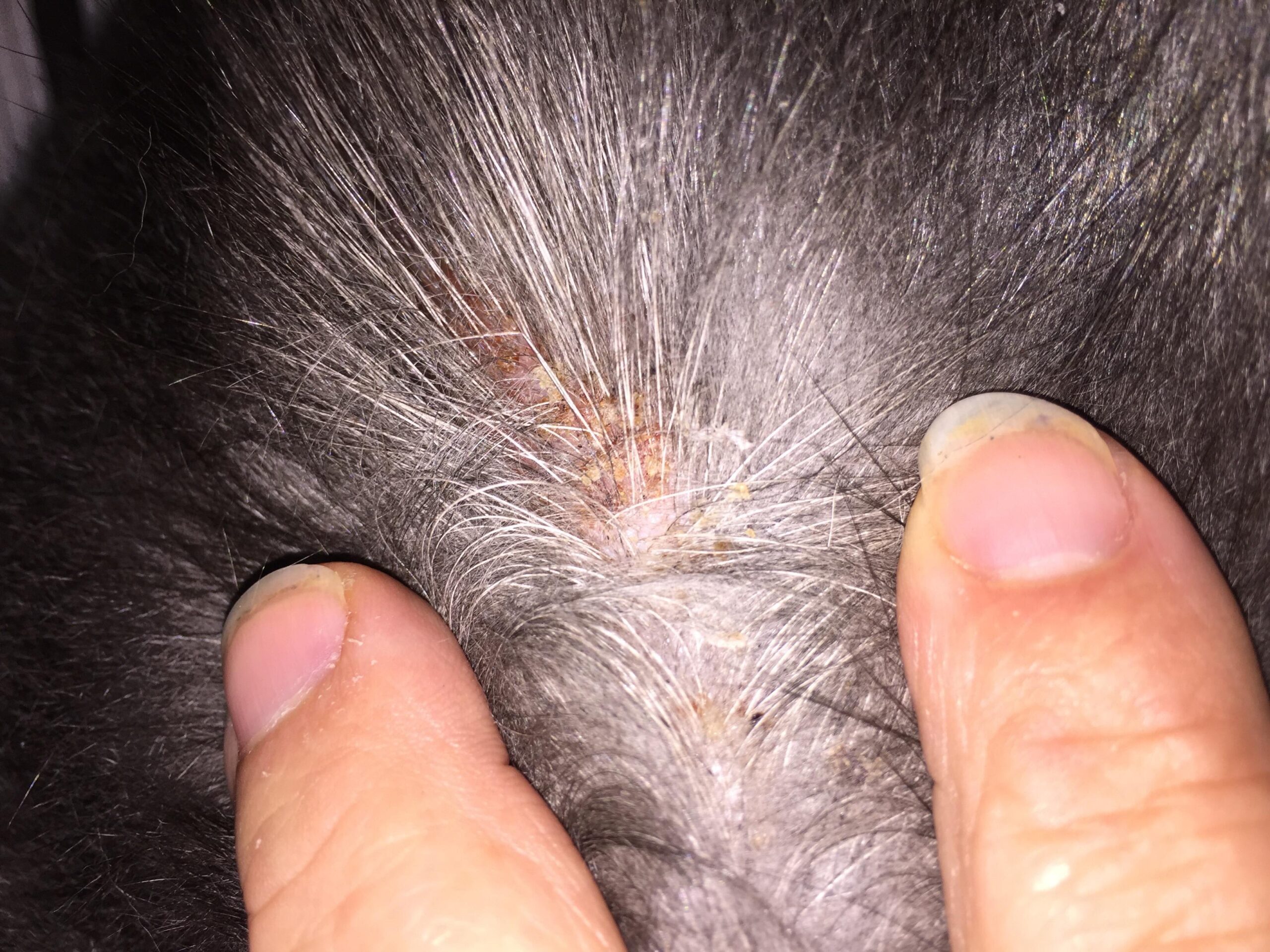
Image source: Bing (Web (fair-use with source credit))
The tricky part is that the itch from FAD is intense. A single flea bite can cause a cat to scratch and bite for days. Treatment means rigorous flea control for all pets in the house, plus treating the environment.
That's a topical or oral flea preventative year-round, not just in summer, and vacuuming and washing bedding regularly.
If fleas are ruled out, the next suspects are usually external parasites like ear mites, Cheyletiella (walking dandruff), or even demodectic mange, though these are less common in cats.
Allergies: Food, Environmental, and Contact
If fleas aren't the issue, allergies are the next big category. Cats get allergies just like people, but instead of sneezing, they show it on their skin. This is called allergic dermatitis.
The two main types are food allergies and environmental allergies (atopy).
Food allergies in cats are usually triggered by a specific protein source. The most common offenders are chicken, beef, fish, and dairy. Symptoms often appear between 6 months and 3 years of age, but they can develop at any time, even after years of eating the same food without issues.
The classic signs include:
- Symmetrical hair loss on the belly and inner thighs
- Redness and irritation around the face, ears, and neck
- Chronic ear infections that keep coming back
- Itchy, inflamed paws (pododermatitis)
Environmental allergies are reactions to things in the air, like pollen, dust mites, mold, or grass. Unlike food allergies, these often cause seasonal flare-ups, though in some cats, they're year-round. The patterns of hair loss can be similar, but cats with environmental allergies often have more generalized itching, especially on the face and neck.
Contact allergies are less common but possible. This is a reaction to something the cat's skin physically touches, like a specific type of litter, a new carpet cleaner, or a synthetic fabric. The hair loss is usually localized to the area that touched the allergen, like the paws or the belly.
The tricky part with allergies is that they're a diagnosis of exclusion. You can't just guess and start changing things randomly. A vet will typically rule out fleas first, then parasites, then fungal infections, and only then start talking about allergy testing or a food trial.
Stress and Anxiety: Psychogenic Alopecia Explained
When medical causes are ruled out, the next suspect is behavioral. This is called psychogenic alopecia, and it's an over-grooming behavior driven by stress, anxiety, or boredom. Cats are creatures of routine.
When their world feels unstable, they often redirect that nervous energy into repetitive behaviors, and grooming is the most common one.
Think of it like a human biting their nails or picking at their skin. It's a coping mechanism. Cats who develop this are often:
- Highly sensitive to change: A new baby, a new pet, a move, or even a change in your work schedule can trigger it.
- Undersocialized or bored: Cats who are left alone for long hours without enough enrichment can develop obsessive behaviors.
- In a multi-cat household with tension: Resource guarding, bullying, or simply not having enough vertical space can create chronic stress.
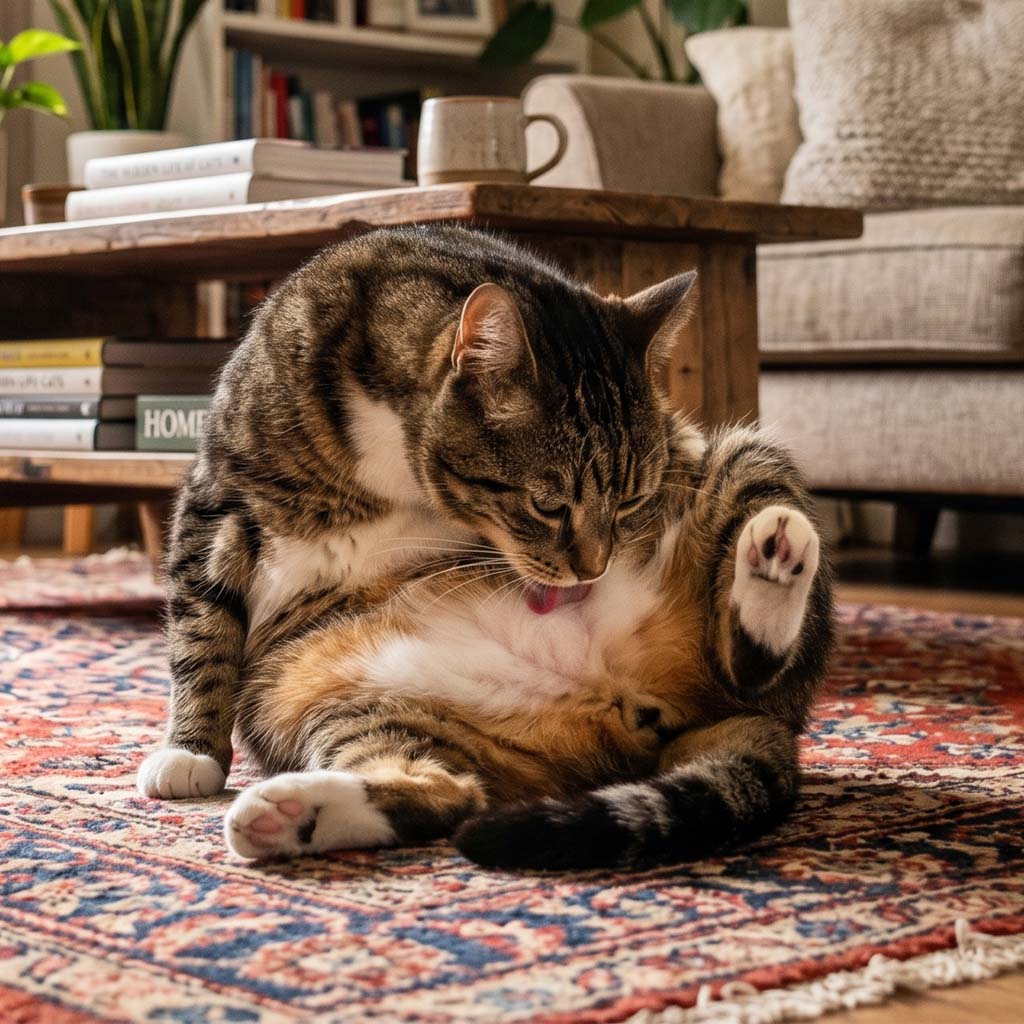
Image source: Bing (Web (fair-use with source credit))
The classic presentation is symmetrical hair loss on the belly, inner thighs, and sometimes the front legs. The skin itself looks normal, no redness, no scabs, no fleas, and you'll often see the cat grooming in a very focused, almost trance-like state.
The challenge with psychogenic alopecia is that it's a diagnosis of exclusion. Your vet will rule out everything medical first, because the symptoms look identical. Only once the medical workup is clear will they consider a behavioral cause.
And even then, it's not purely a "mental" problem. The itching can start from a physical trigger, like a mild allergy, and then become a habit that persists even after the physical trigger is gone. This is called the "itch-scratch-itch cycle," and it's a key reason why skin issues in cats can be so stubborn.
Pain or Discomfort: The Hidden Cause
Cats are masters of hiding pain. They're prey animals, and showing weakness makes them vulnerable. So instead of limping or crying out, they often express discomfort in subtle ways, and over-grooming is one of them.
It's a way of trying to soothe the pain, or it's a displacement behavior, a way of distracting themselves.
This is especially common in older cats with arthritis. The pain in their hips or spine makes it uncomfortable to sit or move, and they'll lick at the joint area obsessively. You might notice the fur is thinning or missing over a specific joint, like the knee or the lower back, rather than in a symmetrical pattern.
Other sources of pain that trigger over-grooming include:
- Dental disease: A sore tooth can cause a cat to rub or lick at their face and jaw.
- Urinary tract issues: Feline idiopathic cystitis (FLUTD) is a painful bladder condition that's often stress-related, and cats with it may groom their belly or genitals excessively.
- Internal discomfort: A cat with nausea, inflammatory bowel disease, or even constipation may lick their abdomen in an attempt to soothe the cramping.
If you notice your cat over-grooming a specific area and they're also slowing down, jumping less, or showing sensitivity when touched, pain should be high on your list of suspects. This is especially true for senior cats, where arthritis is nearly universal.
Underlying Medical Conditions: Thyroid, Infections, and More
Sometimes, fur pulling is a symptom of a systemic medical condition, not a skin problem at all. This is why a full veterinary workup is so important.
Hyperthyroidism is a common one, especially in cats over 10 years old. This is when the thyroid gland produces too much thyroid hormone, which dramatically speeds up the metabolism. Cats with hyperthyroidism often groom excessively, but they also show other signs:
- Weight loss despite a ravenous appetite
- Increased thirst and urination
- Vomiting
- Hyperactivity (some cats become more vocal or restless)
- A dull, unkempt coat
Another cause is feline hyperesthesia syndrome, a rare but fascinating condition. It's characterized by extreme sensitivity in the skin, especially along the back. The cat may twitch, the skin rippling, and then suddenly turn and bite or lick at the area.
This can look like frantic grooming, and it can cause significant hair loss.
Fungal infections, like ringworm (which is actually a fungus, not a worm), can also cause hair loss and itching. Ringworm usually causes circular bald patches, especially on the head, ears, and paws. It's highly contagious to humans and other pets, so it needs a specific diagnosis and treatment.
Finally, bacterial infections (pyoderma) and yeast infections (Malassezia) can cause intense itching. These are usually secondary to one of the other causes, like an allergy or flea infestation, where the cat's own scratching creates an entry point for bacteria.
The takeaway here is that fur pulling is rarely a simple, surface-level problem. It's a clue pointing to something deeper, and your vet is the detective who puts it together.
How to Tell If It's Medical or Behavioral (Red Flags to Watch For)
This is the question every owner asks. And here's the honest answer: you can't reliably tell on your own. The symptoms overlap so much that even veterinarians need diagnostic tests to differentiate them.
However, there are some clues that can give you a better idea before you head to the clinic.
- Pattern of hair loss: Symmetrical hair loss on both sides of the belly is more common in behavioral issues or hormonal problems. Patchy, irregular bald spots are more likely to be parasites or fungal infections. Hair loss confined to a single joint or limb points more toward pain.
- Skin appearance: If the skin looks totally normal, with no redness, scabs, or bumps, that's slightly more suggestive of behavioral over-grooming. If the skin is inflamed, crusty, or has black specks, medical causes are more likely.
- Timing and season: If the issue flares up in spring and summer, environmental allergies are a strong possibility. If it started shortly after a big life change, like a move or a new pet, stress is the likely trigger.
- Response to anti-itch medication: Vets often use a short course of steroids or other anti-itch drugs as a diagnostic tool. If the grooming stops dramatically on steroids, it's a strong indicator of an allergic cause. If it doesn't respond at all, that's more suspicious of a behavioral or pain issue.
- Presence of other symptoms: Weight loss, increased thirst, vomiting, or a change in energy levels point toward systemic medical conditions like hyperthyroidism. Boredom and excessive sleeping, without any other symptoms, suggest a behavioral cause.
- Age: Kittens and young adults are more likely to have allergies or parasites. Middle-aged to senior cats are more likely to have pain, thyroid issues, or chronic behavioral habits.
Here's a quick reference table to help you organize what you're seeing:
| Sign | More Likely Medical | More Likely Behavioral |
|---|---|---|
| Hair loss pattern | Patchy, asymmetric, or localized to one joint | Symmetrical on belly and inner thighs |
| Skin appearance | Redness, scabs, bumps, flea dirt | Normal, healthy-looking skin |
| Seasonality | Flares in spring/summer | Year-round, or linked to a specific event |
| Other symptoms | Weight loss, vomiting, increased thirst | No other symptoms; cat seems otherwise healthy |
| Response to play | No change in grooming behavior | May pause grooming when distracted |
That said, don't rely on this table to make a diagnosis. It's a tool to organize your observations so you can give your vet a clear history. The definitive answer requires professional diagnostics.
Step-by-Step: What to Do Before You Call the Vet
You can do a few things at home before the vet visit. These won't diagnose the problem, but they'll help your vet work faster and can rule out some causes right away. Think of it as gathering evidence for your consultation.
Step 1: Document what you're seeing
Take a clear photo of the affected area and keep a log. Note down:
- When you first noticed the hair loss
- Which specific spots are affected
- Whether it's getting worse or staying the same
- How often your cat grooms the area (hourly, daily, only at night?)
- Any other changes in appetite, water intake, litter box habits, or energy levels
- Any recent changes in your home (new pet, new people, moving, furniture changes, construction noise)
This history is the single most valuable thing you can bring to the vet appointment.
Step 2: Check for fleas, right now
Even if you don't think your cat has fleas, do a quick check. Use a fine-toothed flea comb and thoroughly comb your cat, especially over the lower back and base of the tail. Look for live fleas, which are tiny, fast-moving brown insects.
More likely, you'll see flea dirt.
- Take what you find and place it on a damp white paper towel.
- If it creates a rust-red stain, it's flea dirt. That confirms fleas have been biting your cat.
If you find flea dirt, you've likely solved the mystery. But don't assume it's the only problem. Cats with a severe flea allergy can have secondary skin infections that also need treatment.
Step 3: Do a gentle self-exam
Carefully part the fur on the bald patches and surrounding areas. Look for:
- Redness or inflammation
- Crusts, scabs, or raised bumps
- Black specks (flea dirt)
- Dry, flaky skin
- Ring-shaped lesions with a clearing in the center (a possible sign of ringworm)
- Any swelling or tenderness when you touch areas near joints
Don't scrub or clean the area with anything before your vet sees it. You don't want to wash away evidence.
Step 4: Check the food you're feeding
Write down the exact brand and flavor of food you're feeding, both wet and dry. If you've recently switched brands, note that. This is critical for a food trial later.
Don't change anything yet, just document it. If you free-feed (leave food out all day), note that too, because portion control matters for allergy trials and for diagnosing conditions like hyperthyroidism.

Image source: Bing (Web (fair-use with source credit))
Step 5: Don't try home remedies
This is the biggest mistake owners make. Do not apply human anti-itch creams, essential oils, or over-the-counter flea treatments meant for dogs. Many of these are toxic to cats.
Even seemingly harmless things, like a bit of hydrocortisone cream, can taste terrible and cause your cat to drool or vomit when they lick it off. Essential oils, especially tea tree oil and citrus oils, are outright poisonous to cats.
Also, don't put a cone on your cat unless your vet tells you to. It can help with the self-trauma, but it doesn't fix the underlying cause, and the stress of wearing it might make anxiety worse. Save the cone for after the vet visit, if they prescribe it.
Step 6: Call your vet and describe what you've found
Now you're ready to make that call. Be specific:
- "My cat has a bald patch on their belly."
- "I found what looks like flea dirt near the base of the tail."
- "My cat is licking their paws obsessively and they're red."
- "The hair loss is symmetrical on both inner thighs, and the skin looks normal."
This gives your vet a head start. They'll likely ask you to come in, or they might ask you to try a specific flea treatment first before scheduling an appointment. Either way, you've done the right prep work.
Here's a quick checklist to keep handy:
- Take photos of the affected areas
- Count how often your cat grooms the spot
- Note any changes in the home environment recently
- Check for fleas with a fine-toothed comb
- Write down the exact food brand and flavor
- Do NOT apply any OTC creams, oils, or flea meds
- Call the vet with your findings
What Happens at the Vet Visit (And What Tests to Expect)
When you bring your cat in, the vet will start with a thorough physical exam. They'll look at the pattern of hair loss, check the skin for signs of inflammation, and palpate your cat's body for any pain, swelling, or abnormalities. They'll also ask you the questions you've already prepared to answer, which is why your documentation is so valuable.
From there, the vet will likely run a series of diagnostic tests. Here's what you can expect:
1. Flea comb and skin cytology
The vet will do their own flea check, even if you did one at home. Then they'll gently press a piece of clear tape against the skin and look at it under a microscope. This is called a cytology, and it can reveal bacteria, yeast, or inflammatory cells.
It's quick, painless, and gives immediate results.
2. Skin scraping
For suspected parasites like mange mites, the vet will scrape a small area of skin with a blade to collect samples. This is mildly uncomfortable, but it's over in seconds and doesn't require sedation.
3. Fungal culture
If ringworm is suspected, the vet may pluck some hairs from the edge of a bald patch and place them in a special culture medium. This takes a week or two to grow, but it's the definitive test for ringworm. Some clinics also use a Wood's lamp, which makes certain ringworm species glow under UV light, though it's not foolproof.
4. Bloodwork
For cats with other symptoms like weight loss, increased thirst, or vomiting, bloodwork is essential. A complete blood count (CBC) and a chemistry panel will check organ function and look for abnormalities. A specific thyroid hormone test (T4) will diagnose or rule out hyperthyroidism.
5. Allergy testing
If fleas, parasites, and infections are ruled out, your vet might discuss allergy testing. This can be done through a blood test or intradermal skin testing, where tiny amounts of allergens are injected under the skin. These tests are more commonly referred to veterinary dermatologists.
6. Food elimination trial
If a food allergy is suspected, your vet will recommend a strict food trial. This means feeding your cat a novel protein (like rabbit, duck, or venison) or a hydrolyzed protein diet (where the protein is broken down into pieces too small to trigger an allergic reaction) for 8 to 12 weeks. It has to be strict, no treats, no table scraps, no flavored medications.
If the itching resolves during this period, a food allergy is confirmed.
Don't be afraid to ask your vet about costs upfront. Diagnostic workups for skin issues can range from $150 to $500 depending on what's included. You can ask for a written estimate before any testing is done.
Mistakes Owners Make That Make It Worse
There's a lot of well-meaning advice out there that can actually backfire. Here are the biggest mistakes to avoid:
1. Assuming it's just anxiety and giving calming treats
Calming supplements and pheromone diffusers have their place, but they won't fix a flea infestation or a food allergy. If you skip the vet and go straight to anxiety treatment, you're delaying real relief for your cat.
2. Switching foods randomly
Owners often switch from chicken-based food to salmon-based food, then to turkey, hoping something helps. This doesn't work because most commercial foods share common ingredients, and it's random. A proper food trial requires a single, novel, or hydrolyzed protein source, fed exclusively, for 8 to 12 weeks.
3. Stopping flea prevention in winter
Fleas thrive indoors in heated homes, so they're a year-round problem in most places. Stopping prevention in the colder months leaves your cat vulnerable. The American Veterinary Medical Association recommends year-round flea control for all pets.
4. Using dog flea medication on a cat
This can be fatal. Certain ingredients in dog flea products, like permethrin, are highly toxic to cats. Always read labels and ensure you're buying a product specifically approved for cats.
5. Applying essential oils or human creams
Cats lack the liver enzymes to break down many essential oil compounds. Tea tree oil, eucalyptus, and citrus oils can cause drooling, vomiting, tremors, and even liver failure. Human creams often contain steroids or other ingredients that aren't safe for cats to ingest.
6. Waiting too long to see the vet
A small bald patch can turn into a full-scale skin infection in a matter of weeks. The longer you wait, the longer the treatment timeline and the higher the cost. Early intervention always wins.
How Long Until You See Improvement? Timelines That Are Realistic
One of the most frustrating parts of treating fur pulling is waiting to see results. Here's what you can realistically expect, depending on the cause:
| Cause | Time to Improvement | Notes |
|---|---|---|
| Flea allergy dermatitis | 1 to 2 weeks | Rapid improvement once all fleas are killed and prevention starts |
| Food allergy | 8 to 12 weeks | Requires a strict elimination diet trial |
| Environmental allergy | 2 to 4 weeks | Often responds to meds like steroids or allergy shots, but won't ever be "cured" |
| Bacterial/yeast infection | 2 to 4 weeks | Needs antibiotics or antifungals, often with a follow-up recheck |
| Psychogenic alopecia | 1 to 3 months | Is a diagnosis of exclusion. Behavioral modification and meds take time. |
| Hyperthyroidism | 1 to 2 months | Requires medication, radioactive iodine therapy, or surgery. Hair regrowth happens once hormone levels stabilize. |
| Pain/arthritis | 2 to 4 weeks | Pain meds and joint supplements can reduce over-grooming once the pain is managed. |
Hair regrowth is a slow process. Even after the underlying cause is treated, it can take several weeks for the fur to grow back fully. If your cat continues to over-groom despite treatment, go back to your vet.
It may mean the diagnosis was incomplete, or a secondary issue has developed.
Preventing Relapses: Long-Term Care for a Happy, Healthy Coat
Once you've got the root cause under control, the goal is to keep it that way. Here's how to avoid a relapse.
For allergy-prone cats:
- Stick to the food trial results. If you confirmed a chicken allergy, don't sneak in chicken-flavored treats.
- Keep fleas off year-round. Even if you live in a dry climate, use a preventative.
- Wash your cat's bedding weekly in hot water. This reduces dust mites and environmental allergens.
- Use an air purifier if pollen or dust is a trigger. It helps, though it's not a cure.
For anxiety-prone cats:
- Maintain a consistent routine for feeding, play, and quiet time. Cats thrive on predictability.
- Add vertical space like cat trees and shelves. This gives your cat an escape route and a sense of control.
- Provide puzzle feeders to engage their hunting instincts and reduce boredom.
- Try a pheromone diffuser like Feliway. It's not a cure, but it creates a sense of calm.
- Spend at least 15 minutes a day in interactive play. Laser pointers, feather wands, and treat-dispensing toys are great.
For senior cats:
- Provide easy access to elevated spots like ramps or steps. This reduces the frustration of jumping, which can trigger pain-related grooming.
- Consider joint supplements like glucosamine and chondroitin. Talk to your vet about the right kind and dose.
- Schedule regular bloodwork to catch conditions like hyperthyroidism before they wreak havoc on the coat.
Frequently Asked Questions
Can stress alone cause a cat to pull out its fur?
Yes. Psychogenic alopecia is a real condition where stress or anxiety leads to over-grooming and hair loss. However, it's a diagnosis of exclusion.
Your vet must rule out fleas, allergies, infections, and pain before concluding the cause is behavioral.
How can I tell if my cat has fleas if I can't see them?
Cats are excellent groomers and often eat fleas before you spot them. Look for flea dirt instead: tiny black specks near the skin. Place them on a damp white paper towel.
If they turn rust-red, it's digested blood, a reliable sign of fleas.
What is the best treatment for a cat pulling out its fur?
There is no single best treatment. It depends on the cause. Fleas require year-round prevention and environmental control.
Food allergies require an elimination diet. Anxiety requires behavioral changes and possibly medication. A vet must confirm the diagnosis first.
Is fur pulling in cats an emergency?
Not always, but it can be. If your cat has open sores, bleeding, lethargy, weight loss, or sudden dramatic hair loss, call your vet immediately. Gradual thinning or a small patch can wait a week or two, but don't delay indefinitely.
Can an indoor cat have a flea allergy?
Absolutely. Indoor cats get fleas from other pets, on your clothing, or through screens. It takes only one or two bites to trigger a severe allergic reaction.
Flea prevention should be a year-round routine for all cats, regardless of whether they live indoors.
Will my cat's fur grow back after over-grooming?
Yes, in most cases. Once the underlying cause is treated and your cat stops damaging the hair follicles, fur regrows within a few weeks to a couple of months. If the skin was severely damaged, it might take longer, but full regrowth is common.
Final Takeaway: Your Action Plan for Today
We've covered a lot here, so here's your simple checklist to act on today:
If you're seeing gradual hair loss and your cat otherwise seems fine:
- Take photos and note the pattern.
- Check for fleas with a comb.
- Document your cat's food, behavior, and recent home changes.
- Book a vet appointment within the week.
- Don't apply any home remedies.
If your cat has open sores, weight loss, vomiting, or sudden dramatic hair loss:
- Skip the home investigation.
- Call your vet right now.
- Describe the symptoms clearly.
- Follow their immediate advice.
This problem is rarely a dead end. It's a puzzle, and with your vet's help, you can solve it. A cat with a healthy, full coat is just a few weeks away with the right diagnosis and treatment.