
Summer dog grooming should be shorter, cooler, and easier to stop. Brush during cooler parts of the day, keep shade and water nearby, use airflow instead of heat for drying, check paws after hot surfaces, and do not use grooming as a way to treat overheating, burns, wounds, or breathing trouble.
This is routine grooming guidance, not heatstroke treatment or medical cooling advice. If your dog seems overheated, weak, distressed, painful, burned, injured, or medically fragile, stop grooming and contact a veterinarian.
Summer Grooming Priorities
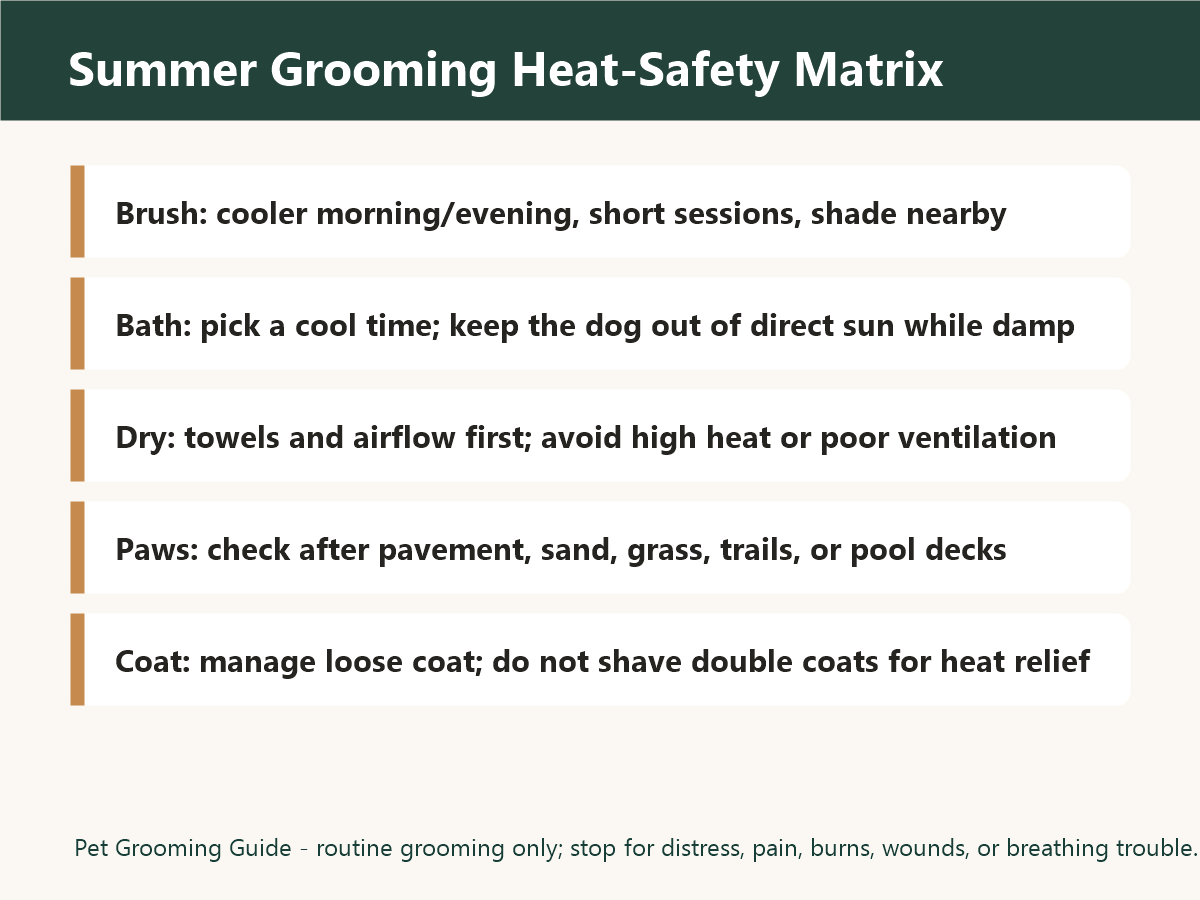
In summer, the goal is comfort and inspection, not a long perfect session. A simple routine focuses on cooler timing, gentle loose-coat work, safe drying, paw checks, and clear stop signs.
| Summer issue | Routine grooming step | Stop if |
|---|---|---|
| Hot part of the day | Move brushing or bathing to a cooler time. | Your dog is panting hard, weak, distressed, or unable to settle. |
| Loose coat and shedding | Use short brushing sessions with breaks. | Skin turns red, the dog flinches, or the coat is matted tight. |
| Bath day | Use comfortable water and dry with towels and airflow. | The setup is hot, poorly ventilated, or the dog cannot cool down. |
| Paws after outdoor time | Check pads and toe gaps; wipe routine dirt. | Burns, swelling, limping, wounds, or pain appear. |
| Double coat | Brush and comb-check loose coat. | You are considering shaving for heat relief without pro guidance. |
Brush Timing and Loose-Hair Control
Brush when your dog is cool and settled. For many homes, morning or evening is easier than the hottest part of the day. Keep sessions short, work in small zones, and stop before the dog becomes restless or stressed.
Do not force a long brushing session in hot weather. Severe mats, skin-close mats, pain, redness, or unsafe handling belong with a qualified groomer or veterinarian, not a harder brush stroke.
Bath Timing and Drying Without Heat
If your dog needs a summer bath, choose a cooler time and a comfortable indoor or shaded setup. Dry with towels and airflow before using any heat. AKC drying guidance notes that airflow, not heat, dries fur, and heat can burn skin.
Do not use a dryer in a hot, poorly ventilated room. Stop if your dog pants heavily, becomes weak, seems distressed, or cannot settle.
No-Shave Boundary for Double Coats
Do not routinely shave a double-coated dog for summer heat relief. AKC guidance on double-coated dogs explains that shaving removes both undercoat and topcoat layers. For routine summer grooming, manage loose coat with gentle brushing and comb checks instead.
If shaving or clipping seems necessary because of mats, skin problems, heat-risk concerns, or medical needs, ask a qualified groomer or veterinarian who can see the individual dog.
Paws, Pavement, and Outdoor Checks
After summer walks, yard time, pavement, trails, sand, or pool decks, check paw pads, toe gaps, nails, belly, tail, and friction areas. Routine dirt can be wiped away. For a detailed cleanup routine, use the guide on how to clean dog paws after a walk.
Do not scrub burns, wounds, swollen pads, painful paws, or limping. Those are veterinary stop signs.
Heat, Shade, Water, and Session Length
ASPCA hot weather safety guidance emphasizes shade, water, and avoiding extreme heat. For grooming, that means you should plan the setup before you start: cooler time, water nearby, airflow, breaks, and a clear end point.
Keep the routine practical. A short brush, paw check, and comfort check are better than pushing through a full grooming plan when the dog is hot or unsettled.
Stop Signs: Overheating, Burns, Wounds, and Distress
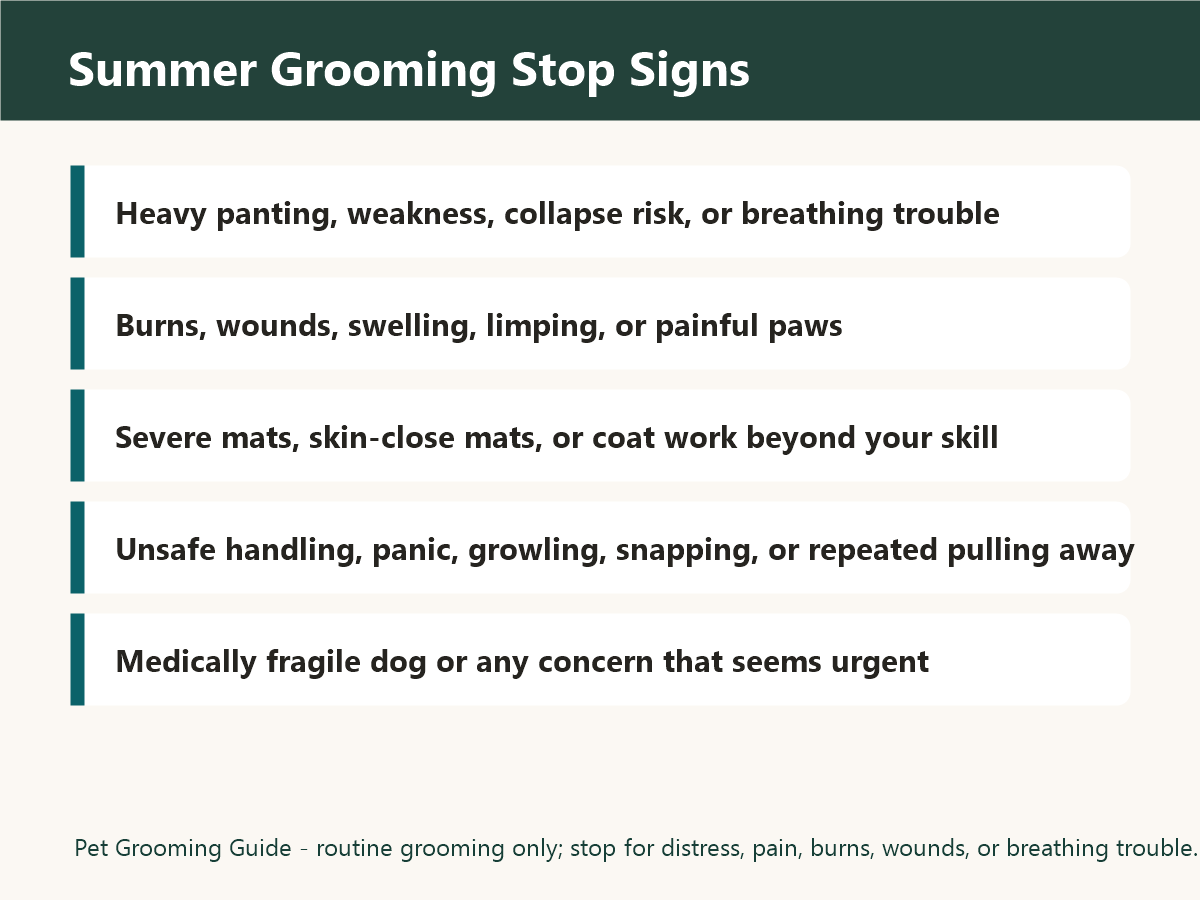
Stop grooming when the issue is no longer routine coat, paw, dirt, or bath care. Do not try to solve heat illness, burns, wounds, breathing trouble, collapse risk, or severe distress as a grooming task.
| Stop sign | Safer next step |
|---|---|
| Heavy panting, weakness, collapse risk, or breathing trouble | Stop grooming and contact a veterinarian or emergency veterinary service. |
| Burns, wounds, swelling, limping, or painful paws | Stop grooming and use veterinary guidance. |
| Severe mats, skin-close mats, or painful coat work | Use a qualified groomer or veterinarian. |
| Panic, growling, snapping, or unsafe handling | Stop and get help before continuing. |
| Medically fragile dog or unusual summer behavior | Ask a veterinarian for individual guidance. |
FAQ
How should I groom my dog in summer?
Use cooler timing, short brushing sessions, shade, water access, airflow for drying, paw checks after outdoor surfaces, and stop signs for distress, burns, wounds, pain, breathing trouble, or severe mats.
Should I shave my dog in summer?
Do not routinely shave double-coated dogs for heat relief. Ask a qualified groomer or veterinarian if mats, skin problems, or medical needs make coat removal seem necessary.
When is it too hot to groom a dog?
If your dog is panting hard, weak, distressed, breathing poorly, painful, unable to settle, or medically fragile, stop grooming and get veterinary guidance.
Can I blow dry my dog in summer?
Only if the setup is cool, ventilated, and your dog tolerates it. Use airflow rather than high heat, and stop if the dog shows distress or cannot cool down.
What summer grooming signs need a vet?
Use a veterinarian for overheating concern, breathing trouble, weakness, collapse risk, burns, wounds, swelling, limping, pain, severe distress, or medically fragile status.