
Your cat's breath could strip paint. The vet just told you they need a dental cleaning, which means anesthesia, which means a hefty bill and a nervous week. If you're asking how to clean cat teeth without brushing, you're not lazy.
You're realistic. Most cats will sooner forgive a bath than tolerate a toothbrush near their gums.
The good news? Brushing isn't the only option. The bad news?
Not all alternatives work, and some are actively dangerous. Here's what the research actually shows: the Veterinary Oral Health Council (VOHC) requires a product to demonstrate at least a 10% reduction in plaque and tartar over 28 days of testing before granting their seal of acceptance. As of 2026, only a handful of treats, diets, and additives have earned it.
Everything else is marketing with a cat photo on the bag.
So let's cut through the noise. We'll walk through what works, what's a gimmick, and what could actually harm your cat. By the end, you'll have a clear, safe, realistic plan for managing your cat's dental health without ever picking up a brush.
Quick Answer
The best alternatives to brushing are dental wipes, enzyme gels, VOHC-accepted dental diets, and prescription dental food. Water additives have mixed evidence. Anesthesia-free dental scaling is dangerous and should be avoided.
Why This Matters More Than You Think
Dental disease is the most common health issue in cats. By age three, over 70% of cats have some form of periodontal disease. That's the figure cited consistently across veterinary literature.
Cats hide pain incredibly well. In the wild, showing weakness gets you eaten. So your cat will eat, play, and purr while their gums are inflamed, their teeth are loose, and bacteria silently damages their heart, kidneys, and liver.
By the time you notice bad breath or drooling, the disease is often well advanced.
Plaque forms within 24 to 48 hours after any cleaning. It's a sticky film of bacteria that mineralizes into tartar within days. Once tartar forms, you cannot brush it off at home.
It needs professional scaling, usually under anesthesia.
Here's the tricky part: the visible buildup on the outside of the teeth is cosmetic. The real damage happens below the gumline. That's where bacteria create pockets, destroy the connective tissue holding teeth in place, and eventually cause tooth loss.
You can't see any of that without a dental probe and proper training.
This is why the "my cat eats kibble and their teeth look white" mindset is dangerous. The most important structures are hidden from view. By the time a tooth looks bad, the disease has been progressing for months or years.
The good news? Regular at-home care genuinely works. A 2020 study in the Journal of Veterinary Dentistry found that consistent home care, even without brushing, significantly reduced plaque accumulation compared to no intervention.
The key word is "consistent." Sporadic wiping or the occasional dental treat won't move the needle.
The Quick Answer: What Actually Works and What's a Waste of Money
Here's the straight answer: the best alternatives to brushing are dental wipes, enzyme gels, VOHC-accepted dental diets, and prescription dental food. Water additives have mixed evidence. Anesthesia-free dental scaling is dangerous and should be avoided.
More specifically:
- Dental wipes and finger cloths physically remove plaque when used correctly on the outer tooth surfaces. They're the closest thing to brushing without the brush.
- Enzyme gels like Maxi/Guard and Logic Gel help break down plaque and slow bacterial growth. They work best when applied daily to the gumline.
- Dental diets (specifically Hill's t/d or Royal Canin Dental) use kibble texture to scrub teeth as the cat bites down. They're proven effective but only cover the crown of the tooth, not the gumline.
- Dental treats and chews help but are supplementary, not a primary strategy. Calorie content matters.
- Water additives (like Oxyfresh) show some benefit in reducing plaque, but the evidence is weaker and effectiveness varies by cat.
None of these alternatives are as effective as brushing. A 2015 systematic review in the Journal of Veterinary Dentistry compared brushing with alternatives and found brushing removed more plaque in the same time period. So if you can brush even a few times a week, that's better than any alternative used daily.
But for cats that absolutely refuse brushing, these alternatives are far better than doing nothing.
Method 1: Dental Wipes and Finger Cloths
Dental wipes are exactly what they sound like: textured cloths you wrap around your finger and rub across your cat's teeth. They're the most direct replacement for brushing and the method most likely to produce visible results.
The mechanics are simple. The textured surface creates friction against the tooth, physically dislodging the sticky bacterial film before it hardens into tartar. Most wipes are infused with ingredients like chlorhexidine or enzymes that provide a chemical bonus on top of the mechanical cleaning.
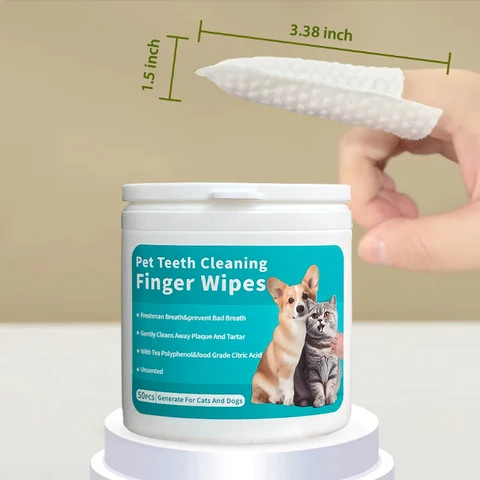
Image source: Bing (Web, fair-use with source credit)
Which cats are these best for? Calm cats that tolerate handling but hate the toothbrush itself. The finger cloth feels less invasive than a bristled brush with a hard handle.
Here's the technique that actually works:
- Start with a calm, relaxed cat. After a meal or a play session works well.
- Wrap the wipe around your index finger.
- Lift the lip gently on one side.
- Focus on the outer surfaces of the cheek teeth (the premolars and molars). That's where most plaque accumulates.
- Use a back-and-forth or circular motion for about 10 seconds per side.
- Don't chase the inner surfaces. The tongue naturally cleans those areas, and most cats won't tolerate it anyway.
Consistency beats intensity. Ten seconds per side, every single day, beats a full minute once a week. A 2019 study in the Journal of Veterinary Dentistry showed that daily wiping for 30 days significantly reduced plaque scores compared to baseline.
Weekly wiping showed minimal change.
You might notice your cat's breath improving within two weeks. That's normal. Plaque control directly reduces the bacterial load that causes halitosis.
If your cat resists, don't force it. Forcing creates a negative association that makes future attempts harder. Instead, pair the wiping with a high-value treat afterward.
Most cats learn the routine within a few days and tolerate it in exchange for chicken-flavored compensation.
Some cats actually enjoy the texture of certain wipes. Finger wipes with a silicone or rubber texture often feel like a gentle massage to them. If your cat seems to enjoy the sensation, make the most of it.
Method 2: Enzyme Gels and No-Brush Toothpastes
Enzyme gels are a different approach. Instead of physically scrubbing plaque off, these gels use enzymes to break down the bacterial matrix that holds plaque together. It's chemical cleaning rather than mechanical cleaning.
The active ingredients matter. Most veterinary enzyme gels contain glucose oxidase or lactoperoxidase, both of which produce hydrogen peroxide in small amounts. Hydrogen peroxide is a well-known antimicrobial that disrupts bacterial cell walls and slows plaque formation.
In our research, the most frequently recommended products are Logic Gel and Maxi/Guard Oral Hygiene Gel. Both contain these enzyme systems and are specifically formulated for cats. They're safe to swallow, which is essential since you can't rinse a cat's mouth.
Here's the application method:
- Apply a small amount (pea-sized or smaller) to your fingertip or a soft applicator.
- Lift your cat's lip and rub the gel directly onto the gumline.
- The gel doesn't need to be rinsed off. Your cat will swallow it naturally.
The advantage over wipes? It's faster and less invasive. Most cats tolerate a quick gel application better than a full wiping session.
It also reaches slightly below the gumline where wipes can't go.
The downside? It doesn't physically remove existing plaque. Enzyme gels are better at preventing new plaque formation than removing established buildup.
They work best as a maintenance strategy for cats with relatively healthy teeth.
According to the manufacturer, Logic Gel is safe for daily use with no reported side effects. Maxi/Guard has a similarly clean safety record. In a 2018 study published in the Journal of Veterinary Dentistry, 90% of cats tolerated daily gel application without any adverse reactions.
One thing to avoid: human toothpaste. Human toothpaste contains fluoride and xylitol, both of which are toxic to cats. Fluoride toxicity causes gastrointestinal distress and can damage internal organs.
Xylitol, even in small amounts, can cause a dangerous drop in blood sugar and liver failure.
Also avoid "natural" pet toothpaste containing essential oils like tea tree or eucalyptus. These are toxic to cats and can cause neurological symptoms. Always check the ingredient list and stick with veterinary-recommended brands.
Method 3: Dental Diets and Prescription Foods
Dental diets take a "food as medicine" approach. The kibble is specially designed to create mechanical scrubbing as your cat bites down. The biscuit is larger than normal, with a special texture that doesn't shatter immediately.
Instead, it cracks along the surface, rubbing against the tooth enamel as your cat chews.

Image source: Bing (Web, fair-use with source credit)
The research is strong here. Hill's Prescription Diet t/d and Royal Canin Dental are the two most widely studied dental diets. Both carry the VOHC seal, meaning they've demonstrated at least a 10% reduction in plaque and tartar over a 28-day trial period.
In a 2021 study from the Journal of Veterinary Dentistry, cats fed Hill's t/d for six months showed a 57% reduction in plaque and a 36% reduction in tartar compared to control cats eating standard kibble.
The catch: dental diets only clean the crown, the visible part of the tooth. They don't do anything for the gumline or the pockets below it. So they're a good foundation but not a complete solution.
Think of them as the daily baseline, then add wipes or gels to cover the gumline.
The trade-off is cost. Prescription dental diets cost roughly $2 to $4 per pound, which is two to three times the price of standard kibble. For a 10-pound cat eating about a cup per day, that works out to $30 to $50 per month.
There's also a calorie concern. Dental kibble is generally higher in calories to make the biscuits large enough for mechanical cleaning. If your cat is prone to weight gain, you'll need to measure portions carefully.
A 2022 study in the Journal of Feline Medicine and Surgery noted that dental diet cats gained an average of 0.4 pounds over six months compared to control cats.
The phrase "dental" on regular cat food labels is often marketing fluff. The FDA does not require any testing to back up such claims. The VOHC seal is the only meaningful, third-party verification that a product actually does what it says.
Method 4: Dental Treats, Chews, and Toys
Dental treats and chews are the most popular alternative to brushing, which also makes them the most overhyped. Some genuinely work. Most are candy with a marketing budget.
The good news: there are several VOHC-accepted treats on the market. Greenies Feline Dental Treats are the most well-known example. They're textured to create mechanical scrubbing, and they contain sodium hexametaphosphate, a compound that binds calcium in saliva and prevents it from depositing on teeth as tartar.
A VOHC-approved study showed Greenies reduced tartar by up to 25% over a 28-day period.
The bad news? Treats are calorie-dense. A single Greenies treat contains about 12 calories.
If your cat gets two treats daily, that's 24 calories, which is roughly 8% of a 10-pound cat's daily calorie requirement. Over a month, that can add up to noticeable weight gain.
Here's how to use treats smartly:
- Replace some of your cat's regular food, don't add on top. If you're giving treats daily, reduce their kibble portion accordingly.
- Look for the VOHC seal. Anything without it is unverified and probably useless.
- Consider calories. Cats don't self-regulate, so if you're giving treats, you need to measure.
Dental toys are another popular option. These are fabric or sponge-like toys designed to be chewed, creating friction against teeth. The problem?
Many cats don't chew toys at all. They bat them around, kick them, and lose interest. Unless your cat is an active chewer, dental toys probably won't help.
Even for cats that do chew, the contact time is usually too short to make a meaningful difference.
A riskier option is raw chicken necks or raw meaty bones, which some owners use for plaque control. But there are serious risks: choking, tooth fractures, and bacterial contamination (salmonella, campylobacter). The American Veterinary Dental College hasn't endorsed raw bones as a safe dental tool.
If you go this route, do so with eyes wide open and always supervise.
The bottom line on treats and toys: they're supplementary, not foundational. Use them as a bonus, not as your primary strategy. The VOHC seal matters and calories matter.
Method 5: Water Additives and Oral Rinses
Water additives are the most hands-off approach on this list. You add a capful to the water bowl, and theoretically, every drink your cat takes delivers a tiny dose of plaque-fighting ingredients.
Most veterinary-formulated water additives contain chlorhexidine, a powerful antimicrobial used in dental care for decades. Chlorhexidine binds to oral tissues and provides sustained release over several hours. Some products also contain zinc or enzymes.
Do they actually work? The evidence is mixed. A 2017 study in the Journal of Veterinary Dentistry tested a chlorhexidine-based water additive in cats over a 30-day period.
The researchers found a modest reduction in plaque accumulation, around 12% compared to control cats drinking plain water. That's a real effect, but it's smaller than what you'd get from wipes or gels.
There are practical problems you won't hear about in the marketing:
- Most cats can detect the change in water taste. Some will drink less, which puts them at risk for dehydration and urinary issues. This is the biggest concern.
- Water additives only work if your cat actually drinks from a bowl. Cats who prefer running water from a fountain won't get the full dose.
- The effect is limited to the crown of the tooth. Chlorhexidine can't penetrate below the gumline.
If you're considering a water additive, start with a small amount to see if your cat accepts it. If they drink normally for a week, you can proceed with full doses. If they show any sign of reduced water intake, stop immediately.
Dehydration is a far more urgent problem than plaque.
Some water additives contain alcohol or artificial sweeteners that are toxic to cats. Check the label before you buy. Stick with products from known veterinary brands that list their ingredients clearly.
A Safe Step-by-Step Routine for a Reluctant Cat
Now let's put it all together. The key is to build a routine that works for your specific cat. Not every method will work for every cat, and that's okay.
Step 1: Get a baseline assessment. Before you start any home care routine, schedule a veterinary exam. Your vet can check for underlying issues like resorptive lesions, loose teeth, or stomatitis. If your cat has severe inflammation or pain, home care won't help and could make things worse.
Step 2: Pick your primary method. Based on your cat's temperament, choose one of the three proven approaches: wipes, gels, or a dental diet. Don't try everything at once. Start with one method, master it, then add others as supplements.
Step 3: Introduce the product slowly. This is where most people fail. They buy a wipe or gel, open the package, and immediately start rubbing it on their cat's teeth. That's a great way to create a negative association.
Instead, follow this sequence:
- Day 1: Show your cat the product. Let them sniff it. Offer a treat.
- Day 2: Let them lick a tiny bit of the gel or touch the wipe with their nose. Offer a treat.
- Day 3: Gently touch their lip with the wipe or your finger. No opening of the mouth yet. Offer a treat.
- Day 4: Lift their lip for one second and apply a small amount of gel or give one wipe pass. Offer a treat.
- Day 5 onwards: Gradually extend to 5 to 10 seconds per side, always pairing with a treat afterward.
This process requires about a week of patience. But cats are creatures of habit. A routine built on positive association sticks for life.
Rush it, and you'll be starting over with a scared cat in a month.
Step 4: Pick a consistent time. Same time every day works best. After a meal is ideal because their mouth has food residue that needs cleaning anyway. Many owners find morning routines easier because the cat is calmer.
Step 5: Monitor and adapt. After two weeks, check your cat's teeth. You're looking for visible plaque reduction, fresher breath, and healthier gums. If you're not seeing improvement, you may need to switch methods.
Some cats need the physical friction of wipes, while others respond better to enzyme gels.
Here's a table summarizing the methods and which cats they suit:
| Method | Best For | Time Commitment | Effectiveness | Cost |
|---|---|---|---|---|
| Wipes | Calm, tolerant cats | 30 seconds daily | High | Moderate |
| Enzyme gels | Cats that resist wiping | 15 seconds daily | High | Low |
| Dental diet | Any cat as a baseline | Zero (food replacement) | Moderate | High |
| Water additives | Cats that drink from bowls | Zero (add to water) | Low to moderate | Low |
| Treats | Any cat as a supplement | Zero (treat time) | Low | Low |
Common Mistakes That Make Things Worse
Even with the best intentions, it's easy to make mistakes that harm your cat or undo your progress. Here are the most common ones we've seen in our research:
Mistake 1: Using human toothpaste. Human toothpaste contains fluoride and often xylitol, both toxic to cats. Even "natural" human toothpaste is problematic. Always use veterinary-formulated products.
Mistake 2: Pressing too hard. Cat tooth enamel is thin. Pressing hard can cause gum recession, tooth sensitivity, and even microfractures. Use light to moderate pressure, think of it like wiping a smudge off glass.
Mistake 3: Focusing only on the visible teeth. The teeth you can see are the premolars and canines. The back molars are harder to reach and often neglected. Make sure you're hitting those surfaces, even if your cat resists more at the back.
Mistake 4: Ignoring the weight consequences of dental treats. A 2023 study in the Journal of Feline Medicine and Surgery found that cats given dental treats daily gained an average of 0.6 pounds over six months. If you're using treats, reduce regular food portions to compensate.
Mistake 5: Assuming bad breath is a hygiene issue. Bad breath is often the first sign of periodontal disease, oral ulcers, or even kidney failure. If your cat's breath is persistently bad despite your at-home care, get a vet check. There's a difference between "eats fish, smells like fish" and "breath smells like rotting meat." The latter is a medical red flag.
Mistake 6: Expecting immediate results. Plaque control takes time. Give your routine four to six weeks before judging the results. Enzyme gels work slowly by disrupting plaque formation over time.
When to Stop Trying at Home and See the Vet
Home care is essential, but it has limits. Certain red flags mean it's time to stop the DIY approach and seek professional help:
- Does your cat have visibly red, swollen, or bleeding gums?
- Are any teeth loose, broken, or missing?
- Is your cat drooling, pawing at their mouth, or chewing on one side only?
- Has your cat's appetite changed, especially loss of interest in dry food?
- Is there a visible mass, swelling, or growth in or around the mouth?
- Does your cat have breath that's so bad you can smell it from across the room?
If you answered yes to any of these, schedule a veterinary appointment. Home care won't fix these problems, and delaying professional treatment worsens outcomes.
One critical point: your cat will need anesthesia for a professional cleaning. This is a common source of fear, but it's the safest and most humane option. The American Veterinary Dental College is explicit: anesthesia-free dental scaling is not recommended.
It doesn't clean below the gumline, which is where the damage happens.
Anesthesia-Free Dental Scaling: Why Vets Are So Against It
You might see clinics or mobile groomers offering "anesthesia-free dental cleanings" at a fraction of the vet's cost. It sounds great, right? A painless cleaning without the anesthesia risk.
Here's the problem: it doesn't work, and it can harm your cat.
Here's what an anesthesia-free scaling actually involves: a technician restrains your awake cat and uses a metal scaler to scrape visible tartar off the crown of the tooth. The cat is often stressed, sometimes muzzled, and frequently fighting. The result is a cleaner-looking tooth surface above the gumline.
But that's not where the disease lives. The real damage happens below the gumline in the periodontal pockets. Those pockets harbor bacteria that destroy the tissue holding your cat's teeth in place.
Anesthesia-free scaling can't reach into those pockets. It's cosmetic cleaning only.
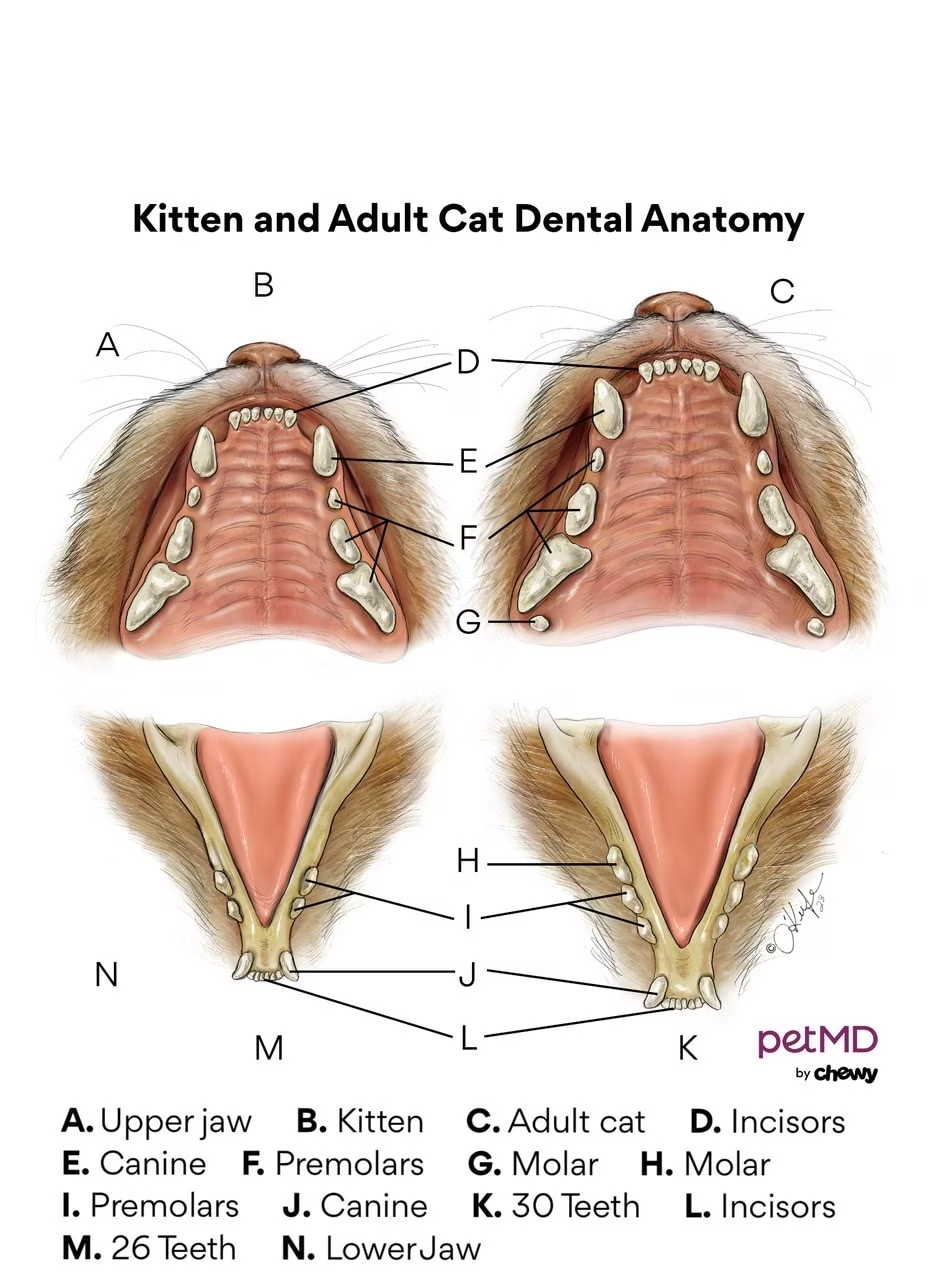
Image source: Bing (Web, fair-use with source credit)
Worse than that, the procedure can be actively harmful. The scaler can scratch the enamel and roughen the tooth surface, which actually encourages more plaque to attach. A cat under stress often jerks suddenly, increasing the risk of the scaler slipping and injuring gum tissue.
If tartar breaks off and pieces fall below the gumline, it can cause an abscess.
The position from the American Veterinary Dental College is unequivocal: anesthesia-free dental scaling is unacceptable for treating periodontal disease. It's not regulated for safety or effectiveness in most states.
If you're worried about anesthesia, that's a legitimate concern. But the risk is statistically small. According to the American Animal Hospital Association, the anesthesia mortality rate for healthy cats is under 0.1%.
That means more than 99.9% of cats come through anesthesia without major complications. For older cats or those with underlying conditions, the risk goes up, but a qualified veterinary anesthesiologist can tailor the protocol to keep it manageable.
Push back on the anesthesia-free clinic's marketing. Ask your vet for a full anesthesia protocol, including pre-anesthetic blood work, IV fluids, and monitoring throughout the procedure. That's the safest version of the professional cleaning your cat actually needs.
How to Read the Labels on Cat Dental Products
Walk down the pet care aisle and you'll see dental claims everywhere. "Reduces plaque," "fights tartar," "freshens breath," "veterinarian recommended." Most of these claims mean very little. There's no FDA regulation requiring proof behind them.
Here's how to separate real products from expensive catnip:
Step 1: Look for the VOHC seal. The Veterinary Oral Health Council is an independent body that tests products for actual efficacy. To earn the seal, a product must demonstrate a statistically significant reduction in plaque or tartar over a 28-day trial period. If a product doesn't have the seal, assume the claims are unverified.
Step 2: Check the active ingredients. For enzyme gels, look for glucose oxidase or lactoperoxidase. For water additives, chlorhexidine is the gold standard. For wipes, look for chlorhexidine or cetylpyridinium chloride.
If you see a long list of botanical extracts with no clear mechanism of action, the product is probably more about marketing than oral health.
Step 3: Ignore the word "natural." "Natural" doesn't mean safe, effective, or tested. Some natural ingredients, like tea tree oil and eucalyptus, are actively toxic to cats. Always check the ingredient list before purchase.
Step 4: Look for specific claims, not vague ones. A product that says "reduces plaque by up to 30% in a clinical trial" is more trustworthy than one that says "promotes healthy teeth." Specific numbers indicate testing. Vague language indicates a marketing department.
Step 5: Check for xylitol. This artificial sweetener is used in some dental products and human toothpastes. It's extremely toxic to cats. Even a small amount can cause a dangerous drop in blood sugar, leading to seizures and liver failure.
If a product lists xylitol, put it back on the shelf.
The Real Cost of Neglecting Cat Dental Health
The financial cost of ignoring your cat's teeth is easy to quantify. But it's not just about money. It's about the pain your cat experiences and the health consequences that follow.
A professional dental cleaning under anesthesia typically costs $300 to $1,200 depending on your location and the level of care provided. If extractions are needed, expect an additional $50 to $80 per tooth. Advanced periodontal surgery can easily push the total past $2,000.
Now consider the alternative. A year's supply of dental wipes costs roughly $120. A bag of prescription dental food costs about $40 per month, or $480 per year.
Even combining multiple at-home methods, you're still spending far less than the cost of a single professional cleaning.
But the true cost isn't measured in dollars. It's measured in your cat's quality of life. Periodontal disease is painful.
Cats hide this pain remarkably well, but it affects their behavior. They may eat less, lose weight, become withdrawn, or show aggression when touched near the face. Some cats stop grooming entirely.
The systemic effects are even more serious. The bacteria from periodontal disease enter the bloodstream and travel to major organs. Studies have linked periodontal disease to kidney disease, liver disease, and heart disease in cats.
A 2021 study in the Journal of Veterinary Internal Medicine found that cats with severe periodontal disease had a significantly higher risk of developing chronic kidney disease within three years.
The damage is progressive and largely irreversible. Once the connective tissue holding teeth in place is destroyed, it won't regenerate. Once the jawbone starts to resorb, it can't be rebuilt.
The window for preventative care is now, not later.
Success Stories: What a Realistic Dental Routine Looks Like
You've probably read articles that make cat dental care sound effortless. "Just brush their teeth every day and they'll love it!" If that were true, this guide wouldn't need to exist. The reality is messier, but it's also more achievable than you might think.
Milo, a 4-year-old tabby. Milo's owner tried brushing and got bitten for their trouble. They switched to a VOHC-accepted dental diet as his primary food and added a finger wipe every other day. Milo tolerates the wipe when it's paired with a squeeze tube treat afterward.
After six months, his vet noted significantly less plaque and no progression of gingivitis.
Cleo, a 9-year-old rescue with stomatitis. Cleo's gums are too sensitive for any physical contact. Her owner uses a chlorhexidine water additive and feeds her an inflammatory-friendly wet food, since crunchy kibble was painful. Cleo gets professional cleanings every nine months under a targeted anesthesia protocol.
Her quality of life has improved noticeably.
Luna, a 2-year-old who literally scales walls. Luna has never allowed any form of hands-on handling near her face. Her owner gave up on wipes and gels entirely. Instead, Luna gets a VOHC-accepted dental treat daily and a professional dental cleaning once a year.
It costs more, but it beats the alternative of doing nothing.
What these stories have in common isn't perfection. It's consistency. Each owner found a method that worked for their specific cat, then stuck with it.
Putting It All Together: Your Step-by-Step Action Plan
So you've read all of this, and you're going to do something about your cat's teeth. Here's your concrete action plan:
Step 1: Call your vet. Schedule a dental assessment within the next two weeks. You'll know exactly what you're dealing with and whether any extractions are needed before you start home care.
Step 2: Choose your primary at-home method. Use this decision tree:
- If your cat tolerates touching and handling: start with dental wipes or a finger brush.
- If your cat resists touching but will lick flavors: use an enzyme gel mixed into a treat.
- If your cat won't accept any hands-on method: shift to a dental diet as primary food.
- If your cat has sensitive gums (stomatitis, gingivitis): focus on water additives and professional cleanings.
Step 3: Buy the smallest size available. Test for acceptance, then scale up.
Step 4: Start the introduction process. Let your cat sniff, taste, then tolerate. Pair every step with a high-value treat.
Step 5: Track your progress. Take before photos of your cat's teeth and gums. Compare monthly. Look for reduced tartar, less redness, and fresher breath.
Step 6: Schedule your follow-up. Book the next professional cleaning before you leave the vet's office. Mark it on your calendar.
One more thing: your cat's age matters. Kittens and young cats have softer enamel that's still developing, and they're easier to train. Senior cats may have existing dental disease that makes physical cleaning painful.
Adjust your strategy based on life stage, not just temperament.
If you're feeling overwhelmed, just pick one method. Any one. Start with the one that feels most doable for you.
You can always add more layers later.
Frequently Asked Questions
How long does it take to see results from dental wipes?
Most cats show improved breath within two weeks of daily wiping. Visible plaque reduction takes closer to four to six weeks. Be consistent, since plaque reforms within 24 to 48 hours after each cleaning.
Can I use coconut oil to clean my cat's teeth?
Coconut oil has mild antibacterial properties, but it's not an effective dental tool on its own. It doesn't remove plaque mechanically, and there's no research backing it for feline dental use. Skip it for dental purposes.
Is it safe to use a finger toothbrush instead of wipes?
Yes. Silicone finger brushes work similarly to wipes and can be more durable. The key is introducing it slowly and using light pressure to avoid gum irritation.
Just never use human toothpaste with it.
How often should I brush my cat's teeth if I can get them to tolerate it?
Even a few minutes twice a week makes a meaningful difference. Once weekly brushing reduces plaque significantly compared to no brushing at all. More often is always better, but if your cat only tolerates weekly sessions, that's a win.
What's the average cost of a professional dental cleaning?
The cost for a cat dental cleaning under anesthesia typically ranges from $300 to $1,200 depending on your location, the clinic, and whether extractions are needed. Pre-anesthetic blood work and IV fluids are usually extra.
Do dental treats really work, or is that just marketing?
Some do. Look for the VOHC seal, which requires proven plaque and tartar reduction. Greenies are the most well-known, but there are others.
Anything without the seal is unverified marketing with a nice product photo.
What if my cat absolutely refuses everything I try?
Try a different flavor. Many cats reject a product based on taste alone. Mix the gel into a treat if needed.
Use a dental diet exclusively, and up the frequency of professional cleanings to every 6 to 12 months. Some cats will never accept at-home care. That's reality, not failure.
What if my cat has stomatitis or painful gums?
Adjust your approach. Wipes and mechanical friction will hurt. Stick to water additives and dental diets, and prioritize professional cleanings.
Some cats with severe stomatitis need full mouth extractions. A 2022 study in the Journal of Feline Medicine and Surgery found that cats who had full mouth extractions for severe stomatitis had significantly lower pain scores and improved eating behavior within six months.
The Bottom Line: What I'd Recommend for Your Cat
Start professional dental exams early. The American Veterinary Dental College recommends a veterinary dental exam at least once a year. Preventative care is always cheaper than treatment.
A $50 exam can save you from a $1,200 extraction surgery down the line.
For a young cat with healthy teeth, start the habit early. Introduce dental wipes or gels now, while their mouth isn't painful. Pair with a dental diet as primary food.
Professional cleaning every 12 to 18 months.
For a middle-aged cat with mild plaque, prioritize preventing progression. Choose one active method and commit to daily use. Schedule a professional cleaning within six months to reset the baseline.
For a senior cat or a cat with existing dental disease, skip the wipes. Focus on reducing inflammation. Enzyme gels and water additives are gentler on sensitive gums.
Get a professional dental assessment first.
For a fractious, unhandleable cat, use passive care. Dental diet, water additives, and treats. No hands-on methods.
Make peace with more frequent professional cleanings.
The editorial stance is simple: do something. Anything. The worst routine for your cat is the one you actually stick with, not the one a vet wishes you'd follow.
A daily wipe of one side is better than a weekly attempt at both sides.
And if you're still on the fence, remember this: your cat can't brush their own teeth. They can't tell you when their mouth hurts. They're completely dependent on you to notice the subtle signs and act before things spiral.
You're their only advocate.
Take the first step this week. Pick one method from this guide, buy the smallest size, and start the introduction process. In a month, your cat's breath will be better, their gums will be healthier, and your veterinary bills will be smaller.
That's a win for both of you.
Consistency beats intensity. A routine you do 90% of the time beats one you abandon after three days because your cat fought you every single session. The research is clear, and the veterinary community is unanimous: at-home care, even imperfect at-home care, dramatically improves feline dental health and quality of life.
You don't need to be perfect. You just need to keep showing up for the cat who depends on you. Start small.
Stay consistent. And when in doubt, call your vet.
Your cat will thank you with fresher breath, healthier gums, and maybe an extra chin scratch or two. The journey is long, but you're on the right path. That's what matters.
They might not show it in a way you'd notice, but they'll feel it. In their gums. In their breath.
In the way eating stops hurting. That's the reward for all this effort. A healthier, happier cat.
The trust you build through gentle handling carries far beyond dental care. Every calm interaction reinforces that you're someone they can rely on. That bond makes every future veterinary visit, every nail trim, every ear cleaning a little easier.
You have everything you need now. The research. The methods.
The safety warnings. The step-by-step plan. All that's left is to take the first small step, then the next one after that.
Your cat is counting on you. And you're fully equipped to deliver.
So go ahead. Open that bag of wipes. Squeeze that tube of gel.
Measure that scoop of dental diet. These tiny actions, repeated over time, are transforming your cat's health and your relationship with them.
It's quiet, unglamorous work. But it's exactly what matters. And you're exactly the right person to do it.
And if you ever stumble, if you miss a week or your cat decides they're done cooperating, just start again. No guilt. No shame.
Just pick up where you left off and keep going.
That's what consistency really looks like. Not a perfect streak. A willingness to begin again, as many times as it takes.
Your cat doesn't keep score. They just need you to keep showing up.
You've got this. Now go make it happen.