

Image source: Bing (Web (fair-use with source credit))
Grooming a Mastiff isn't like grooming a Labrador or a Golden Retriever. You're dealing with a dog that can easily top 150 pounds, deep skin folds that trap moisture like a sponge, and a coat that sheds relentlessly twice a year. If you skip the basics, you're not just looking at a messy house.
You're setting the stage for skin infections, ear problems, and a dog who absolutely hates being touched.
The good news? Mastiffs are actually low-maintenance in one key way. Their coat is short, so you don't need fancy scissors or professional styling.
What you do need is a consistent routine, the right tools, and an understanding of where trouble hides. As of 2026, veterinary dermatology guidelines are clear: daily fold checks and proper drying after baths are non-negotiable for this breed. The American Kennel Club breed standard notes the Mastiff's coat is "short and close-lying," but that undercoat sheds heavily in spring and fall.
So let's walk through exactly how to groom a Mastiff, step by step, without turning it into a wrestling match.
Quick Answer
Groom a Mastiff by brushing 2-3 times weekly with a rubber curry brush. Clean skin folds daily with vet-approved wipes. Bathe every 4-6 weeks with dog-safe shampoo.
Dry every fold completely to prevent infection. Trim nails every 3-4 weeks. Check ears weekly.
This routine takes about 30-60 minutes per session.
Why Grooming a Mastiff Is Different From Other Breeds
Mastiffs carry a double coat that sheds heavily seasonally. Their skin folds create warm, moist environments where yeast and bacteria thrive. Their sheer size means standard grooming tables aren't safe.
And their floppy ears trap moisture, leading to chronic infections if ignored.
The stakes: skin fold infections, ear problems, and heat stress
Let's talk about what actually goes wrong. Skin fold dermatitis is the big one. The deep wrinkles on a Mastiff's face, neck, and shoulders rub together continuously.
That friction creates micro-tears in the skin. Add in trapped saliva, food debris, and dead skin cells, and you have a perfect breeding ground for bacteria and yeast.
Veterinary dermatology research published in the Journal of Small Animal Practice identifies skin fold dermatitis as one of the most common dermatologic conditions in brachycephalic breeds, and Mastiffs are especially prone. The condition presents as red, inflamed, and often foul-smelling skin. If caught early, it's manageable with cleaning and topical treatments.
If ignored, it can require systemic antibiotics, corticosteroids, or even surgical removal of the affected folds.
Then there are the ears. Mastiff ears are floppy and hang close to the head. That physical structure limits airflow inside the ear canal.
Moisture from baths, swimming, or even high humidity gets trapped. The result is otitis externa, an infection of the outer ear canal. Symptoms include head shaking, scratching at the ears, redness, and a yeasty or sour odor.
In severe cases, the infection can spread deeper and cause hearing loss or balance issues.
Heat stress is another overlooked risk. A Mastiff's heavy body mass and thick coat make them poor heat dissipators. A grooming session, especially one involving a blow dryer or warm bath water, can push a dog's core temperature dangerously high.
Signs include excessive panting, drooling, lethargy, and staggering. In extreme cases, heat stroke can be fatal. That's why grooming sessions need to happen in a cool, well-ventilated space, and why forced-air dryers should be used on low heat settings.
What a grooming session really is: a full-body health check
Here's the mindset shift you need. Grooming a Mastiff is not just about looking good. It's the most consistent opportunity you have to inspect your dog's body for problems.
You'll feel lumps under the coat. You'll see ticks embedded in the skin. You'll notice hot spots, cracked paw pads, and swollen joints.
Every brushing session, every fold cleaning, every nail trim is a chance to catch health issues early.
Veterinary professionals recommend that Mastiff owners treat grooming as a structured examination. Start with the head. Check the eyes for discharge or cloudiness.
Look inside the ears for wax buildup or odor. Scan the mouth for dental issues. Then move to the body.
Run your hands over the entire coat, feeling for bumps, scabs, or tender spots. Check the paw pads between the toes. Finish with the tail and rear end.
This full sweep takes less than five minutes once you're practiced.
Before You Start: What You'll Need
You can't groom a Mastiff properly with just any old brush. The tools matter, both for effectiveness and for the dog's comfort. Here's what you need in your grooming kit, based on our research and manufacturer specifications.

Image source: Bing (Web (fair-use with source credit))
Essential tools and supplies
| Tool | Purpose | Why It Matters |
|---|---|---|
| Rubber curry brush | Loosens and removes loose hair from the coat | Works well on short, dense coats without scratching skin |
| Hound glove | Adds shine and massages the coat | Distributes natural oils for healthier skin |
| Undercoat rake | Removes dead undercoat during seasonal sheds | Reaches the dense undercoat that a curry brush can't |
| Finishing brush (slicker or bristle) | Final smoothing and shine | Removes any remaining dander and loose hair |
| Vet-approved ear cleaner | Cleans and dries the ear canal | Prevents moisture buildup and infections |
| Dog-safe shampoo | Cleans the coat without stripping natural oils | Human shampoo disrupts the pH of dog skin |
| Dog-safe conditioner | Moisturizes skin and coat | Especially helpful for Mastiffs with dry, flaky skin |
| Hypoallergenic wipes | Wipe between skin folds daily | Cuts down on moisture and prevents fold dermatitis |
| Nail clippers (guillotine) | Cuts thick nails | Works better than scissor-type clippers on heavy nails |
| Nail grinder (Dremel) | Files nails after clipping | Reduces risk of cutting the quick |
| Quick-stop powder (styptic) | Stops bleeding if you nick the quick | Essential for thick, dark nails where quick is hard to see |
| Towels (large, absorbent) | Dries the coat after bathing | A Mastiff needs multiple towels; one won't do |
| Forced-air dryer or high-velocity dryer | Dries the coat and skin folds thoroughly | Hand-drying alone leaves moisture in deep folds |
| Non-slip bath mat | Prevents slips in the tub or shower | Slips can cause joint injuries in large breeds |
Setting up a safe, non-slip grooming area
A Mastiff is not a lap dog. At 120 to 230 pounds, they need a stable, solid surface. A standard grooming table rated for 50 pounds won't work.
You have a few realistic options.
For brushing and inspection, a non-slip mat on the floor is the safest choice. You want the dog standing on a grippy surface so they feel confident and balanced. Yoga mats, rubber utility mats, or specialized grooming mats all work.
Avoid smooth tile or hardwood floors, where a nervous dog can splay their legs and injure a joint.
For bathing, a walk-in shower with a handheld showerhead is ideal. Standard bathtubs are risky because the dog has to step over a high lip. If that's your only option, place a sturdy step stool with a non-slip top for the dog to climb.
Never lift a Mastiff, even a smaller one. You'll likely throw out your back and seriously stress the dog.
For nail trims, you can do it on the floor with the dog lying down if they're calm. Or use a raised platform, like a sturdy workbench or heavy-duty grooming table rated for at least 250 pounds. The key is making sure the dog can't slip or jump off mid-trim.
Building a handling routine with your Mastiff
Before you ever pick up a brush, your Mastiff needs to learn that being touched is safe and even pleasant. This starts in puppyhood, ideally. But even an adult rescue Mastiff can learn with patience.
Start with short, frequent handling sessions. Touch the paws, the ears, the muzzle, and the tail. Reward calm behavior with treats and praise.
If the dog pulls away, don't force it. Just shorten the session and try again later. The goal is to desensitize the dog to being handled in all the places you'll need to touch during grooming.
Aggregate reviews from Mastiff owners consistently note that dogs who receive daily handling from puppyhood are significantly easier to groom as adults. One owner reported that her rescue Mastiff required three months of daily paw touching before he'd allow nail trims without sedation. Expect the process to take time.
The Skin Fold Routine: Daily Checks and Cleaning
This is the most important part of owning a Mastiff, bar none. If you only do one thing consistently, make it this.
Mastiff skin folds are deep and numerous. The facial folds are prominent. The neck has thick, loose skin that hangs in wrinkles.
Many Mastiffs also have shoulder and flank folds. Each one is a potential infection site if you don't keep it clean and dry.
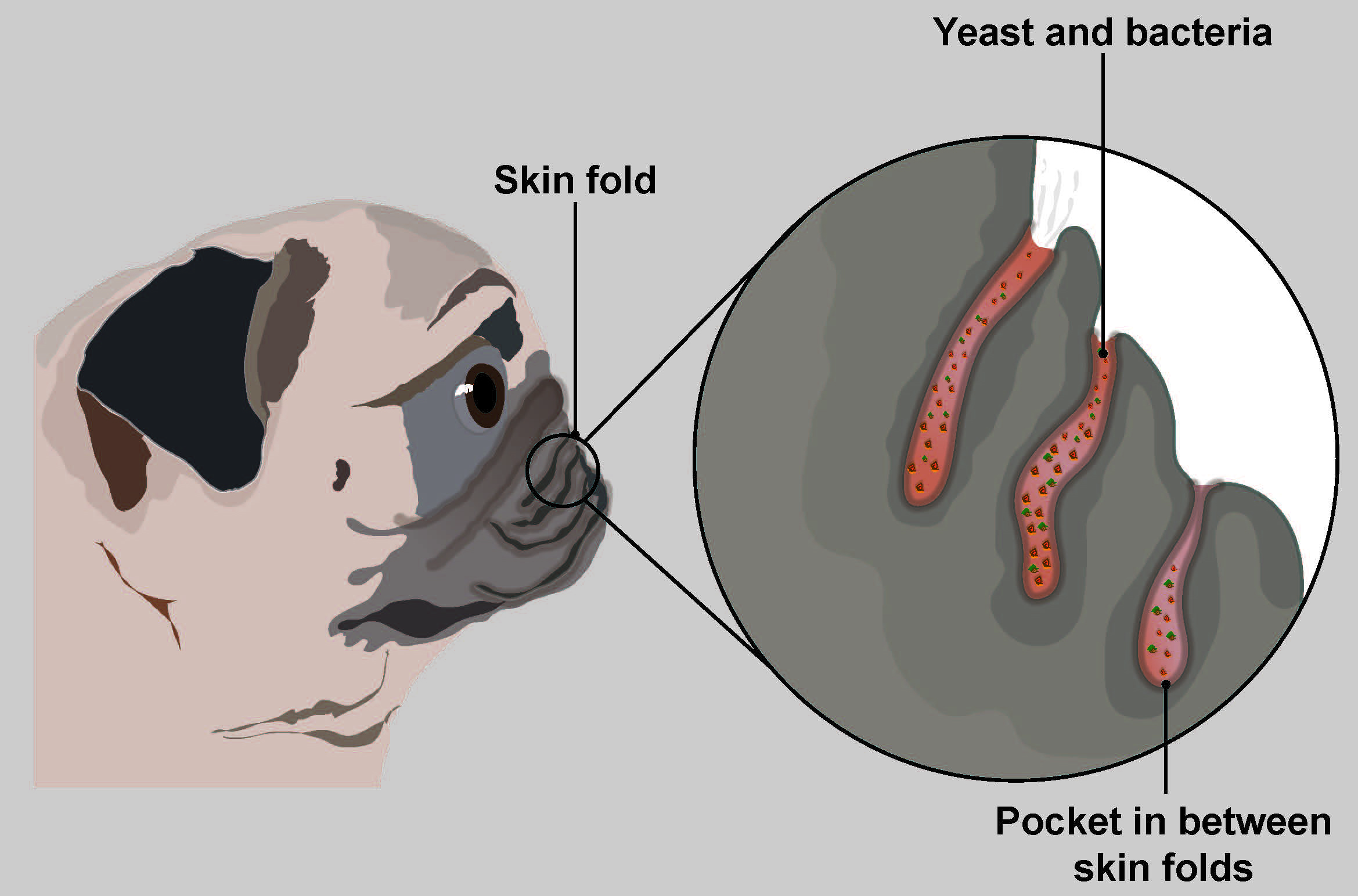
Image source: Bing (Web (fair-use with source credit))
Why folds are a breeding ground for infection
Think about what happens inside a skin fold over the course of a day. The skin rubs together constantly. That friction creates warmth.
Mastiffs drool, and saliva collects in the facial folds. Food crumbs settle into the neck wrinkles. Dead skin cells accumulate.
All of that combines to create a dark, warm, moist environment.
That environment is exactly what yeast and bacteria need to multiply. Malassezia, a common yeast, and Staphylococcus, a common bacterium, both thrive in skin folds. Once an infection takes hold, it spreads quickly.
The skin becomes red, inflamed, and itchy. A foul odor develops. If left untreated, the infection can become chronic and very difficult to clear.
Veterinary dermatologists at university teaching hospitals, including Cornell and UC Davis, recommend daily fold inspection as the primary preventive measure for Mastiffs. They note that the condition is much easier to prevent than to treat.
Step-by-step fold cleaning
Here's the daily routine. It takes about two to three minutes.
Step 1: Inspect. Gently lift each fold and look at the skin underneath. You're checking for redness, soreness, flaking, and any debris trapped inside.
Step 2: Wipe. Use a hypoallergenic, vet-approved wipe or a soft, damp cloth. Wipe along the inside of each fold, from the deepest part outward. This removes saliva, food, dead skin, and other debris.
Step 3: Dry. This step is critical. Use a dry cloth or paper towel to pat each fold dry. Do not wipe roughly.
You want to absorb moisture, not irritate the skin.
Step 4: Treat if needed. If you notice any redness, apply a vet-recommended topical ointment. Do not use human skincare products. Dog skin has a different pH, and many human products contain ingredients that are toxic to dogs.
Step 5: Monitor. If you see the same spot is red for more than two days, or if you detect an odor, call your vet. That's the first sign of a developing infection.
Signs of trouble: redness, odor, and what they mean
You need to know what's normal and what's not.
- Normal: Pinkish, healthy-looking skin. Minimal to no odor. No visible debris.
- Mild irritation: Slight redness, mild flaking. Usually resolves with consistent cleaning and drying.
- Developing infection: Moderate redness, moist or weepy skin, a noticeable odor. Requires veterinary treatment, usually topical antibiotics. Don't wait.
- Advanced infection: Severe redness, swelling, bleeding, pus, worsening odor. This means the infection has taken hold. Your vet will likely prescribe oral antibiotics and medicated washes. In severe cases, surgery to remove the affected fold may be recommended.
The PDSA calls skin fold dermatitis "one of the most common conditions in breeds with wrinkles and folds." They emphasize that early detection is key and that owners should not hesitate to seek veterinary advice if they notice any changes in the skin.
Brushing and Shedding Management
Mastiffs shed. There's no way around it. But with the right routine, you can keep the hair off your furniture and your dog's skin healthy.
How often to brush and which tools work best
During most of the year, brushing two to three times per week is sufficient. You're primarily removing loose hair and distributing natural oils. The rubber curry brush is your main tool here.
It's gentle on the skin and lifts dead hair effectively. Use circular motions across the body, following the direction of the coat.
The hound glove is a nice finishing tool. It picks up stray hair and adds a shine to the coat. Use it after the curry brush, with long, firm strokes.
During seasonal sheds, brush daily. The undercoat rake becomes your best friend here. It pulls out the dead undercoat that sits beneath the topcoat.
You'll be amazed at how much hair comes out. Expect to fill a large trash bag or two per shed.
An important note on brushing technique for this breed: do not overbrush. Mastiff skin is sensitive, especially in areas where folds are present. Brushing too aggressively can cause irritation and hair loss.
Use firm but gentle strokes, and stop if the skin shows any redness.
Handling the seasonal undercoat blowout
Mastiffs have a double coat. The topcoat is coarse and short. The undercoat is soft and dense.
In spring and fall, the undercoat sheds heavily. This is called "blowing coat."
During these periods, hair seems to be everywhere. It drifts onto every surface. You'll find it in your food.
You'll find it in your car. You'll find it in places the dog has never been.
The key to surviving a blowout is to get ahead of it. Increase brushing frequency to daily at the first sign of increased shedding. Use the undercoat rake to remove the dead undercoat before it ends up on your floors.
Some owners find that a shedding blade works well too, but the undercoat rake is generally more comfortable for the dog.
You can also consider a deshedding treatment at a professional groomer during peak shed season. It's not strictly necessary, but it can cut your at-home brushing time significantly.
Reducing hair around the house without over-brushing
Consistent brushing is the main tool. But you can supplement with other strategies.
- Vacuum regularly. A vacuum with a pet hair attachment makes a huge difference.
- Use washable furniture covers. They're much easier to clean than bare upholstery.
- Brush outdoors when possible. It keeps the loose hair out of your home.
- Bathe during heavy shed season. A bath plus thorough brushing afterward removes more loose hair than brushing alone.
A note about coat health: a healthy coat sheds less. Feeding a high-quality diet with adequate omega-3 fatty acids supports skin and coat health. Dehydrated skin sheds more and looks dry.
Ensure your Mastiff has constant access to fresh water and eats a diet that meets AAFCO nutritional standards.
Bathing a Giant: Step-by-Step
Bathing a Mastiff is a logistical challenge. They're big, they dislike being restrained, and they seem to attract dirt like a magnet. But it's a necessary part of the grooming routine.
A bath every four to six weeks is the general recommendation. During muddy seasons or after outdoor adventures, you might need to wash the paws and belly more frequently.
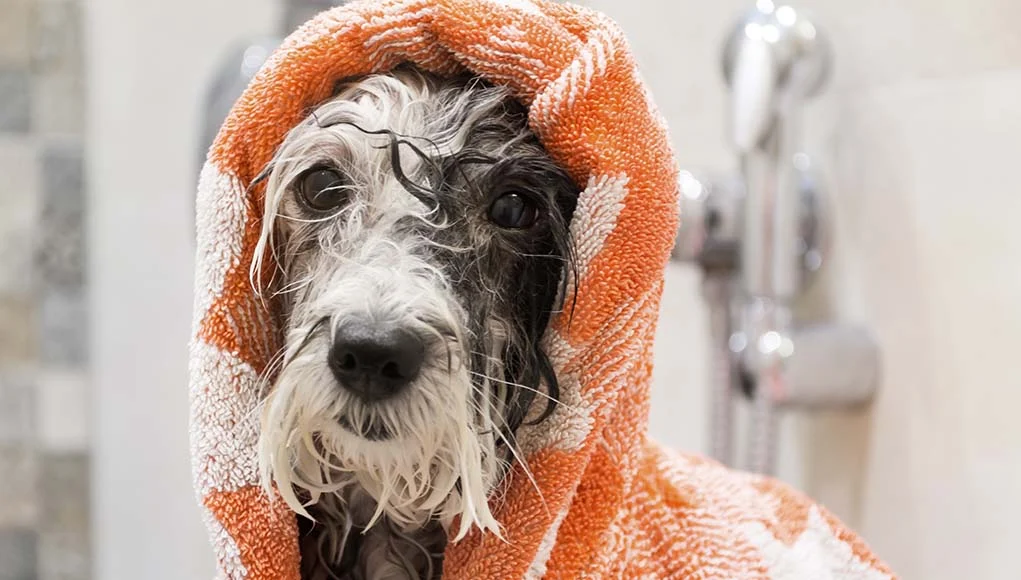
Image source: Bing (Web (fair-use with source credit))
Choosing the right shampoo and conditioner
Not all shampoos are created equal. Human shampoo is off the table, always. Dog skin has a pH between 5.5 and 7.5, which is more neutral than human skin.
Human shampoo is formulated for a more acidic pH and strips away the natural oils that protect your dog's skin. That leads to dryness, itching, and increased susceptibility to infection.
Look for a dog-specific shampoo. For most Mastiffs, a gentle, oatmeal-based formula is a safe choice. It soothes dry, itchy skin.
If your Mastiff has known skin sensitivities, a hypoallergenic or medicated shampoo may be better, but consult your vet first. Medicated shampoos are typically prescription-strength, and using the wrong one can exacerbate the issue.
Conditioner is optional but recommended for dogs with dry skin. A dog-safe conditioner helps maintain moisture in the skin and the coat. Some owners use a leave-in conditioner spray after bathing to help with brushing and static.
How to manage a 150-pound dog in a shower or tub
This is where many owners struggle. Here's a realistic plan.
If you have a walk-in shower: This is the easiest option. Put a non-slip mat down. Guide the dog into the shower and close the door.
Use a handheld showerhead to wet the coat thoroughly. Apply shampoo, lather well, and rinse completely. Shampoo residue causes skin irritation, so rinse twice to be safe.
If you only have a standard bathtub: You're in for a challenge. Place a non-slip mat in the tub. Have the dog step in from the side, guiding them gently.
If the dog is reluctant, try luring them with treats. Once in, use a handheld showerhead or a large cup to wet the coat. A bathtub isn't ideal for a Mastiff, but it's workable if you're patient.
If you're washing the dog outdoors: This works in warm weather. Use a hose with a gentle spray attachment. Never use cold water.
Lukewarm water is best. Be careful not to spray the dog's face directly. And always have the dog secured, either on a leash or in a fenced area.
Never leave a Mastiff unattended in a tub or shower. A big dog can slip and injure themselves in seconds. Always be within arm's reach.
The most critical step: drying every fold completely
Once the bath is over, the real work begins. Wet skin folds are infection zones waiting to happen. Moisture trapped in a fold is exactly what yeast and bacteria need.
Step 1: Towel dry. Use large, highly absorbent towels. Start with the body. Press the towel against the coat rather than rubbing vigorously, especially over the folds.
Rubbing can irritate the skin.
Step 2: Use a forced-air dryer. A high-velocity or forced-air dryer set on low or medium heat is the gold standard for Mastiffs. It blows moisture out of the coat and folds far more effectively than towels alone. Keep the nozzle moving, and never hold it close to the skin at high heat.
Hold it near the folds to blow away any remaining moisture.
Step 3: Manually dry every fold. Go through each facial fold, neck fold, and any other wrinkle with a dry towel. Pat each fold dry, lifting the skin gently to reach the deepest part. Don't forget the folds under the chin and behind the ears.
Step 4: Check again. After you think you're done, wait five minutes and check again. Moisture wicks from deeper areas. If you feel any dampness, dry again.
The drying process should take about 20 to 40 minutes depending on the thickness of the coat and the humidity in your home. Rushing it is a mistake. That's how infections start.
Ears, Eyes, and Paws: The Details People Skip
The big-picture grooming tasks get all the attention. But the small details are where health problems actually hide. Mastiff ears, eyes, and paws need their own targeted care.
Cleaning floppy ears without trapping moisture
Mastiff ears hang down and close off the ear canal. Air doesn't circulate well. Moisture and wax build up quickly.
If you don't clean them regularly, you're inviting an ear infection.
Check your Mastiff's ears once a week. Lift the ear flap and look inside. Healthy ears are pale pink, clean, and odor-free.
If you see redness, dark wax, or if there's a yeasty or sour smell, it's time to clean.
Use a vet-approved ear cleaning solution. Squeeze a generous amount into the ear canal, then gently massage the base of the ear for about 30 seconds. The solution loosens wax and debris.
Let your dog shake their head to bring the loosened material to the outer ear. Then wipe the visible area with a cotton ball or soft cloth.
Here's the critical part: dry the ear thoroughly after cleaning. Use a dry cotton ball to absorb any remaining moisture. Do not use cotton swabs, since they push debris deeper into the canal.
If your dog's ears look infected, don't try to treat it at home. Take them to the vet.
Managing tear stains safely
Mastiffs have droopy eyelids and prominent eyes. That means tears often spill onto the facial folds. Over time, those tears cause rust-colored staining on the fur.
The staining itself isn't harmful, but the moisture can irritate the skin underneath and contribute to fold dermatitis.
Wipe the area under the eyes daily with a damp cloth or a pet-safe eye wipe. Gently blot, don't rub. If tear stains are heavy, you can use a veterinary-approved tear stain remover.
Avoid any product with harsh chemicals or hydrogen peroxide, which can irritate the eyes. If you notice excessive tearing, redness, or squinting, mention it to your vet. It could be a sign of an eye infection, a blocked tear duct, or entropion, a condition where the eyelid rolls inward.
Nail trimming without hitting the quick
Mastiffs have heavy, thick nails that grow quickly. Walking on concrete helps wear them down, but it's rarely enough. You'll need to trim nails every 3 to 4 weeks.
The biggest fear for most owners is hitting the quick. That's the blood vessel and nerve running through the center of the nail. If you cut it, it bleeds and hurts.
For Mastiffs with dark nails, the quick is nearly invisible.
Here's the safest approach. Start with a nail grinder rather than clippers. A grinder files the nail down gradually, which makes it much easier to stop before hitting the quick.
If you must use clippers, take small slices off the tip. Look for a small dark dot in the center of the cut surface. That's the beginning of the quick.
Stop there.
Keep quick-stop powder on hand. If you do nick the quick, apply the powder to the bleeding nail and apply gentle pressure. The bleeding usually stops within a minute or two.
If your Mastiff is nervous about nail trims, take it slow. Touch their paws regularly. Reward them for staying calm.
Trim one or two nails a day if that's all they'll tolerate. It's better to take a week to get through all four paws than to force a traumatic session.
Nail Care for Thick, Heavy Nails
Mastiff nails are a category of their own. They grow fast, they're thick, and they're tough to cut. You'll need the right tools and a lot of patience.
Clippers vs. grinders: which one is safer
Both tools work, but they have different pros and cons.
| Tool | Pros | Cons |
|---|---|---|
| Guillotine clippers | Quick and easy | Risk of cutting the quick is higher |
| Scissor-type clippers | Good control on thick nails | Can crush the nail if not sharp |
| Nail grinder (Dremel) | Very safe, gradual removal | Takes longer, can be noisy |
For Mastiffs, most experts recommend the grinder. It's slower, but it's safer. You can stop at the exact moment you see the quick appear.
The grinder also smooths the rough edges that clippers leave behind.
If you use clippers, make sure they're sharp. Dull clippers crush the nail rather than cutting cleanly. That's painful for the dog and creates splintered edges.
How to find the quick on dark nails
You can't see the quick on dark nails. You have to feel for it. Here's a trick that works well.
Look at the underside of the nail. In most dogs, the quick runs in a straight line down the middle. If you shine a bright light through the nail, you can sometimes see the pinkish shadow of the quick.
Another method is to take tiny slices off the nail tip. After each slice, look at the cut surface. When you see a small, dark dot appear in the center, you're at the quick.
Stop cutting right there.
For longer nails, the quick may extend further than you expect. If your Mastiff's nails are very long, the quick has grown with them. Trimming just a little bit every week will cause the quick to recede over time.
Building nail-trimming tolerance in a dog who hates it
Many Mastiffs hate nail trims. They don't like having their paws restrained, and the sensation of grinding or clipping is unfamiliar. It's not that they're stubborn, they're just uncomfortable.
Here's a desensitization plan that works in most cases.
Week 1: Just touch the paws. No tools involved. Reward calm behavior with high-value treats.
Week 2: Introduce the grinder or clippers near the dog, but don't touch the paws. Let them sniff it. Reward curiosity.
Week 3: Turn the grinder on and let the dog hear the sound. Pair the sound with treats.
Week 4: Touch one nail with the grinder for under a second. Reward immediately. Gradually increase the time.
Week 5: Trim one full nail. Then stop. Reward with a treat and a walk.
The process takes patience, but it works. If your dog is truly fearful, talk to your vet about anxiety medication or a professional groomer who specializes in handling difficult dogs.
Grooming Mistakes That Cause Real Harm
Some mistakes are annoying. Some are dangerous. Here are the ones that can actually hurt your Mastiff.
Using human shampoo and other common errors
Human shampoo is the most common mistake. Your shampoo is formulated for human hair and skin. Dog skin is more alkaline.
Using human shampoo strips away natural oils, leaving the skin dry, itchy, and vulnerable to infection.
Do not use dish soap either. Dawn dish soap is often recommended for oily animal fur, but it's too harsh for regular use. It strips all the oils and disrupts the skin barrier.
Other common mistakes include:
- Skipping the rinse. Shampoo residue causes skin irritation. Rinse twice, then do it one more time.
- Using hot water. Hot water hurts. Use lukewarm water.
- Ignoring ear cleaning. Infected ears are painful. Check them weekly.
- Forgetting the paws. Dirt and debris get trapped between the toes.
Skipping daily fold checks
This is the mistake that leads to the most vet visits. Daily fold checks take two minutes. An infection can take weeks to clear and cost hundreds of dollars.
One is easier than the other.
If you skip a day, that's fine. Life gets busy. But making it a habit to check the folds daily is the single most important thing you can do for your Mastiff's skin health.
What happens when you ignore early infection signs
Early skin fold infection looks like mild redness. It's easy to dismiss. But that mild redness quickly becomes intense inflammation.
The skin weeps. The odor becomes unmistakable. The dog starts to scratch and rub their face.
By the time you notice the serious signs, the infection has taken hold. Treatment now requires medicated washes, oral antibiotics, and sometimes pain medication. Some dogs develop chronic infections that require lifelong management.
In the worst cases, surgery to remove the fold is the only option.
The University of California, Davis veterinary school has published guidance that early intervention is the main way to avoid severe outcomes in skin fold disease. The message is simple, if you see redness that doesn't clear within two days of cleaning, see your vet.
How Often Should You Groom? A Practical Schedule
A Mastiff grooming routine doesn't have to take over your life. Here's a schedule that works.
Daily
- Wipe and dry facial folds (2-3 minutes)
- Quick visual check of ears, eyes, and paws
Weekly
- Full brushing session (15-20 minutes)
- Ear cleaning
- Check nails and file or trim if needed
- Full body inspection for lumps, ticks, or skin issues
Monthly
- Bath (30-60 minutes including drying)
- Nail trim if not done during weekly checks
- Deep clean all skin folds, including neck and shoulder folds
Seasonally
- Daily brushing during heavy shed seasons (spring and fall)
- Deshedding treatment at a professional groomer if desired
Adjustments for weather
- Hot, humid weather: Check folds more often. Clean twice daily if needed.
- Winter: Wipe paws after walks to remove salt residue.
- Muddy season: Rinse paws and belly after outdoor time.
When to Call a Professional or Your Vet
Most Mastiff grooming can happen at home. But there are times when you should ask for help.
What a pro groomer can offer for giant breeds
A professional groomer with experience handling giant breeds can handle baths, nail trims, and deshedding treatments. They have industrial tubs and dryers designed for big dogs. If your Mastiff is too strong or too anxious for you to manage, a pro can do the job safely.
Not every groomer is equipped for Mastiffs. Ask before booking. Confirm they have experience with 150-pound dogs, there are places that only handle small breeds.
Red flags that warrant a vet visit
Some issues can't be fixed with better grooming. If you notice any of these, call your vet.
- Persistent redness or odor in skin folds that doesn't improve
- Intense itching or scratching
- Hair loss in patches
- Red, swollen, or painful paws
- Discharge or odor from the ears
- Excessive tearing or cloudiness in the eyes
- Lumps or bumps that change in size
- Bleeding from any area
Your vet can diagnose the underlying issue and prescribe the right treatment. That's always better than guessing.
Frequently Asked Questions
Can I use baby wipes on my Mastiff's folds?
No. Baby wipes contain chemicals and fragrances that can irritate dog skin. Use wipes specifically formulated for dogs, or use a soft cloth dampened with water.
Make sure to dry the folds thoroughly afterward.
Is it okay to shave my Mastiff in the summer?
No. Shaving a double-coated breed like the Mastiff disrupts the natural insulation that regulates their body temperature. That can make them hotter, not cooler.
Shaving also damages the coat and can cause irregular regrowth. Brush more frequently instead to remove the loose undercoat.
My Mastiff smells even after a bath. What's going on?
That smell is usually coming from a skin fold or the ears. If you didn't dry every fold completely, bacteria or yeast are thriving. Check the facial folds, neck folds, and ears for moisture or odor.
If the smell doesn't improve after deep cleaning and thorough drying, see your vet.
How do I get my Mastiff to sit still for grooming?
Build a positive association slowly. Use high-value treats, keep sessions short, and stop before your dog gets restless. If your Mastiff is genuinely anxious, consult your vet about behavioral strategies or anxiety relief options.
Pressure never works.
Do Mastiffs need professional grooming?
No. Mastiffs don't need professional grooming for their coat. Home grooming works great.
But some owners use a professional for bathing or nail trims when handling is difficult. It's a personal choice depending on your dog's temperament.
How long does a Mastiff grooming session take?
A regular brushing session takes 15 to 20 minutes. A full bath with thorough drying takes 30 to 60 minutes. Nail trims take 5 to 10 minutes if your dog cooperates.
The daily fold wipe-down takes 2 to 3 minutes.