

Image source: Bing (Web (fair-use with source credit))
If you've just brought an Afghan Hound home, or you're seriously considering one, there's something you need to know right now: this is not a wash-and-go dog. Learning how to groom an Afghan Hound properly is the single biggest commitment you're signing up for. It's the difference between a happy, healthy dog and one living with painful mats, skin infections, and a miserable coat.
The Afghan Hound carries a coat that's uniquely fine, silky, and single-layered. It's closer to human hair than to most dog fur. That means it tangles, breaks, and statics like nothing else in the canine world.
The American Kennel Club breed standard calls for a long, flowing coat, but maintaining that standard requires a daily commitment most owners don't expect. The good news? Once you understand the mechanics, it becomes second nature.
Let's break it down.
Why Grooming an Afghan Hound Is Different
Most grooming advice you'll find online was written with a Golden Retriever or a Lab in mind. That advice will actively damage an Afghan Hound's coat. The structure of the hair is fundamentally different, and the consequences of getting it wrong range from ugly breakage to painful skin conditions that need veterinary attention.
The coat structure you're working with
An Afghan Hound has a single-layer coat. There's no dense undercoat to protect the hair follicles. The outer hair is extremely fine, with a silky texture often compared to human hair.
This means it doesn't "shed out" tangles like a double-coated dog might. Everything that gets caught in the fur, dirt, burrs, debris, static, stays there until you physically remove it.
The feathering, the long hair on the ears, legs, chest, and tail, is especially delicate. Those areas rub against surfaces constantly. They collect moisture.
They mat faster than the rest of the body. And because the hair is so fine, aggressive brushing with the wrong tool will snap it off at the follicle, leaving a ragged, uneven coat that takes months to recover.
What "low shedding" actually means
Afghan Hounds are often described as low-shedding. That's true, but it's also misleading. They don't drop fur all over your sofa, which is great.
What they do instead is hold onto dead hair within the coat. That dead hair mixes with live hair, oils, and debris, creating a perfect environment for mats and tangles. The AKC breed standard calls for a coat that's "thick and silky" and "the same texture throughout," but achieving that look is a daily job, not a weekly one.
The stakes: what happens when grooming goes wrong
Mats start forming in the friction zones within 24 to 48 hours of skipping a brushing session. Those zones include behind the ears, under the collar, in the armpits, and along the thigh feathering. As mats tighten, they pull on the skin with every movement.
The dog becomes uncomfortable, then sore, then genuinely painful. Skin underneath the mat stays damp and warm, which is a breeding ground for bacteria and fungal infections. In severe cases, veterinarians see pressure sores, bruising, and hematomas under tight mats that have been in place for weeks.
You can avoid all of that. It takes a routine, the right tools, and a technique that respects the coat's structure.
Quick Answer: The 10-Minute Afghan Hound Grooming Routine
If you only have ten minutes a day, here's how to spend them. This is the minimum viable routine that keeps an Afghan Hound's coat healthy and manageable.
The daily pass:
- Work through the entire coat with a stainless steel pin brush, section by section, from root to tip.
- Spend extra time on the high-friction zones: behind the ears, under the collar, and the thigh feathering.
- Use a greyhound comb to check your work, especially in the feathering.
- Run your fingers through the coat to feel for any mats you might have missed.
Ten minutes, every single day. It prevents the 90-minute nightmare sessions that happen when you skip a week.
The weekly full session:
- Thorough line brushing with a pin brush, followed by a complete comb-through.
- Inspection of the ears, nails, and paw pads.
- Spot-cleaning any dirty areas with a damp cloth.
- A light application of coat oil or detangling spray if the coat feels dry.
As of 2026, this routine is what professional groomers consistently recommend for pet Afghan Hounds. The math is simple: ten minutes daily prevents two hours of painful dematting on a Sunday afternoon.
Essential Grooming Tools: What You Actually Need
You don't need a drawer full of gadgets. You need a handful of quality tools that work with this specific coat type.
The pin brush: your primary weapon
This is the most important purchase you'll make. A pin brush has long, widely-spaced metal pins with rounded tips, set into a cushioned pad. For an Afghan Hound, you need pins that are long enough to reach through the entire coat, usually 25 to 35 millimeters.
The head should be large enough to cover ground efficiently.
Manufacturer specifications indicate that stainless steel pins are essential. Anything coated or flimsy will bend, and bent pins grab and tear the hair. The cushioning matters too.
It flexes as you brush, which prevents the pins from jabbing into the dog's skin.
The greyhound comb: your quality check
A greyhound comb has two sides: wide-spaced teeth on one end, fine teeth on the other. This is your finishing tool. After you brush a section, you comb through it to catch any tangles the brush missed.
The wide side works through general coat. The fine side handles the feathering and the delicate ear hair.
Never skip this step. The brush gets the bulk of the work done, but the comb is what catches the tiny knots that turn into mats overnight.
Detangling spray: your best friend
A good detangling spray is not optional for this breed. Look for silicone-free formulas that add slip to the hair without leaving greasy buildup. You spray it lightly on the coat before brushing.
It reduces static, prevents breakage, and makes the whole process gentler on the dog.
The high-velocity dryer: worth the investment
If you're bathing your Afghan Hound at home, you need a high-velocity dryer. Towel drying alone leaves the coat damp for hours, which is uncomfortable for the dog and creates the perfect conditions for mats to form. A high-velocity dryer uses forced air, not just heat, to blast water off the hair and out of the coat.
Tools to avoid
Some tools will do more harm than good. A slicker brush, with its fine, densely-packed wires, is too harsh for an Afghan Hound's fine coat. It catches on the hair, creates breakage, and is best reserved for dogs with thicker, double coats.
Human hair brushes, plastic-tipped brushes, and anything with ball-tipped pins will snag and tear the hair. And absolutely never use human hair products on your dog. The pH of canine skin is different, and those products strip the natural oils your dog's coat needs.
| Tool | Purpose | Why It Works | Recommended |
|---|---|---|---|
| Pin brush | Primary brushing | Long stainless pins reach through the full coat | Essential |
| Greyhound comb | Finishing and checking | Wide and fine teeth catch small tangles | Essential |
| Detangling spray | Adds slip, reduces static | Prevents breakage during brushing | Essential |
| Slicker brush | Finishing on thicker coats | Too harsh for fine Afghan Hound hair | Avoid |
| Human hairbrush | Human hair only | Wrong tool, wrong bristles, wrong structure | Avoid |
Step-by-Step: How to Brush an Afghan Hound Without Pulling Hair Out
This is the core skill. There's a right way and a wrong way to brush an Afghan Hound, and the difference shows in coat health and the dog's comfort.
Before you start: the pre-brushing assessment
Take thirty seconds to run your hands through the entire coat. You're feeling for mats, tangles, debris, and any areas where the hair feels clumped or sticky. Pay special attention to the friction zones: behind the ears, under the collar, in the armpits, and the feathering on the thighs and tail.
If you find a mat, do not attack it with the brush. You'll only tighten it and cause pain. A small, loose tangle can be worked out with your fingers first, gently pulling the hair apart before you brush.
A tight, dense mat needs a different approach.
The line brushing technique: the only method that works
Line brushing is not optional for an Afghan Hound. It's the only technique that gets through the full depth of the coat and removes tangles at the root, rather than at the surface.
Here's how it works:
Part the coat. Using the comb or your fingers, create a straight part down the dog's back, from the shoulders to the tail. You're aiming for a line of skin visible through the hair.
Brush the line. Start at the bottom of the hair on one side of the part, right at the skin line. Brush downward, toward the ends. Use short, gentle strokes. Keep the brush perpendicular to the part.
Move down the line. Continue brushing that section, from the skin to the ends, until the hair is completely smooth and tangle-free. Then move to the next section, creating a new part each time.
Work your way down the body. Keep going, section by section, until you've worked through the entire coat.
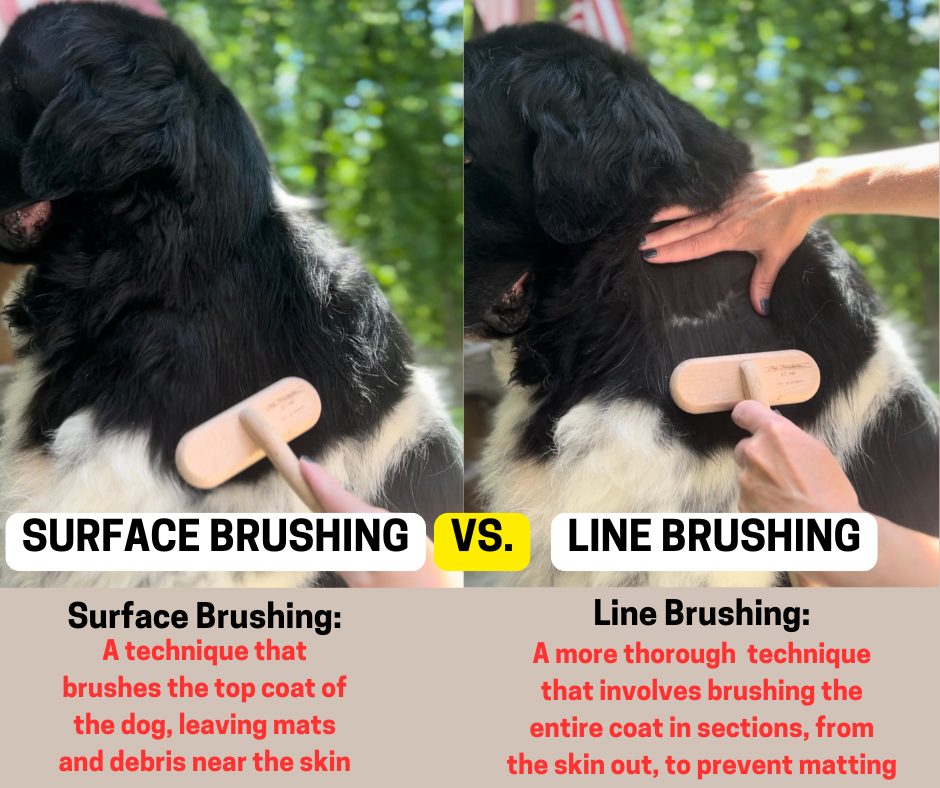
Image source: Bing (Web (fair-use with source credit))
This photo shows the difference between surface brushing and line brushing. Notice that surface brushing only smooths the top layer, leaving tangles matted at the roots. Line brushing reaches down to the skin and clears every tangle from the base.
Handling the tricky zones
The friction zones need extra attention:
- Behind the ears: These areas rub against the collar and the dog's own neck. They mat faster than anywhere else. Brush them gently, using your fingers to hold the ear flap steady so you're not pulling on the ear itself.
- The thigh feathering: The long hair on the back of the thighs collects debris and mats easily. Comb through it carefully, section by section.
- The tail: The Afghan Hound's tail is carried with a slight curve, and the hair is thick. Brush it in sections, working from the base to the tip.
- The armpits and groin: These areas are warm, damp, and high-friction. Check them every single day.
Dealing with static electricity
Afghan Hound coats are notorious for static. In dry climates, especially in winter, the hair will fly away from the brush, crackle with static, and break at the slightest tension. A light misting of detangling spray before brushing eliminates most of this.
The spray adds moisture and slip to the hair, reducing the electrical charge.
How to demat safely (and when to stop)
If you find a mat, here's the rule: if you can't pull it apart with your fingers, and it's too dense for the comb to work through, stop. Do not grab scissors. Do not try to cut it out.
The skin under a tight mat is thin and folds easily, and a pair of scissors can slice through it in a second.
Instead, work methodically. Use your fingers to gently tease apart the outer edges of the mat, then work a wide-tooth comb through the loosened hair. If the mat is truly solid, you have two options: take the dog to a professional groomer, or carefully use a dematting tool with extremely blunt safety blades.
Even then, you risk cutting the skin. Professional groomers see Afghan Hounds with severe matting regularly, and they have the experience and the tools to handle it safely.
Bathing and Drying: Where Most Grooming Damage Happens
Bathing an Afghan Hound is a full-body workout, and it's where most well-meaning owners accidentally ruin their dog's coat. Here's how to do it right.
How often to bathe
Only bathe when the dog is genuinely dirty or starting to smell. For most pet Afghan Hounds, that means every two to three weeks. Some indoor dogs can go a full month.
Over-bathing strips the natural oils that keep the coat silky and healthy, and a dry coat is a coat that mats.
Shampoo selection
Use a shampoo designed for dogs with long, silky coats. Look for a pH-balanced formula that's gentle on the skin. Human shampoo is absolutely off the table.
It's formulated for human skin, which has a different pH, and it strips the coat of everything it needs.
The step-by-step process
Brush thoroughly before the bath. This is non-negotiable. A wet coat is weaker than a dry one, and any tangles you leave in before the bath will become solid mats after.
Use tepid water. Hot water strips oils and can irritate the skin. Tepid water is comfortable and restores, rather than damages, the natural oil balance.
Dilute the shampoo. Mix the shampoo with water before applying. This prevents concentrated shampoo from sitting on the skin and causing irritation, and it distributes more evenly through the coat.
Work in sections. Apply the diluted shampoo, then work it through the coat with your fingers. Work from the skin outward, gently, the same direction the hair grows.
Rinse, and rinse again. Shampoo residue is a magnet for dirt and creates skin irritation. You need to rinse until the water runs completely clear, then rinse a second time. This is a 15-minute job on an Afghan Hound, minimum.
The drying sequence: get this right or undo all your work
Towel drying alone is not an option. The coat will stay damp for hours, and damp fine hair mats aggressively. You need a high-velocity dryer.

Image source: Bing (Web (fair-use with source credit))
Manufacturer specifications for these dryers emphasize forced air over heat. The airflow is what removes the water from the coat, not the temperature. Keep the heat setting low or off, and use the highest airflow setting.
Here's the technique:
Towel dry first. Squeeze the water out of the coat with a towel. Don't rub, that causes tangles. Squeeze.
Dry in sections. Working one section at a time, use the nozzle of the dryer to blast water off the skin and out of the hair. Follow the direction of hair growth. Working against the direction of growth fluffs the coat and creates frizz.
Brush as you dry. As each section dries, run a pin brush through it. This keeps the hair smooth, separates the strands, and prevents mats from forming as the coat dries.
Check for cool spots. The thick feathered areas, especially the thigh feathering and the tail, hold moisture deep down. Use your fingers to check for dampness at the skin level before you call it done.
Coat oil and finishing sprays
Once the coat is completely dry, a light application of coat oil or a finishing spray locks in moisture and gives the coat its signature silky sheen. A few drops of mink, argan, or jojoba oil, worked through the palms and then run through the coat, is perfect. Too much oil will leave the coat greasy and attract dirt.
Start with less. You can always add more.
Grooming for Show Dogs vs. Pet Dogs: Choosing Your Maintenance Level
Before you commit to a grooming routine, you need to decide what you're actually grooming for. The difference between a show coat and a pet trim is massive, and it changes everything from your daily schedule to your budget.
The full show coat: the ultimate commitment
If you're planning to show your Afghan Hound, the coat is the whole game. The AKC breed standard calls for a "thick and silky" coat that flows with movement. Judges expect to see it in perfect condition.
That means no breakage, no mats, no uneven patches, and no clipped areas anywhere on the body except the feet and the very tops of the ears.
Here's what maintaining a show coat actually takes:
| Task | Frequency | Time Per Session |
|---|---|---|
| Full line brushing | Daily | 30 to 45 minutes |
| Comb-through check | Daily | 10 minutes |
| Spot-cleaning and touch-ups | As needed | 5 to 15 minutes |
| Bath and full dry | Every 7 to 10 days | 2 to 3 hours |
| Coat oil application | After every bath | 5 minutes |
That's roughly 8 to 10 hours per week dedicated purely to coat maintenance. For most people, that's a second part-time job. Show handlers often spend even more time, especially leading up to a competition weekend.
The financial side matters too. Professional grooming for a show Afghan Hound runs significantly higher than average because of the coat complexity and the length of each session. As of 2026, grooming industry data shows Afghan Hounds consistently ranking among the most expensive breeds to groom professionally.
The pet clip: a practical alternative
Here's the thing most people don't realize: you don't have to keep your Afghan Hound in full coat. The breed standard describes the ideal, but it doesn't dictate how you live with your dog at home. A pet clip, sometimes called a puppy clip or a kennel clip, shortens the coat to a manageable length while keeping the Afghan Hound's distinctive silhouette.
A typical pet clip leaves the coat around 2 to 4 inches long. The feathering on the legs and tail is trimmed shorter, and the hair between the pads of the feet is cleaned up. The ears are often shaped and thinned to prevent the heavy feathering from trapping debris and moisture.
Many pet owners say this is the secret to actually enjoying life with an Afghan Hound. You get the personality, the elegance, and the companionship, without the daily hour-long brushing commitment. The trade-off is that you lose the flowing, dramatic coat that makes the breed so distinctive.
How to decide what's right for you
Ask yourself these questions:
- Do you plan to compete in confirmation shows? If yes, you need the full coat.
- Is your dog an active outdoor companion? If you hike, run, or spend time in brushy areas, a pet clip saves you hours of mat removal.
- How much time can you genuinely commit each day? Be honest. Ten minutes daily will not maintain a show coat. Neither will thirty minutes three times a week.
- What's your budget for professional grooming? If you plan to outsource some of the work, the full coat gets expensive fast.
There's no wrong answer here. There's only the honest answer about your lifestyle.
The sani clip and other hygiene trims
Between full show coat and full pet clip, there are practical middle grounds. The sani clip, short for sanitary trim, keeps the hair around the rear end and the genital area short. This is a hygiene necessity for every Afghan Hound, regardless of coat length.
Long hair in those areas traps moisture and feces, which leads to skin irritation, matting, and a genuinely unhappy dog.
Similarly, many owners keep the hair between the paw pads trimmed short year-round. This prevents debris from collecting, improves traction on smooth floors, and makes paw cleaning much easier.
Common Mistakes That Ruin Afghan Hound Coats
Every grooming disaster we see in Afghan Hounds comes down to a handful of recurring mistakes. Here's what they are, why they happen, and how to avoid them.
Brushing dry, tangled hair with the wrong tool
The single most common mistake is using a slicker brush as the primary tool on a dry, unsprayed coat. The fine wires grab the hair, create friction, and snap the strands at the follicle. Over time, this creates a coat that looks ragged and feels brittle.
The fix is simple: always use a pin brush for the main pass, always use detangling spray on dry hair, and work through tangles with your fingers before touching them with a brush.
Over-bathing and stripping natural oils
More baths do not equal a cleaner dog. Each wash strips the natural oils that keep the Afghan Hound's coat silky and water-resistant. When those oils are gone, the coat becomes dry, brittle, and prone to static.
Dry hair mats faster. It breaks easier. It looks dull.
Unless your dog is genuinely dirty or starting to develop an odor, resist the urge to bathe. Every two to three weeks is plenty for most pet dogs. Show dogs may need a weekly bath, but they also get daily coat oiling to compensate.
Blow-drying against the coat direction
It's tempting to blast the dryer in whichever direction is easiest, but this creates a mess. Drying against the direction of hair growth fluffs the coat, creates frizz, and pushes tangles deeper into the hair. You'll spend twice as long brushing out the damage.
Always dry in sections, following the natural fall of the hair. Work from the skin outward, and brush each section as it dries.
Cutting mats with scissors near the skin
Do not do this. An Afghan Hound's skin is thin and loose, especially in the armpit and groin areas. A mat can hide the skin entirely, which means you cannot see what's under it when you cut.
One slip with a pair of scissors can mean a deep laceration, a trip to the emergency vet, and stitches.
If a mat is too tight to comb out, use a dematting tool with blunt safety blades, or take the dog to a professional groomer. It's not worth the risk.
Skipping ear care under heavy feathering
The ears are the most overlooked area in Afghan Hound grooming. The heavy feathering traps moisture, debris, and earwax, which creates the perfect environment for bacterial and fungal infections. Left unchecked, an ear infection can become painful, smelly, and expensive to treat.
Check your dog's ears every time you groom. Look for redness, discharge, or an unusual odor. Clean the inner ear with a veterinarian-approved ear cleaner, and never insert cotton swabs deep into the ear canal.
You can push debris further in and damage the eardrum.
Ignoring skin health until it becomes a vet visit
Grooming is also a health check. Every brushing session is an opportunity to run your hands over your dog's body and feel for lumps, bumps, hot spots, or areas of sensitivity. Many owners skip this step, and it's how minor skin irritations become major infections.
Make a habit of checking the skin as you brush. Look for redness, flaking, scabs, or any area where the dog flinches when you touch it. Catching a problem early is always easier than treating it later.
Beyond the Coat: Ears, Nails, Paws, and Skin
The coat gets all the attention with Afghan Hounds, but the rest of the grooming routine matters just as much.
Ear hygiene: the hidden trouble zone
The Afghan Hound's ears are long, pendulous, and heavily feathered. They hang down and trap moisture against the ear canal, which is why this breed is prone to ear infections if proper hygiene is neglected.
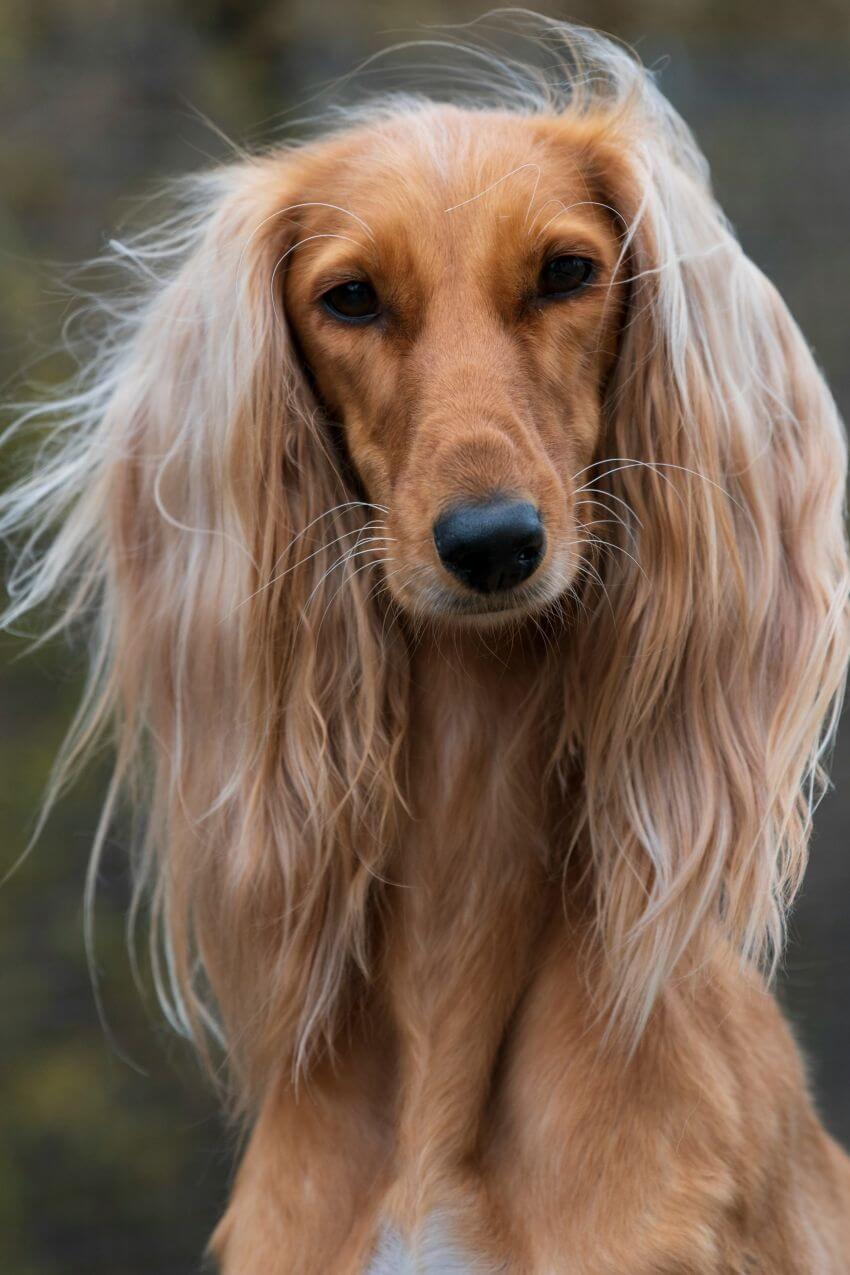
Image source: Bing (Web (fair-use with source credit))
Here's a simple weekly routine:
- Visually inspect the ears. Look for redness, swelling, discharge, or a yeasty, musty odor.
- Clean the visible part of the inner ear. Use a cotton ball or soft cloth dampened with veterinarian-approved ear cleaner. Gently wipe the inner flap and the folds. Never insert anything deep into the ear canal.
- Tend to the feathering. The long hair inside the ear can trap debris and wax. Many owners keep this hair trimmed short, especially if their dog has a history of ear issues.
If you notice your dog shaking its head, scratching at its ears, or wincing when you touch the area, a vet visit is warranted. Ear infections in Afghan Hounds can become chronic if left untreated, and they're much harder to clear once they take hold.
Nail trimming: the non-negotiable
Long nails are not just a cosmetic issue. They're a health issue. Overgrown nails push the toes out of alignment, alter the dog's gait, and can eventually cause joint pain and lameness.
Afghan Hounds are athletic dogs, and they need healthy feet to run and jump.
The general guideline is that the nails should not click against the floor when the dog walks. Depending on the dog's activity level and the surfaces they walk on, that means trimming every two to four weeks.
Here's the technique:
- Use a guillotine-style nail trimmer or a grinder. Both work well; it's a matter of preference.
- Cut only the tip, avoiding the quick, which is the pink area inside the nail that contains blood vessels and nerves.
- If you're unsure where the quick ends, trim small amounts at a time. You can always remove more.
- Keep styptic powder on hand. If you cut the quick, it stops the bleeding quickly and prevents a mess.
Paw pad care: the detail that matters
The hair between the paw pads collects debris like burrs, pebbles, and mud. It also mats, and those mats pull on the skin every time the dog walks. Regularly trimming this hair with blunt-tipped scissors keeps the paws clean and comfortable.
Also, inspect the paw pads themselves during grooming. Look for cracks, cuts, or foreign objects embedded in the pads. Afghan Hounds are sight hounds, bred to run, and a paw issue can sideline an active dog quickly.
Skin checks: your opportunity to find problems early
Every grooming session is a full-body health check, if you're doing it right. Run your hands along the dog's body, from the head to the tail, feeling for anything unusual.
Look for:
- Hot spots, which are red, moist, irritated patches of skin that often appear suddenly.
- Flaking or dandruff, which can indicate dry skin, a nutritional issue, or an underlying condition.
- Lumps or bumps, which should be monitored and checked by a vet if they change or persist.
- Fleas or ticks, which are easiest to spot during a careful grooming session.
Grooming Schedule Cheat Sheet: Daily, Weekly, Monthly
Consistency is the whole game with an Afghan Hound. A regular schedule prevents the nightmare sessions that happen when you skip too many days.
Daily tasks (10 to 15 minutes)
- Line brush the entire coat. Yes, the entire coat. Every day.
- Comb through the feathering. Pay extra attention to the ears, thighs, and tail.
- Check the friction zones. Run your fingers through the armpits, behind the ears, and under the collar.
- Spot-clean any dirty areas. A damp cloth works for most surface dirt.
Weekly tasks (45 to 60 minutes)
- Full deep brushing. Same as the daily routine, but more thorough. Work through every section methodically.
- Bath if needed. Every two to three weeks is the general cadence, but if the dog is dirty, don't wait.
- Ear check and clean. Inspect, wipe, and check for odor.
- Nail trim. If the nails click on the floor, it's time.
- Paw pad check. Look for debris, mats, or cracks between the toes.
- Full skin check. Run your hands over the entire body, looking for anything unusual.
Monthly tasks (30 to 45 minutes)
- Sanitary trim. Keep the hair around the rear and genitals short.
- Paw pad feathering trim. Shorten the hair between the toes.
- Ear feathering tidy. Thin or trim the long hair inside the ears if it's trapping debris.
- Deep conditioner application. Many owners use a deep conditioning treatment monthly to keep the coat hydrated and manageable.
Seasonal adjustments
The Afghan Hound's coat changes with the seasons, and your grooming routine should adjust accordingly.
Winter: Cold, dry air increases static and breakage. Use detangling spray more frequently, and consider increasing coat oil applications. Watch for salt and ice buildup between the paw pads.
Summer: Shedding increases slightly, and outdoor time means more debris in the coat. Check for burrs, grass seeds, and other plant material after every outdoor excursion. In humid climates, pay extra attention to the friction zones, as moisture accelerates matting.
Shedding season: Afghan Hounds don't shed heavily, but they do shed more in spring and fall. Dead hair gets trapped in the live coat. Brush more frequently during these transitions.
A thorough line brushing helps pull loose hair out before it mats.
When to Call a Professional Groomer
There's no shame in admitting that Afghan Hound grooming isn't for you. Even experienced owners hit walls where professional help is the smartest, safest option.
Signs you're in over your head
Some situations are clear-cut. If you encounter any of these, stop what you're doing and book a professional appointment:
- Severe matting. If mats are tight against the skin, you can't see the skin underneath, and you can't work your fingers into the mat, this is beyond home care.
- Aggressive or fearful behavior during grooming. If your dog snaps, growls, or tries to escape during brushing or nail trims, forcing the issue creates a dangerous situation for both of you.
- Skin issues you don't recognize. Redness, swelling, open sores, or unusual odors warrant a professional assessment, and likely a vet visit too.
- You don't own the right tools. Brushing an Afghan Hound with a slicker brush or a human hairbrush causes long-term damage. If you haven't invested in a proper pin brush and greyhound comb, professional grooming is the safer interim option.
How to find a groomer experienced with Afghan Hounds
Not all groomers are created equal. An Afghan Hound's coat requires specific knowledge, and a groomer who primarily works with double-coated breeds might not have the right touch.
Here's what to look for:
- Ask about breed experience directly. A groomer who has worked with Afghan Hounds will know what line brushing is and understand the coat's sensitivity.
- Check for credentials. Professional certifications indicate a baseline of training and knowledge.
- Look at their portfolio. Most groomers show before-and-after photos of their work. Look for smooth, even coats with no visible clipper marks or uneven patches.
- Read reviews from other Afghan Hound owners. Breed-specific feedback is the most valuable signal you can get.
The Afghan Hound Club of America maintains resources for owners, and their community forums are a good place to ask for groomer recommendations in your area.
What to expect from a professional grooming session
A professional Afghan Hound groom will typically include:
- A full assessment of the coat condition before any work begins
- Thorough line brushing and dematting, if possible
- A bath with breed-appropriate shampoo and conditioner
- High-velocity drying with careful attention to airflow direction
- Ear cleaning, nail trimming, and paw pad care
- A finishing trim, which may include the sani clip, ear feathering tidy, and paw feathering trim
The full process takes two to three hours for a pet clip and longer for a show coat. Budget accordingly.
Building a routine with alternating home and pro grooming
You don't have to choose between doing it all yourself and outsourcing everything. Many Afghan Hound owners run a hybrid schedule:
- Daily home brushing: Ten to fifteen minutes, every day, to prevent mats and keep the coat healthy.
- Weekly home maintenance: Bathing, ear cleaning, nail trims, and spot checks.
- Monthly professional groom: A full service that handles the deep work, the sani trim, and any dematting that has accumulated.
This approach keeps costs manageable while ensuring the dog gets professional attention on a regular cycle. It's also a good safety net if you're still learning the finer points of the grooming process.
Common Question: What's the Best Brush for an Afghan Hound?
The pin brush is the only brush you should be using for the main pass on an Afghan Hound's coat. A greyhound comb follows behind it to catch small tangles and finish the job.
Why pin brushes win
The Afghan Hound's coat is long, fine, and silky. A pin brush, with its widely spaced stainless steel pins and cushioned base, threads through the coat without catching or snapping the hair. The cushioning absorbs pressure, which prevents the pins from digging into the dog's skin.
Look for these specifications:
- Stainless steel pins. They don't bend, and they glide through the coat smoothly.
- Pins 25 to 35 millimeters long. This is long enough to reach through the full depth of an Afghan Hound's coat.
- A cushioned base. This flexes as you brush, which protects the skin and makes the experience more comfortable for the dog.
- A rounded tip on each pin. Rounded tips are gentler on the skin and less likely to cause irritation.
Why slicker brushes fail
A slicker brush has fine, densely packed wires that are too harsh for this coat type. The wires grab the hair aggressively, create friction, and break the strands. Over time, a slicker brush causes visible damage: split ends, ragged textures, and a coat that looks frizzy and uneven.
If you already own a slicker brush, don't throw it away. You can use it very gently on the feathering to finish the coat after brushing, but it should never be your primary tool.
Other tools you'll need
- A greyhound comb with both wide and fine teeth. It's essential for checking your work and working through small tangles.
- Detangling spray to add slip and reduce static.
- A high-velocity dryer if you're bathing at home. Towel drying alone doesn't work for this breed.
- Coat oil for finishing after baths.
The Cost of Grooming an Afghan Hound: Time and Money
Let's talk numbers. Afghan Hound grooming is a genuine investment, and you should know what you're signing up for before the dog arrives.
The time commitment
| Routine | Daily Time | Weekly Time | Monthly Time |
|---|---|---|---|
| Pet trim, home grooming | 10 to 15 minutes | 45 to 60 minutes | 3 hours |
| Show coat, home grooming | 30 to 45 minutes | 170 minutes | 10 to 12 hours |
| Hybrid (home plus pro) | 10 to 15 minutes | 30 to 45 minutes | 2 to 3 hours plus one pro session |
These numbers assume you're doing the work correctly. Inefficient grooming sessions, using the wrong tools, or skipping days so mats develop, can double the time commitment.
The financial investment
Professional grooming costs vary significantly by region. Small-town groomers charge less than metropolitan salons, and experienced Afghan Hound specialists command a premium.
Add the one-time tool costs: a quality pin brush, a greyhound comb, detangling spray, coat oil, shampoo, and a high-velocity dryer. The dryer is the biggest upfront expense, but it's a one-time purchase that lasts for years.
Is it worth it?
That depends on your situation. If you have the time, the patience, and the willingness to learn proper technique, home grooming is absolutely doable. Thousands of Afghan Hound owners do it successfully.
If your schedule is packed, or you'd rather spend your time with your dog on walks and play rather than with a brush in your hand, a hybrid routine with a professional groomer makes sense.
The worst approach is to commit to a full show coat, fall behind on the routine, and let the dog suffer through matted, painful coats. Be honest about what you can sustain, and choose the grooming level that matches your reality.
Troubleshooting Common Problems
Even with a solid routine, issues come up. Here's how to handle the most common problems Afghan Hound owners face.
My dog hates being brushed
This is common, especially if the dog has experienced painful brushing with the wrong tools or rough handling. The fix is to rebuild trust gradually.
Start by letting the dog sniff the brush and rewarding calm behavior with treats. Hold the brush against the dog's body without actually brushing, then reward. Slowly build up to gentle strokes, always pairing the experience with treats and a calm voice.
The key is to never force it. If the dog is resisting, stop the session and try again later. Pain and fear only escalate if you push through them.
The coat has become dry and brittle
Dry, brittle hair is usually the result of over-bathing, using the wrong shampoo, or environmental factors like low humidity.
Increase coat oil applications. Use a deep conditioner during baths. Reduce bathing frequency to every three weeks or longer, and ensure you're using a pH-balanced shampoo designed for long-coated breeds.
Static electricity is out of control
This is primarily a winter problem, especially in homes with forced-air heating.
A light misting of detangling spray before brushing usually solves it. You can also run a damp cloth over the coat before brushing, which reduces the electrical charge. Some owners keep a humidifier running in the room where they groom, and it makes a noticeable difference.
The coat suddenly feels greasy
Greasy coats usually mean too much coat oil or a shampoo that's too heavy. Cut back on the oil and switch to a lighter formula. If the greasiness persists, a thorough bath with a clarifying shampoo designed for dogs should reset the coat.
I found a mat that won't come out
If you've tried fingers, a wide-tooth comb, and detangling spray, and the mat is still solid, it's time for professional help. Trying to cut it out at home risks serious injury to the dog. A professional groomer has the tools and the technique to remove it safely.
Puppy Grooming: Starting Young for a Well-Adjusted Adult
The best time to establish good grooming habits is the day your Afghan Hound puppy walks through the door. Early exposure prevents the resistance and fear that develops in dogs who only experience grooming as adults.
The first week
Keep it short and positive. Ten minutes a day is plenty for a puppy. Let the puppy sniff the brush, then gently brush the back and shoulders.
Pair every stroke with treats and praise.
The goal isn't a perfectly groomed puppy. It's a puppy who learns that brushing is a calm, safe, rewarding experience.
The first bath
Wait until the puppy is comfortable with brushing before attempting a bath. Use tepid water, a gentle puppy shampoo, and keep the session short. Introduce the high-velocity dryer at the lowest setting first, letting the puppy get used to the sound and sensation before it becomes part of the routine.
Building the routine
As the puppy grows, extend the grooming sessions gradually. Add ear handling, paw handling, and nail trim exposure during weekly sessions. Dogs who learn these activities as puppies accept them as normal adults.
Dogs who are introduced to them as adults often struggle.
The Afghan Hound Club of America has published guidelines on early coat care for puppies. The consensus is clear: daily gentle handling of the coat, ears, and paws in the first few months sets the foundation for a lifetime of stress-free grooming.
What to expect as the coat grows in
Afghan Hound puppies have shorter, softer coats that transition to the adult coat over the first 12 to 18 months. This transition period is prime matting time. The puppy coat and the emerging adult coat coexist, and the texture difference creates tangles.
During this phase, daily brushing is non-negotiable. Many owners also schedule a professional groom with a breeder-recommended groomer around six to nine months of age, when the coat transition is well underway. The professional groom will also help you spot any developing problems with the texture or health of the coat before they become serious issues.
What to do if your puppy is difficult
Some puppies resist grooming more than others. That's normal. What matters is how you respond.
If your puppy squirms, whines, or tries to escape during grooming, end the session calmly and try again later. Never punish a puppy for struggling. That creates a negative association that follows them into adulthood.
Instead, break the session into shorter pieces. Brush one leg today, one ear tomorrow, the tail the day after. Reward each small success with treats and praise.
Over weeks, the puppy builds tolerance and eventually learns that grooming is just part of life.
The teenage phase
Between six months and two years, Afghan Hounds go through a hormonal phase that can make them more resistant to handling. They're also growing their adult coat, which mattes more easily than the puppy coat did.
If your previously cooperative dog suddenly starts fighting grooming sessions, this is likely the cause. Don't push through it alone if you're getting resistance. A professional groomer has the experience to handle a difficult teenage Afghan Hound without turning grooming into a battle.
Frequently Asked Questions
How often should I brush my Afghan Hound?
Daily brushing is the honest answer. Afghan Hounds need at least ten to fifteen minutes of line brushing every single day to prevent mats. If you keep your dog in a shorter pet trim, you might stretch to every other day, but daily is still the safer bet.
Missed days turn into painful dematting sessions, and that's a lesson you only need to learn once.
Can I shave my Afghan Hound's coat?
Shaving an Afghan Hound is strongly discouraged. The coat grows back differently, with a different texture, and it may never fully recover its original silky quality. The breed standard calls for a long, flowing coat, and shaving destroys that.
If you want a shorter coat, use a pet trim from a professional groomer rather than shaving it down.
Why does my Afghan Hound's coat feel greasy or dry?
Greasy coats usually mean too much oil or a shampoo that's too heavy. Cut back on coat oil and switch to a lighter shampoo formula. Dry, brittle coats typically come from over-bathing or stripping natural oils.
Reduce bathing frequency to every three weeks or longer, and apply coat oil after baths to lock in moisture.
Do Afghan Hounds smell bad?
Afghan Hounds are relatively clean dogs with little body odor. That said, their long coats trap dirt, debris, and moisture, which can create an unpleasant smell if not maintained. Regular brushing and good ear hygiene go a long way toward keeping the dog smelling fresh.
If your Afghan Hound develops a persistent odor, check the ears first, as infections are common in this breed.
How long does it take to dry an Afghan Hound after a bath?
Plan for 45 to 90 minutes of drying time, depending on coat length and the power of your dryer. A high-velocity dryer is essential. Towel drying alone leaves the coat damp for hours, and damp fine hair is prone to matting and skin irritation.
What happens if I skip grooming for a week?
Mats start forming within 24 to 48 hours in the friction zones: behind the ears, under the collar, and in the armpits. After a week, those mats tighten against the skin and become painful. Removing them requires aggressive dematting that hurts the dog, and severe cases may require shaving patches of the coat completely.
That's why daily maintenance matters so much for this breed.
Final Verdict: Your Afghan Hound Grooming Game Plan
By now, you've seen the full scope of what Afghan Hound grooming involves. It's a daily commitment, a financial consideration, and a skill that takes time to build. But here's the good news: it's absolutely doable.
Thousands of owners manage it successfully, and you can too, as long as you're honest about your time and realistic about your goals.
The non-negotiables
If you take nothing else from this guide, hold onto these three rules:
Daily brushing is non-negotiable. Ten to fifteen minutes of line brushing every day prevents the painful, time-consuming dematting sessions that ruin coats and damage relationships.
Use the right tools. A pin brush, a greyhound comb, and a quality detangling spray are the minimum. Anything else risks damaging the coat.
When in doubt, call a professional. Severe mats, skin issues, or a dog that won't tolerate grooming are all reasons to hand over the clippers and get expert help.
What your first month might look like
Let's put this into practice with a realistic plan for a new Afghan Hound owner.
Week one: Focus on building trust. Let your dog sniff the brush, offer treats during short sessions, and learn what areas your dog finds sensitive. Don't obsess over perfection.
Get the daily brush happening without a fight.
Week two: Introduce the full line brushing technique. Work through the entire coat section by section, and finish with a comb-through. Start checking ears and paws during grooming sessions so your dog learns to accept handling.
Week three: If the coat is looking tired, schedule a professional groom. This gives you a clean slate to work from and a professional who can flag any skin issues you might have missed.
Week four onward: Settle into the daily routine. Keep your tools in an easily accessible spot. Make grooming part of the same time each day, after a walk or before dinner, so it becomes a habit for both of you.
When to trust yourself
You'll know you've turned a corner when grooming sessions feel calm. When your dog lies still, without pulling away, and you work through the coat in clean, smooth sections without finding mats. That's the rhythm you're aiming for.
It takes a few weeks to get there, but it's a skill your dog will thank you for.
When to ask for help
Never feel bad about calling a professional. There's a difference between managing daily maintenance and handling a crisis. If you're facing severe matting, a dog that's becoming aggressive, or a skin problem you don't recognize, professional help is the right call.
It's not a failure. It's smart ownership.
A final note on the breed
Afghan Hounds are ancient, elegant, and fiercely independent. They've been called aloof, but those who live with them know they're deeply affectionate on their own terms. Their coats are part of what makes them so beautiful, but that beauty comes with a price.
The grooming routine is the cost of living with a living work of art.
If you're willing to put in the time, the tools, and the effort, you'll find that grooming becomes more than just maintenance. It becomes time spent together. Quiet, focused, bonding time that your dog will learn to love as much as you will.
And really, that's the best reason to get it right. Not for the coat, not for the show ring, but for the dog.