
Misting a parrot sounds simple enough: grab a spray bottle, spritz some water, done. But ask anyone who's owned an African Grey or a Cockatoo, and they'll tell you it's not that straightforward. Learning how to mist a parrot properly means understanding your bird's respiratory system, reading its body language, and knowing exactly when to stop.
Get it wrong, and you can trigger a respiratory infection, chronic stress, or a bird that develops a lifelong fear of water.
The good news? It's not complicated once you understand the fundamentals. As of 2026, avian veterinarians consistently recommend lukewarm water between 85, 95°F, a fine mist setting, and sessions that last no more than 2, 5 minutes.
We've gathered the research, cross-referenced avian vet guidance, and filtered out the bad advice floating around in forums. Here's what actually works, what doesn't, and how to know which category your bird falls into.
Quick Answer
Mist your parrot with lukewarm water (85, 95°F) from an adjustable spray bottle. Set the nozzle to its finest mist setting. Hold the bottle 8, 12 inches away.
Spray from above, mimicking natural rainfall. Never aim at the face. Watch for signs of enjoyment: wing lifting, fluffed feathers, and preening.
Stop at the first sign of stress. Dry your bird in a warm, draft-free area. Repeat 2, 4 times weekly, adjusting for your home's humidity and your parrot's species.
Why Misting Matters (and What Most Owners Get Wrong)
Parrots are native to tropical and subtropical regions where rain is a daily reality. In the wild, a parrot gets rained on almost every day. That rain does far more than wet the feathers.
It triggers the preening instinct, keeps the uropygial gland active, and helps distribute natural oils across each feather shaft.
In our homes, the story is different. Forced-air heating, air conditioning, and dry winter air strip moisture from everything, including your bird's skin and feathers. A parrot living in a heated house in January can easily be dealing with humidity levels below 30%.
Avian vets recommend 40, 60%. That gap is where misting becomes essential.
Here's what most people get wrong: they treat misting like it's optional. It's not. It's a core part of avian husbandry for most species.
But they also treat it like it's just water and a bottle. It isn't. The temperature matters.
The nozzle matters. The angle matters. The duration matters.
The bird's body language matters more than all of those combined.
The other major mistake we see involves birds that "hate" misting. In nearly every case, the bird doesn't hate water. It hates the experience.
Cold water hitting warm skin is shocking. A harsh jet spray feels like an attack. A bottle suddenly appearing and spraying without warning is terrifying.
Fix those variables, and most "water-hating" parrots transform.
Misting isn't just about feather health. It also provides enrichment, encourages natural cleaning behaviors, and helps reduce feather dust. That last one is huge for owners of Cockatoos and African Greys, which produce significant amounts of powder down.
Regular misting cuts down on airborne dander in your home, which benefits both you and your bird's respiratory system.

Image source: Bing (Web (fair-use with source credit))
Is Misting Right for Your Parrot? (Species and Health Check)
Not every parrot needs the same misting schedule. Not every parrot should be misted at all. This is the first filter to run before you ever pick up a spray bottle.
Species Differences Matter
Different parrot species have different feather structures and dust levels. Here's a practical breakdown:
| Species Group | Dust Level | Misting Frequency | Notes |
|---|---|---|---|
| African Greys | High | 3–4 times per week | Heavy powder down; misting reduces dander |
| Cockatoos | High | 3–4 times per week | Similar to Greys; also prone to skin dryness |
| Macaws | Low | 2–3 times per week | Oily feathers; light misting enough |
| Conures | Low | 2–3 times per week | Enjoy bathing; may prefer a dish |
| Budgies/Parakeets | Low | 2 times per week | Small body; keep sessions very short |
| Amazon Parrots | Moderate | 2–3 times per week | Oily feathers; avoid over-misting |
| Lovebirds | Low | 2 times per week | Often prefer wet greens or shallow dishes |
These are starting points, not rules carved in stone. Your home's humidity, your bird's individual preference, and the season all shift these numbers. The key is observation.
Birds are excellent at telling you what they need if you know what to look for.
Health Conditions That Rule Out Misting
This is the part that a lot of online guides gloss over. There are situations where misting is actively dangerous.
Respiratory infections. If your parrot shows signs of labored breathing, tail bobbing, nasal discharge, or wheezing, do not mist. Wet feathers increase the work of breathing, and the moisture can exacerbate fungal or bacterial respiratory issues. This is a hard stop.
See an avian vet first.
Feather plucking or self-mutilation. If your bird is actively plucking or has open wounds, misting can cause pain and introduce water into compromised skin. Address the underlying issue first, then reintroduce bathing gradually.
Recent stress or relocation. A new bird settling into your home should not be misted for the first two weeks. The stress of a new environment is already high. Adding a novel experience can push a bird over its coping threshold.
Immunocompromised birds. Birds undergoing treatment for illness are more vulnerable to waterborne pathogens. Any bathing routine should be explicitly approved by your avian veterinarian.
Reading Body Language Before You Spray
Birds don't hide their feelings well. Before every misting session, run a quick body language check.
Signs your bird wants to be misted:
- Fluffing up feathers
- Spreading wings slightly
- Bowing the head forward
- Leaning toward the water source
- Making soft, contented sounds
- Rapid preening movements
Signs your bird does not want to be misted:
- Pinned or rapidly dilating eyes
- Flattened body posture, crouching
- Moving away from you
- Beak open, hissing, or lunging
- Tail fanning aggressively
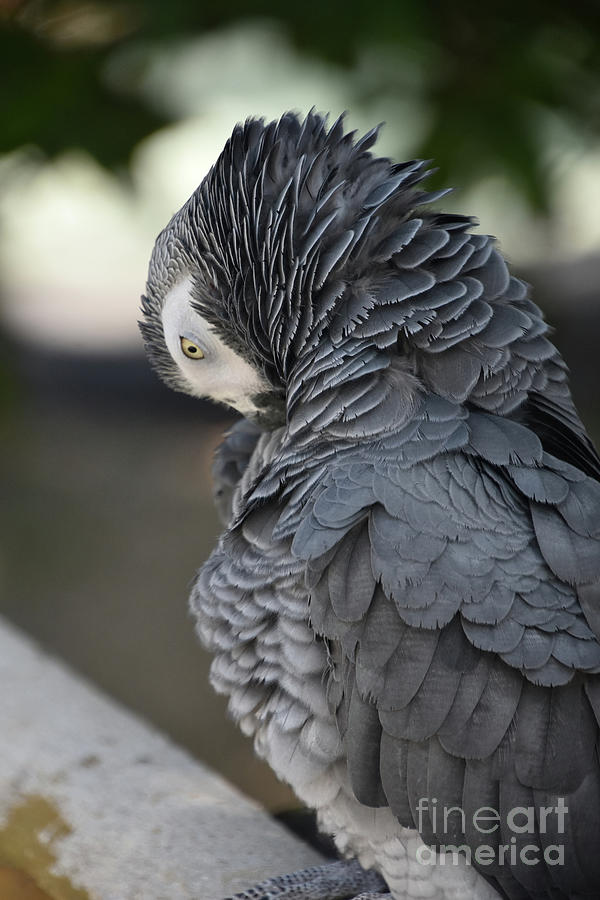
Image source: Bing (Web (fair-use with source credit))
If you see any of the negative signals, stop. Do not push it. One forced session can set back weeks of trust building.
The fluffed feathers in the image above show a relaxed, preening-ready posture. That's your green light.
What You'll Need to Mist Safely
You don't need fancy equipment. But you do need the right basics, and a few common household items are genuinely wrong for this job.
The Spray Bottle
The bottle is the most important tool. Here's what matters:
- Clean and never used for chemicals. This cannot be emphasized enough. A bottle that previously held cleaning solution, even if washed, can retain residues. Buy a new one dedicated to your bird.
- Adjustable nozzle. Look for a nozzle that can produce a fine mist, not a stream. Many bottles have a rotating head with settings ranging from "stream" to "mist." Test it on your own hand first.
- Material. BPA-free plastic or glass. Glass is safest but heavier and breakable. Avoid bottles with exposed metal springs inside, which can corrode or leach into the water.
- Capacity. A 16-ounce bottle is plenty. Smaller birds need far less water per session.

Image source: Bing (Web (fair-use with source credit))
Bottle styles to avoid: trigger sprayers that only produce a stream, pump bottles that dispense thick droplets, and any bottle with a metal spring exposed to the water inside.
Water Quality and Temperature
Tap water varies hugely by region. Chlorine and chloramine are common additives that can irritate a bird's sensitive respiratory tract. Fluoride is another concern, though less studied in birds.
Filtered water is the safest choice. A basic activated carbon filter removes chlorine and most volatile compounds. Distilled water is also safe, though it lacks trace minerals.
Do not use softened water, which has elevated sodium levels that aren't ideal for birds.
Temperature matters far more than most owners realize. Avian vets recommend lukewarm water in the 85, 95°F range. Cool water at 70°F can cause a temperature shock reaction, and hot water above 110°F can scald delicate skin under the feathers.
Test the water on the inside of your wrist, the same way you'd test baby formula. It should feel comfortably warm but not hot.
The Environment
Before you spray, check the room:
- Room temperature. At least 70°F. Warmer is better, since evaporation from wet feathers drops body temperature quickly.
- No drafts. Close windows, turn off ceiling fans, and redirect air conditioning vents away from the bird.
- No direct sunlight. Wet birds can overheat or sunburn more easily. Indirect, bright light is fine.
- Calm atmosphere. No loud TV, no barking dogs, no toddlers running through. Misting should feel like peaceful rainfall, not a chaotic event.
Optional Tools
These aren't required, but they help:
- A dedicated spray perch. Some birds prefer to be misted on a specific stand. It creates a routine and reduces anxiety.
- A towel or waterproof mat. Place it under the cage or perch to make cleanup effortless.
- A warm lamp. Only if the room runs cool. Position it safely away from the cage, per manufacturer specifications, to provide a warm spot for post-mist drying.
Step-by-Step: How to Mist Your Parrot the Right Way
This is the sequence that works reliably across species. Follow it in order, and adjust only after you know your individual bird's preferences.
Step 1: The Pre-Mist Health Check
Take 30 seconds before every session. Look at your bird's posture and breathing.
- Is the bird alert and active?
- Is breathing smooth and unlabored?
- Any nasal discharge or tail bobbing?
- Any recent changes in appetite or droppings?
If anything feels off, skip the misting. A skipped session costs nothing. A misted sick bird can cost you a vet visit.
Step 2: Water Prep and Bottle Setup
Fill your clean bottle with filtered water. Warm it to 85, 95°F. Check the temperature on your wrist.
Set the nozzle to the finest mist setting. Test spray once into the air to confirm the pattern is a fine mist, not a stream.
Step 3: Positioning
Position yourself about 8, 12 inches from the bird. You want the spray to arc down onto the bird from above, mimicking light rain from a canopy. Standing at eye level and spraying horizontally feels more like a confrontation.
Spraying from directly overhead also avoids the face entirely, which is the most sensitive area.
Step 4: The First Spray
Start with a single, brief spritz of 1, 2 seconds. Pause. Watch your bird's reaction.
If the bird leans into it, fluffs, or spreads a wing: continue in 3, 5 second bursts, spraying gently over the back, wings, and tail. Let the water bead on the feathers rather than soaking through.
If the bird pulls away or shows stress signals: stop. Wait. Offer a favorite treat.
Try again another day, possibly with a different approach, like offering a shallow dish instead.
Step 5: Read the Saturation Level
You're aiming for lightly damp feathers, not a soaked bird. Here's the difference:
| Saturation Level | Visual Cue | Verdict |
|---|---|---|
| Light mist | Water beads on outer feathers, skin is dry | Ideal |
| Moderate damp | Feathers clump slightly, skin barely moist | Acceptable |
| Soaked through | Water drips off the bird, skin visibly wet | Too much. Stop. |
Step 6: Post-Mist Drying
After the session, move the bird to a warm, draft-free area. A quiet room with ambient warmth works best. Let the bird preen naturally.
This is their time to redistribute oils and align each feather. Do not towel-dry a parrot unless it's genuinely cold and you have no other option. The towel can damage feather structure, and the restraint causes stress.

Image source: Bing (Web (fair-use with source credit))
Step 7: Clean Up and Note-Taking
Drain the bottle, rinse it thoroughly with hot water, and air-dry it upside down. A tiny bit of mold or bacteria in the nozzle becomes a respiratory hazard next time.
Also, make a mental note: how did your bird respond? The more sessions you track, the clearer your bird's preferences become. Some birds love a morning mist.
Others prefer late afternoon. Some like it from above, and some prefer a slight angle. You're building a custom routine for a specific bird, and that takes observations over time.
How Often Should You Mist? (Frequency by Species and Season)
Frequency is where most owners either overthink or neglect entirely. The real answer depends on three factors: species, environment, and individual preference.
Species Baseline
We covered the species table earlier, but the "why" matters.
- African Greys and Cockatoos produce visible powder down. Their feathers literally turn to dust as they grow. That dust needs moisture to be groomed off properly. Without it, feathers look dull, and the home fills with dander. These birds benefit from misting 3, 4 times per week, and some owners mist daily in dry winter months.
- Macaws have oilier feathers designed for tropical rain. They don't need as much help. 2, 3 times per week is enough, and over-misting can strip natural oils.
- Conures, lovebirds, and budgies are smaller and lower-maintenance. They also often prefer bathing in a shallow dish. 2 times per week is a solid baseline.
Seasonal Adjustments
The season matters more than most species differences.
Winter (with forced-air heating): Indoor humidity can plummet below 30%. Increase misting frequency by 25, 50%. Watch for dry, flaky skin and increased feather dust.
This is also the season to consider a humidifier in the bird's room as a complement to misting.
Summer (with air conditioning): AC removes humidity just like heat does, though less aggressively. Keep your baseline schedule.
Rainy or naturally humid seasons: If your home naturally sits at 50, 60% humidity, scale back. Birds in high-humidity environments don't need as much help.
Molt season: Feathers regrow rapidly, and the process is itchy and uncomfortable. Misting daily during a heavy molt can bring significant relief. The moisture softens sheaths and makes preening more effective.
Signs Your Bird Needs More (or Less) Misting
Body language is your best guide. Track these indicators:
Signs of under-misting:
- Dull, brittle-looking feathers
- Visible feather dust buildup, especially on Greys and Cockatoos
- Excessive scratching or frantic preening
- Dry skin flakes visible at the feather base
Signs of over-misting:
- Oily or matted feathers beyond normal preen
- Reduced preening activity, as if feathers are too saturated
- Coughing or sneezing after sessions
- Increased irritability or avoidance behaviors
Default: Start Slow, Build Up
If you're new to misting, start with once a week. See how your bird responds. Then add a session and observe.
Most parrots settle into enjoying misting within 2, 3 sessions if the water is warm and the approach is gentle. When the bird starts soliciting misting, leaning forward and spreading its wings at the sight of the bottle, you've nailed it. That's the end goal.
The Risks and Mistakes That Can Hurt Your Bird
Misting is safe when done right. But there's a real list of mistakes that can cause harm. We've compiled these from avian veterinary guidance and documented case reports.
Over-Misting and Respiratory Stress
Wet feathers increase the work of breathing. The water adds weight, and the evaporation pulls heat from the body. For a healthy bird, that's manageable.
For a bird with subclinical respiratory issues, it can push them into visible distress.
Signs of respiratory stress after misting: open-mouth breathing, tail bobbing, extended neck, or unusual vocalization. If you see any of these, stop misting immediately, move the bird to a warm, quiet area, and monitor closely. If symptoms persist, contact your avian vet.
Spraying the Face, Nostrils, or Eyes
The nares (nostrils) and eyes are delicate. Fine mist can irritate them, and water in the nasal passages can cause aspiration if the bird inhales at the wrong moment. Always spray from above and behind the head area.
Let the mist fall onto the back and shoulders.
If you accidentally spray the face, don't panic. Wipe gently with a soft cloth and observe for any respiratory reaction. Most birds handle an occasional face spritz without issue, but it's a sign to adjust your aim.
Cold Water and Temperature Shock
Cold water triggers a sharp physiological response. Blood vessels constrict, heart rate spikes, and the bird may temporarily lose coordination. In extreme cases, this shock response has contributed to sudden collapse in small birds.
Always use lukewarm water. If you can't measure it precisely, err on the side of warmer rather than cooler, but never hot. Test on your wrist before every session.
Dirty Bottles and Bacterial Growth
The inside of a spray bottle is a breeding ground for bacteria if left damp. Pseudomonas, E. coli, and various fungi thrive in standing water. Each spritz then aerosolizes those pathogens directly into the air your bird breathes.
Clean your bottle after every use. Hot water and a mild dish soap, rinsed thoroughly, is sufficient. Air-dry completely before storing.
Replace the bottle every few months if it shows signs of wear.
Using Additives or Essential Oils
This one is a hard no. Essential oils, vitamin powders, and "feather conditioning" additives are frequently marketed to parrot owners. Avian vets warn against them.
The oils coat the feathers and interfere with natural waterproofing, and the aromatic compounds can be toxic to a bird's delicate respiratory system.
Plain, filtered water is all you need. Nothing else.
Forcing a Reluctant Bird
The most common behavioral mistake is persistence. The bird says no, and the owner keeps spraying. Every forced session reinforces fear.
Over weeks, that fear generalizes to the owner's hands, the bottle, and the entire room.
If your bird refuses misting, respect the refusal. Offer alternatives. A shallow dish of lukewarm water, wet leafy greens, or a gentle mist only when the bird is in a calm, receptive state will eventually win most birds over.
Patience is not a virtue here. It's a requirement.
Misting vs. Other Bathing Methods
Misting is one tool in the avian hygiene toolkit. It's not always the best one. Here's a realistic comparison of the options.
Shallow Dish Bathing
A wide, shallow dish of lukewarm water placed at the bottom of the cage or on a play stand. Many small parrots, especially Budgies and Lovebirds, prefer this method.
Pros:
- Bird controls the experience entirely
- No restraint or handling involved
- Natural and self-directed
Cons:
- Some birds ignore it completely
- Splash water can get everywhere
- Needs regular cleaning and water changes
Best for: Small parrots and birds that show curiosity toward water dishes.
Shower Perches
A perch designed to attach to a shower wall or stand in the shower. The bird sits while warm water falls nearby or directly on it.
Pros:
- Mimics natural rainfall most closely
- Provides longer bathing sessions
- Can become a bonding ritual
Cons:
- Requires close human supervision at all times
- Risk of burns if shower temperature spikes
- Not suitable for timid birds or small apartments
- Some birds find the shower environment frightening
Best for: Larger, confident parrots that enjoy water and have a trusting bond with their owner.
Wet Leafy Greens
Damp kale, spinach, or other leafy greens offered to the bird. The bird rubs against them, transferring water to its feathers.
Pros:
- Zero stress
- Combines nutrition with bathing
- Works for very nervous birds
Cons:
- Provides very light moisture only
- Not sufficient for dusty species
- Can make a mess on cage floors
Best for: Nervous birds, small parrots, and as a stepping stone toward misting.
Wet Hands or Fingers
Wet fingers lightly stroked over the bird's feathers. Sometimes called "finger bathing."
Pros:
- Maximum trust building
- Extreme control over water placement
- Works for hand-tamed birds
Cons:
- Time-consuming
- Requires a very trusting bird
- Impractical for large parrots or daily bathing
Best for: Hand-raised birds and situations where you're building trust after a setback.
How Misting Compares
| Method | Control | Coverage | Stress Level | Best For |
|---|---|---|---|---|
| Misting | Moderate | Full body | Moderate | Most parrots, dusty species |
| Dish bathing | Bird-controlled | Partial | Low | Small parrots, curious birds |
| Shower perch | Low | Full body | High for some | Confident, large parrots |
| Wet greens | Bird-controlled | Minimal | Very low | Nervous birds, transition |
| Wet hands | High | Partial | Low | Bonded, hand-tamed birds |
Misting wins for most households because it balances coverage, control, and stress. You know exactly how much water your bird gets, and you can adjust in real time. It's also the only method that works well for heavy dust producers like Greys and Cockatoos.
Expert Tips for Building a Routine That Works
A consistent routine does more than keep feathers healthy. It builds trust, creates predictability, and gives your bird something to look forward to. Here's how to build one that sticks.
Pair Misting With Something Positive
Some birds never learn to love misting on their own. They need a behavioral bridge. Offer a favorite treat immediately after a successful session.
Over time, your bird will start associating the bottle with the reward, and the misting itself becomes a secondary reinforcer.
For example, one owner behavior we've seen work reliably: shake the bottle, show the bird a sunflower seed, then mist for three seconds, then give the seed. Within two weeks, the bird starts leaning toward the bottle when it sees it.
Use Consistent Cues
Birds are pattern recognition machines. If you always mist in the same room, at the same time, with the same bottle, your bird will begin to prepare itself. A consistent routine reduces surprise and anxiety.
A simple verbal cue helps too. Say "bath time" or "splash splash" before you start. Eventually, your bird will recognize the phrase and the action.
Adjust for Your Bird's Energy Levels
Misting a bird that's already overstimulated is a recipe for disaster. If your bird is mid-play, bouncing around, and vocalizing loudly, wait until they're calm. The best time is typically after a meal, when energy drops slightly, or in the morning before the day's activity ramps up.
Track the Response Over Weeks
Birds have good days and bad days, just like we do. Don't judge your misting routine on a single session. Track the pattern over 3, 4 weeks.
Is the bird more relaxed? Is the feather condition improving? Are there fewer signs of stress?
If you notice a persistent negative response, change your approach entirely. Switch to dish bathing. Try a different time of day.
Re-evaluate the temperature and distance. The problem is usually fixable, but it requires shifting one variable at a time to isolate the issue.
Long-Term Maintenance
Your spray bottle needs regular cleaning. Your water source needs regular verification if you change filters or brands. And your bird's response needs regular reassessment as seasons change and as the bird ages.
A senior bird with arthritis may not want to hold a wing up for misting. A molting bird may want extra sessions. A bird going through a hormonal phase may be more territorial about its space.
Adjust the routine as your bird's life stage shifts.
When to Stop Misting and Call an Avian Vet
There are times when misting is not the answer. Here's the list of signals that should send you to the phone.
Respiratory Red Flags
- Labored breathing that doesn't resolve within an hour after misting
- Tail bobbing at rest
- Open-mouth breathing
- Nasal discharge, bubbles from the nares, or sneezing that persists
- Unusual voice change or loss of voice
These symptoms can indicate an underlying respiratory infection, aspergillosis, or an allergic reaction that misting may have aggravated.
Water Aspiration
If your bird inhales water into its lungs, you'll likely see immediate coughing, head shaking, and a distressed posture. Hold the bird upright and gently support its chest (reference your avian vet's handling instructions; do not squeeze). The bird will usually clear it with a bit of time and coughing.
If symptoms persist beyond a few minutes, or if the bird shows any bluish tint to the skin around the beak, seek emergency veterinary care immediately.
Skin and Feather Damage
Misting does not cause feather damage directly. But if you notice that your bird's feathers are becoming oily, brittle, or matted despite regular misting, there might be an underlying nutritional or health issue that water can't fix.
Post-Mist Lethargy
A healthy bird will preen and then rest. A bird that seems exhausted, fluffed, and unresponsive after misting is not handling it well. If this happens more than once, stop misting entirely and consult an avian vet.
There may be an issue with your bird's metabolism, respiratory system, or general health.
When to Consult a Professional
The Association of Avian Veterinarians (AAV) recommends an annual wellness exam for all parrots. If you have questions about your bird's specific bathing needs, bring it up at your next appointment. Your vet can recommend a humidity target for your home and a species-specific bathing frequency based on your bird's health profile.
Frequently Asked Questions
How often should I mist my parrot?
Most parrots benefit from misting 2, 4 times per week. African Greys and Cockatoos need more due to heavy feather dust production. Small parrots like Budgies and Lovebirds do fine with 2 sessions weekly.
Adjust based on your home's humidity and your bird's response.
Can I use tap water to mist my parrot?
Filtered water is safest. Tap water contains chlorine and sometimes chloramine, which can irritate a bird's respiratory system. If filtered water isn't available, let tap water sit in an open container for 24 hours to allow chlorine to evaporate.
This does not remove chloramine, so filtered water is still the better choice.
Why does my parrot hate being misted?
Most often, the bird hates cold water, a harsh spray, or being surprised. Try lukewarm water (85, 95°F), the finest mist setting, and a gradual introduction. Pair misting with a favorite treat.
If your bird still refuses, offer a shallow dish of water or wet leafy greens instead.
Is it okay to mist my parrot every day?
Yes, for most species. Daily misting is fine as long as you use lukewarm water, keep sessions short (2, 5 minutes), and let the bird dry in a warm, draft-free area. Some dust-heavy species like African Greys actively enjoy daily misting.
Do I need to dry my parrot after misting?
Not usually. Most birds will preen and dry naturally. You only need to intervene if the room is cool or the bird is showing signs of being cold.
Move the bird to a warm, draft-free space and let it preen. Never towel-dry unless absolutely necessary, as towels can damage feather structure.
Can misting cause respiratory problems?
It can if done incorrectly. Cold water, soaking the bird excessively, or misting a bird with an undiagnosed respiratory infection can all cause issues. Use lukewarm water, keep sessions light, and always skip misting if your bird shows any signs of respiratory illness.