
Most cats never need a bath. That's the honest starting point for anyone searching how to bathe a cat that hates water, because plenty of you don't need to get your cat wet at all. The rest genuinely do, usually because of a medical order or a mess no tongue can fix.
Either way, the goal is identical. Fast, safe, and without convincing your cat that you're a threat.
Details decide this one. Cat skin sits at roughly pH 6.0 to 7.5 and is thinner than ours, so human shampoo strips it. Bath water should sit near body temperature, roughly 37 to 38 °C (98 to 101 °F), and only 7 to 10 cm deep.
As of 2026, mainstream feline veterinary guidance still treats routine bathing as unnecessary for most healthy cats.
Quick Answer
Bathe a water-averse cat only when there's a genuine reason. Fill the tub or sink before bringing the cat in. Use 7 to 10 cm of warm water on a non-slip mat.
Wash from the shoulders back and never wet the head. Rinse fast, lift straight into a towel, and finish the whole thing inside five minutes.

Image source: Bing (Web (fair-use with source credit))
First, the Uncomfortable Question: Does Your Cat Actually Need a Bath?
A healthy adult cat spends a large share of its waking hours grooming. That's not vanity. The feline tongue is covered in backward-facing keratin spines called papillae, and they work like a comb, wicking saliva down to the skin and pulling loose hair and debris out of the coat.
That system is remarkably good. Which is why the honest answer for a lot of readers is that the bath you're planning isn't necessary. Skipping it protects both the cat's skin barrier and your relationship with them.
So before you run the tap, work out which category you're actually in.
When a bath is genuinely justified
- Toxic contamination. Antifreeze, motor oil, paint, tar, household chemicals, anything the cat will lick off. This one isn't negotiable.
- Skunk spray. Rare in the UK, common enough in North America.
- A vet-prescribed medicated protocol. Chlorhexidine or miconazole for bacterial and yeast dermatitis. Lime sulphur dips for ringworm (dermatophytosis).
- Heavy flea burden, particularly in kittens too young for spot-on products.
- Urine or faecal soiling. Diarrhoea, incontinence, litter box accidents, or a longhair with a soiled rear.
- Cats who can't groom themselves. Arthritic seniors, obese cats who can't reach their lower back, cats recovering from surgery.
- Hairless breeds. Sphynx, Peterbald and similar have no fur to wick sebum away, so it builds up on the skin and in the folds.
- Greasy coat conditions, including stud tail and seborrhoea.
When a bath is the wrong move
Here's where a lot of people go wrong. They see a symptom, assume dirt, and reach for the shampoo when the real answer is a phone call to the vet.
| What you're seeing | Is a full bath the answer? | Better first move |
|---|---|---|
| Dandruff and flaking | No | Vet check. Could be diet, obesity, or skin disease. Bathing often worsens it. |
| Bald patches or scabs | No | Vet visit first. Could be fleas, allergy, ringworm, or overgrooming from stress. |
| Sudden stop in grooming | No | Vet visit. This is a classic pain or illness signal in cats. |
| Mild dust or a dirty patch | No | Damp cloth, grooming wipe, or a rubber grooming mitt. |
| Matted longhair coat | No | Comb out or clip first. Water tightens mats and traps moisture against skin. |
| Smells "off" | Usually no | Check the mouth, ears and rear. Odour in cats is usually medical, not dirt. |
| Open wound or surgical site | No | Vet guidance only. Do not soak. |
| Kitten under 4 weeks | No | Damp cloth only. Very young kittens can't thermoregulate. |
The overgrooming trap
Bathing too often does real damage. Strip the sebum repeatedly and you get dry, flaky skin, which itches, which triggers more grooming, which makes the skin worse.
If your cat is otherwise healthy, has no medical reason, and simply looks a bit scruffy, the fix is a brush and a comb. Not a bath.
Why Cats Lose the Plot Around Water (And Why That Matters for Your Approach)
Understanding the "why" isn't academic here. It tells you exactly which parts of the bath to change.
The domestic cat descends from Felis lybica, the African wildcat, an arid-region species with no evolutionary reason to swim. Water simply wasn't part of the deal.
But the deeper problem is mechanical. Cat fur, particularly a double coat, absorbs water and holds it. A soaked cat gets heavy, cold and slow.
That's a genuine vulnerability signal to an animal that survives on being quick.
The four things your cat is actually reacting to
Most owners assume it's the water. It's usually not just the water.
- Loss of traction. A wet porcelain tub or acrylic sink is a skating rink. A cat that can't grip goes straight into panic. This is fixable and it's the single biggest win available to you.
- Restraint. Being held in place with nowhere to retreat frightens most cats more than being wet. Cats are ambush predators with a strong flight preference. Removing the exit is the trigger.
- Noise. Running taps, sprayers and force dryers in a small tiled room are loud and echoey. Cats hear well into the ultrasonic range, so bathrooms are genuinely unpleasant acoustically.
- Temperature. Wet fur plus evaporation equals rapid heat loss. Cats have a higher normal body temperature than we do, roughly 38.1 to 39.2 °C (100.5 to 102.5 °F), and they feel the chill fast.
What that means for your method
Every one of those has a countermeasure, and they're the backbone of everything that follows:
- Rubber mat on the tub floor, always.
- Fill the water before the cat comes into the room. Never run the tap with the cat present.
- Use a pitcher for rinsing instead of a sprayer where you can. Quieter, gentler, more control.
- Warm the room first, to around 22 to 24 °C (72 to 75 °F).
- Give the cat something solid to grip. A mesh bath bag, a towel under the paws, or simply your forearm.
One bad bath can cost you years
Cats are prone to what behaviourists call single-event learning. A genuinely terrifying experience can create a lasting association after one exposure, no repetition required.
That's why "just get through it" is bad advice. A cat that gets ambushed, held down and drenched may start avoiding the bathroom entirely, or flinch when you pick them up. Recovery from that takes months of careful work.
The trade is simple. Spend a bit longer preparing and you keep your cat's trust.
Not every cat hates it
Worth knowing, because it affects expectations. Turkish Vans, Bengals, Maine Coons and Turkish Angoras include a decent number of individuals who tolerate or actively enjoy water. Coat structure plays a part, and so does early exposure.
The socialisation window in kittens runs roughly from 2 to 7 weeks of age. Cats handled gently around water and grooming during that period are considerably easier to bathe as adults. If you have a kitten, that's your opportunity.
The 6 Variables That Decide How You Bathe This Particular Cat
There's no single correct bathing method. There's a correct method for your cat, on this occasion, and it changes based on six things.
Coat Type and Length
Coat drives your time budget more than anything else.
| Coat type | Bath time | Drying time | Special handling |
|---|---|---|---|
| Shorthair (DSH, Siamese, Burmese) | 3 to 5 min | 20 to 40 min | Easiest. Towel drying usually enough. |
| Medium coat (Ragdoll, Norwegian Forest) | 5 to 8 min | 45 to 90 min | Comb while damp to prevent tangles. |
| Longhair with dense undercoat (Persian, Himalayan) | 8 to 12 min | 1 to 3 hours | Must be fully mat-free first. Water sets mats hard. |
| Rex coats (Devon, Cornish) | 3 to 5 min | 15 to 30 min | Thin coat, chills fast. Warm room essential. |
| Hairless (Sphynx, Peterbald) | 3 to 5 min | 10 to 20 min | Clean skin folds, nail beds and ears. |
The rule that catches people out: never bathe a matted cat. Mats shrink when wet, tighten against the skin, and trap moisture underneath. That combination causes sores and skin infection. Clip or comb out first, or book a groomer for a sanitary trim.
Age, Weight and Mobility
- Kittens under 8 weeks. Avoid full baths. Poor thermoregulation means real hypothermia risk. Damp cloth or a vet-approved flea protocol instead.
- Healthy adults. Standard approach applies.
- Seniors (11 and over). Degenerative joint disease is common in older cats and often undiagnosed. It's the reason many stop grooming their back end. Support the hindquarters. Keep it very short.
- Overweight cats. Often need help most, tolerate handling least. They physically can't reach their lower back or rear. Prioritise those areas, skip the rest.
- Cats with heart disease, asthma or brachycephalic faces. Stress raises respiratory and cardiac load. Get vet sign-off first.
Temperament Grading: Green, Amber or Red
Be brutally honest here. This single judgement decides whether you bathe at home or hand it over.
Green. Tolerates nail trims, brushing and being held. Grumbles but doesn't escalate. Home bath is reasonable, ideally with a second pair of hands.
Amber. Struggles hard, wriggles, vocalises, may swipe defensively but is clearly trying to escape rather than attack. Home bath is possible with full prep, a mesh bag, and two people. Abort readily.
Red. Bites without warning, redirects aggression, goes still and then explodes, or has previously drawn blood during handling. Do not bathe this cat at home. Book a feline-experienced groomer or a vet, and ask about pre-visit medication.
Cat bites are not a minor injury. Their teeth are narrow and deep, which seals bacteria under the skin. The CDC's guidance on animal bites and pet-related illness recommends prompt medical attention, and hand bites in particular need same-day care because of the tendon sheath risk.
The Reason for the Bath
The purpose changes the product, the technique, and whether a bath is even the right tool.
- Dirt or smell: waterless foam or wipes will usually do.
- Toxic substance: full water bath, immediately, plus a call to a poison line.
- Fleas: a bath drowns and removes fleas, but it's a stopgap. Long-term control means a vet-supplied product.
- Ringworm or yeast: vet-prescribed dip or medicated shampoo, with a specific contact time that must be observed.
- Soiling around the rear: spot clean only. No need to wet the whole animal.
Solo or Two-Person
A two-person bath is faster, safer and calmer, and it isn't close. One person holds and reassures, the other washes and rinses. Total wet time drops sharply.
If you're alone with an amber cat, use a mesh bathing bag. It gives the cat something to grip, contains the claws, and lets water and shampoo pass through the mesh.
Solo bathing a cat that genuinely fights is where most injuries happen. If nobody can help you, that's a signal in itself.
Your Bathroom Setup
The room you have available shapes the plan more than people expect.
- Kitchen or utility sink. Best option for most cats. Waist height, small, easy to control, less echo.
- Bathtub. Fine, but you'll be kneeling and bent over, which weakens your grip. Use a mat and keep water shallow.
- Shower stall only, no tub. Common in flats. Use two washing-up bowls on the shower floor. One for washing, one for clean rinse water. Quieter than a shower head and far more control.
- Cold bathroom. Heat it for 15 minutes first. A cold tiled room raises stress and slows drying.
The Decision Tree: Which Cleaning Method Fits Your Situation
Start at the top and stop at the first branch that fits.
| Your situation | Branch | Time needed |
|---|---|---|
| Small dirty patch, mild soiling, healthy cat | Damp-cloth spot clean | 2 to 5 min |
| General grubbiness, mild odour, cat won't tolerate water | Waterless foam or wipes | 5 to 15 min |
| Real need, green or amber cat, help available | Full water bath at home | 30 to 60 min including drying |
| Matted longhair, sanitary trim needed, or you're not confident | Professional groomer | 1 to 3 hours, booked |
| Red-zone cat, medical bath, or previous bite history | Vet clinic or sedated groom | Half day, by appointment |
Branch 1: Damp-Cloth Spot Clean
If the mess is localised, then clean only that area. This handles more real-world situations than people realise.
Take a soft cloth, wet it with plain warm water, and wring it out until it's damp rather than dripping. Wipe in the direction of hair growth. For a soiled rear, work from the outside inward and use a fresh section of cloth each pass.
Follow with a dry towel to blot. That's it. No shampoo needed for most spot cleans, and no reason for the cat to be in the bathroom at all.
Branch 2: Waterless Foam or Grooming Wipes
If the cat is genuinely water-phobic and the issue isn't medical, then this is where you should be. Rinse-free foams and pet wipes cover the great majority of "my cat is a bit grubby" cases.
The technique matters. Don't slather it on. Work in sections, apply a small amount, massage it into the coat with your fingertips or a rubber mitt, then comb or towel out the residue.
Where waterless products fall short: heavy grease, tar, chemical contamination, and anything requiring a prescribed contact time.
Branch 3: Full Water Bath at Home
If there's a real reason, the coat is mat-free, and your cat grades green or amber, then proceed.
The headline conditions: warm room, filled tub before entry, non-slip mat, shampoo pre-diluted, towels ready, and a hard five-minute limit on wet time.
Branch 4: Professional Groomer
If the coat is matted, you need a sanitary trim or lion cut, or you simply don't fancy the fight, then book someone who works with cats regularly.
Grooming is largely unregulated in both the US and the UK, so qualifications vary enormously. Look for feline-only salons, groomers with Fear Free certification, or those who advertise cat handling specifically. Ask directly how they handle a cat that struggles.
Not every groomer will take a cat, and many won't take an aggressive one. That's not a bad sign. It's a groomer who knows their limits.
Branch 5: Vet-Supervised or Sedated Bath
If your cat bites, has a medical skin condition, or has failed at a groomer, then this is the safe route.
Sedated grooming happens at a veterinary practice with monitoring. It's the right answer for severely matted cats, ringworm dips on an uncooperative patient, and any cat that poses a genuine bite risk. Expect a pre-anaesthetic assessment, and bloodwork for seniors or cats with known heart or kidney issues.
It costs more. It also removes the risk of a hospital trip for you and a lasting behavioural problem for the cat.
The Prep Work Nobody Talks About, and Why You Start Days Before
This is the part almost everyone skips, and it's the part that decides how the bath goes. A bath that starts as an ambush ends as a fight.
Desensitising the Tub Over 1 to 4 Weeks
If your bath isn't urgent, spend a couple of weeks building tolerance. Short sessions, 30 seconds to 3 minutes, once or twice a day.
Work through this progression, moving up only when the cat is relaxed at the current step:
- Dry tub, treats. Carry the cat in, put them in the empty tub or sink, give a high-value treat, lift them out. Ten seconds is plenty.
- Dry tub with the mat down. Same thing, but the rubber mat is now in place so the surface feels familiar.
- Tap running, cat across the room. Let them hear it while eating something excellent. No contact with water.
- Damp paws. A few centimetres of warm water in the tub. Let them stand in it briefly.
- Damp cloth over the body. Wipe the back and flanks with a warm wet cloth. Treat, then finish.
- A cup of water poured over the shoulders. Then out, dry, reward.
Use a lickable puree tube if your cat likes them. They occupy the mouth, which stops biting, and they keep the cat facing forward. Skipping a meal beforehand makes the treat matter more.
If any step produces genuine distress, drop back a level and stay there for several sessions. Progress isn't the point. Calm is.
Nail Trim, Brush-Out and Mat Check
Trim the claws 24 to 48 hours before the bath, not on the day. It splits the two stressful events and it protects you.
Take the sharp tips off the front claws only. You don't need a short trim, you need to remove the hooks. Stay well clear of the quick, the pink vascular area visible in pale claws.
If your cat won't allow it, that's useful information about how the bath will go.
Then brush thoroughly:
- Shorthairs: a rubber mitt or fine slicker, whole body.
- Longhairs: slicker first, then a metal comb through to the skin.
- Check the friction zones. Armpits, behind the ears, the britches, the belly, and the base of the tail.
If the comb snags, you have a mat, and it needs to come out before water touches it. Small mats can be split with a mat splitter or fingers. Anything tight, close to the skin, or larger than a coin is a job for clippers, and that usually means a groomer.
Pheromones, Gabapentin and When to Ask Your Vet
Synthetic feline facial pheromone products (the F3 analogue) can take the edge off. Spray the towels and the bathroom 15 to 30 minutes ahead so the alcohol carrier has evaporated. Never spray it directly onto the cat.
The effect is modest, not magic, but it costs little to try.
For amber and red cats, ask your vet about pre-visit medication. Gabapentin is the one most commonly used, given orally before the appointment, and it reduces fear-based responses in a lot of cats. Trazodone is sometimes added.
Both are prescription-only and dosing depends on weight, kidney function and age, so this is a vet conversation, never a guess.
The Cornell Feline Health Center publishes accessible owner guidance on feline handling and stress, and it's a reliable place to read up before that conversation.
One last piece of prep that isn't about the cat. Decide your abort point in advance and say it out loud to your helper. Knowing you're allowed to stop makes it far easier to stop at the right moment.
Setting Up the Room Before the Cat Ever Walks In
Everything gets laid out first. The cat comes in last. If you're still reaching for a towel while a wet cat climbs your shoulder, you've already lost the bath.

Image source: Bing (Web (fair-use with source credit))
The kit list
| Item | Why it matters | Rough cost |
|---|---|---|
| Rubber non-slip mat | Traction. The single biggest stress reducer in the room. | $8 to $15 / £7 to £13 |
| Cat shampoo, pre-diluted | Cat-safe pH, spreads faster than neat shampoo | $10 to $25 / £8 to £20 |
| Plastic jug or pitcher | Quiet, controllable rinsing | $3 to $8 / £3 to £7 |
| 3 to 4 towels | One to wrap, one to blot, spares | You've got these |
| Mesh bathing bag (optional) | Grip for the cat, claw containment for you | $8 to $20 / £7 to £18 |
| Metal comb (longhairs) | Comb through damp to stop tangles setting | $6 to $15 / £5 to £13 |
| Lickable treat tube | Occupies the mouth, keeps the head forward | $5 to $12 / £4 to £10 |
| Second bowl or basin | Clean rinse water, no tap noise mid-bath | Use what you own |
Notice what's not on that list. No human shampoo, no washing-up liquid, no baby shampoo.
Getting the room right
Work through this in order, with the door shut and the cat elsewhere:
- Heat the room for 10 to 15 minutes. Target 22 to 24 °C (72 to 75 °F).
- Clear the surfaces. Remove bottles, razors, anything the cat can knock over. Sudden clatters trigger panic.
- Block the escape routes. Close the door properly. Shut the toilet lid. Block the gap behind the washing machine now, not after.
- Lay the mat flat on the tub or sink floor. Press the suction cups down.
- Fill the water to 7 to 10 cm (3 to 4 inches). That's chest height on an average adult cat, not floating depth.
- Check the temperature on the inside of your wrist. It should feel neutral, not warm.
- Fill the second basin with clean rinse water at the same temperature.
- Pre-mix the shampoo. A squeeze bottle with shampoo diluted roughly 1 part to 5 parts warm water spreads in seconds instead of sitting in a blob.
- Fill the jug and set it within arm's reach.
- Lay the towels out, unfolded, on the floor or a closed toilet lid. You want to grab one without looking.
- Stick the treat tube or a lick mat at head height on the tub wall.
- Turn the tap off and leave it off.
That last one matters more than it sounds. Running water is one of the loudest triggers in the whole process.
The two-person handover
If you've got a helper, decide roles before you start. One person is the handler, and their hands never leave the cat. The other is the washer, and their hands never leave the water and shampoo.
Swapping roles mid-bath causes fumbles. Fumbles cause escapes. Agree it in the hallway.
Before you lift the cat
Cats read tension from posture and voice pitch. If you're braced for a fight, you'll telegraph it.
Approach normally. No stalking, no towel behind your back. Pick the cat up the way you always do and carry them in calmly.
Step-by-Step: How to Bathe a Water-Hating Cat in Under Five Minutes
Five minutes of wet time is the target. Ten minutes total, door to door. Speed is kindness here, and every extra minute increases the chance of a bad association forming.
Step 1: Get the cat in without a fight
Carry the cat in facing forward and put them straight down on the mat, hind feet first. Keep one hand under the chest and the front legs supported.
Lowering the back end first lets them feel the surface before the water registers. Dropping a cat in front-first, nose over water, is how you get an immediate scramble.
If you're using a mesh bag, put the cat in it outside the bathroom while they're calm. Zip it, adjust the neck opening so it's snug but not tight, then carry them in.
Step 2: Establish your grip
Your holding hand goes over the shoulders, thumb and fingers around the base of the neck and upper chest. Not a scruff. A steady, supportive hold that stops forward launching.
Your other hand does everything else. Keep your forearm along the cat's flank so they've got something solid pressed against them. Cats settle better with contact on both sides.
If the cat tries to climb, redirect gently rather than pulling. Pulling triggers more climbing.
Step 3: Wet the body from the shoulders back
Use the jug. Pour slowly onto the shoulders and let the water run backward along the spine and down the flanks. Work towards the tail.
Never pour over the head. Never let water run forward into the face. Water in the ear canal is a genuine problem, and it's a common cause of post-bath otitis externa.
The head gets cleaned separately with a damp cloth, later, and only if it actually needs it.
Longhairs need real effort here. A dense undercoat repels water at first. Work the water in with your fingers, section by section, until you can see skin.
Step 4: Lather from neck to tail
Squeeze the pre-diluted shampoo along the spine in a line. Then work it in with your fingertips, always in the direction of hair growth.
Order of coverage:
- Neck and shoulders
- Back and flanks
- Belly and chest
- Legs and paws
- Rear and tail last
The rear goes last for the obvious reason. You don't want to carry that anywhere else on the coat.
Massage, don't scrub. Scrubbing tangles longhair coats and irritates the skin. Firm fingertip circles are enough.
Step 5: Observe contact time (medicated baths only)
If your vet prescribed a medicated shampoo, this is the step people skip and then wonder why the treatment failed. Most chlorhexidine, miconazole and ketoconazole formulations need several minutes of skin contact to work. Follow the label.
That's a long time for a struggling cat, and it's exactly why medicated protocols often belong at a vet clinic. If you're doing it at home, ask your vet whether a shorter contact time with more frequent application is acceptable.
For lime sulphur dips used against ringworm, follow the label exactly. Wear gloves. It stains and it smells strongly of rotten eggs, and that smell lingers in the house.
Step 6: Rinse until the water runs clear, then rinse again
Under-rinsing is the most common technique error in home cat bathing. Residue itches. The cat then grooms it off and swallows it, and you end up with an irritated cat and possible GI upset.
Drain the dirty water. Use your second basin of clean water and the jug. Rinse from the shoulders back, same as before.
Run your fingers through the coat as you go. If it feels even slightly slick, there's shampoo left. Keep going until it squeaks a little.
Then do one more pass. It's always one more pass than you think.
Step 7: Squeeze, lift, wrap
Squeeze the excess water out of the coat with your hands, running down the legs and tail. This removes a surprising amount and cuts drying time meaningfully.
Lift the cat straight into an open towel and wrap immediately. Don't put them down on the floor first. A wet cat on a hard floor will bolt, and now you're chasing a soaked animal through the house.
Wrap snugly with just the head out.
The whole thing, at a glance
| Step | Target time | Non-negotiable rule |
|---|---|---|
| Entry and grip | 15 sec | Hind feet down first |
| Wetting | 45 sec | Shoulders back only, never the head |
| Lather | 60 to 90 sec | Direction of hair growth |
| Contact time | 0, or per label | Only for medicated protocols |
| Rinse | 90 sec | Twice. Always twice. |
| Squeeze and lift | 20 sec | Towel waiting and open |
Reading the Abort Signals: When to Stop Mid-Bath
You need a stop point decided before you start, and you need to actually use it. Pushing through a full-blown panic response is how a one-off bath becomes a permanent handling problem.
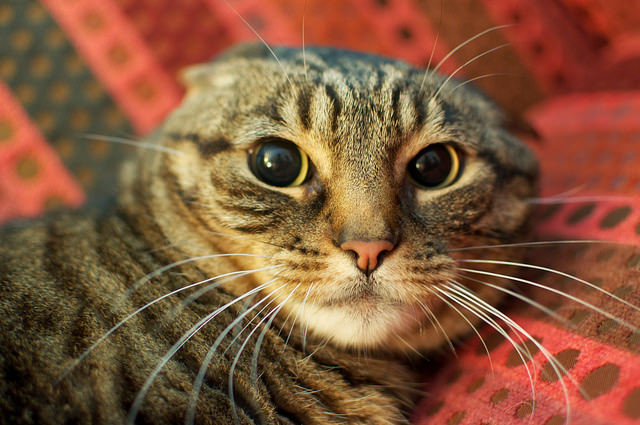
Image source: Web (Bing) / iheartcats.com (Web image (fair-use with source credit))
The escalation ladder
Cats warn you in a fairly predictable sequence. Learn it and you'll spot the turn a good 20 seconds before it happens.
| Stage | What you'll see and hear | Your response |
|---|---|---|
| Mild stress | Ears slightly back, tail tip flicking, low chirping or trilling | Continue, but speed up |
| Rising | Ears rotated flat and sideways, pupils widening, tail thumping, low steady growl | Finish rinsing now, skip anything optional |
| High | Fully dilated pupils, piloerection along spine and tail, hissing, body rigid | Rinse fast, remove, done |
| Critical | Growl shifting to a yowl or scream, bared teeth, lunging or biting rather than escaping | Abort immediately |
That shift from growl to yowl is the one to memorise. A growl is a warning. A yowl or scream means the cat has stopped negotiating.
The signals people misread
Going completely still. This is the big one. A cat that suddenly stops fighting and goes limp has not accepted the bath. That's often behavioural shutdown, a freeze response, and it's a more severe stress state than struggling.
Owners read it as compliance and keep going. Don't.
Flattened, rotated ears. Ears pinned sideways sit differently from ears simply held back in mild annoyance. Sideways and flat is fear.
Dilated pupils in a bright room. Pupils should be narrow slits under bathroom lighting. Wide black pupils mean adrenaline.
Biting instead of fleeing. A frightened cat wants an exit. When a cat turns to bite the hand holding them rather than trying to escape, fear has flipped to defensive aggression. That's your hard stop.
What "abort" actually looks like
Aborting doesn't mean letting go. It means finishing safely and fast:
- Stop lathering. Don't add anything.
- Rinse whatever shampoo is on the coat with two quick jugs of water. Never leave shampoo on the skin.
- Lift straight into the towel.
- Wrap, carry to a warm quiet room, and put them down.
- Walk away. No fussing, no apologising, no picking them back up.
Leaving product on the coat isn't an option, even in an abort. It'll get licked off. Two fast rinses take 15 seconds.
Do not try again the same day
If a bath fails, that cat is done for the day. Stress hormones take hours to come back down, and a second attempt lands on an already sensitised animal.
Wait at least 48 hours. If it's medically urgent, that's your cue to phone the vet, not to try harder.
Aftermath you might see
For 12 to 24 hours after a stressful bath, expect some of these. They're normal and usually settle:
- Hiding under the bed or behind furniture
- Reduced appetite for a meal or two
- Excessive grooming of the bathed areas
- Avoiding you or the bathroom doorway
- Being flinchy about being picked up
What isn't normal, and warrants a vet call: straining in the litter box, going more than 24 hours without eating, or repeated attempts to urinate with nothing produced. Stress is a recognised trigger for feline idiopathic cystitis, and a blocked male cat is a genuine emergency.
Drying Without Undoing All Your Good Work
Plenty of baths go fine and then fall apart at the drying stage. A cold, damp cat is uncomfortable for hours, and that discomfort attaches itself to the memory of the bath.

Image source: Bing (Web (fair-use with source credit))
Blot, never rub
Rubbing a wet coat with a towel creates tangles, and on a longhair it creates mats. Press the towel against the coat, hold for a couple of seconds, lift, move to the next area.
Work through two towels minimum. The first takes the bulk of the water and gets soaked within about a minute. The second does the real drying.
Microfibre towels absorb noticeably more than standard cotton for the same size. If you're bathing a longhair regularly, they're worth having.
The wrap, and why cats tolerate it
Wrap the cat snugly with only the head exposed. The gentle pressure calms most cats, and it stops them bolting while soaked.
Hold them on your lap in the wrap for a few minutes. Change to a dry towel when the first goes cold. Most shorthairs will be most of the way dry after 15 minutes of this.
Drying times by coat
| Coat | Towel only | With low-heat pet dryer | Must-do |
|---|---|---|---|
| Shorthair | 20 to 40 min | 10 to 15 min | Warm room until fully dry |
| Medium coat | 45 to 90 min | 20 to 30 min | Comb through while damp |
| Longhair, dense undercoat | 1 to 3 hours | 30 to 60 min | Comb in sections to the skin |
| Rex | 15 to 30 min | 10 min | Watch for chilling, thin coat |
| Hairless | 10 to 20 min | Rarely needed | Dry the skin folds and armpits |
Should you use a hairdryer?
Only if the cat already accepts one, and only on the lowest heat and speed. Cat skin is thinner than ours and burns more easily.
If you do use one, keep it at least 30 cm away, keep it moving constantly, and never aim it at the face or ears. Most water-averse cats find the noise worse than the bath itself, so towels are usually the better call.
Cage dryers deserve a specific warning. These are the units clipped to a crate that blow heated air at a confined animal. Heat-related deaths have been documented in grooming settings, and reputable feline groomers avoid them. If a salon uses one on your cat, find a different salon.
Comb the longhairs while damp
This is the step that saves you a matted cat next week. Once the coat is damp rather than soaking, run a metal comb through in sections, right down to the skin.
Start at the extremities and work inward. Legs, then flanks, then back. Hold the fur at the base with your other hand so you're not pulling on skin.
A coat that dries with tangles in it locks them in.
Keep them warm until fully dry
Confine the cat to one warm, draught-free room until the coat is dry at skin level, not just on the surface. That means no cat flap, no garden, no sitting on a cold windowsill.
Kittens, seniors and thin cats lose heat fastest. If a cat feels cold at the ear tips or paws, wrap them again and warm the room further.
Signs of hypothermia to watch for: shivering, lethargy, cold ears and paws, and pale gums. Any of those, and it's a vet call.
Then leave them alone
Once dry, put food down and step back. Most cats want to groom themselves thoroughly and then sleep.
Don't hover, don't keep picking them up. Space now is what makes the next bath easier.
Waterless Bathing and Spot Cleaning, Done Properly
For most readers, this is the branch that solves the actual problem. Waterless methods handle everyday grubbiness, mild odour and localised mess with a fraction of the stress.
They're not a lesser option. They're the correct option for the majority of "my cat needs cleaning" situations.
What waterless products actually do
Rinse-free foams and sprays use mild surfactants that lift dirt and oil, plus conditioning agents, in a formula designed to be combed or towelled out rather than rinsed. Grooming wipes do the same job with the product already loaded onto the cloth.
Dry shampoo powders work differently. They're usually cornstarch-based and absorb oil rather than dissolving it. You brush them out completely.
What none of them do well: heavy grease, tar, chemical contamination, or anything with a prescribed contact time. Aggregate owner feedback repeats the same complaint, that foams underperform on genuinely oily coats. That's the product working as designed, not a defect.
Method comparison
| Method | Best for | Time | Watch out for |
|---|---|---|---|
| Damp cloth | Small soiled patches, faces, paws | 2 to 5 min | Too wet leaves the cat chilled |
| Grooming wipes | Quick tidy-ups, dander, light dirt | 3 to 8 min | Sticky residue from cheap wipes |
| Waterless foam | Whole-body freshen-up, greasy patches | 10 to 15 min | Must be combed out fully |
| Dry powder | Oily coats, longhair roots | 10 to 20 min | Brush out completely or it flakes |
| Rubber grooming mitt | Loose hair, surface dust | 5 min | Not a cleaner, just a remover |
How to apply waterless foam properly
Most people use far too much and don't work it in. Then the residue sits on the coat and the cat licks it off.
- Choose a calm moment when the cat is relaxed. Not after a vet visit, not after play.
- Warm the bottle in your hands. Cold product on skin makes cats flinch.
- Dispense a small amount, about a golf ball of foam, into your palm.
- Work it into one section only. Fingertips or a rubber mitt, in the direction of hair growth.
- Towel the section, pressing to lift the residue out.
- Comb through, particularly on longhairs.
- Move to the next section. Stop after two or three sections if the cat is done.
Splitting it across two or three short sessions on different days works better than one long attempt. There's no urgency here, which is exactly the advantage.
Spot cleaning a soiled rear
This comes up constantly with longhairs, seniors, and cats with soft stools. Handle it fast, because faecal matter left against skin causes scald and infection.
Use a soft cloth with plain warm water, or an unscented pet wipe. Wipe from the outside inward, using a fresh area of cloth each pass. Blot dry with a towel.
If it happens repeatedly, the fix isn't cleaning. It's a sanitary trim to shorten the fur around the anus and under the tail, plus a vet conversation about the loose stools.
The one thing to check on your product label
Read the ingredients before anything goes on a cat. Several common "natural" pet grooming ingredients are genuinely dangerous to cats, and they turn up in products marketed for dogs and shared across the shelf.
Avoid anything containing tea tree oil (melaleuca), pennyroyal, wintergreen, citrus oils, d-limonene, or generic "essential oil blend". Cats have limited glucuronidation capacity in the liver, so they clear phenolic compounds far more slowly than dogs or humans do.
Also avoid alcohol-heavy sprays. They sting broken skin and they chill the cat as they evaporate.
When waterless isn't enough
Move up to a full bath if any of these apply:
- The substance on the coat is toxic if licked
- A vet has prescribed a medicated wash
- The coat is genuinely greasy and foam has already failed
- There's a heavy flea burden that needs physically removing
- The soiling covers a large area of the body
Everything short of that list, waterless handles.
Choosing the Right Shampoo (And the Ingredients That Can Kill a Cat)
Getting this wrong is the difference between a clean cat and a poisoned one. Cats metabolise certain compounds badly, and a wet coat gets licked clean afterwards, so anything on the fur ends up inside the cat.
Why human shampoo is off the table
Human skin sits around pH 5.5. Cat skin sits higher, roughly pH 6.0 to 7.5, and the epidermis is far thinner than ours.
Human shampoo, baby shampoo and washing-up liquid are all formulated for that lower pH and for skin that can take it. On a cat they strip sebum, disrupt the barrier, and leave dry flaky skin that itches for days. The cat then overgrooms the irritated area and you've traded a dirty cat for a bald patch.
Dish soap has one narrow exception. It's used in veterinary settings to break down oil, tar and petroleum contamination, because nothing gentler cuts through it. That's an emergency degreasing step under vet advice, not a bath.
The ingredients that genuinely harm cats
| Ingredient | Found in | Risk to cats |
|---|---|---|
| Permethrin and other pyrethroids | Dog flea shampoos and spot-ons | Severe toxicosis. Tremors, seizures, often fatal. |
| Tea tree oil (melaleuca) | "Natural" pet shampoos, skin sprays | Ataxia, tremors, liver damage. Documented feline poisonings. |
| d-Limonene and citrus oils | Insect-repellent shampoos | Hypersalivation, tremors, hypothermia |
| Pennyroyal oil | Herbal flea products | Liver failure |
| Wintergreen (methyl salicylate) | Muscle rubs, some grooming sprays | Salicylate toxicity. Cats clear salicylates very slowly. |
| Phenols and phenolic disinfectants | Household cleaners near the tub | Liver and kidney damage |
| Alcohol (high concentration) | Waterless sprays | Chilling, stinging, ingestion risk |
Permethrin is the one that kills cats. It's safe on dogs at label doses and severely toxic to cats. The usual scenario is a multi-pet household where a cat is treated with the dog's product, or grooms a recently treated dog.
If your cat contacts a permethrin product, that's an emergency. The FDA's Center for Veterinary Medicine publishes safety information on pesticide products for pets, and any suspected exposure warrants an immediate call to a vet or an animal poison control line.
The underlying reason is liver chemistry. Cats have limited glucuronyl transferase activity, the enzyme pathway that conjugates phenolic and salicylate compounds for excretion. Dogs and humans clear these compounds efficiently.
Cats don't.
What to actually use
Keep it simple. A shampoo formulated specifically for cats, fragrance-free or lightly fragranced, soap-free, and pH-balanced for feline skin.
| Shampoo type | Best for | Notes |
|---|---|---|
| Basic cat shampoo | General cleaning, most situations | The default. Nothing clever needed. |
| Colloidal oatmeal | Dry, itchy or sensitive skin | Soothing, not medicated |
| Degreasing | Stud tail, seborrhoea, Sphynx skin | Use sparingly. Strips heavily. |
| Chlorhexidine | Bacterial dermatitis (vet-prescribed) | Needs contact time. Keep out of eyes and ears. |
| Miconazole or ketoconazole | Yeast, Malassezia (vet-prescribed) | Often combined with chlorhexidine |
| Lime sulphur dip | Ringworm (vet-prescribed) | Rinse-free by design. Stains and smells. Gloves required. |
| Flea shampoo | Heavy flea burden, kittens | Must say "safe for cats" explicitly. Check for permethrin. |
Kitten-specific formulations exist and are worth using for cats under six months, mainly because they're milder and lower in fragrance.
Dilute before you apply
Neat shampoo lands as a blob and takes ages to spread through a coat. Diluting roughly 1 part shampoo to 5 parts warm water in a squeeze bottle cuts your lather time meaningfully, and it rinses out faster too.
Professional concentrates specify their own ratios. Follow the label rather than guessing, because over-concentrated product is harder to rinse and more likely to leave residue.
The pre-bath patch test
If you're using a new product on a cat with any history of skin sensitivity, apply a small amount to one spot on the flank first. Rinse it after a minute. Wait 24 hours and check for redness.
Mistakes That Turn One Bad Bath Into a Lifetime Problem
Most bathing disasters trace back to the same handful of errors. None are complicated to avoid.
The ten that cause the most damage
1. Running the tap with the cat in the room. Fill first, always.
2. Water too deep. Anything above chest height makes the cat feel like they're floating, and floating means panic. Stay at 7 to 10 cm.
3. Pouring over the head. Water in the ear canal risks otitis externa. Shampoo in the eye risks a corneal ulcer.
The head almost never needs washing.
4. Skipping the nail trim. Two days beforehand, front claws, tips only. It removes the hooks that let a panicking cat climb.
5. Bathing a matted cat. Wet mats shrink and tighten. They trap moisture against skin and cause sores.
6. Under-rinsing. Residue itches, gets licked off, and causes GI upset. Rinse until the coat squeaks, then rinse once more.
7. Using dog products. Not just flea shampoo. Plenty of dog grooming products contain oils and compounds cats can't process.
8. The force dryer on a first-timer. High airflow and high noise on a cat with no prior exposure is a guaranteed panic.
9. Trying again the same day. Stress hormones take hours to clear. A second attempt lands on a cat already primed for a fight.
10. Going solo with a cat who fights. Most serious bathing injuries involve one person, no bag, and a cat well past their threshold.
The subtler errors
Bathing too often. Repeated stripping of sebum causes chronic dry skin. Unless there's a medical protocol or the cat is hairless, most cats need bathing rarely or never.
Letting the cat outside while damp. Wet fur loses heat fast, and a damp cat in a draught is a genuine hypothermia risk.
Turning the bathroom into a bad place. If the only time your cat enters the bathroom is for a bath, the room itself becomes the trigger. Feed them in there occasionally. Play in there.
Apologising and fussing afterwards. Hovering over a stressed cat prolongs the stress.
Treating a symptom as dirt. Flaking, bald patches, sudden odour, a cat who's stopped grooming. These are medical signals. A bath masks them for a day and delays a diagnosis.
The "just get it over with" trap
This mindset causes the most lasting harm. The logic feels sound. The cat hates it, so push through, finish fast, done.
But cats form strong associations from single frightening events. One genuinely terrifying bath can produce a cat who flinches when picked up, avoids the bathroom permanently, or resists all future handling including vet exams.
Aborting a bath costs you one afternoon. Pushing through a panic response can cost you years of easy handling.
Bathing by Scenario: Sphynx, Senior, Longhair, Kitten, Flea-Ridden and Skunked
The core method stays the same. What changes is the prep, the products, and how much you skip.
Sphynx and hairless breeds
If you have a Sphynx, Peterbald, Donskoy or Bambino, then regular bathing is genuinely required, typically every one to three weeks.
With no coat to wick it away, sebum accumulates directly on the skin. Left alone it builds into a waxy brown film, blocks pores, and can cause comedones and skin infection. It also stains fabric.
- Focus on the folds. Armpits, neck, groin, between the toes, around the tail base.
- Clean the nail beds with a soft cloth. Sebum collects there and goes dark.
- Ears produce more wax than in furred breeds. Clean the outer ear only, never inside the canal.
- Use a gentle or mildly degreasing cat shampoo. Over-degreasing causes rebound oil production.
- Dry thoroughly and keep the room warm. Hairless cats chill fast.
Good news for owners: hairless cats bathed from kittenhood usually tolerate it well.
Senior and arthritic cats
If your cat is 11 or older and has stopped grooming their back end, then the cause is usually pain, not laziness.
Degenerative joint disease is common in older cats and frequently goes undiagnosed. A cat who can't twist to reach their lower back isn't neglecting themselves. They physically can't.
- Spot clean rather than full bathe wherever possible.
- If you must bathe, support the hindquarters throughout.
- Keep it under three minutes. Seniors tolerate stress and temperature drops badly.
- Warm the room more than usual, closer to 24 °C.
- Book a vet appointment about the pain. Feline-licensed options exist, and treating the arthritis often restores self-grooming.
A sanitary trim is frequently the better long-term answer for an arthritic cat. Shorter fur around the rear means far less to clean.
Longhairs with dense undercoats
If you have a Persian, Himalayan, Maine Coon or Norwegian Forest Cat, then the mat check comes before anything else.
Run a metal comb from skin to tip across the whole body. If it snags anywhere, deal with that before water.
- Water tightens mats within seconds. A coin-sized mat becomes a hard pad against the skin.
- Budget 8 to 12 minutes of wet time. Dense undercoats repel water at first.
- Two shampoo passes are common on very greasy or soiled longhairs. Rinse fully between them.
- Comb through while damp, in sections, or you'll be back with tangles in 48 hours.
- Drying can take up to three hours. Plan the afternoon around it.
Persians also need face and eye fold cleaning. That's a damp cloth job done separately, never part of the bath.
Kittens
If the kitten is under 8 weeks, then avoid a full bath. Thermoregulation is poor and hypothermia is a real risk.
For a filthy or flea-infested young kitten, use a damp cloth and a fine-tooth flea comb dipped in soapy water. Comb, dip, repeat. It's slow but it works and it doesn't wet the kitten.
For kittens over 8 weeks who genuinely need a bath:
- Use a kitten-specific or very mild cat shampoo.
- Keep water shallower, around 5 cm.
- Room temperature at the top of the range, 24 °C.
- Two minutes maximum.
- Dry immediately and completely. Keep them wrapped and warm for a good half hour after.
Never use adult flea shampoo on a young kitten without checking the minimum age on the label.
Heavy flea burden
If the cat is crawling with fleas, then a bath physically drowns and removes a large proportion of them, but it isn't treatment.
Plain cat shampoo works. The mechanical action of water and lather does the job.
- Lather the neck first. Fleas run for the head when the body gets wet.
- Leave the lather on for a few minutes if the cat tolerates it.
- Use a fine-tooth flea comb afterwards, dipping it in soapy water between passes.
- Treat the environment. Most of a flea population lives in carpets and bedding, not on the cat.
- Follow up with a vet-supplied product, whether spot-on or oral.
Check the label of any flea shampoo for permethrin before it goes anywhere near a cat.
Skunk spray
If your cat has been sprayed, then act fast and keep them outside or in a garage while you prepare.
Tomato juice doesn't work. Skunk odour comes from thiols, and neutralising them takes oxidation, not acid.
The standard mix:
- 1 litre (about 1 quart) of 3% hydrogen peroxide
- 60 ml (1/4 cup) baking soda
- 1 to 2 teaspoons of mild liquid soap
Mix it fresh in an open container. Never store it, because it builds pressure and can burst a sealed bottle.
Apply to the affected areas only, keep it well away from the eyes and mouth, leave for around five minutes, then rinse thoroughly. Follow with a normal cat shampoo bath. Expect some lightening of dark fur.
Toxic contamination
If the cat has oil, paint, tar, antifreeze or a chemical on their coat, then this overrides every other rule here.
Stop the cat grooming. An Elizabethan collar or a towel wrap buys you time. Then call a vet or a poison control line before you wash anything, because some substances need specific handling and some get worse when wetted.
Never use paint thinner, turpentine, petrol or any solvent on a cat. They're absorbed through skin and they're toxic. For oil and tar, veterinary guidance typically involves mild dish soap or vegetable oil to break the substance down, followed by a proper bath.
What It Costs: Home Supplies vs Groomer vs Sedated Grooming
Money isn't usually the deciding factor, but knowing the numbers helps you judge when to stop trying at home.
Home kit, one-off cost
| Item | US | UK |
|---|---|---|
| Cat shampoo, 250 to 500 ml | $10 to $25 | £8 to £20 |
| Waterless foam | $10 to $18 | £8 to £15 |
| Grooming wipes, 50 to 100 ct | $8 to $15 | £7 to £13 |
| Mesh bathing bag | $8 to $20 | £7 to £18 |
| Rubber non-slip mat | $8 to $15 | £7 to £13 |
| Metal comb | $6 to $15 | £5 to £13 |
| Slicker brush | $8 to $20 | £7 to £17 |
| Cat nail clippers | $6 to $15 | £5 to £13 |
| Pheromone diffuser starter kit | $25 to $35 | £20 to £30 |
| Full kit | $90 to $180 | £75 to £150 |
Most of that is reusable for years. The consumables are shampoo and wipes, and a bottle lasts a long time when you're bathing rarely.
Professional grooming
| Service | US typical | UK typical |
|---|---|---|
| Basic cat bath and dry | $50 to $90 | £40 to £70 |
| Bath, dry, nails, sanitary trim | $70 to $120 | £55 to £90 |
| Full lion cut | $80 to $150+ | £65 to £120 |
| Dematting surcharge | $15 to $50 extra | £15 to £40 extra |
| Mobile groomer premium | +$20 to $40 | +£15 to £30 |
| Feline-only salon premium | +10 to 25% | +10 to 25% |
Prices vary a lot by region. Metro areas and feline-only salons sit at the top of these ranges.
Vet clinic and sedated grooming
| Service | US typical | UK typical |
|---|---|---|
| Vet nurse bath, cooperative cat | $40 to $80 | £30 to £60 |
| Pre-visit gabapentin (per dose) | $5 to $15 | £4 to £12 |
| Sedated groom, healthy adult | $150 to $300 | £120 to £250 |
| Sedated groom with pre-anaesthetic bloods | $250 to $400+ | £200 to £320+ |
| Medicated bath course (ringworm, 4 to 8 weeks) | $200 to $600 total | £160 to £480 total |
Sedation isn't a luxury option. For a red-zone cat or a severely matted one, it's the safe route and it's often cheaper than a hospital visit for an infected bite.
The real cost comparison
| Path | Upfront | Ongoing | Best for |
|---|---|---|---|
| Waterless only | $20 to $40 | Low | Most healthy cats, mild grubbiness |
| Home bathing kit | $90 to $180 | Very low | Sphynx owners, regular medicated protocols |
| Groomer, occasional | $0 | $70 to $120 per visit | Longhairs, sanitary trims, nervous owners |
| Vet sedated | $0 | $150 to $400 per visit | Aggressive cats, severe matting, medical baths |
If your cat is a Sphynx needing a bath every two weeks, the home kit pays for itself in about two months. If you're bathing a longhair twice a year, a groomer is easier and probably cheaper once you factor in the mat risk.
Where people waste money
Buying a force dryer for a cat who's terrified of it. Buying a grooming table for a once-a-year bath. Buying three brands of waterless foam because none of them cut through what was actually a medical skin problem.
The two purchases that consistently earn their keep are the non-slip mat and the mesh bathing bag. Both are cheap and both directly reduce the panic response.
Bite and Scratch Safety, Ringworm Precautions and When to See a Doctor
Cat bites are the injury people underestimate most. They look small and they behave badly.
Why cat bites are worse than they look
Cat canines are long, narrow and sharp. They puncture deep and the surface wound closes over within hours, which seals bacteria into the tissue underneath.
Cat bites become infected considerably more often than dog bites. Hand and wrist bites are the worst because tendon sheaths and joint capsules sit close to the surface, and infection there spreads fast.
The main organism is Pasteurella multocida, which lives in most cats' mouths and can produce marked swelling and pain within 12 to 24 hours.
Cat bite first aid
Do this immediately, not after you've finished drying the cat:
- Let it bleed briefly. Don't squeeze hard.
- Wash under running water for at least five minutes.
- Irrigate the puncture thoroughly with clean water or saline.
- Apply antiseptic and a clean dressing.
- Note the time and take a photo of the wound.
When to see a doctor
Same-day medical attention for any of these:
- Any bite to the hand, wrist, finger, foot or over a joint
- Any deep puncture, regardless of location
- Bites near a prosthetic joint or implanted device
- Anyone immunocompromised, diabetic, on chemotherapy, or without a spleen
- Tetanus vaccination not current within 10 years
- A bite from an unfamiliar or unvaccinated cat (rabies risk depends on region)
Go straight away if you see spreading redness, warmth, swelling, pus, red streaking up the limb, fever, or reduced movement in a finger or joint.
CDC guidance recommends prompt evaluation for cat bites specifically because of the puncture depth and infection rate. Prophylactic antibiotics are commonly prescribed rather than waiting for infection to appear.
Scratches carry their own risk. Bartonella henselae causes cat scratch disease, which typically shows up 3 to 14 days later as a swollen lymph node near the scratch, sometimes with fever and fatigue. It's usually self-limiting in healthy adults but needs medical attention in children and immunocompromised people.
Ringworm precautions
Ringworm isn't a worm. It's a fungal infection, usually Microsporum canis in cats, and it transmits readily to humans.
If you're bathing or dipping a cat with confirmed or suspected ringworm:
- Wear disposable gloves and a long-sleeved top you can wash hot.
- Use an apron or old clothing you'll strip off straight after.
- Confine the cat to one easy-clean room between treatments.
- Wash all towels and bedding separately at the highest safe temperature.
- Vacuum thoroughly and dispose of the bag or empty the canister outside.
- Wipe hard surfaces with a suitable disinfectant. Fungal spores survive in the environment for months.
Lime sulphur dip needs additional care. Wear gloves, ventilate the room, and expect the smell to linger. It stains fabric, jewellery and light-coloured fur temporarily.
Children, elderly household members and anyone immunocompromised should stay away from a ringworm-positive cat until treatment is well underway.
Protecting the cat during the process
A few risks run the other way:
- Hypothermia in kittens, seniors and thin cats. Watch for shivering, cold ears, lethargy.
- Cardiac and respiratory stress in cats with hypertrophic cardiomyopathy, asthma, or brachycephalic faces. Get vet clearance first.
- Water in the ear canal, leading to otitis externa. Prevented entirely by never wetting the head.
- Corneal injury from shampoo in the eye. Flush with plain water or sterile saline and call a vet if the cat squints or paws at it.
- Feline idiopathic cystitis, which stress can trigger. Watch the litter box for 48 hours afterwards. A male cat straining without producing urine is an emergency.
If a bath goes badly wrong
Stop, secure the cat somewhere safe and warm, then deal with your own injury. A wet cat loose in the house is a problem, but an untreated hand bite is a bigger one.
Tell your vet if the cat drew blood in a way that surprised you. Sudden aggression in a previously tolerant cat sometimes has a medical cause, including pain, hyperthyroidism, or hypertension. Worth ruling out before the next attempt.
Rebuilding Trust After a Bath That Went Badly
Some baths go wrong. The cat panicked, you got scratched, and now they're under the bed and won't come out. That's recoverable, but only if you handle the next few days properly.
The first 48 hours: do less, not more
The instinct is to make it up to them. Resist it.
Chasing a stressed cat with treats and apologies keeps them in a heightened state. What they need is control over their own space and no further demands.
- Leave the hiding spot alone. Under the bed is fine.
- Put food, water and a litter tray within easy reach of where they're hiding.
- Don't pick them up. Not once, for at least 24 hours.
- Keep the household quiet. No vacuuming, no visitors.
- Let them come to you. When they do, don't grab.
Most cats reappear within 6 to 24 hours and act largely normal. Some take two or three days. Both are within range.
What to watch for
Normal recovery looks like hiding, a skipped meal, some extra grooming, and a bit of flinchiness. It resolves.
Call your vet if you see any of these instead:
- No food for more than 24 hours (hepatic lipidosis is a real risk in cats who stop eating, particularly overweight ones)
- Repeated trips to the litter tray with little or no urine produced
- Straining, crying in the tray, or blood in the urine
- Continued hiding past 72 hours
- New aggression toward people or other cats in the house
- Overgrooming to the point of bald patches
That urinary list matters most. A blocked male cat is life-threatening within hours.
Fixing the bathroom association
If the only reason your cat ever enters the bathroom is to get wet, the room itself becomes the trigger. That's easy to undo with a bit of patience.
Start about a week after things have settled:
- Prop the door open and leave it open. No mystery, no ambush.
- Toss a few treats onto the bathroom floor once a day. Don't follow the cat in.
- Feed one meal in the doorway, then just inside, then further in over a fortnight.
- Play in there. A wand toy session in the bathroom rewrites the association fast.
- Sit in there reading with the cat present and nothing happening.
The goal is a cat who wanders into the bathroom of their own accord. That's your green light for the next attempt.
Rebuilding handling tolerance
Baths often damage general handling confidence, not just bathroom tolerance. Rebuild it deliberately.
- Touch a paw, treat, stop. Three seconds, twice a day.
- Brush for ten seconds, treat, stop. Build to a minute over two weeks.
- Practise the towel wrap with no bath attached. Wrap, treat, unwrap, release.
- Do a nail trim on one claw only, then stop and reward.
Every session ends before the cat wants it to. That's the whole trick.
When to hand it over
If two home attempts have failed, then stop trying at home. You're not going to win the third one, and each failure makes the cat harder to handle in general.
Book a feline-experienced groomer or your vet, and be upfront about what happened. They'd far rather know in advance than discover it mid-groom.
Plenty of cats are simply not candidates for home bathing, and recognising that early protects the relationship you've got with them.
How Often Should You Actually Do This?
For most cats, the honest answer is almost never. Bathing frequency depends entirely on coat type and whether there's a medical protocol running.
Frequency by cat type
| Cat type | Bathing frequency | Reasoning |
|---|---|---|
| Healthy shorthair, indoor | Only when necessary. Often never. | Self-grooming handles it entirely |
| Healthy longhair, indoor | Every 3 to 6 months at most, or never | Brushing matters far more than bathing |
| Outdoor cat | As needed after contamination | No routine schedule |
| Show cat (longhair) | Every 2 to 6 weeks | Coat presentation, not hygiene |
| Sphynx and hairless | Every 1 to 3 weeks | Sebum builds directly on skin |
| Rex coats | Every 4 to 8 weeks | Sparse coat, oil accumulates |
| Senior who can't groom | Spot clean weekly, full bath rarely | Minimise stress, target the problem areas |
| Obese cat | Spot clean the rear and lower back weekly | Physically unreachable areas |
| Medicated protocol | Per vet, often twice weekly | Follow the prescription exactly |
| Ringworm dip | Per vet, until cleared by culture | Usually a multi-week course |
What happens when you bathe too often
Over-bathing creates the exact symptom people bathe to fix.
Repeated shampooing strips sebum faster than the skin can replace it. The result is dryness, flaking and itching. The cat then overgrooms the irritated areas, which causes hair loss and sometimes sores.
Owners see the flaking and reach for the shampoo again. That loop can run for months before anyone breaks it.
If your cat has dandruff, the answer is almost never another bath. It's a vet check for underlying causes, better brushing, and often a diet with adequate essential fatty acids.
Brushing is the actual maintenance routine
This is where the effort belongs. A well-brushed cat rarely needs bathing at all.
| Coat | Brushing frequency | Tools |
|---|---|---|
| Shorthair | Weekly | Rubber mitt or soft slicker |
| Medium coat | 2 to 3 times weekly | Slicker plus metal comb |
| Longhair, dense undercoat | Daily | Slicker, metal comb, dematting comb |
| Rex | Weekly, gently | Soft cloth or very soft brush |
| Hairless | Wipe-down between baths | Damp cloth |
Ten minutes of daily combing on a Persian prevents the mats that would otherwise force a sedated shave-down.
Seasonal and regional factors
Shedding increases in spring and autumn in cats with outdoor light exposure. Indoor cats under artificial lighting often shed steadily year-round instead. Either way, brushing frequency rises when shedding does.
In humid climates, coats dry more slowly and yeast overgrowth is more common, so drying thoroughly matters more. In cold regions, winter bathing needs a properly heated room and a longer confinement period until the cat is dry to the skin.
In warm, humid areas fleas are a year-round problem rather than a summer one, which affects how often you're combing.
The bathing log
Keep a note. It takes thirty seconds and it's genuinely useful.
Record the date, the method used, how the cat reacted, what worked, and what you'd change. Over a year you'll have a clear picture of what your specific cat tolerates. That's also exactly what a vet or groomer wants to hear when you hand the job over.
Frequently Asked Questions
Can I use baby shampoo on my cat?
No. Baby shampoo is formulated for human skin at around pH 5.5, while cat skin sits closer to pH 6.0 to 7.5. It strips the natural oils and leaves dry, itchy skin.
Cats then overgroom the irritated area. Use a shampoo formulated specifically for cats instead.
How do I bathe a cat by myself without getting scratched?
Trim the front claws two days beforehand and use a mesh bathing bag. The bag contains the claws, gives the cat something to grip, and lets water and shampoo pass through. Fill the tub before bringing the cat in, keep water at 7 to 10 cm, and finish within five minutes.
Will a bath get rid of my cat's fleas?
A bath drowns and removes many fleas, but it isn't treatment. Fleas return within days because most of the population lives in carpets and bedding, not on the cat. Follow up with a vet-supplied spot-on or oral product and treat the home environment.
Never use dog flea shampoo containing permethrin.
My cat won't stop hiding after a bath. Is that normal?
Hiding for 6 to 24 hours is normal after a stressful bath. Leave them alone, keep food and a litter tray nearby, and don't pick them up. Call your vet if hiding lasts past 72 hours, if they refuse food for over 24 hours, or if they strain in the litter tray.
Do indoor cats need baths at all?
Most healthy indoor cats never need a bath. Their tongues are covered in keratin papillae that work like a comb, and self-grooming keeps the coat clean. Bathe only for a genuine reason: toxic contamination, a vet-prescribed medicated wash, heavy soiling, or a cat who can't groom themselves.
Is it safe to use a hairdryer on my cat?
Only on the lowest heat and speed, held at least 30 cm away and kept moving. Cat skin is thinner than human skin and burns more easily. Most water-averse cats find the noise worse than the bath itself.
Towel drying in a warm room is usually the better choice.
Your Quick Decision Guide: Pick Your Path in 60 Seconds
Answer these in order and stop at the first yes.
1. Is there a toxic substance on the coat?
Yes: call a vet or poison line now, then wash. Don't wait.
2. Has a vet prescribed a medicated bath or dip?
Yes: follow their protocol exactly, including contact time. Ask about doing it at the clinic if your cat struggles.
3. Is the coat matted anywhere?
Yes: comb out or clip first. Never bathe a matted cat. If the mats are tight or widespread, book a groomer.
4. Does your cat bite, or has one drawn blood before?
Yes: vet clinic or feline-experienced groomer. Ask about pre-visit gabapentin. Do not attempt this at home.
5. Is the mess localised, like a soiled rear or one dirty patch?
Yes: damp cloth spot clean. Two minutes, no bathroom required.
6. Is it general grubbiness or mild odour on a healthy cat?
Yes: waterless foam or grooming wipes, in two or three short sessions.
7. Is it a hairless breed on a routine schedule?
Yes: full bath every one to three weeks, focusing on skin folds and nail beds.
8. Still need a full water bath, cat is green or amber, and you've got help?
Then go. Warm room, filled tub, non-slip mat, shoulders back only, five minutes flat.
The five rules that carry the whole thing
- Fill the water before the cat enters the room. Never run the tap with them present.
- Non-slip mat, every single time. Traction beats restraint.
- Never wet the head. Ears and eyes stay dry.
- Rinse twice, always. Residue gets licked off.
- Stop when the growl turns into a yowl. Aborting costs you an afternoon. Pushing through can cost you years.