
Most cat owners assume grooming is about looks. It's not. It's about comfort, health, and catching problems before they turn into vet bills.
The tricky part is that cats hide discomfort brilliantly, and by the time you notice something's off, your cat may have been dealing with it for weeks. That's why knowing how to tell if a cat needs grooming is such a crucial skill for any owner.
The good news? You don't need to be a professional groomer or a veterinary expert to spot the warning signs. You just need to know what to look for, where to check, and how often to do it.
According to the Cornell Feline Health Center, a simple weekly hands-on check catches about 90% of grooming-related issues before they escalate. As of 2026, the consensus among feline health organizations is clear: regular grooming assessment isn't optional. It's part of responsible cat ownership.
Let's walk through exactly what to look for.
Quick Answer
You can tell a cat needs grooming when you feel mats or tangles in their fur, see a greasy or dull coat, notice excessive shedding or dander, spot overgrown nails clicking on floors, or observe an increase in hairballs. Changes in self-grooming behavior are also red flags. Cats stop grooming when they hurt or feel unwell.
Check your cat weekly with a hands-on pass over their entire body.
Why This Matters More Than You Think
Here's the thing about cat grooming: it's not cosmetic. A cat's coat is a living extension of their health. When a cat stops grooming properly, it's often the first sign of an underlying issue.
And when mats form, they don't just look bad. They pull on the skin constantly, causing pain, bruising, and even open sores that can become infected.
The Hidden Link Between Grooming and Health
Cats spend anywhere from 30% to 50% of their waking hours grooming. That's a massive chunk of their day dedicated to spreading natural oils, removing loose fur, and keeping their skin clean. When that routine breaks down, it's rarely random.
Something is causing it.
Here's what veterinary research tells us:
- Pain is the #1 reason cats stop grooming. Arthritis, dental disease, and injuries all make grooming physically uncomfortable. A cat with sore joints won't twist to reach their back. A cat with a tooth abscess won't lick their flank.
- Obesity physically prevents grooming. Overweight cats simply can't reach certain areas. Their backs, hindquarters, and tails go ungroomed because they can't bend that way.
- Stress changes grooming behavior. Some cats overgroom when stressed, creating bald patches. Others undergroom and let their coat go dull and greasy. Both are red flags.
- Age-related decline is normal, but not ignorable. Senior cats lose flexibility. They need more help, not less.
The connection runs both ways. A poor coat can cause skin problems, and skin problems can cause a poor coat. It's a cycle that gets worse the longer you ignore it.
What Most Owners Miss Until It's a Bigger Problem
The biggest mistake we see is waiting for obvious signs. Visible mats, a greasy coat, or hairballs on the floor are late-stage indicators. By that point, your cat is already uncomfortable, and the fix is more stressful for everyone.
Most owners miss these early warning signs:
- A change in grooming frequency. Your cat used to groom for 20 minutes a day. Now it's 5. That's a change worth investigating.
- A localized greasy patch. One spot on the base of the tail or behind the ears that feels different from the rest of the coat.
- Subtle matting in hidden areas. Armpits, behind the ears, and the belly are prime spots. You can't see them just by looking.
- Increased dander. Flakes that weren't there before, especially along the spine.
- A "starey" or rough coat texture. The fur doesn't lay flat. It stands up slightly, like it's been styled that way. It shouldn't be.
These subtle signs are exactly why the hands-on check is non-negotiable. Looking at your cat isn't enough. You need to feel them.
The Quick Answer: 7 Signs Your Cat Needs Grooming Now
Some signs are unmistakable. If you see any of these, it's time to grab the brush or call the groomer. Don't wait.
Here's what to look for.
Matted Fur and Where to Check First
A mat is a clump of fur that has become so tangled it forms a solid mass. It can't be brushed out easily. In severe cases, it's as hard as a rock and sits right against the skin.
Here's the critical part: mats are not just ugly. They hurt. Every time your cat moves, the mat pulls on the skin.
Over time, that constant tension causes bruising, skin irritation, and even open wounds. Bacteria love those wounds.
Check these five areas first. They're where mats hide:
- Behind the ears. A classic spot. The fur is fine and easily tangled.
- Under the armpits. Your cat's legs rub against their body constantly. Mats form here quickly.
- The belly. Especially in long-haired cats. The fur is soft and prone to matting.
- The base of the tail. This area gets greasy and matted, especially in unneutered males.
- The hindquarters. A common spot for senior or overweight cats who can't reach to groom.

Image source: Bing (Web (fair-use with source credit))
If you feel a mat smaller than a coin, you can often work it out gently with your fingers and a comb. Anything larger needs more aggressive intervention.
Changes in Shedding Patterns That Signal Trouble
All cats shed. That's normal. But a sudden increase, or an increase that doesn't follow the seasons, is worth investigating.
Here's the standard timeline for outdoor-adapted cats: expect heavy shedding in spring (as the winter coat comes out) and fall (as the summer coat comes in). Indoor-only cats often shed year-round at a lower level.
If your cat is shedding dramatically more than usual, or if you're pulling out clumps of fur with every stroke, that's a sign. It could mean:
- The undercoat isn't being released properly
- The coat is in poor condition from lack of grooming
- There's an underlying skin condition or dietary issue
Seasonal shedding is managed with regular brushing. Chronic excessive shedding needs a closer look.
Greasy or Dull Coat Texture
A healthy cat coat has a slight sheen to it. It reflects light because the natural oils are evenly distributed. When that sheen disappears and the coat starts to look dull or greasy, something's off.
Here's what you're looking for:
- Greasy fur often indicates a buildup of oils that the cat hasn't been spreading. This happens when grooming declines.
- Dull, dry fur suggests the coat isn't being conditioned by grooming. It can also point to dietary deficiencies or dehydration.
- A rough, "starey" texture means the individual hairs aren't laying flat. They stand up and look spiky.
Run your hand along your cat's back. Healthy fur feels smooth and silky. Unhealthy fur feels rough, brittle, or oily.
The "Stud Tail" Sign You Might Mistake for Dirt
Here's one that trips up a lot of owners. You see a greasy, brownish patch at the base of your cat's tail. You assume it's dirt or something your cat rolled in.
You wash it off, and it comes back within days.
That's not dirt. That's likely "stud tail," technically called feline tail gland hyperplasia. It's a condition where the sebaceous glands at the base of the tail overproduce oil.
It's most common in unneutered males, but any cat can develop it.
What you're seeing is a buildup of waxy, oily secretion that collects dirt and debris. It's not painful, but it can lead to skin irritation or infection if left untreated.
The fix isn't grooming. It's a vet check. Grooming can clean the area temporarily, but you're treating the symptom, not the cause.
Nail Length That Hits the Floor
Cat grooming isn't just about fur. Nails are part of the equation, and they're often the most neglected part.
Here's the test: place your cat on a hard floor and listen. If you hear clicking sounds as they walk, their nails are too long.
Long nails cause real problems:
- They curve and grow into the paw pads. This is genuinely painful and leads to infection.
- They get caught in carpet, fabric, and furniture. A caught nail can tear, causing bleeding and injury.
- They alter your cat's posture. Long nails force the toes upward, which puts strain on the joints over time.
You should also check visually. When your cat is relaxed and standing, their nails should not touch the ground. If they do, it's time for a trim.
Increased Hairballs (and When It's Abnormal)
Hairballs are a normal part of cat life. They're not pleasant, but they happen. The question is how often.
Most cats will cough up a hairball occasionally. Research from the Cornell Feline Health Center suggests that more than one hairball per month is abnormal and warrants investigation.
Here's the logic:
- Frequent hairballs mean excessive fur ingestion. Your cat is swallowing more loose fur than their digestive system can handle.
- This often points to excessive shedding. The coat is releasing more loose fur than normal.
- It can also point to overgrooming. If your cat is grooming excessively due to stress or skin irritation, they're swallowing more fur.
Regular brushing removes loose fur before your cat swallows it. If brushing doesn't reduce the hairball frequency, talk to your vet.
Noticeable Dander or Flaking Skin
Dander is those white flakes you see on your cat's coat, especially along the back and near the tail. A small amount is normal. A visible dusting of flakes is not.
Here's what's happening:
- Dry skin causes dead skin cells to flake off more readily.
- Poor grooming means those flakes aren't being distributed or removed.
- Underlying conditions like allergies, infections, or nutritional deficiencies can all worsen dander.
If you see dander, run your hands through your cat's fur near the skin. Check for redness, scabs, or hot spots. Dander can be the first visible sign of a skin condition that needs veterinary attention.
The 60-Second Hands-On Check You Should Do Weekly
Here's the most practical advice in this entire guide: get your hands on your cat once a week. Not to pet them. To check them.
The visual pass isn't enough. You need to feel the coat and the skin underneath. Most mats and skin issues live beneath the surface hair, invisible until they're well developed.
How to Run a Proper "Hand Test" Over the Coat
Start when your cat is relaxed. After a meal or during a quiet moment works best. Don't chase your cat down for this.
Make it a positive interaction with treats and gentle strokes.
Here's the correct technique:
- Start at the head and run your fingers through the fur, down to the skin, in the direction the fur grows.
- Work your way down the neck, back, and sides. Use slight pressure so you can feel under the topcoat.
- Check the belly and legs while your cat is standing or lying on their side.
- Don't skip the tail. Run your hand down the entire length.
- End at the hindquarters. This is a high-risk area for matting.
The entire pass takes about 60 seconds. You're feeling for lumps, tangles, mats, bumps, or changes in texture.
What a Healthy Coat Should Feel Like
Before you can identify problems, you need to know what's normal. Here's the baseline:
- Smooth. Your fingers should glide easily through the fur without snagging.
- Clean. The fur should feel fresh, not greasy or sticky.
- Even. No patches of coarse, rough, or matted fur.
- Supple skin underneath. The skin should move freely over the muscle and not feel tight, bumpy, or crusty.
If you hit a snag, stop. Don't pull. Gently work your fingers through the tangle to feel what's causing it.
Feeling for Hidden Mats in Armpits, Behind Ears, and the Belly
These three areas are notorious for hiding mats. They're hard to see and easy to miss.
Here's what to do:
- Behind the ears: Run your fingers gently through the fur right behind each ear. The fur is fine and tangles easily. Rub your thumb and forefinger together to feel for clumps.
- Armpits: While your cat is standing, slide your hand between their front legs and feel the fur where the leg meets the body. Mats here are common and painful.
- Belly: Have your cat lying on their side or gently lift them slightly. Feel across the entire belly area. The fur is soft and prone to matting.
If you find a small tangle, you can often work it out with your fingers right then. For larger mats, check the section below on safe mat handling.
Checking Skin for Bumps, Scabs, or Ticks While You're at It
Your weekly hands-on check is the perfect time to catch skin issues early. While you're feeling for mats, you're also feeling for anything else that shouldn't be there.
Here's what to look for:
- Bumps or lumps: Any new or changing lumps under the skin. Some are harmless. Some are not.
- Scabs or crusts: These can indicate flea allergies, skin infections, or other conditions.
- Ticks or fleas: Run your fingers against the fur to part it and look for ticks, especially around the head, neck, and ears.
- Redness or irritation: Warm, red, or inflamed areas need attention.
- Hair loss: Bald patches or thinning fur can indicate a range of issues from stress to hormonal imbalances.
This check takes less than two minutes and catches problems early when they're easiest to treat.
Breed-Specific Grooming Needs: Not All Cats Are Equal
Here's a truth that surprises new cat owners: grooming needs vary wildly by breed. A Persian and a Siamese have completely different coats, and treating them the same is a recipe for problems.
The size of your grooming investment should match your cat's coat type. Let's break it down.
Long-Haired Breeds: Persian, Maine Coon, Ragdoll
These cats are stunning. They're also a significant grooming commitment. Their long, dense coats require daily attention.
| Breed | Coat Characteristic | Grooming Frequency |
|---|---|---|
| Persian | Very long, fine, dense undercoat | Daily, 10-15 minutes |
| Maine Coon | Long, shaggy, water-resistant | Daily or every other day |
| Ragdoll | Long, silky, less undercoat | Every 2-3 days minimum |
With long-haired cats, mats aren't a possibility. They're an inevitability, unless you stay on top of brushing. Daily brushing prevents mats from forming and distributes natural oils through the coat.
For these breeds, weekly grooming isn't optional. It's essential. If you can't commit to daily brushing, professional grooming every 4-6 weeks is a worthwhile investment.
Medium Coats: The Weekly Routine
Medium-haired cats like the American Shorthair or the Domestic Longhair fall in the middle. They have a double coat that's less extreme than a Persian, but it still needs regular attention.
A weekly brushing session of 10-15 minutes is generally enough. Pay extra attention to the hindquarters and tail, where mats love to form.
Medium-coat cats benefit most from:
- Weekly full-body brushing to remove loose fur and prevent mats.
- Monthly nail trims or as needed based on wear.
- Seasonal extra brushing during heavy shedding periods.
Short-Haired Cats: Less Is More, But Don't Ignore Them
Short-haired cats are lower maintenance, but they're not no-maintenance. Many owners assume a short-haired cat never needs grooming. That's a mistake.
Here's the reality:
- They still shed. A short-haired cat can shed plenty, especially indoor cats with artificial lighting that disrupts natural seasons.
- They can get mats. It's less common, but it happens, especially in older or overweight cats.
- They benefit from brushing. Weekly brushing removes loose fur, reduces hairballs, and distributes natural oils.
For short-haired cats, a weekly brush with a soft bristle brush or grooming glove is sufficient. Nail trims are still needed every 2-4 weeks.
Double-Coated Breeds: Undercoat Management
Some breeds have a double coat with a dense, soft undercoat beneath the topcoat. This includes breeds like the Norwegian Forest Cat and the Siberian.
The undercoat is where the magic happens and where the problems start. It sheds heavily, especially seasonally, and it's the primary contributor to mats.
Here's what works:
- Use an undercoat rake to remove the loose undercoat fur. A standard brush just skims the surface.
- Brush in sections to get through the dense undercoat. Don't just do a quick pass.
- Be prepared for seasonal blowouts. In spring and fall, you may need to brush daily.
Double-coated cats are a commitment. If you have one, invest in the right tools. It makes a massive difference.
When "Not Grooming" Is a Health Warning
Sometimes, a cat's grooming decline isn't a grooming problem at all. It's a health problem showing up as a grooming issue. This is the most important distinction in this entire guide.
Knowing the difference can save your cat from unnecessary discomfort. Here's what to watch for and when to call the vet.
Senior Cats and Arthritis: Why They Stop Cleaning Themselves
Arthritis is incredibly common in older cats. Research from the Journal of Feline Medicine and Surgery suggests that over 90% of cats over 12 years old show radiographic evidence of arthritis.
Here's the connection to grooming: grooming is a physical activity. It requires twisting, turning, bending, and flexibility. When joints are painful, cats don't want to twist their bodies into those positions.
You'll often see:
- A neat groomed "cap" on the head and neck, but a matted, unkempt back and hindquarters.
- A cat that grooms only the easily reachable spots and ignores the rest.
If your senior cat shows this pattern, grooming can help, but pain management is the real solution. Talk to your vet about arthritis treatment. Once the pain is managed, grooming behavior often improves on its own.
Obesity and Why Your Cat Can't Reach Their Back
Overweight cats face a mechanical problem: they can't physically reach certain parts of their body. The belly, back, and tail are common areas they can't access.
This creates a pattern of matting:
- The area around the tail base gets greasy and matted.
- The middle of the back develops mats where the cat can't twist.
- The hindquarters go ungroomed entirely.
If your cat is overweight and has an ungroomed coat, the fix is two-fold: grooming to address the immediate problem, and weight management to address the cause. Both are important.
Dental Pain: The Overlooked Culprit
Here's a surprising connection: a cat with dental disease may stop grooming. Not because their coat hurts, but because grooming uses their mouth.
Cats use their tongues to groom. If their gums and teeth hurt, licking becomes painful. The cat associates grooming with discomfort and reduces its frequency.
The signs of dental issues include:
- Bad breath that smells worse than usual.
- Difficulty eating or dropping food from the mouth.
- Pawing at the mouth or excessive drooling.
- Grooming decline alongside these signs.
If you notice a sudden decline in grooming combined with any of these signs, a dental check is in order.
Stress-Related Overgrooming vs. Undergrooming
Stress affects different cats differently. Some overgroom. Others undergroom.
Both are responses to anxiety.
Overgrooming is more visible. It appears as bald patches or thinned fur, especially on the belly, inner thighs, or back. This is called psychogenic alopecia.
The cat is licking excessively to self-soothe, causing hair loss.
Undergrooming is quieter. The coat becomes dull, greasy, or matted because the cat isn't bothering to maintain it. This can happen during major life changes like a move, a new pet, or a change in schedule.
In either case, the answer isn't more grooming. It's addressing the stress. Identify the trigger, provide environmental enrichment, and consider a vet consult if the behavior persists.
When to Call the Vet Instead of the Groomer
This is the line you need to know. Some situations call for a brush. Others call for a vet.
Call the vet immediately if you notice:
- Bald patches that aren't from licking alone. They could indicate ringworm, mites, or hormonal issues.
- Skin that's red, oozing, or has an odor. This suggests an infection.
- Lethargy or loss of appetite combined with poor coat condition.
- Fever or visible distress alongside grooming changes.
- Sudden, dramatic changes in grooming behavior. A cat that stops grooming entirely needs a checkup.
In these cases, grooming would only treat the surface. The underlying medical issue needs professional attention. Grooming the affected area could actually make things worse.
The simple rule: if the grooming issue is about the coat, groom. If it's about the cat's behavior, health, or overall condition, see a vet. When in doubt, err on the side of a vet visit.
They can identify what you can't.
Matting: How to Handle It Safely
Matting is the most common grooming emergency we see. It's also the one most owners handle incorrectly, which causes pain and stress for the cat.
Here's the safe, step-by-step approach to dealing with mats.
Why Mats Hurt (They Pull the Skin Constantly)
A mat is not just tangled hair. It's a tight, dense mass of fur that pulls at the skin with every movement. Imagine wearing a hair tie that's too tight, all day, every day.
That's what a mat feels like to your cat.
The constant tension causes:
- Skin irritation and redness beneath the mat.
- Bruising from the persistent pulling.
- Open sores when the mat rubs against the skin during movement.
- Pain that makes your cat avoid being touched near the mat.
In severe cases, mats can hide infections, parasites, or wounds. The skin beneath a mat can become moist, warm, and infected because it can't breathe.
The "Coin-Size Rule" for When to Intervene
Here's a simple guideline that works across coat types: if a mat is smaller than a coin (about the size of a dime or nickel), you can often address it at home. If it's larger, or if there are multiple mats, professional help is usually safer.
Here's the reasoning:
- Small mats can be worked out gently with fingers and a comb.
- Large mats are firmly attached to the skin. Trying to brush or pull them out causes pain.
- Multiple mats mean the coat is in bad shape. Removing them all is stressful and time-consuming.
If you're unsure about size, take a photo and ask your groomer or vet.
Why Scissors Are a Hard No
This is the most important safety rule in this entire guide: never use scissors on a mat.
Here's why:
- Cat skin is thin and loose. It's easy to accidentally cut a fold of skin that's hidden beneath the mat.
- Mats sit close to the skin. You can't see what you're cutting.
- A cut from scissors can be deep and severe. It often requires stitches.
If you're considering scissors, don't. Use a mat splitter, a dematting comb, or professional help instead.
Step-by-Step Dematting at Home (If It's Mild)
If the mat is small and your cat is cooperative, you can try to address it at home. Here's the safe method:
- Stay calm and go slow. If your cat is stressed, stop and reschedule. Don't force it.
- Use your fingers to gently tease the mat apart. Start at the edges and work inward.
- Use a dematting comb or mat splitter to gently work through the mat. These tools have blades that cut the mat safely, not the skin.
- Brush the area afterward with a slicker brush to remove the loose fur.
- Reward your cat with treats throughout the process.
This method only works for mild mats. Moderate to severe matting needs professional help.
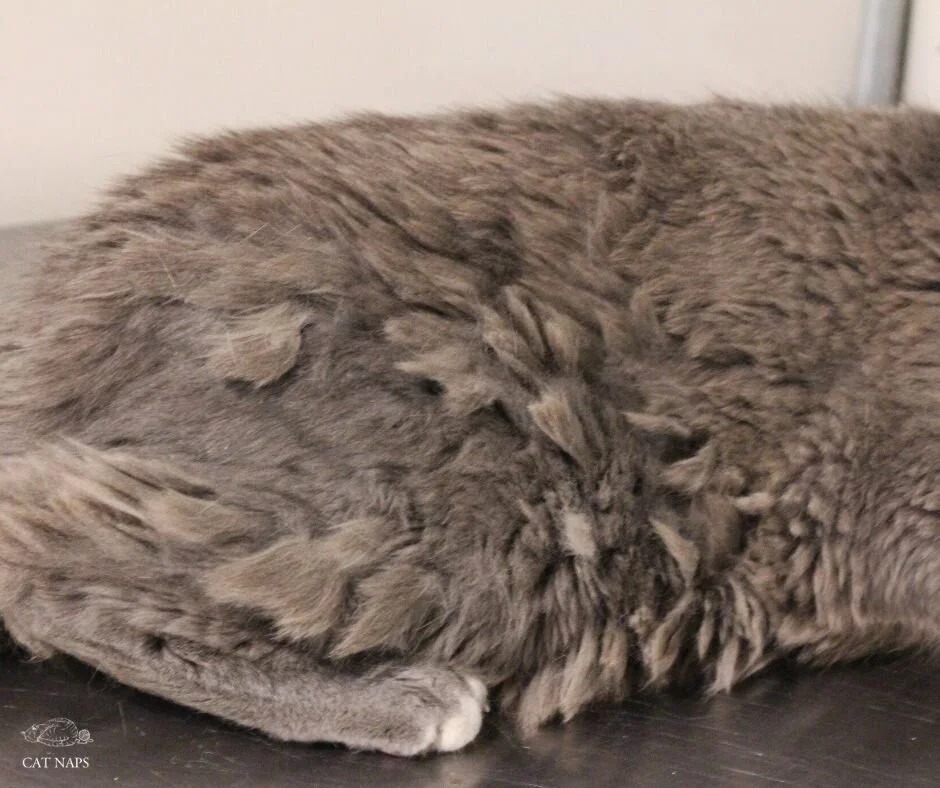
Image source: Bing (Web (fair-use with source credit))
When to Bring in a Professional Groomer
Sometimes, the smartest move is to hand it to a professional. This isn't a failure. It's the safest choice for your cat.
Bring your cat to a professional groomer when:
- The mats are larger than a coin.
- There are multiple mats across the body.
- The mats are tight against the skin.
- Your cat is aggressive or extremely stressed during grooming.
- The mat is near sensitive areas like the belly, armpits, or tail base.
A professional groomer will often recommend a "shave-down" in severe cases. This means removing the entire coat to restart fresh. It's not the prettiest look, but it's painless and safe.
Ask the groomer about their methods before booking. Some sedate cats, which is a red flag unless a vet is supervising.
Nail Care: The Easiest Thing to Get Wrong
Nail trims are the most feared grooming task for cat owners. They're also the most frequently avoided, which leads to painful problems down the line.
Here's everything you need to know about doing it right.
How to Tell If Nails Are Too Long
The floor-click test is the simplest method. Put your cat on a hard surface and watch them walk. If you hear clicking, the nails are touching the ground, which means they're too long.
You can also check visually:
- Stand your cat on a flat surface. Look at their paws from the side.
- Healthy nails hover just above the ground when the cat is standing.
- Overgrown nails touch or dig into the floor.
When you look at the paw from underneath, you should see the nail tips barely peeking out from the fur. If you see long, curved hooks, it's trim time.
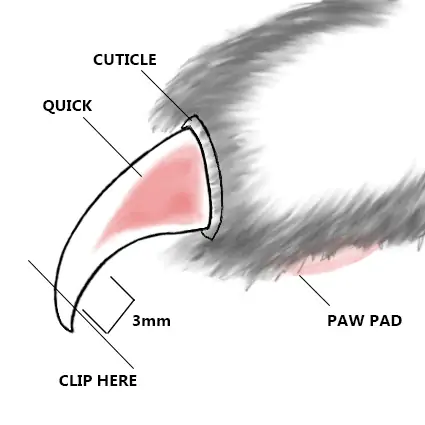
Image source: Bing (Web (fair-use with source credit))
The Floor-Click Test
This is the fastest diagnostic you can do at home. Place your cat on a tile, hardwood, or linoleum floor. Listen carefully as they walk.
- No clicking: Nails are at a healthy length.
- Occasional clicking: Nails are getting long. Schedule a trim.
- Constant clicking: Nails are too long. Trim now.
If you hear clicking, also check for nails that are curling inward. These can grow into the paw pad and cause painful infections.
Trimming Basics Without Hitting the Quick
The quick is the pink area inside the nail that contains blood vessels and nerves. Hitting it causes pain and bleeding. Avoiding it is the entire game.
Here's how to trim safely:
- Use cat-specific nail clippers. Guillotine-style or scissor-style both work. Human nail clippers can crush the nail.
- Hold your cat securely. Have someone help if needed. A towel wrap can help for resistant cats.
- Press on the paw pad to extend the nail. This makes the nail visible and easier to clip.
- Identify the quick. In light-colored nails, it's the pink section. In dark nails, shine a strong light through the nail or look for the point where the nail curves.
- Cut just below the quick. Aim for a 45-degree angle. If you're unsure, cut less rather than more.
- Reward with a treat after each paw.
Nail trims every 2-4 weeks maintain the right length. Regular trims also prevent the quick from growing longer, which makes future trims easier.
What to Do If You Do Cause Bleeding
Even experienced owners hit the quick sometimes. It's not a disaster. It's a learning moment.
If you cut the quick:
- Stay calm. Your cat will react to your energy.
- Apply styptic powder or cornstarch to the nail tip. Press firmly for 30 seconds.
- Offer a treat and end the session. Don't try to trim more nails.
- Watch for excessive bleeding. If it doesn't stop within 10 minutes, contact your vet.
Bleeding from the quick is usually minor. Your cat will recover quickly, and you'll be more careful next time.
Bathing: How Often Is Too Often?
Here's the truth that surprises many cat owners: most cats never need a bath. Cats are self-cleaning animals. Their tongues and natural grooming routines handle the job.
But "most" isn't "all." There are situations where a bath is necessary. The key is knowing when to bathe and when to leave your cat alone.
Why Most Cats Never Need a Bath
A cat's tongue is a remarkable grooming tool. It has tiny, backward-facing barbs called papillae that act like a natural comb. They remove dirt, distribute oils, and detangle fur.
Bathing disrupts this natural system. It strips the natural oils from the coat, which can lead to dry skin, itchiness, and a dull coat.
Here's the thing: a cat's coat is designed to clean itself. Unless there's something the cat can't handle, a bath isn't needed.
When Bathing Is Actually Necessary
There are legitimate reasons to bathe your cat. Here are the main ones:
- Flea infestations. A flea bath can help, but it's not a standalone cure. Your cat will need ongoing flea treatment.
- Skin conditions. A vet-prescribed medicated shampoo can treat conditions like ringworm or dermatitis.
- Soiled fur. If your cat gets into something sticky, toxic, or foul-smelling, a bath is necessary.
- Obese or senior cats that can't groom themselves effectively may need occasional baths.
If you're not sure whether your cat needs a bath, ask your vet. They can give you a definitive answer.
Waterless Shampoo Alternatives
If your cat dislikes water, or if they only need a spot clean, waterless shampoo is a great option.
Here's how it works:
- It comes in a foam or spray form.
- You apply it to the coat and massage it in.
- It cleans the fur and absorbs oils.
- You brush it out or let it air dry.
Waterless shampoo is ideal for:
- Spot cleaning a greasy patch or soiled area.
- Between baths for cats that tolerate water poorly.
- Senior cats that can't groom themselves as well as they used to.
Choose a formula made specifically for cats. Dog shampoo has a different pH and can irritate a cat's sensitive skin.
The pH Mistake to Avoid
This is a critical safety issue. Human shampoo and dog shampoo have a different pH balance than a cat's skin.
- Human skin pH is around 5.5. Human shampoo is formulated for this.
- Cat skin pH is around 6.5. It's different from both humans and dogs.
Using human or dog shampoo on a cat disrupts the skin barrier, leading to:
- Dry, itchy, flaky skin.
- Increased susceptibility to infections.
- A dull, damaged coat.
Always use a shampoo made specifically for cats. If you're in doubt, ask your vet for a recommendation.
Grooming Tools: What Actually Works
The right tools make grooming easier for you and more comfortable for your cat. The wrong tools can cause pain, skin damage, and a lasting fear of grooming.
Here's what actually works, and what to avoid.
Slicker Brush vs. Undercoat Rake vs. Dematting Comb
Different coat types need different tools. Here's a breakdown of the essentials:
| Tool | Best For | How Often | Notes |
|---|---|---|---|
| Slicker brush | Removing loose fur, detangling, all coat lengths | 2-3 times per week | Use gentle pressure to avoid scratching skin |
| Undercoat rake | Double-coated breeds, heavy shedding | 1-2 times per week | Reaches the dense undercoat |
| Dematting comb | Mild mats, tangles | As needed | Has blades that cut mats safely |
Here's how to choose:
- Slicker brush: This is your everyday brush. The fine, angled bristles grab loose fur and smooth the coat. Look for one with rounded tips to avoid scratching.
- Undercoat rake: This has longer, spaced teeth that reach the undercoat. It's essential for double-coated breeds like the Siberian or Norwegian Forest Cat.
- Dematting comb: This has toothed blades that cut through mild mats. It's not for routine brushing, only for problem areas.

Image source: Bing (Web (fair-use with source credit))
What NOT to Use (and Why Furminator-Style Tools Can Be Harsh)
Not every tool on the market is good for your cat. Some are actively harmful if used incorrectly.
Avoid or use with caution:
- Furminator-style tools. These have a sharp metal edge that cuts the coat. While effective for shedding, they can cause skin irritation, brush burn, and damage if used too aggressively or too often.
- Human brushes. The bristles are often too stiff and can scratch your cat's skin.
- Wire pin brushes with sharp tips. They can scratch the skin and cause discomfort.
- Flea combs. These are fine for flea checks but useless for grooming.
If you use a Furminator-style tool, limit use to once a week during heavy shedding and use light pressure. For most cats, a slicker brush is gentler and safer.
Nail Clippers: Guillotine vs. Scissor-Style
There are two main types of cat nail clippers. Both work, but they suit different preferences.
| Type | How It Works | Best For |
|---|---|---|
| Guillotine | Nail slides through a ring, a blade cuts down | Precise cuts on small nails |
| Scissor-style | Two blades squeeze together like scissors | Larger nails, easier grip |
Guillotine clippers are the most common. They're easy to use with one hand and provide a clean cut. However, some cats dislike the sensation of the nail sliding into the ring.
Scissor-style clippers offer more control and are often preferred by experienced owners. They're better for cats with thicker nails, which are common in senior cats.
Either works. Choose the one you feel most comfortable handling. Remember: the quick is the same regardless of which tool you use.
When Professional Tools Are Worth the Upgrade
You don't need professional-grade tools to groom your cat. But there are times when a higher-quality tool is worth the investment.
Consider upgrading when:
- Your cat has a thick double coat that standard brushes can't penetrate.
- You're dealing with frequent mats that a dematting comb can't handle.
- Your cat is large or heavy and needs a sturdier tool.
- You have multiple cats and need tools that hold up to regular use.
A high-quality slicker brush or undercoat rake costs more, but it lasts years and works better. It's worth the extra money if your grooming routine demands it.
Mistakes to Avoid in Cat Grooming
Even experienced owners make mistakes. Here are the most common ones, and how to avoid them.
Using Dog Grooming Tools on a Cat
This is a simple but common mistake. Dog brushes and clippers don't work on cats. Here's why:
- Dog brushes are often too stiff for a cat's finer coat and sensitive skin.
- Dog nail clippers are too large for cat nails.
- Dog clippers are too loud and heavy for cats, which causes fear.
Always use cat-specific tools. They're smaller, gentler, and designed for feline coats.
Shaving a Double-Coated Cat (It Ruins Their Coat)
This is a big one. If you have a double-coated cat, never shave them down, even in summer.
Here's why:
- The undercoat insulates against both heat and cold. Removing it makes your cat less comfortable, not more.
- The coat may not grow back the same way. Shaving can cause permanent coat damage, a condition called "shave alopecia."
- The topcoat and undercoat grow at different rates. This can cause an uneven, patchy appearance for months.
If your cat has severe mats, a groomer might recommend a shave-down as a last resort. But for routine maintenance, a shave is not a good idea.
Over-Bathing and Drying Out Their Skin
Remember, cats are self-cleaning. Bathing them too often strips the natural oils that keep their coat and skin healthy.
Here's what over-bathing causes:
- Dry, itchy skin.
- Dull, brittle fur.
- Increased dander.
- Skin irritation and infections.
Unless your vet recommends a bathing schedule, stick to occasional baths only when necessary. Between baths, use waterless shampoo or spot cleaning.
Ignoring the Tail Area and Anal Glands
These areas are easy to ignore because they're not visible during a standard brushing session. But they need attention.
- The base of the tail is prone to stud tail (the greasy buildup we mentioned earlier). It needs regular checking.
- The anal glands can become impacted or infected without obvious signs. If your cat is scooting their rear on the floor or licking the area excessively, check with your vet.
During your weekly hands-on check, spend a few extra seconds on these areas.
Forcing Grooming on a Terrified Cat (and How to Desensitize Instead)
This is the most counterproductive mistake you can make. Forcing a cat into a grooming session when they're scared teaches them that grooming is scary. It makes future sessions even harder.
Instead, desensitize your cat gradually:
- Start slow. Show the brush, let your cat sniff it. Reward with a treat.
- Touch your cat gently with the brush. Just one or two strokes. Reward.
- Increase the duration gradually. Over several sessions, build up to a full brushing.
- Keep sessions short. Five to ten minutes is plenty.
- Always end on a positive note. Finish with a treat or play session.
If your cat is genuinely scared of grooming, work with a professional groomer or vet behaviorist. They can help you build a positive association.
Real Scenarios: What Experienced Owners Recognize
Sometimes, the best way to learn is through examples. Here are real situations that experienced cat owners recognize, and what they mean.
The Senior Cat Who "Just Looks Messy"
You have a 14-year-old cat who's always been meticulous about grooming. Lately, they look a bit rough. The coat is greasy, especially on the back and hindquarters.
There are a few small mats forming near the tail.
You might think it's just age. That's partially true. But it's also a sign of something more specific.
This is likely arthritis. Grooming requires flexibility. When joints hurt, your cat can't twist to reach their back.
The "messy" look isn't laziness. It's pain.
The fix:
- See your vet about arthritis management. This is the most important step.
- Brush your cat gently to remove loose fur and prevent mats.
- Use a warm, soft cloth to wipe away excess oil on hard-to-reach areas.
The Indoor Cat Shedding in January
Your indoor cat is shedding like crazy in the middle of winter. You're finding fur on every surface. This doesn't match the "seasonal shedding" pattern you expected.
Indoor cats live in a climate-controlled environment. Their bodies don't experience the natural temperature drops that trigger seasonal coat changes. Instead, they shed year-round at a fairly consistent rate.
If your indoor cat is shedding excessively in winter, consider:
- Is your home unusually dry? Dry air can cause the coat to dry out and shed more.
- Has there been a change in diet? Dietary shifts can affect coat health.
- Are you brushing regularly? More fur on your clothes means more fur in the coat.
Regular brushing, even in winter, manages indoor shedding. If the shedding is dramatic or sudden, check with your vet.
The Rescue Cat with Hidden Mats
You've adopted a rescue cat with a beautiful, fluffy coat. You assume they're in good shape because they look great. But when you run your hands through their fur, you hit a solid mat near the hindquarters.
This is more common than you'd think. A cat's coat can look healthy from the outside while mats hide close to the skin.
What to do:
- Don't try to brush it out. That will cause pain.
- Check for other mats in the armpits, belly, and behind the ears.
- Take your cat to a groomer for a professional assessment.
Rescue cats, especially those with unknown histories, often need a professional grooming session when they first arrive home.
The Cat That Grooms Too Much and Goes Bald
Your cat is grooming obsessively. They're licking their belly and inner thighs so much that the hair is thinning. Bald patches are starting to appear.
This is overgrooming, and it's a different problem than undergrooming.
Here's what it could be:
- Stress or anxiety. This is psychogenic alopecia. Your cat is using grooming to soothe themselves.
- Allergies. Flea allergy dermatitis, food allergies, or environmental allergies cause itchy skin, which triggers excessive licking.
- Pain. Sometimes, a cat will overgroom an area that hurts.
This isn't a grooming problem. This is a medical or behavioral problem. See your vet to determine the cause.
When to See the Vet: Red Flags
Knowing when to stop grooming and start treating is critical. Here are the red flags that need veterinary attention.
Skin Redness, Oozing, or Odor Under Mats
If you separate a mat and find red, irritated, or weeping skin beneath it, that's an infection.
The mat creates a warm, moist environment that bacteria love. What started as a grooming issue has become a medical issue.
See your vet for:
- Antibiotics or antifungal treatment.
- Pain relief for the affected area.
- Instructions on how to clean and manage the area.
Do not try to treat this at home. You could make the infection worse.
Bald Spots That Aren't from Licking Alone
If you find bald patches that don't match the pattern of overgrooming, it could be something else.
Possible causes:
- Ringworm. A fungal infection that causes circular bald patches.
- Mites. These can cause intense itching and hair loss.
- Hormonal imbalances. Conditions like hyperthyroidism can cause hair loss.
A vet can perform skin scrapings or blood tests to identify the cause.
Lethargy Paired with Poor Coat Condition
If your cat has poor grooming AND seems tired, weak, or unwell, that's a serious combination.
This could signal:
- Systemic illness. Kidney disease, diabetes, or hyperthyroidism can all affect coat condition and energy levels.
- Chronic pain. A cat in constant pain doesn't have the energy for grooming.
- Nutritional deficiencies. A poor diet can cause a dull coat and low energy.
When poor grooming accompanies lethargy, it's not a grooming issue. It's a health issue.
Fever or Loss of Appetite Alongside Grooming Changes
This combination is urgent. A fever and a loss of appetite, coupled with grooming changes, can indicate a serious infection or disease.
Seek veterinary care immediately if you notice:
- Fever (over 102.5°F or 39.2°C)
- Refusing food for more than 24 hours
- Lethargy that's unusual for your cat
- Visible distress or pain
These symptoms warrant immediate attention. Don't wait to see if they pass.
A Simple Weekly Grooming Routine You Can Stick To
The most effective grooming routine is one you actually do. Here's a simple, realistic plan you can follow every week.
The Checklist
| Frequency | Task | Time |
|---|---|---|
| Daily | Check for visible mats or changes in coat | 1 minute |
| Weekly | Hands-on full-body check | 2 minutes |
| Weekly | Full brushing session | 10-15 minutes |
| Bi-weekly | Nail trim | 5 minutes |
| Monthly | Deep check for skin issues, lumps, or ticks | 5 minutes |
Step-by-Step
Here's how to structure a weekly grooming session:
- Start with the hands-on check. Feel for mats, lumps, or changes in texture.
- Brush the coat thoroughly. Start at the head, work down the back, and finish with the belly and tail.
- Check the ears. Look for wax, redness, or odor.
- Check the tail base. Run your hand down the tail and feel for greasiness or mats.
- Trim nails if needed. Use the floor-click test to determine if it's time.
- Reward your cat. Finish with a treat and some play.
This routine takes about 20 minutes. It's manageable, consistent, and catches most issues early.
Frequently Asked Questions
How Often Do Cats Really Need Grooming?
Most cats need at least one brushing session per week. Long-haired breeds need daily brushing. Short-haired cats can go 2-3 days between brushing sessions, but weekly is the minimum.
The keys are preventing mats, reducing hairballs, and keeping the coat healthy.
Can I Use a Slicker Brush on Short Hair?
Yes. A slicker brush works on short-haired cats too. Use it with light pressure to remove loose fur and distribute natural oils.
For short coats, a softer bristle brush or grooming glove can also work well.
Why Does My Cat Hate Being Brushed?
Cats often hate being brushed because of a negative past experience or because the brush is too harsh. Start slowly, use treats, and keep sessions short and gentle. Switch to a softer brush if needed.
Never force a session, and stop if your cat shows serious stress.
Is It Okay to Let My Cat's Mats Just Fall Out?
No. Mats don't fall out on their own. They pull on the skin and cause constant discomfort.
They can also hide skin infections. If the mat is small, address it at home. If it's large or there are many, see a groomer or vet.
Should I Shave My Cat in Summer to Keep Them Cool?
No. Cat fur acts as insulation against heat, not just cold. Shaving a double-coated cat damages their coat permanently in some cases.
If your cat is overheating, provide cool water, shade, and a cool place to rest. Grooming to remove loose fur, not shaving, is the better approach.
How Do I Know If My Cat Is Overgrooming or Undergrooming?
Overgrooming shows as bald patches, thinning fur, or skin irritation, especially on the belly and inner thighs. Undergrooming shows as a dull, greasy, or matted coat, especially on the back and hindquarters. Both can indicate stress, pain, or illness.
If you notice either pattern, consult your vet.