
You know that feeling when you're petting your cat, and your fingers hit a hidden clump of fur right in the armpit? It feels like a tiny, felted rock hiding under a soft coat. And suddenly, you're wondering how long it's been there and what it's doing to your cat's skin.
Dealing with matted fur under a cat's armpits isn't just about looks. It's a health issue that can cause serious pain and skin damage if you handle it the wrong way.
Here's the thing that surprises most owners: those mats aren't just tangled hair. They're pulled tight against skin that's significantly thinner than the rest of your cat's body. The axillary region, which is the medical term for the armpit, is among the most delicate areas on a cat's frame.
It's designed for maximum flexibility during stretching and jumping. When a mat tightens there, it restricts movement and can cause sores from friction. As of 2026, veterinary guidance is clear: removing a mat incorrectly is worse than leaving it alone.
Let's walk through exactly how to assess, treat, and prevent this safely.
Quick Answer
Matted fur under a cat's armpits needs immediate but careful attention. Never use scissors on these mats because the skin is paper-thin and moves easily. Use a clipper with a #10 blade to shave the mat out gently.
If the skin underneath is broken, red, or weeping, visit a vet first.
Understanding Why Cats Get Matting Under Their Armpits
The armpit is a perfect storm for fur damage. Think about how your cat moves. Every step, every stretch, every jump involves the front legs sweeping against the chest wall.
That constant friction acts like a tiny, persistent force that twists and knots individual hairs together.
Combine that friction with the natural shedding cycle, and you have a breeding ground for tangles. Loose undercoat hairs that would normally fall out get trapped by the topcoat. The movement of the leg then acts like a felting machine, packing those loose hairs tighter and tighter against the skin.
The result is a dense mat that only gets worse with time.
But the mechanical reasons are only half the story. The most common reason cats develop mats here is that they've stopped grooming that area. Cats are meticulous cleaners.
When they skip a spot, it's a red flag. The question is why they're avoiding it.

Image source: MSD Veterinary Manual
The "Why" Behind Armpit Mats
Pain is the number one culprit. If it hurts to twist or stretch, your cat will avoid that motion entirely. Think about what causes armpit pain:
- Arthritis: Stiff, sore shoulder joints make reaching up and back incredibly uncomfortable.
- Dental disease: A sore mouth makes grooming painful all over. The cat can't chew at tangles to work them out.
- Skin irritation: A mat that's already pulled tight causes discomfort. This makes the cat avoid the area, which makes the mat worse. It's a vicious cycle.
Mobility issues are the second major factor. Overweight cats simply can't bend like they used to. Their belly gets in the way, and they give up trying to reach those armpits.
Senior cats often have reduced flexibility even without arthritis.
Here are other contributors we see regularly:
- Long-haired breeds: Persians, Maine Coons, and Ragdolls have fine, dense undercoats that mat very easily. The armpit is the first place it happens.
- Post-surgical recovery: If your cat wears an e-collar after surgery, it physically prevents grooming. In just a few days, mats can form.
- Static electricity: In dry winter months, brushing can create static that makes the fur fly and tangle more easily.
Dental Pain and Other Hidden Health Issues
If you notice your cat's armpits are matting and they're otherwise a short-haired breed, look deeper. A sudden change in grooming habits is a clinical sign that should prompt a veterinary visit. In our research, we've seen cases where the initial symptom reported by owners was "matted fur," and the underlying issue turned out to be kidney disease or hyperthyroidism.
Both conditions make a cat feel too unwell to groom properly.
How to Assess the Damage (Before You Touch Anything)
Before you even think about picking up a tool, you need to understand what you're dealing with. Not all mats are the same, and the treatment differs vastly based on severity.
Put your cat on a sturdy table with a non-slip mat. Have treats ready. Gently lift the front leg like you're shaking a paw.
The 30-Second Check: Is This a Surface Tangle or a "Pelt"?
Here's how to tell the difference. A surface tangle feels loose. You can see the individual hairs, and you might be able to wiggle your fingers through the bottom layers.
The skin underneath moves freely when you touch the mat.
A pelt, on the other hand, is dense and solid. It's felted tight against the skin like a sweater you can't take off. You cannot see the skin at all, and the mat doesn't move independently of the body.
If you try to pull the mat up, the skin stretches with it.
This distinction matters because it dictates your next step. A loose tangle might respond to combing. A tight pelt will never respond to combing, and trying to brush it out will cause tremendous pain.
Reading Your Cat's Body Language
Even a friendly cat can lash out when their armpit hurts. Watch for these warning signs during your assessment:
- Skin rippling: The skin on your cat's back twitches or rolls. It's a strong sign of agitation or pain.
- Tail flicking: A fast, agitated tail swish is a back-off signal.
- Ears flattening: This is an early warning sign of fear or anxiety.
- Low growl or hiss: This is a stop sign. Respect it immediately.
If you see any of these signs, stop the assessment. You can try again later or take your cat to a professional.
When to Skip the Groomer and Go Straight to the Vet
This is a critical safety decision. Under that mat, the skin is a dark, warm, moist environment. It's perfect for bacteria to thrive.
Schedule a vet visit immediately if you notice:
- Open sores or weeping wounds
- A foul odor coming from the area
- Dark specks (flea dirt) visible in the mat
- Redness or inflammation on the skin around the mat
- Any lump or bump you can feel beneath the fur
Removing the mat when the skin is wounded will cause severe pain and may make the infection worse. A vet can sedate your cat, clip the fur safely, and treat the underlying skin condition properly.
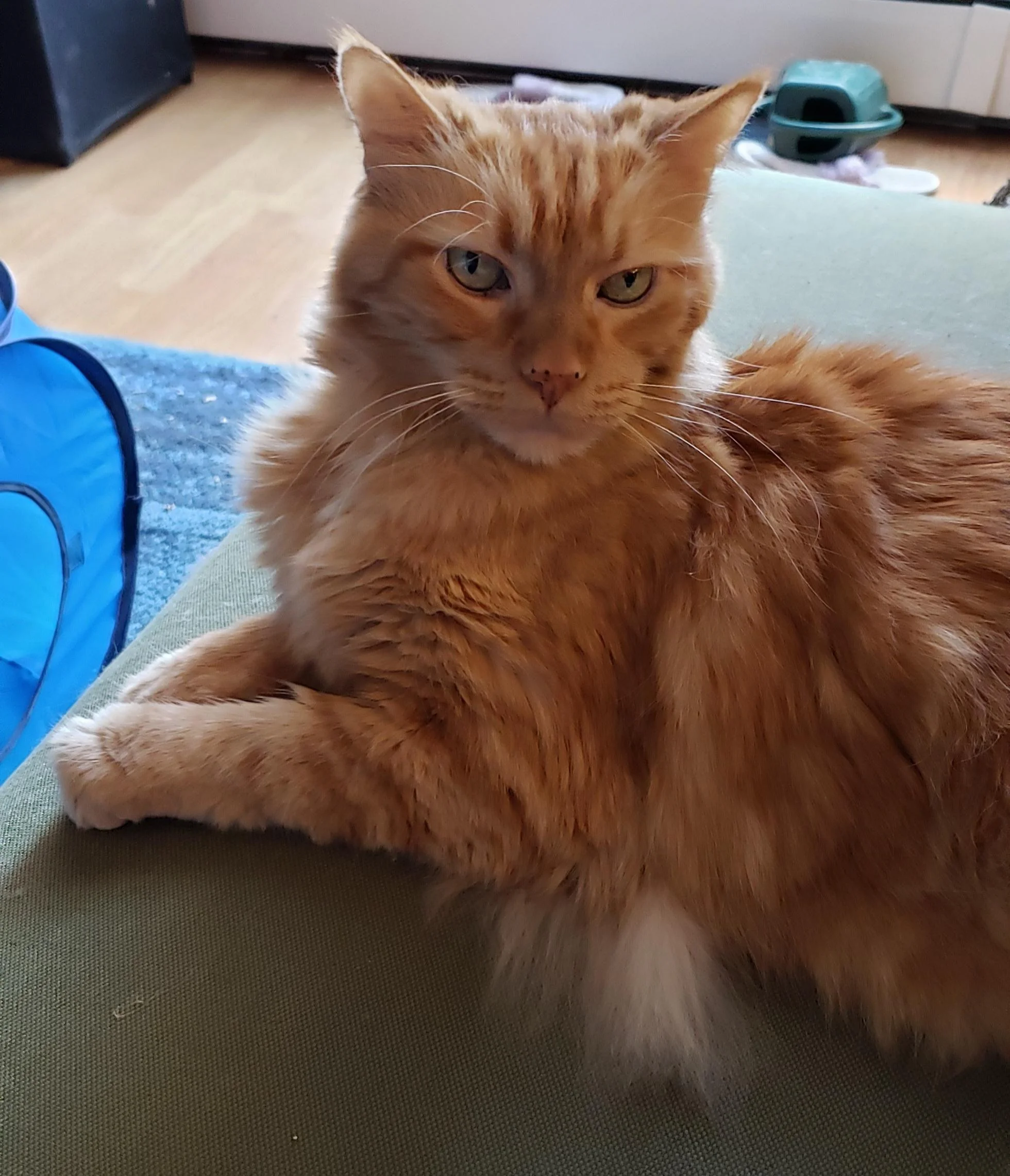
Image source: Reddit (fair-use with source credit)
Safe Tools: What You Actually Need (and What to Throw Away)
Gathering the right equipment is half the battle. The wrong tool can turn a 10-minute grooming session into a nightmare for you and your cat. We've broken down the essentials based on manufacturer specifications and veterinary recommendations.
The "Do Not Use" List
Let's start with what should stay in the drawer.
Scissors are absolutely forbidden around the armpit. We cannot stress this enough. When a cat squirms, the thin, loose skin of the armpit can fold into a little tent. A single snip can easily go through the skin.
Even with rounded-tip safety scissors, the risk is simply too high. A shaved, bald-looking armpit is much better than a trip to the emergency vet for stitches.
Human brushes and combs are also a no-go. They're designed for human hair, which has different texture and elasticity. They often have sharp, closely spaced pins that pull and irritate cat skin.
Detangling sprays with artificial fragrance should be avoided. Cats have a highly sensitive sense of smell. Strong scents can cause stress.
More importantly, some ingredients can irritate the skin if they get trapped under a tight mat.
The "Safe" List
Now, here's what you actually need.
| Tool | Purpose | Why It's Safe |
|---|---|---|
| Pet-specific clippers | Shaving mats close to the skin | Quiet, lightweight, designed for cat anatomy |
| #10 blade | Standard veterinary blade for dematting | Leaves 1/16 inch of hair, won't catch skin easily |
| Mat splitter | Cutting through dense tangles lengthwise | Blades are recessed, won't touch skin |
| Cornstarch or grooming powder | Reduces friction and static | Makes hair easier to separate and slide through |
Why the #10 Blade is the Gold Standard
According to grooming industry standards, the #10 blade leaves hair approximately 1/16 inch long. It's not a shave-to-the-skin situation, but it's close enough to break the tension of the mat. Crucially, the spacing of the teeth in a #10 blade makes it very difficult to catch and pull the skin, unlike a wider-toothed comb.
This makes it the safest choice for inexperienced home groomers.

Image source: Amazon (fair-use with source credit)
Step-by-Step: How to Tackle the Mat Safely at Home
Okay, you've assessed the situation, you have your tools ready, and your cat is relatively calm. Here's the safe way to remove that mat. Remember, patience is not a virtue here.
It's a requirement.
Step 1: Prep the Session (Environment + Cat)
Set yourself up for success. Choose a quiet room with minimal distractions. Close the door so other pets can't wander in.
Use a towel or a non-slip mat on your work surface so your cat feels secure.
About 15 minutes before you start, many owners find it helpful to use a feline facial pheromone spray on the bedding or a towel. These synthetic pheromones signal safety to cats and can significantly reduce anxiety. A calm cat is a safe cat.
Step 2: Desensitize the Armpit Zone
Never dive straight for the mat. Spend a few minutes gently touching your cat's shoulder, then slowly work down to the armpit. Talk in a soothing voice and give high-value treats for allowing the touch.
The goal is to associate armpit handling with positive rewards.
If your cat pulls away or shows any of the body language signs we discussed earlier, stop. Do not force this step. Try again in a few hours or the next day.
Step 3: The Clipping Technique
This is the moment of truth. If your cat is tolerant, here's how to proceed safely.
- Direction matters: Always clip in the direction of hair growth. Clipping against the grain is more likely to pull the skin and cause clipper burn.
- Stretch the skin taut: Use your non-dominant hand to gently stretch the armpit skin flat. This creates a smooth, tight surface for the clippers to glide over, preventing the skin from folding into the blade.
- The one pass rule: Never run the clipper over the same spot repeatedly. One smooth pass is all you should attempt. Going back and forth creates friction and heats up the blade, which can cause burns. If the mat is very thick, work in layers from the outside in.
- Clipper pressure: Let the clipper do the work. Do not press down. The weight of the clipper head is enough to cut the hair.

Image source: Amazon (fair-use with source credit)
Step 4: The Comb-Out (For Loose Tangles Only)
If your assessment revealed a loose tangle, not a tight felted pelt, you can try combing instead of clipping.
Use a mat splitter to make a few lengthwise cuts through the tangle. This separates the hair into smaller sections. Then, hold the base of the tangle with your fingers and use a wide-tooth comb to gently work from the tips downward.
Never pull the mat away from the body.
Step 5: Post-Grooming Care
You're not done yet. After the mat is gone, check the skin carefully. It might be pink from being covered, which is normal for the first hour or so.
- Wipe the area: Use a pet-safe antiseptic wipe to clean the freshly exposed skin. This helps prevent any potential infection.
- Check for clipper burn: Keep an eye out for redness that doesn't fade after 20 minutes. Clipper burn looks like a red, irritated rash. If it appears, apply a vet-approved hydrocortisone cream.
- Reward your cat: End the session with a flood of treats and praise. This positive association is what will make the next time easier.
If the skin looks raw, broken, or has any discharge, skip the cream and call your vet. You don't want to mask an infection with an anti-inflammatory.
Also, give the area a day to breathe before you apply anything beyond a gentle wipe. The skin has been covered and possibly damp for a while. It needs air.
Watch for excessive licking. If your cat won't leave the spot alone, an e-collar might be necessary for a day or two to let the skin calm down.
The Big Mistake That Causes Repeat Mats
You've done the hard work. The mat is gone. The skin looks healthy.
You feel a wave of relief. Then, three weeks later, you feel another lump under the armpit. Sound familiar?
This is the most frustrating cycle in cat grooming, and it almost always comes down to one thing: you fixed the symptom, not the cause.
"I Just Groomed Him, Why Is It Back in a Week?"
Let's run through the most common reasons mats reappear quickly.
You didn't address the underlying pain. If your cat has arthritis or dental disease, they still aren't grooming that area. The fur will grow back, and it will mat again, because nothing has changed. You need to address the root cause, not just the visible result.
You bathed your cat. Bathing a long-haired cat without thoroughly brushing and drying afterward is a mat machine. Wet fur shrinks, tangles, and felts together faster than you can imagine. If you bathe your cat, you must be prepared to blow-dry and brush immediately.
You didn't remove the entire mat. Sometimes what feels like one mat is actually several layers. If you only removed the top layer, the dense core remains glued to the skin. It will grow and attach to new fur as it emerges.
The regrowth cycle. After a shave, the new hair grows in stages. The undercoat regrows faster than the topcoat. This stage of mixed-length growth is highly prone to tangling and matting again.
Without regular combing during this transition, you'll be back to square one.
Fixing the Root Cause: Pain, Diet, and Underlying Illness
This is where you need to think like a detective. In our research, the most successful grooming routines are built on understanding the cat's health status.
If your cat is a senior or has diagnosed arthritis, talk to your vet about pain management. Options like joint supplements, anti-inflammatory medications, or even acupuncture can make a world of difference in their willingness to groom.
Look at their diet. A cat eating low-quality food with poor protein content will have dry, brittle fur that breaks easily and tangles more readily. Switching to a high-quality, species-appropriate diet with Omega-3 fatty acids can significantly improve coat health.
It won't happen overnight, but you'll see a difference in a few months.
Finally, if your cat is overweight, weight loss is the most effective long-term fix. A slim cat can reach every inch of its body. An overweight cat can't.
Building a Preventative Routine That Actually Sticks
Here's the good news: once you identify the cause, prevention is straightforward. It just requires consistency.
The 5-Minute Check: Combing Under the Armpits Twice a Week
You don't need to do a full grooming session every day. You just need to check the armpits specifically. Make it a habit.
- Twice a week, lift each front leg and run a wide-tooth comb through the armpit fur.
- Look for any small tangles starting to form.
- If you find a tiny knot, comb it out immediately before it tightens.
- Pair this with a treat so your cat learns that armpit checks mean good things.
This 5-minute routine prevents the big, scary mats from ever forming and gets your cat used to being handled in this sensitive area.
When to Bathe (and Why Bathing Can Sometimes Make Mats Worse)
Bathing a cat is almost always more stressful than helpful, especially for long-haired breeds. The only time you should bathe a cat is for a medical reason like a flea infestation or a skin condition, or if they are truly filthy and can't clean themselves.
If you must bathe your cat, follow these rules:
- Brush thoroughly before the bath to remove all loose fur.
- Use lukewarm water and a cat-specific shampoo. Never use human shampoo.
- Rinse completely. Soap residue is a major cause of skin irritation and mats.
- Dry immediately with a high-velocity dryer and brush as you dry. Do not let your cat air-dry, especially in a cold house.
The Role of Grooming Wipes vs. Full Baths
When you want to clean your cat without the drama of a bath, use pet grooming wipes. These are pre-moistened with a gentle, waterless cleanser. They remove dirt and dander and are excellent for spot-cleaning under the armpits.
They won't solve a mat problem, but they help maintain skin health between proper grooming sessions.
When DIY Is Not Enough: The Vet Visit
There's no shame in admitting when a situation is above your pay grade. We've talked about skin wounds and signs of infection. But there are other scenarios where DIY grooming is dangerous, even when the skin looks okay from the outside.
What to Expect from a Professional De-Matting
A professional groomer or vet has more tools and more experience, but they also have something you don't: options for restraint that are safe for the cat and the handler.
When you bring a severely matted cat in, the professional will assess the mats. If the mats are tight and close to the skin, and the cat is resisting, they will likely recommend sedation. This is not a failure on your part.
It's a safety decision.
Sedation allows the groomer to:
- Work slowly and methodically without causing pain.
- Use clippers to remove mats safely without risk of sudden movements causing injury.
- Examine the skin thoroughly for any hidden wounds, parasites, or infections.
The process is quick, and your cat will wake up with a much more comfortable coat.
How to Find a Cat-Friendly Groomer or Vet
Not all groomers are created equal. Some are used to dealing with dogs and may not understand cat behavior. Look for a groomer who has experience working specifically with cats.
The best way to find one is to ask your vet for a referral.
A cat-friendly clinic adheres to specific standards to reduce stress. They have separate waiting areas for cats and dogs, quiet examination rooms, and staff trained in low-stress handling techniques. The American Association of Feline Practitioners (AAFP) offers a cat-friendly practice certification program that many clinics pursue.
The Cost Reality Check
Let's talk money. Grooming fees vary widely, but here's a rough picture based on industry data:
| Service | Average Cost | What's Included |
|---|---|---|
| DIY Clipper Kit | $40 – $100 | Clippers, blade, mat splitter, comb |
| Professional Groomer | $60 – $120 | Sedation usually adds another $50 – $100 |
| Vet De-Matting with Sedation | $150 – $300 | Exam, sedation, grooming, sometimes skin treatment |
Now, compare that to the cost of emergency vet care if you accidentally cut your cat's skin with scissors. That can easily run into the hundreds or thousands of dollars. The small investment in proper tools or professional help is always cheaper than treating an injury or a severe skin infection.
Preventative Strategy for At-Risk Cats
Prevention isn't a one-size-fits-all plan. You need to tailor your approach based on your cat's specific health profile and lifestyle.
The "High-Risk Cat" Grooming Protocol
This protocol is for cats that are seniors, long-haired, or have a history of matting. If your cat fits any of these categories, you should be proactive, not reactive.
- Daily visual checks: A quick glance at your cat's coat as they walk by can tell you a lot. Look for any raised tufts or lumps.
- Every other day combing: This isn't a full brush. It's an 8-minute session focused on the undercoat and the armpits specifically.
- Monthly "bikini" clip: Many long-haired cat owners choose to keep the armpit and belly fur clipped short year-round. This is often called a "sanitary clip" or "bikini clip." It dramatically reduces the chance of matting in the highest-risk zones.
Diet and Hydration: The Unexpected Grooming Allies
You might not think diet affects fur, but it does. A healthy coat starts from the inside.
- Protein: Cats need a high-protein diet. Protein is the building block of fur. Low-quality food with plant-based fillers results in weak, brittle hair.
- Omega-3 Fatty Acids: These healthy fats reduce inflammation in the skin and promote a softer, shinier coat. Look for food with fish oil or flaxseed.
- Hydration: A dehydrated cat has dry skin and dry fur. This makes fur more prone to static and tangling. Encourage water intake with a fountain or by adding wet food to their diet.
Seasonal Coat Management
Cats blow their coats in spring and fall. This means a sudden, massive shedding event. During these times, the risk of matting spikes dramatically.
In spring and fall, increase your combing frequency to daily, even for short-haired cats. Pay special attention to the armpits, belly, and the "pants" area on the back legs. These are the spots where loose fur accumulates and tangles fastest.
Frequently Asked Questions
Can I use human scissors to cut out a mat if I'm careful?
No. We say this clearly and firmly: never use scissors on mats in the armpit area. The skin there is extremely thin, loose, and elastic.
A startled movement can cause a serious injury in a split second. Even if you're careful, pets don't understand what you're doing, and their natural reaction to pain or fear is to flinch. Use clippers with a #10 blade instead.
The blade is designed to cut hair close to the skin without actually touching it.
Will the fur grow back patchy if I have to shave it?
Yes, it will look patchy for a while, but it will recover. After a shave, the undercoat and topcoat grow at different rates. This can leave a temporary, uneven appearance that lasts a few weeks.
The hair typically fills back in within 4 to 6 weeks. Some cats might have a change in texture, but once the fur fully regrows, it looks normal. It's far better to have a temporary bald spot than a painful mat pulled tight against the skin.
Is it painful for the cat when I clip a mat?
It shouldn't be, if you're using the right technique and a sharp blade. A dull blade will pull the hair, which hurts. A sharp #10 blade should glide through the fur without pulling.
The bigger issue is the anxiety and restraint. If your cat is scared, they're not in pain, but they're stressed. This stress can make them struggle, which can cause accidental nicks.
If your cat gets too stressed, stop and take them to a professional or your vet.
How do I know if my cat's self-grooming decrease is age-related or medical?
This is a crucial question. An older cat might groom less simply because they're tired or achy. But a sudden, noticeable decrease in grooming is often a sign of an underlying medical issue.
If your cat's coat looks greasy, matted, or has a dandruff build-up, do not assume it's just old age. Schedule a veterinary exam. Bloodwork can rule out kidney disease, hyperthyroidism, and diabetes, all of which cause poor coat condition.
Getting a diagnosis early is always the best course of action.
The Bottom Line: What to Do Right Now
You've read the full guide. You understand the risks, the tools, and the techniques. Now it's time to put it into action.
Here's your decision-based action plan.
A Decision-Based Action Plan
Follow this simple if/then logic to guide your next steps.
If the mat is loose and you can see skin between the fibers: Comb it out gently with a mat splitter and a wide-tooth comb. Work from the tips toward the base to avoid pulling the skin.
If the mat is tight, dense, and you can't see the skin: Break out the clippers with a #10 blade. Stretch the skin taut and shave in the direction of hair growth. Do not attempt to comb it out.
If the skin underneath is broken, red, weeping, or smelly: Stop immediately. Do not groom. Call your vet and schedule an appointment for today or tomorrow.
The skin needs medical treatment.
If your cat is aggressive, terrified, or won't stay still: Do not force it. Wrap them in a towel if you must, but if they are beyond tolerance, book a professional groomer or a vet visit with sedation options.
If this is the second or third time you've dealt with armpit mats: Look beyond the fur. Address pain management, diet, and weight. You need to solve the grooming aversion, not just the visible symptom.
The Golden Rule of Cat Armpits
Here's the golden rule to remember: when in doubt, stop. A moment of frustration can cause a lifetime of handling aversion. Your cat's trust in you is worth more than a perfect coat.
Take a deep breath. Gather your tools. Give your cat a treat.
And remember that your cat isn't giving you a hard time. They're having a hard time. Work with them, not against them, and you'll both get through it.