
Let's talk about the actual price of cat grooming. Not the fluffy marketing version, but the real numbers, the hidden surcharges, and the "why" behind them. If you've ever typed "cat grooming cost" into a search bar, you know the results are all over the place.
One site says $40, another says $120, and your friend swears she pays $25 at a local shop. So which is it?
The truth is that no single number exists. As of 2026, the range for a standard professional groom runs roughly $45 to $85, but that's just the starting line. The final bill depends on a chain of variables: your cat's coat type, their temperament, how badly they're matted, and where you live.
The good news? Once you understand how groomers price their work, you can predict your bill before you even book. Here's exactly how that math works.
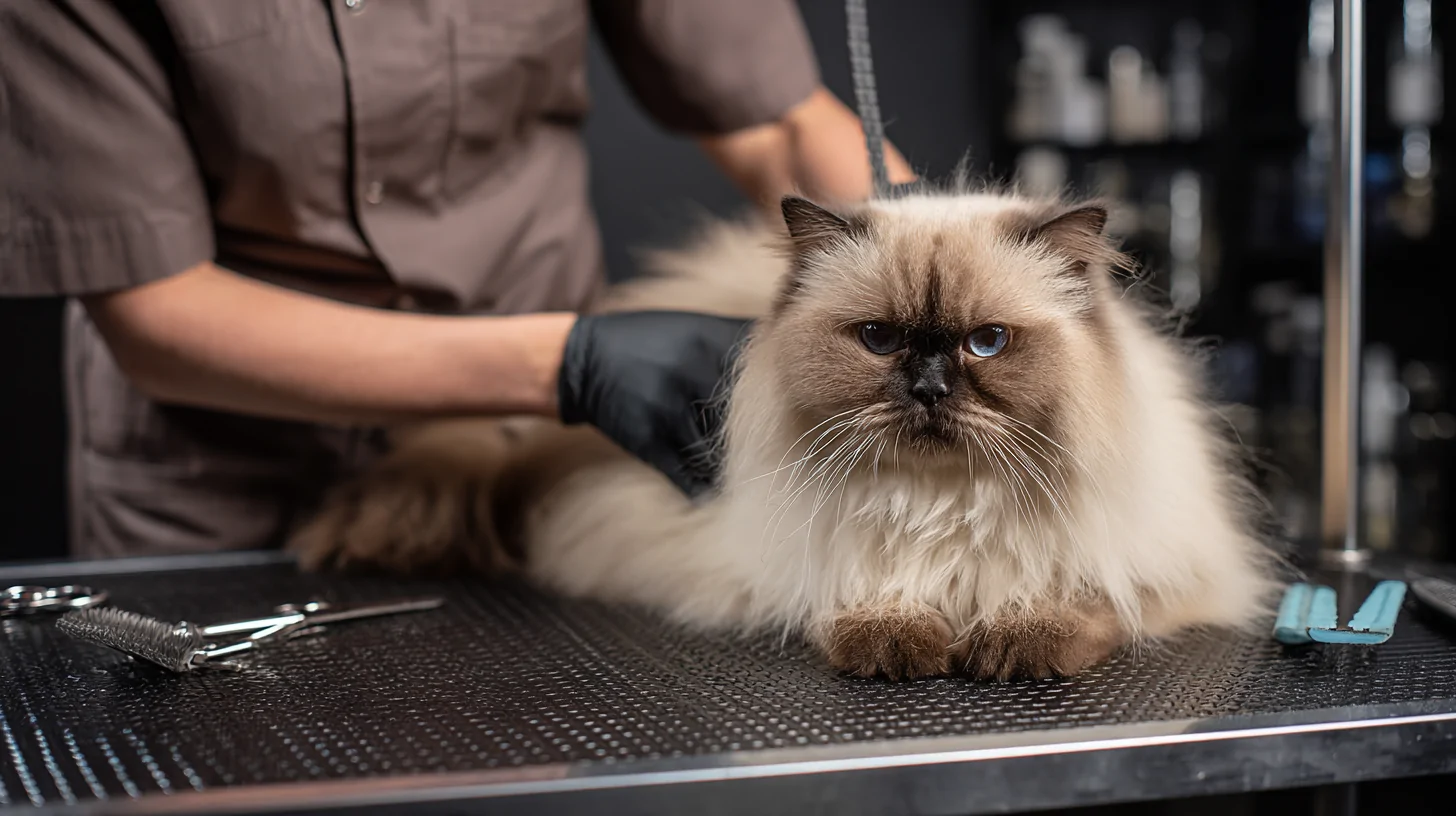
Image source: Bing (Web (fair-use with source credit))
Quick Answer
Professional cat grooming costs $45 to $85 for a basic bath and brush package. De-matting adds $20 to $50. Lion cuts run $75 to $125.
Mobile groomers charge a $20 to $40 premium. Vet grooming for severe matting with sedation can exceed $300. Your final price depends on coat condition, cat temperament, and location.
Why Cat Grooming Costs Vary So Much
A $40 groom and a $140 groom might be for the exact same breed of cat. The difference isn't the shampoo. It's the labor.
Grooming a cat is not like grooming a dog. Cats are smaller, more agile, and significantly less cooperative when they're scared. A groomer isn't just washing and brushing.
They're managing a living creature who may be terrified, angry, or both. That takes time, patience, and genuine skill.
Here's the core principle: groomers price by time and risk. The longer a job takes, and the higher the chance of injury (to the cat or the groomer), the more it costs.
Let's break down what actually drives the price up:
- Coat type. A short-haired cat with a single coat might take 45 minutes. A long-haired Maine Coon with a thick undercoat could take two hours just to brush out properly.
- Matting. This is the big one. Light tangles take a few minutes to work through. Pelted fur, where the hair is compressed into a solid mass against the skin, can require an hour of careful shaving. It's slow, delicate work, and it carries real risk of cutting the cat's thin skin.
- Temperament. A relaxed cat is fast. A cat that hisses, swipes, or tries to escape gets surcharged. Groomers have to slow down, use extra safety measures, and sometimes stop entirely if the cat is too stressed.
- Location. Mobile groomers bring the salon to you, but that convenience costs money. Urban areas also run higher than rural ones, simply because overhead and demand are higher.
- Condition upon arrival. If your cat is already well-brushed and clean, the groomer does less work. If your cat has been rolling in the dirt or hasn't been brushed in six months, that's extra labor baked into the quote.
The table below shows the typical starting ranges. Remember, these are not ceilings.
| Service | Typical Price Range |
|---|---|
| Basic bath + brush (short hair) | $45 – $65 |
| Basic bath + brush (long hair) | $55 – $85 |
| De-matting (per session, light to moderate) | +$20 – $40 |
| De-matting (severe/pelted, requires shave) | +$40 – $70+ |
| Lion cut / full body clip | $75 – $125 |
| Sanitary trim (only rear and belly) | $10 – $20 |
| Nail trim (standalone) | $10 – $20 |
| Mobile groomer premium | +$20 – $40 |
| Vet-assisted grooming with sedation | $200 – $600+ |
Step 1: Assess Your Cat's Coat Condition
Before you pick a groomer, pick up a brush and look at your cat. The single biggest factor in your final bill is the state of their fur. Groomers quote based on what they see in the first five minutes.
If they spot mats, the price climbs. If they spot a full-on pelt, it climbs again.
Short Hair vs. Long Hair vs. Double Coat
A short-haired cat with a smooth, tight coat is the cheapest to groom. They don't tangle easily, dry quickly, and rarely need more than a quick wipe-down and nail clip. These cats cost the least because they take the least time.
Long-haired cats are the opposite. Persians, Ragdolls, Himalayans, and Maine Coons have hair that mats at the drop of a hat. These breeds need daily brushing, not weekly.
When that brushing doesn't happen, the mats form fast. Groomers see this constantly.
Double coats are the sneaky ones. A cat can have short fur on top but a thick, dense undercoat underneath. That undercoat sheds twice a year, and if you don't use an undercoat rake, it compacts into felt-like mats that are invisible from the outside.
You don't see the problem until the groomer's clippers come out.
Matting Severity: Light Tangles vs. Pelted Fur
This distinction matters more than anything else on this page. Let's define each clearly.
- Light tangles. These are small, loose knots you can work out with a slicker brush or wide-tooth comb without pulling too hard. They take minutes to fix. Groomers may not even charge extra for these if they catch them early in the session.
- Moderate mats. Denser clumps that resist brushing. These take time to tease apart, often require a de-matting rake, and are uncomfortable for the cat. Expect a surcharge.
- Pelted fur. The worst case. The hair has fused into a hard, continuous shell against the skin. You cannot brush this out. It won't brush out, period. The only safe option is to shave it off with clippers, usually with a #10 blade, leaving the cat nearly bald. That shave is slow, precise work against a thin skin layer that wrinkles easily. Nicks happen. Infections happen.
The photo below shows what severe matting looks like. Notice how the fur is compressed and tight against the body. That's a pelt.
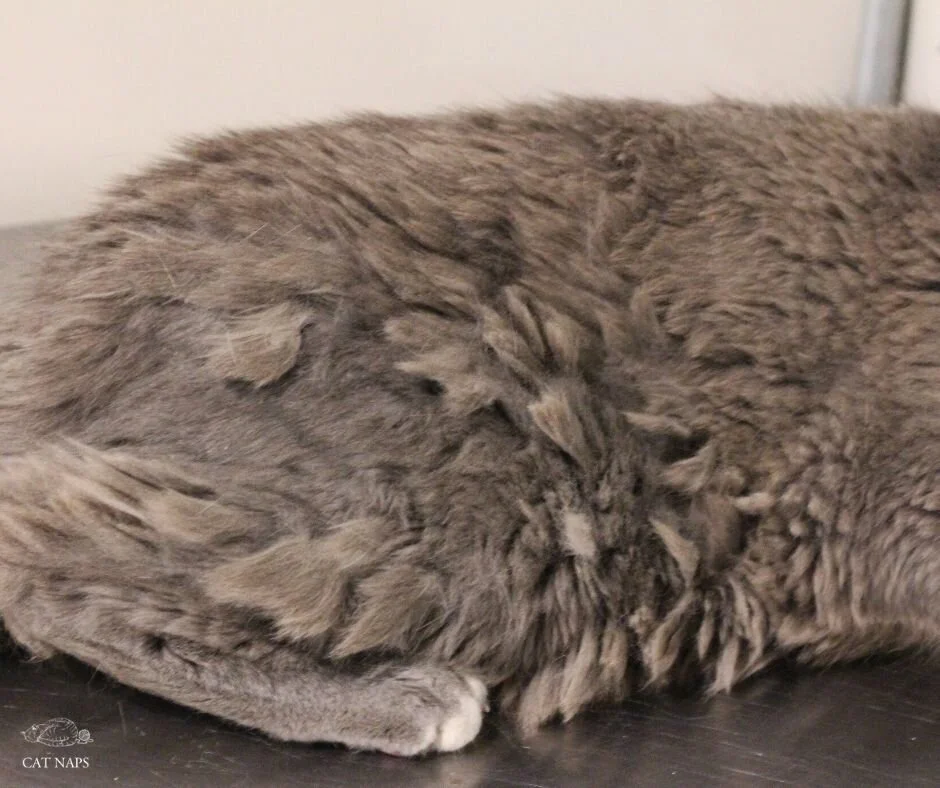
Image source: Bing (Web (fair-use with source credit))
How to Check for Mats at Home
Run your fingers through your cat's fur down to the skin. Don't just stroke the surface. Press gently and move your hand against the grain.
You're feeling for any bump, lump, or patch of resistance where the hair doesn't separate easily.
Pay special attention to these areas:
- Behind the ears
- Under the chin
- Armpits
- The belly
- The rear end, where urine or feces can cause mats
- The base of the tail
If you find a mat, try to work it out with your fingers before you reach for scissors. Ripping a mat apart with a comb hurts the cat. Go slow, use detangling spray, and be patient.
If the mat is tight against the skin and you can't get a finger under it, that's pelt. Don't try to cut it off with scissors. Cats have paper-thin skin, and a stray snip can cause a wound that needs stitches.
Write down that you have a pelted cat, and budget for a de-matting fee.
Step 2: Evaluate Your Cat's Temperament
You know your cat better than anyone. Be honest here. The groomer will figure it out within 30 seconds of opening the carrier, so there's no point in hiding it.
A cat that acts sweet at home can turn into a claw machine the second they smell unfamiliar shampoo.
Groomers don't judge. They do, however, charge for risk and time.
The Cooperative Cat
Some cats are genuinely chill about grooming. They sit on the table, tolerate the bath, and only complain a little during the blow-dry. These cats get the base rate.
The groomer moves fast, finishes ahead of schedule, and everyone is happy.
If your cat is like this, you'll get the lowest quote in the range. It's not a discount. It's just efficiency.
The Anxious or Fearful Cat
This is the majority of cats. They don't bite, but they tremble, try to hide, and cry. They need breaks, gentle handling, and sometimes a second groomer to help hold them steady.
That extra time adds up. A groomer might quote a base price but add a "difficult coat handling" or "stress surcharge" of $10 to $25 when they meet the cat and see the behavior. It's not a scam.
It's an honest assessment of how long the job will actually take.
The Aggressive or "Difficult" Cat
This is the category that gets cats turned away. Some groomers refuse aggressive cats entirely. The risk of injury, to both the cat and the groomer, is too high.
Others will attempt it but charge a serious premium, often $20 to $40 extra, and may require that you stay at the salon during the appointment.
If your cat is aggressive, your options narrow. You might need:
- A groomer who specializes in "difficult" cats
- A mobile groomer who works in a quieter environment
- A veterinary clinic that can offer sedation
- A professional who uses Fear Free handling techniques
Surcharges for Challenging Behavior: What's Normal
Here's a reality check on what's reasonable. A $10 to $15 surcharge for a nervous cat is fair. A $30 to $40 surcharge for a cat that needs two groomers or a muzzle is also fair.
Groomers don't set these rates to punish you. They set them because a difficult cat takes twice as long and carries real injury risk.
If a price quote feels shockingly high, ask why. A good groomer will explain the breakdown. They'll say things like "your cat has a few mats near the tail" or "she's very nervous, so I'm budgeting double time." That transparency is a good sign.
It means they're experienced enough to predict what they're walking into.
Step 3: Choose Your Grooming Route
Now that you know your cat's coat and temperament, it's time to pick where you'll get the work done. You have four main routes, and they all cost differently. There's no universal "best" option.
The right choice depends on your cat, your budget, and your tolerance for hassle.
Professional Salon Grooming
This is the traditional route. You load the cat into a carrier, drive to the salon, drop them off, and pick them up a few hours later. Prices are the lowest of the professional options because salons handle multiple clients and keep their overhead spread across the day.
Your cat will be handled in a new environment with unfamiliar smells, sounds, and other animals around. That's stressful for many cats, which is why anxious cats sometimes end up with a "behavior" surcharge at a salon when they'd behave better at home.
Salons are best for:
- Cats who are already comfortable with car rides
- Cats who are reasonably social or at least not aggressive
- Owners who are okay with a chunk of the day being scheduled around drop-off and pick-up
Mobile Groomers (The Convenience Premium)
These are vans or converted vehicles equipped with a full grooming setup: tub, dryer, grooming table, and all the tools. They pull up to your house, set up, and groom your cat on your driveway. You don't have to drive anywhere, and your cat never leaves the safety of your property.
That convenience costs. Mobile groomers typically charge $20 to $40 more than a salon for the same service. It covers fuel, vehicle maintenance, and the fact that they're spending an hour on the road for a single client instead of staying in one building.
The image below shows a typical mobile grooming van. Notice the dedicated equipment and the self-contained setup. That's what you're paying extra for.

Image source: Bing (Web (fair-use with source credit))
Mobile grooms are best for:
- Cats who panic in cars and arrive at a salon already overstimulated
- Multi-cat households that need several cats done in one visit
- Owners with mobility issues who can't manage carrying a cat carrier in and out of a building
- Anxious owners watching helplessly from the salon window
Veterinary Grooming (When It's Necessary)
Vet clinics don't usually offer routine grooming. When they do, it's for medical reasons. Severe matting that requires sedation, matting so tight it's pulling the skin, or a cat so aggressive that safe grooming without drugs is impossible.
That's when the vet steps in.
This option is the most expensive by a wide margin. A sedation protocol, the veterinarian's time, monitoring equipment, and a technician to assist can push the bill past $300 easily. It's not "grooming with extra steps." It's an anesthesia event that happens to include a haircut.
Vet grooming is best for:
- Cats with pelted fur that's adhered to the skin
- Cats with wounds or infections hidden under mats
- Cats with severe behavioral issues that make standard grooming dangerous
- Cats with health conditions that require monitoring during the process
DIY Home Grooming (What It Actually Costs)
You can absolutely groom your cat at home. Short-haired cats often need nothing more than a weekly brush and monthly nail trim. The upfront cost is a one-time purchase of tools: a slicker brush, an undercoat rake, nail clippers, and a high-quality cat shampoo.
That kit runs $30 to $60.
Long-haired cats are a different story. Maintaining a Persian's coat at home takes daily brushing, regular combing, and occasional professional help for the tricky areas like the rear end and the tail. You save money on the routine visits but still need a pro every two to three months.
Here's the catch with DIY: no two grooms are equal. If you have a short-haired cat, DIY is honestly all you need. If you have a long-haired cat with mats, DIY is not an option.
Matting is a professional problem.
| Route | Typical Cost | Best For | Stress Level for Cat |
|---|---|---|---|
| Salon | $45 – $85 | Cooperative, car-tolerant cats | Moderate |
| Mobile | $65 – $125 | Anxious cats, multi-cat households | Low |
| Vet-assisted | $200 – $600+ | Severely matted or aggressive cats | High but medically safe |
| DIY | $30 – $60 (one-time kit) | Short-haired, low-maintenance cats | Varies by skill |