
Most cat baths go wrong in the first ninety seconds. Learning how to bathe a cat without getting scratched has very little to do with shampoo technique and almost everything to do with setup, timing, and knowing when to quit. Cats don't scratch out of spite.
They scratch when they feel trapped, off balance, or ambushed.
The American Association of Feline Practitioners handling guidelines make the point vets follow daily: minimal restraint, short handling windows, and secure footing prevent more injuries than any grip ever will. Two targets are worth memorising now. Keep total handling under 10 minutes.
Keep water between 100 and 102°F (38 to 39°C), which is roughly your cat's own body temperature.

Image source: Bing (Web (fair-use with source credit))
Quick Answer
Bathing a cat without getting scratched starts days before the water. Trim the nails, brush out every mat, and warm the room. Use two people, a non-slip mat, and shallow warm water.
Keep total handling under 10 minutes. Stop at once if your cat pants, drools, or goes limp.
First, Answer This: Does Your Cat Actually Need a Bath?
Here's the part generic advice always skips. Most cats never need a full water bath.
A healthy cat spends a large share of its waking hours grooming itself. The tongue is covered in backward-facing keratin spines called filiform papillae. They work like a built-in comb, wicking saliva down to the skin and pulling out loose hair and debris.
Soaking a cat that's already doing that job well costs you skin oils, trust, and possibly blood.
So the honest starting point isn't "how do I bathe my cat." It's "why am I bathing my cat."
The four reasons a bath is genuinely necessary
If your situation isn't on this list, you probably don't need water at all.
- Contamination. Something is on the coat that the cat must not swallow. Motor oil, paint, tar, antifreeze, sticky trap glue, garden chemicals, or a dog's spot-on flea product applied by mistake.
- A medical protocol. Your vet has prescribed a medicated shampoo or dip, such as chlorhexidine and miconazole for skin infections, or lime sulphur for ringworm (Microsporum canis). These need proper contact time and rinsing.
- Soiling the cat can't fix. Diarrhoea stuck to the britches, urine scald, post-surgical mess, or a long-haired cat who's sat in the litter box.
- A cat who can't self-groom. Sphynx and other hairless breeds accumulate skin oil with no coat to absorb it. Senior, arthritic, and overweight cats often can't reach the tail base or hindquarters at all.
The situations where a bath makes things worse
Water is the wrong tool more often than people expect. If any of these apply, stop and change plan.
| Situation | Why water is the wrong move | What to do instead |
|---|---|---|
| Matted or pelted coat | Wet mats tighten against the skin, causing pain and sores | Demat or clip first, then bathe |
| Permethrin or unknown chemical exposure | Some toxins need specific decontamination, and absorption may already be happening | Call your vet or a poison line immediately |
| Suspected ringworm | The wrong product spreads spores around the house | Vet-directed protocol only |
| Cardiac, renal, diabetic, or hyperthyroid cats | Restraint stress carries real physiological risk | Vet or Fear Free certified groomer |
| Brachycephalic breeds (Persian, Exotic Shorthair) | A wet face plus stress means genuine breathing difficulty | Professional groomer with proper drying setup |
| Recent surgery or open wounds | Contamination and stitch damage | Follow discharge instructions, spot clean only |
| Kittens under four weeks | They can't regulate body temperature yet | Damp cloth on soiled areas, dry immediately |
If your cat has come into contact with something toxic, the US Environmental Protection Agency publishes guidance on pet pesticide products, and the ASPCA Animal Poison Control Center runs a 24-hour line at 888-426-4435. Ring first, wash second. Some products get worse when you scrub them.
The 60-Second Version: What Stops Most Scratches
If you read nothing else, read this. In our review of veterinary handling guidance and professional feline grooming practice, the same short list turns up again and again. Ranked roughly by how much difference each one makes.
- Trim the nails two to three days before. Blunt claws still hurt. They don't open skin the same way.
- Brush the coat out completely while it's dry. Non-negotiable for anything longer than a shorthair.
- Use two people. One holds and reassures, one washes. Solo bathing is where most injuries happen.
- Give the cat solid footing. A rubber mat or a folded towel in the sink. Slipping is the biggest panic trigger.
- Keep the water shallow. Three to four inches. A cat who can stand is a cat who isn't fighting for its life.
- Set everything up before the cat enters the room. You should never have to walk away or reach for something mid-bath.
- Work fast and stop early. Under 10 minutes. A rushed but calm bath beats a thorough one that ends in a bite.
Notice how much of that happens before you turn on a tap. That's the whole point.
Why Cats Fight Baths (And What That Tells You About Restraint)
Cats aren't afraid of water in some mysterious way. Plenty of them will paddle a tap, sit in a wet shower tray, or fish ice cubes out of a glass. What they hate is the combination of being wet, being held, and having nowhere to put their feet.
A cat's whole defensive strategy depends on escape. Take away traction and remove the exits, and you've removed both of its options. The only thing left is the claws.
There's a second layer. A soaked coat loses its insulating loft, so the cat gets cold fast. Cold plus restrained plus confused reads as genuine danger.
That's why a warm room and warm water aren't luxuries. They cut the panic at the source.
Why vets stopped scruffing
Grabbing the loose skin at the back of the neck used to be standard. It isn't any more, and the reason is straightforward.
The limp reflex you see in kittens fades early. In an adult cat, scruffing doesn't produce calm. It produces a fear response that looks like calm from the outside.
The cat freezes because it's overwhelmed, not because it's relaxed.
Meanwhile the front legs are still free, the hind legs are completely free, and nothing is supporting the cat's body weight. Modern feline handling guidance does the opposite. Support the weight, keep the cat close to a surface, use a towel to limit movement rather than a grip on skin.
Less restraint, less struggle. It sounds backwards and it works.
The escalation ladder: growl, hiss, spit, strike
Cats warn you. The trouble is that the early warnings are quiet, and people miss them until the loud ones arrive.
Roughly in order, escalation looks like this:
- Freeze. The cat goes still and stops blinking normally.
- Tail. A flick becomes a thump becomes a lash.
- Ears. Rotating sideways, then flattening back against the skull.
- Pupils. Dilating wide even in a bright bathroom.
- Skin ripple. Twitching along the back, fur standing up along the spine and tail.
- Voice. A low growl, then a hiss, then a spit.
- Contact. A swat with claws out, then a bite.
Two things worth knowing. A frightened cat can skip several rungs and go straight to contact. And a cat that's been ignored at the quiet stages learns to stop bothering with them.
That's how people end up with a cat that "attacks with no warning."
Your Condition Variables: Six Things That Change the Whole Approach
There is no single correct way to bathe a cat. Six factors decide which method you should use. Run through them honestly before you commit.
Coat type and matting
Run your fingers all the way down to the skin, especially in the armpits, groin, belly, and the britches behind the back legs. Feel any firm lump or tight tangle? That's a mat, and water will make it worse.
- Shorthaired, no mats: a full bath is workable.
- Semi-long or long hair, fully combed out: workable, but plan for drying time.
- Any matting or pelting: clipping comes first, and that usually means a groomer.
Age, weight, and mobility
An arthritic 14-year-old can't brace itself in a slippery sink. An overweight cat may struggle to stand at all when the footing gives.
Older cats chill faster and take longer to recover from stress. If your cat is over about 10, or clearly stiff, keep the bath shorter, the water warmer, and the drying gentler. Often a warm damp cloth on the greasy areas does the whole job.
Health status and breed breathing risk
Flat-faced breeds have compressed airways at the best of times. Add a wet face and a stress response and you can push a Persian or Exotic Shorthair into real respiratory distress.
Cats with heart disease, kidney disease, diabetes, or hyperthyroidism carry genuine risk from a big adrenaline surge. Same for any cat with a history of stress-triggered cystitis. A bad bath can set off a flare within a day or two.
Temperament and handling history
Be realistic here, not hopeful. Can you already trim this cat's nails? Does it tolerate being held for 60 seconds?
Has it ever bitten during handling?
A cat that has never been handled much, or a recently adopted or semi-feral cat, is not a home bath candidate yet. The first bath sets the template for every bath afterwards, and a traumatic one is very hard to undo.
Why you're bathing
Routine cleanliness allows flexibility. You can bathe half the cat today, stop, and finish tomorrow. A medicated protocol doesn't, because contact time and full coverage matter clinically.
Toxin removal is urgent, which changes the calculation again.
How many people you've got
This is the variable people ignore, and it's arguably the most important. A full water bath needs one hand on the cat, one on the sprayer, and one on the shampoo. You have two.
If you can't get a second pair of hands, adjust the method rather than pushing through. There are decent solo options, and we cover them further down.
The Decision Tree: Which Method Fits Your Cat
Work through this in order. The first branch that matches is your answer.
| If this is true | Then your branch is |
|---|---|
| Toxic substance, permethrin, ringworm, or a sick cat | Branch D: vet first |
| The coat is matted or pelted anywhere | Branch C: groomer |
| The cat is fearful, unhandled, senior and frail, or brachycephalic | Branch C: groomer |
| Only spot soiling, a greasy patch, or light dust | Branch B: waterless |
| Healthy, combed out, tolerates handling, two people available | Branch A: home bath |
| Healthy and combed out but you're alone | Branch B first, then A with help later |
Branch A: full water bath at home, two people
Use this when your cat is healthy, calm enough to hold for a couple of minutes, fully brushed out, and you have a helper. This is the classic sink bath done properly. With the prep right, it's genuinely uneventful.
The shape of it is simple. Shallow warm water, non-slip footing, one person supporting the cat's chest and shoulders, one person washing from the neck backwards. Face done with a damp flannel only.
Branch B: waterless foam or damp-cloth spot clean
Use this when the problem is localised, when your cat won't tolerate immersion, or when you're on your own. It's underrated and it solves maybe half of all real-world "my cat needs a bath" situations.
- Dry shampoo foam or mousse: work into the coat, wipe out with a towel, comb through. No rinsing.
- Cat grooming wipes: good for paws, tail base, and a light overall wipe-down.
- Warm damp flannel: the simplest option for a soiled patch. Blot, don't scrub.
- Plain unscented cornstarch: absorbs grease in a small area, then brush out thoroughly.
Skip anything containing tea tree, melaleuca, pine, or citrus oils. Essential oils and phenolic compounds are poorly metabolised by cats and genuinely dangerous, whatever "natural" claim is on the bottle.
Branch C: professional cat groomer
Use this for mats, difficult temperaments, double coats you can't dry properly, and any cat where you've already had one bath go badly.
Look for a cat-only salon or a groomer with feline-specific credentials. As of 2026, groomer licensing is still patchy. Only a handful of US states regulate the trade, and UK qualifications are voluntary rather than mandatory.
Ask about feline experience specifically, not a generic pet grooming certificate.
Typical prices sit around $50 to $120 in the US and £40 to £90 in the UK for a bath, dry, nail trim, and sanitary tidy. A full lion cut on a matted cat costs more.
Branch D: vet visit first
Use this when the bath is medical, when the cat is medically fragile, or when the cat's stress level makes safe handling impossible.
A vet offers two things you can't. First, a diagnosis. A greasy coat, dandruff, or overgrooming often signals an underlying problem that a bath won't touch.
Second, pre-visit medication. Gabapentin and trazodone are commonly used off-label to take the edge off feline handling stress, and licensed pregabalin oral solution exists in several markets.
There's no shame in a sedated groom for a cat who genuinely can't cope. It's often kinder, safer, and cheaper once you've factored in antibiotics for an infected bite.
Prep Work Starting Three Days Out
The bath itself is the easy part. Everything that decides whether it goes well happens in the days beforehand.
Think of it as removing reasons to scratch, one at a time. Blunt claws, no mats, a familiar sink, a warm room. Each one you tick off makes the actual wash shorter and calmer.
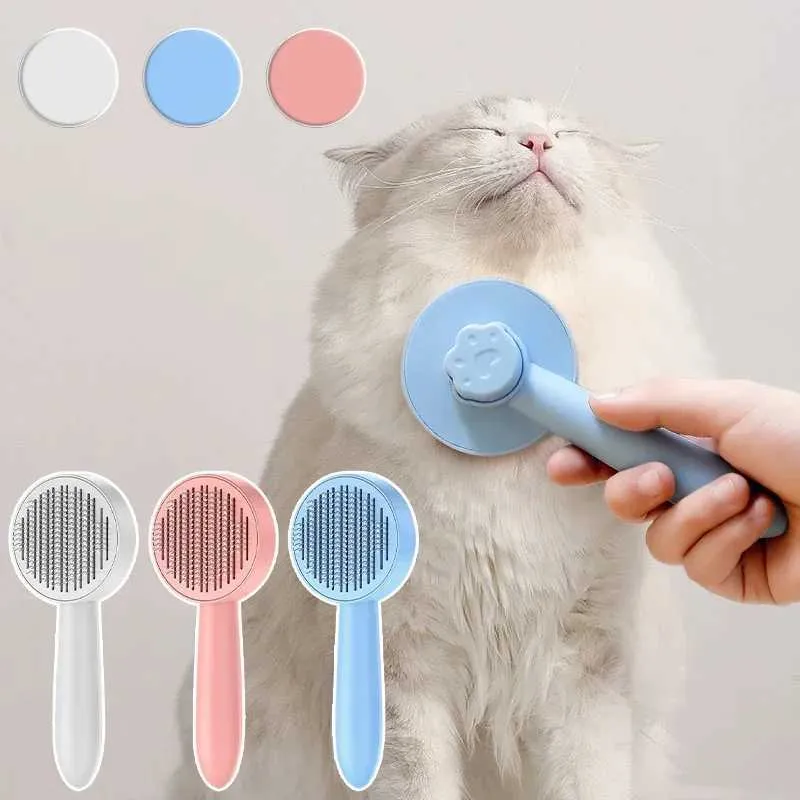
Image source: Bing (Web (fair-use with source credit))
Nail trim timing and nail caps
Trim two to three days before the bath, not on the day. Doing both in one session stacks two stressful handling events back to back, and the second always goes worse.
Use scissor-style clippers rather than the guillotine type. Press gently on the toe pad to extend the claw, and take off only the clear hook at the tip. The pink triangle inside is the quick, and it bleeds freely if you clip it.
- Keep styptic powder within reach in case you nick a quick.
- Do the front paws first. Those are the ones that catch you.
- If your cat objects, do two claws a day over a week rather than forcing all ten.
- Back claws matter less for scratching, but they help the cat grip a slippery sink.
Soft nail caps (glued vinyl covers) suit a cat that needs frequent medicated baths. They last four to six weeks and blunt the tips completely. They're not a substitute for good handling, but they take the sting out of a bad moment.
Declawing is not on this list and never should be. It's an amputation of the last toe bone and is banned or restricted in much of the world.
Brushing out before water touches the coat
Brush the whole cat dry, all the way to the skin. Not a quick surface stroke over the back.
Water turns a loose tangle into a solid felted pad. Once that happens, the mat pulls on the skin every time the cat moves. It also traps moisture underneath, which leads to sores.
This is the most common way a well-meant home bath causes actual harm.
Work in this order:
- Slicker brush over the body to lift loose undercoat.
- Greyhound comb (metal, wide teeth one end, fine the other) through the same areas to find what the brush missed.
- Check the danger zones by hand: armpits, groin, belly, behind the ears, the britches, and the base of the tail.
- Any mat you find: work it apart with fingers and a mat splitter, or stop and book a groomer.
Never cut a mat out with scissors. Cat skin is thin and mobile, and it lifts into the blade far more easily than you'd think. Lacerations from owner dematting are a routine emergency presentation.
Desensitising the sink or tub
Give your cat three or four short, boring, positive sessions in the bathing spot before the real thing. Sixty seconds each is plenty.
- Day one: put the cat in the dry, empty sink on a towel. Treat. Lift out after 20 seconds.
- Day two: same thing, with the tap running quietly nearby but not on the cat.
- Day three: dampen the towel with warm water so the paws feel wet footing. Treat, lift out.
Aggregate feedback from feline grooming professionals points to the same pattern. Cats who've stood in the sink calmly a few times do noticeably better than cats who meet it for the first time already covered in shampoo.
A synthetic facial pheromone spray helps some cats. Spray the towels and the room 15 minutes beforehand so the alcohol carrier evaporates. Don't spray it directly on the cat.
Setting Up the Bathroom So Nothing Goes Wrong
Here's the rule that prevents most bath disasters. Once the cat is in the room, you never leave, never turn your back, and never reach for something you forgot.
That means the setup has to be complete before the cat arrives. All of it.
Water depth, temperature, and the non-slip surface
Fill the sink or tub before you bring the cat in. Running water hitting a hard basin is a major startle trigger, and doing it with the cat already in your arms is asking for a launch.
| Setting | Target | Why it matters |
|---|---|---|
| Water depth | 3 to 4 inches (7 to 10 cm) | The cat can stand. Standing cats don't panic-swim |
| Water temperature | 100 to 102°F (38 to 39°C) | Matches feline body temp. Cold water triggers thrashing |
| Room temperature | 75 to 80°F (24 to 27°C) | A wet cat loses heat fast |
| Container height | Chest height for you | Bending over a deep tub wrecks your control |
| Draughts | Zero | Close the door and the window |
Test the water on the inside of your wrist. If it feels neutral rather than warm, it's about right. Anything that feels pleasantly hot to you is too hot for a cat.
The non-slip layer isn't optional. A rubber or silicone mat in the base of the sink, or a folded bath towel, gives the claws something to hold. When a cat can grip, it stops trying to grip you.
A useful trick for anxious cats: put a plastic laundry basket or storage tub inside the bath, and put the cat in that. Four walls, solid footing, a sense of containment. You can pour water straight through the slots.
The full kit list, laid out within arm's reach
Everything on this list goes on a towel next to the sink before the cat walks in.
| Item | Spec or note |
|---|---|
| Cat shampoo | pH-appropriate for feline skin, pre-diluted in a squeeze bottle |
| Two rinse jugs | Filled with warm water, ready to go |
| Non-slip mat | Rubber or silicone, cut to fit the basin |
| Three towels | One to wrap, one to blot, one dry spare |
| Damp flannel | For the face and ears. Plain water only |
| Cotton balls | Resting at the ear opening, never pushed into the canal |
| Metal comb | For combing the damp coat afterwards |
| Treats | High value. Lickable tubes work well |
| Mesh bathing bag | Optional, depending on your cat |
Dilute the shampoo before you start. Most cat shampoos are concentrates, and manufacturer instructions commonly specify somewhere in the range of 1:8 to 1:16 with water. Diluted product spreads through the coat faster and rinses out far more easily, which cuts your handling time.
Never use human shampoo, baby shampoo, or dish soap. Feline skin sits at roughly pH 6 to 7.4 and human skin around 4.5 to 5.5, so human products strip the acid mantle and leave the skin flaky and itchy. Dish soap is worse, since it's engineered to remove fat.
Assigning the holder and the washer
Decide roles out loud before you start. Confusion mid-bath is how hands end up in the wrong place.
The holder stands at the cat's head end. Their job is to support the chest and shoulders, keep the cat facing away from the washer, and talk quietly. They also call the stop.
The washer works from the neck backwards, one hand always in contact with the cat's body. They handle shampoo, water, and rinsing, and they never make a sudden move toward the head.
If the cat starts turning to face the holder, that's a request for reassurance, not an escape attempt. Let it tuck its head against the holder's forearm. A cat with its face buried has stopped scanning for threats.
The Two-Person Bath, Step by Step
Total target time from first splash to towel: under 10 minutes. Set a timer if you're the type who loses track.
Towel burrito vs mesh bathing bag
Both work. They suit different cats.
A towel wrap (the burrito or scarf wrap) means folding the cat into a towel so only the head, or the head and one section of body, stays exposed. You unwrap one area at a time, wash it, and re-cover. Best for cats who calm down when their body is contained, and for medicated washes done in stages.
A mesh bathing bag encloses the cat with a drawstring at the neck and lets water and shampoo pass through the fabric. Best for fast, whole-body washes and for cats who fight a towel. The downside is slower rinsing, since the mesh holds product.
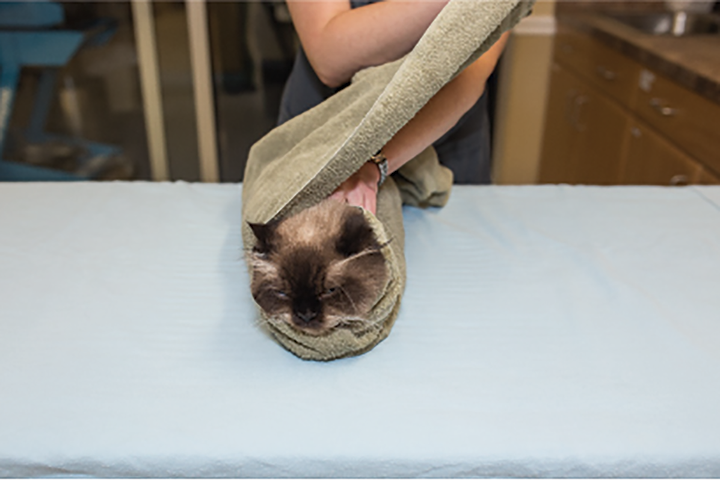
Image source: Bing (Web (fair-use with source credit))
Whichever you use, the towel or bag replaces a tight grip. Your hands stay soft and supportive, and the fabric does the limiting.
Lowering the cat in and wetting from the shoulders back
Carry the cat in wrapped or bagged, and lower it rear feet first. Hind paws touching a solid surface tell the cat it's landing, not falling.
Let it stand for a few seconds before you do anything else. A cat that has found its footing is already halfway to cooperating.
Wet the coat with a jug or a low-pressure hand sprayer held right against the fur. Contact matters. A sprayer held six inches away sounds and feels like rain, which is alarming.
Held against the skin, it just feels like warm pressure.
Start at the shoulders and work backwards toward the tail. Then the legs, then the belly last. Leave the head and neck completely dry for now.
Lather, contact time, and rinsing until clear
Apply the diluted shampoo along the spine and massage down and outward. Use flat palms and finger pads, not fingertips digging in.
- General cleaning shampoo: lather, then rinse straight away.
- Medicated shampoo: most veterinary products need 5 to 10 minutes of contact time. Check the label. Keep the cat warm and wrapped in a damp towel during the wait.
- Flea shampoo: these are EPA-registered pesticide products in the US. Follow the label exactly, and never use one labelled for dogs.
Rinse until the water runs completely clear, then rinse once more. Residue matters more than people realise, because a cat licks its whole coat dry afterwards and swallows whatever you left behind. Leftover shampoo also causes itching and flaking days later, which people then misread as dry skin.
Squeeze water out of the coat with your hands as you go. Less water in the fur means less drying time.
Face, ears, and eyes, cloth only
Never pour water over a cat's head. Not once, not carefully, not "just a bit."
Water in the ear canal is a genuine route to otitis externa, and water over the face triggers the strongest panic response you'll see all bath. Use a warm damp flannel with plain water and wipe the face, around the eyes, and the outer ear flaps.
For greasy chin acne or tear staining, a tiny amount of tearless product on the cloth is fine. Wipe, then wipe again with a clean wet corner to remove it.
Rest a cotton ball at each ear opening before you start if you like. Never push anything into the canal.
Drying Without Creating a New Fear
More cats are lost at the drying stage than the washing stage. The bath is over, the human relaxes, and then a roaring hot dryer arrives out of nowhere.
Wet cats get cold fast, and a chilled cat is a stressed cat. Speed matters, but method matters more.
Towel-blotting, dryer noise, and heat limits
Blot, don't rub. Rubbing tangles a damp coat and creates the mats you spent three days preventing.
Wrap the cat in the first towel and press firmly. Swap to a dry towel after 30 seconds, then a third. Three dry towels remove far more water than one soggy one, and it costs you nothing but laundry.
If you use a dryer, follow these rules:
- Low or no heat only. Cats can't shed heat through the skin the way we do, and dryer burns are a documented grooming injury.
- Keep it moving. Never hold the airflow on one spot.
- Stay about 12 inches away and never point it at the face.
- Start it in another room so the cat hears it before it feels it.
- Stop if the cat pants. Open-mouth breathing during drying is heat stress until proven otherwise.
Many cats do better with no dryer at all. A warm, draught-free room, a stack of dry towels, and 30 to 60 minutes of quiet works fine for a shorthaired cat. Double-coated and long-haired cats are the exception, since a dense undercoat can stay damp for hours and encourage skin problems.
Combing damp coat to stop post-bath matting
Comb the coat through while it's still slightly damp, not bone dry. Almost everyone skips this, and it's why long-haired cats often come out of a bath matted a week later.
A wet coat dries in whatever direction you leave it. Comb it flat and it dries flat. Leave it swirled and clumped and it dries into felted knots at the roots.
Use the metal comb, work in the direction of hair growth, and pay attention to the armpits and britches again. Two minutes here saves a dematting session later.
Then leave the cat alone. Somewhere warm, with food and a familiar bed. Most cats do a marathon self-grooming session, sulk for an hour or two, and are entirely normal by evening.
Don't chase them for cuddles.
Abort Signals: When to Stop Immediately
Knowing when to quit is the most underrated skill in cat handling. A bath you abandoned at 60% is a minor inconvenience. A bath you pushed through is a bite, a vet visit for you both, and a cat that fights every future attempt.

Image source: Web (Bing) / pethealthlove.com (Web image (fair-use with source credit))
The stop-now list
Any single one of these means you stop washing, wrap the cat, and get it out of the water.
- Open-mouth breathing or panting. Cats don't pant to cool off the way dogs do. Here it signals severe stress or heat overload.
- Drooling. Sudden salivation is a fear and nausea response.
- Fully dilated pupils in a bright room.
- Silence after screaming. A cat that was vocalising and has gone quiet isn't calming down. It's shutting down.
- Going limp. Tonic immobility looks like surrender and is closer to a freeze response. Push on and you'll often get an explosive reaction seconds later.
- Frantic climbing up the sink wall, up your arm, over the holder's shoulder.
- Any bite attempt, even one that misses.
- Uncontrolled shaking, or gums that look pale.
How to stop safely
Don't just let go. That's how a wet, frightened cat ends up bolting through the house or up your leg.
- Wrap the cat in a dry towel, front legs included.
- Lift it out and set it on a stable surface, still wrapped.
- Leave it wrapped for 30 seconds without looming over it.
- Open the towel and step back. Let the cat leave on its own terms.
- Close the bathroom door behind it and leave it alone.
Rinse off any remaining shampoo with a damp cloth once the cat has settled. If you can't, a small amount of residue is a much smaller problem than a serious injury. Ring your vet for advice if it was a medicated or pesticide product.
Then reassess honestly. A cat that hit an abort signal once will very likely hit it again. That cat belongs with a Fear Free trained groomer or a vet team, ideally with pre-visit medication on board.
Bathing a Cat Alone When You Have No Second Pair of Hands
Sometimes there's no helper available. You can still do this, but you have to change the method rather than attempt the two-person bath with one person.
The core problem is simple. A solo bath means one hand is always occupied holding the cat, which leaves one hand to do a two-hand job. So the fix is removing tasks from that second hand.
Set up so nothing needs a free hand
- Pre-fill two jugs of warm water. You'll pour with one hand, no tap fiddling.
- Pre-dilute shampoo in a squeeze bottle with a flip cap you can open with one thumb.
- Use a bathing bag or a laundry basket in the tub. The container does the containing so you don't have to.
- Wear long sleeves and drape a towel over your forearms. Not armour, just a buffer.
- Put a towel on the floor by your feet so you can wrap the cat the second you lift it out.
The one-arm brace hold
Stand at the cat's side, not in front of it. Slide your non-dominant forearm along the cat's chest so your hand cups the far shoulder. The cat's body rests against your forearm, and your elbow blocks it from backing out.
That grip supports weight instead of pinning. Your dominant hand is now free to pour, lather, and rinse. Work backwards from the shoulders as usual, and keep the cat's head pointing away from your face.
Break the bath into sessions
You don't have to do the whole cat in one go. Aggregate feedback from cat groomers points to a pattern worth copying: two short sessions beat one long fight.
Day one: back half only. Rear legs, tail base, britches. Wrap, dry, treat, done in four minutes.
Day two: front half and belly. Same length, same routine.
The cat learns that a bath is short, predictable, and survivable. That's how you build a cat that tolerates the sink at all.
When solo simply isn't the answer
If any of the following apply, switch to waterless cleaning or a professional.
- The cat has ever bitten you during handling.
- You're bathing for a medical protocol that needs full coverage and timed contact.
- The cat weighs over about 15 lb (6.8 kg) and is strong.
- You've got a long or double coat that needs proper drying.
- You've had one bath already go badly.
One person plus a determined 12 lb cat is not a fair fight, and you're the one with thin skin and no fur.
Mistakes That Cause Most Bath Scratches
Almost every scratch traces back to a handful of avoidable errors. Here they are, roughly in order of how often they show up.
| Mistake | What actually happens | Fix |
|---|---|---|
| Skipping the dry brush-out | Mats tighten, the cat feels pain and lashes out | Comb to the skin days before |
| Deep water | The cat can't stand, panic-swims, climbs you | 3 to 4 inches only |
| Cold or hot water | Instant thrashing response | 100 to 102°F (38 to 39°C) |
| No non-slip footing | Slipping triggers the grab reflex | Rubber mat or folded towel |
| Filling the sink with the cat present | Startle response before you've begun | Fill first, then fetch the cat |
| Scruffing | Fear freeze, then explosive reaction | Towel wrap and body support |
| Water on the head | The strongest panic trigger there is | Damp flannel for the face |
| Forgetting an item mid-bath | You reach, the cat bolts, claws land | Full kit within arm's reach |
| Pushing past a warning signal | Escalation to a bite | Stop at the first abort signal |
| Loud dryer straight after | The cat learns baths end badly | Towel first, dryer introduced slowly |
Less obvious errors worth knowing
Bathing right after a stressful event. A vet visit, a house move, a new pet, or fireworks night. The cat's stress bucket is already full, and the bath tips it over.
Doing it when you're rushed or irritated. Cats read tension in your hands and voice with uncomfortable accuracy. If you're already annoyed, reschedule.
Using too much shampoo. More product means more rinsing, and rinsing is the slowest part of the bath. Diluted product cuts handling time by minutes.
Holding the sprayer away from the coat. The noise and the sensation of falling water both spike anxiety. Contact with the fur removes both.
Letting a second animal into the room. Redirected aggression is real. A stressed cat that can't reach the source of its fear takes it out on whoever's nearest, including a curious dog or another cat.
Cornering the cat to catch it. Pick your cat up calmly from a neutral spot. Chasing it out from under the bed sets the tone before you've filled a single jug.
What to Use and What Never Touches a Cat
Product choice is where well-meaning owners cause real harm. Cats have a metabolic quirk that matters here. They're deficient in certain liver enzymes, particularly glucuronyl transferase, which many mammals use to process compounds like phenols and salicylates.
Substances a dog shrugs off can accumulate in a cat.
Cat shampoo vs dog, human, and baby shampoo
Use a shampoo labelled for cats. That's the short version, and it isn't marketing.
| Product | Safe for cats? | Why |
|---|---|---|
| Cat-labelled shampoo | Yes | Formulated for feline skin pH and safe if licked |
| Dog shampoo, non-medicated | Sometimes | Only if the label explicitly says safe for cats |
| Dog flea shampoo | No | May contain permethrin or pyrethroids at toxic doses |
| Human shampoo | No | Wrong pH, strips the acid mantle, causes flaking |
| Baby shampoo | No | Still human pH. The "tearless" claim isn't the issue |
| Dish soap | Only under vet direction | Degreases aggressively, strips the skin barrier |
| Bar soap | No | Alkaline and drying |
Dish soap gets recommended for oil-covered animals for a reason. It genuinely does cut heavy contamination like motor oil. But it should be a vet-directed decision for a real contamination event, not your routine choice, and the coat needs conditioning afterwards.
Medicated shampoos are a separate category. Chlorhexidine, miconazole, ketoconazole, and lime sulphur products all have specific dilutions and contact times set by the manufacturer. Follow the label, not a blog.
Guidance from the U.S. Food and Drug Administration Center for Veterinary Medicine covers how animal drug products should be used as labelled.
Essential oils, permethrin, and other real dangers
Never put essential oils on a cat, and be careful about what's diffusing in the room.
Oils toxic to cats include tea tree (melaleuca), pine, citrus, eucalyptus, peppermint, wintergreen, cinnamon, clove, ylang ylang, and pennyroyal. Symptoms range from drooling and vomiting to tremors, liver damage, and collapse. "Natural" and "organic" on a label mean nothing about feline safety.
Permethrin deserves its own paragraph. It's a common active ingredient in dog spot-on flea treatments and some dog shampoos, and it's one of the most frequent causes of serious feline poisoning reported to poison control services. Exposed cats can develop tremors, seizures, and hyperthermia within hours.
If you've applied a dog product to a cat, or your cat has groomed a recently treated dog, that's an emergency. Ring your vet immediately. Don't wait for symptoms.
Other things that shouldn't go near a bathing cat:
- Phenol-based disinfectants (the kind that go cloudy in water). Toxic, and often present as bathroom cleaner residue.
- Rubbing alcohol on the coat, which absorbs through skin and drops body temperature.
- Hydrogen peroxide as a general wash, which damages skin and hair.
- Human medicated dandruff shampoos, particularly coal tar and salicylate types.
- Strong vinegar rinses, which sting on any broken skin.
- Talc-based dry shampoos. Plain cornstarch is a better absorbent.
For fleas specifically, a bath is rarely the right answer any more. Modern oral and topical preventives labelled for cats work far better than shampoo, kill fleas for weeks rather than minutes, and don't involve wrestling. Ask your vet about a cat-licensed product instead.
If You Do Get Scratched or Bitten
It happens, even to people who do everything right. What matters is treating it properly, because cat bites are far more dangerous than they look.
Why cat bites outrank cat scratches
Cat teeth are long, thin, and sharp. They inject bacteria deep into tissue, and the small puncture seals over within hours, trapping everything inside. That's a near-perfect incubator.
Bites to the hand, wrist, or over a joint carry the highest risk, since bacteria can reach tendon sheaths and joint spaces. A significant proportion of cat bites that break the skin become infected, and hand bites in particular have a well-documented rate of needing antibiotics or surgical washout.
The usual culprits are Pasteurella multocida, staph and strep species, and anaerobes. Scratches carry a different risk, Bartonella henselae, which causes cat scratch disease with swollen lymph nodes and fever a week or two later.
First aid, step by step
- Wash immediately under running water with soap for at least five minutes. Let it bleed a little.
- Don't scrub a puncture closed. Irrigate rather than squeeze.
- Apply a clean dressing. Don't seal a puncture wound airtight.
- Elevate the limb if it's a hand or arm bite.
- Mark the edge of any redness with a pen and check it every few hours.
When to see a doctor
Get medical advice the same day for any of these:
- Any bite that punctured the skin, especially on a hand, wrist, foot, or over a joint.
- Any wound over a joint replacement or implant.
- Spreading redness, increasing pain, warmth, swelling, or pus.
- Fever, chills, or a red streak tracking up the limb.
- You're immunocompromised, diabetic, pregnant, elderly, or have had a splenectomy.
- Your tetanus vaccination is more than 10 years old, or more than 5 for a dirty wound.
- A bite from a cat with unknown vaccination status, where rabies risk applies in your region.
The Centers for Disease Control and Prevention publishes guidance on cat scratch disease and animal bite management, including rabies considerations. In many US states, animal bites are reportable, and quarantine rules may apply to an unvaccinated cat. Rules differ by country and state, so check locally.
Don't tough it out because it's "only a scratch from my own cat." A hand infection with a 24-hour head start is a genuinely nasty problem.
Costs: DIY Kit vs Groomer vs Sedated Bath
Cost usually decides the route people take, so here's an honest comparison. Figures reflect typical market ranges as of 2026 and vary by region and by how difficult your cat is.
| Option | Typical cost | Time | Best for |
|---|---|---|---|
| Home water bath, DIY kit | $30 to $70 one-off, then pennies | 30 to 45 min including prep and drying | Healthy, handleable, well-brushed cats with two people available |
| Waterless foam or wipes | $8 to $20 per bottle or pack | 5 to 10 min | Spot cleaning, senior cats, solo owners, water-averse cats |
| Professional cat groomer (US) | $50 to $120 | Drop off, 1 to 2 hours | Long coats, mild matting, nervous cats, proper drying |
| Professional cat groomer (UK) | £40 to £90 | Similar | Same |
| Full lion cut on a matted cat | $80 to $180 / £60 to £130 | 1 to 3 hours | Pelted coats past saving |
| Sedated groom at a vet | $150 to $400 / £120 to £320 | Half day, including recovery | Aggressive, painful, or medically fragile cats |
| Pre-visit medication only | $10 to $40 for a few doses | Given 2 to 3 hours before | Cats who need a little help, not full sedation |
What the DIY kit actually contains
Building it from scratch is cheap, and most items last for years.
- Cat shampoo, 8 to 16 oz concentrate: $10 to $20
- Silicone or rubber non-slip mat: $8 to $15
- Mesh bathing bag: $10 to $18
- Metal greyhound comb: $10 to $20
- Slicker brush: $8 to $15
- Scissor-style nail clippers: $8 to $12
- Styptic powder: $6 to $10
- Microfibre pet towels, pack of three: $12 to $20
You almost certainly own the towels and a jug already, which brings the real spend down.
Where the maths flips
Home bathing is cheapest right up until it isn't. Factor in these hidden costs before you assume DIY wins.
- A vet visit for an infected bite: roughly $150 to $400 in the US, plus a course of antibiotics.
- Emergency dematting after a wet mat tightens, which often costs more than a routine groom.
- A cat that now hates handling, which makes every future nail trim, medication, and vet visit harder. That one has no price tag, but it costs you for years.
For a Sphynx needing a bath every one to two weeks, DIY is the only sensible option economically. For a matted Persian, a groomer is cheaper than the vet visit you'll otherwise need. For a genuinely frightened cat, the sedated groom is the cheapest option once you count the risk.
Special Cases: Sphynx, Persians, Kittens, and Senior Cats
Some cats need a different playbook. The general method still applies, but these groups have quirks that catch people out.
Sphynx and other hairless breeds
Hairless cats need regular baths, and that's not optional. Without a coat to wick it away, sebum builds up on the skin and collects in the wrinkles, the armpits, between the toes, and around the nail beds.
Most Sphynx owners settle on a bath every one to two weeks. Manufacturer guidance on hairless-cat shampoos points the same way, favouring gentler, non-stripping formulas designed for frequent use.
- Skin dries out fast, so avoid harsh degreasers and don't over-bathe.
- Clean the nail folds with a cotton bud. Brown waxy buildup there is normal and needs removing.
- Ears produce more wax in hairless breeds. Wipe the outer flap only.
- They chill quickly. Keep the room warmer than you would for a coated cat, around 78 to 80°F.
- Between baths, a warm damp cloth over the body most days keeps oil under control.
Sphynx cats often tolerate baths well, simply because they've had them since kittenhood. That's the whole argument for early habituation in one breed.
Persians, Exotics, and other flat-faced cats
Two separate problems here, and both need respect.
First, breathing. Brachycephalic cats have compressed nasal passages, and a wet face plus stress can tip them into real respiratory distress. Never wet the head, keep the session short, and stop at the first sign of open-mouth breathing.
Second, tear staining. Persians have shallow eye sockets and often overflow tears onto the face. Clean that with a damp cloth and a cat-safe eye wipe, working outward from the inner corner.
Don't use human eye products.
Their coats also mat faster than almost any other breed, especially the armpits and the ruff. A Persian that isn't combed daily will need a groomer, not a sink.
Kittens
Under four weeks, don't bathe at all. Kittens can't regulate their own body temperature yet, and a wet kitten chills dangerously fast. Spot clean with a warm damp cloth and dry immediately.
From about eight weeks, short introductory baths are fine and genuinely useful. Keep them under three minutes. The goal isn't cleanliness.
It's teaching a young cat that sinks are boring.
- Water even warmer than for adults, since kittens lose heat faster.
- Two inches of water maximum.
- Dry completely before the kitten goes anywhere near a draught.
- Never use adult flea shampoo on a kitten. Age and weight minimums on parasiticide labels exist for good reason.
If you're fostering and a kitten arrives covered in flea dirt, warm water with a drop of gentle cat shampoo removes most of it. Follow up with a vet-approved product licensed for that age and weight.
Senior and arthritic cats
A cat over 10 has different needs, and the first is usually a vet check. Cats stop grooming for a reason. Arthritis, dental pain, hyperthyroidism, and kidney disease all show up first as a scruffy, greasy coat.
Once you know the cause, keep the bath minimal.
- Support the hindquarters the whole time. Old joints don't brace well.
- Skip the sink. A shallow washing-up bowl on a towel on the floor is easier on everyone.
- Warm water and a warm room matter more than usual, since older cats hold heat poorly.
- Consider skipping water entirely. A warm damp flannel over the greasy areas, twice a week, often does the whole job.
- Comb daily rather than bathing monthly. Little and often beats one big event.
Cats with medical or behavioural complications
Diabetic, cardiac, hyperthyroid, and CKD cats should be bathed by a vet team or a Fear Free trained groomer. The physiological cost of a big adrenaline surge is real for these patients.
Cats with a history of feline idiopathic cystitis are worth flagging too. Stress is a well-documented trigger, and a bad bath can produce a flare within a day or two. Watch for straining, frequent litter trips, or blood in the urine afterwards.
Straining with no urine production in a male cat is an emergency, not a wait-and-see.
Building Bath Tolerance for Next Time
A cat that tolerates baths wasn't born that way. Someone built it, usually in small, dull sessions that had nothing to do with getting clean.
The training principle is straightforward. Expose the cat to a tiny version of the scary thing, pair it with something good, stop before the cat gets worried. Repeat, and the association shifts.
A four-week habituation plan
Each session takes 60 to 90 seconds. Do one a day, or every other day. Never do two in a row if the first went badly.
| Week | What you do | Success looks like |
|---|---|---|
| 1 | Cat sits in the dry sink, gets a treat, leaves | Walks in willingly by day 4 |
| 2 | Same, with the tap running quietly in the background | Eats the treat while the water runs |
| 3 | Warm damp towel under the paws, then a cup of warm water over the back feet | Stays standing, doesn't scramble |
| 4 | Water over the back legs and lower back, towel, treat, done | Tolerates 30 seconds of wetting |
Use something genuinely high value. A lickable treat tube, a scrape of tuna, or squeezy cheese. Dry biscuits usually aren't enough to shift an emotional response.
The rules that make it work
- Always end early. Stop while the cat is still relaxed, not when it's had enough.
- Never chase a reluctant cat to the sink. Let it walk in, or lift it calmly from a neutral spot.
- Keep the same location, order, and towel. Predictability is soothing.
- Don't skip a stage because it's going well. That's how you undo three weeks in one session.
- If a session goes badly, drop back two stages. Not one.
Ongoing maintenance that reduces bath frequency
The best way to make baths easy is to need fewer of them.
- Comb long-haired cats daily, shorthairs twice a week. Ten minutes a week prevents most mats.
- Handle the paws regularly, even when you're not trimming. It keeps nail trims uneventful.
- Wipe the chin on cats prone to feline acne, and switch to a shallow ceramic or stainless food bowl.
- Check the tail base on unneutered and older males for stud tail greasiness.
- Keep flea prevention year-round with a cat-licensed product. That removes the main reason people reach for a flea bath.
- Weigh your cat monthly. A cat that's gaining weight loses the ability to groom its own back end, and that's when the soiling problems start.
One more habit worth building: get your cat used to a towel wrap when nothing stressful is happening. Wrap, treat, unwrap, done. A cat that finds the burrito familiar doesn't fight it when it matters.
Your Decision Guide in One Page
Run down this list and stop at the first line that matches your cat.
| Your situation | Do this |
|---|---|
| Chemical, oil, or dog flea product on the coat | Call your vet or ASPCA Poison Control now. Don't wash first |
| Vet has prescribed a medicated bath | Follow the label dilution and contact time exactly. Two people |
| Any mat you can feel with your fingers | Book a groomer. Don't wet the coat |
| Cat is senior, frail, brachycephalic, or has heart, kidney, or thyroid disease | Professional groomer or vet, with pre-visit medication if advised |
| Cat has bitten during handling before | Professional. Not your bathroom |
| Kitten under four weeks | Damp cloth on soiled spots only. Dry immediately |
| Light soiling, greasy patch, or dusty coat | Waterless foam, wipes, or a warm damp flannel |
| You're on your own | Waterless method, or split the bath across two short sessions |
| Healthy, combed out, handleable, two people available | Full home bath, following the sequence below |
The home bath sequence at a glance
- Trim nails 2 to 3 days ahead.
- Comb the whole coat to the skin the day before.
- Warm the room to 75 to 80°F and close the door.
- Fill to 3 to 4 inches at 100 to 102°F, mat down, kit within reach.
- Bring the cat in wrapped, lower it rear feet first.
- Wet from the shoulders back, sprayer touching the fur.
- Lather, observe contact time if medicated, rinse until clear.
- Face and ears with a damp flannel only.
- Blot with three dry towels, comb while damp.
- Warm quiet room, food, no fuss. Total handling under 10 minutes.
Stop immediately for panting, drooling, dilated pupils, sudden silence, or going limp. Wrap, lift out, let the cat leave on its own terms. A half-finished bath is a fine outcome.
A bite is not.
Frequently Asked Questions
How often should I bathe my cat?
Most healthy cats never need a bath. Long-haired cats might need one every few months if the coat gets greasy or soiled. Hairless breeds like the Sphynx typically need one every one to two weeks.
Bathe for a reason, not on a schedule, since over-bathing strips skin oils and causes flaking.
Can I use a mesh bathing bag to stop scratches?
Yes, and it helps a lot with fast whole-body washes. The bag encloses the cat with a drawstring at the neck while water and shampoo pass through the mesh. Rinsing takes longer because the fabric holds product.
Towel wraps suit cats who calm down when contained, bags suit cats who fight towels.
What do I do if my cat starts panicking mid-bath?
Stop washing immediately. Wrap the cat in a dry towel, front legs included, and lift it out onto a stable surface. Leave it wrapped for 30 seconds without leaning over it, then open the towel and step back.
Let the cat walk away on its own. Don't try to finish.
Is it safe to use dry shampoo instead of water?
Yes, for most routine cleaning. Waterless foams, wipes, and plain cornstarch handle spot soiling, mild grease, and dust without any restraint stress. Check the ingredients carefully.
Avoid anything containing tea tree, pine, citrus, or other essential oils, since cats can't metabolise those compounds safely.
Should I see a doctor after a cat scratch or bite?
See a doctor the same day for any bite that punctures the skin, especially on the hand, wrist, or over a joint. Cat teeth push bacteria deep and the wound seals over quickly. Scratches usually need washing only, but seek help for spreading redness, swelling, fever, or swollen lymph nodes.
Why can't I just scruff my cat to hold it still?
Scruffing triggers a fear-based freeze in adult cats, not genuine calm. It leaves all four legs free, offers no weight support, and increases stress. Modern feline handling guidance favours supporting the body, using a towel to limit movement, and keeping the cat's feet on a solid surface instead.