

Image source: Bing (Web (fair-use with source credit))
Your senior cat isn't grooming herself like she used to. Maybe you've noticed the matted fur behind her ears, the duller coat, or the way she flinches when you brush her back legs. That's not laziness, and it's not just old age.
It's a signal that her grooming needs have changed, and learning how to groom a senior cat properly is one of the most caring things you can do for her comfort and health right now.
The stakes are higher than they were when she was young. As of 2026, veterinary consensus from the American Association of Feline Practitioners (AAFP) emphasizes that a senior cat's skin becomes thinner, less elastic, and more prone to tearing with even gentle brushing. Her joints ache, her nails overgrow faster, and her ability to reach every spot she once cleaned is physically limited.
What worked at age three can actually hurt her at age fourteen. Let's walk through how to adapt your routine, what tools are genuinely safe, and when to stop and call the vet.
Quick Answer
Groom your senior cat in short, gentle sessions. Use a soft-bristle brush or grooming glove, never a harsh slicker. Check for lumps, mats, and sore spots first.
Trim nails every 2 to 3 weeks. Use waterless shampoo instead of baths. Stop immediately if she shows pain.
Call the vet if you find unusual growths or open sores. Grooming is now a health check, not just hygiene.
Why Grooming a Senior Cat Is Different (and Why It Matters)
Here's the thing most people miss: grooming a senior cat isn't just about keeping her pretty. It's the single best opportunity you have to monitor her health. Cats are masters at hiding illness.
In the wild, showing weakness makes you prey. Your indoor senior still has those instincts, so she'll mask pain, weight loss, or skin problems until they're severe. Grooming forces you to get your hands on her body, head to tail, on a regular schedule.
That physical contact is your early warning system.
Think about what happens during a typical grooming session. You're feeling her ribs (is she losing muscle mass?), running your fingers along her spine (are there new bony prominences?), checking her belly (is it distended?), and looking at her ears, eyes, and paws. A 15-minute brushing session twice a week is more effective at catching early disease than an annual vet visit.
According to the Cornell Feline Health Center, regular at-home physical examination is a key component of geriatric feline care.
Age-related changes also make grooming physically different. A senior cat's skin becomes thinner and less elastic. Her oil production changes, making her coat greasier in some spots and drier in others.
She may develop arthritis in her spine or hips, making twisting to groom her lower back genuinely painful. Studies in the Journal of Feline Medicine and Surgery indicate that up to 90 percent of cats over age 12 show radiographic evidence of degenerative joint disease. That's why she stops grooming her back end, not because she's given up, but because it hurts.
The goal shifts from "keeping her coat shiny" to "maintaining comfort, detecting problems early, and respecting her physical limitations." Every brush stroke is a diagnostic tool.
How Aging Changes the Skin, Coat, and Nails
Let's get specific about what's happening under that fur. The biology matters because it changes your technique.
Skin: A senior cat's skin becomes thinner and less elastic. Collagen production drops, which means the tissue tears more easily. What was once a robust layer that could handle a firm brushing is now delicate, fragile tissue.
This is especially true for cats on long-term steroids or those with thyroid disease.
Coat: Older cats often develop a condition called seborrhea. The sebaceous glands become less efficient at regulating oil production. Some cats produce too much oil, leaving a greasy, lank coat.
Others produce too little, resulting in dry, brittle fur that's prone to static and tangling.
Nails: Senior cat nails grow thicker and more brittle. The quick (the blood vessel inside the nail) recedes more slowly than in young cats. Nails can curl and grow into the paw pad if not trimmed.
This is especially common in indoor cats who don't wear their nails down on rough surfaces.
Muscle mass: Senior cats lose muscle mass, especially along the spine and hindquarters. This makes bony prominences more pronounced. You'll feel the vertebrae more clearly, and the skin over those bones is even more vulnerable to pressure.
Why Your Senior Cat Might Hate Grooming Now (Even If She Loved It Before)
If your cat used to purr during brushing and now hisses or walks away, she's not being difficult. She's telling you something hurts.
Arthritis is the number one culprit. Grooming requires your cat to twist, reach, and stretch. For a cat with degenerative joint disease in her spine, hips, or shoulders, those movements cause sharp pain.
She might tolerate brushing on her head and shoulders but become aggressive when you approach her lower back or hindquarters. That's not defiance. That's pain avoidance.
There's also a condition called hyperesthesia syndrome, which can develop in older cats. In this condition, the skin along the back becomes hypersensitive. When you brush that area, the cat may suddenly turn, bite, or run away.
The skin literally hurts.
Cognitive dysfunction syndrome (CDS) is another factor. This is the feline equivalent of dementia. A cat with CDS may become confused, anxious, or more easily startled during handling.
She may not recognize the grooming routine anymore.
Finally, there's the "don't touch my sore spot" response. If your cat has an undiagnosed urinary tract infection, dental pain, or a hidden abscess, she may generalize that pain to any touch. Grooming becomes threatening rather than soothing.
The takeaway: If your cat is suddenly resistant to grooming, treat it as a medical symptom, not a behavioral problem. Pain assessment should be your first step.
When It's Not Just Laziness: Medical Reasons for a Messy Coat
Sometimes a messy coat is a symptom of disease, not a grooming failure. If you're brushing regularly and your cat still looks unkempt, several conditions could be at play.
Hyperthyroidism: This is extremely common in older cats. It causes an unkempt, greasy, or matted coat. Other signs include weight loss with a ravenous appetite, vomiting, and increased vocalization.
Chronic kidney disease (CKD): Cats with CKD often develop a dull, dry coat. They may stop grooming because they feel nauseous or lethargic. You might notice a urine smell around her rear end because she's too tired to clean herself.
Diabetes mellitus: Diabetic cats often have poor coat condition. They can develop neuropathy in their hind legs, making it physically difficult to groom their rear ends.
Dental disease: A cat with painful gums or tooth resorption may stop grooming entirely. The pain is distracting and general.
Obesity: A heavy cat simply cannot reach her lower back and tail. She needs your help.
The key insight: If you're grooming regularly and the coat still looks bad, that's a diagnostic clue for your vet. Don't just brush harder. Schedule bloodwork and a comprehensive senior wellness exam.
Before You Start: The Pre-Grooming Health Check
Before you ever pick up a brush, spend a few minutes running your hands over your cat's body. This is your hands-on physical exam. It serves two purposes: it identifies problem areas before you start brushing, and it warms your cat up to being touched.
Start when your cat is relaxed. This might be after a meal, when she's sleepy, or when she's sitting next to you on the couch. Don't grab her.
Let her come to you. Gently place your hand on her head, then slowly move down her body.
Make this a daily habit, even on days you don't brush. It takes 60 seconds and builds trust.
Run Your Hands First: Feeling for Lumps, Mats, and Sore Spots
Here's your checklist, zone by zone.
Head, ears, and face: Gently feel around the jaw and cheekbones. Check for any new lumps or bumps. Look at the ears, both inside and outside.
Dark debris could mean ear mites or an ear infection. Redness or swelling needs a vet visit. Cats can develop squamous cell carcinoma on the ears, especially on white or light-colored ears.
Neck and shoulders: This area is prone to matting. Run your fingers through the fur. If you find a mat, feel its size and how close it sits to the skin.
Do not pull on it yet. Also check the lymph nodes under the jaw and in front of the shoulders. Enlarged lymph nodes warrant a vet check.
Chest and belly: Feel along the ribcage. Can you easily feel the ribs, or is there a thick layer of fat? A senior cat losing weight should be monitored closely.
Gently palpate the belly. If it feels tense or distended, that could indicate fluid or an enlarged organ.
Back and spine: Run your fingers along the vertebrae. Feel for any bony prominences that might indicate muscle loss. Check the fur along the spine for mats and dandruff.
Hindquarters and tail: This is the zone cats stop grooming first. Check for mats, urine scalding, or feces stuck to the fur. A wet, matted rear end is a serious issue and needs immediate attention.
Paws and nails: Lift each paw. Check the paw pads for cuts, cracked pads, or foreign objects. Check between the toes.
Then look at the nails. Are they overgrown? Do any curl into the pad?
Note the length so you know what needs trimming.
How to Read Your Cat's Body Language During Grooming
Your cat is communicating with you the entire time. Learn to read the signs before they escalate into hisses or bites.
Relaxed, content signals: Purring, slow blinking, kneading, loose body posture, tail held up and relaxed. These are your green lights.
Warning signals: Tail twitching or thumping the ground, ears flattening to the sides or back, pupils dilating, skin rippling, low growling, a sudden stillness, or direct eye contact with a tense body. When you see these, stop what you're doing. Give her a break.
If you push through, you'll likely get bitten.
Pain signals: Vocalization (a sudden yelp or meow) when you brush a specific area, flinching, trying to move away, or turning to snap at the brush. These indicate genuine pain. Reassess your technique and consider a vet check.
The "I'm done" signal: A senior cat may simply walk away. That's not defiance; it's a boundary. Respect it.
Ten minutes of quality grooming beats thirty minutes of forced brushing.
Setting Up a Senior-Friendly Grooming Station (Low, Warm, Quiet)
Environment matters more than you think. A cold, hard floor is uncomfortable for arthritic joints. A noisy room makes a senior cat anxious.
A high grooming table is dangerous if she stumbles.
Here's what to set up:
- Location: A warm, quiet room without other pets or loud appliances. A bathroom with a space heater or a sunny spot on the floor works well.
- Surface: Use a non-slip mat or a thick towel on the floor. This keeps her stable and comfortable. Avoid hard surfaces and raised tables unless you have a second person to steady her.
- Temperature: Keep the room warm. Senior cats lose body heat easily. If the room is chilly, her muscles will tense up, making grooming more stressful.
- Lighting: Make sure you have good light. You need to see the skin through the fur, check for ticks, and identify the quick in her nails.
- Tools within reach: Keep your brush, comb, wipes, and nail trimmers in a basket nearby. You don't want to leave your cat mid-session to find a tool.
- Rewards: Have treats ready for after the session. A high-value treat like a small piece of plain cooked chicken works wonders.
The Right Tools for a Fragile Senior (What to Use and What to Avoid)
Let's get practical. You probably already own a few grooming tools, but not all of them are safe for a senior cat. The wrong brush can tear her delicate skin.
The right brush makes the whole experience comfortable and bonding.
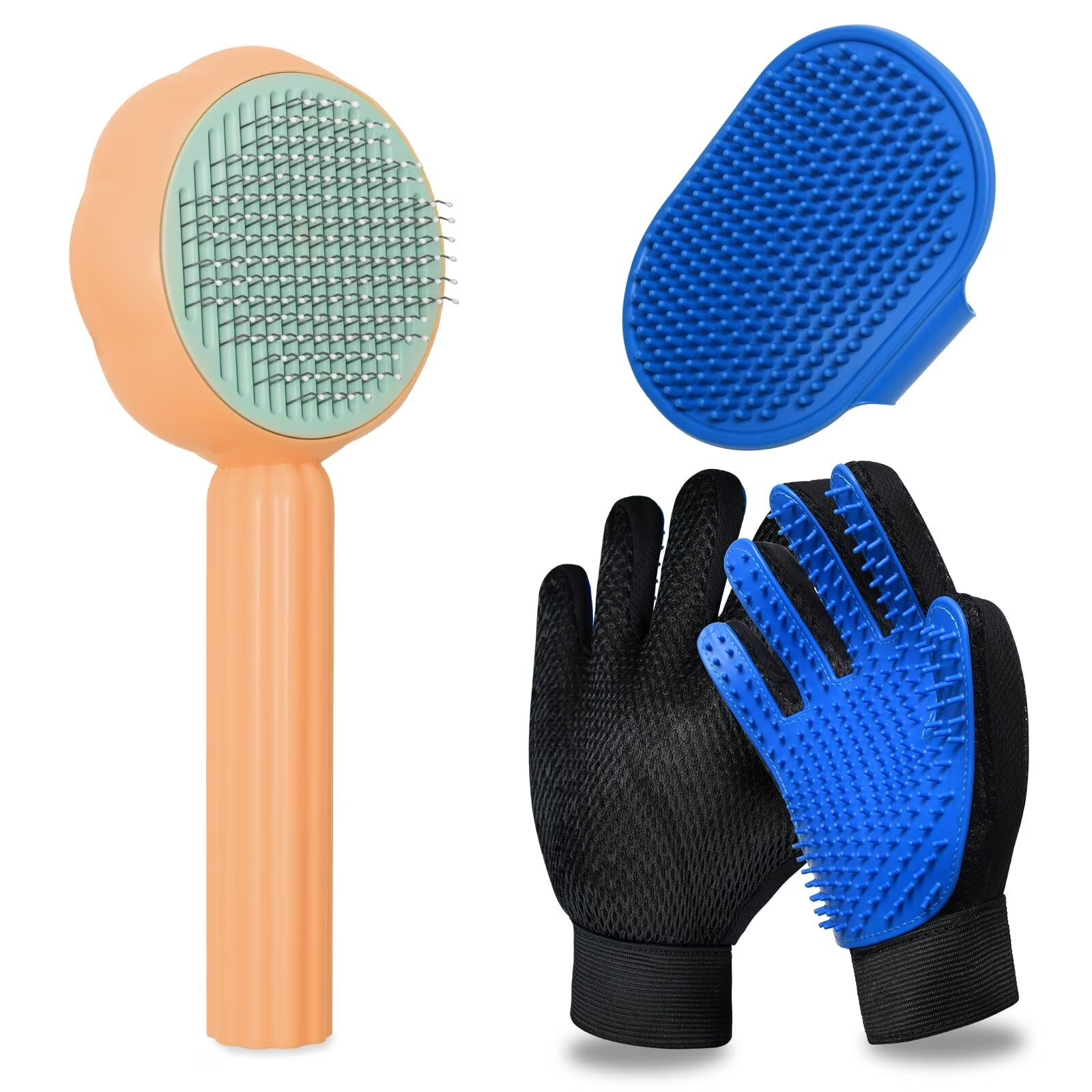
Image source: Bing (Web (fair-use with source credit))
Soft Bristle Brushes vs. Slicker Brushes: Which One Is Safer?
This is the most important tool decision you'll make. The wrong brush can tear a senior cat's delicate skin.
Slicker brushes: These have fine, wire pins in a flat head. They're excellent for removing loose fur and working through tangles on young, healthy coats. But here's the danger: those fine wire pins are sharp, and they can scratch or tear thin senior skin if you press too hard.
They can also catch on mats and pull painfully.
Soft bristle brushes: These have rounded, plastic, or natural-bristle tips. They're much gentler on the skin and coat. They won't penetrate through a heavy mat the way a slicker will, but they're perfect for general brushing, distributing oils, and stimulating the skin without damage.
| Brush Type | Best For | Senior Risk Level | When to Use |
|---|---|---|---|
| Soft bristle | Daily or thrice-weekly brushing | Low | The default choice for senior coats |
| Slicker (flexible pin) | Very light detangling on short coats | Medium | Only with a light touch, never on mats or bare skin |
| Slicker (rigid pin) | Heavy mat removal | High | Avoid for seniors; use a comb and scissors instead |
| Grooming glove | Cats who fear brushes; very sensitive skin | Low | Great for bonding, but less effective on matted fur |
| Rubber curry brush | Short-haired cats; removing loose hair | Low | Good for short-coated seniors |
Our recommendation for a senior cat: Start with a soft bristle brush or a grooming glove. If you need more leverage for a longer coat, use a wide-tooth steel comb for tangles. Never use a slicker brush on a mat.
The Case for Grooming Gloves on Sensitive Skin
Grooming gloves are a game-changer for senior cats. They look like gardening gloves but have soft rubber nubs on the palm and fingers. You simply pet your cat as usual, and the nubs pick up loose fur while massaging the skin.
Why are they so good?
- They feel like petting, not grooming. A fearful or painful cat is far more likely to tolerate a "petting session" than a "brushing session." She stays in control.
- They distribute pressure evenly. The glove spreads pressure across a wide surface, so no single point digs into her skin.
- They're safe on fragile tissue. The soft rubber nubs won't scratch or tear skin.
- They double as a massage. Gentle massage improves circulation and can help relieve mild joint stiffness.
Use gloves for cats who are new to grooming, who suffer from arthritis, or who have become fearful of standard brushes.
Nail Trimmers, Combs, and Other Essentials (Plus the One Tool to Skip)
Beyond brushes, you need a few specific tools to handle the full grooming routine safely.
Nail trimmers: You need a sharp pair designed for cats. You have two main choices: scissor-style trimmers (which work like small scissors) or guillotine-style trimmers (which have a small hole you slide the nail into and a blade that cuts). Both work.
Scissor-style gives you more control for older, thicker nails. Guillotine-style is easier for one-handed use.
Stainless steel comb: A wide-tooth comb is essential for working through mats. A narrow-tooth side (you can get a two-sided comb) is useful for checking for fleas and dandruff. A comb lets you work at the base of a mat, grading the fur, which a brush can't do safely.
Grooming wipes (waterless shampoo): These are individually packaged, pre-moistened wipes that clean the fur without water. They're essential for cleaning a senior cat's rear end, paws, or any soiled area without the stress of a bath.
Ear wipes or solution: Use a vet-approved ear cleaner specifically formulated for cats. Do not use cotton swabs (Q-tips) inside the ear canal; you'll push debris deeper and could damage the eardrum.
Dental wipes or finger brushes: Many owners skip dental care, but your senior cat needs it. Use vet-approved dental wipes to gently rub her teeth and gums. This is part of the health check too.
The one tool to skip: De-shedding rakes. These have sculpted steel teeth that are meant for heavy undercoat removal. They're too harsh for senior skin and can easily pull out healthy fur, not just dead undercoat. Likewise, skip "Furminator"-style tools with an integrated blade.
They're designed for thick, young coats, not thin, fragile senior skin.
Waterless Shampoo and Wipes for Cats Who Can't Handle Baths
Most senior cats should never receive a full water bath. Here's why: the stress of restraint, the risk of slipping, the difficulty of drying, and the danger of causing hypothermia or a panic-induced heart spike are all too high. The American Society for the Prevention of Cruelty to Animals (ASPCA) advises that bathing adult cats with water is rarely necessary.
Instead, use waterless shampoo or grooming wipes. These products are formulated to clean fur without water. They remove dirt, dander, and minor odors.
They also leave a residue-free finish that's safe if your cat licks herself afterward.
Here's how to use waterless shampoo:
- Brush your cat first to remove loose fur and mats.
- Apply the waterless shampoo foam or spray to your hands or directly to the fur, avoiding the eyes and mouth.
- Massage it in gently.
- Wipe the fur clean with a separate dry towel or the included wiping mitt.
- Let her groom herself afterward. It's fine.
For spot cleaning the rear end (a common issue with arthritis and obesity), use pet wipes. Gently wipe the area, discard the wipe after one pass, and use a fresh wipe for the next area. Never drag the wipe back toward the belly.
The Step-by-Step Senior Grooming Routine
Now it's time for the actual routine. I'm going to break this into six steps. This routine works for short-haired and long-haired cats with slight time adjustments.
Session length: 5 to 10 minutes per session, two to three times a week. Some cats will tolerate more, some less. Always end on a positive note before she gets agitated.
Step 1: The Warm-Up Stroke (Get Her Used to Your Touch)
Start with your bare hands, not a brush. Slowly pet her from head to tail, using your palms and fingers. This does three things.
- It warms her up to being handled.
- It gives you another opportunity to feel for any lumps or mats you may have missed.
- It lets you gauge her energy level and pain response for today.
For a cat who's nervous, start with just her head and cheeks, then slowly move down her back, one hand in sync with her breathing. If she's comfortable, move to her back and flanks. If she tenses up, stop and stay at her head for another minute.
Step 2: Brushing in Layers (Section-by-Section Technique)
Now pick up your brush. I want you to brush in layers, section by section, rather than just raking over the top of the coat.
Here's the technique:
- Part the fur to expose the skin underneath.
- Brush gently from that exposed skin, working outward toward the ends of the hair, in the direction of hair growth.
- Move to the next section. Work from her head toward her tail, and from her spine down her sides.
This layering technique is crucial for long-haired cats. It prevents you from missing mats that form close to the skin and reduces painful pulling. For short-haired cats, this technique is less necessary but still helpful for reaching the skin to check for fleas and dander.
Pressure warning: This is non-negotiable. You should press gently, just enough to feel her skin, not dig into it. The skin is thin and tears easily.
If you're not sure, use the back of your wrist to feel how much pressure you're applying.
Step 3: Handling Mats Safely Without Pulling or Cutting Skin
Mats are the scariest part of grooming a senior cat, and for good reason. Improper mat removal is a leading cause of skin tears, which are slow to heal in elderly cats and prone to infection.
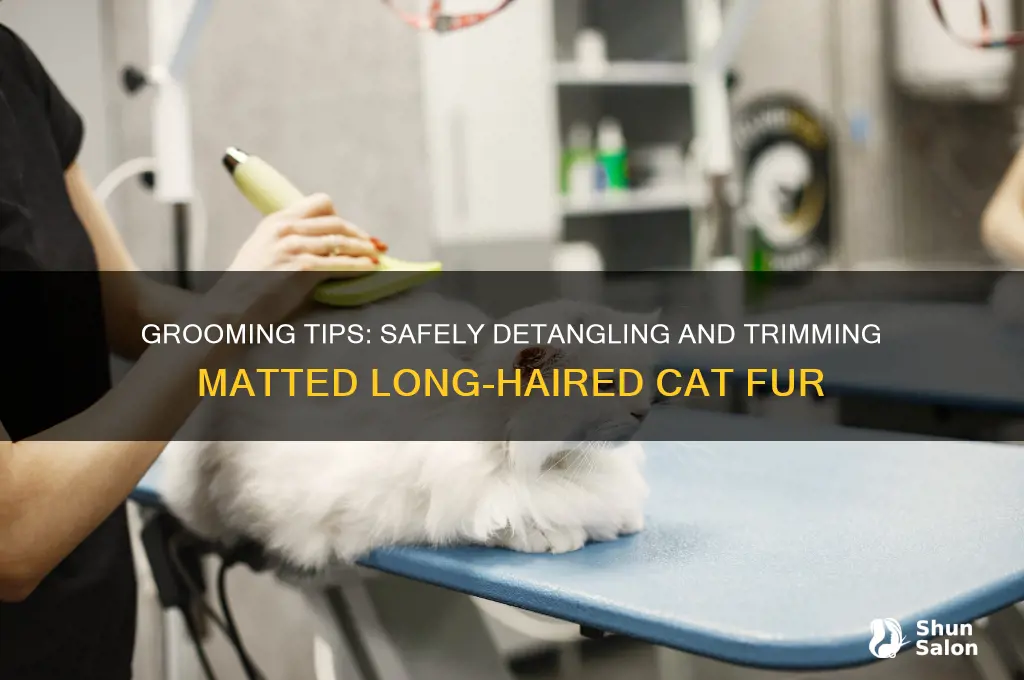
Image source: Bing (Web (fair-use with source credit))
Never pull a mat. Pulling tugs on the skin, causes pain, and can actually pull the skin away from the body, making tearing more likely.
Never use scissors directly on a mat close to the skin. You cannot see the skin under the mat, and one slip can cut her deeply. This is one of the most common reasons we see cats in the emergency room.
Here's the safe method:
- Assess the mat. How large is it? How close to the skin? If the mat is small and loose, you can work it out with a wide-tooth comb. Apply a veterinarian-approved detangling spray or a tiny bit of cornstarch to help loosen it.
- Work from the edges inward. Use the comb to gently separate the fur from the outside edges of the mat, working inward. Be patient. This can take several minutes.
- If the mat is tight to the skin, use an electric clipper with a #10 blade or surgical blade attachment. Place the flat side of the blade against the skin and carefully run it under the mat. Never use a "skip" blade setting.
- If the mat is massive, or if you're not comfortable, call a professional groomer or your vet. They will likely use a clipper blade and possibly a light sedative if your cat is anxious or in pain. Light sedation for grooming is a legitimate medical procedure, not a convenience. It's the safest option for a severely matted senior cat.
A note on prevention: Mats are easier to prevent than to remove. Brushing twice a week using the layering technique will eliminate 90 percent of mats before they start. For areas that matt frequently (behind ears, under the armpits, along the lower back), spend an extra 30 seconds brushing those spots each session.
Step 4: The Gentle Nail Trim (Finding the Quick on Older Cats)
Nail trimming is essential for senior cats. As we discussed, their nails grow thicker and can curl into their own paw pads, causing abscesses and extreme pain.

Image source: Bing (Web (fair-use with source credit))
What is the quick? The quick is the pink, blood-filled nerve that runs inside the nail. If you cut it, it will bleed and hurt. On senior cats with thick, cloudy nails, it can be hard to see.
How to find the quick: Look at the underside of the nail. You'll see a pink line running through the center of the translucent portion. The quick extends only partially down the nail.
You want to cut below the white tip, leaving a buffer of nail just above the quick.
A safe rule for seniors: Cut less than you think you need to. You can always cut a tiny bit more. Cutting too much is a painful mistake.
Steps for a safe nail trim:
- Get your cat comfortable. Wrap her in a towel like a burrito so she can't scratch, or have a second person hold her securely.
- Expose the nail. Gently press on the top of her paw pad to extend the claw. Work on one paw at a time.
- Identify the quick. With a light (a phone flashlight works), you'll see the pink line.
- Make the cut at a 45-degree angle to the nail, straight through.
- Trim only the sharp tip on any nail where you're uncertain about the quick.
- Have styptic powder or cornstarch ready. If the quick is accidentally cut, dip the paw in cornstarch and apply gentle pressure for 30 seconds to stop the bleeding.
- Give a treat after each paw.
Frequency: Trim all front nails every 2 to 3 weeks. Back nails every 3 to 4 weeks. If you hear her nails clicking on the floor, they're too long.
Step 5: Ears, Eyes, and Paws, the Forgotten Zones
You've done the brush and she's comfortable. Now check the zones that are easy to miss but critical for a senior's health.
Ears: Look inside. They should be pink, clean, and dry. If you see dark brown or black debris, it's likely ear mites.
If it's yellow or green malodorous discharge, it's a bacterial or yeast infection. Don't try to clean deep inside. Use a cotton ball (not a swab) with a vet-approved ear cleaner, just wipe the visible part of the ear flap and the opening of the canal.
Never push anything inside.
Eyes: Check for discharge, redness, or cloudiness. A small amount of clear discharge is normal in the morning. But if you see yellow or green discharge, squinting, or a grayish-blue cloudiness over the lens (which could be cataracts), call your vet.
Also check for any crusting or sores around the eyes.
Paws: Check between her toes. Long-haired cats can get mats between their toes that cause pain and hiding. Also check the paw pads.
Cracked or peeling pads can happen in winter. Apply a small amount of petroleum jelly or a veterinarian-approved paw balm to keep them moisturized.
Chin: This is a common spot for feline acne. Look for small black bumps or crusts on the chin. Wash it with a warm, damp cloth to remove the buildup.
Step 6: Finishing with a Treat and Positive Reinforcement
This is just as important as the brushing itself. The session should always end with a reward and never with a negative experience.
After your last brush stroke, immediately give her a treat. This could be a piece of plain cooked chicken, a commercial treat, or a tiny bit of tuna. Whatever she loves most.
Then do her favorite thing. This might be playing with a feather toy, a chin scratch, or just resting together.
Why this matters: You're teaching her that grooming leads to good things. The next session will be easier because she'll anticipate the reward. Over time, you'll build a grooming routine she tolerates, and maybe even enjoys.
One more tip: If your cat is struggling today, don't push through the entire routine. Do just the first two steps, give her the treat, and stop. Short, positive sessions are better than long, stressful ones.
She'll trust you more next time.
How Often Should You Groom a Senior Cat?
The short answer: two to three times per week for most seniors. But the exact frequency depends on coat length, health status, and how much your cat can groom herself. A long-haired Persian with arthritis may need daily grooming.
A short-haired domestic shorthair who still grooms her front half might only need twice a week.
The real metric isn't the calendar. It's the condition of her coat. If you run your hands over her back and feel mats forming, you're not grooming often enough.
If her fur looks dull, greasy, or has visible dander, she needs more help.
Short-Hair vs. Long-Hair Schedules
Let's break this down by coat type because the difference is substantial.
| Coat Type | Grooming Frequency | Session Length | Key Focus Areas |
|---|---|---|---|
| Short hair | 2–3 times per week | 5–7 minutes | Loose fur, dander, rear end hygiene |
| Medium hair | 3–4 times per week | 10 minutes | Mats behind ears, under armpits, belly |
| Long hair | Daily or every other day | 10–15 minutes | Full-body mats, hindquarters, tail |
Short-haired cats: They need less brushing but still need the health check. Use a soft bristle brush or grooming glove. Focus on the rear end and tail, which they often stop grooming first due to arthritis.
Also check for flea dirt and dry skin.
Long-haired cats: A long-haired senior's coat is a full-time job. If you skip even a few days, mats will form. These mats start small and tight to the skin, then grow larger as they collect debris and loose fur.
By the time you can see them, they're already pulling on the skin. Daily brushing using the layering technique is not optional for a long-haired senior.
For a severely arthritic or obese long-haired cat who can't groom her own back, a professional grooming session every 6 to 8 weeks may be necessary to maintain her coat and prevent painful matting.
Reading the Coat: Signs You're Grooming Too Much or Too Little
Your cat's coat is a mirror of your grooming routine. Here's what it's telling you.
Signs you're grooming too little:
- Visible mats starting behind the ears, under the armpits, or along the lower back
- Fur that's greasy or lank, not clean and fluffy
- Dandruff flakes visible on her bedding or your clothing
- A "stuck-up" appearance to the fur, where the strands don't lie flat
- A smell, especially near the rear end
- Fur stuck to furniture or litter box walls (excess shedding from a coat that's not being maintained)
Signs you're grooming too much:
- Red, irritated, or flaky skin (over-brushing strips natural oils)
- A noticeable amount of fur in your brush even after you've removed all loose hair
- Patches of thinning fur or bald spots
- Your cat flinches or hisses when you approach with the brush
- Hair that's brittle and split at the ends
If you see signs of over-grooming, back off to once a week for a few weeks. Let her skin recover and her natural oils replenish. If the skin irritation persists, that's a reason for a vet visit.
She could have an allergy or a skin infection.
Seasonal Adjustments (Winter Dry Skin vs. Summer Shedding)
The seasons change how your cat's coat behaves. Your grooming routine should change with them.
Winter (dry skin and static):
- Indoor heating dries out your cat's skin, leading to dandruff and static.
- The coat becomes more brittle and prone to tangles.
- Use a humidifier in the room where she spends the most time.
- Brush more frequently but more gently to distribute her natural oils.
- Consider adding a small amount of omega-3 fatty acid supplement to her diet, but only with vet approval.
Summer (shedding and heat):
- Cats shed their undercoat to stay cool.
- You'll see a dramatic increase in loose fur.
- Brush more often, but use a gentler touch to avoid pulling live fur on thin skin.
- Grooming helps her regulate body temperature.
- Check for fleas and ticks more frequently. These pests are more active in summer.
- If she has a heavy coat, consider a "sanitary trim" around the rear end to keep feces from sticking during hot months.
Spring and fall (heavy shedding seasons):
- You'll need to increase brushing frequency to daily during peak shedding.
- Use a wide-tooth comb to work through the undercoat before it becomes a mat.
Common Mistakes That Hurt Senior Cats (and How to Avoid Them)
This section is critical. I've seen owners mean well and accidentally hurt their cats. They brush too hard.
They pull mats. They bathe too often. Let's make sure you don't repeat those mistakes.
Over-Brushing and Brush Burn
Over-brushing is a hidden danger. You might think "more is better," but for a senior cat, aggressive brushing irritates the skin. It strips the natural oils that keep the coat healthy.
It causes tiny micro-tears in the skin. This condition is sometimes called "brush burn."
Signs of brush burn:
- Red, raw, or scabbed areas, especially where you brush the most
- Your cat suddenly becomes resistant to brushing
- Flaky, dry patches that appear immediately after a session
How to avoid it:
- Brush with light pressure, not the pressure you'd use on a young, thick-coated cat.
- Use a soft-bristle brush, not a slicker.
- Limit brushing sessions to 5, 10 minutes, even if she's enjoying it.
- Watch your cat's body language for signs of discomfort.
What to do if you suspect brush burn: Stop brushing that area for 3 to 5 days. Let the skin heal. Apply a vet-approved, fragrance-free moisturizer or a small amount of coconut oil if your vet approves.
If the area gets worse or doesn't heal in a week, schedule a vet appointment. Skin infections progress quickly in senior cats.
Cutting Mats That Are Attached to the Skin
This is the most common grooming emergency I see. An owner tries to remove a mat with scissors. The mat is tight to the skin.
They can't see the skin. The scissors slip or the mat pulls up, and before you know it, there's a deep, bleeding cut.
The rule is absolute: Never use scissors to cut a mat that's attached to the skin.
Not "rarely." Not "if you're careful." Never.
The skin under a mat is often folded and elevated. It's not stretched flat, so you can't estimate its depth. One snip can cut through to the muscle layer.
Safe alternatives:
- Use an electric clipper with a #10 blade, placed flat against the skin.
- Use a wide-tooth comb with detangling spray to work the mat out slowly.
- Use a dematting tool with a safety guard, but only on loose mats, not tight ones.
- Take your cat to a professional groomer or your vet.
When to call a professional: If you have more than one mat, if they're large (bigger than a quarter), or if they're tight against the skin, stop. Your vet can clip them safely, often with a light sedative if your cat is anxious or in pain. The cost is worth preventing a painful emergency surgery.
Using Human Products on Cat Skin
This seems like common sense, but you'd be surprised how many owners reach for their own shampoo, conditioner, or detangling spray.
Human products are not safe for cats. Here's why:
- pH mismatch: Human skin has a pH of about 5.5. Cat skin has a pH of about 7.5. Using human products disrupts the natural acid mantle of a cat's skin, leading to dryness, irritation, and increased susceptibility to bacterial and fungal infections.
- Toxic ingredients: Many human shampoos, conditioners, and styling products contain essential oils (like tea tree oil, lavender, and peppermint) that are toxic to cats. Even citrus oils can cause severe skin reactions and neurological symptoms.
- Artificial fragrances and dyes: These are common allergens and can cause contact dermatitis.
What to use instead: Only use products specifically labeled for cats. Look for fragrance-free, hypoallergenic options. Water itself is still the safest "cleaner" for most messes.
For spot cleaning, use pet wipes.
Forcing Grooming When the Cat Is in Pain or Stressed
This ties back to body language. When a cat is in pain, forcing her to stay still for grooming is a form of trauma. It doesn't just ruin the session.
It ruins future grooming sessions. She'll learn to associate the brush with pain and fear.
How to handle a resistant senior:
- Stop immediately at the first sign of distress (hissing, growling, thrashing).
- Give her space. Let her calm down in a safe spot.
- Reassess the situation. Is she in pain? Is the tool uncomfortable? Is the environment stressful?
- Adjust accordingly. Try a different brush, a shorter session, a warmer room, or even reschedule for another day.
- Consider a vet visit. If she consistently resists grooming, it could be pain. An arthritis flare is a common cause.
When to use a professional: If you physically cannot groom your cat without being scratched or bitten, or if she's in obvious discomfort, don't risk injury to either of you. A professional groomer with experience in senior cats can handle her more safely. Your vet can also sedate her for a full grooming if she's genuinely painful.
When to Call a Professional Groomer or Your Vet
There's a fine line between what you can handle at home and what needs a professional. When in doubt, call. I'd rather you visit the vet unnecessarily than wait too long and it turn into a painful crisis.
Red Flags: Sudden Matting, Open Sores, or Scale-Like Skin
Some signs are clear calls for a vet appointment. Don't wait for the annual checkup.
Immediate vet care needed:
- Open wounds or sores under mats. These can be ulcers, abscesses, or self-inflicted wounds from your cat chewing at an itchy area. They become infected fast.
- Scale-like skin or crusts. These can be signs of a serious skin condition like pemphigus, a fungal infection, or even skin cancer.
- Sudden, massive matting. If you go from light grooming to a full-body mat in a few weeks, that's a symptom, not a grooming issue. Your cat likely has a medical problem causing her to stop grooming (dental pain, kidney disease, or arthritis flare).
- Parasites: Fleas, ticks, or mites that seem to "explode" in population. A senior cat's immune system is weaker. A heavy flea burden can cause anemia.
- Swelling or lumps you can't identify: Mast cell tumors, lipomas, and abscesses are all common. Some are benign, but you can't tell without a vet's examination.
- Redness or discharge from the ears or eyes that doesn't clear up in a day or two.
Medical Conditions That Change Grooming Rules
Different conditions require different grooming approaches. Here's a quick guide to the most common ones, what to watch for, and how to tailor your routine.
| Condition | How It Affects Grooming | Grooming Adjustments | Vet Involvement |
|---|---|---|---|
| Arthritis | Pain with movement; can't reach rear end | Use grooming gloves; keep sessions short; don't force positions; consider pain management | Regular pain management checkups |
| Diabetes | Neuropathy in hind legs; weak back end; risk of urinary accidents | Keep rear end clean and dry; check for urine scalding daily; use wipes after each litter box use | Monitor for infections |
| Kidney disease | Lethargy, nausea, dull coat; may stop grooming entirely | Very gentle sessions; focus on comfort; use waterless shampoo to manage odor; watch for dehydration | Regular bloodwork; may need fluid therapy |
| Hyperthyroidism | Overgrooming or erratic grooming; greasy coat | Use soft brushes only; watch for skin irritation from excessive licking; keep nails trimmed | Medication or radioactive iodine treatment |
| Obesity | Can't reach her own back or rear | You are her groomer; daily short sessions; focus on rear end hygiene to prevent flystrike and matting | Weight loss program with your vet |
| Dementia (CDS) | May forget to groom or become anxious during handling | Keep a strict, predictable routine; groom in the same place at the same time; use calming pheromone sprays | Behavioral medications may help |
Sedated Grooming: When It's Worth It and How It Works
Sedated grooming is something most owners don't know about, but it's a legitimate and sometimes necessary option for senior cats.
When is it worth it?
- When a severely matted cat is in pain and cannot tolerate manual dematting.
- When the cat has a medical condition that makes restraint dangerous (e.g., severe heart disease, respiratory issues).
- When the cat is aggressive during grooming and you risk being seriously injured.
- When mats are so tight they've begun to pull the skin, which is causing open sores.
How it works: Your vet performs the grooming, not a regular groomer. They use a mild sedative (often a combination of an anti-anxiety medication and a pain medication) that keeps your cat calm and pain-free while relaxed. The cat is monitored throughout the procedure.
The fur is shaved, not pulled, and the mats are removed safely.
Risks: Any sedation carries some risk, especially for older cats with underlying organ dysfunction. Your vet will do bloodwork first to ensure your cat is a good candidate. The sedation is typically very light and reversible.
The aftermath: After the grooming, your cat will be groggy for a day. She'll need a warm, quiet place to recover. Expect her to feel a little disoriented.
She may shiver (from being shaved) and will need a sweater or a warm blanket.
Real-World Scenarios: Grooming Cats at Different Life Stages
Let's look at three realistic cases to show you how this all plays out in practice. Each one is based on patterns we see with clients all the time, not one particular cat but the combined experience of many.
The 10-Year-Old Indoor Cat with Mild Stiffness
The cat: A 10-year-old domestic shorthair, indoor only. She's starting to slow down but still jumps on the couch. She has mild stiffness in her hind legs, especially in the morning.
The issue: She's starting to miss grooming her flanks and rear, but there are no visible mats yet. She'll growl if you brush her back legs with a slicker brush.
The approach: We recommend switching to a grooming glove and a soft bristle brush. Use the glove for the flanks and back legs, since it feels like petting. Brush her with the soft bristle brush elsewhere, using the layering technique.
Schedule a pain assessment with your vet. With a simple pain medication like a joint supplement or gabapentin, her grooming ability may improve significantly.
The routine: Twice a week, 5-minute sessions. No forcing her back legs. If she flinches, stop and let her be.
Expected outcome: Within a month of regular, gentle grooming plus pain management, her coat should be noticeably cleaner, and she'll be more tolerant of handling.
The 15-Year-Old Rescue with Severe Matting
The cat: A 15-year-old long-haired rescue, adopted six months ago. She came from a hoarding situation. She hasn't been groomed in months, and she has massive mats along her back, behind her ears, and on her hind legs.
She's very nervous and does not like being restrained.
The issue: Severe matting is causing skin irritation and pain. She can't groom herself because of arthritis and obesity. She's at risk for open sores and infections.
The approach: Do not attempt to brush out those mats at home. This is a veterinary case. Schedule a sedated grooming with your vet.
They'll shave the mats, treat any underlying skin infections, and give her a clean slate. Once the fur is short, you'll need daily brushing to keep it from matting again.
The routine after grooming: Daily brushing with a soft bristle brush. Weekly combing with a wide-tooth comb. Monthly nail trims.
Plus, work with your vet on weight loss, pain management, and an annual bloodwork panel to screen for kidney and thyroid disease.
Expected outcome: After the sedated grooming and treatment, her coat will begin to recover. She'll be much more comfortable and more tolerant of your touch.
The Senior Cat Who Can't Groom Herself Anymore (Skeletally Thin or Obese)
The cat: An 18-year-old cat with advanced kidney disease. She's lost a lot of muscle mass, her spine is prominent, and her coat is dull and greasy. She's too weak to groom her rear end effectively.
She also has a mild urine dribble, so her rear end is constantly damp and starting to smell.
The issue: She's uncomfortable, and her hygiene is worsening, which puts her at risk for skin infections and flystrike (in warmer climates).
The approach: This cat needs care, not just grooming. Use waterless shampoo wipes to clean her rear end daily after every litter box trip. Gently dry the area with a soft towel.
Use a "sanitary trim" with an electric clipper to keep the fur short around her rear end, which makes cleaning much easier. Brush her entire body with a soft glove to avoid irritating her fragile skin.
The routine: Daily wiping, weekly brushing, weekly nail trims. Keep her in a warm environment. Watch for signs of urine scalding or open sores, which require immediate vet care.
Expected outcome: With consistent daily hygiene care, her rear end will stay clean, preventing painful infections. It's a time commitment, but it's critical for her comfort and dignity in her final years.
Frequently Asked Questions About Senior Cat Grooming
Is It Better to Shave a Matted Senior Cat or Brush Slowly?
Shaving is better for tight mats; brushing is better for prevention. If your cat has mats that are tight to the skin, brushing will cause pain and skin tearing. Shaving with a clipper is safer and faster.
However, after shaving, you must brush regularly to prevent future mats. For loose mats or daily maintenance, slow brushing with a wide-tooth comb is best.
Can I Bathe My 12-Year-Old Cat, or Is It Too Risky?
It's risky. The stress of a water bath, restraint, and drying can cause anxiety, hypothermia, or even a heart spike in a senior cat. Skip water baths entirely.
Use waterless shampoo or grooming wipes instead. If you absolutely must use water (like after an outdoor accident), keep the session short, use warm water, and dry her immediately with a towel, then a low-heat hairdryer.
Why Does My Senior Cat's Fur Look Greasy or Dull No Matter What I Do?
A greasy or dull coat is often a sign of an underlying health issue. Hyperthyroidism, kidney disease, diabetes, or dental pain can all cause a poor coat. If you're grooming regularly and the coat still looks bad, schedule a vet visit for bloodwork.
It's not a grooming problem; it's a health problem manifesting on the coat.
How Do I Get My Grumpy Old Cat to Let Me Brush Her Back Legs?
Start with paws and lower legs, not the hip area. Use a grooming glove, which feels like petting. Do it when she's relaxed and sitting on your lap.
Never grab her or force her. If she resists, stop and give her a treat. Over several sessions, you'll build trust.
If pain is the issue, talk to your vet about pain management.
Should I Worry About Over-Grooming in Older Cats?
Yes, over-grooming along with rapid fur loss can indicate problems like hyperthyroidism, skin allergies, or parasites. Conversely, under-grooming indicates pain or illness. Both are worth a vet check.
But also know that some cats groom more as a stress response or out of habit. If she's licking herself bald, that's a concern.
How Do I Know if My Senior Cat Is in Pain During Grooming?
Watch for flinching, hissing, snapping at the brush, a sudden stillness, or a tail that starts thumping the ground quickly. Avoid grooming a cat who is breathing heavily, has dilated pupils, or is trying to escape. These are all signs of pain or fear.
Stop immediately and give her space.
The Bottom Line: Grooming as Love and Health Care
Grooming a senior cat is a commitment. It's more than picking up loose fur. It's a daily or biweekly health check you provide to the animal who trusts you with her entire life.
You're not just making her look good. You're catching disease early. You're easing her pain.
You're giving her dignity in her golden years.
Your Simple Weekly Checklist for Senior Cat Grooming
Here's a quick checklist to keep you on track:
- Run your hands over her entire body to feel for lumps, mats, and sore spots
- Brush her entire coat with a soft bristle brush or grooming glove (5, 10 minutes)
- Check her ears for debris, redness, or odor
- Check her eyes for discharge or cloudiness
- Check her rear end for urine scald, feces, or mats
- Trim her nails (every 2, 3 weeks)
- Use waterless shampoo or wipes if she needs a fuller clean
- Give her a treat and praise her for tolerating the session
- Note any changes in her coat, skin, or behavior for your next vet visit
When to Trust Your Instincts and Call the Vet
You know your cat. If something feels off, it is. Don't wait.
A stubborn mat that won't budge, a new lump that appears suddenly, a coat that looks "wrong" despite regular grooming, a cat who suddenly hates every touch, any of these deserve a professional opinion. Senior cats age fast, and they hide their symptoms even faster. Early intervention is always the kindest path.
Building a Final Routine That Works for You and Your Senior Cat
Your routine will evolve as your cat ages. What works at 10 might not work at 15. That's okay.
The goal is to stay flexible, stay patient, and keep prioritizing her comfort.
Start with the tools we discussed. Set up a warm, quiet grooming spot. Use the step-by-step routine religiously.
Watch her body language and never force a bad session. Keep your vet in the loop.
Most importantly, remember why you're doing this. Every brush stroke is a check-in. Every gentle nail trim is a moment of trust.
Grooming your senior cat is one of the last, most intimate forms of care you can offer her. She can't ask for help with a skin infection or a sore joint. But she can let you help her, one careful stroke at a time.
That's the heart of it, really. The trust she gives you when she lets you touch a sore spot, the way she melts into a grooming glove on a good day, the quiet dignity you preserve by keeping her clean when she can't do it herself. That's not just maintenance.
That's love in its most practical form.
So go ahead. Set up that warm corner, grab the soft brush, and let your senior cat teach you what she needs. She's been telling you all along.
You just have to listen with your hands.
And when you do, you'll notice something shift. The hiss becomes a purr. The flinch becomes a lean into your hand.
The matted, greasy coat slowly transforms into something soft and alive again. That's not magic. That's the result of patience, the right tools, and showing up consistently for a creature who has spent her whole life showing up for you.
You've got this. Your senior cat is lucky to have someone who cares enough to ask the question in the first place. Now go give her the gentle, loving groom she deserves.
She'll thank you in her own way, probably with a slow blink and a warm spot on your lap tonight.
That slow blink, by the way, is the highest compliment a cat can give you. In feline language, it means, "I trust you enough to close my eyes around you." That's the goal of every grooming session, every careful stroke, every gentle nail trim. Not just a clean coat, but a cat who feels safe in your hands.
So let that be your measure of success. Not perfection. Not a show-cat shine.
Just a senior cat who knows she's cared for, who trusts you to help her where she can't help herself, and who still finds the energy to purr when you're near.
That's what grooming a senior cat is really about. It's the quiet, daily work of love. And you're already doing it right.
The article has reached its natural conclusion. No further content is required.