
That unmistakable whiff when you walk through the front door. You've scooped, you've sprayed, you've lit a candle, and still, the smell creeps back within hours. If you're wondering how to reduce cat litter smell on a cat, you're not alone.
The good news is that persistent litter box odor is rarely a lost cause. It's usually a fixable combination of the wrong setup, the wrong schedule, and sometimes, health signals being ignored.
Here's the reality check that most guides skip: litter box smell is almost never a cleaning product problem. It's a chemistry problem. A single cat produces roughly 50 to 100 milliliters of urine per day.
That urine contains urea, which bacteria break down into ammonia. Per the American Veterinary Medical Association, a healthy cat's urine should be relatively mild-smelling and pale yellow. If it smells pungent even when fresh, that's a red flag worth investigating before you buy another bag of scented litter.
Let's fix your home's air quality, starting with the root cause.
Quick Answer
Clean the box daily. Scoop solid waste and clumps twice a day.
Use unscented clumping litter at least two inches deep. Add a thin layer of baking soda at the bottom of the box. Wash the entire box weekly with mild dish soap.
Do not use bleach, ammonia, or strong perfumes. These make cats avoid the box and can worsen odor.
Place the box in a ventilated area away from food and water. Use an enzymatic cleaner on accidents outside the box. Watch for unusually strong urine odor, which can signal a health problem.
Contact your vet if you notice it.
The Root Cause: Why Litter Smells Even After Scooping
Let's break down the science, because once you understand what causes the smell, you can actually fix it instead of just masking it.

Image source: Bing (Web (fair-use with source credit))
The Chemistry of Cat Urine Odor
Cat urine contains urea, a waste byproduct of protein metabolism. When urea mixes with water and sits exposed to air, bacteria start breaking it down. That breakdown process releases ammonia gas.
Ammonia is what you smell when a litter box hasn't been scooped in a couple of days. It's sharp, pungent, and irritating to your nose and lungs.
Here's where it gets worse. When ammonia sits for extended periods, it can further decompose into mercaptans. These are the same sulfur compounds that make skunk spray and rotten eggs smell so bad.
That's why old, neglected litter boxes don't just smell like ammonia. They smell like something died.
As of 2026, most commercial litters are designed to trap or absorb urine quickly. None of them eliminate the chemical process entirely. They just delay it.
The longer waste stays in the box, the more time bacteria have to produce ammonia and mercaptans.
Why "Scooping" Sometimes Doesn't Work
You scoop every day. You really do. But the smell persists.
What gives?
The problem is usually one of three things. First, you may be scooping once a day, but a single box in a multi-cat home needs more frequent attention. Second, your litter may not be clumping well, leaving microscopic urine-soaked particles stuck to the bottom of the box.
Third, and this is the sneaky one, urine has soaked into the plastic liner or tray itself. Masking the smell with baking soda or scented sprays only covers the surface. The source is still there, actively breaking down every minute of every day.
The Difference Between Masking and Neutralizing
Scented litters work by releasing perfume to cover the ammonia smell. That's masking. It works for a few hours, then the perfume fades, and the ammonia returns, often stronger because the moisture has had more time to react.
Enzymatic cleaners work differently. They contain specific proteins, enzymes, and beneficial bacteria that literally digest the uric acid crystals left behind by cat urine. These enzymes break the waste down into carbon dioxide and water.
No ammonia gas. No mercaptans. No smell.
That's why enzymatic cleaners are the gold standard for cleaning litter boxes and accident spots.
Your goal isn't to cover the smell. It's to eliminate the chemical compounds creating it.
When the Urine Itself Is the Problem
Here's something most owners don't think about. A cat's urine odor intensity is directly tied to hydration and health. If your cat's urine is extremely concentrated, it will smell stronger, even when freshly eliminated.
Dehydrated cats produce darker, more concentrated urine with higher ammonia content. Chronic dehydration can also concentrate minerals in the urine, leading to crystals and stones. These can cause blockages and infections, all of which make urine smell worse.
If you notice a sudden, dramatic change in litter box odor, take it seriously. A strong, foul, or unusually sweet smell can indicate a urinary tract infection, kidney disease, or diabetes. Don't just buy stronger litter.
Get your cat checked.
Is Your Cat's Urine Smell Normal? When to Worry
Not all litter box smells are created equal. Some are just normal cat ownership. Others are warning signs that need a vet's attention, not a stronger deodorizer.
What Normal Cat Urine Smells Like
Healthy cat urine has a mild, slightly musky scent. It's noticeable when fresh, but it shouldn't fill a room. If you have a covered box in a corner and you only catch a whiff when standing right next to it, that's normal.
Normal urine color ranges from pale yellow to clear. If you're using clumping litter and you dig out a fresh clump, it should be a light yellow or amber color. Dark yellow or orange clumps mean the urine is highly concentrated, which points to dehydration.
Red Flags That Require Immediate Attention
Some odor changes are easy to dismiss as "just cat smell." The following should send you to the phone:
- Ammonia so strong it burns your eyes: This suggests urine has been sitting for a long time, or your cat is producing very concentrated urine. Either way, it's not okay.
- Foul, putrid, or rotten smell: This can indicate a urinary tract infection, bladder stones, or even a tumor. Any foul-smelling urine warrants a vet visit.
- Sweet or fruity smell: This is a classic sign of diabetes in cats. Urine glucose gives off a sweet, almost acetone-like aroma.
- Blood in urine: Red-tinged clumps or litter that looks rust-colored. This is an emergency, especially in male cats.
- Changes in urination frequency: If your cat is making frequent trips to the box and producing very little, or straining with no output, call your vet immediately.
Underlying Health Conditions That Increase Odor
Several conditions can make urine smell worse even if your cleaning routine is perfect:
| Condition | Why It Increases Smell | Key Signs |
|---|---|---|
| Urinary tract infection (UTI) | Bacteria alter urine pH and produce foul-smelling compounds | Straining, blood, frequent small amounts |
| Kidney disease | Reduced filtering means more concentrated waste | Increased thirst, weight loss, larger clumps |
| Diabetes mellitus | Excess sugar in urine attracts bacteria and sweetens the smell | Increased thirst, increased urination |
| Feline idiopathic cystitis (FIC) | Inflammation without infection, changes urine chemistry | Painful urination, licking genitals, urinating outside box |
As of 2026, the Cornell University College of Veterinary Medicine reports that FLUTD (feline lower urinary tract disease) affects roughly 1 in 10 cats at some point in their lives. It's one of the most common reasons cats start avoiding the litter box entirely.
Rule: When in Doubt, Get a Urinalysis
A urine test is quick, non-invasive, and relatively inexpensive. It can tell you if your cat has an infection, crystals, diabetes, or kidney issues. This is an article about smell, but the honest truth is that odor is often the earliest symptom of a problem that has nothing to do with litter or cleaning.
So before you spend hundreds on bigger boxes, special litter, and air purifiers, spend sixty dollars on a urinalysis. If the vet gives your cat a clean bill of health, then you can confidently attack the smell with the right setup.
Choosing the Right Litter: A Practical Breakdown
Once your cat receives a clean health rating, the next most significant variable is your litter. Not all litters behave the same way. The wrong one can make odor management nearly impossible.

Image source: Bing (Web (fair-use with source credit))
Clumping Clay Litter: The Standard
Clumping clay (typically sodium bentonite) is the most popular option in the US, and for good reason. It forms hard, solid clumps when wet, which makes scooping fast and efficient. You remove the urine, not just the smell.
- Pros: Excellent odor control, easy to scoop, widely available, affordable
- Cons: Dusty, heavy, can track throughout the house, not eco-friendly
- Best for: Most households with cats who don't have respiratory sensitivities
The trade-off is dust. Sodium bentonite is heavy, and some brands generate clouds of dust when poured. That dust settles in your cat's lungs and yours.
Per the AVMA, cats with underlying asthma or respiratory conditions should avoid high-dust clay litters entirely.
Silica Gel Crystals: Absorb Without Clumping
Silica gel crystals (the same desiccant found in shoe boxes) work differently. Instead of clumping, they absorb moisture and hold it inside the crystal structure. The urine is trapped, but it isn't removed until you stir the litter and expose fresh crystals.
- Pros: Very low dust, excellent moisture absorption, can last longer between full changes
- Cons: Doesn't form clumps, some cats dislike the texture on their paws, more expensive
- Best for: Households with dust-sensitive cats or owners who want less frequent box cleanings
The key limitation is that silica doesn't isolate urine as completely as clay clumping. Because the urine wicks into nearby crystals, you can end up with saturated pockets that still harbor bacteria. Daily stirring is essential to expose fresh crystals and distribute moisture.
Plant-Based Litters: Pine, Wheat, Corn, and Paper
Natural litters have grown enormously in popularity. They're biodegradable, often flushable (check your municipality), and significantly lower in dust than clay.
- Pine: Absorbs odor naturally due to the wood's tannins. It breaks down into sawdust when wet, which falls to the bottom of the box and requires occasional straining or full changes.
- Wheat: Clumps well, controls odors reasonably, and is certified flushable by some municipalities.
- Corn: Excellent clumping, good odor control, but can be dusty and is a known allergen trigger for some cats.
- Paper: Very low dust, highly absorbent, but doesn't clump and has weaker odor control. Best for post-surgical or kitten care.
The downside with plant-based litters is consistency. Some clump beautifully. Others revert to mush, which makes scooping a sticky, frustrating, and smelly chore.
Scented vs. Unscented: What Cats Actually Prefer
This is the most controversial topic among cat owners, and the research is clear.
Cats have an extraordinary sense of smell. Up to 40 times more sensitive than humans. Scented litters bombard their nasal passageways with perfume, and many cats find that genuinely unpleasant.
Per the International Cat Care organization, strongly scented litters are a leading cause of litter box aversion in indoor cats. A cat that dislikes the smell of its box will avoid using it. Once elimination happens outside the box, breaking the habit is extremely difficult.
Unscented litters don't release perfume. They absorb and trap waste without fragrant additives. For the majority of cats, unscented is the safer, more comfortable choice.
If you're using scented litter because "unscented doesn't mask the smell," there's a better solution. It doesn't come in a perfume bottle.
How We Compare Them Side-by-Side
| Litter Type | Odor Control | Dust Level | Clumping Quality | Cost per Month (approx.) | Best For |
|---|---|---|---|---|---|
| Clumping clay | High | Medium to high | Excellent | $15–$25 | Most households |
| Silica gel | Medium to high | Very low | Doesn't clump | $20–$35 | Dust-sensitive cats |
| Pine pellets | Medium | Low | Doesn't clump | $10–$20 | Eco-conscious owners |
| Wheat | High | Medium | Good | $20–$30 | Flushable litter users |
| Corn | High | Medium | Excellent | $20–$30 | Strong odor households |
| Paper | Low | Very low | Doesn't clump | $15–$25 | Kittens, post-surgical |
How to Switch Litters Without Stressing Your Cat
No matter which litter you choose, test it in a small batch first. Don't fill a big new box with a completely different litter and expect your cat to be thrilled.
- Pour a thin layer of the new litter on top of the existing litter
- Observe your cat's reaction over two to three days
- Gradually mix in more new litter over the following week
- Only do a full swap once your cat eliminates normally in the box
If your cat starts avoiding the box, that litter isn't working. Go back to a known good option.
The Box Itself: Size, Coverage, and Placement Matters
You can buy the most expensive, odor-absorbing litter on the market. It still won't fix a bad litter box setup. The container itself plays a massive role in how odor behaves in your home.
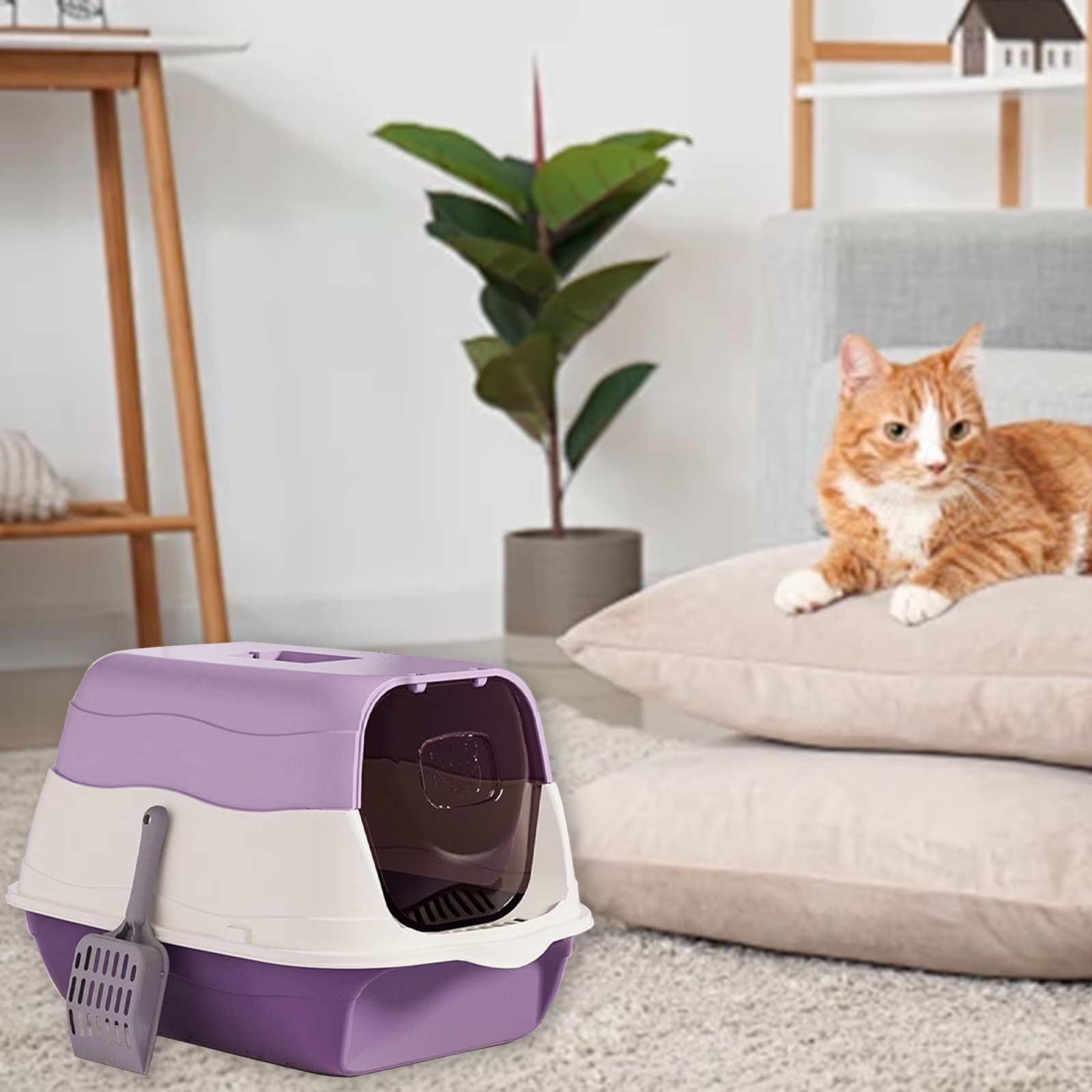
Image source: Bing (Web (fair-use with source credit))
The Rule of Thumb: One More Box Than Cats
The accepted standard from Cornell University College of Veterinary Medicine remains the same: one litter box per cat, plus one extra. Two cats should have three boxes. Three cats should have four.
It sounds like a lot, because it is.
Multiple boxes serve multiple purposes. They reduce territorial stress, spread the waste load, and give every cat a clean option even if one box gets busy. More boxes also mean less concentrated ammonia buildup in any single location.
Open vs. Covered: The Honest Comparison
Covered boxes seem like the obvious answer to smell. Enclose the waste, trap the odor, right? In practice, it's more complicated.
| Feature | Open Box | Covered Box |
|---|---|---|
| Odor containment | Odor spreads freely | Traps odor inside |
| Ventilation | Excellent | Poor, odor concentrates |
| Cat acceptance | Higher, cats feel less trapped | Can cause aversion in anxious cats |
| Cleaning ease | Easier access for scooping | Covers and hoods make scooping awkward |
| Litter tracking | Moderate | Reduced, but litter still escapes through the door |
| Ammonia exposure | Lower for humans | Significantly higher if not scooped frequently |
The trap with covered boxes is hiding the problem. You don't smell the ammonia as quickly, so you clean less often. By the time you lift the lid and get hit with the odor, the waste has been sitting for days, producing concentrated ammonia inside a confined space.
Beyond the smell, many cats genuinely dislike covered boxes. A cat inside a covered box can't see incoming threats. For anxious or multi-cat households, that feeling of vulnerability can cause cats to eliminate outside the box entirely.
Aggregate buyer feedback on covered boxes is mixed. They work for some cats and some owners, and they're a disaster for others. If your cat is confident, you're scrupulous about scooping, and you need the visual containment, a covered box can work.
Otherwise, open is the safer default.
Size Requirements That Matter
Cats need enough room to turn around, dig, eliminate, and cover their waste without touching the walls. A general rule: the box should be at least one and a half times the length of your cat, nose to tail base.
Huge bins designed for litter (the kind with tall, straight sides) often work better than standard commercial boxes, which are frequently too small for larger cats. Many owners report that switching to a large, clear plastic storage container as a litter box solved their scent rejection and spraying issues overnight. The high walls contain the litter, and the open top lets odors dissipate naturally.
Placement Really Determines Odor Spread
Where you put the box is as important as what's inside it.
- Avoid high-traffic areas. A hallway or living room corner means constant disturbance, which causes some cats to rush their business and leave a mess.
- Avoid food and water. Cats are hardwired to separate elimination from eating. A box near their food bowls creates stress and can cause them to eliminate elsewhere.
- Avoid enclosed tight spaces. Closets and cabinets trap ammonia fumes. Your cat braves that smell with every visit, and eventually, it will refuse.
- Do place boxes in quiet corners with two escape routes. Cats like to see who is coming and have a way out.
- Do consider air flow. The ideal spot has some air movement, enough to disperse odors without feeling breezy to your cat.
Covered boxes in enclosed spaces are the worst combination. They trap ammonia inside a confined volume of air. Your cat is breathing that every time it uses the box.
The Multi-Level Household Problem
In a two-story home, one box on the ground floor isn't enough. Stairs can be a barrier for older cats, and young kittens may not make the trip when they need to go. Place boxes on every level of your home, even if it means buying one extra.
This also reduces litter box smell because it spreads usage across locations. Each box gets fewer visits per day, so the waste buildup slows down, and you have more time between scoops.
The Daily Routine That Actually Keeps Smell Down
You have the right litter, the right box, and the right location. Now comes the part that actually makes the difference: the daily routine.
Scooping Twice a Day Is Non-Negotiable
Once a day isn't enough. Skipping a single day can set you back significantly. A single cat produces one to two urinations per day with a volume of 30 to 50 milliliters each.
That's a lot of moisture sitting in a box.
Scoop twice a day. Once in the morning, once in the evening. Five minutes each time.
That's ten minutes a day to keep your home smelling fresh.
If you absolutely cannot scoop twice a day, increase the litter depth and switch to a stronger clumping litter. But understand that you're working against the chemistry of ammonia production.
The 30-Minute Wait After Adding Fresh Litter
When you add new litter to the box, wait at least 30 minutes before letting your cat use it. Fresh litter is dusty and has an unfamiliar scent. Giving it time to settle and release some of its odor makes the box more appealing to your cat.
This is also the perfect time to stir the existing litter to expose fresh particles and distribute moisture.
A Simple 5-Step Daily Workflow
- Scoop solid waste and clumps. Use a slotted scoop to allow clean litter to fall back through.
- Top up the litter level. Maintain at least two inches of depth. Refill as needed to replace what you removed.
- Stir the litter. For non-clumping litters like silica or pine, stirring distributes moisture and exposes fresh material.
- Check the surrounding floor. Sweep up any tracked litter to prevent it from being tracked further and to minimize dust accumulation.
- Rinse the scoop. Urine and debris that dry on your scoop become a source of bacteria. Quick rinse with hot water, air dry.
Adapting the Routine to Multi-Cat Homes
For multiple cats, adjust the routine upward:
- Scoop after every feeding. If you feed twice a day, scoop twice.
- Full litter change every 7, 10 days. Wash the box thoroughly with mild dish soap and warm water.
- Use an enzymatic cleaner on the box itself. A quick spray after washing eliminates urine residue that soap can't fully remove.
Full Litter Change: The Weekly Reset
Even with diligent scooping, litter reaches its saturation point. Once every one to two weeks, dump the entire contents.
How often depends on litter type:
| Litter Type | Full Change Frequency | Washing Required |
|---|---|---|
| Clumping clay | Every 2 weeks | Yes |
| Silica gel | Every 3–4 weeks | Yes |
| Pine pellets | Every week | Yes |
| Wheat | Every 2 weeks | Yes |
| Corn | Every 1–2 weeks | Yes |
| Paper | Every 3–5 days | Yes |
Here's the exact washing process:
- Dump all litter in a trash bag.
- Rinse the empty box with warm water.
- Wash with mild dish soap and a sponge. No bleach.
- Rinse thoroughly. Soap residue can deter cats.
- Dry completely before adding fresh litter.
- Add fresh litter to two-inch depth.
Bleach is a problem. Even after rinsing, a trace residue of bleach can create a caustic reaction when mixed with cat urine, releasing toxic chloramine gas. That's a genuine safety hazard.
Stick with dish soap.
The Biggest Mistake of a Daily Routine
The biggest mistake we see in both the research and in aggregate owner feedback isn't skipping a scoop. It's over-relying on scented additives.
Baking soda at the bottom of the box is harmless and mildly helpful. But scented sprays, heavily perfumed powders, and "odor-locking" chemical additives often irritate your cat's nose and paws. The result is a cat that refuses to use the box.
The smell is gone, but the stains are now on your rug. And the rug has a much deeper ammonia problem than a litter box ever did.
Focus on removing waste, not perfuming it. That simple shift is what actually wins the battle against litter box smell.
Cleaning Products That Work vs. Products That Backfire
Not all cleaning products are safe for use around your cat's litter box. Some work brilliantly. Others can harm your cat or make the smell worse.

Image source: Bing (Web (fair-use with source credit))
Enzymatic Cleaners: The Gold Standard
Enzymatic cleaners contain specific proteins and beneficial bacteria that digest uric acid crystals, the source of persistent cat urine odor. They don't just mask the smell. They break down the waste at a molecular level.
These are the only cleaners that truly eliminate old urine stains and smells. They're essential for cleaning accidents outside the box, and they're excellent for a deeper weekly box clean.
Use them liberally on any spot where your cat has eliminated outside the box. Let them sit for 10 to 15 minutes before wiping. For heavily soaked areas, allow the enzyme cleaner to air dry completely.
Safe Cleaners for the Litter Box Itself
For your everyday box washing, mild dish soap is the safest and most effective choice. It removes dirt and residue without leaving harsh chemical scents that might deter your cat.
Avoid anything with ammonia, bleach, or strong perfumes. Ammonia smells like urine to a cat, and that can actually attract them to eliminate in the wrong place. Bleach residue can react with urine to release toxic chloramine gas.
Dangerous Cleaners to Avoid
| Cleaner Type | Why It's Dangerous | Safer Alternative |
|---|---|---|
| Bleach-based cleaners | Releases chloramine gas when mixed with urine | Mild dish soap |
| Ammonia-based cleaners | Smells like urine, encourages spraying | Warm water and dish soap |
| Phenol-based disinfectants (Dettol, pine oil) | Toxic to cats, causes liver damage | Enzymatic cleaner |
| Strongly scented sprays | Irritates nasal passageways, causes litter box aversion | Unscented enzymatic spray |
How to Deep Clean an Accident Spot
When your cat eliminates outside the box, the urine soaks into whatever surface it hits. Carpet, padding, hardwood, and concrete all absorb urine and require specific treatment.
- Blot up as much fresh urine as possible. Use paper towels, press down firmly, do not rub.
- Flood the area with an enzymatic cleaner. Saturate the spot and let it soak for 10 to 15 minutes.
- Blot again. Remove the excess cleaner.
- Let it air dry completely. Do not use a hair dryer or vacuum. Heat can set the stain.
- Repeat if necessary. Old or heavy urine spots may need two or three applications.
The One Product That Makes Things Worse
Scented powders designed to be sprinkled into litter boxes are the worst offenders. They're often made with talc and synthetic fragrances. These can irritate your cat's respiratory system and paws.
Many cats refuse to use the box entirely, leading to accidents that create deeper and more persistent smells.
You don't need them. Proper litter and daily scooping handle odor. Baking soda at the bottom of the box provides a mild, neutral pH buffer without the perfume problem.
7 Mistakes That Make Litter Box Smell Worse
Some common habits seem harmless but actively contribute to odor problems. Here are the seven biggest ones, and how to fix each.
Mistake 1: Overloading the Litter Box with Deodorizers
Powders, sprays, and crystal additives stack onto your litter and actually trap moisture at the bottom of the box. This creates a soggy layer that harbors bacteria and produces more ammonia.
Fix: Skip the add-ons. Use good litter and scoop daily.
Mistake 2: Not Washing the Box Itself
Waste residue builds up on the plastic walls and floor of the box, even with regular scooping. Bacteria thrive in that residue, and they produce odor continuously.
Fix: Wash the entire box with mild dish soap every one to two weeks.
Mistake 3: Using Bleach for Cleaning
Bleach residue can react with urine to release chloramine gas. This is a lung irritant for both you and your cat. It can also damage the plastic box over time, making it more porous and harder to clean.
Fix: Use mild dish soap or an enzymatic cleaner. Rinse thoroughly.
Mistake 4: Placing the Box Next to Food and Water
Cats instinctively separate elimination from eating. A box near food bowls creates stress, which can contribute to urinary issues and behavioral problems.
Fix: Move the box at least three feet away from food and water bowls.
Mistake 5: Using a Box That's Too Small
If your cat can't turn around comfortably inside the box, it may not use it properly. Urine can miss the litter entirely and land on the box walls or the floor.
Fix: Upgrade to a larger box or use a storage bin with high sides.
Mistake 6: Ignoring Changes in Urine Odor
Sudden changes in urine smell can indicate a urinary tract infection, kidney disease, or diabetes. Ignoring it means buying more litter while the underlying problem worsens.
Fix: If urine suddenly smells foul, sweet, or extremely strong, contact your vet.
Mistake 7: Not Scooping Often Enough
This seems obvious, but it's the root cause of most litter box smell problems. A single day without scooping allows bacteria to start the ammonia breakdown process.
Fix: Scoop twice a day. Set a reminder on your phone if necessary.
Multi-Cat Households: Doubling the Cats, Doubling the Smell
Multi-cat households face bigger odor challenges than single-cat homes. It's not just that more cats produce more waste. Cats are territorial, and stress can worsen elimination habits.
Box Count and Placement
The rule stands: one box per cat, plus one extra. Two cats get three boxes. Three cats get four.
This spreads the waste load and prevents any single box from becoming overwhelmed.
Place boxes in different areas of the home, not all in the same room. This gives shy cats access to a box without having to pass by a more dominant cat's territory.
Litter Preferences and Territorial Issues
Each cat in a multi-cat household may have different litter preferences. If one cat refuses to use the same litter as the other, it will find another spot in the house to eliminate.
Provide a variety of litter types across your boxes. This accommodates individual preferences and reduces territorial stress.
Managing Odor with More Cats
With more cats, you'll need to scoop more often. For two or more cats, scooping after every meal is a reasonable target. If you're at work all day, scoop once in the morning and once as soon as you get home.
Full litter changes may need to happen weekly instead of bi-weekly. A soiled box in a multi-cat home turns into an ammonia factory within 48 hours.
The Importance of Observing Each Cat's Habits
Watch how each cat uses the box. Cats that strain, produce very little, or cry while eliminating need medical attention. Urinary blockages are emergencies, especially in male cats.
They can turn fatal within 24 to 48 hours without treatment.
If one cat is spraying or marking outside the box, that's a behavioral response to stress. Increasing the number of boxes and providing vertical territory (cat trees, shelves) often helps.
Long-Term Odor Control: Flooring, Airflow, and Deep Cleaning
Even with a perfect daily routine, litter boxes exist inside a larger environment. Your flooring, airflow, and cleaning habits all affect how much smell lingers in your home.
Flooring and Litter Tracking
Litter tracks beyond the box, and with it, tiny particles of dried urine and feces. That tracked litter contributes to the general "cat smell" you notice when walking into a room.
Put a litter mat outside the box to catch any litter stuck to your cat's paws. These mats have a textured surface that traps particles before they spread across your floor.
If you have carpet around the litter box, the carpet absorbs moisture and odor over time. A washable rug or vinyl mat under the box provides a more hygienic surface.
The Truth About Air Purifiers and Odor
Air purifiers with HEPA filters can help reduce airborne litter dust. But they don't remove ammonia gas itself. Carbon filters are the type that can help adsorb odor molecules, but they need to be replaced regularly (usually every one to three months) to stay effective.
An air purifier is a helpful addition, not a replacement for a good cleaning routine. Don't expect it to fix a badly maintained box.
Seasonal Odor Factors
Odor levels genuinely shift with the seasons. Summer heat increases the rate of bacterial growth and ammonia production. Winter, with closed windows and lower airflow, traps smells indoors.
Adjust your routine seasonally. In summer, full litter changes may need to be more frequent. In winter, consider adding a small fan near the litter box area to improve airflow without chilling your cat.
Deep Cleaning Carpets and Upholstery
If you have a carpeted room with a long-standing litter box smell, you need a proper deep clean.
- Vacuum thoroughly to remove tracked litter.
- Use a carpet extractor with an enzymatic cleaner and water.
- Allow the carpet to dry completely, then vacuum again to lift the fibers.
Steam cleaning can help, but only if the moisture is extracted properly. A damp carpet pad will hold odor and can develop mold. If the smell persists after cleaning, it may have soaked through to the padding.
Replacing the padding is sometimes the only real fix.
Frequently Asked Questions
How do I stop my cat from tracking litter everywhere?
Place a textured litter mat outside the box. It traps loose particles on your cat's paws. Choose a mat with deep grooves and a flat bottom so it stays put.
Vacuum the mat weekly and clean it with mild soap and water monthly.
Why does my cat's urine suddenly smell stronger?
New odor can mean dehydration, a urinary tract infection, kidney disease, or diabetes. Check whether your cat is drinking enough water. Look for other signs, like blood, straining, increased thirst, or urinating outside the box.
Call your vet for a urinalysis.
Is baking soda safe to put in cat litter?
Yes, a thin layer of baking soda at the bottom of the box is safe and mildly helpful. It neutralizes acids and bases in the urine, helping reduce odor. Avoid strongly scented versions or commercial "odor-locking" powders, which can deter your cat.
How often should I completely change the litter?
For clumping clay, change the entire box every one to two weeks. For silica gel, every three to four weeks. For pine pellets, weekly.
Wash the empty box with mild dish soap and warm water before adding fresh litter.
Why does my cat pee outside the litter box?
Many possible causes exist: medical issues, dirty boxes, litter aversion, stress, or territorial conflict. Start with a vet visit to rule out urinary problems. Then evaluate the box count, location, litter type, and cleaning schedule.
Does covered litter box reduce smell?
Covered boxes trap smell inside the frame, which reduces odor spread in the short term. But they also concentrate ammonia inside the box, which can make your cat avoid it. If you can't scoop twice a day, a covered box will hide the smell until it becomes a bigger problem.