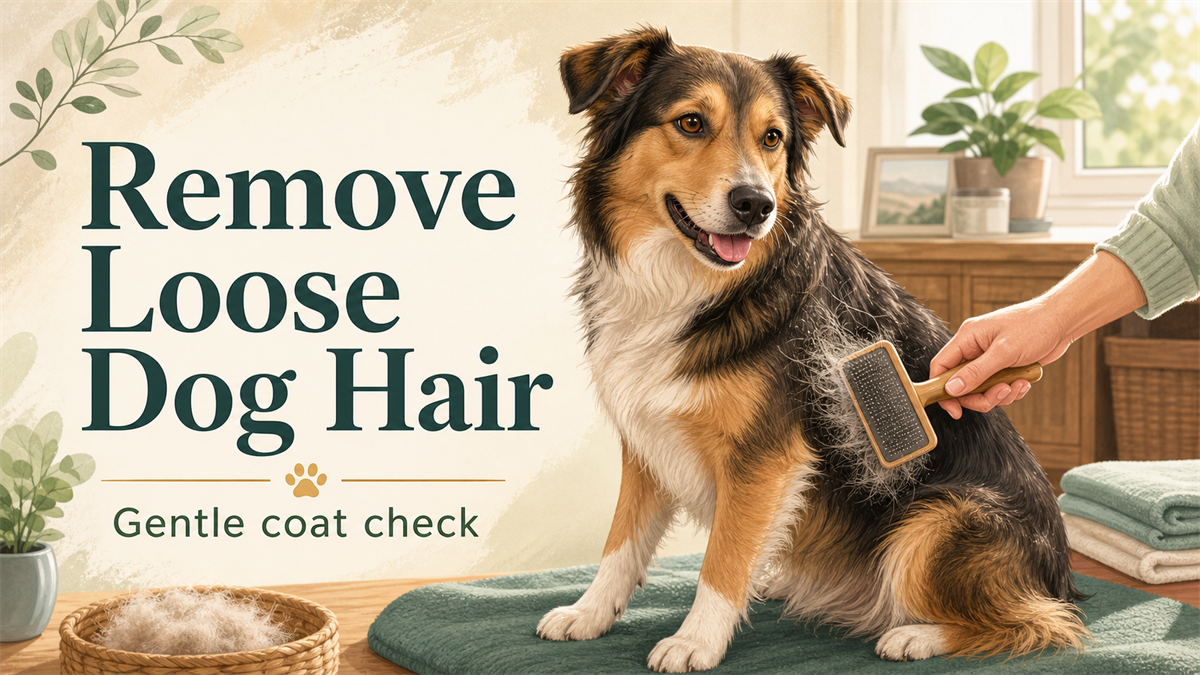
To remove loose dog hair at home, start with the coat type and the dog’s comfort level. Check for mats, sore skin, parasites, or sudden hair loss first. If the coat and skin look normal, use a gentle dry brush, bathe only when the coat is safe to wet, dry thoroughly, then do a light final pass. The goal is to control normal shedding, not stop shedding completely.
Stop before brushing or bathing if you see bald patches, red or painful skin, sores, fleas, ticks, tight mats, sudden heavy shedding, or a dog that cannot be handled safely. Use a veterinarian for medical concerns and a professional groomer for mats or coat work you cannot do gently.
Quick Answer by Coat Type
Coat type
Best starting sequence
Main caution
Short smooth
Light dry brush, wipe-down, bath only when needed
Do not scrape the skin or over-bathe.
Short dense or double coat
Dry brush, optional bath, thorough dry, light second pass
Do not shave for normal shedding or overuse deshedding tools.
Medium or long coat
Check for tangles, brush in sections, bathe only if the coat is safe, dry carefully
Do not bathe over tangles or mats.
Curly or woolly coat
Comb-check small sections and ask a groomer for matted coat
Mats can hide close to the skin.
Wire coat
Routine brush and comb checks, with professional help for coat-specific work
Do not assume every shedding tool fits a wire coat.
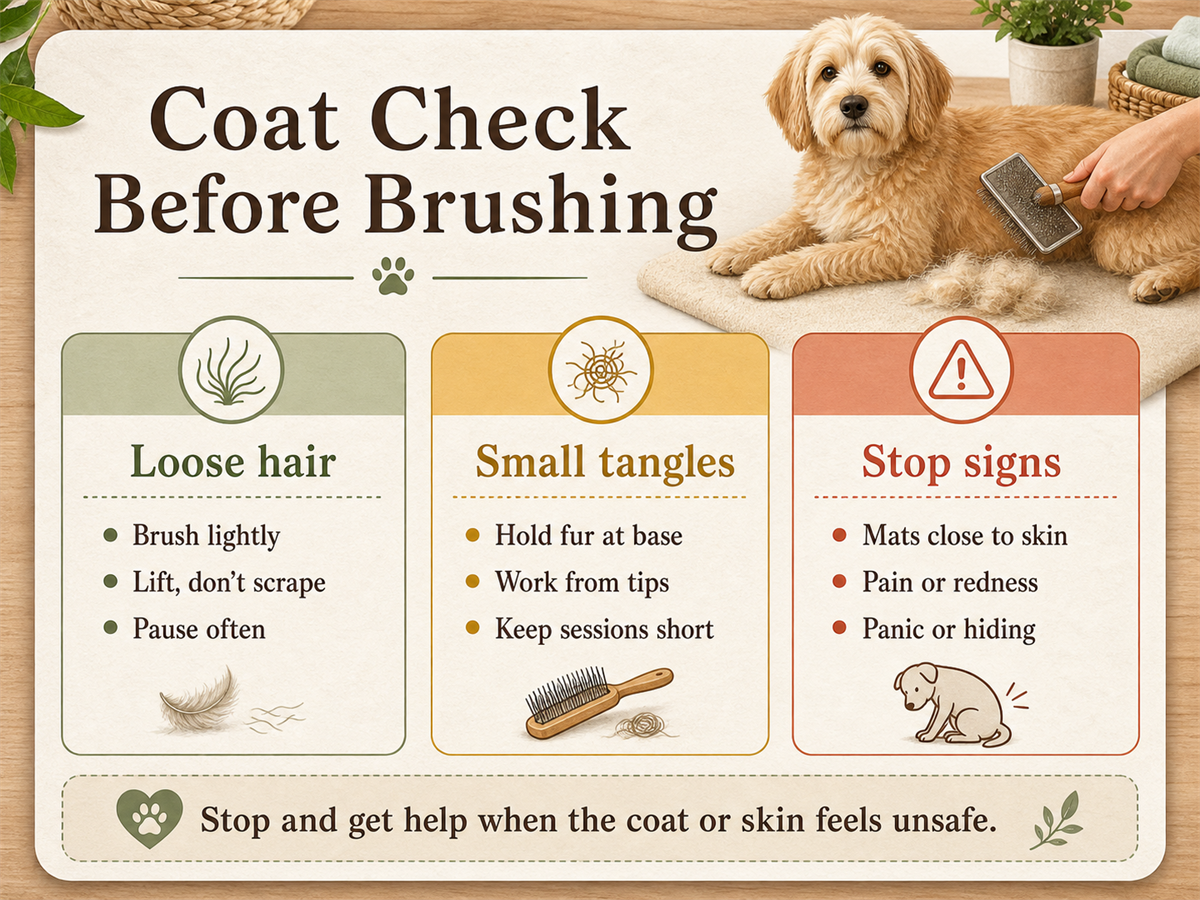
Use this quick coat check before brushing harder. Loose hair can be handled gently; pain, redness, panic, or mats close to the skin mean stop and get help.
Normal shedding leaves loose hair on the brush, floor, furniture, or your clothes. Abnormal hair loss can look different: bald patches, sudden coat thinning, red skin, sores, scabs, parasites, strong itching, pain, or a fast change from the dog’s usual pattern.
Do not treat those signs as a brushing problem. Stop and ask a veterinarian if the skin looks sore, infected, painful, or suddenly different. Ask a groomer for tight mats, packed coat, or coat work you cannot complete without pulling.
Dry brushing should come first for most dogs because it shows you what is happening under the topcoat before water hides or tightens problems.
Use a non-slip surface.
Run your hands over the coat to feel for tangles, tender spots, bumps, scabs, or mats.
Choose a coat-appropriate tool category, such as a soft brush, comb, grooming mitt, rubber curry, slicker brush, or undercoat tool.
Brush with light pressure in the direction the coat grows.
Work in small sections instead of dragging through a large area.
Clear hair from the tool often so you are not pushing old hair back into the coat.
Stop before the dog becomes sore, tense, or frustrated.
ASPCA dog grooming guidance says brushing removes dirt, spreads natural oils, and helps owners check for fleas and flea dirt. Keep that brush pass gentle. More pressure is not better.
What to Do for Mats and Tangles
Loose hair and mats are not the same problem. Loose hair should lift out with gentle passes. Mats feel packed, tight, or stuck, and they may pull the skin when you touch them.
Small, loose tangles may be eased apart before a bath only if the dog stays comfortable and the hair separates without pulling. Tight mats, widespread mats, skin-close mats, and mats over red or sore skin need a groomer or veterinarian. Do not force a brush through them, bathe over them, or use scissors close to the skin.
A bath can help loosen dead coat when the dog is healthy, the coat has been checked, and the dog can handle bathing. It should not be the first step on a tangled or matted coat.
Use lukewarm water and dog shampoo. Keep water and shampoo away from the eyes, ears, and nose. Rinse thoroughly, especially through dense, long, curly, or double coats. Leftover shampoo can irritate skin.
Skip the bath and get help if the dog is scared, painful, matted, hard to handle safely, or showing skin irritation. For bath timing and order, see dog grooming before or after bath.
Drying and Final Hair Cleanup
Drying matters because damp coat can hold loose hair, odor, and tangles. Towel-dry thoroughly. If you use a dryer, keep the temperature comfortable, use airflow the dog can tolerate, and stop if the dog becomes frightened or overheated.
Once the coat is mostly dry down near the skin, do a light second pass to collect loosened hair. Do not keep brushing just because more hair keeps appearing. Normal shedding can continue after a good grooming session.
A timed check can help you learn what works for your own dog without turning grooming into a harsh session. Keep the time short and use the same time limit for each step you compare.
What to record
Example note
Coat type
Short smooth, double, long, curly, or wire
Coat condition
Normal shedding, seasonal shedding, post-bath, or recently brushed
Step
Dry brush, bath, dry, final pass, cleanup
Tool category
Brush, comb, mitt, curry, undercoat tool, towel, or dryer
Time
Equal short sessions where possible
Dog tolerance
Calm, unsure, tense, or stop
Use this quick coat check before brushing harder. Loose hair can be handled gently; pain, redness, panic, or mats close to the skin mean stop and get help.
Use this as a home record, not a product test. Hair amount changes with season, coat type, health, recent baths, and how recently the dog was brushed.
Common Loose-Hair Mistakes
Brushing too hard.
Using one tool category for every coat.
Bathing over mats or tight tangles.
Expecting grooming to stop shedding.
Ignoring red skin, bald patches, parasites, pain, or sudden coat change.
Forcing a dog that is afraid, painful, or unsafe to handle.
Shaving a double coat to manage normal shedding.
When to Use a Groomer or Vet
Use a professional groomer for heavy undercoat work you cannot complete gently, extensive tangles, tight mats, coat packed close to the skin, trimming near sensitive areas, or a dog that needs safer handling.
Use a veterinarian for bald patches, sudden excessive shedding, parasites, sores, red or raw skin, pain, swelling, odor from skin or ears, ear discharge, eye problems, intense itching, or any medical concern.
FAQ
How do I remove loose dog hair fast?
Use a short, coat-appropriate dry brushing session first. If the coat is healthy and brushed out, a bath and thorough dry can help loosen more hair, but do not rush through mats, fear, or skin problems.
Does bathing remove loose dog hair?
Bathing can help loosen dead hair when it follows a coat check and gentle pre-brush. Do not bathe over severe tangles, mats, or irritated skin.
Can I use a deshedding tool every day?
Do not assume daily deshedding is safe. Overuse can irritate skin or damage coat. Match the tool category and frequency to coat type, skin condition, and dog tolerance.
Why is my dog still shedding after brushing?
Normal shedding can continue after grooming, especially during seasonal coat changes. Grooming removes loose hair that is ready to come out; it does not create a no-shed coat.
When is shedding abnormal?
Sudden bald spots, redness, sores, parasites, intense itching, pain, or sudden excessive shedding need veterinary guidance.
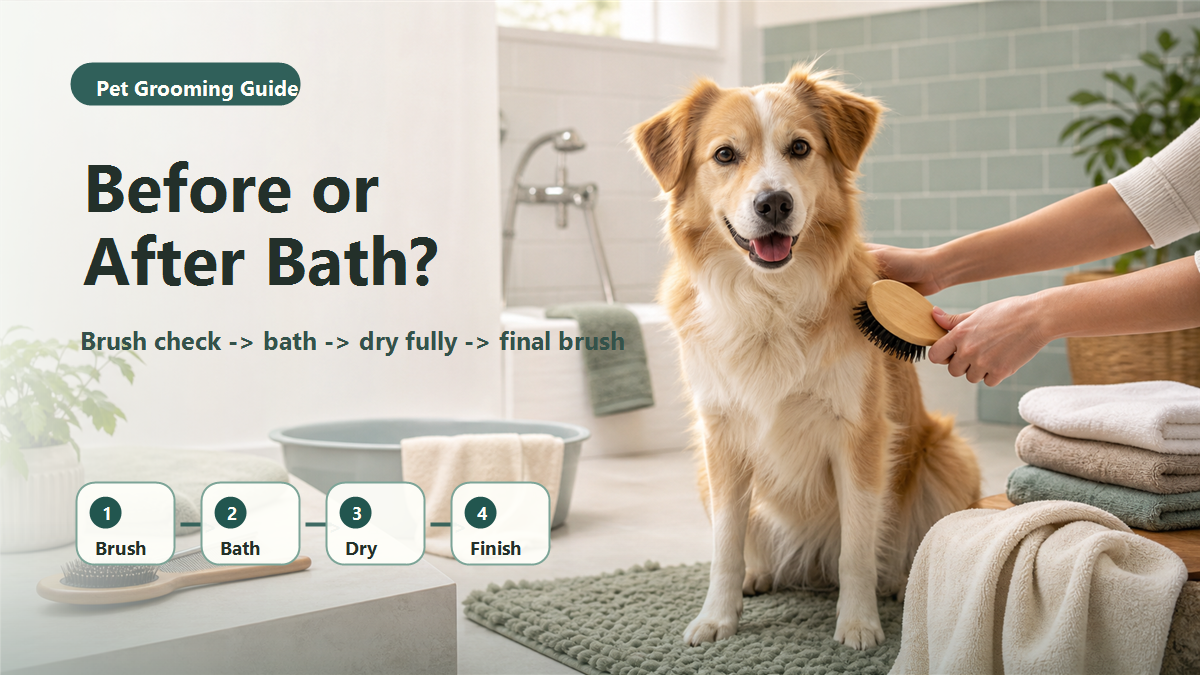
Most dogs should be checked and lightly brushed before a bath, then dried fully and brushed again afterward. The before-bath pass finds loose hair, dirt, small tangles, skin problems, ear or eye concerns, paw issues, and stress signs before water makes the session harder. The after-bath pass finishes the clean, dry coat. For a broader routine, use the dog grooming checklist for beginners.
If the coat is tightly matted, painful, skin-close, or hiding sores, do not bathe over it and do not cut it out at home. Stop and use a professional groomer or veterinarian.
Quick Answer: What Happens Before vs After the Bath?
Grooming step
Best timing for most dogs
Why
Coat and skin check
Before the bath
Find tangles, mats, sore skin, parasites, lumps, wounds, and stress before the coat is wet.
Brush or comb check
Before and after
Brush lightly before water; finish only after the coat is fully dry.
Small loose tangles
Before the bath, only if painless
Water can tighten tangles. Stop if the hair pulls skin or the dog flinches.
Tight mats
Neither at home
Do not bathe, cut, or force-comb tight mats. Use a groomer or vet.
Nails
Separate session if needed
Nails can happen before, after, or another day. Calm handling matters more than timing.
Ears and eyes
Check before; wipe gently only when safe
Pain, discharge, redness, swelling, squinting, or odor are vet signs, not routine grooming jobs.
Final brush and finish
After the dog is fully dry
Damp coat can hide tangles and moisture near the skin.
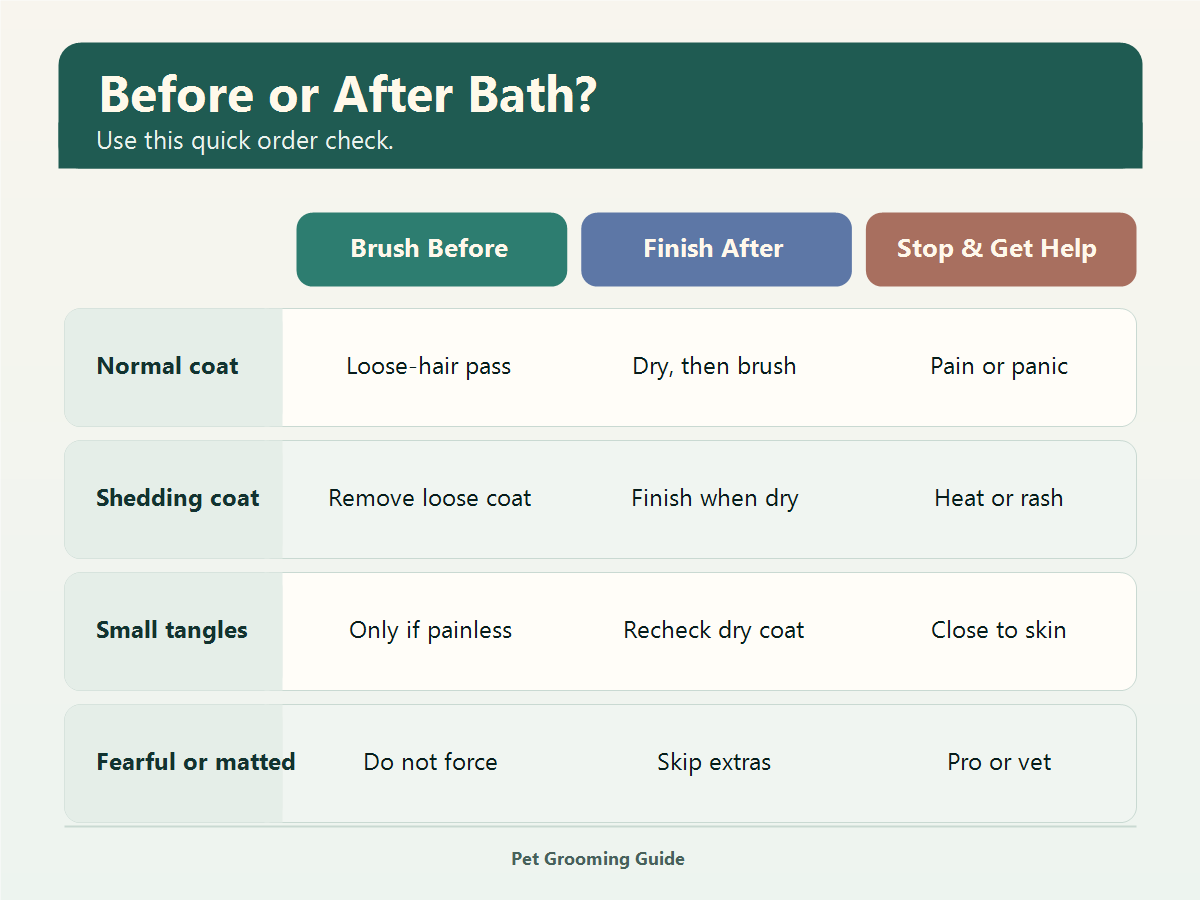
Use this quick card to choose what happens before the bath, what waits until the coat is dry, and when to stop.
The Safe Beginner Order
For a normal home grooming session, use this order:
Check the coat, skin, ears, eyes, paws, nails, and behavior.
Brush or comb loose hair and small surface tangles only if they move without pain.
Bathe if the dog needs it and can stay safe and calm.
Rinse thoroughly, especially through dense, long, curly, or double coats.
Towel dry, then keep drying until the coat is dry down near the skin.
Brush again once the coat is dry.
Move nails, ears, paws, or trimming to another short session if the dog is tired.
ASPCA dog grooming guidance recommends brushing before bathing to remove dead hair and mats, and it also notes careful water control around the ears, eyes, and nose.
What to Do Before the Bath
Start with your hands and eyes before you reach for a tool. Look for redness, sores, scabs, fleas or flea dirt, ticks, swelling, odor from skin folds, ear discharge, eye squinting, limping, cracked paw pads, bleeding nails, or behavior that says the dog cannot handle more.
Then do a light brush or comb check. For a short coat, this may be a quick loose-hair pass. For a long, curly, silky, or shedding coat, work in small sections and check the places that tangle first: behind the ears, under the collar, armpits, chest, belly, tail base, rear legs, and paw feathering.
Keep the brush pass gentle. If the hair does not move, the dog flinches, or the coat feels packed close to the skin, stop. That information is the point of the pre-bath check.
Mats and Tangles: The Bath Decision
Small loose tangles may be handled before the bath only when the dog is calm and the hair separates without skin pulling. Do not keep brushing harder to make the bath happen.
Tight mats, widespread mats, painful mats, skin-close mats, and mats over red or wounded skin should stop the home bath. Water can make tangled coat tighter and can hide problems underneath. Do not use scissors near the skin to remove mats. The same safety idea applies during the bath itself; the dog bathing mistakes guide covers bath-specific errors to avoid.
When Bathing First Can Make Sense
Some professional groomers bathe certain dirty or heavily shedding coats before the final brush-out. That is usually done with grooming equipment, coat knowledge, and drying control that many beginners do not have at home. Groomer to Groomer discusses this professional disagreement for double-coated dogs, which is useful context for exceptions, but it is not universal beginner advice. The safer home rule is still: inspect first, remove only loose and painless coat problems, bathe only when the coat is safe to wet, then finish after full drying.
Bathing first is not a good shortcut for mats, sores, unknown skin problems, ear problems, eye problems, panic, or unsafe handling.
Dry Fully Before the Final Brush
The final brush should wait until the dog is fully dry. A coat can feel dry on top while the undercoat, armpits, belly, collar area, tail base, or paw feathering still holds moisture. For more drying detail, see how to dry a dog after a bath.
Drying does not have to mean high heat. Use towels, a warm but not hot room, calm breaks, and airflow the dog can tolerate. Be extra cautious with puppies, seniors, heavy-coated dogs, flat-faced dogs, and dogs that become stressed by noise or air movement.
Nails, Ears, and Eyes Do Not Need to Fit the Same Session
Many home grooming sessions go badly because the owner tries to do everything at once. Nails can be trimmed before the bath, after the bath, or on a different day. If the dog is already tired from bathing and drying, move nails to another calm session.
Ear cleaning should be need-based and gentle, not an automatic deep-cleaning step after every bath. Do not treat painful, red, swollen, smelly, or discharging ears as a normal bath task. Ask a veterinarian.
For eyes, keep shampoo and rinse water controlled. Wipe the face gently with a damp cloth if needed, but stop for squinting, injury, heavy discharge, swelling, or pain.
Coat-Type Notes
Short coats
Do a quick pre-bath loose-hair pass, check skin and paws, bathe if needed, dry well, and finish with a short brush or cloth pass.
Double coats and shedding coats
Remove loose coat gently before the bath, but avoid scraping or overworking the skin. After the bath, dry thoroughly before the final brush. Dense coats can trap moisture even when the top layer looks finished. The dog grooming schedule by coat type can help plan routine timing without turning one bath day into too much work.
Long, silky, curly, or mat-prone coats
Check friction zones before the bath. Do not wet tight tangles. After the bath, dry fully and use a careful final comb check only if the dog is comfortable.
Fearful Dogs and Puppies
A fearful dog or puppy does not need a full grooming day. Split the job into tiny sessions: one day for a brush check, another for bath setup practice, another for a short bath, and another for nails or ears if needed.
Stop for panic, growling, snapping, repeated escape attempts, freezing, heavy panting that does not settle, or handling that no longer feels safe. A shorter session that ends calmly is better than forcing the whole list.
When to Use a Groomer or Vet
Use a professional groomer for tight or widespread mats, coat work beyond your skill, trimming close to skin, heavy undercoat removal that you cannot do calmly, or a dog that needs safer handling than you can provide at home.
Use a veterinarian for wounds, hot spots, red or raw skin, parasites, bad odor from skin or ears, ear discharge, eye injury, eye discharge, bleeding nails, limping, pain, breathing distress, heat stress, sudden behavior change, or a medically fragile dog.
Bottom Line
For most dogs, the safest home order is simple: check and lightly brush before the bath, skip the bath if mats or medical concerns appear, bathe and rinse only when the dog can stay safe, dry completely, then do the final brush. Nails, ears, eyes, and trimming can wait for another session if the dog is stressed.
FAQ
Should you brush a dog before or after a bath?
Usually both. Brush lightly before the bath to remove loose hair and find small tangles, then brush again after the coat is fully dry.
What if my dog has mats before a bath?
Do not bathe over tight, painful, widespread, or skin-close mats. Stop and use a professional groomer or veterinarian.
Should nails be done before or after the bath?
Either can work. If the dog is tired or stressed after bathing, trim nails another day.
Should ears be cleaned before or after bathing?
Check ears during grooming, but clean only when needed and safe. Pain, odor, redness, swelling, or discharge should go to a veterinarian.
Should double-coated dogs be brushed before bathing?
For home grooming, yes: do a gentle pre-bath brush and coat check, then dry fully before the final brush. Heavy or difficult coat work may need a groomer.
Should you cut a dog’s hair before or after a bath?
Basic finishing is usually cleaner after the dog is bathed, rinsed, and fully dry. Do not clip over mats, cut close to skin, or attempt major coat work without the right skill and setup.