
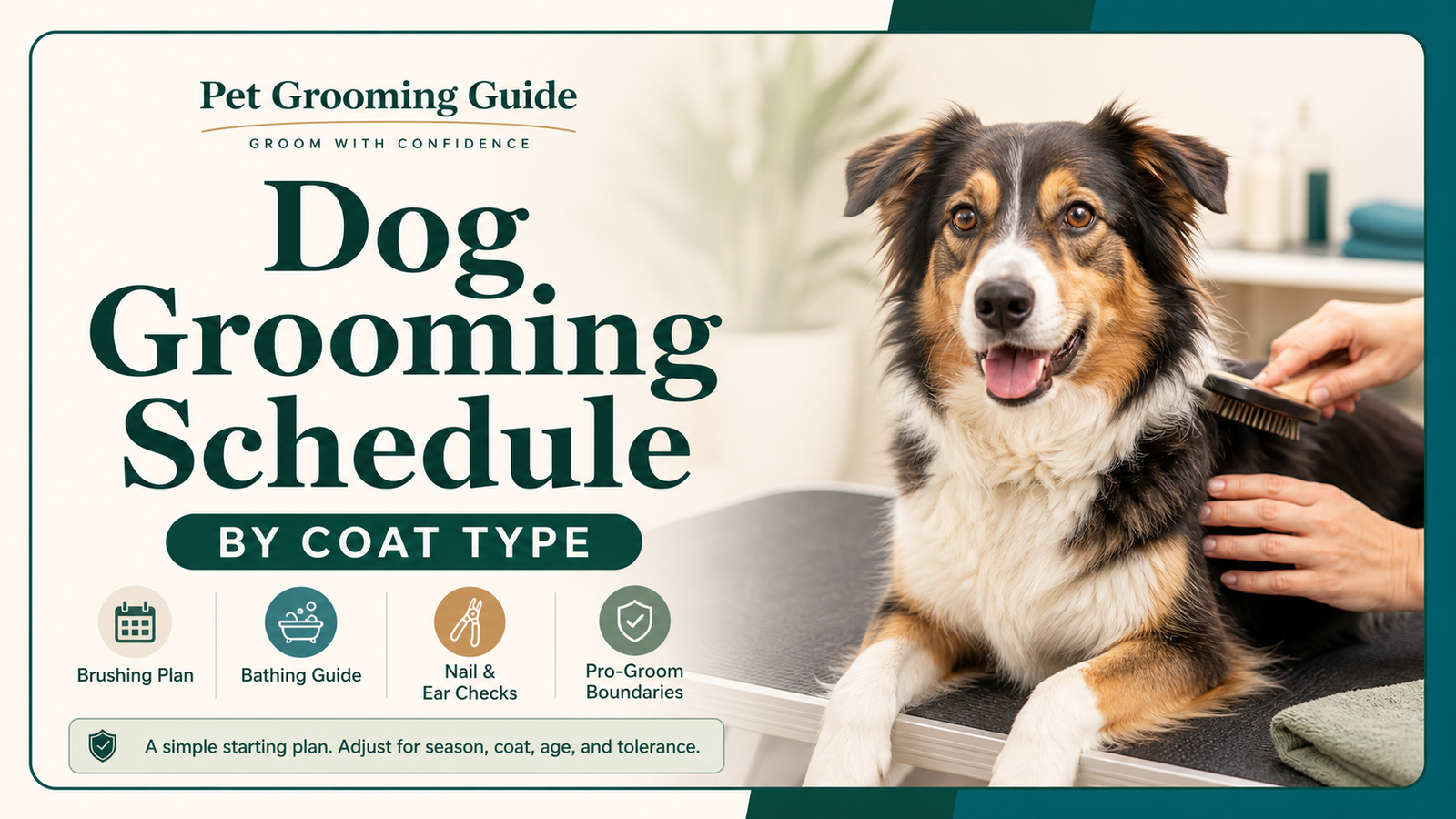
A dog grooming schedule should start with coat type, not a universal calendar. Short smooth coats, dense double coats, long coats, curly coats, and wire coats all need different brushing and professional-care plans. Use this schedule as a starting point, then adjust for age, season, activity, skin condition, coat condition, and how safely your dog tolerates grooming.
Quick schedule matrix by coat type
Use this matrix as a starting framework, then adjust for your dog's coat condition, age, season, activity, and safe handling limits.
| Coat type | Brushing | Bathing | Nails | Ears | Pro-groom boundary |
|---|---|---|---|---|---|
| Short smooth | About weekly, more when shedding | When dirty, smelly, or seasonally needed | Check every 1 to 2 weeks | Check during grooming | Usually as needed unless nails, skin, or handling are difficult |
| Short dense or double | Several times weekly; more during coat blow | When dirty or shedding support is needed | Check every 1 to 2 weeks | Check after baths/swimming | Helpful for heavy seasonal shedding or unsafe handling |
| Medium or long | Several times weekly to daily in friction areas | When coat is brushed out and bathing is needed | Check every 1 to 2 weeks | Check regularly | Use a groomer if tangles are extensive or home brushing falls behind |
| Curly, woolly, or continuously growing | Frequent brushing and combing, often daily in mat-prone areas | On a maintenance plan, not over mats | Check every 1 to 2 weeks | Check regularly | Regular professional grooming is often needed for clipping and mat prevention |
| Wire | Routine brushing/comb checks; method depends on coat | When needed | Check every 1 to 2 weeks | Check regularly | Hand-stripping or coat-specific work belongs with a skilled groomer if unfamiliar |
The ASPCA notes that brushing method and frequency depend on coat type, and USDA coat-care guidance states that frequency varies by breed, type, and length. Treat the table as a practical planning tool, not a medical rule or a promise that every dog fits the same interval.
Short smooth coats
Short smooth coats often need less brushing than long or curly coats, but they are not maintenance-free. Weekly brushing can remove loose hair, dirt, and debris while giving you a chance to check the skin.
Good home focus:
- Light brushing with a coat-appropriate category tool.
- Skin inspection for redness, fleas or flea dirt, bumps, sores, or irritation.
- Bathing only when the dog is dirty, smelly, or seasonally needs it.
Do not over-bathe to chase shedding. If the dog has sudden hair loss, itching, sores, or parasites, stop and ask a veterinarian.
Short dense and double coats
Short dense and double coats, including many Labradors, shed more than their coat length suggests. Brushing several times weekly may help keep loose hair controlled, and daily short sessions may be useful during seasonal coat blow.
Home focus:
- Gentle loose-hair removal.
- Pre-bath brushing before water.
- Thorough drying after baths, especially in dense coat.
- No shaving as a normal shedding shortcut.
For heavy seasonal shedding, a groomer can help if the dog tolerates professional handling. For bald patches, painful skin, parasites, wounds, or sudden excessive shedding, call a vet.
Medium and long coats
Medium and long coats need more frequent attention because friction areas can tangle quickly. Common problem spots include behind ears, armpits, chest, belly, tail, collar area, and rear legs.
Home focus:
- Brush and comb in layers.
- Check friction areas before and after baths.
- Keep sessions short enough that the dog can stay calm.
- Stop before small tangles become severe mats.
VCA advises that severe or extensive tangles should be handled by a groomer or veterinarian. Do not cut mats out with scissors.
Curly, woolly, corded, or continuously growing coats
Curly and continuously growing coats can mat close to the skin even when the surface looks fluffy. These coats often need frequent brushing, comb checks, and professional grooming for clipping or coat shaping.
Home focus:
- Comb-check down to the skin where safe.
- Maintain a regular pro-groom interval approved by the owner and groomer.
- Avoid bathing over tangles.
- Keep the coat length realistic for your home maintenance schedule.
If brushing has already become a fight or the coat has tight mats, stop and book a professional appointment.
Wire coats and hand-stripping boundaries
Wire coats can need coat-specific techniques. Some wire-coated dogs are clipped, while others may be hand-stripped by a skilled groomer depending on coat goals and dog tolerance.
At home, keep the schedule simple: routine brushing, skin checks, nail checks, ear checks, and professional help for unfamiliar coat work.
Nails, ears, teeth, and bath cadence across all coats
Coat type changes brushing needs, but every dog needs routine checks.
| Task | General planning note |
|---|---|
| Nails | Check every 1 to 2 weeks; trim only when you can do it safely |
| Ears | Check for odor, redness, discharge, or pain; ask a vet for concerning signs |
| Teeth | Follow veterinarian guidance for dental care |
| Bathing | Bathe when dirty, smelly, or seasonally appropriate; use dog shampoo |
| Skin | Watch for redness, sores, parasites, odor, sudden hair loss, or pain |
Merck notes that regular brushing helps remove loose hair and prevent mats, and bathing should use pet shampoo when appropriate.
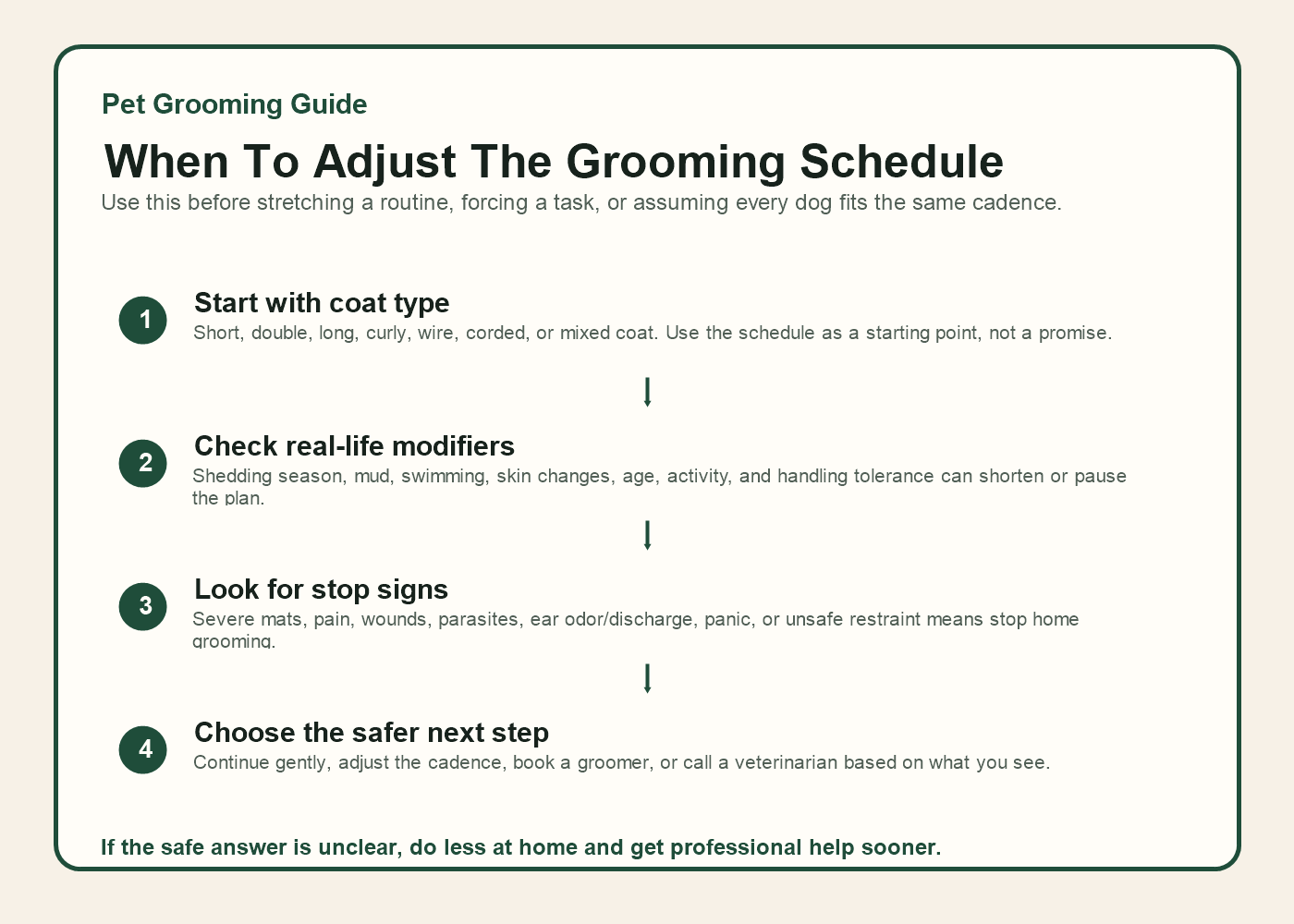
Adjust the schedule for season, age, skin, and tolerance
Increase brushing during seasonal shedding, muddy weather, swimming periods, or coat transitions. Reduce intensity if the dog becomes sore, anxious, or irritated.
Puppies need short introductions. Seniors may need softer handling and more breaks. Dogs with skin disease, wounds, parasites, ear pain, sudden hair loss, or medical fragility need veterinarian guidance before a grooming schedule is treated as routine.
When to call a groomer or vet
Call a groomer for extensive tangles, coat work you cannot safely do, clipping needs, or a dog whose coat maintenance has fallen behind.
Call a veterinarian for skin irritation, wounds, parasites, ear pain, discharge, sudden hair loss, unusual odor with redness, pain, or medical concerns.
If the dog growls, snaps, panics, or cannot be handled safely, stop grooming and seek professional help.
Bottom line
Start with the coat type, then adjust the schedule around the dog in front of you. Brush often enough to keep the coat loose, dry, and manageable; bathe only when it helps; check nails and ears routinely; and stop early when the coat, skin, or handling situation is no longer safe for home grooming.
If the plan feels hard to keep up with, shorten the coat where appropriate, split grooming into smaller sessions, or bring in a groomer before tangles become painful. Call a veterinarian for skin changes, wounds, ear pain, discharge, sudden hair loss, parasites, unusual odor with irritation, or any sign that grooming has become a medical concern.
FAQ
What is the best dog grooming schedule by coat type?
The best schedule matches coat type and tolerance. Short smooth coats may need weekly brushing, dense double coats often need several sessions weekly, and long or curly coats may need frequent brushing plus professional grooming.
How often should I bathe my dog?
Bathe when the dog is dirty, smelly, or seasonally needs it. Do not use bathing as the only shedding or mat-control plan, and do not bathe over severe tangles.
Do all dogs need professional grooming?
Not every dog needs frequent haircut-style grooming, but many dogs benefit from professional nail care, coat work, deshedding support, or help when handling is unsafe.
What if my dog hates brushing?
Do not force the schedule. Switch to short tolerance-building sessions and stop for growling, snapping, panic, pain, or severe mats.
Should I follow a coat-type schedule or a breed-specific grooming guide?
A coat-type schedule is the best starting point because coat length, density, shedding pattern, and mat risk drive most routine grooming decisions. A breed-specific guide can then add details for common coat traits, trim choices, and handling issues within that breed.