Tag: dog bath safety

  • How to Protect Dog Ears During a Bath

    How to Protect Dog Ears During a Bath

    Protect dog ears during a bath by keeping water away from the ear opening, using a gentle rinse angle, and stopping if the ears already look painful or abnormal. This is bath-water prevention only. It is not ear-canal cleaning or ear-infection treatment.

    Do not force a dog’s head into position. If the dog is panicking, snapping, scrambling, or showing ear pain, stop and get help from a veterinarian or qualified groomer.

    Why Ear Protection During Baths Matters

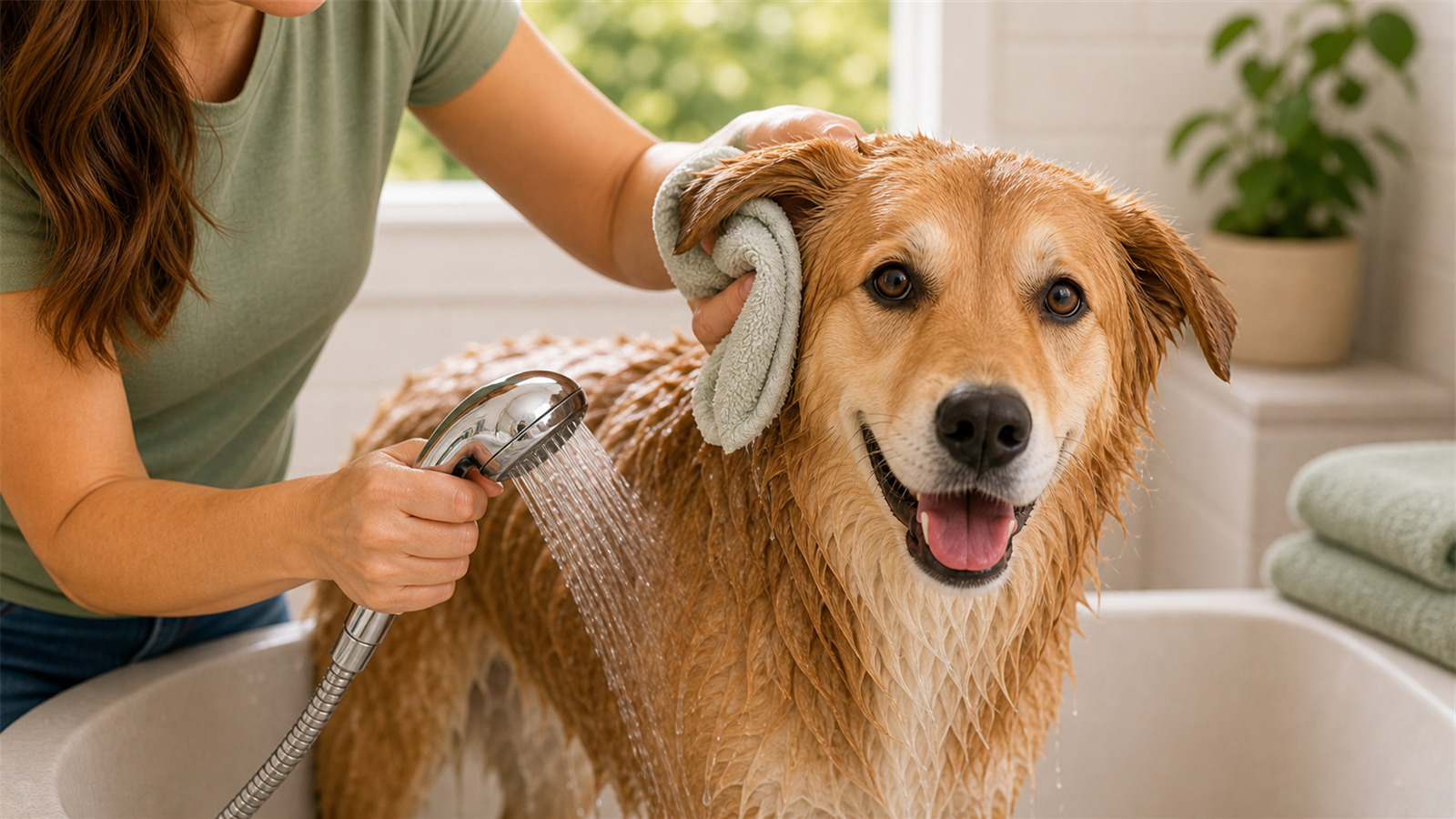
    ASPCA dog grooming guidance says to avoid spraying or pouring water directly into a dog’s ears, eyes, or nose during bathing. Around the head, careful direction matters more than speed.

    The practical goal is simple: rinse nearby fur while keeping the ear opening out of the water path.

    Use a Safer Rinse Angle Around the Head
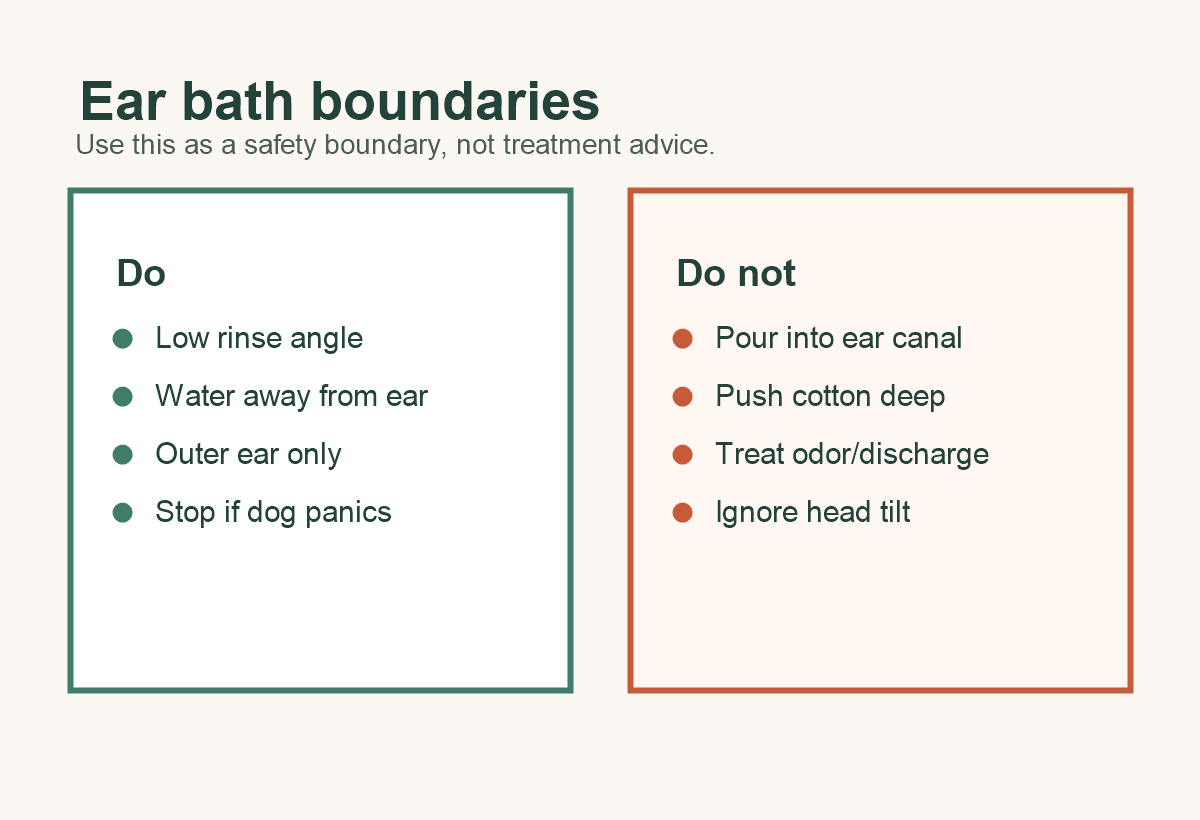
    Dog ear bath boundary checklist with safe rinse angle and do-not-put-in-ear warnings.

    Use gentle water flow. Aim the water down and away from the ear opening, not across it. Rinse the neck, cheeks, and nearby fur in small passes instead of blasting the whole head.

    If the dog moves suddenly, pause. Re-aim before you turn the water back toward the head area.

    What Not to Put in Your Dog’s Ears

    Do not push cotton deeply into the ear. Do not use ear plugs, powders, cleaners, medications, or tools as bath shortcuts unless a veterinarian gave those directions for that dog.

    Shallow ear covering may sound simple, but it can become unsafe if the dog resists or if material is pushed too far. When in doubt, skip the bath or use professional help.

    Long Ears vs Upright Ears

    For long ears, you may gently hold the ear flap down and away from the water path if the dog is calm. For upright ears, control the spray direction and avoid aiming water toward the opening.

    Do not fold, twist, pin, or force the ear. Ear handling should stay calm and brief.

    After-Bath Outer-Ear Drying

    Dry the outer ear and the fur around it with a soft towel. Stay outside the canal. Do not push cloth, cotton, or tools into the ear.

    If the ear smells bad, looks red, has discharge, or seems painful, do not treat it as a normal drying task.

    Vet Stop Signs Before or After a Bath

    VCA ear-cleaning guidance says red, inflamed, or painful ears should be checked by a veterinarian before cleaning. VCA ear-infection guidance lists concern signs such as head shaking, scratching, odor, redness, discharge, and pain.

    Balance changes, head tilt, bleeding, swelling, or severe discomfort are not grooming issues. Stop and contact a veterinarian.

    FAQ

    How do I keep water out of my dog’s ears during a bath?

    Use gentle water flow, aim away from the ear opening, and rinse the head area in small controlled passes.

    Should I put cotton in my dog’s ears during a bath?

    Do not insert cotton deeply. If any ear covering cannot be done calmly and safely, skip it and use professional help.

    Can I rinse around my dog’s head?

    Yes, but keep water away from the ears, eyes, and nose. Do not aim the spray toward the ear opening.

    What if my dog shakes their head after a bath?

    Head shaking can be a concern sign, especially with odor, discharge, redness, scratching, or pain. Contact a veterinarian if it continues or appears with other symptoms.

    When should ear symptoms go to a vet?

    Use a veterinarian for odor, discharge, head shaking, scratching, pain, redness, swelling, bleeding, balance changes, head tilt, or unsafe handling.

    Bottom Line

    Protecting dog ears during a bath is mostly about rinse direction, calm handling, and knowing when not to bathe. Keep water away from the ear opening, stay out of the canal, and treat abnormal ear signs as a veterinary issue.
  • Dog Bath Water Temperature: What Lukewarm Should Feel Like

    Dog Bath Water Temperature: What Lukewarm Should Feel Like

    Use lukewarm, not hot, water for a routine dog bath. The goal is simple: water that feels comfortable and mild, with no hot bite, no icy shock, and no guesswork once the bath is already moving.

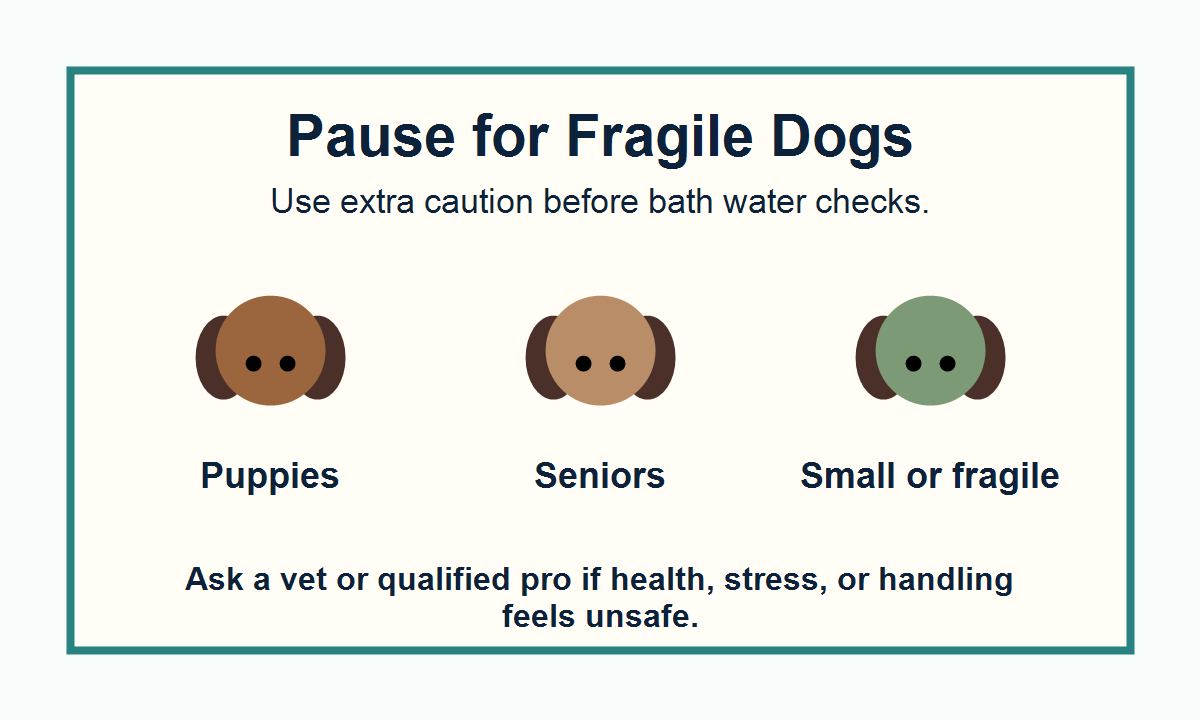
    Do not bathe a dog at home if there are burns, open sores, signs of skin infection, heat or cold stress, panic, aggression, or handling that no longer feels safe. Puppies, senior dogs, small dogs, and medically fragile dogs need extra caution, and a veterinarian or qualified professional should guide bathing when health status is part of the concern.

    The Safe Target: Lukewarm, Not Hot

    For routine bathing, the practical target is lukewarm water. ASPCA dog grooming guidance describes using lukewarm water for bathing and keeping water out of the ears, eyes, and nose. A Merck Veterinary Manual shampoo therapy table uses the same basic direction: lukewarm, never hot.

    This guide does not give a universal number for every dog and every bathroom setup. Water temperature can shift during the bath, and a dog’s age, size, skin condition, stress level, and health status all matter.

    Why a Hand Check Can Mislead You

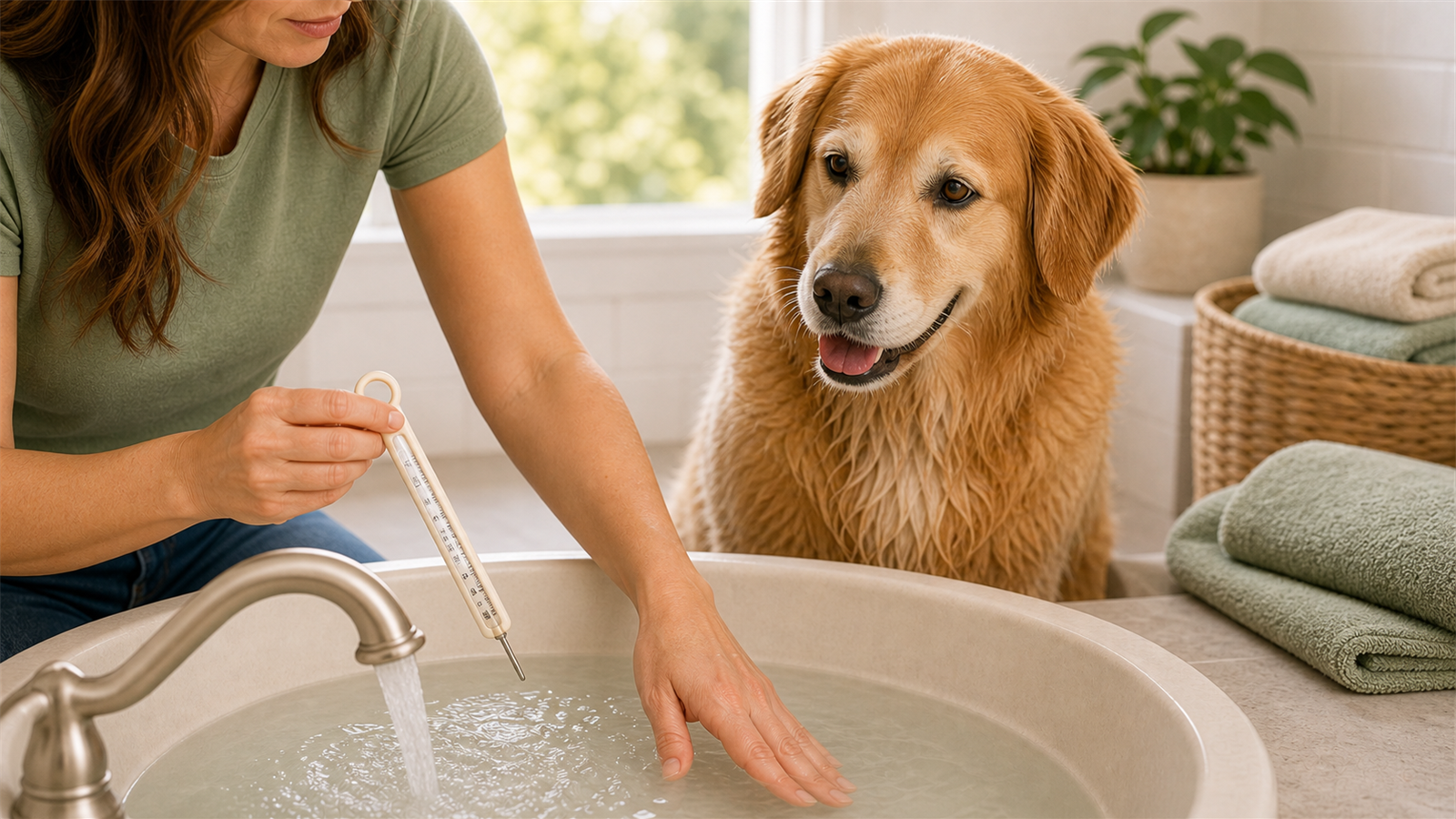
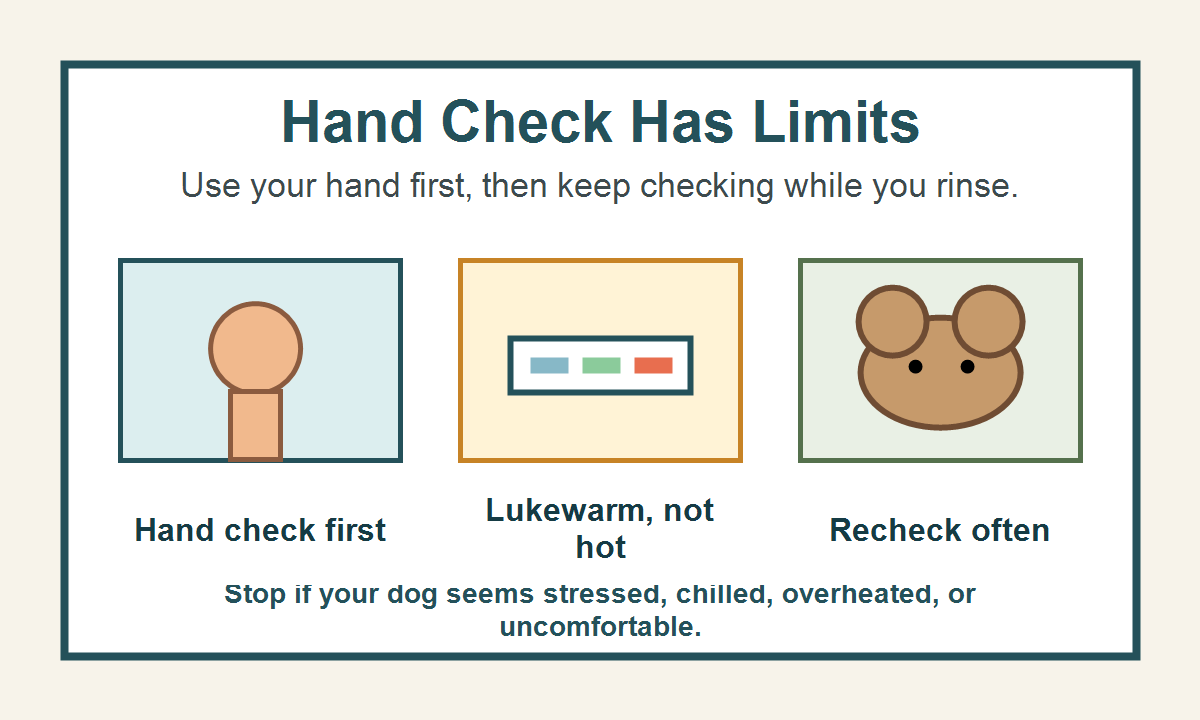
    A hand or wrist check is useful for catching water that is obviously hot or cold, but it is not a perfect safety test. Owner comfort is not the same as dog comfort. A spray hose can warm up or cool down after it runs. A tub can feel different from the water coming out of the nozzle.

    Hand checking dog bath water with a reminder that the hand test has limits and water should be rechecked during the bath
    A hand check helps, but it should not be treated as proof that the whole bath will stay comfortable.

    Check the water before the dog gets wet. Check again before rinsing the chest, belly, legs, and tail area. If the water suddenly feels sharp, hot, chilly, or uncomfortable, stop and adjust before continuing.

    Use Extra Caution With Puppies, Seniors, Small Dogs, and Fragile Dogs

    Puppies, senior dogs, small dogs, thin-coated dogs, and medically fragile dogs may have less tolerance for temperature stress or a long bath. Keep the session short, keep the room calm, and stop before the dog becomes exhausted or highly stressed.

    Dog bath caution graphic for puppies, senior dogs, small dogs, and medically fragile dogs
    When health, age, size, or stress changes the risk, pause the bath and get professional guidance.

    Set Up the Bath Before Water Touches the Dog

    Before you start, make the footing secure, place towels within reach, and test the water flow away from the dog. Keep the water shallow for a home bath. Avoid spraying or pouring water directly into the ears, eyes, or nose.

    If the dog is already worried, rushing the water step can make the bath harder. Start slowly, keep one hand steady on the dog if safe, and stop if the dog begins to panic, growl, snap, scramble hard, or repeatedly try to escape.

    Stop Signs During a Dog Bath

    Stop the bath if you see skin redness, pain, suspected burns, shivering, heavy panting, weakness, panic, aggression, open sores, discharge, strong odor from irritated skin, or any handling risk. This page is not a treatment guide for skin, ear, eye, heat, cold, injury, or behavior problems.

    If the bath was started because of itching, odor, sores, parasites, sudden hair loss, or recurring skin trouble, pause and ask a veterinarian what should happen next. A bath can clean surface dirt, but it should not be used to cover up a medical problem.

    Where This Fits in Home Dog Grooming

    Water temperature is only one part of a safer bath. Brush first when the coat allows it, use a calm setup, rinse thoroughly, and dry the dog in a way that does not overheat or frighten them.

    FAQ

    What temperature should dog bath water be?

    Use lukewarm, not hot, water. This article does not give a universal numeric target because dogs, bathrooms, water flow, and health status vary.

    Is warm water or cold water better for dogs?

    Lukewarm water is the safer routine direction. Avoid hot water and icy water.

    Can hot bath water hurt a dog?

    Yes. Hot water can irritate or burn skin. Stop for redness, pain, distress, panic, or any burn concern.

    Should puppies or senior dogs use cooler bath water?

    Use extra caution with puppies, seniors, small dogs, and medically fragile dogs. Ask a veterinarian when health status affects bathing.

    How do I tell if bath water is too hot for my dog?

    Check that the water feels lukewarm, not hot, before and during bathing. Stop if the dog seems distressed, chilled, overheated, painful, or uncomfortable.

    Bottom Line

    For a routine dog bath, choose lukewarm water, check it more than once, and stop quickly when the dog or the skin tells you something is wrong. A calm, short bath with mild water is better than pushing through a setup that feels uncertain.