
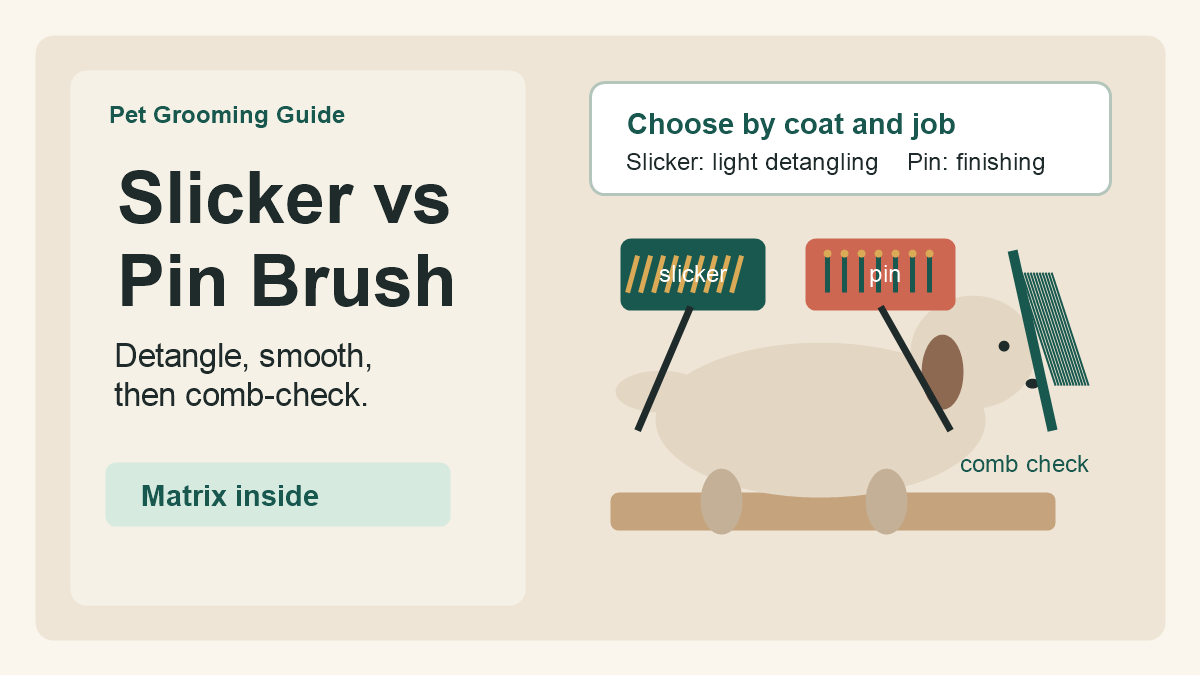
A slicker brush is usually the better starting tool for light detangling and lifting loose hair from many medium, long, wire, curly, and wavy coats. A pin brush is usually better for smoothing and finishing longer coat after tangles are already under control. Many dogs need both, plus a metal comb to check whether the brush reached below the surface.
The main safety rule is simple: neither brush is a force tool. Do not press a slicker hard into the skin, yank through snags, or keep brushing if your dog shows pain, panic, skin irritation, sores, or tight mats close to the skin. Severe mats, painful tangles, wounds, or skin problems need a professional groomer or veterinarian.
Quick Answer: Slicker Brush vs Pin Brush
| Dog coat situation | Better starting point | Why |
|---|---|---|
| Medium or long coat with loose hair | Slicker brush, then comb check | Helps lift loose coat and find light tangles before they tighten. |
| Long flowing coat after detangling | Pin brush | Smooths and arranges coat with less grab than a slicker. |
| Curly or wavy coat | Slicker plus comb | Works in sections so the coat does not look brushed only on top. |
| Wire coat with light tangles | Slicker or pin brush by area | Both may help, but pressure and a comb check matter. |
| Short smooth coat | Often neither as the main tool | A rubber curry or soft bristle brush may fit the job better. |
| Severe mats, pain, sores, or skin irritation | Professional help | Do not brush through pain or skin-level matting. |
What A Slicker Brush Does Well
The AKC dog brush types guide describes slicker brushes as short, tightly packed, angled wire pins used on medium, long, wire, and curly coats, and notes that they should be used with a light touch. In everyday grooming, that means a slicker is a working brush, not a skin scraper.
A slicker brush can help with light tangles, loose hair, and section brushing on coats that need more than surface smoothing. It is often useful before a comb check on curly, wavy, medium, and long coats.
Use short, controlled strokes. Keep pressure light enough that the brush would feel comfortable on your own forearm. If the dog flinches, turns away, tenses, mouths at the brush, or the skin looks pink, reduce pressure or stop.
What A Pin Brush Does Well
A pin brush looks more like a human hairbrush. The AKC describes pinhead brushes as finishing brushes for long-coated dogs and as useful on some wire coats. A pin brush is usually better for smoothing, arranging feathering, and finishing a coat that is already free of painful tangles.
The limit is depth. On dense, curly, wavy, or long coats, a pin brush may make the outside look tidy while tangles remain near the skin. That is why a pin brush should not be treated as proof that the coat is clear.
When You Need Both Plus A Comb
For many home groomers, the answer is not slicker or pin brush. It is slicker, comb, then pin brush.
- Use a slicker lightly in small sections to open the coat and lift loose hair.
- Use a metal comb to check whether the coat is clear below the surface.
- Use a pin brush to smooth and finish longer coat once the comb passes comfortably.
The comb is the check step. If it catches, do not yank through the snag. Work a smaller section with gentle strokes, or stop if the tangle is tight, painful, close to the skin, or attached to irritated skin. For more on the check step, see how to remove loose dog hair and the coat-routine notes in dog grooming schedule by coat type.
Pressure, Skin, And Mat Safety
The ASPCA dog grooming tips note that brushing can remove dirt, spread natural oils, prevent tangles, and help you inspect your dog. Those benefits depend on brushing that stays comfortable.
- Part long or dense coat so you can see the section you are brushing.
- Brush small sections instead of sweeping over the whole dog.
- Keep slicker pressure light and avoid repeated strokes over one sensitive spot.
- Check behind ears, armpits, collar areas, belly, pants, tail base, and friction zones.
- Stop for redness, sores, scabs, swelling, heat, pain, panic, or skin irritation.
- Use a groomer or veterinarian for severe, widespread, painful, or skin-level mats.
The ASPCA matting guidance says mats that cannot be easily brushed out should be handled by a groomer or veterinarian, and warns against cutting mats with scissors. Do not cut, shave, scrape, or force-brush mats at home.
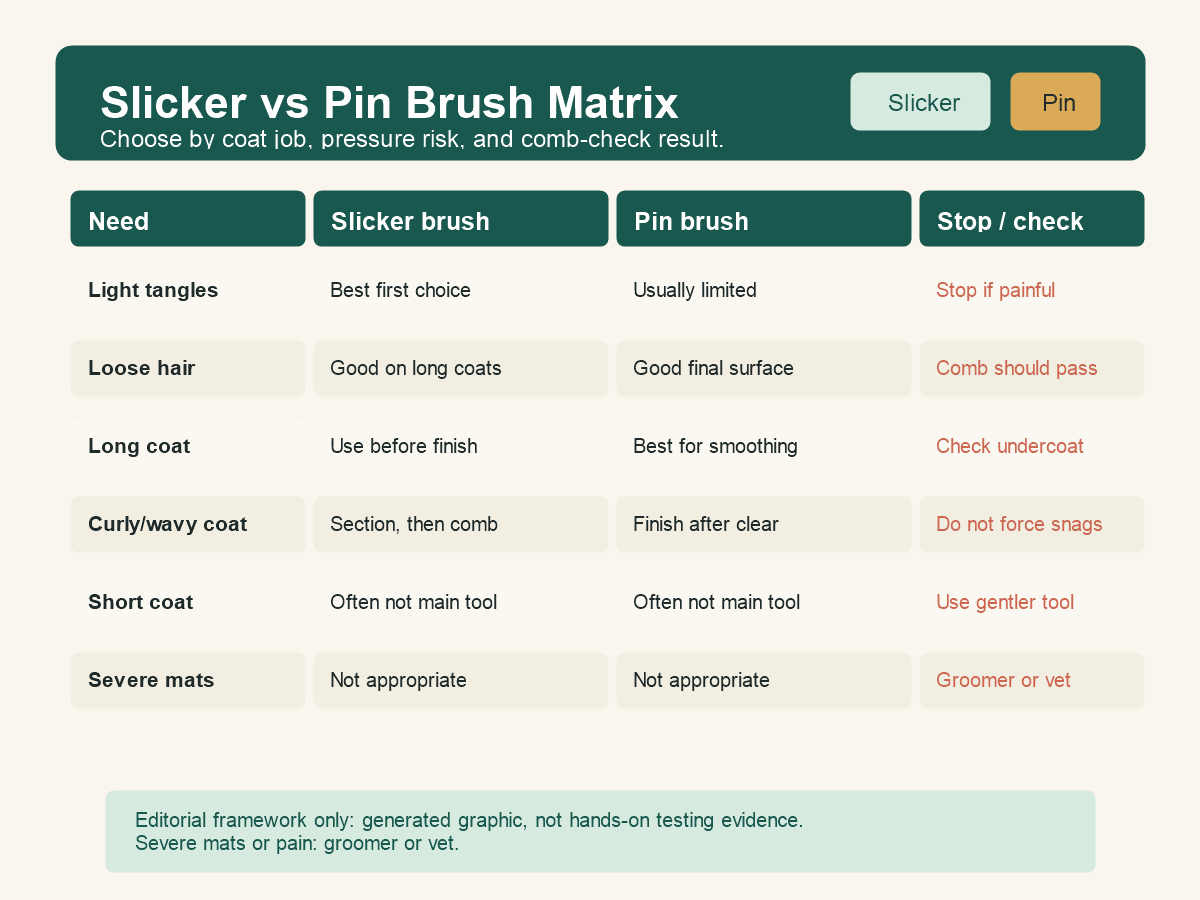
| Need | Slicker brush | Pin brush |
|---|---|---|
| Light tangles | Usually the stronger choice when used gently in sections. | Limited; may glide over tangles instead of opening them. |
| Loose hair on medium or long coat | Often useful before the comb check. | Useful for final surface smoothing. |
| Dense coat penetration | Better with sectioning and light pressure. | Often too shallow alone. |
| Long-coat finishing | Useful before finishing if the coat needs detangling. | Usually the better finishing brush. |
| Beginner pressure risk | Higher because wire pins can irritate skin if pressed hard. | Lower, but still not a tool for yanking snags. |
| Severe mat removal | Not appropriate. | Not appropriate. |
For dogs that tense, dodge, snap, or panic around brushing, shorten the session and work on handling separately instead of pushing through. The next step is a behavior-safe plan, such as how to brush a dog that hates being brushed, or help from a qualified groomer.
Bottom Line
Choose a slicker brush when the coat needs gentle section work for light tangles or loose hair. Choose a pin brush when a long coat is already clear and needs smoothing. Use a comb to confirm the brush reached below the surface, and stop for pain, panic, skin irritation, or serious mats.
FAQ
Is a slicker brush better than a pin brush?
Not always. A slicker brush is usually better for light detangling and lifting loose hair. A pin brush is usually better for smoothing and finishing longer coat after tangles are removed.
Can a slicker brush hurt a dog?
Yes. A slicker brush can irritate skin if it is pressed too hard, used repeatedly over one spot, or used on sore skin. Use a light touch and stop if the dog shows pain or the skin looks irritated.
What coats need a pin brush?
Pin brushes are often useful on long, flowing, or feathered coat after tangles have been removed. They help smooth and arrange hair rather than dig out dense tangles.
Do I still need a comb after brushing?
For medium, long, curly, wavy, or dense coats, yes. A comb helps check whether the brush reached below the top coat. If the comb catches, work gently in smaller sections or stop if the snag is painful or close to the skin.
Should I brush out mats at home?
Only small, loose tangles that do not hurt the dog are reasonable home work. Severe, tight, painful, widespread, or skin-level mats should be handled by a professional groomer or veterinarian.