
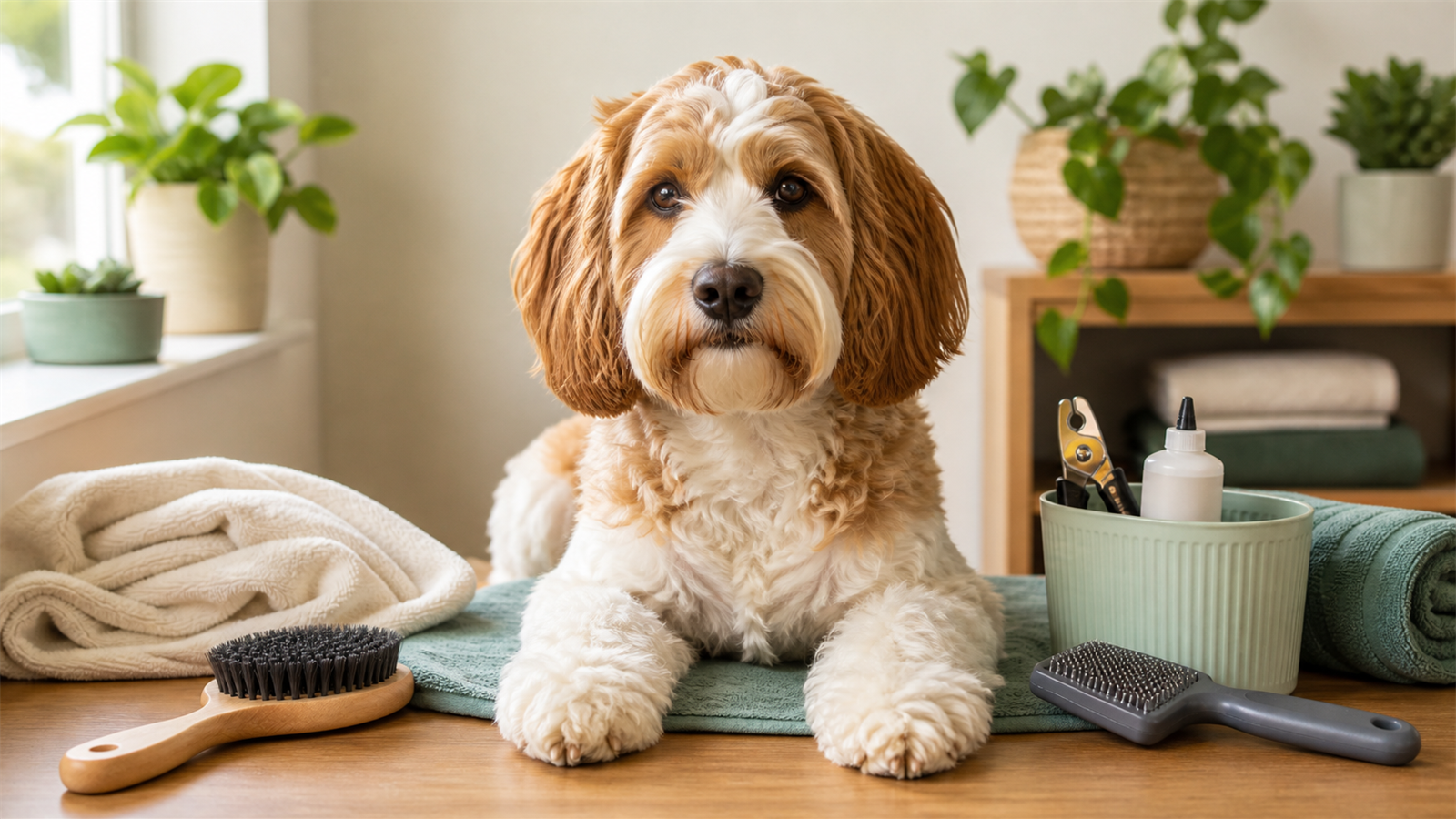
For most dogs, the safest grooming order is body check first, brush and comb before water, handle nails while the dog is still calm, bathe and rinse if needed, dry safely, then finish with ears, paws, and a final coat check. The order can change by coat type, bath need, nail sensitivity, and drying method.
This is an adaptive workflow, not a rigid promise that every dog should complete every step in one session. If you see wounds, lumps that need a vet check, parasites, severe mats, burns, bleeding, pain, panic, aggression, sedation needs, restraint risk, or medically fragile handling, stop the home session and use a veterinarian or qualified professional.
The Default Dog Grooming Order
Use this default sequence when the dog is healthy, calm, and safe to handle.
| Order | Step | Main decision |
|---|---|---|
| 1 | Body and skin check | Is it safe to groom today? |
| 2 | Brush and comb | Can the coat be opened before water? |
| 3 | Nails | Is the dog calm enough for paw handling? |
| 4 | Bath and rinse | Does the dog need a bath today? |
| 5 | Towel and dry | What drying method fits the coat and dog? |
| 6 | Ears, paws, final check | Are there any remaining stop signs? |
The ASPCA’s dog grooming tips support brushing before bathing to remove dead hair and mats, followed by wetting, shampooing, rinsing, and drying.
Original Grooming Order Map
Pet Grooming Guide original framework: use this order as a decision map, not a race to finish every task.
- Check first: stop for pain, wounds, severe mats, parasites, panic, or unsafe handling.
- Open the coat: brush and comb before water when tangles are minor and the dog is comfortable.
- Handle nails early only if calm: split nail work into another day if paw handling escalates stress.
- Bathe only when needed: skip the bath if the coat, skin, or behavior makes water unsafe today.
- Dry gently: prioritize towels and safe airflow over high heat.
- Finish with checks: ears, paws, coat dampness, debris, and comfort decide what happens next time.
Step 1: Pre-Groom Body and Skin Check
Start with a quick nose-to-tail check before tools come out. Look for wounds, lumps that need a vet check, parasites, severe mats, hot or painful areas, bleeding, burns, or behavior that says the dog is not safe to handle.
Do not groom over wounds, lumps needing veterinary review, parasites, severe mats, painful skin, burns, bleeding, panic, or aggression. If any of these are present, stop and route to a veterinarian or qualified professional.
Step 2: Brush and Comb Before Water
Brush and comb before bathing whenever the coat needs it and the dog can tolerate it. VCA notes that brushing helps remove loose hair, dead skin, debris, and parasites while distributing oils. VCA also says severe or extensive tangles should be handled by a professional groomer or veterinarian.
- Loose hair and minor tangles: brush before bath if the dog stays comfortable.
- Severe mats or skin-close tangles: stop and use a professional.
- Painful brushing: stop.
- Parasites or skin concerns: stop and use veterinary guidance.
Bathing over mats can make coat problems worse, so water should not be the first step when the coat is tangled.
Step 3: Nails Before or After Bath?
Nails often fit best before the bath because the dog is less tired and the floor is dry. That said, nail timing should follow the dog’s stress level.
Trim or grind nails before the bath only when the dog is calm, paw handling is already accepted, good light and supplies are ready, and the handler can stop after one nail if needed.
Move nails to another session when the dog is already stressed, paw handling triggers panic, the nail is bleeding, torn, or painful, or restraint would be required. VCA nail-handling guidance supports preparation and styptic readiness; this section is about setup logic, not clipping technique.
Step 4: Bath, Rinse, and Towel Stage
Bathe only when the dog needs it and the setup is safe. After brushing, wet the coat, shampoo with a dog-safe product category, rinse thoroughly, and towel before any airflow step.
Do not bathe a dog with severe mats, wounds, burns, parasites, pain, panic, or unsafe handling. A bath should not be used to treat skin problems or cover medical odor.
Step 5: Drying Method by Coat
Drying should prioritize airflow and comfort, not high heat. The AKC drying guide supports airflow rather than heat for drying fur and warns that heat can burn skin.
| Coat or situation | Drying direction |
|---|---|
| Short coat | Towel thoroughly and use gentle airflow if needed. |
| Dense or double coat | Towel, part-check damp areas, and use safe airflow. |
| Long or tangle-prone coat | Dry while monitoring for tangles and skin comfort. |
| Noise-sensitive dog | Use towel work and breaks; stop for panic. |
Stop for overheating, burns, panic, pain, or unsafe restraint.
Step 6: Ears, Paws, Final Comb Check
After the coat is dry enough to inspect, finish with outer-ear checks, paw checks, and a final comb or brush pass where safe.
VCA ear guidance says red, inflamed, or painful ears should be evaluated by a veterinarian before cleaning. Keep ear work conservative and visible. Do not push into painful ears, treat discharge, or clean aggressively.
Final checks should answer whether the coat is dry at the skin where it needs to be, paws are free of debris, any skin problem appeared during grooming, and the dog stayed comfortable enough to continue next time.
When to Change the Order or Stop
Change the order when the dog or coat needs it. Some dogs do better with nails on a separate day. Some coats need brushing only, not a bath. Some dogs need drying breaks.
Stop completely for wounds, lumps needing vet check, parasites, severe mats, burns, bleeding, pain, panic, aggression or restraint risk, sedation needs, or medically fragile handling. Home grooming should be split into shorter sessions rather than forced into one long workflow.
FAQ
What order should you groom a dog in?
For most dogs: body check, brush and comb, nails if calm, bath and rinse if needed, dry safely, then ears, paws, and final checks.
Should you brush a dog before or after a bath?
Brush before the bath when the coat needs it and brushing is safe. Severe or painful tangles should go to a groomer or veterinarian.
Should you trim dog nails before or after a bath?
Often before the bath, while the dog is calmer and dry. Move nails to another session if paw handling causes stress or risk.
When should you clean a dog’s ears during grooming?
Keep ear checks near the end and conservative. Painful, red, inflamed, odorous, or draining ears need veterinary evaluation before cleaning.
When should you stop a home grooming session?
Stop for wounds, parasites, severe mats, burns, bleeding, pain, panic, aggression, sedation needs, restraint risk, or medically fragile handling.
Bottom Line
A good dog grooming order starts with safety, not tools. Check the dog first, brush before water when the coat allows it, do nail work only while the dog is calm, bathe only when needed, dry gently, and finish with ears, paws, and a final comfort check. If the dog, coat, skin, or handling situation turns unsafe, stop and bring in a professional.