
You can groom a dog without a bathtub by choosing the safest setup for the dog, the mess, and the room you have. Small dogs may use a sink only when lifting is easy and the surface is secure. Many dogs do better in a shower, with a paw rinse or wipe-down, or with a professional bath. Outdoor rinsing is only a mild-weather option when footing, water control, and handling are safe.
Do not turn a no-tub problem into a handling problem. Stop and get help if the dog is too heavy to lift, slips, panics, bites, has severe mats, has wounds or skin irritation, shows pain, has chemical residue on the coat, or cannot be handled calmly.
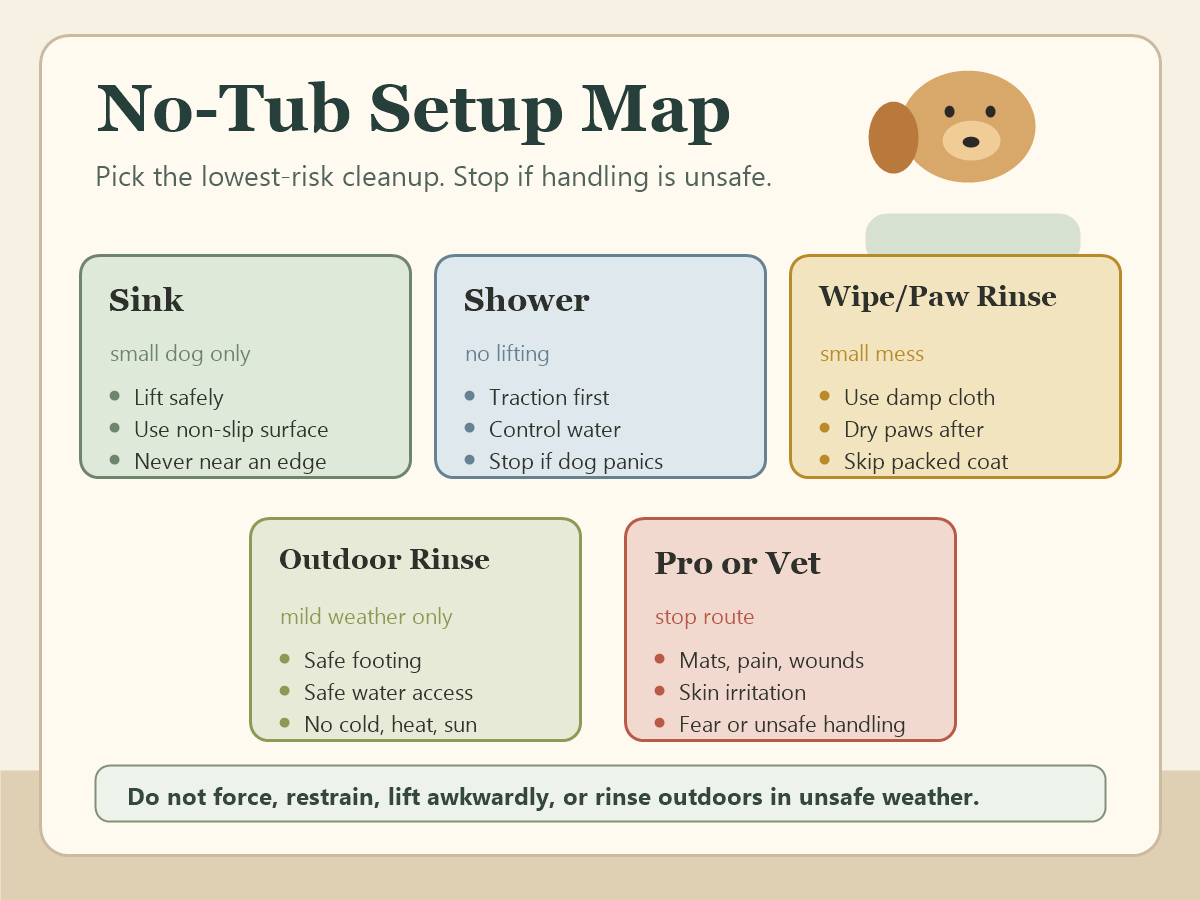
| Situation | Better option | Skip it when |
|---|---|---|
| Small dog, safe lift, steady surface | Sink setup | The dog is heavy, jumpy, slippery, panicked, or near an edge. |
| Medium or larger dog with bathroom access | Shower setup | The floor is slick, water control is poor, or the dog tries to flee. |
| Small mess on paws, belly, or coat surface | Wipe-down or paw rinse | Mud is packed in, the coat is matted, or the skin looks sore. |
| Mild weather, secure footing, controlled water | Outdoor rinse | It is cold, hot, icy, windy, directly sunny, slippery, or hard to control the dog. |
| Large, fearful, painful, matted, or medically fragile dog | Professional bath, groomer, or veterinarian | Home grooming would require force, awkward lifting, restraint, or guesswork. |
Sink Setup: Small Dogs Only When the Lift Is Safe
A sink can work for a small dog when the handler can lift the dog comfortably, the sink area is uncluttered, and the dog can stand on a non-slip surface without leaning near an edge. Keep towels within reach before you start, and use lukewarm water rather than hot water. If you are unsure what lukewarm should feel like, review dog bath water temperature before the bath.
Brush or check the coat first. The ASPCA dog grooming tips recommend brushing before bathing and keeping water away from a dog’s ears, eyes, and nose. Use a cup, pitcher, or controlled sprayer rather than blasting water at the face.
Skip the sink if the lift feels awkward, the dog stiffens or scrambles, the counter is crowded, or you would need to hold the dog in place by force. A sink bath should feel lower-risk than the alternatives. If it does not, use a shower, wipe-down, or professional bath.
Shower Setup: Traction First, Water Control Second
A shower is often better than a sink for dogs that should not be lifted. Set up the floor first with secure traction. Put towels where you can reach them without stepping away from the dog. Use a handheld sprayer, cup, or pitcher so you can keep water controlled and away from the face.
Keep the water warm, not hot, and rinse thoroughly. The SF SPCA at-home grooming guidance supports warm water and complete rinsing during home baths. For mistakes to avoid before, during, and after the bath, see dog bathing mistakes.
Stop the shower setup if the dog cannot stand securely, repeatedly tries to leave, freezes, snaps, or becomes too distressed to continue calmly. Do not solve poor footing with more restraint.
Wipe-Down or Paw Rinse for Small Messes
Not every mess needs a full bath. Light dirt on paws, belly fur, or the coat surface may be easier to handle with a damp cloth, warm washcloth, or short paw rinse. This keeps the session brief and avoids turning a small cleanup into a stressful full wash.
The AKC clean dog paws guidance describes using dog-safe wipes or a warm soapy washcloth for muddy, sandy, or salty paws. For a dedicated routine, use how to clean dog paws after a walk.
Skip a wipe-down if the coat is packed with mud, matted, sticky with an unknown substance, or sitting over red or painful skin. Those are not scrub-harder situations.
Outdoor Rinse: Mild Weather Only
An outdoor rinse is a narrow option, not the default no-tub answer. Use it only when the weather is mild, the footing is secure, water access is controlled, drainage is safe, and the dog stays calm. Keep the rinse short and bring the dog indoors to dry.
Do not rinse outdoors in cold weather, hot weather, direct heat, icy conditions, high wind, poor footing, unsafe drainage, or any situation where the dog is hard to control. Do not use buckets or open containers in a way that creates slipping, lifting, or dumping risk. If the setup feels improvised in a bad way, choose a different cleanup path.
Drying in a Small Space
Dry with towels first. If you use airflow, keep it comfortable, keep ventilation open, and stop if the dog becomes frightened, overheated, or uncomfortable. The AKC drying guide notes that airflow does the drying and that heat can burn skin.
Do not use high heat close to the skin, and do not send a damp dog into cold or hot outdoor conditions. For more detail, see how to dry a dog after a bath.
When to Use a Groomer or Veterinarian
Use a professional groomer when the dog is too large to handle safely, the coat is packed or matted, the dog is too fearful for calm home handling, or the bath setup would require force. Use a veterinarian for wounds, pain, bleeding, skin irritation, chemical exposure, heat or cold stress, or a medically fragile dog.
If you are unsure whether the session should continue, the safer answer is to pause. The guide when to stop grooming and call a pro covers the stop signs that should end a home session.
Conclusion
The best no-bathtub grooming setup is the one that cleans the actual mess without adding lifting, slipping, weather, or handling risk. Use a sink only for small dogs when lifting and footing are safe, use a shower when traction and water control are good, choose a wipe-down for small messes, and keep outdoor rinsing limited to mild, controlled conditions. When the dog, coat, skin, or setup is not safe, stop and get professional help.
FAQ
How can I bathe my dog without a bathtub?
Choose a sink, shower, wipe-down, paw rinse, mild-weather outdoor rinse, or professional bath based on dog size, coat condition, weather, footing, and handling safety.
Can I wash my dog in the shower?
Yes, if the floor has traction, the water is lukewarm, the dog can stand calmly, and you can keep water away from the ears, eyes, and nose.
Is it safe to bathe a dog in a sink?
Only for a small dog that can be lifted safely onto a steady non-slip surface. Skip the sink if lifting, balance, edge risk, or behavior is unsafe.
Can I rinse my dog outside?
Only in mild weather, on safe footing, with controlled water access and a calm dog. Do not rinse outside in cold, heat, direct sun, slippery conditions, or poor-control setups.
When should I use a professional bath instead?
Use a professional bath when the dog is too large, fearful, painful, matted, medically fragile, hard to handle calmly, or unsafe to lift or rinse at home.