
Tag: dog mats

  • How to Comb Check a Dog Coat

    How to Comb Check a Dog Coat

    A comb check is a gentle pass/fail test after brushing. You slide a comb through one small brushed section to see whether the coat is truly open, not just smooth on top. Pass means the comb glides through without catching, tugging, skin pull, or a worried reaction from your dog. Fail means stop that section and do not force the comb.

    Comb check before a bath, before drying a long or dense coat, or before ending a brushing session. Stop for pain, redness, tight mats, panic, defensiveness, or skin irritation. Use a groomer for coat work you cannot do gently, and call a veterinarian for painful skin, wounds, parasites, bleeding, infection signs, or any medical concern.

    What a Comb Check Is

    A comb check verifies brushing. It is not a detangling shortcut, a mat-removal method, or a reason to pull harder. The point is to learn whether the brush reached through the coat.

    This matters because a coat can look neat on the surface while tangles stay hidden underneath. The ASPCA notes that brushing helps remove loose hair and dirt, spread natural oils, and check for fleas and flea dirt. A comb check makes that brushing result easier to confirm, section by section.

    When to Comb Check

    Use a comb check after brushing a small area, not before. If you start with the comb and it hits resistance, you may drag through a tangle before you know what is there.

    Comb checking is especially useful before a bath. If the coat still has hidden tangles or mats, water and drying can make the session harder on your dog. For bath order, see dog grooming before or after bath.

    The Pass/Fail Comb-Check Framework

    Think of each section as pass, pause, or fail. That keeps the check simple and prevents the common mistake of treating resistance like something to push through.

    ResultWhat you feelWhat to do next
    PassThe comb glides from the skin-side coat outward without snagging, tugging, or upsetting the dog.Move to the next small section.
    PauseThe comb meets a light snag, but the dog is calm and the skin is normal.Stop combing that spot. Go back to gentle brushing only if the hair separates easily.
    FailThe comb stops, pulls skin, hits a tight mat, or the dog flinches, panics, growls, snaps, or turns defensively.End work on that area. Use a groomer or veterinarian as appropriate.

    A failed section is useful information. It tells you the coat is not ready for bath, not ready for a harder comb pass, and not safe to rush.
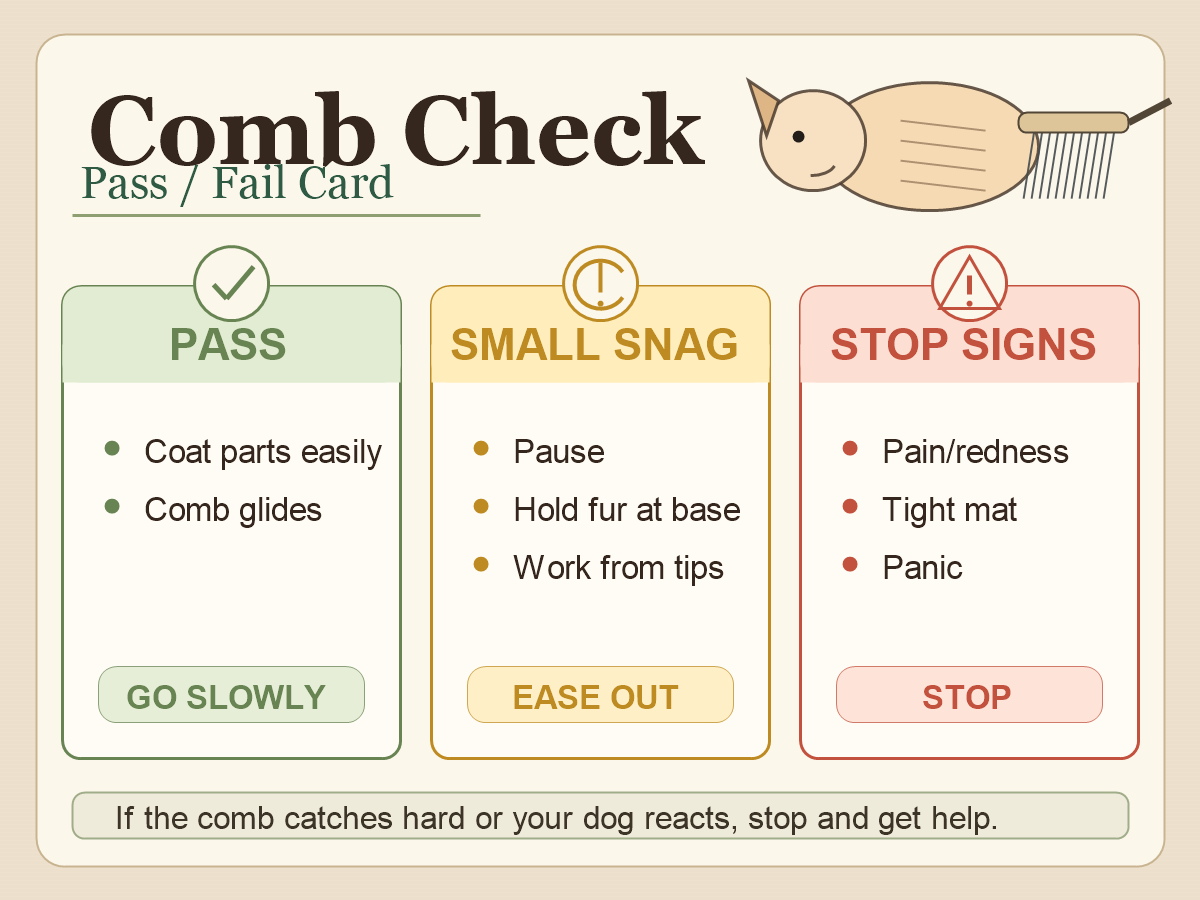
    Comb-check pass fail card showing pass signs, small snag steps, and stop signs for pain, redness, tight mats, or panic.
    Use the comb check as a pass, pause, or stop signal instead of forcing the comb through resistance.

    Zones to Check

    Comb check the areas that rub, bend, collect loose coat, or hide tangles. Work slowly around thin or sensitive skin.

    • Behind the ears.
    • Collar and harness line.
    • Armpits.
    • Chest and belly.
    • Inner legs and feet.
    • Tail base, pants, and feathering.
    • Any spot where the coat looks packed, flat, damp, or clumped.

    If you find repeated catching in these friction zones, use dog matting vs tangles before deciding whether the area is safe for home brushing.

    How to Hold the Comb

    Use a clean metal comb category that suits the coat. Hold it lightly, close enough that you can feel resistance before it becomes a pull. Keep your other hand near the coat section so you can notice skin movement.

    1. Brush a small section first.
    2. Part or lift the coat so you can see the area you are checking.
    3. Start with a light comb pass through the brushed section.
    4. Watch the dog and the skin, not just the comb.
    5. Stop as soon as the comb catches, the skin moves, or the dog reacts.

    Do not saw the comb back and forth, brace the dog to finish, or pull harder because the section is almost done. If the comb cannot pass gently, the section fails the check.

    What to Do If the Comb Catches

    If the comb catches once, stop the comb pass and look at the area. A loose tangle may separate with gentle brushing if the dog stays calm and the skin looks normal. A tight mat, repeated catching, pain, redness, or skin pull needs a different plan.

    Use how to line brush a dog if the coat is safe to brush but you need smaller sections. Use how to prevent dog mats for a routine that reduces future catching.

    Call a groomer when the coat is tight, packed, skin-close, widespread, or beyond what you can brush without pulling. Call a veterinarian when there is pain, red or irritated skin, wounds, parasites, bleeding, swelling, infection signs, sudden coat loss, or a dog who seems medically fragile.

    Comb Check by Coat Type

    Coat typeHow to checkExtra caution
    Smooth coatUsually limited checks in thicker areas or shedding spots.Do not scrape thin skin for loose hair.
    Long silky coatCheck in small sections after brushing ends, ears, legs, belly, and tail.Stop if feathering pulls or twists around the comb.
    Curly or wavy coatUse very small sections and check close to the skin only after brushing opens the coat.Hidden mats may sit close to the skin; do not force the comb.
    Dense double coatCheck packed areas after light section brushing.Stop if undercoat is packed tight or the skin gets irritated.
    Feathered coatCheck behind ears, legs, tail, chest, and pants in short passes.These areas can be sensitive and mat from friction.

    The ASPCA’s at-home grooming tips describe different brush and comb categories by coat type. This guide stays category-level and does not recommend specific products.

    Stop Signs

    End the session if the check is no longer calm, gentle, and clear. A comb check should never turn into a struggle.

    • Pain, yelping, flinching, or repeated turning toward the comb.
    • Redness, raw skin, hot skin, swelling, scabs, wounds, bleeding, or skin irritation.
    • Tight mats, skin-close mats, packed coat, or coat that pulls the skin.
    • Panic, freezing, growling, snapping, biting, or defensive behavior.
    • Fleas, ticks, parasite dirt, sudden hair loss, or unusual skin changes.
    • Any situation where restraint or sedation seems necessary.

    For broader brushing safety mistakes, see dog brushing mistakes.

    FAQ

    What is a comb check on a dog?

    A comb check is a gentle pass through a brushed coat section to confirm that hidden tangles are not left under the surface.

    Should you comb check before bathing?

    Yes, when it is safe. Comb check after brushing and before bathing so hidden tangles or mats are not missed before water is added.

    What does it mean if the comb catches?

    It means that section does not pass. Stop the comb pass, check the skin and coat, and do not pull through resistance.

    Can I comb through a mat?

    No. Do not force a comb through tight, painful, skin-close, or repeated matting. Use a groomer or veterinarian as appropriate.

    Which coat zones should I comb check?

    Focus on behind the ears, collar line, armpits, chest, belly, legs, feet, tail, pants, feathering, and any packed or clumped area.
    Sources

  • How to Line Brush a Dog at Home

    How to Line Brush a Dog at Home

    Line brushing means lifting a dog’s coat and brushing one small section at a time so the brush reaches more than the surface coat. It can help on long, double, curly, wavy, and feathered coats, but it is not a way to remove tight mats. If the brush catches, the skin pulls, or the dog reacts in pain or fear, stop and get help from a groomer or veterinarian.

    Use light pressure, good light, and sections small enough that you can see the skin-side coat without scraping the skin. Do not force a brush or comb through mats, red skin, wounds, parasites, or a dog that is panicking, growling, snapping, or too hard to handle safely.

    What Line Brushing Is

    Line brushing is a section-by-section brushing method. You lift or part a narrow layer of coat, brush that visible section gently, move to the next nearby section, and check whether the coat is opening without tugging.

    The goal is to prevent surface brushing, where the top looks smooth while tangles stay hidden underneath. This matters most on coats that hold hair in layers, such as long coats, double coats, curly or wavy coats, and feathering behind the ears, legs, tail, and chest.

    The ASPCA’s dog grooming guidance notes that brushing helps remove dirt, spread natural oils, and check for fleas and flea dirt. Line brushing applies that same idea in smaller visible sections.

    When Line Brushing Helps

    Line brushing helps when the coat is healthy enough to brush and the problem is reach, not pain or tight matting. It is useful when the brush is only smoothing the surface, when feathering tangles between sessions, or when a thick coat needs smaller sections before a comb check.

    Coat areaLine-brushing fitStop point
    Long coatSmall rows from lower coat upwardStop if the coat pulls skin or forms tight clumps.
    Double coatSmall sections where undercoat packs behind the topcoatStop for packed coat you cannot open with light brushing.
    Curly or wavy coatVery small sections with careful comb checksStop for skin-close mats or curls that will not separate gently.
    FeatheringShort sections behind ears, legs, tail, and chestStop for pain, redness, or mats near thin skin.
    Smooth coatUsually not neededUse a simpler gentle brushing routine instead.

    If you are unsure whether a spot is a loose tangle or a mat, check dog matting vs tangles before brushing through resistance.

    Set Up Before You Start

    Choose a calm time, a steady surface, and enough light to see the coat part clearly. Keep the session short if your dog is young, tired, worried, sore, or new to brushing.

    • Use a brush or comb category that fits the coat, such as a slicker brush, pin brush, or metal comb.
    • Keep one hand close to the section so you can feel skin movement.
    • Brush with light pressure instead of pressing down toward the skin.
    • Clear hair from the brush often.
    • Reward calm pauses and stop before the dog becomes overwhelmed.

    If your dog already dislikes brushing, start with handling and tolerance work first. The guide on how to brush a dog that hates being brushed can help you keep the session safer and shorter.

    Step-by-Step Line Brushing

    Work slowly and keep each section small. If you cannot see what the brush is doing, the section is probably too large.

    1. Run your hands over the coat first. Check for mats, sore skin, wounds, parasites, swelling, heat, or painful spots.
    2. Lift a narrow layer of coat so you can see the section underneath.
    3. Hold the loose coat gently, without pulling the skin tight.
    4. Brush the exposed section with light strokes in the direction the coat grows.
    5. Move to the next small section beside or above it.
    6. Pause often to check skin color, dog comfort, and whether the brush is catching.
    7. When safe, finish the area with a gentle comb check. If the comb catches, do not force it.
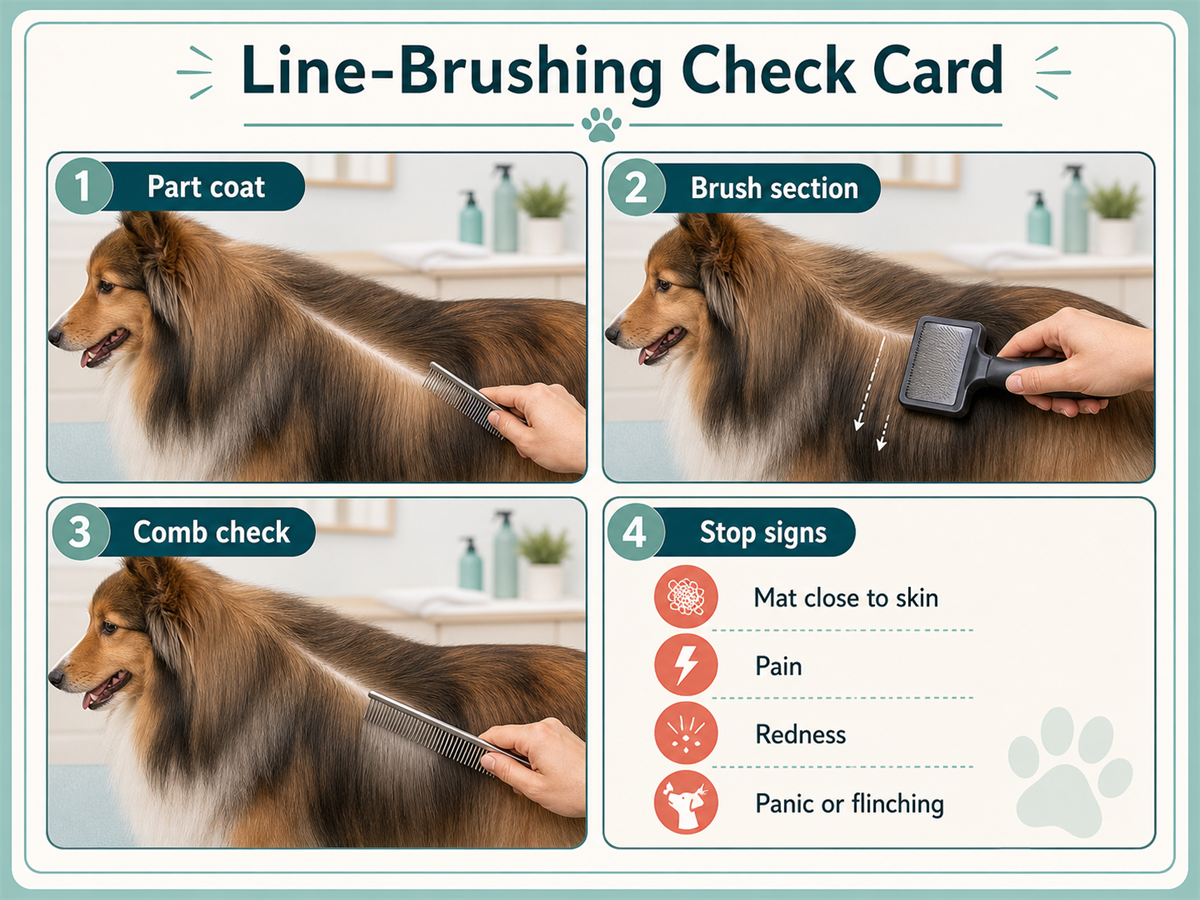
    Line-brushing check card showing part coat, brush section, comb check, and stop signs.
    Use this quick sequence while line brushing: part the coat, brush a small section, comb-check only when safe, and stop for pain, redness, panic, flinching, or mats close to the skin.

    How Small Should Each Section Be?

    Each section should be small enough that you can see the coat you are brushing and feel whether the skin is being pulled. Thicker, longer, curlier, or more packed coats need smaller sections than open, easy coats.

    Use smaller sections around ears, armpits, legs, tail, collar areas, and other friction spots. These areas can mat faster and may have thinner, more sensitive skin.

    For routine spacing and prevention, see how to prevent dog mats. For a broader brushing rhythm, the dog grooming schedule by coat type can help you choose a realistic cadence.

    Follow With a Comb Check

    A comb check tells you whether the brush reached through the section. Use it only when the dog is comfortable and the coat has already opened with gentle brushing.

    The comb should move through without tugging, skin pull, or a pain response. If it catches, stop. The answer is not more force. You may need a smaller section, a calmer session, or a groomer if the coat is tight or close to the skin.

    Stop Signs

    Stop line brushing if the dog or coat shows signs that the job is no longer safe for home brushing. These signs mean the session needs to end, not intensify.

    • Pain, flinching, yelping, or repeated turning toward the brush
    • Red, raw, swollen, hot, scabbed, wounded, or bleeding skin
    • Fleas, ticks, parasite dirt, or sudden skin changes
    • Tight mats, mats close to the skin, packed coat, or coat that pulls the skin
    • Panic, freezing, growling, snapping, biting, or unsafe handling
    • Any situation where sedation or restraint seems necessary

    Use a professional groomer for tight mats, packed coat, sensitive-area matting, or coat work you cannot do gently. Use a veterinarian for wounds, parasites, painful skin, infection signs, sudden coat loss, or any medical concern.

    Common Line-Brushing Mistakes

    • Brushing only the top layer and missing the coat underneath.
    • Taking sections so large that you cannot see the brush contact.
    • Pressing the brush down into the skin.
    • Using line brushing as a mat-removal method.
    • Dragging a comb through resistance after brushing.
    • Continuing after the dog shows pain, fear, or defensive behavior.
    • Bathing a coat that still has tight tangles or mats.

    For more brushing errors to avoid, see dog brushing mistakes. If you are brushing before a bath, review dog grooming before or after bath so mats and tangles are handled before water can tighten them.

    How Line Brushing Fits With Shedding

    Line brushing can help collect loose hair from deeper coat layers, but it should still feel gentle. On shedding coats, work in small sections, clear the brush often, and stop before the skin gets irritated.

    If your main goal is normal shedding control rather than sectioning a long or curly coat, start with how to remove loose dog hair.

    FAQ

    What is line brushing a dog?

    Line brushing is brushing a dog’s coat in small lifted sections so you can reach through the coat instead of smoothing only the surface.

    Which dogs need line brushing?

    Long, double, curly, wavy, and feathered coats may benefit from line brushing. Smooth coats usually need a simpler brushing routine.

    Should line brushing hurt?

    No. Stop for pain, redness, skin pull, tight mats, panic, growling, snapping, or any sign that the dog cannot be handled safely.

    Can line brushing remove mats?

    No. Line brushing is not a severe mat-removal method. Do not force brushes or combs through mats. Use a groomer or veterinarian for tight, painful, skin-close, or widespread mats.

    Do you comb after line brushing?

    Yes, when it is safe. A comb check can confirm whether the section is open. If the comb catches or pulls skin, stop instead of forcing it.

    Sources

  • How to Prevent Dog Mats at Home

    How to Prevent Dog Mats at Home

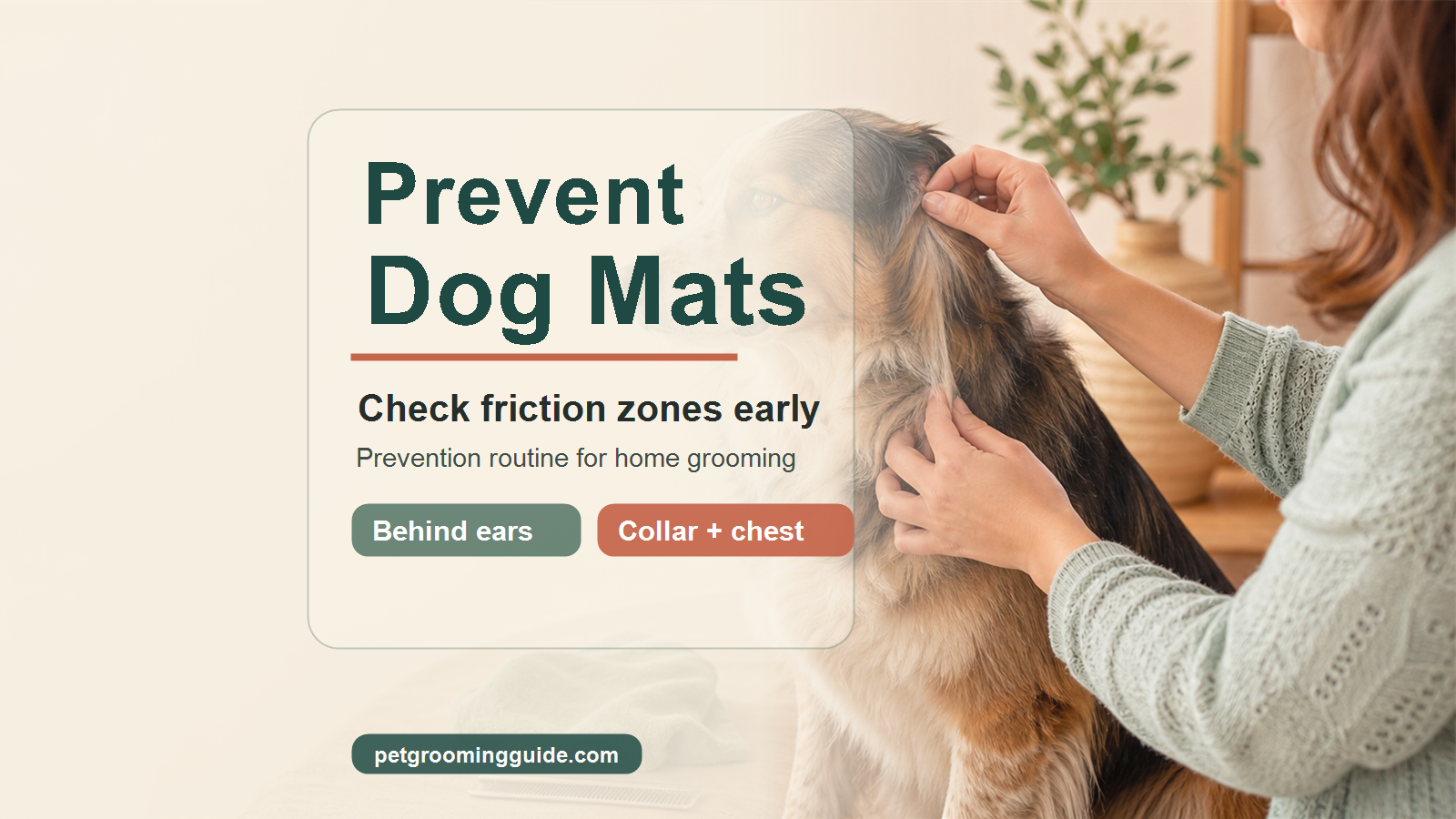
    Prevent dog mats by brushing and comb-checking high-friction areas before tangles tighten, keeping the coat dry and clean, and stopping early when hair pulls skin or the dog shows pain. This page is prevention only. It does not teach dematting, cutting, shaving, or brushing through painful mats.

    Any frequency here is a conservative starting point. Long, curly, wavy, feathered, or double coats usually need more attention than smooth coats, and the routine changes with coat, activity, moisture, and mat history.

    What Causes Dog Mats?

    Mats form when loose hair, friction, moisture, and skipped comb checks let the coat compact. They often start where hair rubs, bends, or traps dampness.

    ASPCA matting guidance notes that mats are uncomfortable and prevention depends on a dog’s coat and grooming needs. ASPCA general dog-care guidance also supports frequent brushing and checking the coat before bathing.

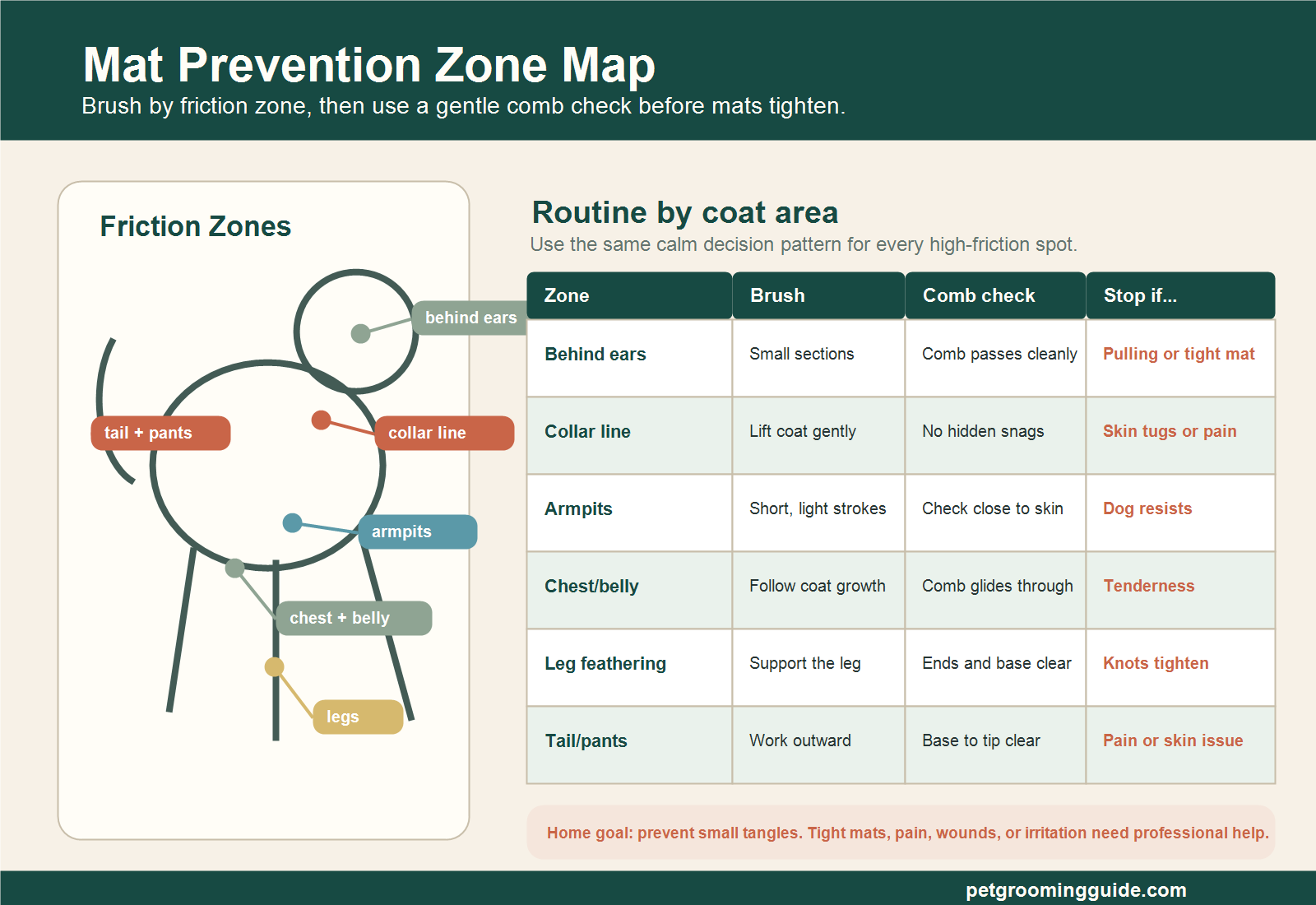
    Mat prevention zone map showing behind ears, collar line, armpits, chest and belly, leg feathering, and tail and pants with brush, comb check, and stop-point guidance.
    Use this as a prevention map only. Stop for pain, skin pulling, wounds, irritation, or tight mats and use a qualified groomer or veterinarian.
    ZoneWhy it matsConservative check rhythm
    Behind earsFriction and fine coatCheck most often
    Collar or harness lineCompression and rubbingCheck after gear-heavy days
    Armpits and chestMovement and moistureCheck often on long or curly coats
    Belly and legsDirt, dampness, frictionCheck after wet or outdoor days
    Tail, pants, featheringLong coat and sheddingCheck more during shedding

    Do not treat this as a universal schedule. A dog with a coat that mats easily may need checks more often.

    High-Friction Zones to Check First

    Start where mats usually form: behind the ears, under collars, armpits, chest, belly, inner legs, tail base, pants, and feathering. Use gentle sectioning, and stop if the coat pulls skin.

    Brush Before Bath: Why Water Can Make Tangles Worse

    Brush and comb-check before bathing when the coat is safe to work. ASPCA dog grooming tips and ASPCA general dog-care guidance support brushing or combing out mats before bathing.

    Do not bathe over mats, painful tangles, wounds, parasites, irritation, or skin pulling.

    Comb-Check Routine After Brushing

    A comb check verifies the coat after brushing. A pass means the comb glides through a small section without catching, tugging, pulling skin, or causing the dog discomfort. If the comb catches, stop that section and return to gentle brushing only if it is safe.

    If catching, pain, tight mats, skin redness, or resistance appears, route to a qualified groomer or veterinarian.

    Prevention by Coat Type

    Smooth coats may need only light brushing and skin checks. Long, curly, wavy, feathered, and double coats often need more frequent friction-zone checks. Exact timing depends on the individual coat, activity, moisture, and mat history.

    Use category-level tools only: slicker brush, pin brush, comb, and an undercoat rake when appropriate. This page does not recommend products.

    When Prevention Is Too Late and a Pro Is Needed

    Use a professional groomer for tight mats, severe mats, skin pulling, painful tangles, or coat work beyond your skill. Severe mat removal is not a home task. Use a veterinarian for wounds, irritation, parasites, bleeding, pain, medically fragile dogs, or skin problems.

    FAQ

    How do you prevent mats on a dog?

    Brush and comb-check friction zones before tangles tighten, keep the coat dry, brush before bathing, and stop early for pain or skin pulling.

    Where do dogs mat most often?

    Common zones include behind the ears, the collar line, armpits, chest, belly, legs, tail, pants, and feathering.

    Should you bathe a matted dog?

    No. Do not bathe over mats. Brush only if it is safe, and use a professional for tight or painful mats.

    Can small tangles become mats?

    Yes. Loose tangles can compact into mats if friction, moisture, and loose hair build up.

    When should a groomer handle dog mats?

    Use a groomer for tight, severe, skin-close, painful, or recurring mats, or when the dog resists handling.

    Bottom Line

    The best way to prevent dog mats is to check friction zones early, brush before bathing when the coat is safe, and comb-check gently after brushing. Once hair is tight, painful, skin-close, or pulling, stop home grooming and use a qualified groomer or veterinarian.

  • Dog Matting vs Tangles: How to Tell the Difference

    Dog Matting vs Tangles: How to Tell the Difference

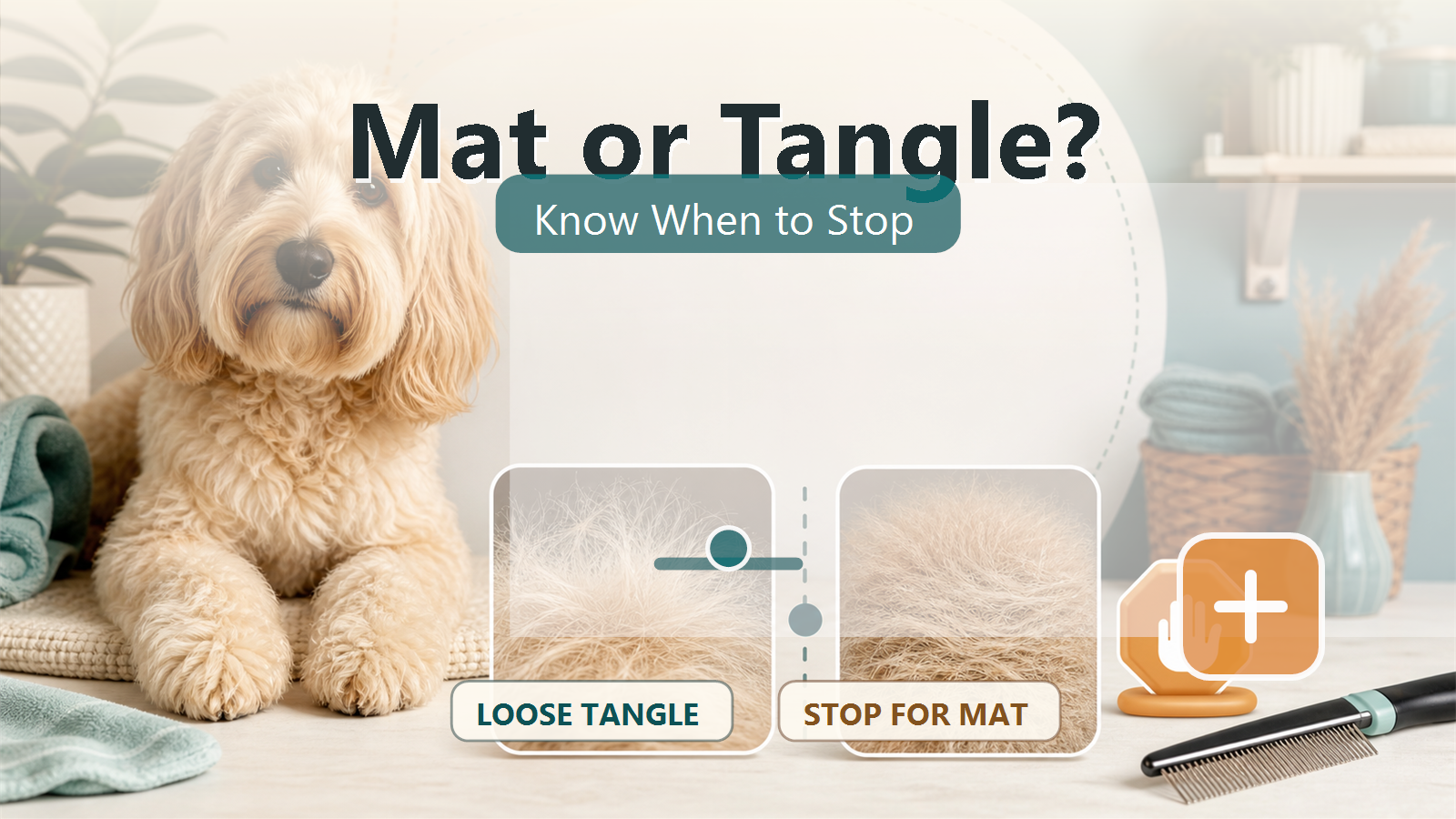
    A loose tangle may separate with calm, gentle checks when there is no pain, skin pulling, tight mat, irritation, wound, parasite, bleeding, resistance, or unsafe handling. A mat feels compacted, pulls skin, resists gentle movement, or causes discomfort; it should stop home grooming and route to a qualified groomer or veterinarian.

    This page identifies and routes coat problems. It does not teach dematting, cutting, shaving, force-combing, or bathing over mats.

    Tangle vs Mat: Quick Definitions

    Coat issueWhat it usually meansHome action
    Loose tangleHair is crossed or lightly caught but still movableGentle check only if the dog is calm
    Mild tangleSmall snag with no skin pull or discomfortPause, brush gently if safe, then comb-check
    MatCompacted hair that resists gentle movementStop and route to a groomer
    Painful or skin issuePulling, redness, sores, bleeding, parasitesStop and route to a vet or pro
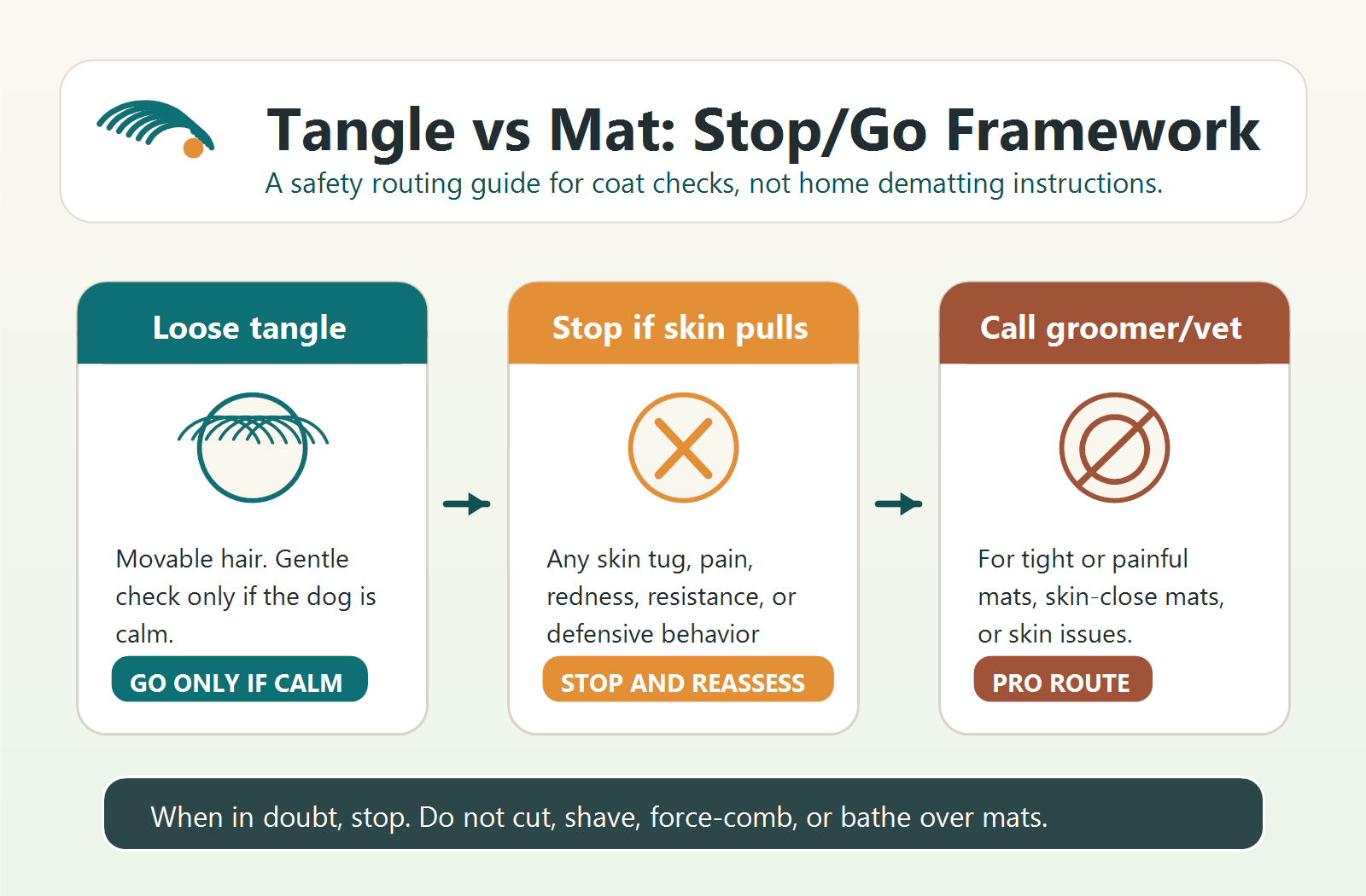
    Tangle vs mat stop-go framework showing loose tangle, stop if skin pulls, and call groomer or veterinarian for tight or painful mats.
    Use this as a stop/go guide only. Do not cut, shave, force-comb, or bathe over tight mats at home.

    Go slowly only when all of these are true: the dog is calm, the hair moves gently, there is no skin pulling, there is no pain, there is no redness or wound, and the brush or comb is not being forced.

    Stop when any resistance, skin pull, pain, tight mat, redness, parasite, bleeding, or defensive behavior appears.

    What a Loose Tangle Can Look and Feel Like

    A loose tangle may look like a small crossed section of hair that shifts when you lift it lightly. It should not feel hard, packed, skin-close, or painful.

    If a loose tangle does not separate with gentle brushing and a calm dog, stop the section and reassess. Do not increase pressure.

    What a Mat Can Look and Feel Like

    A mat can feel firm, compacted, or close to the skin. It may pull skin when moved and can hide irritation or sores.

    VCA grooming and coat-care guidance routes severe or extensive tangles to a groomer or veterinarian. ASPCA matting guidance notes mats are uncomfortable and progressed mats may require professional clipping. This page does not teach clipping or removal.

    Why Bathing Matted Hair Can Make Things Worse

    Water can tighten tangles and make coat problems harder to manage. Brush before bathing only when the coat is safe to brush. ASPCA dog grooming tips support brushing before bathing to remove dead hair and mats.

    Do not bathe over mats, skin irritation, wounds, parasites, or painful areas.

    When to Call a Groomer or Vet

    Call a groomer for compacted mats, tight tangles, skin-close mats, recurring mats, or coat work beyond your skill.

    Call a veterinarian for sores, skin irritation, wounds, bleeding, parasites, pain, infection signs, defensive behavior tied to pain, sedation needs, or medically fragile dogs.

    How to Prevent the Next Mat

    After the current problem is safely routed, prevention means friction-zone checks, line brushing when appropriate, comb checks, drying the coat well, and brushing before baths.

    FAQ

    What is the difference between a mat and a tangle on a dog?

    A tangle is usually loose and movable. A mat is compacted hair that resists gentle movement and may pull skin.

    Can I brush out a dog tangle at home?

    Only if it is loose, the dog is calm, and there is no pain, skin pull, irritation, wound, parasite, bleeding, or resistance.

    Should I cut out a dog mat?

    No. This page does not recommend cutting mats at home. Use a qualified groomer or veterinarian.

    Can I bathe a dog with mats?

    No. Bathing over mats can make tangles worse and hide skin problems.

    When does matting need a groomer or vet?

    Use a groomer for tight or severe mats. Use a vet for skin irritation, sores, bleeding, parasites, pain, infection signs, or medically fragile dogs.

    Bottom Line

    A loose tangle is movable and may be checked gently with a calm dog. A mat is compacted, resistant, painful, skin-close, or risky, and it should stop home grooming. When in doubt, choose the safer route and call a qualified groomer or veterinarian.