To groom a dog at home safely, start with a calm setup and a quick body check, brush and comb before bathing, decide whether a bath is needed, rinse and dry thoroughly, check paws and nails carefully, keep face and ear work surface-level, and stop as soon as the dog, coat, skin, or tool setup becomes unsafe.
You do not have to finish every grooming task in one session. For many dogs, the safest home groom is short, calm, and intentionally unfinished.
At-Home Dog Grooming Order
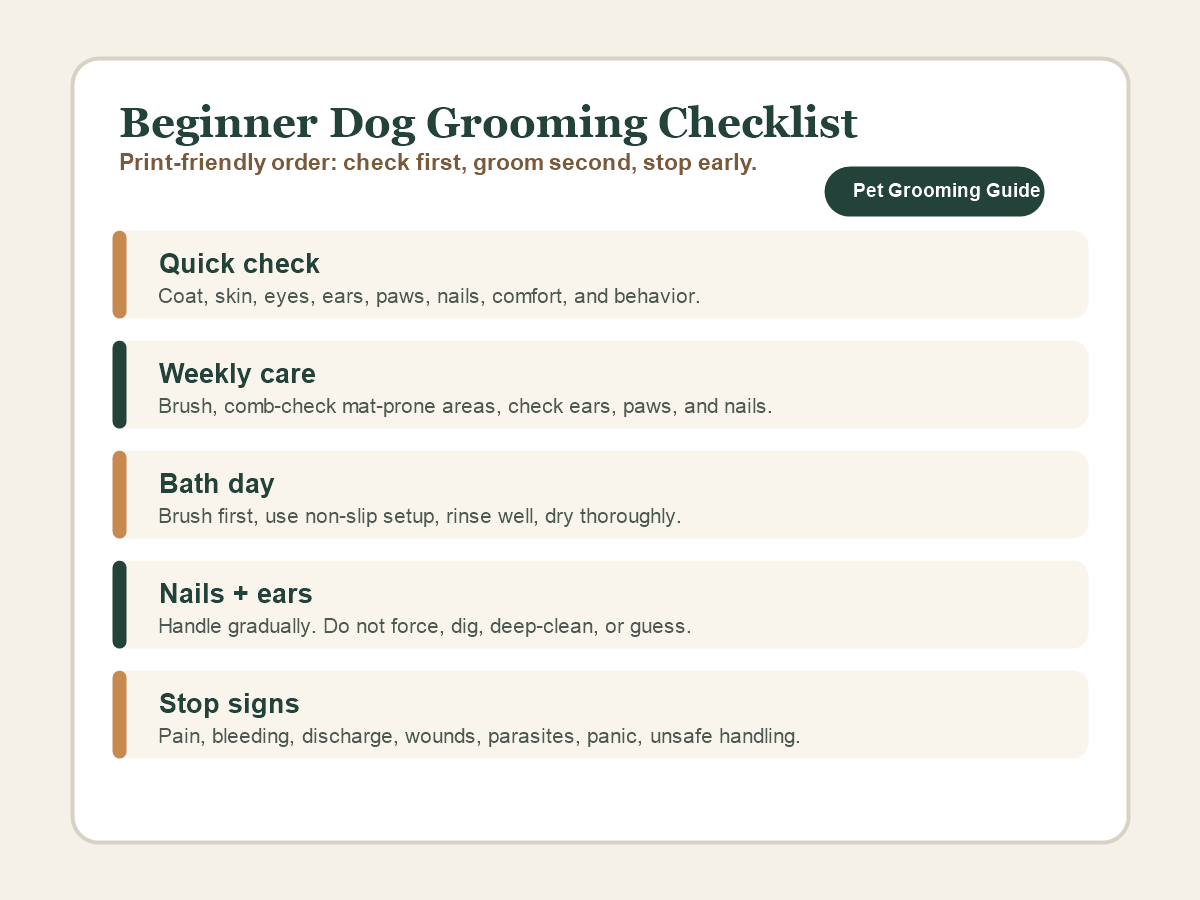
Use this order as a safety flow, not a race. Skip any step that would make the session too long, stressful, or risky.
| Step | What to do | Stop or skip if |
|---|---|---|
| 1 | Set up a quiet, well-lit room with non-slip footing | The dog is already panicked or the floor is slippery |
| 2 | Check coat, skin, paws, eyes, and ears before tools touch the dog | You see pain, swelling, bleeding, discharge, severe mats, or unsafe handling |
| 3 | Brush and comb gently before any bath | Mats are tight, painful, close to skin, or in a sensitive area |
| 4 | Bathe only if needed, using a dog-appropriate shampoo category | A bath would make the session too long or the dog is not safe to bathe today |
| 5 | Rinse well and dry fully on a non-slip surface | The dog overheats, panics, struggles to breathe, or cannot be handled calmly |
| 6 | Check paws and nails within your skill level | There is limping, bleeding, swelling, paw guarding, or nail-trim uncertainty |
| 7 | Wipe face and ear areas only where appropriate | There is eye squinting, discharge, ear pain, odor with irritation, or facial pain |
Original Safe-Order Framework
Pet Grooming Guide original framework: build the session around stopping early, not getting everything done.
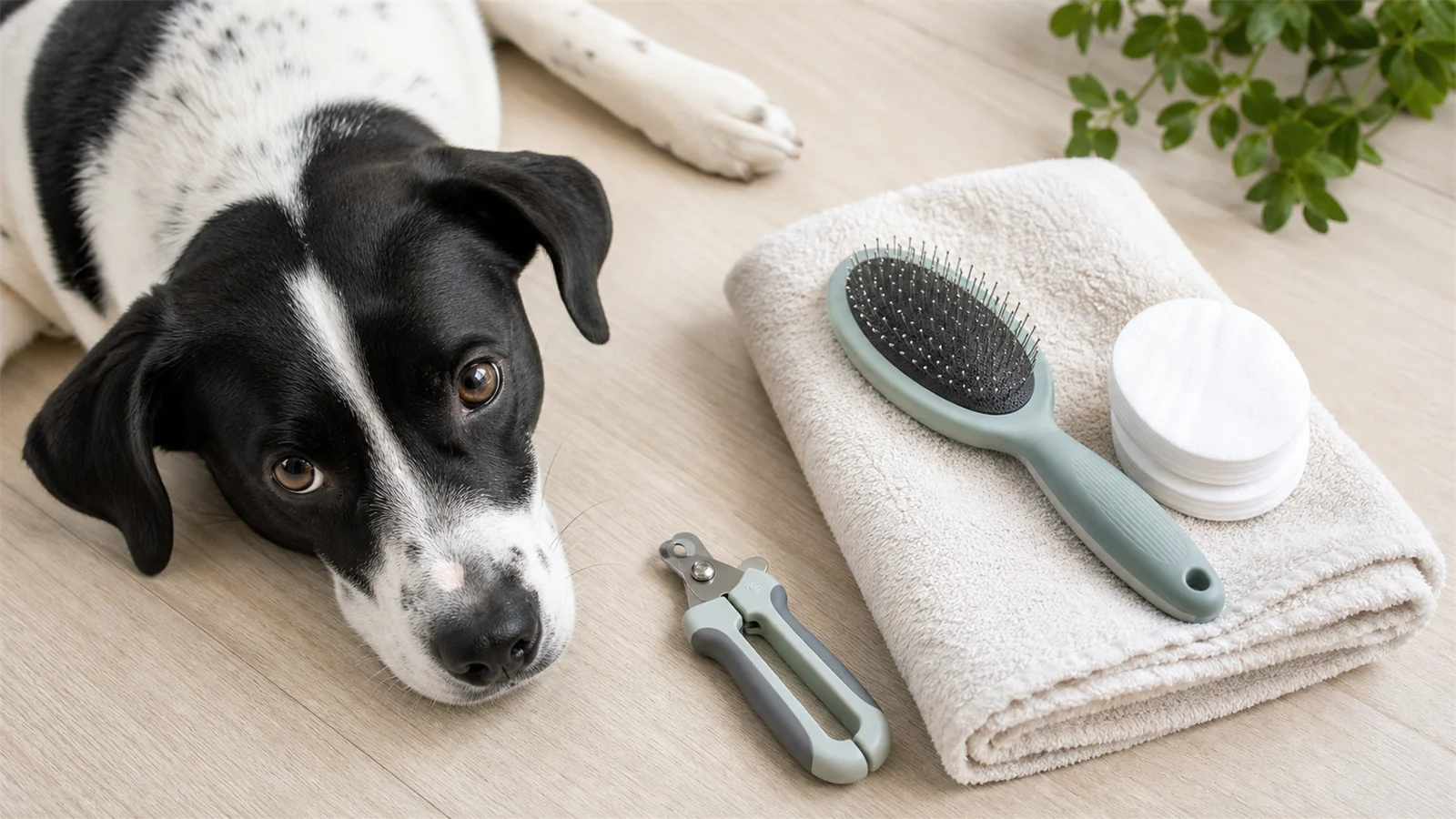
- Set the room: quiet space, bright light, towels, non-slip footing, and tools placed before the dog arrives.
- Check first: look for mats, soreness, skin changes, paw problems, ear/eye concerns, and stress level.
- Brush before water: gently loosen loose coat and find tangles before bathing.
- Choose the smallest useful session: brush-only, bath-only, paw check, or full routine only when calm and safe.
- Route up quickly: use a groomer for severe coat problems or handling limits, and use a veterinarian for pain, injury, discharge, limping, or medical concern.
Set Up the Room First
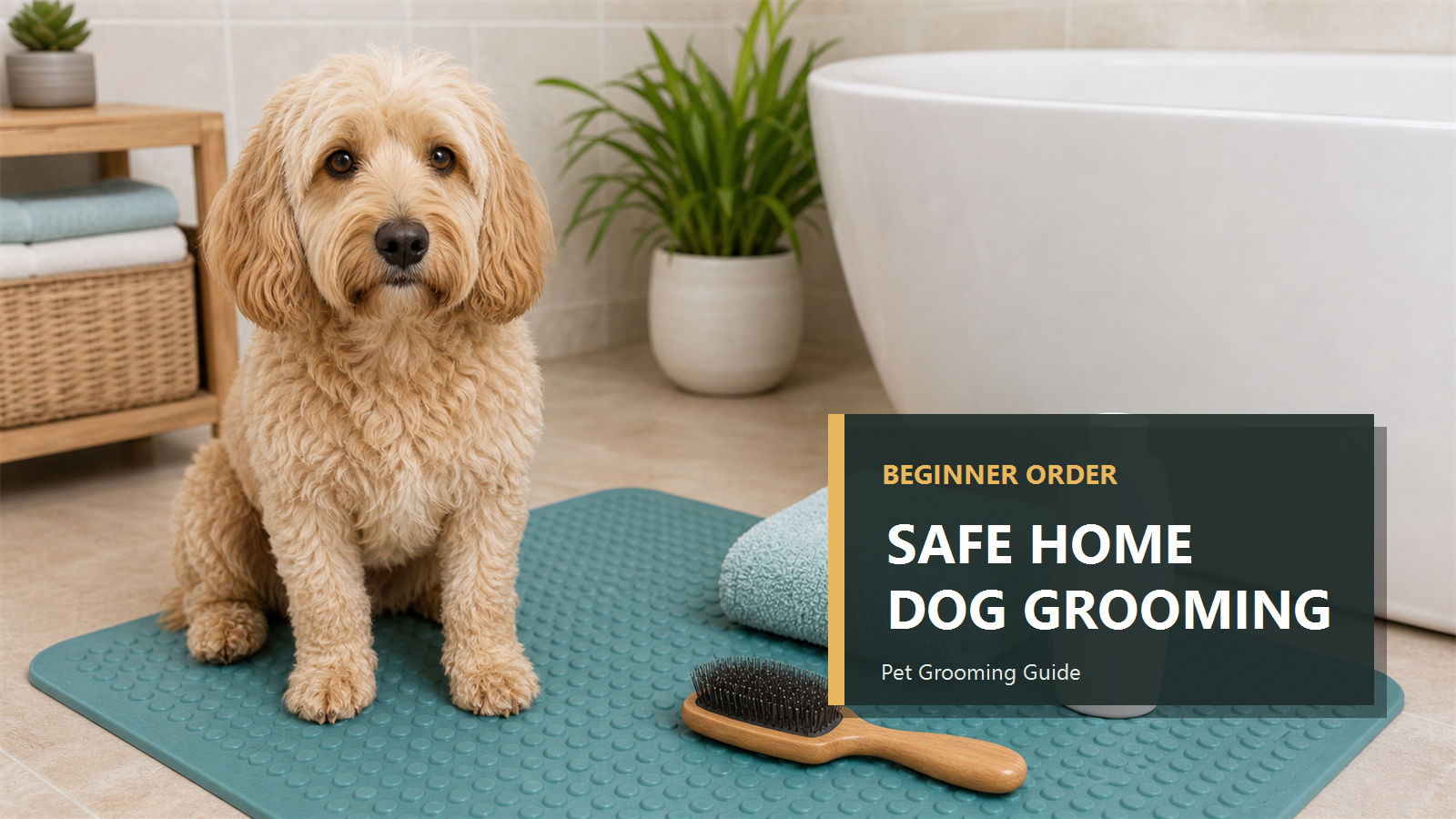
Choose a quiet area with good light, a stable surface, towels, and clean water if bathing. Keep electric tools away from water and damp surfaces. Read product labels and tool manuals before the dog is on the grooming surface.
Skip the session if the room is too hot, the surface is slippery, the dog is already panicked, or you cannot keep the setup controlled without force.
Do a Quick Body and Coat Check
Before brushing or bathing, look over the coat and skin. This is a safety check, not a diagnosis.
Stop and call a veterinarian or professional groomer if you see severe mats, painful mats, wounds, sores, bleeding, redness, swelling, discharge, odor with irritation, eye squinting, ear pain, limping, obvious pain, parasites, sudden skin or coat changes, panic, aggression risk, or unsafe handling.
Brush and Comb Before Bathing
Brush and comb gently before a bath to remove loose coat and find tangles. Bathing over tangles can make coat problems harder to manage, especially on thick, curly, or double-coated dogs.
Do not force a brush through mats. Do not cut mats out at home if they are tight, painful, close to the skin, or in a sensitive area. That belongs with a qualified groomer or veterinarian, depending on the dog and skin condition.
Decide Whether to Bathe Today
A bath is not always required. If the dog is clean enough and the main need is brushing, stop after brushing and comfort checks. If a bath is needed, use a dog-appropriate shampoo category and follow the label.
Avoid human shampoos, medicated products chosen without veterinary direction, pesticide shortcuts, or chemical mixtures. Rinse well and keep water and shampoo away from the eyes and ear canal. For bath-specific mistakes, use the dog bathing mistakes guide before repeating the routine.
Dry Fully and Watch Comfort
Drying matters because trapped moisture can irritate skin and make thick coats uncomfortable. Use towels first and keep the dog warm, calm, and secure on a non-slip surface.
If using any electric drying tool, follow the manufacturer instructions, avoid heat stress, and stop for panic, overheating, breathing trouble, collapse, or unsafe handling. This guide does not teach advanced salon drying.
Check Paws and Nails Carefully
After brushing or bathing, check the paws for trapped moisture, debris, nail-edge issues, and signs of discomfort. Nail work should stay within what you can safely do. If you need a dedicated setup check, use the dog nail trimming setup checklist.
Stop and call a veterinarian for limping, pain, swelling, bleeding, cuts, burns, blisters, discharge, excessive licking, chemical exposure concern, or sudden sensitivity. Stop and call a groomer for paw-hair trimming uncertainty or mats between toes.
Keep Ears and Face Surface-Level
For the face and ear area, keep home grooming gentle and surface-level. Wipe only where appropriate and do not insert tools or cotton swabs into the ear canal.
Ear pain, discharge, odor with irritation, head shaking, eye discharge, eye squinting, or facial pain should stop the grooming session and move the decision to a veterinarian.
Skip This Today Decision Box
| If this is true | Safer choice |
|---|---|
| The dog is nervous but not unsafe | Do one short task and end positively |
| The coat has small tangles you can brush gently | Work slowly, then stop before frustration |
| The dog has painful mats or skin changes | Stop and call a groomer or veterinarian |
| Nails are stressful today | Skip nails and use a nail-specific setup guide later |
| Bathing would make the session too long | Brush today, bathe another day |
| Tools look damaged or wet | Do not use them; follow the manufacturer route |
Cleanup After the Session
When the session ends, clean and dry the grooming area, remove hair from tools, store tools away from moisture, and note any issue you should revisit later. If the dog seems sore, itchy, unusually tired, or uncomfortable after grooming, stop home grooming and consider veterinary advice.
FAQ
What order should I groom my dog at home?
Start with setup and a body check, then brush and comb, decide on bathing, rinse and dry, check paws and nails, do gentle face or ear-area wiping if appropriate, and clean up. Stop anytime safety changes.
Do I have to bathe my dog every time I groom?
No. Many home sessions can be brushing, paw checks, or comfort work only. A shorter session is often safer than trying to do everything at once.
Can I remove severe mats at home?
No. Severe, painful, tight, or skin-close mats should be handled by a professional groomer or veterinarian. Do not cut them out at home.
When should I stop grooming immediately?
Stop for wounds, bleeding, swelling, discharge, pain, panic, breathing trouble, collapse, chemical exposure concern, severe mats, damaged tools, wet electric tools, or unsafe handling.
Bottom Line
Safe home grooming is a sequence of small decisions. Set up the room first, check the dog before tools touch the coat, brush before bathing, skip tasks that are too much for today, and route pain, injury, severe mats, discharge, panic, or unsafe handling to a veterinarian or qualified groomer.