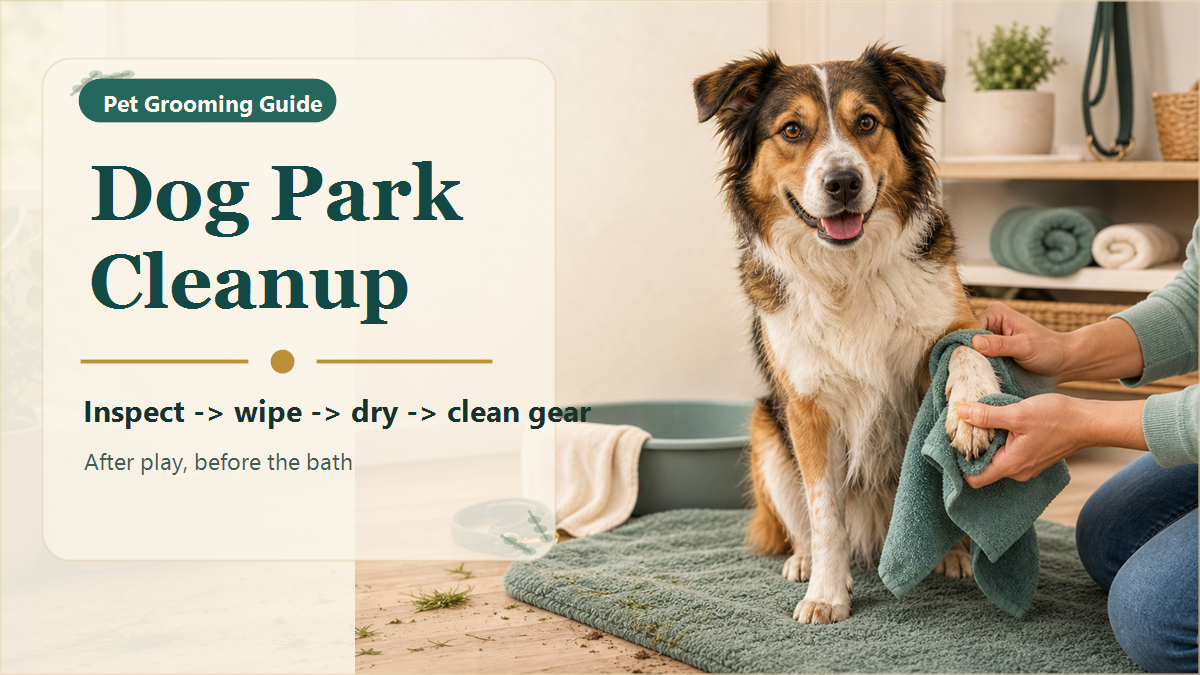
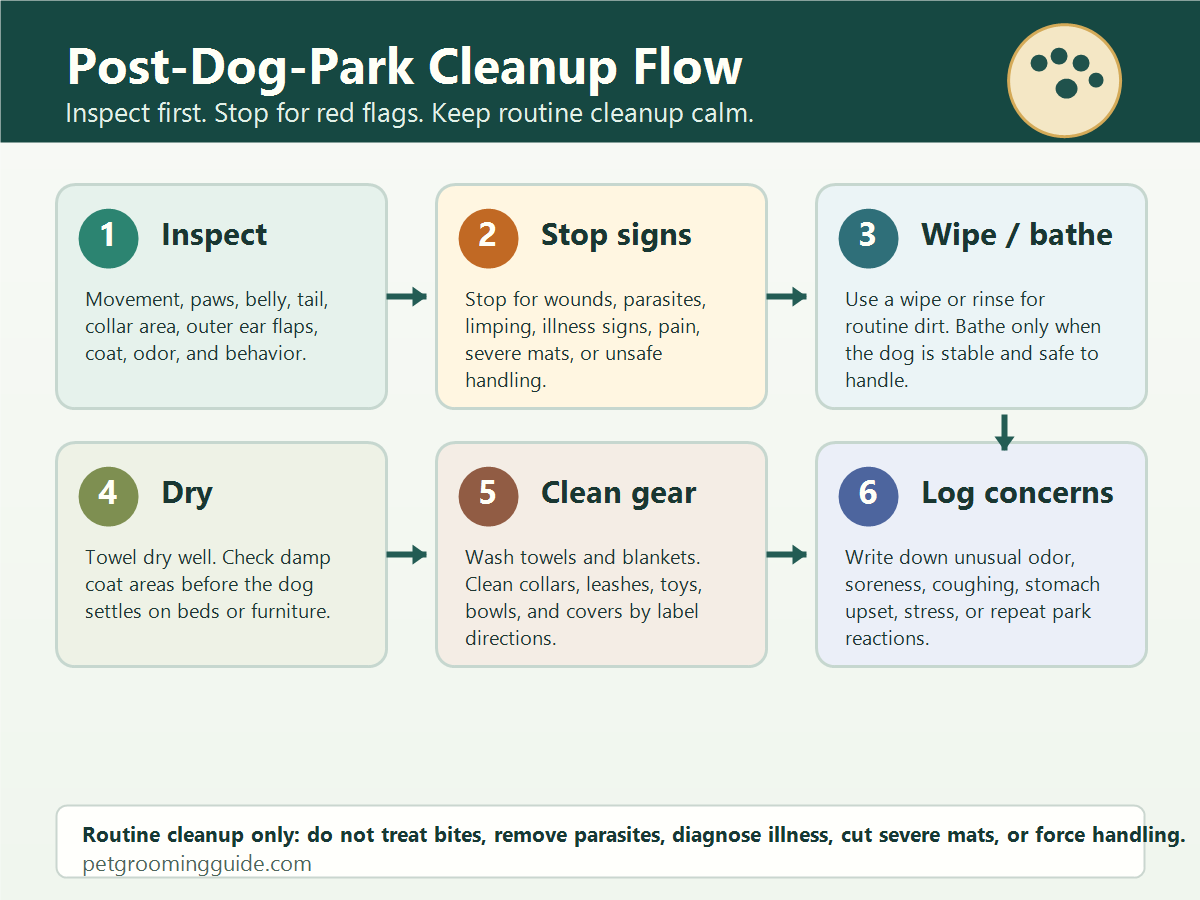
After the dog park, check your dog before you bathe. Look at movement, paws, belly, tail, collar areas, outer ear flaps, coat, odor, and behavior. If everything looks routine, wipe or rinse dirty spots, bathe only if needed, dry well, clean the gear, and write down anything you may need to watch later.
Stop grooming and contact a veterinarian or qualified professional if you find wounds, punctures, bleeding, swelling, parasites or suspected parasites, limping, coughing, vomiting, diarrhea, weakness, pain, severe mats, panic, aggression, or handling that is no longer safe. This guide is for routine cleanup and inspection only. It does not cover bite care, wound care, parasite removal, parasite treatment, disease diagnosis, pain management, severe-mat cutting, or forced handling.
Quick Post-Park Cleanup Plan
| Step | What to do | When to stop |
|---|---|---|
| Inspect first | Check movement, paws, belly, tail, collar area, outer ear flaps, coat, odor, and behavior. | Stop for pain, limping, wounds, parasites, illness signs, panic, or unsafe handling. |
| Clean routine dirt | Wipe paws and belly, brush out loose dry debris, or bathe if dirt and odor are spread through the coat. | Stop if the dog flinches, guards the area, or the coat is tightly matted. |
| Dry thoroughly | Towel dry and check damp areas near the belly, armpits, tail base, collar area, and paw feathering. | Stop if drying causes panic or handling risk. |
| Clean gear | Wash towels and blankets. Clean collars, leashes, toys, bowls, and washable covers by label directions. | Keep pets away from unsafe cleaners and wet surfaces. |
Check Before Water or Brushing
A dog park visit can leave dirt, grass, shared-water odor, loose debris, and excitement behind. A short inspection helps you decide whether normal cleanup is enough or whether grooming should stop.
Start while your dog is standing or resting calmly. Watch the walk from the car or gate to the house. Check whether your dog is bearing weight normally, breathing normally, and willing to be touched in the usual places.
The CDC dog health guidance supports handwashing after handling dogs or their supplies and routine veterinary care. For this page, that source is used as a public-health boundary, not as disease or treatment advice.
Where Debris Hides After the Dog Park
Dog park dirt often collects in the same areas. Check these places before you decide on a wipe, rinse, bath, or full stop:
- Between toes and paw pads.
- Around nails and dewclaws.
- Belly, armpits, and chest.
- Tail base and hind legs.
- Collar, harness, and leash-contact areas.
- Outer ear flaps, especially on long-eared dogs.
- Feathering, furnishings, and long coat edges.
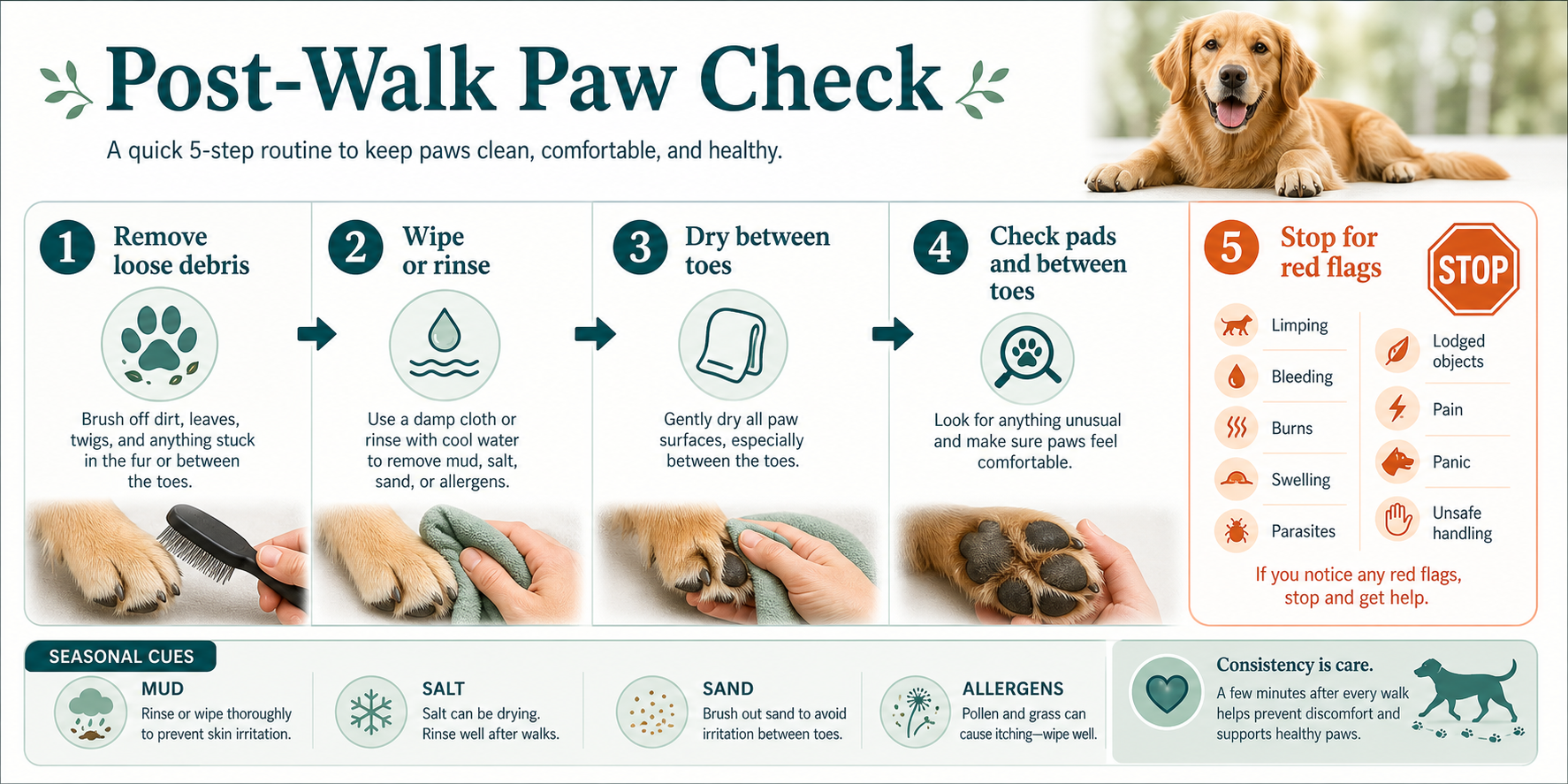
For routine paw dirt, the how to clean dog paws after walk guide gives a more detailed paw-only routine. After a dog park visit, keep the wider body check too, because paws are only one part of the cleanup.
When a Wipe Is Enough
A quick wipe is usually enough when dirt is limited to paws, belly, or the coat surface, the dog smells mostly like outdoors, and the dog is calm. Use a damp towel or cloth, clean the dirty areas, and dry between toes and coat folds where moisture can linger.
Do not turn a wipe into digging, scraping, or repeated rubbing over a sore spot. If the dog pulls away, flinches, growls, snaps, freezes, or repeatedly tries to escape, stop. For more handling boundaries, see dog grooming anxiety signs.
When a Bath Makes Sense
A bath can make sense when mud, shared-water residue, or outdoor odor is spread through the coat and your dog has no stop signs. Keep the bath ordinary: lukewarm water, gentle handling, careful rinsing, and thorough drying.
ASPCA dog grooming tips support routine brushing, bathing, rinsing, and drying. After the dog park, those steps should stay in the routine-grooming lane. Do not use bath time to manage wounds, parasites, pain, severe mats, or illness signs.
Shared Water, Mud, Odor, and Gear
If your dog played in shared water, rolled in mud, or used a high-traffic area, clean the dog and the gear. Wipe or rinse paws and belly, brush dry debris when it moves easily, and wash towels, blankets, and washable covers.
Clean collars, leashes, toys, bowls, crates, and other supplies according to their labels. CDC cleaning guidance for pet supplies supports label-following and keeping pets away from unsafe cleaning products. Routine cleaning lowers mess and odor, but this article does not claim it prevents every infection or parasite risk.
Bite, Parasite, and Illness Stop Signs
Some post-park findings are not grooming tasks. Stop and contact a veterinarian if you see bite marks, punctures, bleeding, swelling, parasites or suspected parasites, limping, stiffness, coughing, vomiting, diarrhea, weakness, eye irritation, ear pain, discharge, or sudden behavior change.
An AVMA article on dog park parasite exposure supports treating dog parks as a possible exposure setting. This page uses that point only to explain why parasite concerns should be routed to veterinary guidance rather than handled as grooming cleanup.
Low-Stress Order of Operations
Use the least stressful cleanup that solves the routine problem. A delayed bath is better than forcing a tired or overstimulated dog through a long session.
- Let the dog settle.
- Inspect movement, coat, paws, and behavior.
- Stop for red flags.
- Wipe paws and belly first.
- Brush loose dry debris only when it moves easily.
- Bathe only if needed and safe.
- Rinse and dry thoroughly.
- Clean gear.
- Log concerns to discuss with a veterinarian or professional if they repeat or worsen.
What to Write Down After Cleanup
After the dog is clean and calm, note anything unusual: limping, soreness, odor, coughing, stomach upset, skin irritation, stress around handling, or a pattern after certain parks or playgroups. A simple note helps you decide whether the next visit needs a shorter play session, a different cleanup setup, or veterinary guidance.
Bottom Line
Dog grooming after dog park visits should stay simple: inspect first, stop for red flags, clean routine dirt, dry well, clean gear, and track concerns. Do not treat wounds, remove parasites, diagnose illness, manage pain, cut severe mats, or force handling as part of grooming.
FAQ
Should I bathe my dog after the dog park?
Only if a wipe or brush-out is not enough and your dog has no wounds, parasites or suspected parasites, limping, illness signs, severe mats, pain, distress, or unsafe-handling concerns.
What should I check after a dog park visit?
Check paws, belly, tail, coat, collar area, outer ear flaps, movement, breathing, behavior, and odor. Stop for wounds, punctures, parasites, limping, coughing, vomiting, diarrhea, pain, or distress.
How do I clean muddy paws after the dog park?
Use a calm paw wipe or rinse for routine mud, then dry between toes. If there is bleeding, swelling, pain, puncture, limping, or embedded material, contact a veterinarian.
What if I find a bite mark or parasite?
Stop grooming and contact a veterinarian. This article does not provide bite care, wound care, parasite removal, parasite treatment, diagnosis, or pain management.
Should I wash dog park gear?
Yes. Wash or clean leashes, collars, bowls, blankets, towels, toys, and washable gear according to labels, and keep pets away from unsafe cleaners.