
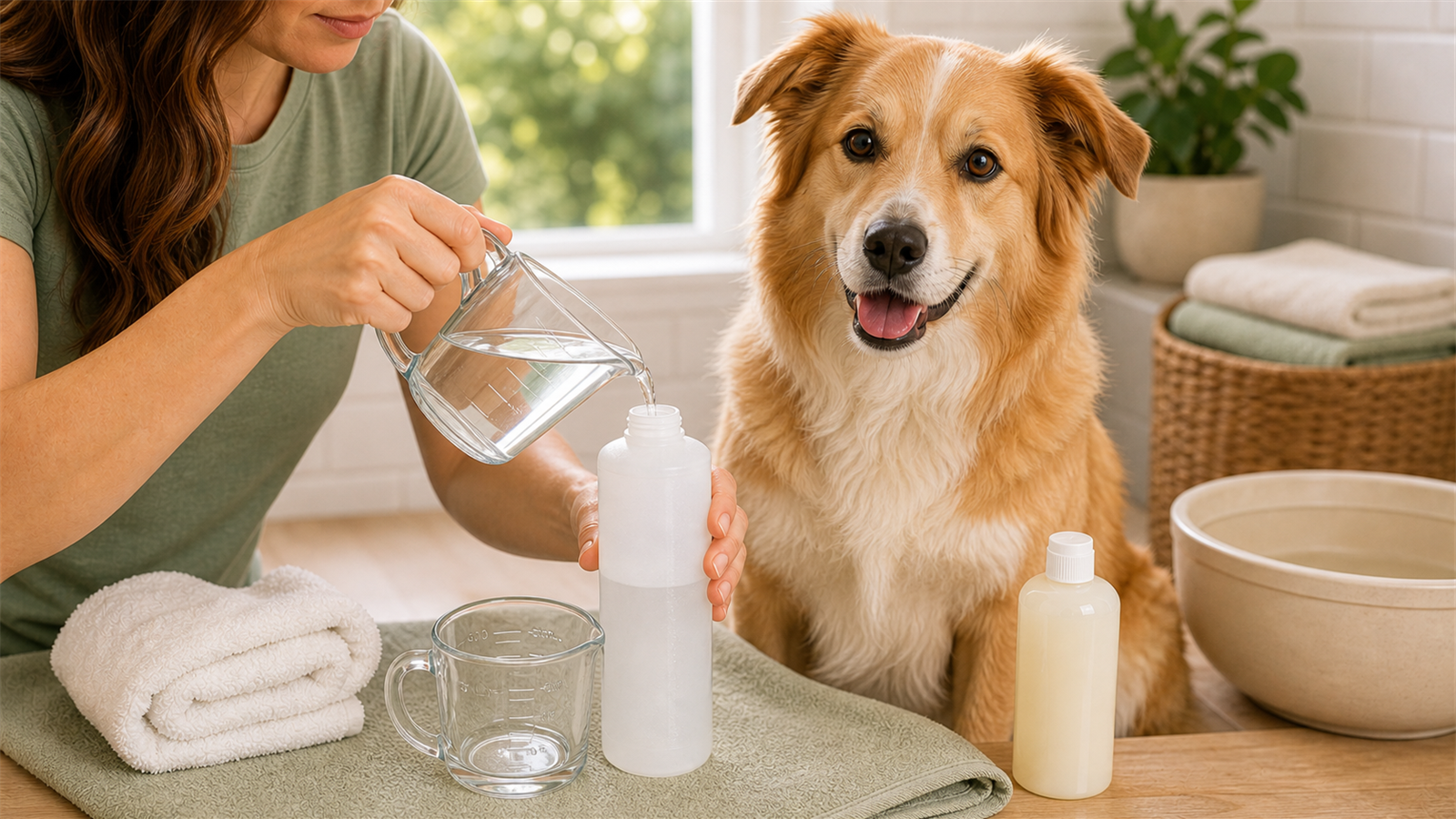
Dilute dog shampoo only when the label or your veterinarian says to dilute it. The ratio is not universal. A label that says to mix 10 parts water with 1 part shampoo is giving a different instruction from a label that says to use the shampoo full strength.
For routine bathing, the safest habit is label first, fresh mix second, full rinse third. Do not guess a ratio, and do not use this page as medicated-shampoo instructions.
What Dog Shampoo Dilution Means
Dilution means mixing shampoo with water before it goes on the coat. Some shampoos are designed for that; some are not. A Merck Veterinary Manual shampoo therapy table notes that some shampoos may be diluted in water, and the wider veterinary point is simple: follow the product instructions.
If the label does not tell you to dilute the shampoo, do not invent a mix. If the label is unclear, check the manufacturer’s directions before the bath.
How to Read Ratios Like 4:1, 10:1, and 16:1
A ratio describes parts, not a single bottle size. In a generic example, 10 parts water to 1 part shampoo means ten equal parts of water and one equal part of shampoo. Those parts could be ounces, cup marks, or fill lines, as long as you use the same unit for both sides.
Read the wording carefully. Some labels spell out water first. Others may phrase the instruction differently. Use the exact order and wording on your own product.
A Simple Dilution Worksheet
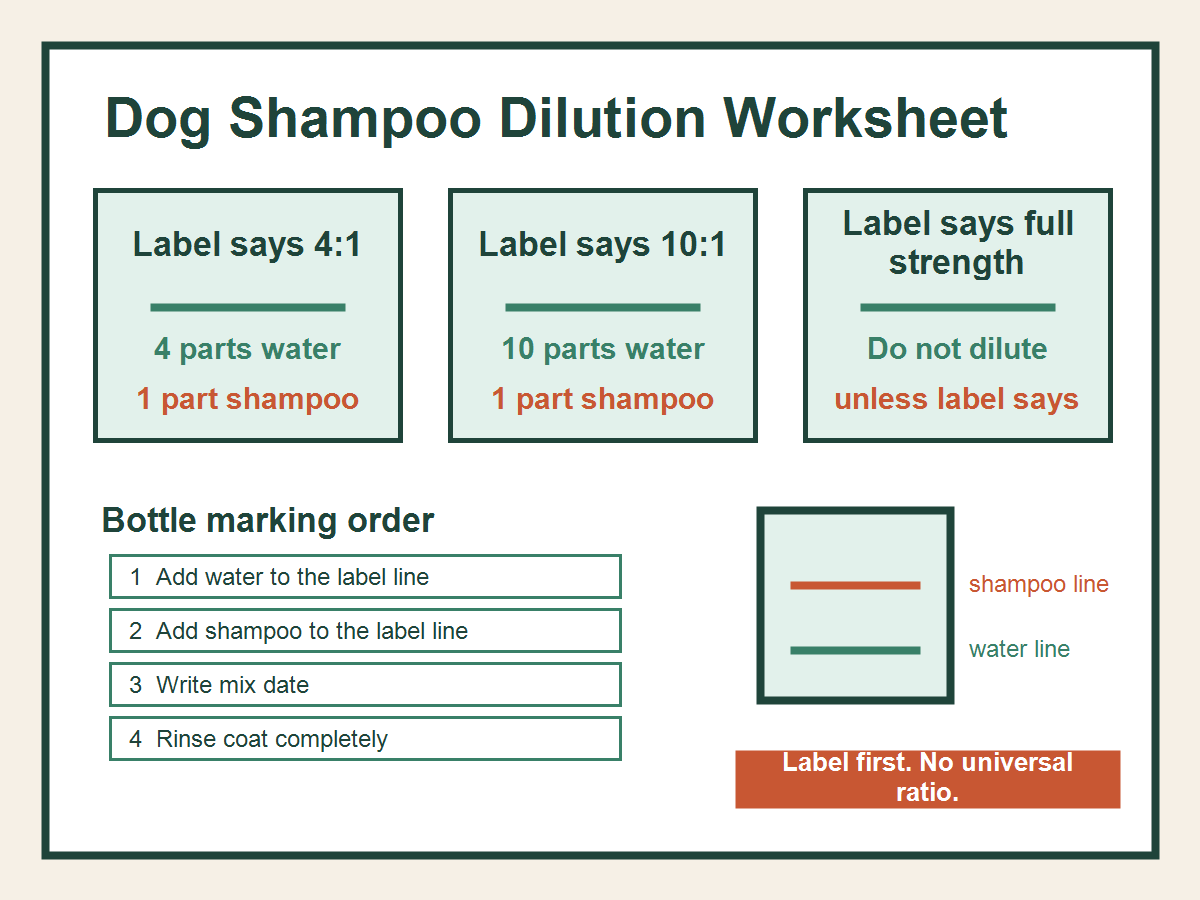
Before mixing, write down five things: the label ratio, the bottle size or fill line, the water amount, the shampoo amount, and the mix date. Add one more reminder on the bottle: rinse completely.
Example only: if the label says 4 parts water to 1 part shampoo, the full mix has 5 total parts. A small batch could use 4 ounces of water and 1 ounce of shampoo. That example does not apply to a product with a different label.
The Bottle-Mark Method
Use a clean mixing bottle. Mark the water line first, then mark the shampoo line based on the actual label. Add water before shampoo if the label allows it, mix gently, and make only what you expect to use for that bath unless the label says storage is allowed.
Do not reuse a bottle that held harsh cleaners or anything unsafe for pets. Do not leave an unlabeled mix where someone might mistake it for plain water or another product.
Routine Shampoo vs Medicated Shampoo
Medicated or prescribed shampoos are different. VCA medicated-shampoo guidance emphasizes veterinarian-prescribed directions, contact time, and rinsing all shampoo away. This page does not give medicated-shampoo dosing or treatment instructions.
If a veterinarian prescribed the shampoo, follow the veterinarian and label directions instead of a general bath routine.
Common Dilution Mistakes
The common mistakes are guessing, copying a ratio from another bottle, assuming every shampoo should be diluted, storing a mix without label support, and using too much shampoo because more feels cleaner.
More shampoo can be harder to rinse. The MSD Veterinary Manual notes that shampoo residue can irritate skin, which is why dilution and rinsing belong together.
Skin and Rinse Stop Signs
Stop the bath and get veterinary guidance for open sores, skin disease, sudden irritation, allergic reaction signs, swelling, distress, or a medically fragile dog. Do not use shampoo dilution as a way to manage a skin problem at home.
FAQ
What does 10:1 dog shampoo dilution mean?
In a generic example, it means 10 parts water to 1 part shampoo. Always check your own product label because wording and order matter.
Should all dog shampoo be diluted?
No. Dilute only when the label or veterinarian directions say to dilute.
Can I dilute medicated dog shampoo?
Only under the product label and veterinarian directions. This page does not give medicated-shampoo instructions.
How long does diluted dog shampoo last?
Follow the label. If the label does not say a diluted mix can be stored, mix fresh for the bath.
What happens if I use too much shampoo?
Too much shampoo can be harder to rinse and may leave residue. Persistent itching, redness, or distress needs veterinary guidance.
Bottom Line
A good dilution routine is not complicated: read the label, measure by parts, mix only what the directions allow, and rinse until the coat no longer feels slick or sudsy. If the shampoo is medicated or the skin looks abnormal, use veterinary directions instead.