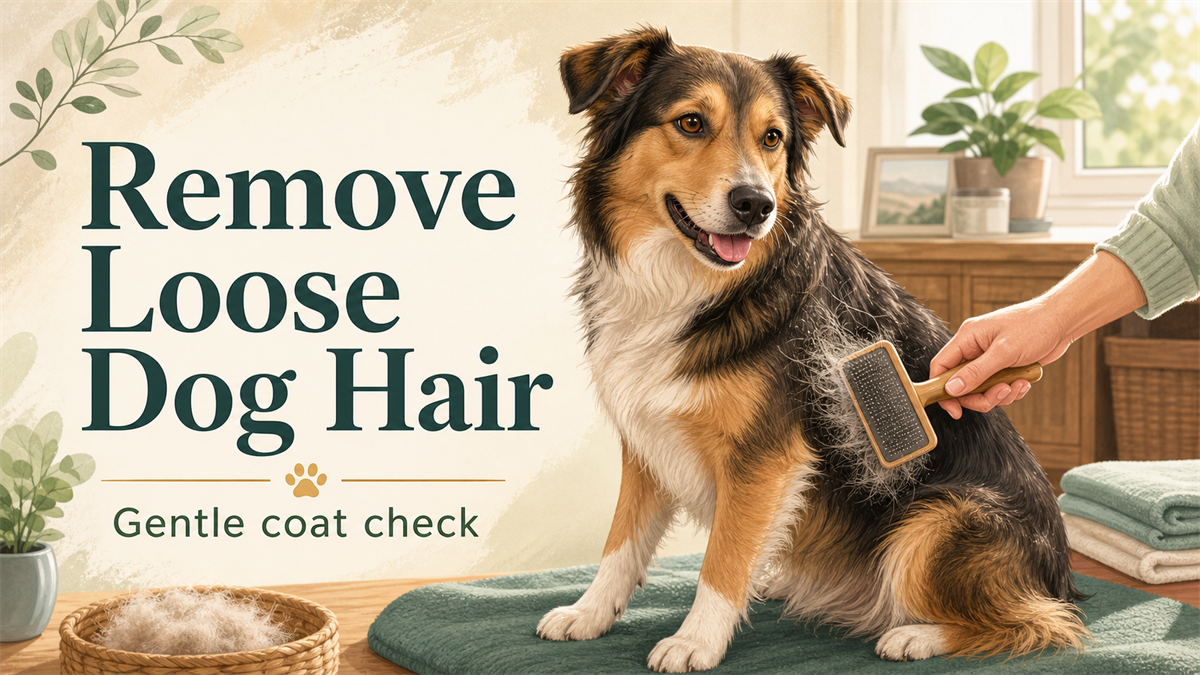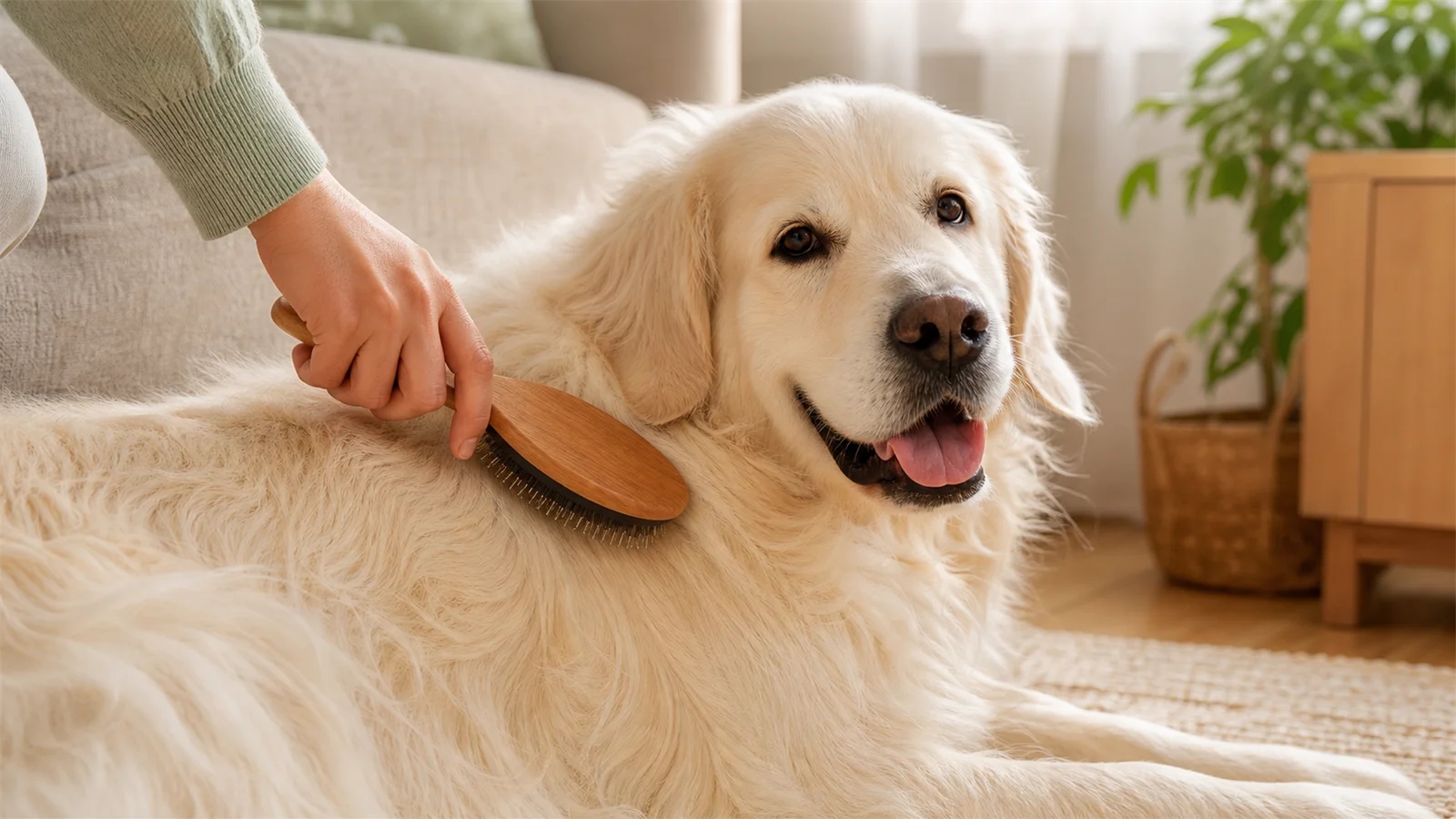
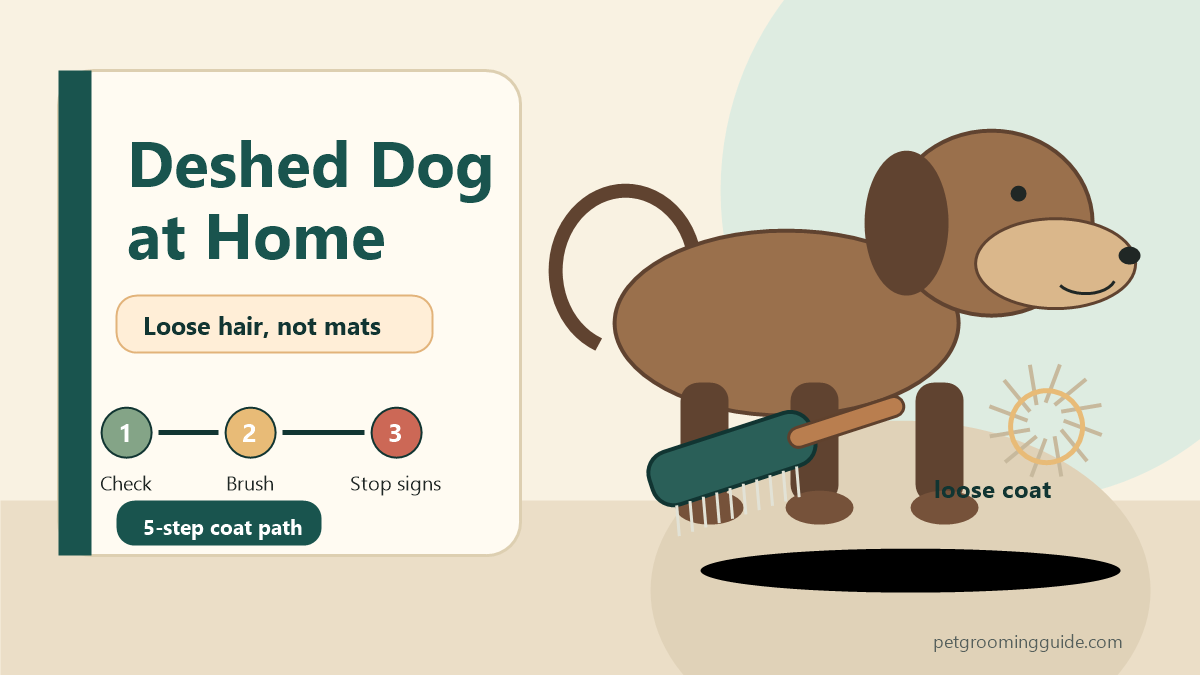
Deshedding a dog at home means removing loose dead hair safely. It is not mat removal, and it should not involve scraping skin, digging with a tool, or trying to pull every last hair. Start with a skin and coat check, choose the gentlest path for the coat, use light pressure, and stop at the first sign of redness, soreness, pain, or stress.
If your dog has tight mats, irritated skin, hot spots, bald patches, parasites, sudden heavy hair loss, or pain, skip deshedding and use a veterinarian or qualified groomer. For a broader loose-hair routine, see how to remove loose dog hair.
Check the Coat Before You Start
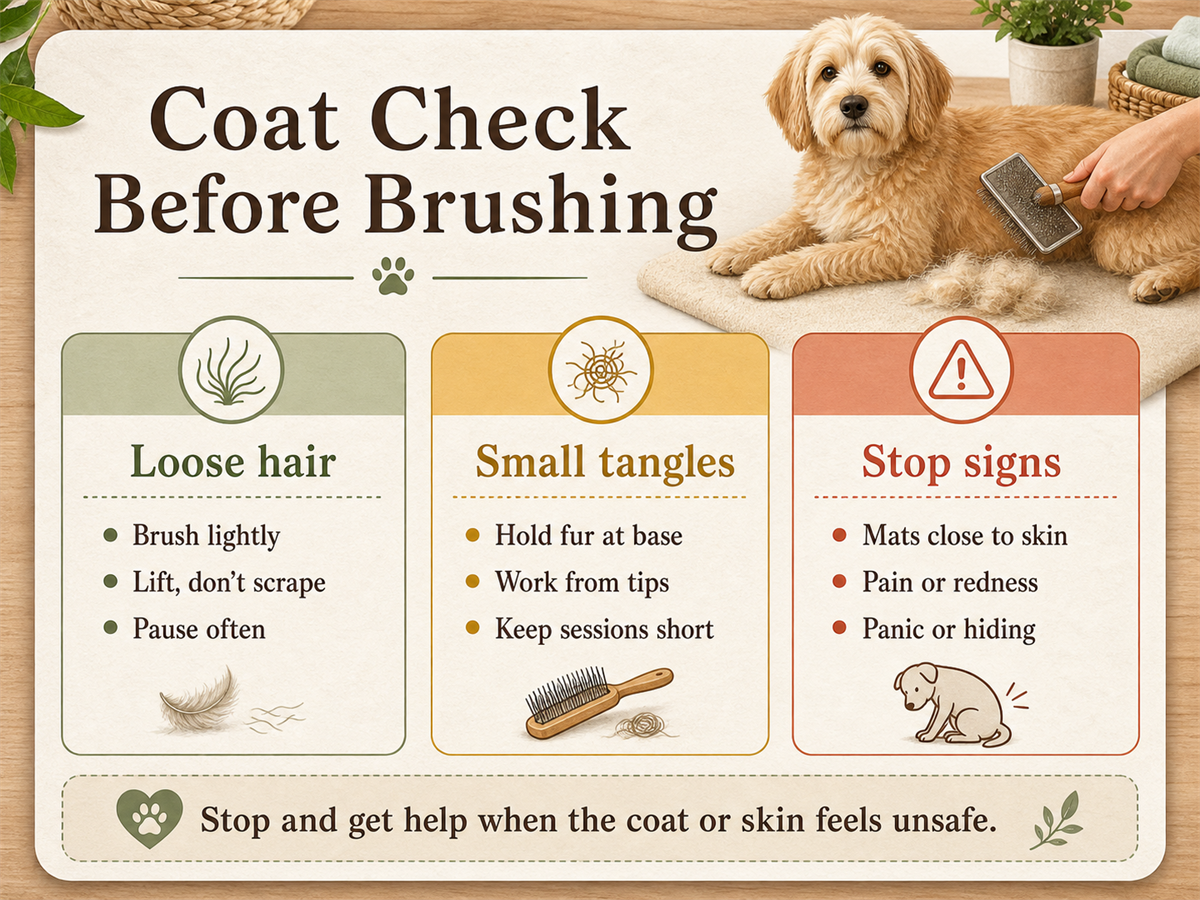
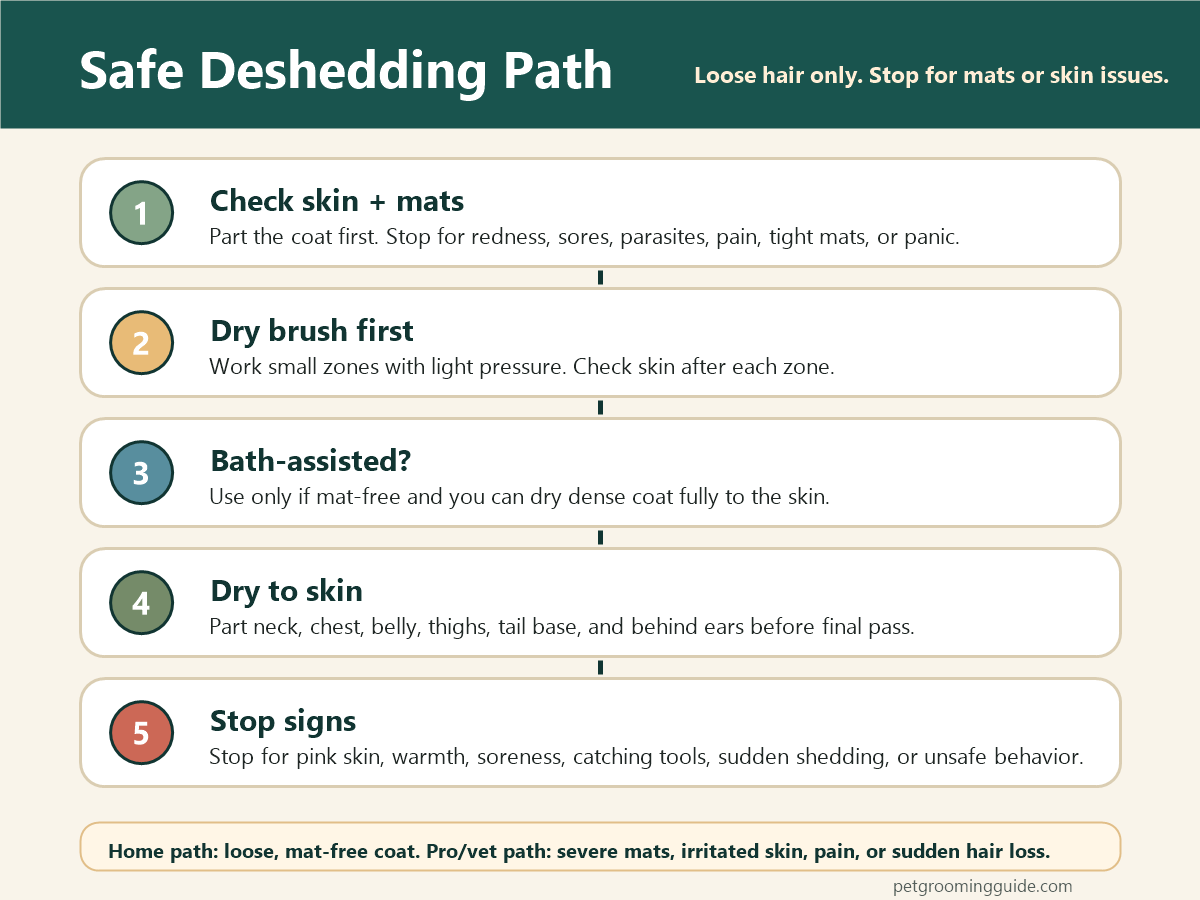
A safe deshedding session starts with inspection, not brushing. Part the coat with your fingers in a few dense areas and look for skin changes, tight tangles, packed undercoat, or damp spots.
Stop before deshedding if you see:
- Red, sore, hot, flaky, swollen, or broken skin.
- Bald patches, parasites, odor with irritation, or sudden coat change.
- Tight mats, skin-level mats, or packed coat that does not separate easily.
- Pain, yelping, growling, snapping, trembling, or panic.
Texas A&M Pet Talk notes that abnormal shedding or skin and coat concerns can call for a veterinarian conversation. Treat sudden or patchy hair loss as a health question, not a brushing challenge.
Deshedding Is Not Dematting
Deshedding removes loose dead hair that is ready to release. Dematting deals with tangled or compacted hair. Those jobs need different boundaries.
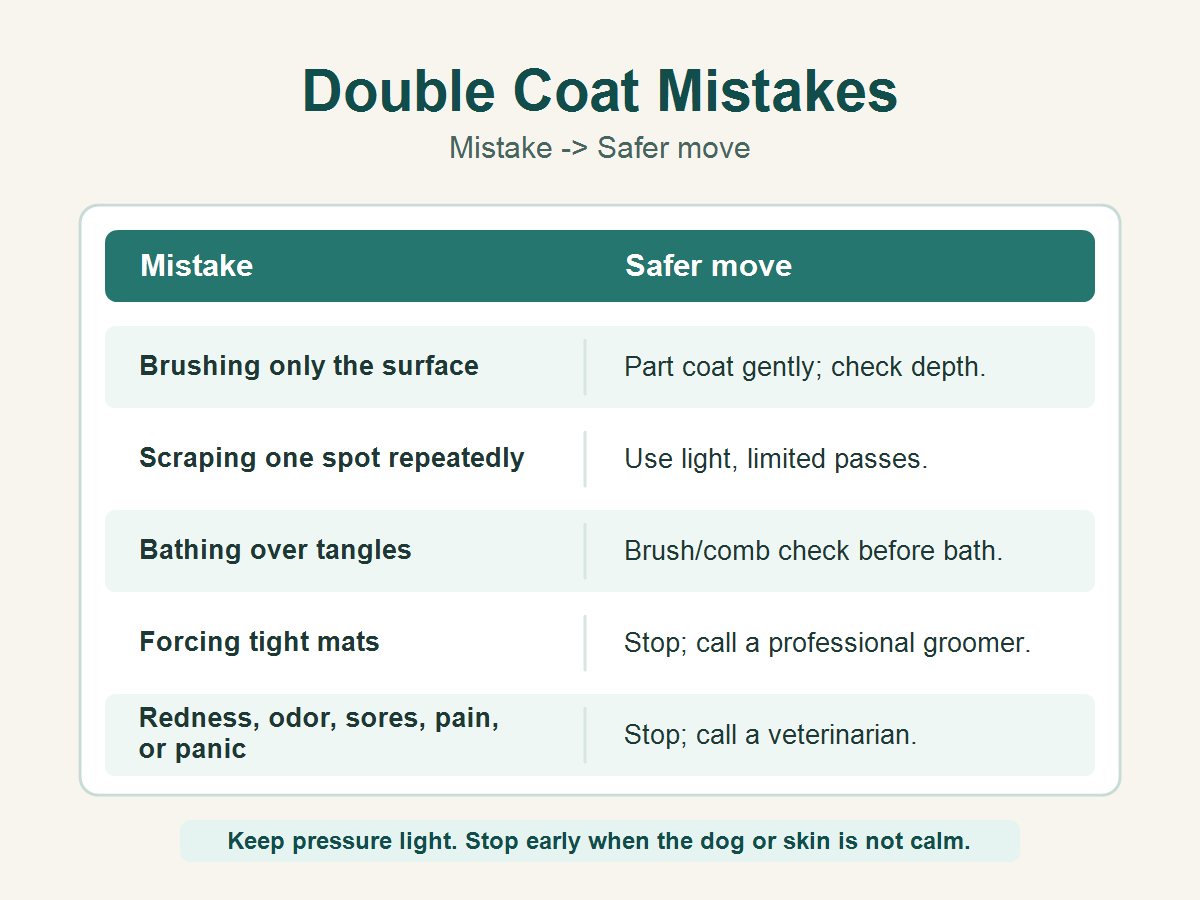
The ASPCA’s matting guidance warns that mats can hide skin problems and that cutting mats out with scissors can injure pets. If a mat does not brush out easily with gentle work, do not cut, scrape, or force it. Use a groomer or veterinarian.
Choose the Gentlest Deshedding Path
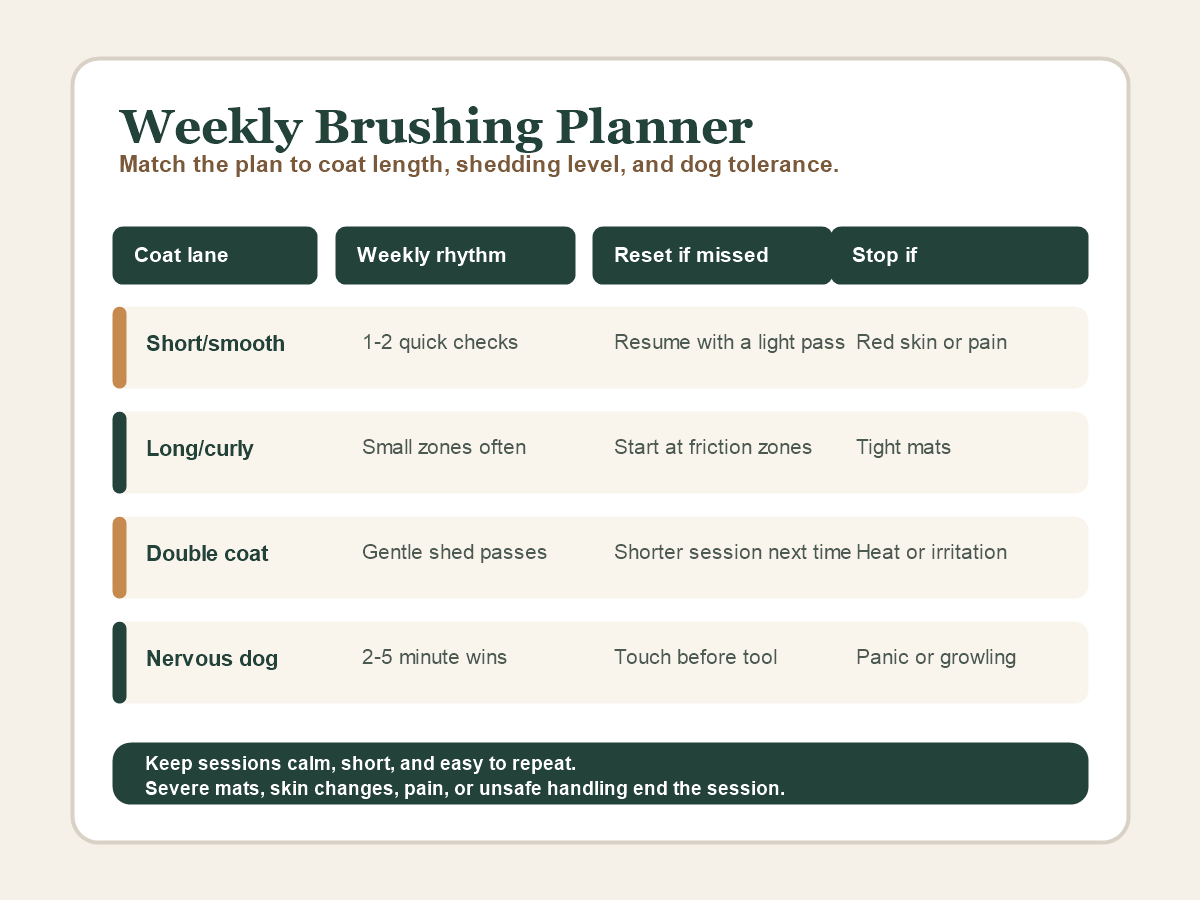
The right path depends on coat type, skin condition, mat status, and how well the dog tolerates handling. The ASPCA dog grooming tips recommend matching brushes and combs to the dog’s hair type.
| Coat state | Safer path | Stop if |
|---|---|---|
| Short smooth coat, healthy skin | Rubber curry or soft brush category, short light passes | Skin gets pink, warm, flaky, or sore |
| Medium double coat, mat-free | Dry brush in small zones, then comb-check dense areas | Tool catches, dog resists, or skin changes |
| Heavy double coat, mat-free | Short dry sessions; bath-assisted only if you can dry to skin | Coat stays damp near the skin or packed areas remain |
| Long, curly, or wavy coat | Comb-check first; use gentle brushing only where hair separates | Tangles pull, tighten, or sit close to skin |
| Irritated skin, severe mats, or sudden hair loss | No home deshedding | Use a veterinarian or groomer |
Dry-Brush Deshedding Routine
Use the dry-brush path when the coat is dry, skin looks calm, and there are no severe mats. Keep the session short enough that the dog stays relaxed.
- Set the dog on a non-slip surface with good light.
- Part the coat and check skin before the first brush pass.
- Work one small zone at a time: neck, shoulder, side, chest, thigh, tail base.
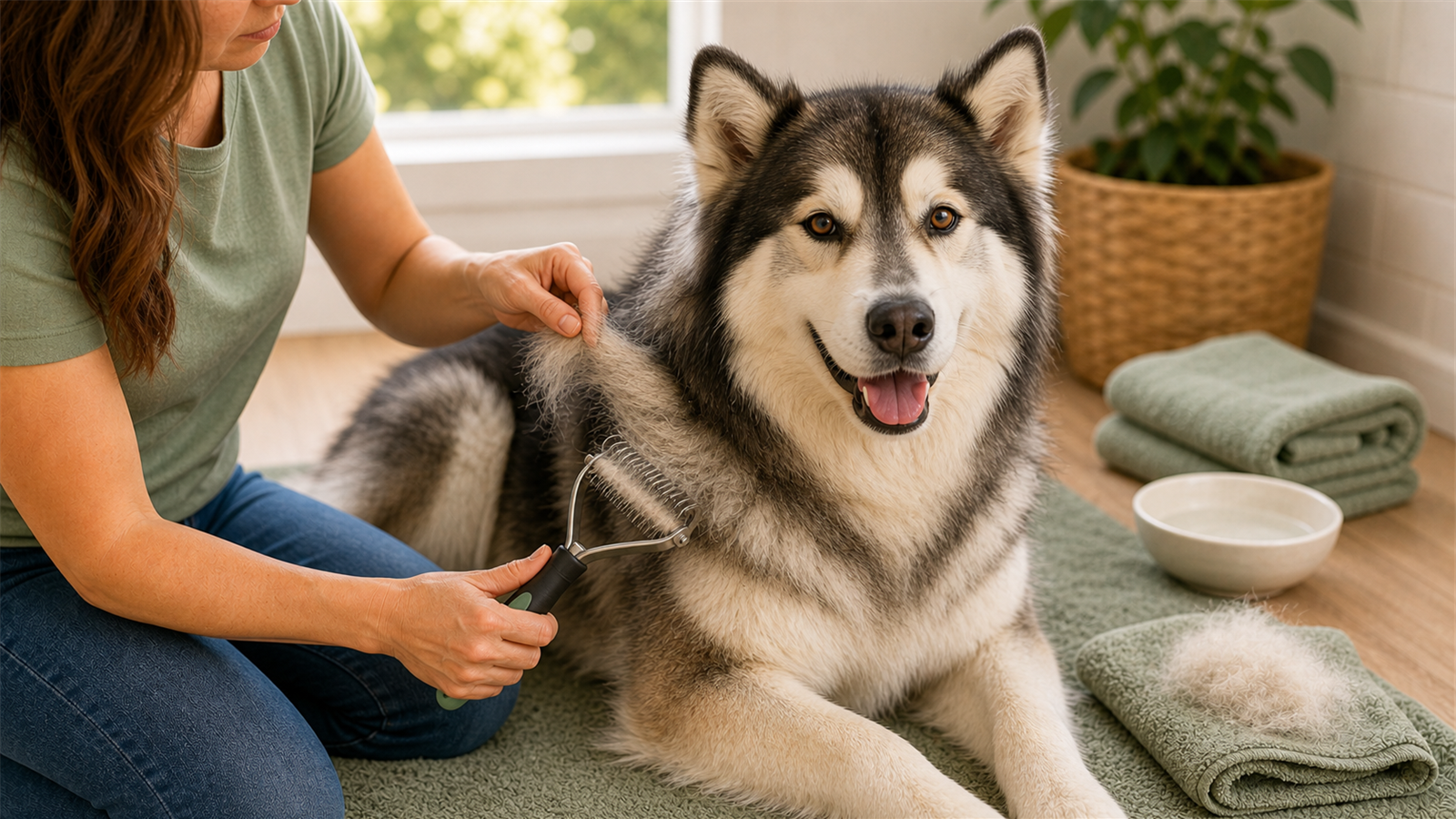
- Use light pressure and short strokes with a slicker brush, rubber curry, undercoat rake, deshedding tool, or comb only where that category fits the coat.
- Pause after each zone and look at the skin.
- Finish with a light comb-check or soft brush pass where the coat allows it.
Merck Veterinary Manual supports regular brushing as part of routine dog care and notes that grooming helps maintain coat health. The home goal is controlled loose-hair removal, not making shedding stop.
If brushing often turns into tugging, see dog brushing mistakes before repeating the same session pattern.
Bath-Assisted Deshedding
Bath-assisted deshedding can help some mat-free coats release loose hair, but water can make existing tangles tighter and can leave dense coats damp near the skin. Brush and inspect first.
Use the bath-assisted path only if:
- The coat is mat-free and separates easily.
- The skin is calm.
- The dog tolerates bathing and drying.
- You can dry dense areas all the way to the skin.
After the bath, rinse well, towel-blot, dry thoroughly, and part the coat in dense areas before doing a final light pass. The Cornell Richard P. Riney Canine Health Center notes that moisture and matted hair can be part of hot-spot risk. For drying help, use how to dry a dog after a bath.
How Much Deshedding Is Enough?
Stop while the skin still looks normal and the dog is still comfortable. More loose hair may release later, especially during seasonal coat changes.
Good stopping points include:
- The brush is collecting less hair with each gentle pass.
- The coat feels looser and parts more easily.
- The dog is becoming tired, restless, or less cooperative.
- The skin looks even, calm, and unchanged.
Do not press harder when hair release slows. Repeated passes over one area can irritate the skin. For routine planning by coat type, see the dog grooming schedule by coat type.
Tool Categories to Know
Tool names here are category-level only. The aim is to match the tool style to the coat, not to shop for a specific brand.
| Tool category | Where it may fit | Use carefully |
|---|---|---|
| Rubber curry | Short smooth coats and surface loose hair | Avoid sore or irritated skin |
| Slicker brush | Light loose hair and some coat separation | Use light pressure; do not scrape |
| Undercoat rake | Some dense double coats when mat-free | Stop if it catches or pulls |
| Deshedding tool | Specific mat-free shedding coats | Avoid repeated passes and wrong-coat use |
| Comb | Checking whether the coat is truly separated | Do not drag through resistance |
If you are choosing between common brush categories, slicker brush vs pin brush explains the difference by coat job and safety limits.
When to Call a Groomer or Veterinarian
Call a groomer for severe mats, packed coat, recurring matting, a dense coat you cannot dry fully, or a dog who cannot tolerate handling safely.
Call a veterinarian for bald patches, sores, hot spots, redness, parasites, sudden heavy shedding, painful skin, swelling, bleeding, odor with irritation, or behavior changes that suggest pain.
FAQ
How often should you deshed a dog?
It depends on coat type, season, skin condition, and tolerance. Many dogs need more loose-hair work during seasonal shedding, but the right frequency is the one that manages loose coat without redness, soreness, or stress.
Should you bathe before deshedding?
Usually, check and brush first. Bath-assisted deshedding is safer only when the coat is mat-free and you can dry the coat fully to the skin.
Can deshedding hurt a dog’s skin?
Yes. Too much pressure, repeated passes, the wrong tool category, or brushing irritated skin can cause pain or redness. Stop if the skin changes or the dog shows distress.
What is the difference between deshedding and dematting?
Deshedding removes loose dead hair. Dematting deals with tangled or compacted hair. Severe, tight, painful, or skin-close mats should be handled by a qualified groomer or veterinarian.
Will deshedding stop my dog from shedding?
No. Deshedding can reduce loose hair on the coat and around the home, but normal shedding continues. Be cautious of any promise that one session or tool will stop shedding.
When is shedding a vet problem?
Use a veterinarian for bald patches, sores, parasites, hot spots, sudden heavy shedding, painful skin, odor with irritation, swelling, or major coat changes.
Bottom Line
Deshedding at home is safest when it stays gentle, short, and limited to loose hair. Check skin and mats first, work in small zones, use light pressure, dry dense coats fully after any bath, and stop before irritation starts. If the coat is matted, painful, abnormal, or unsafe to handle, the right next step is a groomer or veterinarian, not a harder brush pass.