
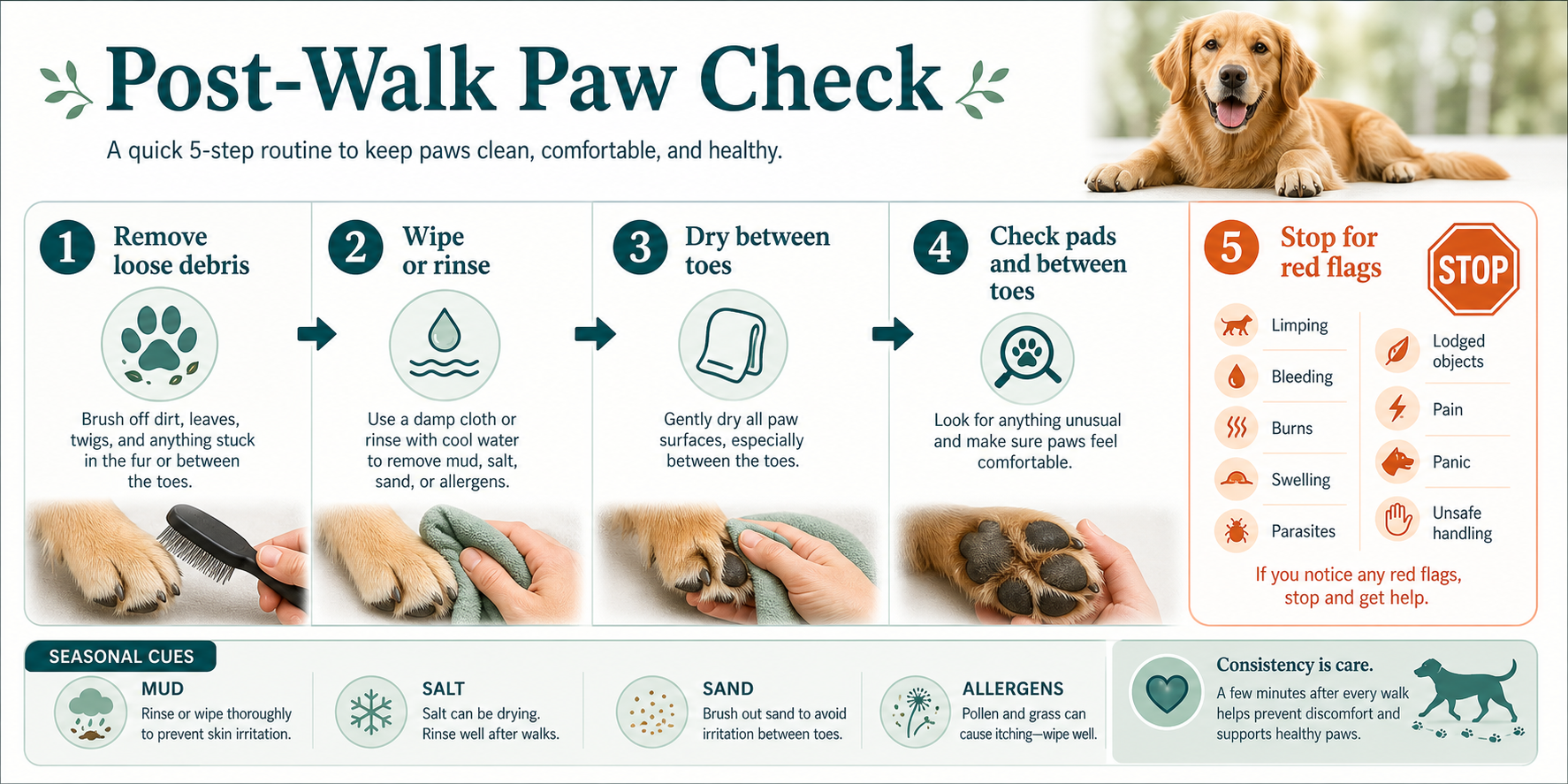
For normal dirty paws after a walk, wipe loose debris, rinse with lukewarm water if needed, dry between the toes, and inspect the pads. Stop for pain, bleeding, burns, blisters, swelling, limping, lodged objects, parasites, infection signs, panic, aggression, or unsafe handling.
This is routine paw hygiene. It is not wound care, parasite treatment, burn treatment, or a guide to removing embedded objects.
The Quick Post-Walk Paw-Cleaning Routine
AKC paw-cleaning guidance supports using dog-safe wipes or a warm, soapy washcloth for muddy, sandy, or salty paws, along with checking the paws. ASPCA winter paw guidance supports washing and drying feet after walks to remove salt and chemicals.
| Step | Routine action | Stop point |
|---|---|---|
| Wipe | Remove loose mud, sand, grass, or surface grit | Pain, bleeding, lodged object |
| Rinse | Use lukewarm water when paws have salt, chemicals, allergens, or sticky residue | Burns, blisters, panic |
| Inspect | Check pads, between toes, nails, and fur around the paw | Limping, swelling, parasites |
| Dry | Towel pads and between toes so moisture does not sit | Redness, odor, discharge |
Mud, Sand, Salt, and Allergens: What Changes?
The basic routine stays the same, but the reason for cleaning changes the emphasis.
| Walk condition | What to add |
|---|---|
| Mud | Wipe first, then rinse if mud remains between toes |
| Sand or grit | Check between toes and around pads before drying |
| Salt or ice-melt | Rinse rather than only wiping, then dry thoroughly |
| Pollen or allergens | Wipe or rinse paws before repeated licking starts |
| Wet pavement | Dry between toes and check for irritation |
Do not use harsh cleaning products or home chemical mixes on paws. ASPCA dog grooming tips support warm-water rinsing after winter walks to remove salt and chemicals.
How to Inspect Paw Pads and Between Toes
Lift one paw only as far as the dog is comfortable. Spread toes gently enough to see between them. Look for redness, cuts, swelling, lodged debris, broken nails, parasites, or the dog pulling away in pain.
If an object is embedded or the dog is limping, do not dig. VCA limping first-aid guidance and veterinary emergency guidance on paw pad injuries support routing deeper paw injuries and embedded objects to veterinary care.
When a Wipe Is Enough and When to Rinse
A wipe may be enough for light dust or dry grass. Rinse when paws touched salt, ice-melt, chemicals, sticky mud, allergens, or anything the dog might lick off.
Use lukewarm water, not hot water. Keep the session calm and short.
Drying Paws So Moisture Does Not Sit Between Toes
After wiping or rinsing, dry the pads, nail area, and between toes with a towel. Moisture sitting between toes can make the dog lick or chew, and it can hide redness or irritation.
Do not rub hard over sore skin. Stop if drying reveals pain, bleeding, swelling, discharge, or a strong odor.
Stop Signs: Cuts, Burns, Limping, Parasites, or Lodged Objects
Stop routine paw cleaning and contact a veterinarian or qualified professional for cuts, bleeding, limping, burns, blisters, swelling, lodged foreign bodies, parasites, infection signs, panic, aggression, or unsafe handling.
FAQ
Should I clean my dog’s paws after every walk?
You do not need a full rinse after every clean sidewalk walk, but a quick check is useful. Rinse after salt, chemicals, mud, allergens, or visible residue.
Can I use wipes on my dog’s paws?
Dog-safe wipes can be used for routine surface dirt. Rinse instead when salt, chemicals, or sticky residue may be present.
Should I rinse salt off dog paws?
Yes. ASPCA guidance supports washing and drying paws after winter walks to remove salt and chemicals.
How do I dry between my dog’s toes?
Use a towel gently between the toes and around pads. Stop if the dog shows pain or you see redness, swelling, cuts, or discharge.
When should paw cleaning become a vet visit?
Use a vet for limping, bleeding, burns, lodged objects, parasites, infection signs, swelling, severe pain, or unsafe handling.
Bottom Line
Most post-walk paw cleaning is simple: wipe, rinse when needed, dry well, and inspect. If the paw check turns up pain, limping, bleeding, burns, parasites, swelling, or an embedded object, stop cleaning and call a veterinarian.