
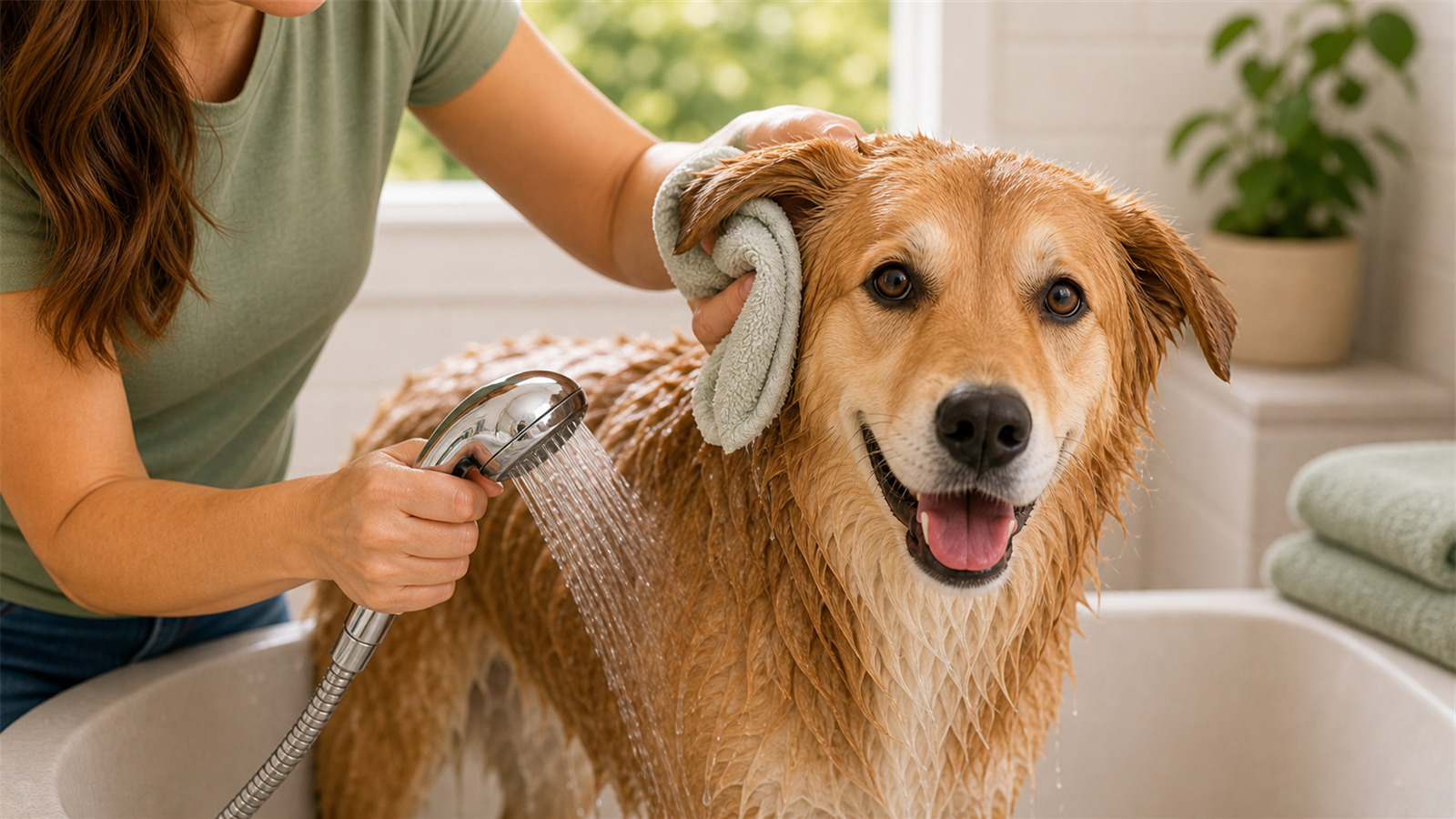
Protect dog ears during a bath by keeping water away from the ear opening, using a gentle rinse angle, and stopping if the ears already look painful or abnormal. This is bath-water prevention only. It is not ear-canal cleaning or ear-infection treatment.
Do not force a dog’s head into position. If the dog is panicking, snapping, scrambling, or showing ear pain, stop and get help from a veterinarian or qualified groomer.
Why Ear Protection During Baths Matters
ASPCA dog grooming guidance says to avoid spraying or pouring water directly into a dog’s ears, eyes, or nose during bathing. Around the head, careful direction matters more than speed.
The practical goal is simple: rinse nearby fur while keeping the ear opening out of the water path.
Use a Safer Rinse Angle Around the Head
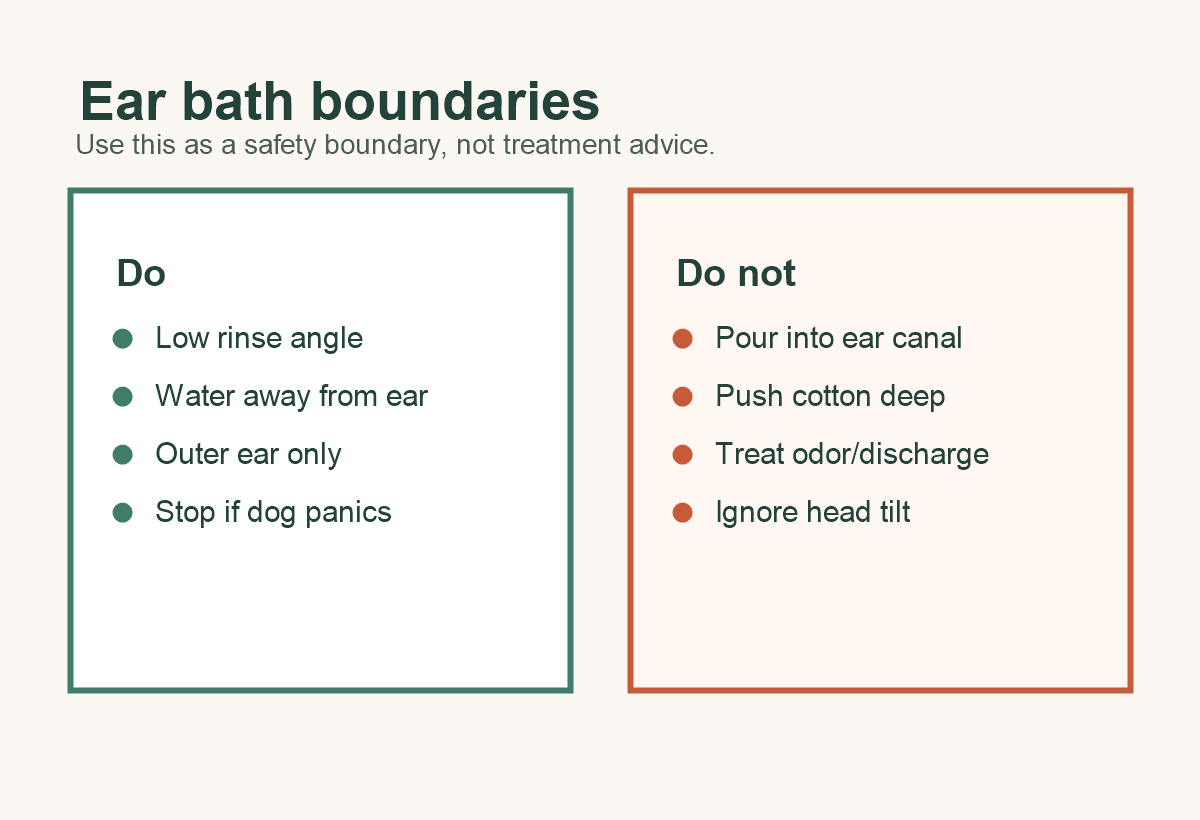
Use gentle water flow. Aim the water down and away from the ear opening, not across it. Rinse the neck, cheeks, and nearby fur in small passes instead of blasting the whole head.
If the dog moves suddenly, pause. Re-aim before you turn the water back toward the head area.
What Not to Put in Your Dog’s Ears
Do not push cotton deeply into the ear. Do not use ear plugs, powders, cleaners, medications, or tools as bath shortcuts unless a veterinarian gave those directions for that dog.
Shallow ear covering may sound simple, but it can become unsafe if the dog resists or if material is pushed too far. When in doubt, skip the bath or use professional help.
Long Ears vs Upright Ears
For long ears, you may gently hold the ear flap down and away from the water path if the dog is calm. For upright ears, control the spray direction and avoid aiming water toward the opening.
Do not fold, twist, pin, or force the ear. Ear handling should stay calm and brief.
After-Bath Outer-Ear Drying
Dry the outer ear and the fur around it with a soft towel. Stay outside the canal. Do not push cloth, cotton, or tools into the ear.
If the ear smells bad, looks red, has discharge, or seems painful, do not treat it as a normal drying task.
Vet Stop Signs Before or After a Bath
VCA ear-cleaning guidance says red, inflamed, or painful ears should be checked by a veterinarian before cleaning. VCA ear-infection guidance lists concern signs such as head shaking, scratching, odor, redness, discharge, and pain.
Balance changes, head tilt, bleeding, swelling, or severe discomfort are not grooming issues. Stop and contact a veterinarian.
FAQ
How do I keep water out of my dog’s ears during a bath?
Use gentle water flow, aim away from the ear opening, and rinse the head area in small controlled passes.
Should I put cotton in my dog’s ears during a bath?
Do not insert cotton deeply. If any ear covering cannot be done calmly and safely, skip it and use professional help.
Can I rinse around my dog’s head?
Yes, but keep water away from the ears, eyes, and nose. Do not aim the spray toward the ear opening.
What if my dog shakes their head after a bath?
Head shaking can be a concern sign, especially with odor, discharge, redness, scratching, or pain. Contact a veterinarian if it continues or appears with other symptoms.
When should ear symptoms go to a vet?
Use a veterinarian for odor, discharge, head shaking, scratching, pain, redness, swelling, bleeding, balance changes, head tilt, or unsafe handling.
Bottom Line
Protecting dog ears during a bath is mostly about rinse direction, calm handling, and knowing when not to bathe. Keep water away from the ear opening, stay out of the canal, and treat abnormal ear signs as a veterinary issue.