
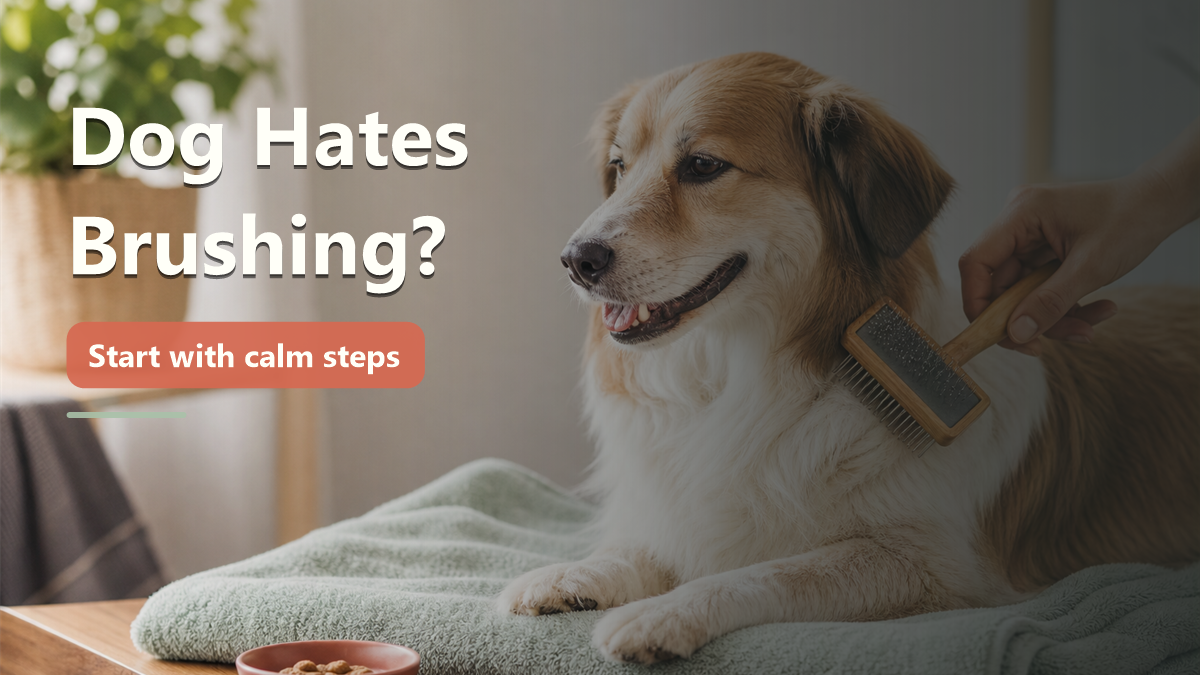
If your dog hates being brushed, do not force a full brushing session. Stop, check for pain, tight mats, skin problems, parasites, and fear signs first. If the dog is safe and comfortable enough to practice, rebuild brushing with very short, reward-based steps: touch before tool, one easy area, one gentle stroke, reward, and stop before the dog escalates.
This guide is for mild brushing resistance in a dog who can be handled calmly. It is not a plan for biting, growling, snapping, panic, painful mats, sedation, restraint, or brushing through pain. Those cases need a veterinarian, qualified groomer, or qualified trainer.
First, Check for Pain, Mats, and Skin Problems
A dog who resists brushing may not simply dislike the brush. The coat may pull at the skin, a body area may hurt, or the dog may have learned that grooming predicts discomfort.
Before you practice brushing, check for:
- Tight mats or tangles behind the ears, under the collar, in the armpits, along the belly, under the tail, or on the rear legs.
- Red skin, sores, scabs, flea dirt, parasites, sudden bald patches, or a bad odor from the skin or ears.
- Flinching, yelping, freezing, growling, snapping, guarding a body area, or repeated escape attempts.
- Pain around the ears, paws, hips, tail, belly, or any area the dog suddenly will not let you touch.
The ASPCA’s dog grooming tips note that brushing helps keep the coat in good condition and gives you a chance to look for skin concerns. If that check turns up pain, wounds, parasites, or sudden coat changes, pause home grooming and call your veterinarian.
If you find tight mats, do not cut them out with scissors and do not brush through pain. The ASPCA’s matting guidance warns that mats can hide skin problems and that cutting them out can injure the pet. Use a qualified groomer or veterinarian for tight, severe, painful, or skin-close mats.
What Not to Do When a Dog Resists Brushing
Do not hold the dog down, chase the dog, punish the dog, brush faster to get it over with, or try to outlast growling, snapping, panic, or pain. Those choices can make the next session harder and can raise bite risk.
Do not use sedation advice from a grooming article. If sedation or medication has entered the conversation, that is a veterinary decision.
The AVSAB humane dog training position statement supports reward-based training and cautions against aversive methods. For brushing, that means making the task easier, pairing calm handling with rewards, and stopping before fear turns into a fight.
Set Up a Low-Stress Brushing Spot
Use a quiet spot with good footing. A towel, mat, or familiar surface can help the dog understand where the short practice happens. Keep the session simple: one coat-appropriate brush or comb, small rewards if they fit your dog’s health needs, and a timer.
Start in a place where the dog can stay relaxed. Best Friends’ handling guidance recommends practicing in calm places first, pairing handling with rewards, and building gradually before adding harder distractions.
If your dog already knows a calm station behavior, such as resting their chin on a towel or your hand, you can use it as a consent-style pause point. Fear Free’s chin-rest guidance explains how a chin rest can support cooperative care without holding the animal in place.
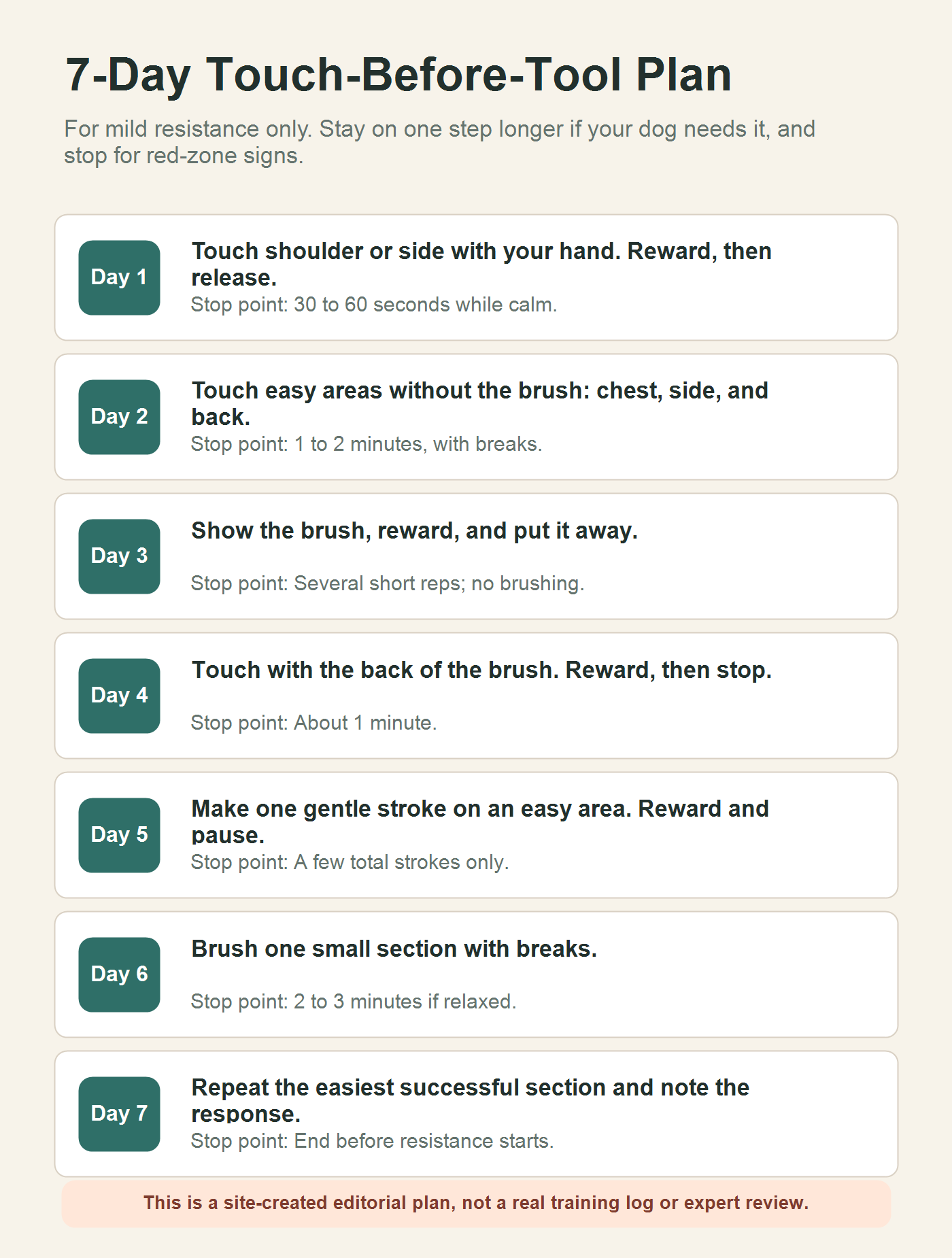
This plan is a starting point for calm, mild resistance. Stay on one step for more than a day if your dog needs it. If your dog shows red-zone signs from the scorecard below, stop and get professional help instead of making the step harder.
| Day | Goal | Stop point |
|---|---|---|
| 1 | Touch the shoulder or side with your hand, reward, then release. | 30 to 60 seconds while the dog is still calm. |
| 2 | Touch easy grooming areas without the brush: chest, side, and back. | 1 to 2 minutes, with breaks. |
| 3 | Show the brush, reward, and put it away. | Several short repetitions with no brushing. |
| 4 | Touch the dog with the back of the brush, reward, then stop. | About 1 minute. |
| 5 | Make one gentle brush stroke on an easy area, reward, and pause. | A few total strokes, not a full brushing session. |
| 6 | Brush one small section with breaks. | 2 to 3 minutes if the dog stays relaxed. |
| 7 | Repeat the easiest successful section and record the dog’s response. | End before resistance starts. |
If the dog refuses food, turns away, stiffens, growls, snaps, freezes, yelps, guards a body area, or tries to leave, make the next session easier or stop and contact the right professional.
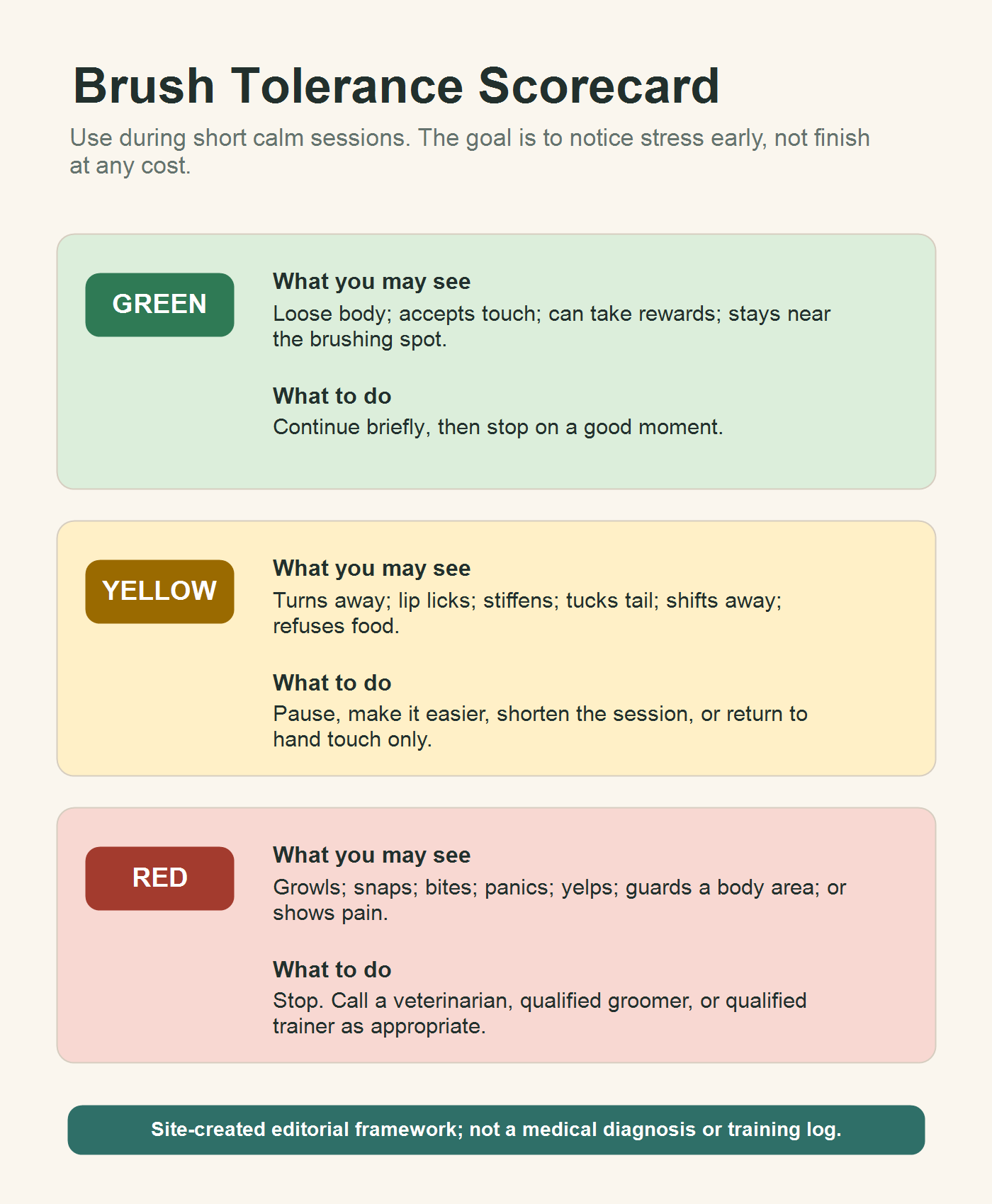
Use this scorecard during every session. The goal is not to finish the coat at any cost. The goal is to notice stress early enough to keep the dog safe.
| Score | What you may see | What to do |
|---|---|---|
| Green | Loose body, accepts touch, can take rewards, stays near the brushing spot. | Continue briefly, then stop on a good moment. |
| Yellow | Turns away, lip licks, stiffens, tucks tail, shifts away, refuses food. | Pause, reduce difficulty, shorten the session, or return to hand touch only. |
| Red | Growls, snaps, bites, panics, yelps, guards a body area, or shows pain. | Stop. Call a veterinarian, qualified groomer, or qualified trainer as appropriate. |
How to Brush One Small Area Safely
Choose an easy area, often the shoulder or side. Touch with your hand first. If the dog stays loose, make one gentle pass in the direction the coat grows. Reward, pause, and stop early.
Do not start with the worst tangle, belly, feet, ears, tail, or any area the dog guards. Build trust on an easy area first. Once the dog accepts that, slowly expand to nearby coat sections over later sessions.
For long or curly coats, one small combed section may be enough for a session. If the coat is already matted, switch from home practice to professional help. Training a dog to accept brushing is not the same as removing painful mats.
When to Stop and Call a Professional
Call a qualified groomer for tight mats, coat maintenance beyond your skill level, or haircut-style work that cannot be done safely at home.
Call a veterinarian for suspected pain, wounds, skin disease, parasites, sudden hair loss, ear pain, medication questions, or any medical concern.
Call a qualified trainer or behavior professional if fear is not improving with easy steps, or if your dog shows growling, snapping, biting, panic, or repeated escape attempts. Bite-risk cases are not a home brushing challenge.
FAQ
Should I force my dog to be brushed?
No. Forcing can increase fear and bite risk. Stop, check for pain or mats, and rebuild tolerance with short rewarded steps only if the dog can stay calm.
What if my dog growls when I brush?
Stop immediately. Growling is a warning sign. Check for pain, mats, and sensitive areas, then contact a veterinarian, qualified groomer, or qualified trainer depending on what you find.
Can treats help a dog accept brushing?
Yes, treats can help if the dog can eat calmly and the food fits the dog’s health needs. Treats do not replace stopping for pain, mats, panic, growling, snapping, or bite risk.
How long should brushing sessions be for a dog that hates brushing?
Start with seconds or one small area. Stop while the dog is still calm. A short successful session is better than a long session that ends with fear or a struggle.
Can I brush out mats at home?
Only small, loose tangles may be safe to work through gently. Tight, severe, painful, skin-close, or widespread mats need a qualified groomer or veterinarian.
What brush should I use for a dog that hates brushing?
Use a coat-appropriate brush or comb and keep pressure light. The tool matters less than the dog’s comfort, the condition of the coat, and stopping before stress escalates.
Bottom Line
For a dog that hates being brushed, the safest order is check first, train second, brush last. Rule out pain and mats, avoid force, practice short touch-before-tool steps, and stop for growling, snapping, panic, pain, severe mats, or bite risk.