
Dog grooming record keeping means writing down the date, routine task, body area, generic product category, comfort notes, photos, follow-up question, and next routine date after grooming. Use the record to remember patterns and give clearer notes to a groomer or veterinarian. Do not use it to diagnose skin, ear, nail, parasite, pain, product, or behavior problems at home.
A short log works best. Fill it out after baths, brushing, comb checks, nail sessions, paw wipes, outer-ear checks, face-fold wipes, or professional grooming visits. If your dog becomes uncomfortable or you see a health concern, stop the routine and ask the right professional instead of trying to solve it from the record.
Quick Grooming Record Fields
| Field | What to write | Safe boundary |
|---|---|---|
| Date | Grooming date and approximate time | Use for routine spacing, not treatment timing. |
| Task | Bath, brush, comb check, paw wipe, nail trim, outer-ear wipe, face-fold wipe | Use plain task names, not medical labels. |
| Body zone | Coat, paws, nails, outer ears, face folds, belly, tail, harness area, mat-prone spots | Record location only. |
| Generic product or tool category | Dog shampoo, conditioner, towel, brush, comb, paw wipe | Do not use the log to prove a cause or choose treatment. |
| Comfort notes | Calm, wiggly, needed break, pulled paw away, stopped early | Do not force handling. |
| Observation | Tangles, loose hair, mud, damp coat area, residue concern, odor noticed | Escalate abnormal or worsening signs. |
| Photo | Yes or no, plus what area the photo shows | Photos support handoff, not home diagnosis. |
| Follow-up question | Ask groomer about harness-area tangles; ask vet if itching continues | Use referral language when signs are not routine. |
| Next routine date | Next brush, bath, nail check, or appointment | Keep it to routine care planning. |
What a Grooming Record Should Track
A useful dog grooming record answers four questions: what was done, where it happened on the dog, how the dog responded, and what should happen next. That is enough for most home routines.
ASPCA dog grooming tips cover routine brushing, bathing, rinsing, drying, and cleaning around folds. ASPCA general dog care guidance also frames brushing, bathing, and basic checks as part of regular care. A record turns those ordinary steps into a clear timeline.
Use simple wording. Write “mud between left front toes” instead of guessing what caused it. Write “stopped brushing behind harness area and will ask groomer” instead of pushing through a difficult spot.
Fields for Baths, Brushing, Nails, Paws, and Ears
For bath days, record whether you brushed or comb-checked first, which generic wash category was used, whether the rinse was thorough, and which thick coat areas needed extra drying time.
For brushing and comb checks, record the coat zones checked, where loose hair or tangles appeared, where the dog stayed comfortable, and where you stopped. If you are unsure whether coat hair is a loose tangle or a tighter mat, use the safety boundaries in dog matting vs tangles and avoid cutting, shaving, or forcing the area.
For nails and paws, record which paws were handled, whether your dog stayed calm, whether the session ended early, and any question for a groomer or veterinarian.
For ears, keep notes to the outer ear and ear flap only. Do not use a grooming log to guide ear-canal cleaning, flushing, plucking, medication, or infection care. Stop and call a veterinarian for odor, discharge, redness, swelling, pain, head shaking, or repeated scratching.
Product and Comfort Notes Without Guessing
It is fine to write down a generic category, such as “dog shampoo” or “paw wipe,” so you can remember what changed in the routine. The record should not decide that a product caused a problem, that a sign is harmless, or that a different product should be tried as treatment.
If itching, redness, inflammation, hair loss, sores, odor, pain, or worsening skin signs appear, AVMA allergy guidance for pet owners supports veterinary involvement for itch and inflammation concerns. Your log can help by showing what happened and when. It should not replace a veterinarian’s advice.
Safe note: “Bath on June 14. Dog seemed comfortable during rinse. Scratched belly later that evening. No more grooming on that area; will call vet if it continues or worsens.”
Unsafe note: “Shampoo caused allergy; treat with another product.”
Photo Notes That Help a Groomer or Veterinarian
Photos can make a grooming record easier to understand. Use them for routine coat length, tangle-prone areas, paw debris, nail length, collar or harness areas, and before-and-after grooming notes.
Do not use photos to decide whether a wound, rash, parasite, ear problem, eye problem, painful area, or sudden behavior change is safe to handle at home. In those cases, the photo is a handoff note for a professional.
Helpful photo notes are short: “before bath: mud on paws,” “after brush-out: harness area checked,” or “stopped: tight coat area near armpit; groomer question.”
When the Record Should Trigger a Call
Stop home grooming and call a veterinarian, professional groomer, or qualified trainer when the log shows a concern beyond routine care.
| What you notice | Safer next step |
|---|---|
| Redness, sores, swelling, discharge, bad odor, hair loss, persistent itch, or worsening skin | Call a veterinarian. |
| Eye irritation, squinting, eye discharge, or eye exposure | Call a veterinarian. |
| Ear odor, discharge, head shaking, swelling, pain, or suspected infection | Call a veterinarian. |
| Bleeding, wounds, punctures, parasites, limping, pain, or sudden behavior change | Call a veterinarian or qualified trainer, depending on the concern. |
| Severe, tight, extensive, or skin-close mats | Call a professional groomer or veterinarian. |
| Panic, aggression, bite risk, or unsafe handling | Stop and get help before continuing. |
Blank Dog Grooming Log Template
Use this blank structure after routine grooming. Keep each entry brief and factual.
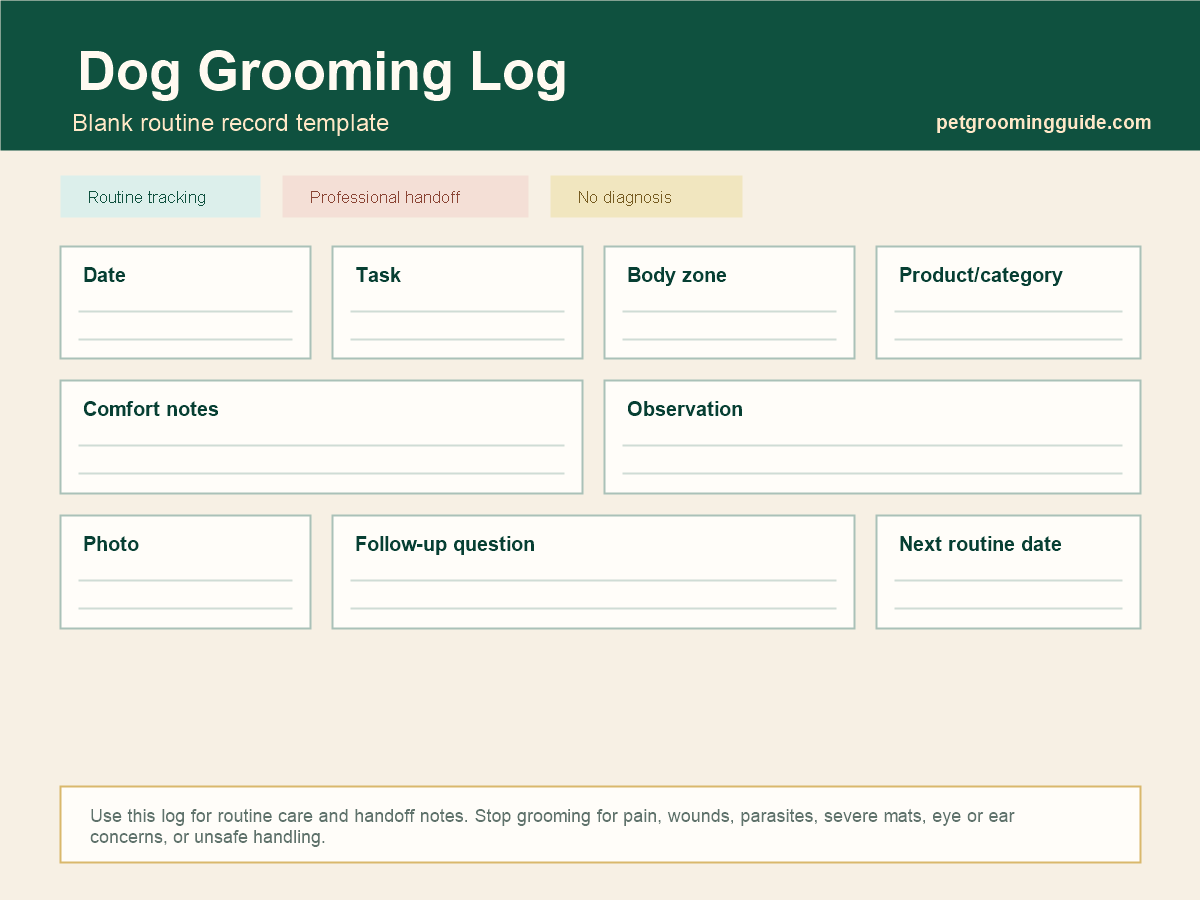
| Date | Task | Body zone | Generic product/category | Comfort notes | Observation | Photo? | Follow-up question | Next routine date |
|---|---|---|---|---|---|---|---|---|
Fictional Routine Sample
This sample is fictional and routine only. It is not a medical example, treatment plan, or product test.
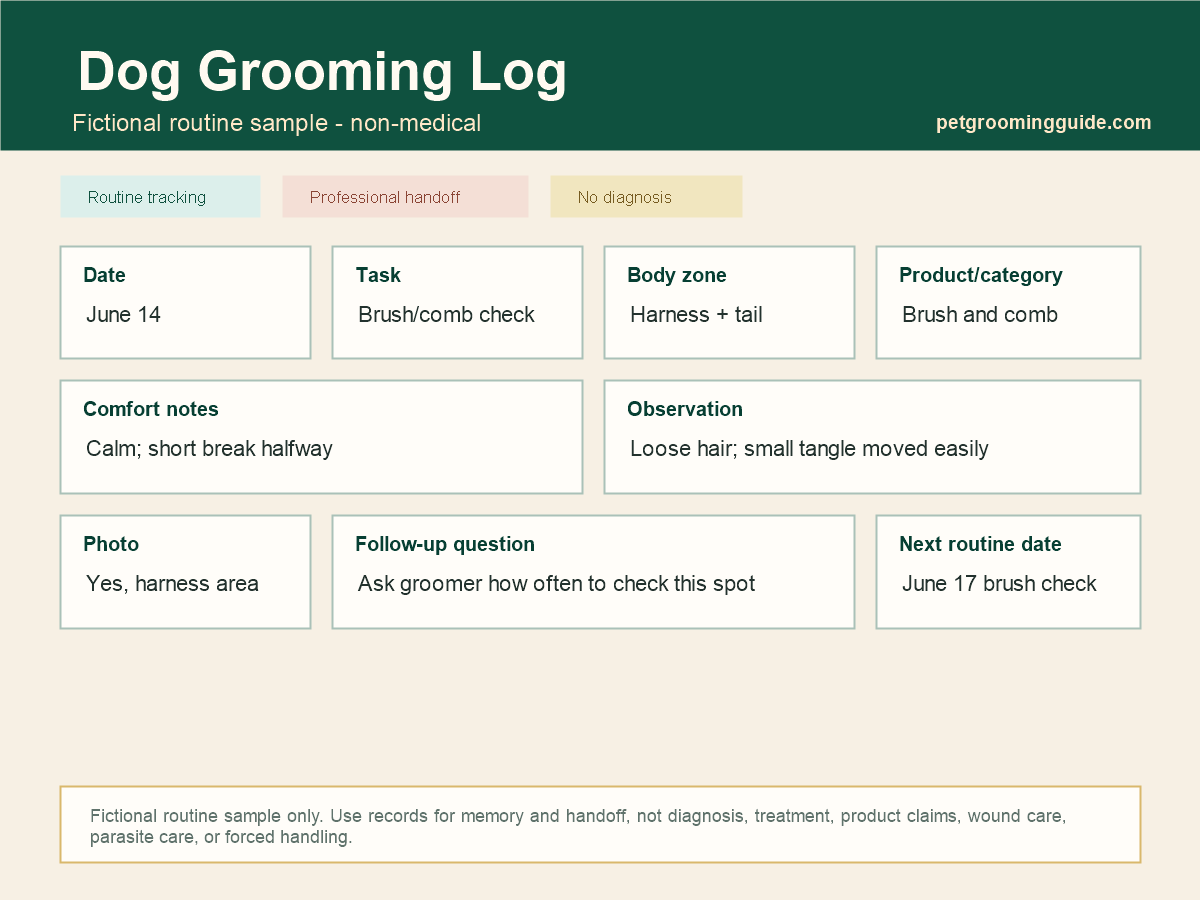
| Date | Task | Body zone | Generic product/category | Comfort notes | Observation | Photo? | Follow-up question | Next routine date |
|---|---|---|---|---|---|---|---|---|
| June 14 | Brush and comb check | Harness area and tail | Slicker brush and comb | Calm; short break halfway | Loose hair; small harness-area tangle moved easily | Yes, harness area | Ask groomer how often to check this spot | June 17 brush check |
| June 18 | Paw wipe | Front paws | Damp cloth | Pulled right paw away; stopped early | Mud between toes after walk | No | Try shorter paw handling next routine if calm | June 20 paw check |
FAQ
What should I write in a dog grooming record?
Write the date, task, body area, generic product or tool category, comfort notes, routine observation, photo note, follow-up question, and next routine date. Keep the wording factual.
Should I track shampoo or grooming products?
Track generic product categories so you remember the routine. Do not use the record to diagnose allergies, prove product cause, or choose treatment.
Are photos useful for grooming records?
Yes. Routine photos can show coat length, tangle-prone spots, paw debris, nail length, and areas to ask a groomer or veterinarian about. They should support a professional conversation when signs are not routine.
Can a grooming log help my vet or groomer?
Yes. A clear timeline can help a groomer see where you stopped and can help a veterinarian understand when signs appeared. The log is a communication aid, not a diagnosis.
When should I stop grooming and call a professional?
Stop for pain, severe mats, wounds, parasites, bleeding, swelling, discharge, eye or ear concerns, worsening skin signs, panic, aggression, or bite risk. Call a veterinarian, professional groomer, or qualified trainer depending on the concern.
Bottom Line
A good dog grooming record is short, plain, and safe. Track routine care, note where your dog was comfortable, save photos when they help, and use the log to ask better questions. When the notes point to pain, skin changes, ear or eye concerns, severe mats, parasites, wounds, or unsafe handling, stop grooming and call a professional.