
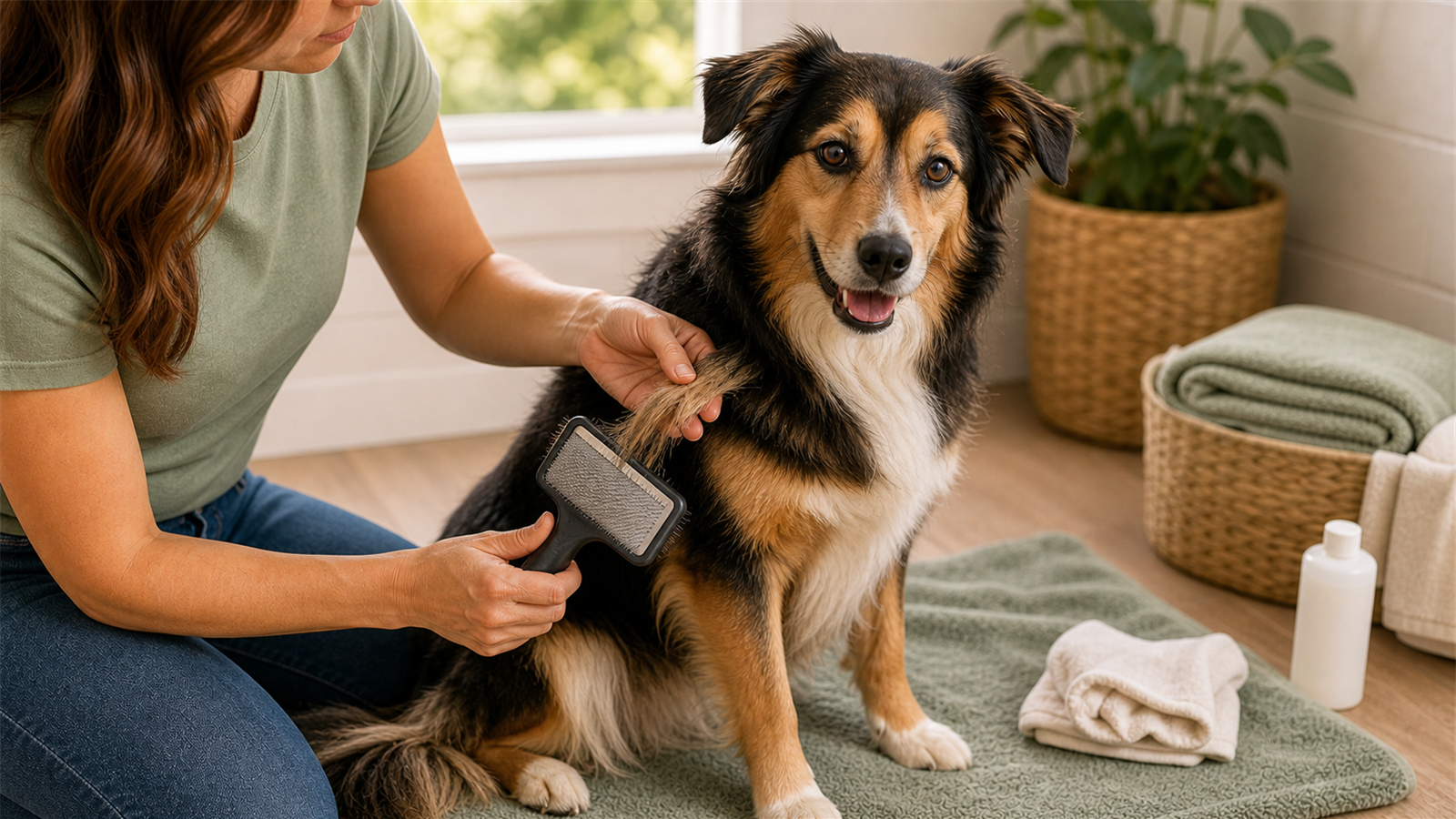
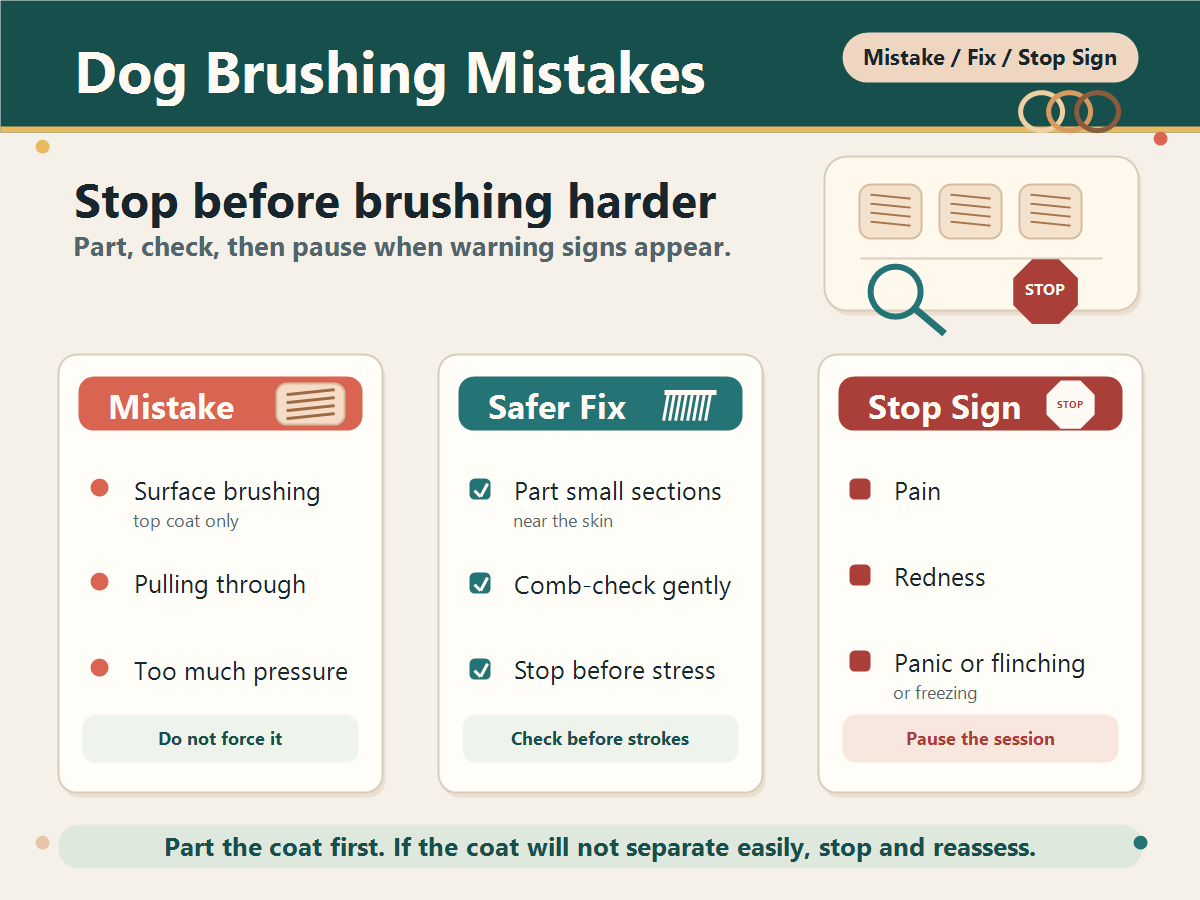
The biggest dog brushing mistakes are brushing only the surface, brushing or bathing over mats, using the wrong brush category, pressing too hard, overbrushing one area, skipping friction zones, and ignoring pain, skin, or behavior stop signs. Safer brushing is slower, lighter, and honest about when a groomer or veterinarian should take over.
Do not use brushing to solve severe mats. Stop for tight mats, mats close to skin, redness, sores, bleeding, parasites, bald patches, hot spots, pain, yelping, growling, snapping, freezing, or panic.
Quick Mistake Check
| Mistake | Safer choice | Stop sign | |
|---|---|---|---|
| Brushing only the topcoat | Work in small sections and comb-check near the skin. | The comb catches, pulls, or will not pass gently. | |
| Brushing or bathing over mats | Pause and check whether the mat is a groomer or vet task. | The mat is tight, painful, skin-close, widespread, or paired with sore skin. | |
| Using one brush for every coat | Match the tool category to coat type. | The tool scrapes, snags, or leaves hidden tangles. | |
| Pressing harder to get more hair | Use light pressure and short sessions. | Skin looks red or the dog becomes tense, sore, or evasive. | |
| Skipping friction zones | Check behind ears, collar lines, armpits, belly, thighs, tail base, legs, feet, and sanitary areas. | The area is sensitive, packed, damp, red, or painful. |
| Coat type | Common starting category | Main caution | |
|---|---|---|---|
| Short smooth | Soft brush, rubber curry, or grooming mitt | Do not scrape thin or sensitive skin. | |
| Long silky | Pin brush and comb | Work ends first and check for hidden tangles. | |
| Curly or doodle-type | Slicker and comb, used gently | Mats may hide close to the skin. | |
| Dense double coat | Undercoat rake, slicker, and comb category with light pressure | Do not overwork one area or scrape for loose hair. | |
| Wire or specialty coat | Groomer-guided brush and comb routine | Ask for help if the technique is unfamiliar. |
| Coat | Safer routine | Watch for | |
|---|---|---|---|
| Short smooth | Gentle passes and skin inspection | Redness from too much pressure | |
| Long silky | Section work, ends first, comb check | Tangles behind ears, legs, and tail | |
| Curly or doodle-type | Line brushing and skin-level comb test | Hidden mats close to skin | |
| Dense double | Loose undercoat removal with breaks | Overbrushing, scraping, or packed undercoat | |
| Wire or specialty coat | Groomer guidance if technique is unfamiliar | Wrong tool category or coat damage |
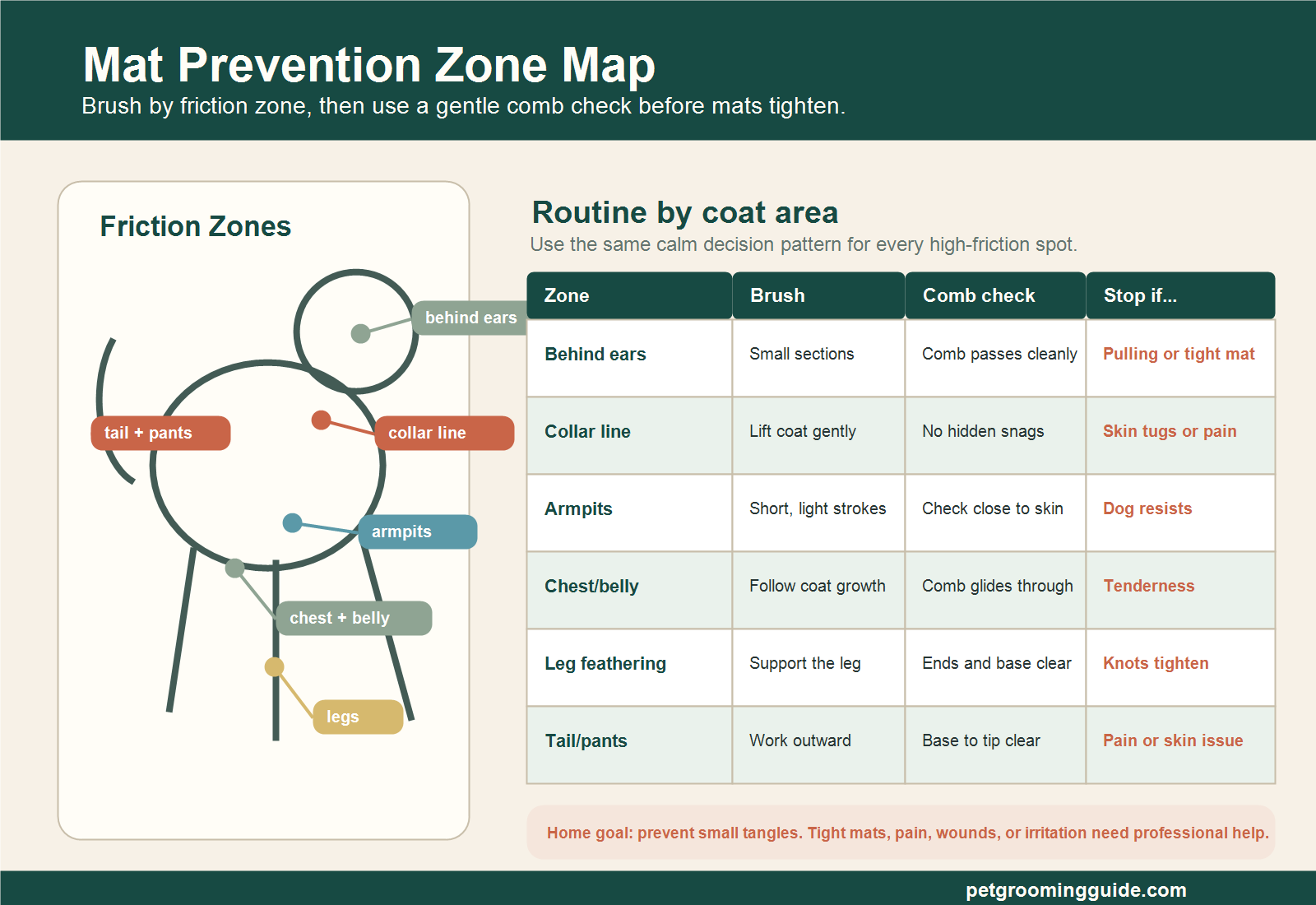
| Zone | Why it mats | Conservative check rhythm |
|---|---|---|
| Behind ears | Friction and fine coat | Check most often |
| Collar or harness line | Compression and rubbing | Check after gear-heavy days |
| Armpits and chest | Movement and moisture | Check often on long or curly coats |
| Belly and legs | Dirt, dampness, friction | Check after wet or outdoor days |
| Tail, pants, feathering | Long coat and shedding | Check more during shedding |
Do not treat this as a universal schedule. A dog with a coat that mats easily may need checks more often.
High-Friction Zones to Check First
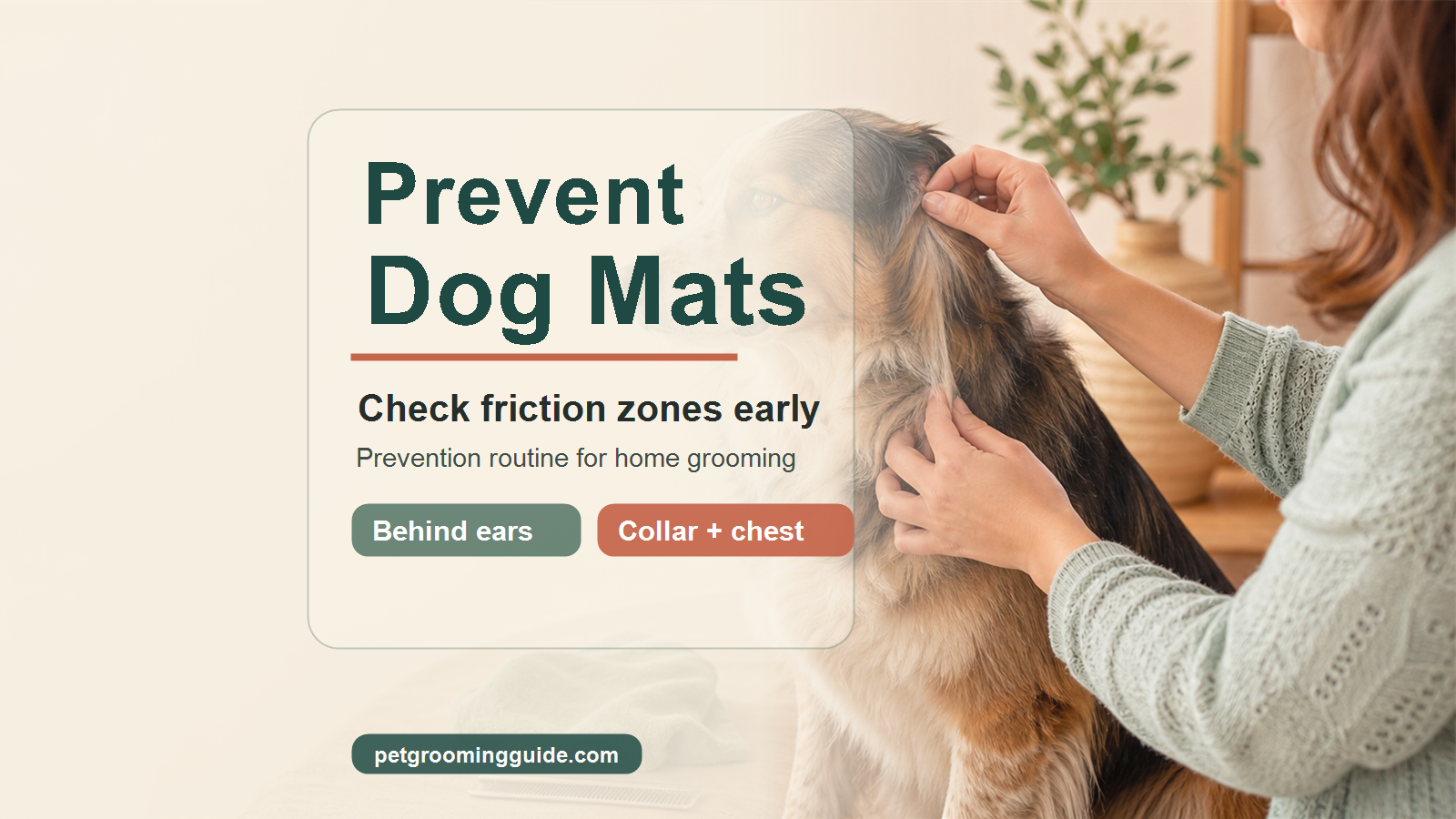
Start where mats usually form: behind the ears, under collars, armpits, chest, belly, inner legs, tail base, pants, and feathering. Use gentle sectioning, and stop if the coat pulls skin.
Brush Before Bath: Why Water Can Make Tangles Worse
Brush and comb-check before bathing when the coat is safe to work. ASPCA dog grooming tips and ASPCA general dog-care guidance support brushing or combing out mats before bathing.
Do not bathe over mats, painful tangles, wounds, parasites, irritation, or skin pulling.
Comb-Check Routine After Brushing
A comb check verifies the coat after brushing. A pass means the comb glides through a small section without catching, tugging, pulling skin, or causing the dog discomfort. If the comb catches, stop that section and return to gentle brushing only if it is safe.
If catching, pain, tight mats, skin redness, or resistance appears, route to a qualified groomer or veterinarian.
Prevention by Coat Type
Smooth coats may need only light brushing and skin checks. Long, curly, wavy, feathered, and double coats often need more frequent friction-zone checks. Exact timing depends on the individual coat, activity, moisture, and mat history.
Use category-level tools only: slicker brush, pin brush, comb, and an undercoat rake when appropriate. This page does not recommend products.
When Prevention Is Too Late and a Pro Is Needed
Use a professional groomer for tight mats, severe mats, skin pulling, painful tangles, or coat work beyond your skill. Severe mat removal is not a home task. Use a veterinarian for wounds, irritation, parasites, bleeding, pain, medically fragile dogs, or skin problems.
FAQ
How do you prevent mats on a dog?
Brush and comb-check friction zones before tangles tighten, keep the coat dry, brush before bathing, and stop early for pain or skin pulling.
Where do dogs mat most often?
Common zones include behind the ears, the collar line, armpits, chest, belly, legs, tail, pants, and feathering.
Should you bathe a matted dog?
No. Do not bathe over mats. Brush only if it is safe, and use a professional for tight or painful mats.
Can small tangles become mats?
Yes. Loose tangles can compact into mats if friction, moisture, and loose hair build up.
When should a groomer handle dog mats?
Use a groomer for tight, severe, skin-close, painful, or recurring mats, or when the dog resists handling.
Bottom Line
The best way to prevent dog mats is to check friction zones early, brush before bathing when the coat is safe, and comb-check gently after brushing. Once hair is tight, painful, skin-close, or pulling, stop home grooming and use a qualified groomer or veterinarian.
Weekly Dog Brushing Routine by Coat Type and Tolerance
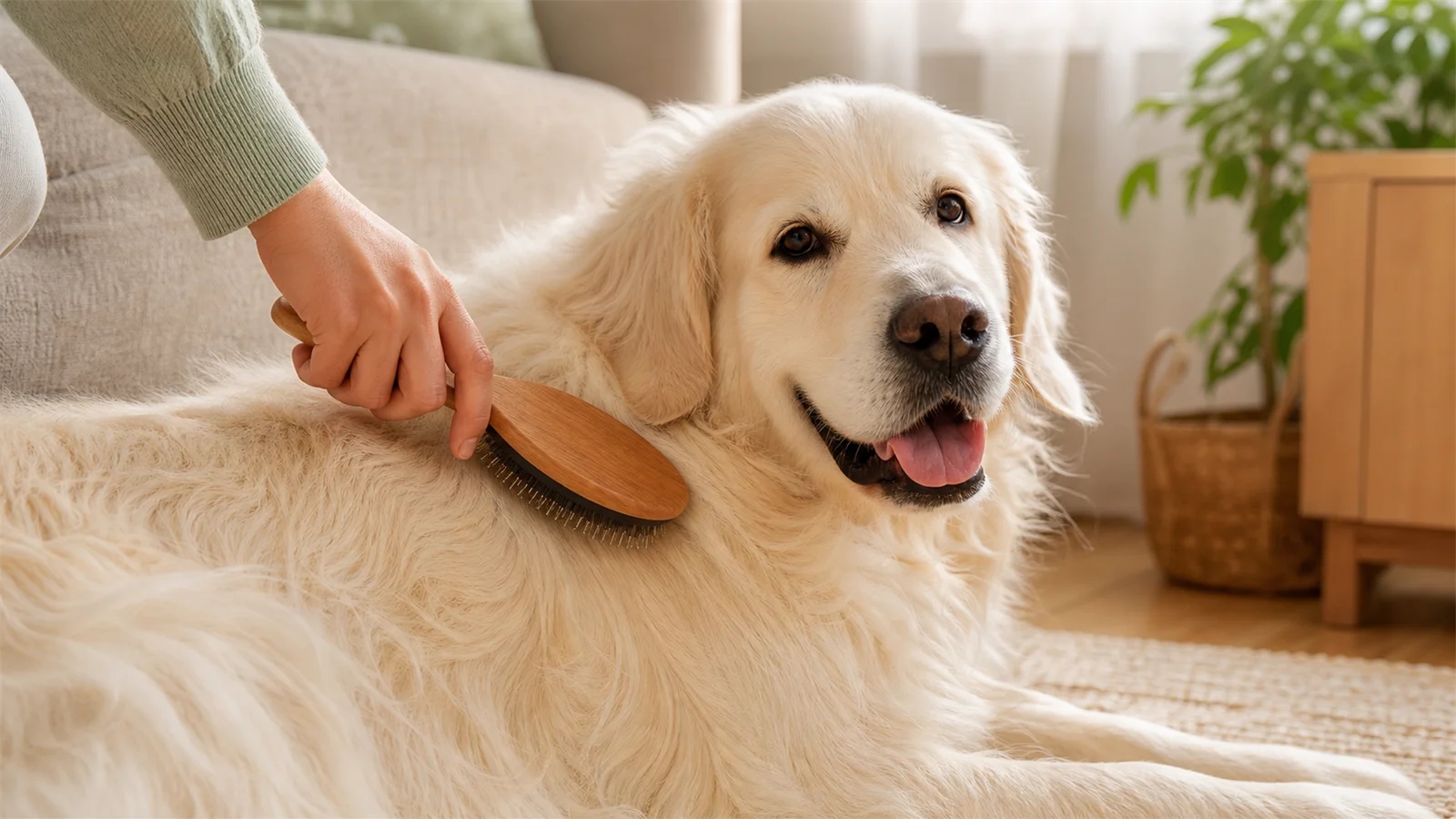
A weekly dog brushing routine works best when it matches your dog’s coat length, shedding level, and tolerance. Start with short, repeatable sessions instead of one long catch-up session. If the coat is painful, tightly matted, red, irritated, or your dog cannot be handled calmly, stop and use a qualified groomer or veterinarian.
This routine is a planning guide, not a promise that one schedule works for every dog. Coat type, season, health, age, and handling comfort all change the plan.
The Simple Weekly Brushing Rule
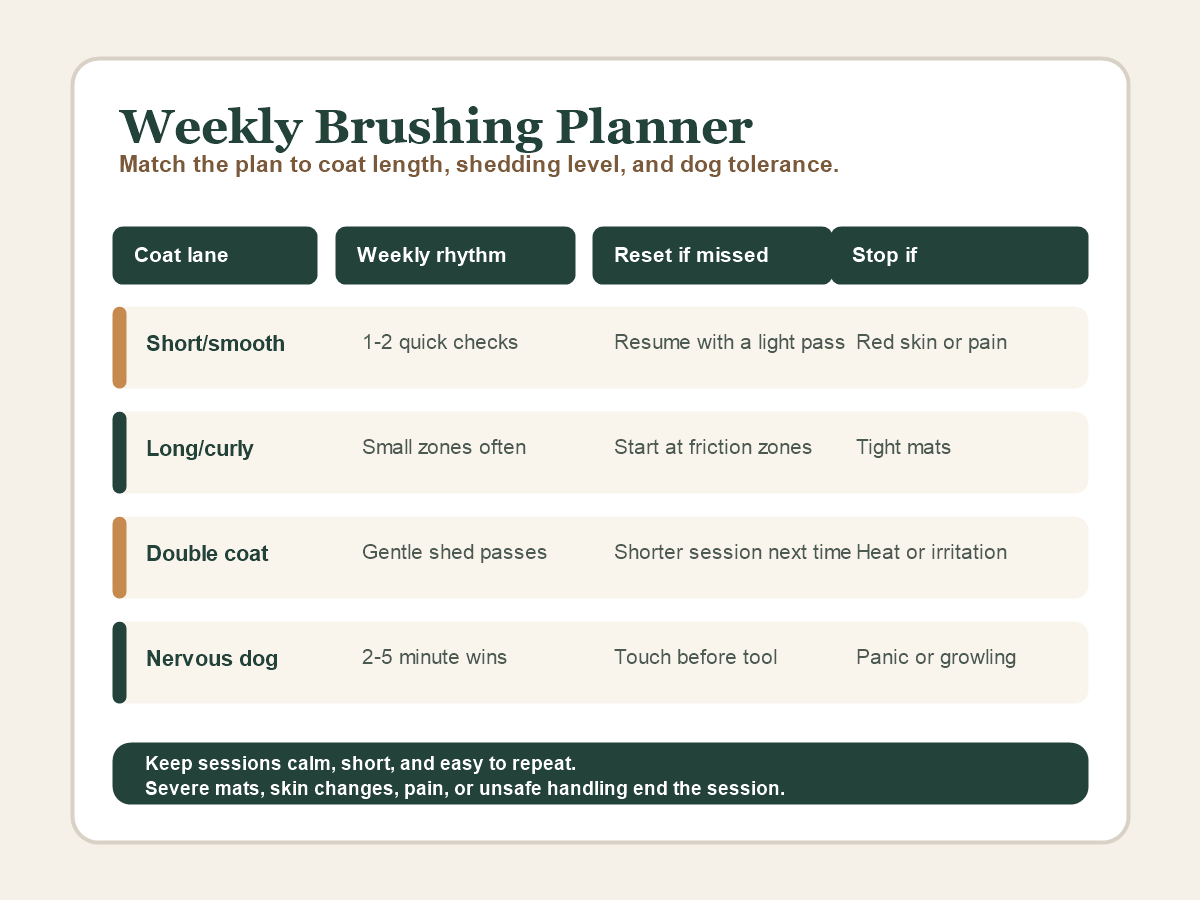
Use the easiest routine your dog can tolerate consistently. A short smooth coat may only need quick checks and loose-hair passes. A long, curly, feathered, or double coat usually needs more frequent small-zone brushing so tangles do not build up.
For broader grooming timing, use the dog grooming schedule by coat type alongside this weekly brushing planner.
Weekly Brushing Planner
| Coat lane | Weekly rhythm | Where to focus | Reset if you miss a session |
|---|---|---|---|
| Short or smooth coat | One or two quick checks | Loose hair, dirt, skin changes, paws | Resume with a light pass; do not overbrush to catch up |
| Long, curly, or silky coat | Several small sessions | Behind ears, collar line, armpits, belly, tail, rear legs | Start with friction zones and stop if tangles pull |
| Double coat or shedding coat | Gentle shed checks, more during seasonal shedding | Loose undercoat, comfort, skin irritation, overheating risk | Use shorter sessions rather than one intense session |
| Nervous or low-tolerance dog | Two- to five-minute wins | Touch-before-tool practice, calm release, reward breaks | Restart with handling only before brushing again |
What to Check Before You Brush
Before brushing, part the coat gently in a few areas and check for:
- Red, raw, flaky, swollen, wounded, or painful skin.
- Parasites, flea dirt, hot spots, or unusual odor.
- Tight mats, pelted coat, or tangles close to the skin.
- Sudden hair loss or a coat change that seems unusual for your dog.
- Fear signs such as freezing, growling, snapping, panic, or repeated escape attempts.
The ASPCA notes that grooming time can also be a chance to check for fleas and skin concerns, while VCA emphasizes that matting and coat problems can become uncomfortable. Keep the check gentle and stop if anything looks medical or painful.
Short-Coat Weekly Routine
For many short or smooth coats, the weekly routine can be simple:
- Do a quick body check.
- Use a gentle coat-appropriate brush or mitt category.
- Wipe ordinary dirt from paws or coat if needed.
- Stop if the skin looks irritated or brushing causes discomfort.
Short coats still need observation. A dog can have skin irritation, parasites, paw problems, or handling stress even when the coat itself is easy.
Long, Curly, or Feathered-Coat Routine
Long, curly, silky, or feathered coats usually need smaller, more frequent sessions. Focus on friction zones where tangles often form: behind the ears, under the collar, armpits, chest, belly, tail, and rear legs.
Do not brush hard through tangles. If a tangle does not loosen gently, stop. Severe mats, close-to-skin mats, pain, or skin pulling belong with a qualified groomer or veterinarian.
Double-Coat and Shedding-Season Routine
For double-coated or heavy-shedding dogs, increase brushing during shedding seasons, but keep pressure and session length conservative. The goal is to remove loose coat without scraping skin, overheating the dog, or turning the session into a struggle.
If the dog is hot, tired, irritated, or trying to leave, pause or end the session. You can return later with a shorter pass.
Missed a Week? Do Not Overcorrect
If you miss a brushing session, do not make the next session twice as long. Use a reset:
- Check skin and coat first.
- Start with the easiest zone.
- Brush for a few calm minutes.
- Stop before your dog gets frustrated.
- Schedule another short session instead of forcing the full routine.
This is especially important for puppies, seniors, nervous dogs, and dogs with thick or mat-prone coats.
When to Stop Brushing
Stop brushing for pain, yelping, flinching, skin pulling, redness, sores, wounds, swelling, parasites, bleeding, sudden hair loss, tight mats, pelted coat, panic, growling, snapping, freezing, repeated escape attempts, or handling that no longer feels safe.
Use a veterinarian for medical-looking skin, pain, parasites, wounds, sudden coat changes, or infection concerns. Use a qualified groomer for severe mats or coat work you cannot safely maintain at home.
Helpful Companion Guides
- Dog grooming checklist for beginners
- Dog bathing mistakes to avoid at home
- Dog grooming schedule by coat type
Sources
Bottom Line
A weekly brushing routine should be easy to repeat, matched to the coat, and calm enough for your dog to tolerate. Brush short coats lightly, split long or curly coats into small zones, adjust during shedding season, and stop early when the coat, skin, or behavior says the session is no longer safe.
FAQ
How often should I brush my dog each week?
It depends on coat type and tolerance. Short coats may need one or two quick checks, while long, curly, feathered, or shedding coats often need smaller sessions several times a week.
What if I miss my dog’s brushing routine?
Do not overcorrect with a long session. Check the coat, start with an easy zone, brush for a few calm minutes, and schedule another short session later.
Should I brush more during shedding season?
Often yes, but keep the sessions gentle and short. More frequent light passes are safer than one harsh or exhausting brushing session.
When should I stop brushing my dog?
Stop for pain, red or wounded skin, parasites, tight mats, panic, growling, snapping, repeated escape attempts, or any handling that feels unsafe.
Can brushing replace professional grooming?
No. Brushing helps with routine maintenance, but severe mats, coat work you cannot safely manage, medical skin signs, pain, or unsafe handling need a groomer or veterinarian.