
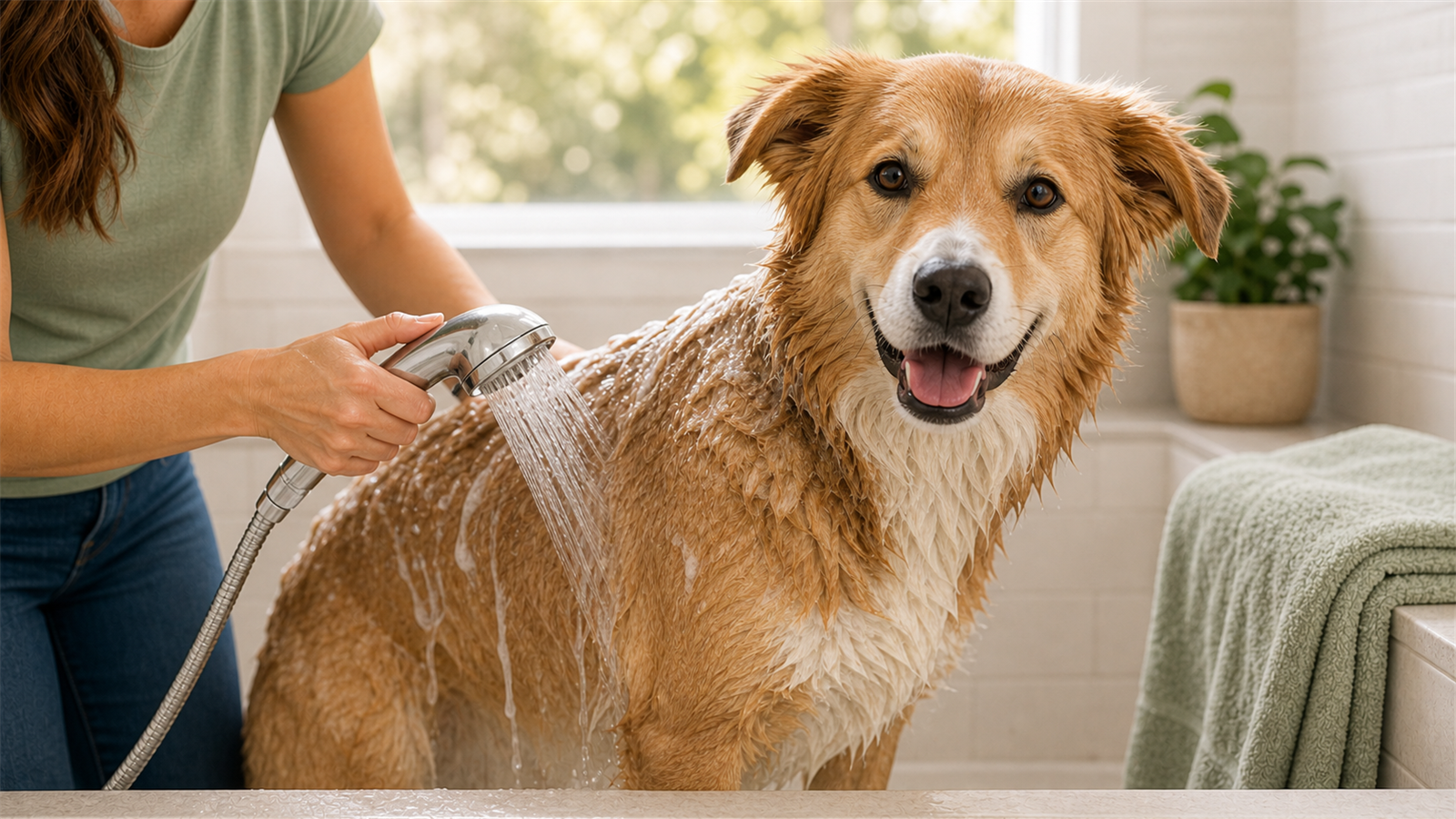
Rinse dog shampoo by working through the coat in zones, not just by spraying the top of the back until the water looks clearer. Shampoo can hide in armpits, belly fur, feet, tail areas, folds, feathering, and dense undercoat.
Keep water and soap out of the eyes, ears, nose, and mouth. Stop if the dog is panicking, the skin looks irritated, or handling no longer feels safe.
Why Complete Rinsing Matters
VCA medicated-shampoo guidance stresses rinsing all shampoo from the body and not leaving residue on the skin. The same residue concern matters during routine bathing, even when the shampoo is not medicated.
The MSD Veterinary Manual notes that shampoo residue can irritate skin. Rinsing is not a quick final splash; it is its own step.
The Rinse-Check Sequence
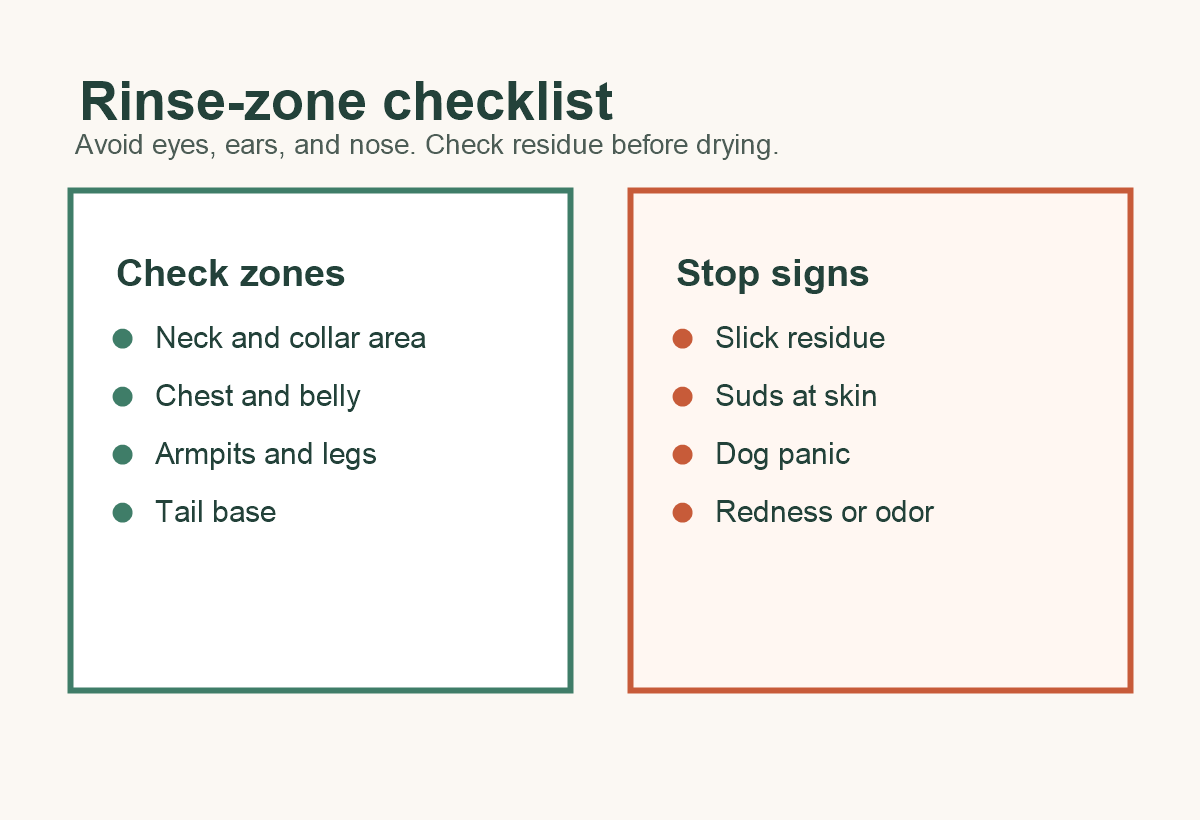
Start at the neck and shoulders, then move down the body. Work through the chest, belly, legs, and feet. Recheck armpits, tail base, feathering, folds, and any dense coat zones before drying.
Use your fingers to part the coat gently where the dog is comfortable. The goal is to let water reach the skin level without scrubbing painful skin or forcing the dog into a risky position.
Common Missed Zones
The easiest places to miss are the armpits, belly, chest, tail base, feet, legs, skin folds, long feathering, and dense undercoat. These areas can still feel slick after the topcoat looks clean.
If the dog has mats, painful skin, folds with odor, or areas that cannot be handled calmly, do not push through. Use a veterinarian or qualified groomer.
Rinse Checks by Coat Type
Smooth coats need a surface check plus belly and feet. Dense double coats need extra time near the skin and undercoat. Long or feathered coats need attention at the ends, armpits, tail, and leg feathering. Curly or wavy coats can hold residue inside tight coat texture. Folded-skin areas need gentle rinsing and careful drying when the skin is healthy.
These checks are clues, not a guarantee. Some skin conditions, coat types, and products need professional guidance.
Residue Feel Test and Water Clarity
Clearer water, fewer suds, less slickness, and normal coat texture are useful signs. They do not prove every bit of residue is gone in every dog.
If the coat still feels slippery, soapy, strongly scented, or heavy, keep rinsing. If the skin becomes red, painful, or irritated, stop and get guidance instead of continuing to scrub.
Rinse Water Temperature and Spray Direction
Use lukewarm, not hot, water. ASPCA grooming guidance supports keeping water out of the ears, eyes, and nose during bathing. Aim the spray away from the face and keep the flow gentle enough that the dog stays under control.
Stop Signs After Shampoo or Rinsing
Stop for open sores, burns, infection signs, persistent itching, redness, odor, distress, panic, aggression, a medically fragile dog, or unsafe handling. Do not treat a bath as a fix for a skin problem that needs veterinary care.
FAQ
How do I know dog shampoo is fully rinsed?
Use several clues: clearer water, fewer suds, less slickness, and normal coat feel. Treat those as checks, not proof.
What happens if shampoo stays on a dog’s skin?
Residue can irritate skin. Persistent redness, itching, odor, or distress should be checked by a veterinarian or qualified groomer.
Which areas are easiest to miss?
Armpits, belly, chest, tail base, feet, folds, feathering, and dense undercoat areas are commonly missed.
Should rinse water be warm or cold?
Use lukewarm water. Avoid hot water and icy water.
What should I do if my dog is itchy after a bath?
Do not assume it is only residue. If itching persists or comes with redness, odor, pain, or distress, contact a veterinarian.
Bottom Line
Rinse by zone, check the hidden areas, and keep going while the coat feels slick or sudsy. Stop quickly for skin changes, distress, or unsafe handling.