
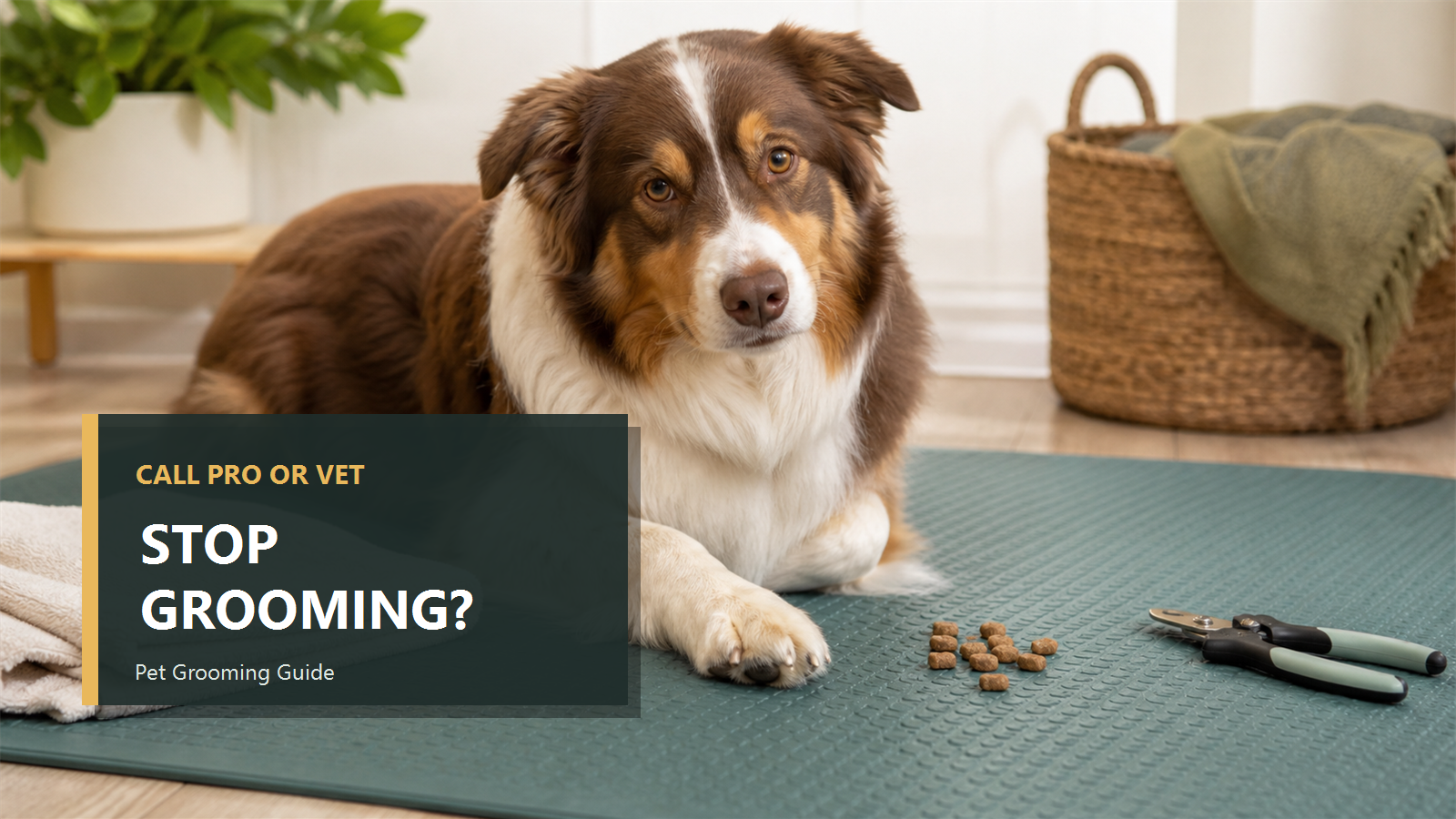
Stop grooming and call a professional when the coat, skin, behavior, breathing, paws, nails, ears, eyes, or tools move outside a calm routine home session. Some problems belong with a groomer, some belong with a veterinarian, and unsafe tools belong with the manufacturer or service route.
This is a routing guide, not a treatment guide. It does not diagnose, treat, sedate, restrain, demat severe coats, or repair tools.
The Simple Rule: Pause, Stop, or Call
| Signal | What it usually means for the home session |
|---|---|
| Mild wiggles, short attention span, normal coat | Pause, shorten the session, or retry later |
| Tangles beyond your skill, coat uncertainty, advanced trim need | Stop and call a professional groomer |
| Pain, wounds, bleeding, swelling, discharge, limping, breathing trouble | Stop and call a veterinarian |
| Damaged, wet, sparking, overheating, rusty, or broken tool | Stop using the tool and contact the manufacturer or service route |
If you are unsure, end the session. A stopped session is easier to fix than a pushed session that becomes painful or unsafe.
Original Red, Yellow, Green Routing Matrix
Pet Grooming Guide original framework: sort the moment by risk, then choose the safest next route.
| Status | Example | Next action |
|---|---|---|
| Green | Calm dog, normal coat, safe tools | Continue gently |
| Yellow | Dog needs a break, minor tangle, owner unsure about one task | Pause, simplify, or skip that task |
| Red – groomer | Severe mats, advanced trim, coat uncertainty | Stop and call a professional groomer |
| Red – vet | Pain, wounds, limping, discharge, breathing trouble | Stop and call a veterinarian |
| Red – manufacturer | Damaged cord, sparks, rust, overheating, wet electrical tool | Stop using the tool and contact the service route |
Coat and Mat Stop Signs
Call a professional groomer for severe mats, painful mats, pelted coat, mats close to skin, or coat problems you cannot separate safely with gentle brushing. Do not cut mats out at home and do not force a brush through them.
Call a veterinarian if mats are paired with sores, bleeding, swelling, discharge, skin odor with irritation, parasites, or obvious pain. A groomer can help with coat handling, but medical signs need veterinary guidance.
Skin, Ear, Eye, and Paw Stop Signs
Stop grooming and contact a veterinarian for wounds, sores, bleeding, redness, swelling, discharge, odor with irritation, eye squinting, eye discharge, eye pain, ear pain, ear discharge, strong ear odor with discomfort, limping, paw pain, burns, blisters, embedded-object concern, sudden sensitivity, excessive licking, parasites, or severe scratching.
Do not try to treat these during grooming. Do not apply medication, pesticide products, antiseptics, disinfectants, bandages, or home remedies from this page.
Behavior and Handling Stop Signs
Pause for normal restlessness. Stop for panic, growling, snapping, repeated attempts to escape, aggression risk, or any handling that would require force.
If there is no medical emergency but the dog cannot be handled safely, call a professional groomer or a qualified handling-support route. If the behavior is sudden, paired with pain, or paired with medical signs, call a veterinarian.
Breathing, Heat, and Chemical Exposure
Stop immediately and call a veterinarian or emergency veterinary route for breathing trouble, collapse, heat stress signs, burns, blisters, or chemical exposure concern.
Do not continue drying, bathing, clipping, brushing, or nail work while you wait through breathing or collapse signs.
Nails and Paws
Stop nail work for pain, bleeding, repeated pulling away, limping, swelling, sudden sensitivity, or unsafe handling. Pain or bleeding means the session ends.
For paw pads, stop and call a veterinarian for cuts, burns, blisters, discharge, swelling, embedded-object concern, excessive licking, limping, or chemical exposure concern. If the issue is setup rather than injury, use the dog nail trimming setup checklist before trying again another day.
Tool and Electrical Stop Signs
Stop using a grooming tool and follow the manufacturer or professional service route for damaged cords or plugs, cracked housing, sparks, burning odor, overheating, water exposure, rust, broken or sharp blade teeth, missing guards, abnormal noise, or dropped electrical tools.
Do not open the tool, repair cords, sharpen blades, diagnose electrical problems, or keep using a tool because it still turns on. For basic non-repair care, use the appropriate tool-cleaning guidance after the tool is safe to handle.
Call Groomer vs Call Vet
| Call a groomer when | Call a veterinarian when |
|---|---|
| The coat is matted beyond gentle brushing | The dog has pain, bleeding, swelling, discharge, or injury |
| The trim requires skill you do not have | The dog is limping, collapsing, struggling to breathe, or showing heat stress signs |
| The dog needs a calmer professional setup without a medical emergency | Ear, eye, paw, skin, chemical, parasite, or sudden sensitivity signs appear |
| You are unsure how to handle coat safely | The issue looks medical, painful, infected, or urgent |
FAQ
When should I call a groomer instead of trying at home?
Call a groomer for severe mats, painful mats, advanced clipping, breed-specific trims beyond your skill, coat uncertainty, or handling that cannot be completed calmly and safely.
When should I call a vet after grooming?
Call a veterinarian for pain, limping, wounds, bleeding, swelling, discharge, odor with irritation, eye or ear symptoms, burns, blisters, breathing trouble, collapse, chemical exposure concern, parasites, or sudden skin changes.
Should I keep grooming if my dog panics?
No. Stop the session. Panic increases injury risk and can make future grooming harder. Resume only with a safer plan and appropriate professional help if needed.
Can I fix a clipper problem during grooming?
No. Stop using damaged, wet, sparking, overheating, rusty, or broken tools and follow the manufacturer or professional service route.
Bottom Line
A safe home grooming session has permission to stop. Pause for mild restlessness, call a groomer for coat or handling tasks beyond your skill, call a veterinarian for pain or medical signs, and stop using any damaged or unsafe tool. Ending early is part of safe grooming.