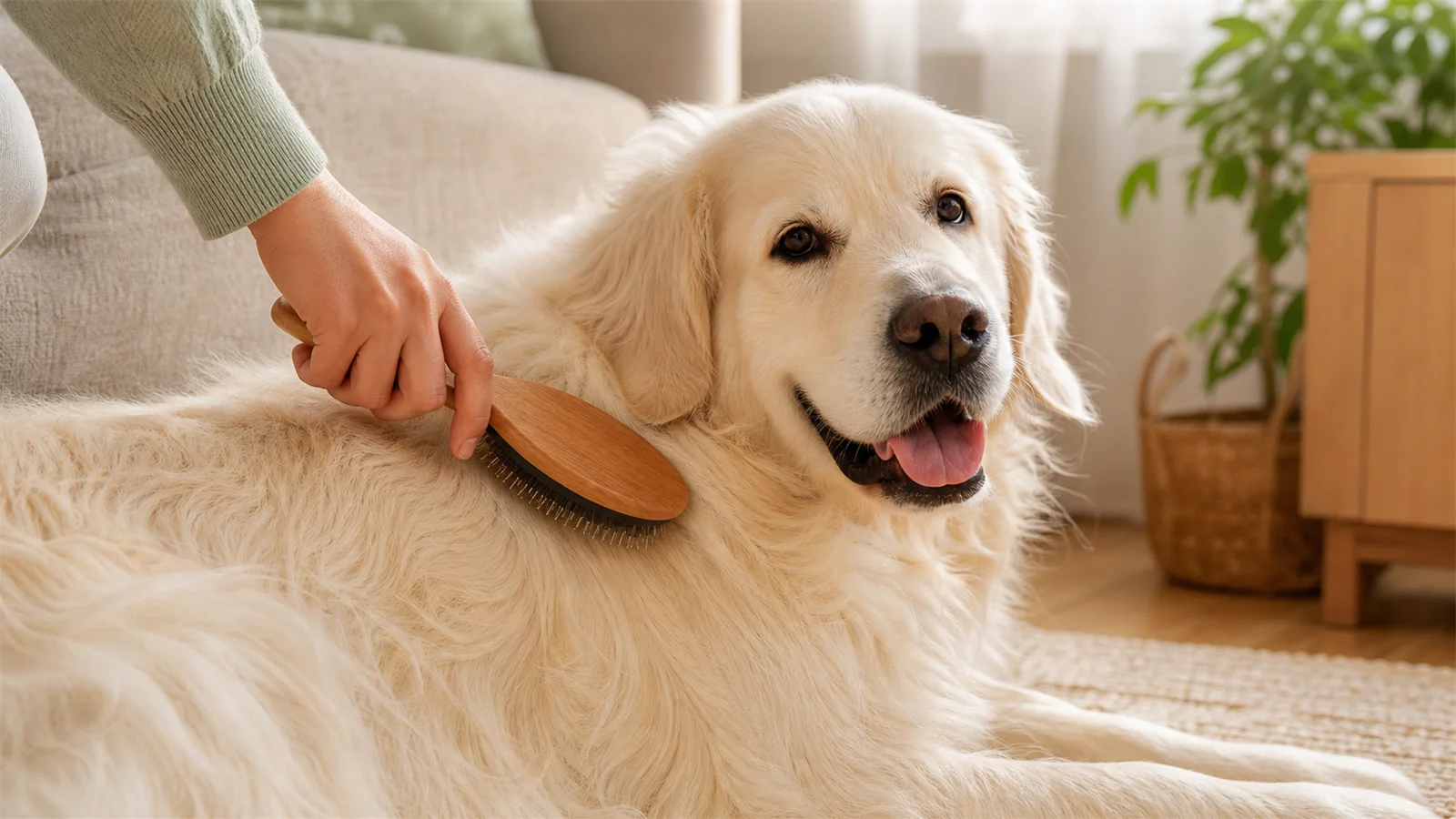

A weekly dog grooming mini routine should help you check the coat, paws, face, nails, and comfort level without pretending every dog can be fully groomed in 10 minutes. The goal is to catch what needs attention and do a small amount safely.
Quick Answer
Use a short weekly check split into must-do items, nice-if-time extras, and tasks that are safe to skip on a rushed or stressful day. Split across two or three short sessions if your dog needs a slower pace.
In practice, the owners who stick with a weekly routine are rarely the ones who do the most each session — they are the ones who do the same small thing on the same day every week. Pick an anchor point that already exists in your schedule (Sunday evening, or right after the last walk of the week) and attach the check to it. A routine that lives in your calendar survives busy months; a routine that depends on motivation does not.
The 10-Minute Weekly Check
Use the time as a guide, not a rule. If your dog needs a slower pace, split the routine across two or three short sessions.
A workable split for a dog who fidgets is three three-minute blocks: one for the front end (face, ears, collar line), one for the coat, and one for the paws and nails. Blocks can sit hours apart or even on different evenings. Ending a block before your dog starts to squirm is what buys you an easier session next week — stopping after the squirm teaches the dog that wriggling ends the handling.
Before You Start: A Five-Item Kit
You do not need a grooming table or clippers for a maintenance check. Keep a small basket wherever you actually do this — by the back door or beside the sofa — containing:
- A slicker brush or pin brush suited to your dog’s coat, plus a metal comb for testing whether you actually got to the skin.
- A stack of plain washcloths or unscented wipes for face, beard, and paws.
- A pet-safe nail file or grinder if you only intend to blunt an edge rather than trim.
- A small towel for damp feet and ear flaps.
- A notebook or a note on your phone for the “skipped this week” list.
Keeping the kit assembled removes the most common failure point: the five minutes you lose hunting for the comb, which is usually the five minutes that kills the session.
Must Check
Check the coat for tangles, the paws for debris, the face for dried food or discharge, and the nails for length or broken edges. Also note whether your dog is relaxed enough for handling today.
Work in the same order every week so nothing quietly disappears from the list. A practical sequence is nose-to-tail, then top-to-bottom: eyes and muzzle, ears and ear flaps, neck and collar line, back and sides, belly and armpits, hindquarters and tail base, then all four feet. Friction points — behind the ears, under the collar, the armpits, and the britches — are where mats form first, and they are also the spots busy owners skip because they are awkward to reach. Run the comb, not just the brush, through those four areas; a brush can glide over the top of a mat and leave you falsely reassured.
Nice If Time
Brush one or two coat zones, wipe paws, clean around the collar line, or add one short nail-handling practice. Stop while your dog is still coping.
The “nice if time” tier is also where handling practice belongs. Thirty seconds of holding a paw, touching each nail, and releasing before the dog pulls away is worth more over a year than one long, tense nail session. The same applies to ears and muzzle: touch, praise, release. If your dog has a beard or long muzzle furnishings, a quick post-meal tidy of the whiskers during the week means the weekly check is not fighting hardened food.
Safe to Skip Today
Skip bathing, nail trimming, tail tangles, or face work if the dog is stressed, the coat is matted, or you are rushed. A skipped task with a note is better than forced grooming.
Write the skip down rather than trusting memory. Two words are enough — “left rear mat” or “nails, dog tense” — because the value is in the pattern, not the entry. If the same item is skipped three weeks running, it has stopped being a scheduling problem and become either a handling problem (the dog dislikes it) or a scope problem (it needs a groomer). Both have different fixes, and you cannot tell them apart without the notes.
Weekly Mini-Routine Card
Tier Tasks
Must check Coat tangles, paw debris, face check, nail length
Nice if time Brush one zone, wipe paws, collar-line check
Skip safely today Bathing, nail trim, tail tangles, face work if stressed
The Same Card, Laid Out
| Tier | Tasks | Rough time | Skip rule |
|---|---|---|---|
| Must check | Coat tangles, paw debris, face check, nail length, comfort read | 3–4 min | Never skipped — looking is always safe |
| Nice if time | Brush one zone, wipe paws, collar-line check, nail handling practice | 3–5 min | Skip if the dog is unsettled |
| Skip safely today | Bathing, nail trimming, tail tangles, face work on a stressed dog | — | Skip freely, but log it |
The must-check tier is inspection only, which is why it survives even the worst week — you are gathering information, not performing a procedure.
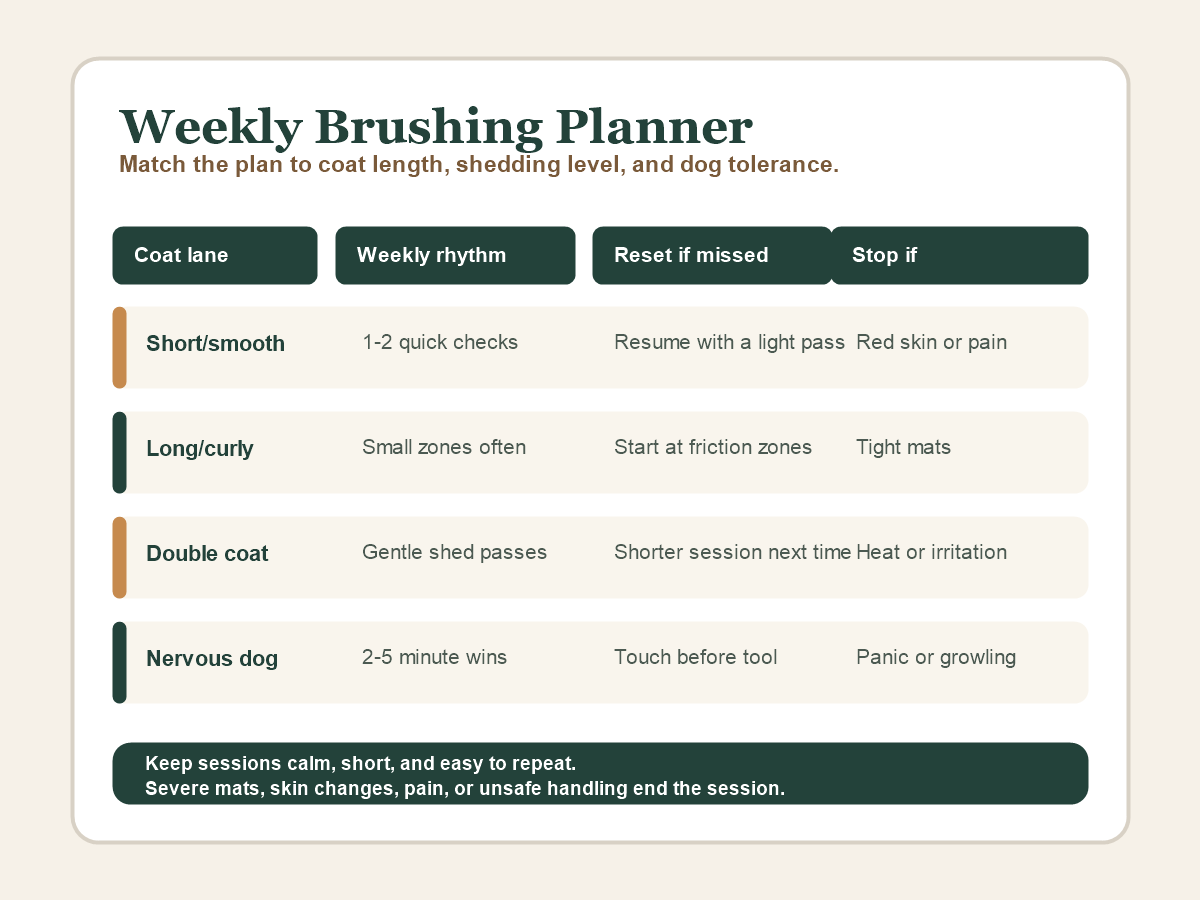
Matching the Routine to Your Dog’s Coat
A single weekly slot works differently depending on what your dog is wearing. Use this to decide where your limited minutes go:
| Coat type | Examples | Weekly focus | Watch for |
|---|---|---|---|
| Short, smooth | Beagle, Boxer, Staffie | Rubber curry over the body, paws, nails | Skin lumps and grass seeds, easily seen |
| Double coat | Husky, German Shepherd, Corgi | Undercoat rake on rear and ruff | Packed undercoat near the hips during shedding season |
| Long silky | Yorkshire Terrier, Maltese, Setter | Comb-through of ears, armpits, britches | Mats behind the ears and under the collar |
| Curly / wool | Poodle, Doodle crosses, Bichon | Line brushing one zone per week to the skin | Tight mats that feel flat, not lumpy |
| Wire | Terriers, Schnauzer | Comb through the beard, legs and eyebrows | Food and water held in the furnishings |
Curly and wool coats are the ones that most often defeat a ten-minute plan. If that is your dog, resist the urge to spread the brushing thinly across the whole body; pick one section, brush it properly down to the skin, and leave the rest for next week. Thin coverage everywhere produces a coat that looks brushed and mats anyway.
Reading Comfort Before You Handle
The “is my dog relaxed enough today” item is not padding — it decides whether the rest of the routine is useful or counterproductive. Look for the quiet signals rather than the loud ones: lip licking with no food around, a head turned away, whale eye, a lowered tail, a sudden shake-off, or freezing when you reach for a paw. Any of those means shorten the session, not push through it. The American Veterinary Medical Association and most veterinary behaviour resources make the same point about handling generally: a dog that has learned grooming predicts discomfort becomes harder to handle every year, including at the vet.
A common mistake is reading stillness as compliance. A dog who has gone rigid and stopped moving is often more stressed than one who wriggles. If your dog freezes, put the brush down, feed something, and try again later at a smaller scale.
The Pressure Question
More weekly routines fail from brushing too hard than from brushing too little. If you can see pink skin, tram-line scratches, or your dog flinches on the same stroke every week, the tool is being pressed rather than drawn. Working out how firmly to lean on the coat is worth one deliberate session, because once the pressure is right, brushing stops being a negotiation. As a rough test: the brush should move under the weight of the tool plus a light hand, and you should be able to slide a comb through afterwards without catching.
Face, Beard and Ear Flaps in Under Two Minutes
Faces accumulate more than owners expect between weekly checks — food, water, saliva, and outdoor debris all collect in the same few places. If you have a bearded or drooly dog, a short daily wipe makes the weekly check almost trivial; without it, you are chiselling rather than grooming.
- Muzzle and beard. A damp cloth along the grain, then a dry one. Owners of heavy droolers usually find that a daily slobber routine prevents the sour smell that otherwise turns up on week two.
- Ear flaps. Check the underside where hair mats against the head, and dry the flaps whenever they get wet. The same towel pass used after a bath works after rain or a paddling pool.
- Eye corners. Wipe outward with a fresh corner of cloth for each eye. Persistent discolouration is worth tracking week by week rather than treating on a whim, because the cause matters more than the stain.
- Chin and neck fold. Damp fur trapped under a collar is a reliable source of odour; loosen the collar for the check and dry underneath.
Trade-off worth naming: daily face wipes add about sixty seconds a day but remove the single most common reason weekly sessions overrun. If you can only add one daily habit, make it this one.
Paws, Nails and What the Weekly Check Should Catch
Paws are the highest-yield part of the whole routine because problems there show up as limping fast. Spread the toes and look at the webbing, the pad edges, and the nail beds. Grit, seeds and salt lodge in the gaps, and a quick look between the toes after lawn time catches most of it before it embeds. Dogs who walk on hard surfaces pick up different debris, so an end-of-day sweep for grit suits city and porch-access households.
For nails, the weekly job is assessment, not always trimming. Ask three questions: is the nail touching the floor when the dog stands square, is any edge split or hooked, and is there a nail catching on rugs? If a claw has caught and torn, file the rough edge if the dog tolerates it and leave the rest alone. Bleeding, a nail pulled from the bed, or obvious pain is a vet matter, not a grooming one — teaching resources from veterinary schools such as Cornell’s College of Veterinary Medicine are consistent that nail-bed injuries can involve the quick and become infected.
Small trims taken often beat one long trim taken rarely: shaving a millimetre weekly encourages the quick to recede, while waiting two months guarantees you either cut short or cut into it.
A Simple Weekly Rotation
Week one can focus on coat and collar line. Week two can focus on paws and nail length. Week three can focus on face and outer-area comfort signals. Week four can review what kept getting skipped.
The fourth week is the one people abandon first, and it is the most valuable. Sit down with your notes for five minutes and sort the skips into three buckets: do it next week, needs a calmer approach, and book the groomer. That single sorting step is what stops a mini routine from silently degrading into a monthly glance. If you photograph anything, keep the shots consistent — same light, same angle — because a visual record of the face over time shows drift that weekly eyes miss entirely.
Fitting It Around Bath Days and Groomer Appointments
The weekly check is maintenance between fuller grooms, so let the professional appointment set the rhythm. In the two weeks before a groom, prioritise brushing out mats — a dog that arrives matted usually leaves shaved, whichever salon you use. In the week after a groom, prioritise paws and face while the coat is short and easy, and use the time to build handling tolerance instead.
On bath weeks, the mini routine changes shape: brush thoroughly before water goes anywhere near the coat, because wetting a tangle tightens it. Dry properly afterwards, especially ear flaps, armpits and the tail base. Damp fur left in a fold is the origin of most “why does my dog smell three days after a bath” complaints.
Common Mistakes to Avoid
- Brushing only the top coat. The comb test is the honest one; if the comb stops, the brush did not finish.
- Turning the check into a wrestling match. One forced nail session can cost months of cooperation.
- Saving everything for a “proper session”. The proper session never comes during a busy stretch, which is precisely when problems develop.
- Bathing to solve a mat. Water shrinks mats. Brush first, always.
- Grooming immediately after arousing activity. A dog straight off a walk or out of play is a poor candidate for still handling; give ten minutes of settling first.
- Skipping the notes. Without the log, every week starts from zero and nothing accumulates.
Where the Routine Stops Being Enough
Some dogs genuinely cannot be maintained on ten minutes a week — heavy double coats in spring, wool coats at full length, seniors with skin changes, and dogs who find handling frightening. That is not a failure of the routine; it is information. In those cases the weekly check becomes a triage tool: you use it to decide what the groomer or vet needs to deal with, and you protect the relationship by not attempting the hard parts yourself.
Current professional guidance has moved firmly in this direction — the value of an owner’s weekly routine is early detection and desensitisation, with the technical work left to people with the right equipment. That framing is more useful than any stopwatch target.
Safe Limits For This Page
This routine does not cover mat cutting, ear treatment, nail quick care, skin diagnosis, or forceful handling. Stop for pain, panic, aggression risk, wounds, severe tangles, abnormal skin, limping, bleeding, or breathing trouble.
Call a groomer for coat problems you cannot safely brush out. Call a veterinarian for wounds, pain, sudden hair loss, limping, skin changes, or nail injuries.
Never cut a mat with scissors. Matted fur pulls skin up into the tangle, and the skin underneath is often thinner and closer than it looks — this is one of the most common causes of accidental grooming wounds in home settings. Clippers used flat under the mat by a groomer are the safe answer.
FAQ
Can I really groom my dog in 10 minutes a week?
Ten minutes is a guide, not a promise. Some dogs need shorter, more frequent sessions instead.
What if I miss a week?
Pick up where you left off. A monthly review can help you notice patterns in what keeps getting skipped.
Does this replace a full grooming session?
No. It is a maintenance check between fuller grooming sessions or professional appointments.
Frequently Asked Questions
What is the single most important item if I only have three minutes?
Paws and coat friction points. Paw problems cause lameness quickly, and mats behind the ears and under the collar are the ones that turn a brush-out into a shave-down. Face wiping matters, but it is easier to catch up on than a mat.
How do I tell a tangle from a true mat?
Slide a comb in at the base. A tangle lets the comb through with light teasing from the ends inward. A mat feels like felt — flat, dense, and moving with the skin when you tug gently. Tangles are a home job; mats are a groomer job.
Should I brush a wet or dry coat?
Dry, in almost every case. Brushing wet fur stretches the hair and tightens existing knots. If you use a detangling spray, apply it lightly to a dry coat and work in sections rather than soaking the dog.
How often should nails actually be shortened?
Most dogs need attention every two to four weeks, but pavement walkers wear nails down faster than lawn walkers, and dewclaws never wear at all. Use the “clicking on hard floors” test weekly and act on it rather than working to a fixed calendar.
My dog hates having his feet touched — where do I start?
Below the threshold that triggers the reaction. Touch the shoulder, feed, stop. Next session, the elbow. Then the wrist, then the foot, then a single toe. Progress measured in weeks is normal, and it is far faster in the long run than one battle a month.
Is a weekly wipe enough for a beard, or does it need daily attention?
Bearded and wiry-muzzled dogs almost always need something daily, even if it is only ten seconds with a cloth after drinking. Water and food sit in the furnishings and sour fast; the weekly session then becomes a comb-through rather than a rescue operation.
Can puppies follow the same routine?
Yes, and they should — but flip the emphasis. For a puppy, the point is handling tolerance, not coat condition. Very short, very frequent, heavily rewarded sessions covering paws, ears, mouth and tail will pay off for the dog’s entire life.
What about senior dogs?
Shorten sessions, support the body with a non-slip surface, and be alert to new lumps, thinning coat, dandruff, or reluctance to have a particular area touched. Seniors often develop nail overgrowth because they walk less, so nails move up the priority list even as brushing time comes down.
Do I need professional-grade tools?
No. One correctly matched brush, one metal comb, cloths and a towel cover the weekly routine. Money is better spent on the right type of brush for your dog’s coat than on an expensive version of the wrong one.
Bottom Line
Busy owners need a routine that fits real life. Check the important areas, do one small task well, and write down what should wait for a calmer day or a professional.
Start this week: print the three-tier card, put your brush, comb and two cloths in one basket by the door, and run the four must-check items on your dog tonight — it takes three minutes and it will tell you exactly which of the routines above your dog actually needs next.