
Your cat has scabs, and you're fairly certain she's causing them herself. You've watched her lick, bite, and groom the same spots on her belly until the fur thinned and tiny crusty bumps appeared. The cycle is exhausting.
She grooms, the skin gets worse, so she grooms more. Here's the critical thing to understand: over-grooming is a symptom, not a disease. Something is driving that behavior, and until you identify the root cause, those scabs will keep coming back.
The good news is that most causes are manageable. Flea allergy dermatitis alone accounts for roughly 60% of miliary dermatitis cases in cats, according to veterinary dermatology research. Food allergies, environmental triggers, and underlying pain make up most of the rest.
As of 2026, the diagnostic approach is more streamlined than ever, with vets following a clear ladder of tests to find the trigger. That said, this process takes patience. A proper food trial runs 8 to 12 weeks minimum, and missteps along the way can reset the clock entirely.
Let's walk through what you're seeing, what it means, and exactly how to fix it without going in circles.
Quick Answer
Cat scabs from over grooming are usually caused by an underlying itch, pain, or stress. Flea allergy dermatitis is the most common trigger. Food and environmental allergies are close behind.
Treatment requires finding the root cause, not just stopping the licking. See a vet if scabs appear infected, spread rapidly, or cover large areas. Never use dog flea medication on a cat, as it can be fatal.
Why This Needs a Careful Approach
Here's what surprises most cat owners: over-grooming is rarely a behavioral problem. Studies consistently show that psychogenic over-grooming, where the cat grooms purely due to anxiety or obsessive-compulsive tendencies, is the actual diagnosis in only about 10% of cases. Most veterinary dermatologists treat it as a diagnosis of exclusion.
That means your vet will only consider it after ruling out every medical cause first.
The danger of guessing wrong is significant. If you assume stress is the culprit and skip the medical workup, you could miss a flea infestation, a food allergy, or even internal pain from arthritis or bladder inflammation. Worse, untreated over-grooming leads to secondary bacterial infections, a condition called pyoderma.
Those tiny scabs can become weeping, painful lesions that require antibiotics and more aggressive treatment.
There's also the risk of masking. Over-the-counter anti-itch sprays and home remedies might temporarily calm the skin, but they don't stop the underlying trigger. The cat keeps grooming, the scabs keep forming, and you've lost precious weeks that could have gone toward a proper diagnosis.
A structured approach saves time, money, and your cat's comfort. Most cases resolve within 2 to 4 weeks of starting the correct treatment, but only if you identify the right trigger first.
What Over-Grooming Actually Looks Like
Identifying over-grooming requires more than noticing your cat licks herself. All cats groom. It's normal and healthy.
The key is distinguishing normal grooming behavior from the compulsive, damaging kind that creates scabs.
Normal grooming happens in sessions, usually after meals or naps. The cat licks her fur, maybe nibbles at a tangle, and moves on. Her coat stays smooth, and her skin remains healthy underneath.
Over-grooming looks different. You'll start to see thinning hair, often in a symmetrical pattern on the belly, inner thighs, or along the flanks. The hair that remains looks stubby, almost like it's been cut with scissors.
That's a classic sign called barbering, where the cat's rough tongue breaks the hair shafts rather than pulling them out.
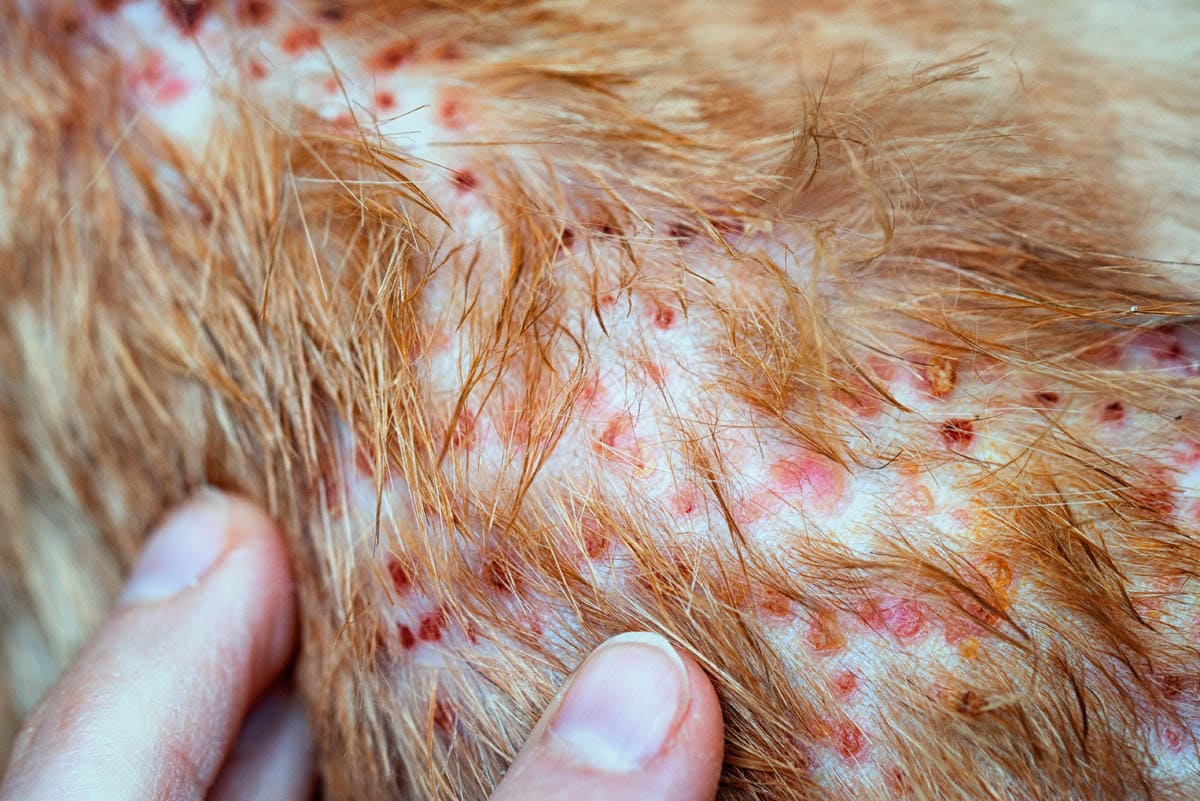
Image source: Bing (Web (fair-use with source credit))
Miliary dermatitis is the specific skin reaction most often linked to over-grooming scabs. The term comes from the Latin word for millet seeds, which perfectly describes the small, crusted bumps that appear on the skin. These tiny papules feel like sandpaper under your fingers and often show up along the back, neck, and tail base, though they can appear anywhere on the body.
The Locations That Point to Specific Causes
Where the scabs appear matters more than most owners realize. The pattern gives your vet valuable clues before any testing begins.
Belly and inner thighs. This is the most common over-grooming zone. It's where cats can reach easily while lying down. Flea allergies, food allergies, and psychogenic grooming all show up here first.
Tail base and lower back. This pattern strongly suggests flea allergy. Fleas tend to bite around the rump and tail, and a hypersensitive cat will over-groom that entire region in response.
Head, neck, and ears. Over-grooming in these areas often points to environmental allergies (atopy) or food allergies. Pollen, dust mites, and molds fit here too.
Front legs and paws. Lateral grooming on the front legs is sometimes called barbering and often appears with both allergies and anxiety. Paw licking can also signal joint pain or a foreign body like a grass seed.
Flanks (sides). This pattern is less common but appears in some stress-related grooming cases. It can also accompany feline hyperesthesia syndrome, a condition where the skin along the back ripples and the cat becomes hypersensitive to touch.
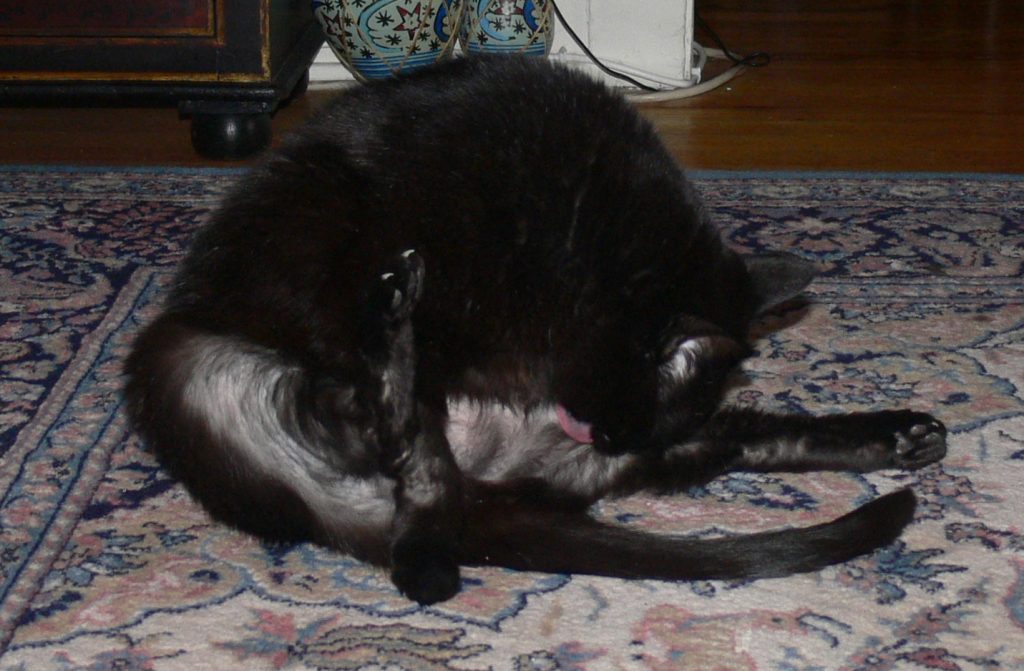
Image source: Bing (Web (fair-use with source credit))
Look for other signs beyond scabs. Redness, flaky skin, greasy fur, or a moth-eaten appearance to the coat all add context. Also pay attention to when the grooming happens.
If it occurs mostly at night or when you're away, separation-related stress could be a factor. If it happens right after meals, food allergy moves up on the suspicion list.
The Usual Suspects: Why Cats Over-Groom
Understanding the root causes of over-grooming is the foundation of solving the problem. Each trigger operates differently, requires a different treatment approach, and has its own timeline for resolution.
Flea Allergy Dermatitis: The Number One Offender
Flea allergy dermatitis (FAD) is the single most common cause of miliary dermatitis in cats. Here's the catch: a normal cat can be bitten by fleas and show almost no reaction. A cat with FAD has an allergic response to proteins in flea saliva.
One single flea bite can trigger intense itching for up to two weeks. That's why you might never see a single flea on your cat and still be dealing with FAD. The cat grooms so aggressively that she swallows the fleas before you ever spot them.
Treatment requires rigorous flea control. Prescription oral or topical products from your vet are significantly more effective than over-the-counter options. A single dose of a prescription product like fluralaner or sarolaner kills fleas within hours, but you must treat every pet in the household and continue prevention year-round.
Indoor-only cats still need flea prevention. Indoor fleas from visitors, other pets, or even your own clothing can trigger a reaction.
Food Allergies: More Common Than You Think
Food allergies in cats typically develop after years of eating the same diet. The most common culprits are chicken, beef, fish, and dairy. Unlike humans, cats rarely show digestive symptoms with food allergies.
Instead, the reaction manifests on the skin. Itching around the face, neck, and ears is common, but belly over-grooming also appears frequently.
Diagnosing food allergies requires a strict elimination diet trial. Your vet will likely recommend a hydrolyzed protein prescription diet or a novel protein diet using something your cat has never eaten, like rabbit or venison. The trial runs 8 to 12 weeks minimum.
That means no treats, no table scraps, no flavored medications, not even a bite of another cat's food. If the itching subsides during the trial and flares when the old food is reintroduced, the diagnosis is confirmed.
Environmental Allergies (Atopy)
Cats can be allergic to the same things humans are. Pollen, grass, mold spores, dust mites, and more can trigger an allergic response. Atopy often causes seasonal itching, though indoor allergens like dust mites cause year-round symptoms.
The pattern of over-grooming tends to involve the face, ears, paws, and belly. Unlike flea allergy, there's no single trigger you can eliminate. Treatment usually involves reducing allergen exposure, topical therapy, and sometimes immunotherapy.
Immunotherapy, also called allergy shots or sublingual drops, trains the immune system to tolerate specific allergens over time. It has a success rate of roughly 60-80% in cats, according to veterinary dermatology research. It's not a quick fix, though.
Most cats need 6 to 12 months before seeing meaningful improvement.
Pain as a Hidden Trigger
Here's a scenario that catches many owners off guard. A senior cat starts over-grooming her lower belly. She has scabs from all the licking.
Everyone assumes it's allergies. But bloodwork and skin tests come back clean. The real culprit turns out to be arthritis in her hips and lower spine.
The cat discovered that licking somehow distracts from the joint pain, or the area itself is referred pain from the spine.
Feline lower urinary tract disease (FLUTD) can have a similar effect. Cats with bladder inflammation, urinary crystals, or interstitial cystitis often develop a lower belly grooming pattern. They lick to soothe the discomfort, and that grooming escalates into skin damage.
In many cases, treating the underlying urinary condition resolves the over-grooming entirely.
Your vet may recommend a trial of pain medication to see if over-grooming decreases. This diagnostic test is fast and inexpensive compared to full allergy workups. If the licking stops within two weeks of starting pain relief, you've found your culprit.
Psychogenic Over-Grooming: Real but Rarely the First Answer
Stress, anxiety, and obsessive-compulsive tendencies can absolutely cause over-grooming in cats. It's a displacement behavior, something cats do to cope with conflict, frustration, or boredom. Multi-cat households, changes in routine, new pets, or moving homes can all trigger it.
But research shows psychogenic alopecia is over-diagnosed. A review in the Journal of Feline Medicine and Surgery emphasized that behavioral over-grooming should only be diagnosed after a complete medical workup. Even when behavioral triggers seem obvious, physical causes must be ruled out first.
The two often coexist, too. A cat with flea allergy may learn to groom excessively, and that behavior persists even after the fleas are gone.
Treatment for true psychogenic over-grooming combines environmental enrichment with behavioral modification. Puzzle feeders, cat trees, window perches, and interactive play sessions help redirect the behavior. In severe cases, your vet may prescribe anti-anxiety medication like fluoxetine or clomipramine.
These drugs take 4 to 8 weeks to show full effect and should never be stopped abruptly.
How Vets Actually Diagnose This
The diagnostic process for over-grooming and scabs follows a logical, step-by-step ladder. Each step rules out the cheaper, more common causes before moving toward the complex ones. Understanding this process helps you know what to expect and why your vet is asking certain questions.
Step 1: The Physical Exam and History
Your vet will start with a full physical exam, paying close attention to skin patterns, lesion locations, and any signs of secondary infection. They'll ask about your cat's environment, diet, flea prevention history, and recent changes at home. Be thorough here.
The more context you provide, the more efficiently your vet can narrow the possibilities.
Step 2: Flea Combing and the Wet Paper Test
Before any fancy testing, your vet will likely do a flea check. This involves combing through your cat's fur with a fine-toothed flea comb, focusing on the neck, back, and tail base. Any debris that comes off gets placed on a damp white paper towel.
If it leaves reddish-brown streaks, that's flea dirt, digested blood from flea feces. This test is extremely useful because even one flea in the environment can trigger a severe reaction in an allergic cat.

Image source: Bing (Web (fair-use with source credit))
Step 3: Skin Cytology
If your vet sees scabs, crusts, or pustules, they'll likely perform a skin cytology. This involves taking a piece of clear tape and pressing it gently on the affected skin, then examining it under a microscope. This quick, painless test checks for bacteria, yeast, and inflammatory cells.
It tells your vet whether secondary infections are present and helps guide treatment choices.
Step 4: Skin Scraping and Trichogram
To rule out mites like Demodex or Notoedres, your vet may perform a skin scrape. A scalpel blade is used to gently scrape the surface of the skin to collect cells for microscopic examination. A trichogram involves plucking a few hairs and examining the roots and shafts.
This reveals whether the hair was broken, typical of over-grooming, or fell out from the root, which suggests hormonal or immune issues.
Step 5: The Food Elimination Trial
This is the gold standard for diagnosing food allergies. It involves feeding your cat a diet with a single novel protein source and a single novel carbohydrate source for 8 to 12 weeks. That means nothing else.
No treats, no table scraps, no flavored medications. If the itching subsides during the trial and flares when the old food is reintroduced, the diagnosis is confirmed.
Step 6: Bloodwork and Imaging
If the above steps don't yield clear answers, your vet may recommend bloodwork to rule out systemic conditions like hyperthyroidism or diabetes. X-rays or ultrasound can help identify pain sources like arthritis, bladder stones, or other internal issues driving the grooming behavior.
Step 7: Allergy Testing
Intradermal skin testing or serum allergy testing can identify environmental allergens for immunotherapy. This isn't typically the first step because it's more expensive and requires special equipment, but it's an excellent tool for cats with confirmed atopy that doesn't respond to management alone.
The Step-by-Step Plan for Home Management
While your vet handles the diagnostic side, there are concrete steps you can take at home to support your cat and prevent things from getting worse. These measures don't replace veterinary care, but they address immediate needs and reduce the chance of secondary infections.
Step 1: Rule Out Fleas Properly
Even if you don't see fleas, start rigorous flea control immediately. Use a prescription product from your vet rather than an over-the-counter option. Treat every pet in the household, and continue year-round, even for indoor cats.
Vacuum thoroughly, wash pet bedding in hot water weekly, and consider a household spray for severe infestations.
Step 2: Address Immediate Skin Irritation
Bathing with a veterinary-approved, hypoallergenic shampoo can remove allergens and soothe irritated skin. Look for products containing oatmeal or phytosphingosine. Do not use human shampoos, which can dry out cat skin and worsen the problem.
Follow up with a cool-water rinse to reduce inflammation.
An Elizabethan collar may be necessary for a short period to break the grooming cycle and let the skin heal. Soft fabric collars are more comfortable than plastic cones, but they must allow proper airflow to prevent moisture buildup and secondary infections.
Step 3: Enrich the Environment
Environmental enrichment is not just for behavioral cases. Even cats with confirmed allergies benefit from reduced stress. Provide vertical spaces, scratching posts, and puzzle feeders.
Set aside 15 minutes twice daily for interactive play with wand toys. This gives your cat an alternative focus and reduces compulsive grooming habits.
Step 4: Track Symptoms Systematically
Keep a daily log of your cat's grooming behavior, noting which areas she targets and any changes in pattern. Photograph the affected areas weekly so you can visually compare progress. Also track environmental factors like new products, seasonal changes, or household stress that might correlate with flare-ups.
This data is invaluable to your vet and can dramatically speed up the diagnostic process.
Step 5: Ensure Complete Food Trial Compliance
If your vet recommends a food trial, treat it as a medical protocol. Read every ingredient label, including those on treats, supplements, and even hidden sources like flavored toothpaste or plastic toys that contain animal proteins. Use unflavored medications whenever possible.
One accidental bite of the wrong food can reset the entire trial and cost you weeks.
Step 6: Prevent Licking Without Punishing
Never punish your cat for over-grooming. It creates stress, which makes the behavior worse. Instead, use negative reinforcement gently.
A bitter-tasting spray applied to targeted areas can discourage licking without causing anxiety. Apply it consistently and reapply after meals or play sessions.
Treatment Options: What Works, What Doesn't
Once your vet identifies the underlying cause, treatment becomes focused and effective. Here's what the evidence supports and what typically disappoints.
Flea Control: Prescription vs. Over-the-Counter
| Aspect | Prescription Products | Over-the-Counter Products |
|---|---|---|
| Active ingredients | Fluralaner, sarolaner, isoxazolines | Pyrethrins, fipronil (older) |
| Efficacy | 95%+ flea kill within 24 hours | 70-85%, resistance reported |
| Safety | Minimal side effects at labeled doses | Higher risk of skin reactions |
| Cost | $20-40 per dose | $10-20 per dose |
| Required | Veterinary prescription | Available without vet visit |
Prescription products are the clear winner for FAD. A single oral dose of fluralaner eliminates fleas within hours and provides protection for up to 12 weeks. Topical prescription options like selamectin also work well but require monthly application.
Never use dog flea medication on a cat. Permethrin, common in dog products, is highly toxic to cats and can cause tremors, seizures, and death. Check every label carefully.
Dietary Changes: Hydrolyzed vs. Novel Proteins
| Aspect | Hydrolyzed Protein Diet | Novel Protein Diet |
|---|---|---|
| How it works | Proteins broken into tiny pieces that evade the immune system | Uses a single protein source your cat has never eaten |
| Examples | Hill's z/d, Royal Canin Ultamino | Rabbit, venison, duck formulas |
| Trial duration | 8-12 weeks | 8-12 weeks |
| Certainty | Highly reliable | Dependent on true exposure history |
| Best for | Confirming food allergy diagnosis | Confirmed food allergy maintenance |
Hydrolyzed diets are the standard for diagnosis because they remove all intact proteins. Novel protein diets work well for long-term management once the allergen is identified. Neither works if your cat sneaks treats, human food, or another pet's meal.
Aggregate reviews consistently show that hydrolyzed protein diets outperform novel protein diets in diagnostic accuracy. Several manufacturers report compliance challenges, however, because cats often reject the taste initially. Transition slowly over 7 days, and try warming the food slightly to enhance palatability.
Medications: Steroids, Antihistamines, and Immunosuppressants
Glucocorticoids (steroids). Fast and effective for acute flare-ups. Prednisolone is the most common choice in cats. Doses of 1-2 mg/kg once daily typically provide relief within 48 hours.
Long-term use carries risks including diabetes and immunosuppression, so steroids work best for short-term control while the underlying cause is identified and treated.
Antihistamines. Cetirizine at 1 mg per cat once daily works for some cats. Antihistamines are inconsistent in feline dermatology, helping roughly 30-40% of cases. They have fewer side effects than steroids but are rarely a standalone solution.
Immunosuppressants. Cyclosporine (Atopica) works for severe allergic skin disease. It takes 4-6 weeks to reach full effect and costs more than steroids, but it's a safer long-term option. Manufacturer specifications indicate dosing at 5-7 mg/kg once daily, with dose adjustments based on response.
Behavioral Therapies: From Enrichment to Prescription Drugs
For confirmed psychogenic over-grooming, a multi-layered approach works best. Environmental enrichment provides the foundation. Puzzle feeders, automatic toys, and window perches reduce boredom and stress.
Feliway, a synthetic feline facial pheromone diffuser, helps some cats by creating a calmer environment.
When enrichment isn't enough, prescription medications help. Fluoxetine, an SSRI, is the most studied drug for feline psychogenic alopecia. It reduces grooming behavior but takes 4-8 weeks to show effects.
Clomipramine, a tricyclic antidepressant, works faster but has a higher side effect profile. Both require regular veterinary monitoring.
Why OTC "Anti-Itch" Sprays Usually Fail
Over-the-counter sprays and creams rarely help with over-grooming because they don't address the root cause. Most contain hydrocortisone or benzocaine, which numb the skin temporarily but do nothing to stop the underlying itch trigger. Worse, they can irritate broken skin and cause the cat to groom even more to remove the strange taste or sensation.
Save your money and focus on a veterinary diagnosis. A $60 exam fee and proper flea control will do more for your cat than $30 worth of sprays from the pet store.
Mistakes Cat Owners Make
Even well-intentioned owners derail their cat's recovery. These are the most common errors we see repeatedly in veterinary dermatology forums and clinics.
Stopping Flea Treatment in Winter
Fleas survive year-round in heated homes. The eggs and larvae in your carpet wait out the cold months and hatch when conditions improve. Indoor-only cats need year-round prevention, especially in multi-pet households.
A single lapse in treatment can restart the entire cycle of over-grooming and scabs.
Giving Dog Medication to Cats
This cannot be emphasized enough. Permethrin, commonly used in dog flea and tick products, is lethal to cats. Symptoms include tremors, drooling, seizures, and death.
Always verify that the product label explicitly states it is safe for cats.
Using Human Antihistamines Without Vet Approval
Human allergy medications contain additional ingredients that are toxic to cats. Antihistamines combined with decongestants or pain relievers can cause liver damage or kidney failure. Only give a medication at a dose and formulation your vet explicitly approves.
Giving Up on a Food Trial After 3 Weeks
Food allergy symptoms take time to resolve. The immune system needs at least 8 weeks to clear reactive antibodies from the skin. If your cat still itches at week 3, that doesn't mean the trial failed.
It means you need more patience. Stopping early wastes the effort and leaves you back at square one.
Confusing "Less Grooming" with "Healed"
A cat may reduce grooming frequency but still have inflamed skin underneath. Monitor the skin closely, not just the behavior. Scabs should flatten and hair should begin regrowing within 2 to 4 weeks of effective treatment.
If hair regrowth stalls or scabs persist, the underlying trigger hasn't been fully addressed.
Treating Only One Pet in the Household
In multi-pet homes, flea treatment must cover every cat and dog. Even if your other pets don't show symptoms, they can carry fleas that re-infest your affected cat. Treat everyone, and treat them at the same time.
When The Scabs Mean Something Worse
Over-grooming scabs are usually managed with proper treatment. But some signs warrant urgent veterinary attention.
Signs of Secondary Bacterial Infection (Pyoderma)
When the skin barrier breaks down, bacteria invade. Look for these warning signs:
- Wet, weeping lesions that leak fluid
- Pus-filled pustules
- A foul odor from the affected area
- Heat or swelling around the scabs
- Lethargy or loss of appetite
- Fever
If you see any of these, call your vet immediately. Pyoderma requires antibiotics, usually for 2 to 4 weeks. Untreated skin infections can spread to the bloodstream and become life-threatening.
Keep in mind that an Elizabethan collar is essential during treatment to let the skin heal. A cat with pruritus cannot be stopped from licking by willpower alone.
Eosinophilic Granuloma Complex and When to Worry
Eosinophilic granuloma complex encompasses a group of skin reactions in cats that may produce raised, ulcerated, or linear lesions. Indolent ulcers on the upper lip, eosinophilic plaques on the belly or thighs, and granulomas on the chin or back legs are the three main forms. These lesions can look alarming and may mimic over-grooming scabs.
The treatment mirrors what we've discussed: identify the underlying allergen, control fleas, and use immunosuppressive therapy when necessary. The key difference is that eosinophilic lesions often require more aggressive treatment to resolve. A prolonged steroid or cyclosporine course may be needed.
If you see open, ulcerated lesions, especially on the lips or paws, don't wait. These can become infected quickly and are painful for your cat.
Red Flags That Suggest Internal Pain
Over-grooming that focuses on one specific area, rather than a general pattern, should raise a red flag for localized pain.
Lower back or flank grooming can signal kidney issues or spinal arthritis. Licking one joint can indicate osteoarthritis, especially in senior cats. Excessive licking of the paws correlates with joint pain in multiple studies. Grooming near the abdomen may indicate pancreatitis, inflammatory bowel disease, or bladder problems.
A response to pain medication within 1 to 2 weeks strongly suggests pain as the root cause, even when radiographs look normal.
The Emergency Signs That Warrant Immediate Vet Care
Some situations leave no room for waiting:
- Your cat cannot eat, drink, or urinate normally
- Persistent vomiting or diarrhea
- Blood in urine or stool
- Extreme lethargy or weakness
- Difficulty breathing
- Seizures or tremors
- Any sign of permethrin toxicity (if you suspect exposure, call an emergency vet immediately)
When in doubt, call your vet. It's always better to ask a professional than to wait and risk a serious outcome.
Real Recovery Timelines
Understanding what recovery looks like helps you track progress and identify problems early. Here's what to expect at each stage.
Days 1-3: Initial Changes
If the trigger is medication-based, like flea treatment or steroids, you may see reduced licking within 48 hours. The skin will still be red and irritated, but your cat may show less interest in grooming the area. Scabs may begin to soften and flake off naturally.
Do not pick at them.
During this period, keep your cat in an e-collar if directed by your vet. This prevents additional trauma while the skin starts healing.
Week 1: Stabilization
Scabs should flatten and lose their crusty texture. Redness may fade but not disappear completely. Your cat's grooming behavior should reduce significantly, though some residual licking is normal.
Hair regrowth begins around the edges of affected areas.
Weeks 2-4: Visible Improvement
New hair growth becomes clearly visible. The skin should look pink and healthy rather than red and inflamed. Most cases show significant improvement within 3 weeks of correct treatment.
If you see no improvement by week 2, the diagnosis may be incorrect or incomplete.
Broken hair shafts from old grooming sessions take time to regrow. The coat may look patchy for a few weeks until new growth catches up.
Weeks 4-8: Hair Regrowth
By one to two months, the affected areas should show full or nearly full hair regrowth. Your cat's coat should regain its smooth appearance. If hair regrowth lags or spots remain bald, consider a follow-up visit to rule out complications.
When Progress Stalls
Beware of apparent improvement that doesn't last. If your cat improves on treatment but relapses within a few weeks, the underlying cause likely hasn't been eliminated. This pattern classically appears with:
- Flea re-infestation
- Food allergen reintroduction
- Incomplete food trial
- Environmental allergen exposure
- Steroid resistance
If you see this pattern, return to your vet for further investigation rather than repeating the same treatment blindly.
Practical Questions from Cat Owners

Image source: Bing (Web (fair-use with source credit))
"Can I just use a cone to stop the licking?"
An Elizabethan collar stops the behavior temporarily, but it doesn't treat the underlying cause. Use a cone only as a short-term measure to let skin heal or protect sutures. If you rely on a cone for weeks without addressing the root trigger, the grooming behavior resumes the moment the cone comes off.
"Will changing my cat's food help if it's allergies?"
Only if the allergy is food-based. An elimination diet trial is the only way to confirm. Switching to a "grain-free" or "limited ingredient" diet without veterinary supervision rarely works because cross-contamination and unrecognized proteins still trigger reactions.
Use a prescription hydrolyzed or novel protein diet under your vet's guidance.
"How do I know if my cat is actually stressed?"
Behavioral signs of feline stress include hiding, reduced appetite, excessive vocalization, aggression, and altered litter box habits. Environmental changes like a new pet or moving homes are common triggers. However, stress and medical causes are not mutually exclusive.
Treat the medical causes first, then address stress.
"Is over-grooming ever just a bad habit?"
It can become a learned behavior that persists after the original trigger is gone. This is how psychogenic over-grooming develops. Once medical causes are ruled out and the skin has healed, behavioral modification and enrichment can break the habit.
"Can cats develop OCD?"
Yes, cats can display obsessive-compulsive behaviors, including over-grooming. The condition is called feline psychogenic alopecia or over-grooming disorder. It responds to a combination of environmental enrichment and prescription anti-anxiety medication.
It is, however, a diagnosis of exclusion.
Frequently Asked Questions
How long does it take for cat scabs from over grooming to heal?
Once treatment targets the correct cause, most scabs flatten within 1 to 2 weeks and fully resolve by week 3 or 4. Hair regrowth follows over the next several weeks. If you see no improvement after two weeks of treatment, the diagnosis may be incomplete or the treatment plan needs adjustment.
Can stress alone cause scabs on cats?
Stress can trigger over-grooming, which damages skin and causes scabs. However, pure psychogenic over-grooming is rare, affecting roughly 10% of cats with skin issues. Most cats with scabs have an underlying medical condition like fleas, food allergies, or pain.
Your vet should rule these out before attributing the problem to stress.
What does miliary dermatitis look like on a cat?
Miliary dermatitis appears as dozens of small, crusty bumps that feel like fine sandpaper. They often cluster along the back, neck, and tail base. Hair loss and redness accompany the bumps.
The condition is a reaction pattern that can stem from multiple allergic triggers, most commonly flea bites.
Is it safe to use human hydrocortisone cream on cat scabs?
No. Human hydrocortisone cream can be toxic if ingested, and cats will inevitably lick it off. It also provides only temporary relief without treating the underlying cause.
Use only veterinary-prescribed topical medications, and follow the e-collar guidance if your vet recommends it.
How do I know if my cat has fleas if I can't see them?
Combine a flea comb with the wet paper test. Comb through the fur, collect debris, and place it on a damp white paper towel. Reddish-brown streaks indicate flea dirt, which confirms flea exposure even if live fleas are absent.
Additionally, look for scabs along the lower back and tail base, classic flea allergy reaction zones.
Can over-grooming cause permanent hair loss?
In most cases, hair regrows completely once the underlying trigger is treated. However, prolonged, severe over-grooming can damage hair follicles and result in permanent thinning in rare cases. Catching the problem early and treating the root cause is the best way to preserve a full coat.
Is over-grooming painful for my cat?
The act itself usually isn't painful, but the underlying condition often is. Allergic skin is itchy and uncomfortable. Cats in pain may also over-groom as a coping mechanism.
Monitor for signs of pain like changes in appetite, litter box habits, or vocalization, and report these to your vet.