
You've probably been told that grooming is a long-haired cat problem. So do short haired cats need brushing at all, or is that just something brush companies want you to believe? The honest answer is yes, most of them do, but not for the reason nearly everyone assumes.
It's rarely about preventing mats.
Here's the part that changes everything: coat length is one of the weakest predictors of grooming need. Coat structure matters far more. A single-coated Siamese and a double-coated British Shorthair have hair of roughly the same length, yet their shedding loads aren't remotely comparable.
And cats spend a large share of their waking hours self-grooming, so the real question is whether your cat can still do that job properly.
Quick Answer
Yes, short haired cats need brushing. Most do well with one or two sessions a week. Double-coated breeds like British Shorthairs need two to three, and daily during seasonal shedding.
Brushing cuts hairballs, removes loose fur, and spreads skin oils. Overweight, senior, or arthritic cats need it most, because they can't reach their own lower back.

Image source: Bing (Web (fair-use with source credit))
The Short Answer: Yes, But Not for the Reason Most People Think
Ask most owners why they brush a cat, and they'll say "to stop it getting matted." That's a long-hair answer. Short coats rarely mat unless something has gone wrong, so if that's your only reason, you'd skip brushing entirely.
The actual reasons for brushing a shorthair are different, and they're better ones:
- Fewer hairballs. Every hair your brush catches is a hair the cat doesn't swallow.
- Less fur on everything you own. Sofas, jumpers, car seats, the works.
- A weekly health check in disguise. Lumps, scabs, ticks, flea dirt and sore spots turn up under your hands long before they turn up in a photo.
- Covering for a cat who can't cover for itself. This is the big one, and we'll come back to it.
- Handling tolerance. A cat that accepts a brush accepts a vet, a carrier, a pill and a nail trim far more easily.
Notice what's missing from that list. Coat health barely features for a young, lean, healthy single-coated cat. Those cats maintain their own coats to a high standard, and brushing them is mostly for your benefit, not theirs.
That's not a licence to skip it. It's a reason to be honest about what you're doing and why. Once a cat gets heavier, older, stiffer, or denser in the undercoat, brushing stops being optional housekeeping and becomes genuine care.
So the useful version of the question isn't whether your short haired cat needs brushing. It's which kind of short haired cat you have, and what that cat needs.
Why "Short Hair" Tells You Almost Nothing About Brushing Needs
"Short haired" describes hair length. It says nothing about how many hairs there are, how they're layered, or how much dead coat gets trapped down at skin level. Two cats with identical 2 cm coats can shed at wildly different rates.

Image source: Web (Bing) / mlb.com (Web image (fair-use with source credit))
Single-Coated vs Double-Coated Shorthairs
A cat's coat is built from up to three hair types. Guard hairs are the long, coarse outer hairs that shed water. Awn hairs sit beneath them as a middle layer. Down hairs form the soft, crimped undercoat that traps warm air.
A single-coated cat has mostly guard and awn hair with little to no down. A double-coated cat has a thick down layer packed underneath. That undercoat is where dead hair gets stuck, and stuck hair is the whole game.
| Coat type | Typical shorthair breeds | What you'll notice | Brushing pressure |
|---|---|---|---|
| Fine single coat | Siamese, Oriental Shorthair, Burmese, Korat, Tonkinese, Singapura | Coat lies flat, feels silky, very little fur on furniture | Low |
| Close-lying single coat | Bengal, Abyssinian, Bombay, Egyptian Mau | Sleek and glossy, moderate seasonal shedding | Low to moderate |
| Dense double coat | British Shorthair, Chartreux, Russian Blue, Exotic Shorthair, Manx | Coat stands away from the body, springs back when pressed, fur everywhere in spring | High |
| Mixed (most moggies) | Domestic Shorthair, American Shorthair | Varies enormously between individuals | Test it yourself |
| Down-only or sparse | Cornish Rex, Devon Rex | Wavy, soft, thin, skin feels close to the surface | Minimal, cloth only |
| No coat | Sphynx | Oily skin, no hair to brush | Bathing instead |
If you've got a Domestic Shorthair, you can't look this up. Your moggy is a genetic lucky dip and could sit anywhere on that table. The next section shows you how to check by hand in half a minute.
How Cats Groom Themselves, and Where That System Fails
Cats aren't lazy about grooming. Their tongues are covered in backward-facing keratin spines called filiform papillae, and those spines work like a built-in comb. Research from North Carolina State University found these papillae are hollow-tipped and wick saliva down to the skin, which is why a healthy cat's coat stays clean without help from you.
That system works brilliantly, right up until it doesn't. Here's where it breaks down:
- The cat can't reach. Grooming the lower back, rump and tail base needs a spinal twist and an extended neck. Arthritis and body fat both take that away.
- The undercoat is too dense. A tongue can only pull so much. In a British Shorthair mid-moult, dead down builds faster than the cat can clear it.
- Grooming hurts. Dental disease, mouth ulcers or a sore jaw stop a cat grooming long before you notice a change in eating.
- Something is physically in the way. An Elizabethan collar, a dressing, a surgical wound, or a badly fitted harness.
- The cat has stopped caring. Illness, pain and low mood all show up as a scruffy coat first.
Here's the pattern worth remembering. A shorthair's coat works like a health dashboard. When something goes wrong, the coat usually tells you before the cat does.
The Five Things That Actually Decide Your Cat's Brushing Routine
Forget breed charts for a moment. Five variables decide how often you should pick up a brush, and they stack. A ten-year-old, slightly chunky British Shorthair in April needs a completely different routine to a two-year-old Siamese in July.
1. Coat Type
If your cat is single-coated, then brushing is light-touch maintenance. A rubber brush or grooming glove once or twice a week clears loose hair and you're done.
If your cat is double-coated, then you're managing a real undercoat. Two to three sessions a week baseline, stepping up during the moult. Skip it and the dead down compacts into greasy clumps around the tail base and flanks.
2. Age and Joint Mobility
This is the variable most owners miss. Feline osteoarthritis is far more common than people realise, and radiographic studies have repeatedly found degenerative joint changes in the majority of cats over ten. Most of those cats never limp.
They just quietly stop twisting.
If your cat is over ten, or over seven with any stiffness, then assume it can no longer groom its lower back properly. Check the rump and tail base monthly and brush that area weekly, even if the rest of the coat looks perfect.
3. Body Weight and Reach
Fat physically blocks the spinal twist a cat needs to reach behind itself. On the Body Condition Score scale (a 1 to 9 system where 4 to 5 is ideal), grooming problems typically appear from a score of 7 upwards.
If you can't feel your cat's ribs under light pressure, then it almost certainly can't reach its own back end. Expect dandruff on the lower back and a greasy patch above the tail. Brushing helps, but weight management is the real fix.
Talk to your vet.
4. Season, Heating, and Indoor Light
Cat shedding is driven by photoperiod, meaning day length, not temperature. Outdoor cats in the UK and northern US typically blow coat over a four to six week stretch in spring and again in autumn.
If your cat lives entirely indoors under artificial light and central heating, then that seasonal signal gets scrambled. You'll see moderate shedding all year instead of two sharp peaks, so a steady year-round routine beats a seasonal blitz.
If your home runs dry in winter, then expect more static and visible scurf. That's environmental, not a skin disease.
5. Whether Your Cat Is Over-Grooming or Under-Grooming
This branch separates good advice from dangerous advice. Before you set a schedule, work out which direction your cat has drifted.
- Under-grooming looks like: dandruff, greasy clumps, a dull coat, matting behind the elbows, and a scruffy lower back. More brushing genuinely helps.
- Over-grooming looks like: thin or bald patches on the belly, inner thighs and forelegs, with short stubbly hair and often no broken skin. More brushing does not help. This is a vet visit.
Over-grooming means fleas, allergy, pain or stress until proven otherwise. Brushing a cat that's already licking itself bald just adds friction to irritated skin.
Work Out Your Cat's Coat Type in 30 Seconds
You don't need a breed certificate. You need your hand and half a minute, ideally while the cat is already relaxed on your lap.
- Press flat. Put your palm on the cat's shoulders and press the coat down gently.
- Watch it recover. A double coat springs back like carpet pile. A single coat stays flat and glossy.
- Part the fur along the spine. Blow gently or push the hair sideways. Look for a second, paler, softer layer underneath the top coat.
- Run a fine-tooth metal comb through the flank. One or two strokes only.
- Look at what came out. Coarse dark hairs only means single coat. A wad of soft, fluffy, lighter-coloured fluff means double coat.
| What you find | Coat type | Starting routine |
|---|---|---|
| Comb glides through, few hairs, no fluff | Fine single coat | Once weekly, rubber brush or glove |
| Some loose hair, no soft underlayer | Close-lying single coat | Once or twice weekly |
| Visible pale soft layer, comb pulls fluff | Dense double coat | Two to three times weekly, daily in moult |
| Comb snags, coat feels waxy or clumped | Under-grooming already happening | Start now, and check weight and mobility |
| Thin patches, stubbly hair, pink skin | Over-grooming | Stop. Book a vet appointment |
One caution. If the comb catches anything gritty and black at the tail base, put it on damp white kitchen roll. If it smears rust-red, that's flea dirt, not dandruff.
Flea treatment comes first, brushing second.
The Decision Tree: Find Your Cat's Brushing Schedule
Now put it together. Find the branch that matches your cat and use that routine as your starting point. Adjust from there based on what the coat tells you over the following month.
Branch A: Healthy Young Single-Coated Cat
You're here if: under seven, ideal body condition, sleek flat coat, no soft undercoat, no skin issues.
- Frequency: once or twice a week
- Tool: rubber curry brush or grooming glove
- Session length: two to three minutes
- Finish: a quick pass with a damp cloth to lift the last loose hairs
This cat doesn't strictly need you for coat health. You're brushing to cut hairballs, cut fur on the furniture, and keep the cat comfortable being handled. That's a perfectly good reason.
Keep sessions short and pleasant and it stays easy for life.
Branch B: Double-Coated Shorthairs
You're here if: British Shorthair, Chartreux, Russian Blue, Exotic Shorthair, Manx, or a moggy whose coat springs back and yields fluff.
- Frequency: two to three times weekly baseline, daily during the four to six week spring and autumn moults
- Tools: fine-tooth metal comb to lift dead down, rubber brush to collect it, deshedding tool sparingly during moult only
- Session length: four to six minutes, split across the body
- Watch: the rear thighs, flanks and tail base, where dead undercoat compacts first
Use the deshedding tool with restraint. These tools pull genuine undercoat, and heavy-handed use thins the coat and irritates skin. Once or twice a week during peak moult is plenty.
Never on a single-coated cat.
Branch C: Overweight or Senior Cat Who Can't Reach
You're here if: body condition score 7 or above, age ten or over, stiffness, reluctance to jump, or visible scurf on the lower back.
- Frequency: two to three times weekly, focused on the back half
- Tools: soft rubber brush or grooming glove, plus a damp microfibre cloth for greasy patches
- Session length: short. Two or three minutes, more often, rather than one long session
- Key point: support the cat's body and don't ask it to twist
Arthritic cats find handling around the hips and lumbar spine genuinely uncomfortable, and that discomfort is exactly why the area got neglected. Go gently, watch for tail twitching and skin rippling, and stop early.
If your cat consistently objects to being touched over the hips, that's a pain signal worth raising with your vet, not stubbornness. The Cornell Feline Health Center publishes solid owner-facing material on recognising feline arthritis, and it's worth reading before you assume a grumpy older cat is just grumpy.
Brushing here is compensatory care. You're doing a job the cat used to do itself.
Branch D: Rex and Sparse-Coated Cats
You're here if: Cornish Rex, Devon Rex, or any cat with a thin, wavy, down-only coat.
- Frequency: weekly at most
- Tools: a chamois, a soft damp cloth, or your bare hand. No slickers, no wire pins, no deshedding tools
- Extra care: these cats often need ear cleaning more than coat work, because oils build up without a full coat to absorb them
Rex coats are fragile and the hair breaks easily. Aggressive brushing produces bald patches, and owners then brush more to "fix" it. Less is genuinely more here.
Branch E: Bald Patches, Scabs, or Sudden Coat Change
You're here if: thinning belly or inner thighs, stubbly regrowth, scabby bumps along the spine, sudden heavy shedding, or a coat that turned dull in a matter of weeks.
Then stop, and book a vet appointment. Don't add brushing.
These signs point to flea allergy dermatitis, food or environmental allergy, ringworm, pain-driven over-grooming, stress barbering, hyperthyroidism, or diabetes. Every one needs diagnosis, not grooming. As of 2026, veterinary guidance remains clear on this: a coat change is a clinical sign, and treating the coat while ignoring the cause wastes time.
One extra warning for multi-cat homes. Ringworm is zoonotic and spreads readily on shared brushes. If one cat has patchy hair loss with crusting, use a separate tool for that cat and disinfect between uses until you've got a diagnosis.
Brushing Frequency by Cat Type: The Quick Reference Table
Here's everything from the decision tree collapsed into one grid. Find the row closest to your cat and start there.
| Cat profile | Sessions per week | Session length | Main tool | Priority zone |
|---|---|---|---|---|
| Young single-coated (Siamese, Bengal, Burmese) | 1 to 2 | 2 to 3 min | Rubber curry brush or glove | Spine and flanks |
| Young double-coated (British Shorthair, Russian Blue) | 2 to 3 | 4 to 6 min | Metal comb plus rubber brush | Rear thighs, tail base |
| Double-coated during spring or autumn moult | 5 to 7 | 5 to 8 min | Comb, rubber brush, deshedder once weekly | Whole body |
| Domestic Shorthair, average build | 1 to 2 | 3 min | Rubber brush or glove | Wherever fur collects |
| Senior cat (10+) | 2 to 3 | 2 to 3 min | Soft rubber brush, damp cloth | Lower back, rump, tail base |
| Overweight (BCS 7 to 9) | 3 | 2 to 3 min | Soft rubber brush, damp cloth | Lower back, flanks, behind hips |
| Arthritic or post-surgical | 3 to 4, very gentle | 1 to 2 min | Grooming glove only | Whatever the cat can't reach |
| Cornish or Devon Rex | 0 to 1 | 1 to 2 min | Chamois or bare hand | Skin oils, ears |
| Sphynx | 0 (bathe instead) | Weekly bath | Cat-safe shampoo | Skin folds, nail beds, ears |
| Nursing queen or kitten under 12 weeks | 2 to 3, playful | 30 to 60 sec | Soft glove | Head and shoulders only |
Two notes on reading that table.
The frequency column is a floor, not a ceiling. If your cat enjoys it, brush more. Daily brushing does no harm to a healthy coat as long as you're gentle and not going over the same patch repeatedly.
Session length matters more than most people think. Short and frequent beats long and occasional every time. A cat's tolerance for handling runs out fast, and a session that ends badly makes the next one harder.
Choosing the Right Tool for a Short Coat
Tool choice is where most short-coat grooming goes wrong. Owners buy the aggressive tool because it pulls out the most fur, then wonder why the cat starts hiding.
The rule that keeps you safe: on a short coat, you want a tool that lifts and collects hair, not one that rakes and cuts it.

Image source: Bing (Web (fair-use with source credit))
Rubber Curry Brush and Grooming Gloves
This is the default choice for short coats, and for most cats it's the only tool you'll ever need. Soft rubber nubs grip loose hair through static and friction. Nothing pulls, nothing scratches.
Best for: every single-coated cat, senior cats, overweight cats, nervous cats, kittens, and anyone starting from scratch.
- Rubber brushes cost roughly £4 to £10 or $6 to $12
- Grooming gloves run about £6 to £12 or $8 to $15
- Both wash under a tap and last years
The glove version wins with cats that dislike being brushed. It reads as stroking rather than grooming, so the cat doesn't clock what's happening. Aggregate user reviews consistently flag this as the tool that works on "impossible" cats.
The downside is honest enough. Gloves collect less hair per stroke than a rubber brush, so on a heavy double coat you'll be there a while.
Slicker Brushes: When They Help and When They Hurt
A slicker brush is a flat pad of fine bent wire pins. On a matted longhair it's excellent. On a shorthair it's a tool you use carefully or not at all.
Cat skin is thin, considerably thinner than human skin, and wire pins reach it easily through a short coat. Repeated passes over one spot cause what groomers call brush burn: red, sore, irritated skin.
If you're using a slicker on a shorthair, then:
- Choose one with coated or rounded pin tips
- Use almost no downward pressure, let the brush float
- Two or three strokes per area maximum
- Never on the belly, armpits, groin, or over bony hips
- Stop instantly if the skin pinks up
Skip it entirely on Rex breeds, elderly cats, thin cats where the spine and hips protrude, and any cat with existing skin irritation.
Deshedding Tools: Only for Genuine Double Coats
Deshedding tools use a fine-toothed metal edge to pull dead undercoat up through the guard hairs. Used correctly on the right coat, they're outstanding. Used on the wrong coat, they thin the topcoat and leave a patchy finish.
Manufacturer guidance from brands like FURminator is clear on this. These tools are designed for undercoat removal. If your cat has no undercoat, there's nothing to remove, so the tool strips guard hair instead.
| Question | If yes | If no |
|---|---|---|
| Does the coat spring back when pressed? | Deshedder is appropriate | Use a rubber brush instead |
| Is it moulting season? | Once or twice weekly | Once monthly at most |
| Is the cat under 6 months? | Wait | Not applicable |
| Any bald patches or scabs? | Stop, see a vet | Proceed carefully |
Never use a dog deshedding tool on a cat. The blades are wider and more aggressive, and the pressure they need is designed for thicker canine skin.
Flea Combs and the Damp-Cloth Finish
A fine-tooth flea comb costs a couple of pounds and does two jobs. It catches fleas and flea dirt, and its narrow tooth spacing lifts dead undercoat that a rubber brush glides over.
Run it over the tail base and the back of the neck once a week. Those are the two spots where fleas concentrate, and both are hard for a cat to inspect itself.
The damp cloth finish is the underrated last step. A slightly damp microfibre cloth or chamois wiped along the coat picks up loose hairs your brush lifted but didn't capture. It also flattens static, which matters in dry winter homes.
Wring the cloth almost dry. You want damp, not wet. A soaked cat is a cat that won't sit still for you again.
What About Grooming Wipes?
Cat grooming wipes work as a between-session tidy-up, not a replacement for brushing. They lift surface dust, dander and loose top hair.
They don't touch the undercoat, so they solve nothing for a shedding British Shorthair. Where they earn their place is on a greasy patch above the tail on an overweight cat, or on a cat recovering from surgery who can't be brushed yet. Check the label says cat-safe.
Never use baby wipes or anything containing tea tree oil.
How to Brush a Short Haired Cat Without a Fight
Technique matters more than tools. Most brushing battles start because the owner did the right thing in the wrong order.
Follow this sequence and most cats settle within a few sessions.
- Pick the right moment. After a meal or after a nap, when the cat is already sleepy. Never when it's playing, hunting, or freshly woken.
- Let the cat approve the tool. Hold the brush out. Let it sniff and cheek-rub. That rub is a scent-marking gesture, and it means the tool is now "theirs".
- Start at the head. Chin, cheeks, forehead, behind the ears. These are the allogrooming zones where cats groom each other, so brushing here reads as friendly.
- Move down the neck to the shoulders. Slow, light strokes.
- Work along the back and flanks. Always in the direction the hair lies, from head towards tail.
- Stop. Yes, already. The first few sessions end here.
- Reward. A treat, a bit of play, or just leave the cat alone, which many cats prefer.
Once your cat is comfortable with steps 1 to 5, add the harder zones one at a time across later sessions: hindquarters, then tail base, then legs, then belly last.
The First Session with a Nervous Cat or Kitten
Keep it to 30 to 60 seconds. That's not a typo. The goal of session one isn't a clean coat.
It's a cat that doesn't run when it sees the brush.
- Kittens from 8 weeks: use a soft glove, treat it as play, 30 seconds, three times a week. Cats handled regularly during the socialisation window accept grooming far more readily as adults.
- Rescue or nervous adults: leave the brush on their bed for a week before you use it. Let it pick up the household smell.
- Cats that swat: brush while they're eating. Divided attention works wonders.
- Cats that bite the brush: they're playing, not attacking. Swap to a glove so there's nothing separate to grab.
Never restrain a cat for grooming. Scruffing, pinning, or towel-wrapping a cat to force a brush through gets you one clean cat and a lifetime of hiding. Cat-friendly handling guidance from the veterinary profession has moved firmly away from restraint for exactly this reason.
Reading the Warning Signs Before You Get Scratched
Cats give you three or four warnings before they bite. Learn them and you'll never get scratched during grooming.
| Signal | What it means | What to do |
|---|---|---|
| Tail tip flicking | Mild irritation building | Change zone, shorten strokes |
| Whole tail thumping | Genuinely annoyed | Stop within 10 seconds |
| Skin rippling along the back | Overstimulated, possible hyperesthesia | Stop now |
| Ears rotating back or flattening | Escalating fast | Stop, step away |
| Pupils dilating, head turning to your hand | Bite is next | Freeze, then withdraw slowly |
| Sudden stillness after purring | Classic petting-induced aggression setup | Put the brush down |
The golden rule: stop before the cat asks you to stop. End every session while the cat is still enjoying it. Do that consistently and grooming becomes something your cat comes to you for.
Reading Your Cat's Coat: What Dandruff, Grease, and Clumps Are Telling You
Your hands and your brush pick up information no photo will show you. Here's how to read what you find.
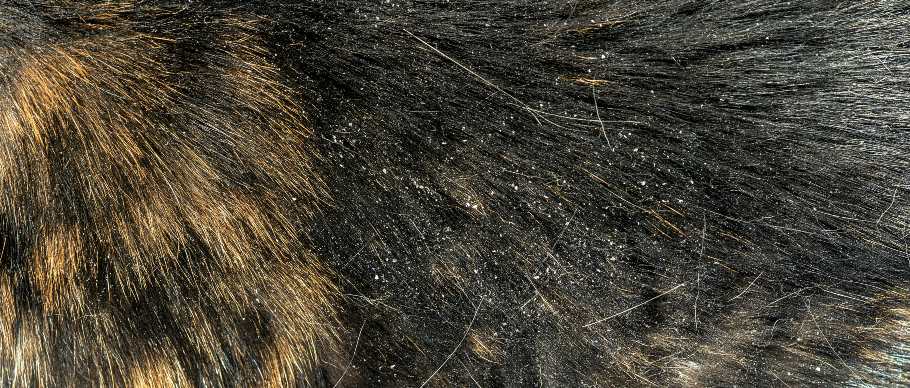
Image source: Bing (Web (fair-use with source credit))
Dandruff on the Lower Back and Rump
Scurf concentrated over the lower back, hips and tail base is the most common finding in shorthairs, and it's rarely a skin disease. It's a reach problem.
The cat isn't grooming there. Dead skin cells build up because nothing removes them. Check the cat's weight and check its age, because one of those two usually explains it.
If the dandruff covers the shoulders and head too, then it's more likely systemic. Dry indoor air, poor diet, dehydration, or an underlying condition. Worth a vet conversation.
Greasy, Clumped, Spiky Fur
Greasy clumps that make the coat look spiky or separated usually appear in the same place as the dandruff: above the tail, along the lower back and flanks.
Sebum keeps building because no tongue is spreading it. It mats the hair into stiff little spikes. On short coats these clumps sit close to skin and can be uncomfortable.
Work them loose with your fingers first. A damp cloth softens the grease. Then comb gently.
If a clump won't lift after two attempts, leave it and try again the next day.
Stud Tail
A greasy, sometimes waxy or crusty patch on the upper surface of the tail base points to overactive supracaudal glands. It's more common in unneutered males, but neutered cats and females get it too.
Regular cleaning with a cat-safe degreasing product usually manages it. Persistent or infected-looking cases need veterinary attention.
Dandruff or Flea Dirt?
Flea dirt is digested blood, so it dissolves red. Dandruff doesn't.
The test takes ten seconds. Comb the debris onto damp white kitchen roll and wait a moment.
- Red or rust-coloured smear: flea dirt. Treat with a cat-licensed flea product.
- Stays white or grey: dandruff. Work through the reach-and-weight checks above.
Matting on a Short Coat
Short coats shouldn't mat. When they do, something specific caused it: neglect of an unreachable area, a wound, sticky substance in the fur, or a cat that's stopped grooming entirely.
Common short-coat mat locations are the armpits, behind the elbows, the groin, and the tail base. All of them are hard for a cat to reach.
Never cut a mat out with scissors. Feline skin tents up into the base of a mat, and it's easy to slice skin while believing you're cutting hair. Home mat-removal lacerations are a routine emergency presentation.
Use your fingers and a comb, or book a groomer or vet for a clip.
Sudden Coat Changes Worth Acting On
Some changes justify a phone call rather than a brush.
- Shedding that suddenly doubles outside of moult season
- A coat that turns dull, dry or greasy over two to three weeks
- Hair that pulls out too easily in clumps
- Scabby bumps along the spine and around the neck (miliary dermatitis)
- Circular patches of hair loss with scaling (possible ringworm)
- A cat that visibly stops grooming altogether
That last one deserves emphasis. A cat that suddenly stops grooming is telling you it feels unwell, and it's often the earliest sign owners get.
Brushing Mistakes That Cause More Harm Than Skipping It
Some of these are uncomfortable to read, because they're common and they're done with good intentions.
Over-Brushing the Same Patch
Cats have a spot they love having brushed, usually the cheeks or the base of the spine. So owners stay there, because the cat leans in and purrs.
Repeated strokes over one area strip the protective top layer of skin. You get redness, then flaking, then soreness. Cover the whole body, move on, come back later.
Using a Dog Tool
The temptation is real, especially in households with a dog already. Don't.
Dog brushes are built for thicker skin and denser coats. The pins are longer and stiffer, the deshedding blades wider and sharper. On a cat, that's a scratching tool.
Going Straight for the Belly
The belly is the most vulnerable part of a cat's body. Even a relaxed cat lying belly-up is not offering it for grooming.
Belly access is earned over weeks. Head first, back second, hindquarters third, belly last. Many cats never fully accept it, and that's fine, because short coats rarely need belly work anyway.
Brushing Against the Grain
Backwards brushing lifts hair against its natural direction and tugs at follicles. It's uncomfortable, it produces static, and it makes the coat look rough.
Always brush head to tail, following the lie of the coat. The only exception is a very brief backward pass with a rubber brush on a heavy moulting double coat, and even then, finish forwards.
Sharing One Brush Between Cats
In a multi-cat household, one brush moves skin flakes, fungal spores, flea eggs and mites from cat to cat.
Ringworm spreads this way constantly, and spores survive in the environment for months. Give each cat its own tool, or disinfect between cats. It's a five-second fix for a six-week problem.
Brushing Instead of Weighing
Brushing an overweight cat's unreachable back is a plaster, not a cure. The dandruff is a symptom of a weight problem that also brings diabetes risk, joint strain and a shorter life.
Keep brushing, absolutely. But start the weight discussion with your vet at the same time. UK veterinary charity data has consistently put a large share of the pet cat population in the overweight or obese bracket, and owners routinely underestimate their own cat's condition score.
Treating Over-Grooming with More Grooming
A cat licking its belly bald has a medical or behavioural problem, not a grooming shortfall.
Brushing adds mechanical irritation to skin that's already inflamed. It also delays the vet visit that actually solves it. Fleas remain the most common cause by a wide margin, and a cat can be flea-allergic while carrying so few fleas that you never see one.
When More Brushing Is the Wrong Answer
There are specific situations where reaching for a brush works against the cat. Knowing them stops you making a treatable problem worse.
Flea Allergy Dermatitis
A flea-allergic cat reacts to saliva from a single bite. You'll see scabby bumps along the spine, hair loss over the rump, and relentless licking of the back half.
Brushing doesn't remove the allergen and it irritates inflamed skin. If you find scabs along the spine, then treat with a cat-licensed prescription product and speak to your vet. The FDA Center for Veterinary Medicine publishes safety information on flea and tick products, worth checking before you buy anything over the counter.
Never use a permethrin-based dog flea treatment on a cat. Cats can't metabolise permethrin properly and the result is often fatal. This is one of the most common feline poisoning emergencies vets see.
Psychogenic Alopecia and Stress Barbering
Some cats lick themselves bald in response to anxiety. Common triggers include a new cat in the house, building work, a house move, or a new baby.
The hair loss is symmetrical, usually on the belly and inner thighs, and the skin underneath looks normal. Brushing adds another handling demand to a cat that's already stressed.
If you suspect stress, then look at resources first. Litter tray count, feeding stations, vertical space and hiding places. A cat that's overcrowded needs environmental change, not grooming.
Psychogenic alopecia is a diagnosis of exclusion, though. Pain and allergy get ruled out first. Don't self-diagnose it.
Feline Hyperesthesia
Hyperesthesia shows as rippling skin along the back, sudden tail-chasing, dilated pupils and frantic licking at the flanks. Touching the lower back can set off an episode.
Brushing that area is exactly the wrong move. These cats need veterinary investigation, because the presentation overlaps with spinal pain, flea allergy and neurological conditions.
Fragile or Compromised Skin
Some cats can't take mechanical grooming at all.
- Post-surgical cats with fresh incisions or shaved patches
- Very old, very thin cats where hip bones and spine sit close to the surface
- Cats on long-term steroids, which thin the skin over time
- Cats with pemphigus foliaceus or other autoimmune skin disease
- Kittens under 8 weeks, whose skin and coat are still developing
For these cats, a damp cloth or a bare hand does everything a brush would, with none of the risk.
Suspected Ringworm
Ringworm is a fungal infection, not a worm, and it spreads on hair and skin scales. Brushing broadcasts spores across the house and onto every surface the brush touches.
Circular scaly patches, broken hair stubble, or crusting around the ears and face all warrant a vet visit before any grooming. Ringworm passes to humans readily, and children and immunocompromised adults are most at risk.
What Brushing Won't Fix: Hairballs, Fleas, and Shedding Myths
Brushing gets credited with solving problems it only partly touches. Here's where the line sits.
Does Brushing Stop Hairballs?
Brushing reduces hairball frequency but doesn't eliminate them. Every hair you catch is one the cat can't swallow, so the maths works in your favour. It just isn't a cure.
An occasional hairball is normal in any cat. What isn't normal is a cat producing them frequently, or retching repeatedly without bringing anything up.
If your cat brings up more than roughly one hairball a month, then brushing alone isn't the answer. Frequent hairballs often signal over-grooming, and over-grooming points back to fleas, allergy, pain or stress. Persistent retching also overlaps with inflammatory bowel disease and gut motility problems.
There's a second point owners miss. Retching that produces nothing, repeatedly, can signal an obstruction. That's an emergency, not a grooming issue.
Will Brushing Get Rid of Fleas?
No. A flea comb catches adult fleas and flea dirt, which is useful for detection, but it does nothing about the rest of the infestation.
Adult fleas on the cat are a small fraction of the total population. The eggs, larvae and pupae sit in carpet, bedding and floor cracks. Combing removes a handful of adults while thousands of life stages carry on developing in your living room.
Effective flea control means a cat-licensed parasiticide plus environmental treatment, applied to every pet in the household. Combing is a monitoring tool alongside it.
Does Brushing Stop Shedding?
Brushing doesn't reduce how much hair a cat sheds. It changes where that hair ends up.
The hair growth cycle runs through four phases: anagen (growing), catagen (transition), telogen (resting) and exogen (shedding). Nothing you do with a brush alters that cycle. What you can do is collect the hair in exogen before gravity and the sofa do it for you.
So if your goal is a cleaner house, brushing works brilliantly. If your goal is a cat that stops shedding, that cat doesn't exist.
Do Hairball Diets Replace Brushing?
Hairball-control diets and brushing solve the problem at different points. High-fibre formulas help move swallowed hair through the gut. Brushing reduces how much hair gets swallowed in the first place.
Petrolatum-based hairball pastes work as a lubricant laxative. They're useful short-term, though long-term daily use isn't something to start without a vet conversation, particularly in cats with other conditions.
| Approach | What it actually does | Best for |
|---|---|---|
| Brushing | Removes hair before it's swallowed | Every shorthair, especially double coats |
| Hairball diet | Helps hair pass through the gut | Cats with recurring hairballs |
| Petrolatum paste | Lubricates, short-term relief | Occasional flare-ups |
| Treating the cause | Stops excess licking at source | Any cat over-grooming |
Does a Shorthair Need Bathing?
Almost never. A healthy short-coated cat with normal grooming behaviour will go its entire life without a bath.
Bathing strips protective skin oils and stresses most cats badly. The real exceptions are Sphynx cats (no coat to absorb oils, so weekly bathing is standard), cats contaminated with something toxic or sticky, and cats on veterinary medicated shampoo for a diagnosed condition.
If something oily or sticky gets into the coat, don't wait and don't use household solvents. Call your vet. Cats groom off whatever they land in, and that's how contact problems become poisoning cases.
Real Scenarios: Three Shorthairs, Three Very Different Routines
The same question, three cats, three completely different answers. These show how the branches play out in practice.
Scenario One: The Three-Year-Old Domestic Shorthair
A lean, healthy moggy with a sleek black coat. The owner reports hair on the sofa but no skin issues, no dandruff, no hairballs.
The hand test finds no soft underlayer and a comb that glides through cleanly. Single coat.
- Routine: rubber curry brush, twice a week, three minutes
- Zones: shoulders, back, flanks, plus a weekly flea comb pass at the tail base
- What changes: noticeably less fur on furniture within two weeks. Coat condition stays the same, because it was already fine
- The honest point: this cat doesn't need brushing for its own health. The owner does
Scenario Two: The Six-Year-Old British Shorthair in April
Dense blue coat that springs back when pressed. The owner reports fur "everywhere" and a couple of stiff clumps above the tail.
Textbook double coat mid-moult. Those clumps are compacted dead undercoat, not mats in the usual sense.
- Routine during the moult: daily. Metal comb first to lift the dead down, then rubber brush to collect it, then a damp cloth finish
- Deshedding tool: once a week only, light pressure, never over the hips
- Zones: rear thighs and tail base get the most attention, because that's where the down compacts
- After the moult: drop back to two or three times a week
- Timeline: the heavy shed typically runs four to six weeks, then settles
Scenario Three: The Twelve-Year-Old Overweight Tabby
Body condition score around 8. Visible white scurf across the lower back, a greasy patch above the tail, and hair that's started to look separated and spiky.
The owner assumed this was a skin condition. It isn't. It's a cat that physically cannot reach past its own hips, made worse by age-related stiffness.
- Routine: short sessions, three times a week, two minutes each
- Tool: grooming glove only. Bony hips and likely joint pain rule out anything firmer
- Technique: support the body, don't ask the cat to twist, watch for tail flicking around the lumbar spine
- Grease patches: soften with a damp cloth first, then work loose with fingers
- The part that matters most: a vet conversation about weight and joint pain. Brushing manages the symptom. Weight loss and pain relief let the cat groom itself again
That third scenario is the one most owners get wrong. They buy a better brush when what the cat needs is a scale and a mobility assessment.
What Tools Cost and How Long They Last
Short-coat grooming is cheap. You're looking at £10 to £25 total for a kit that lasts years, and most cats need only two of these items.
| Tool | Typical UK price | Typical US price | Realistic lifespan | Who needs it |
|---|---|---|---|---|
| Rubber curry brush | £4 to £10 | $6 to $12 | 3 to 5 years | Almost every shorthair |
| Grooming glove | £6 to £12 | $8 to $15 | 1 to 2 years | Nervous, senior, or overweight cats |
| Fine-tooth metal comb | £5 to £12 | $7 to $15 | Decades | Double coats, mat checks |
| Flea comb | £2 to £6 | $3 to $8 | Decades | Every cat, monthly minimum |
| Soft slicker brush | £8 to £20 | $10 to $25 | 2 to 4 years | Optional, use with care |
| Deshedding tool | £20 to £40 | $25 to $45 | 5+ years | Double coats only |
| Chamois or microfibre cloth | £3 to £8 | $4 to $10 | 1 to 2 years | Finishing, Rex breeds |
What's Worth Spending On
Metal tools last effectively forever, so buying a decent comb once beats replacing cheap ones. Rubber degrades, so brushes and gloves are consumables.
Gloves have the shortest life. The rubber nubs flatten with use and the fabric stretches. Aggregate user feedback suggests around 12 to 18 months of regular use before grip drops off noticeably.
What's Not Worth Buying
- Vacuum grooming attachments. Most cats won't tolerate the noise, and returns data reflects that
- Multi-tool grooming kits. You get five tools, use one, and the rest sit in a drawer
- Deshedding tools for single-coated cats. No undercoat means nothing to remove
- Anything marketed for dogs and cats interchangeably. The pressure and blade design are usually built for the dog
When to Replace a Tool
Check tools every few months for wear that could hurt the cat.
- Bent or splayed wire pins on a slicker, replace it
- Missing protective tips on pin brushes, replace immediately
- Nicked or rough teeth on a metal comb, file smooth or replace
- Cracked rubber nubs, replace
- Any tool used on a cat with ringworm, disinfect thoroughly or bin it
Building It Into a Routine You'll Actually Keep
The best brushing schedule is the one that still happens in six months. Ambitious plans collapse. Small, tethered habits survive.
Tie It to Something You Already Do
Standalone habits fail. Attached habits stick.
- Brush during the ad break of whatever you watch in the evening
- Brush while the kettle boils
- Brush right after the evening feed, when the cat is already settled and sleepy
- Keep the brush where the cat sleeps, not in a cupboard
That last one matters more than it sounds. In our research into why owners stop grooming, the most common reason isn't the cat. It's that the brush lives somewhere inconvenient.
Split the Cat Across the Week
Nobody has to do the whole cat in one go, and most cats would rather you didn't.
If your cat has a short tolerance window, then try zone rotation:
- Monday: head, neck, shoulders
- Wednesday: back and flanks
- Friday: hindquarters and tail base
- Anytime: flea comb pass at the neck and tail base
Each session takes 60 to 90 seconds. The whole cat gets covered weekly, and the cat never gets pushed past its limit.
Adjust for the Season
Set a reminder for the two moult windows, roughly March to May and September to November in the UK and northern US.
If your cat is double-coated, then double your frequency for those six-week stretches and drop back afterwards. If your cat is indoor-only under artificial light, then the peaks will be flatter and a steady year-round routine works better.
Build In a Monthly Check
Once a month, do a slower pass with your hands rather than a brush. You're feeling for change, not removing hair.
- Ribs: can you feel them under light pressure?
- Lower back and rump: any new scurf or grease?
- Along the spine: any scabby bumps?
- Belly and inner thighs: any thinning or stubble?
- Tail base and neck: any flea dirt?
- Anywhere: new lumps, scabs, or sore spots?
Write down anything new with the date. Vets get far more useful information from "the dandruff started six weeks ago and the coat's got greasier since" than from "he's been a bit scruffy lately".
Keep Sessions Positive
Three rules do most of the work.
- End while the cat is still enjoying it, every time
- Never chase a cat that walks away
- Pair the brush with something good, whether that's a treat, a meal, or a favourite spot on your lap
Cats don't hold grudges about grooming, but they do form strong associations. Get that association right early and you'll have a cat that comes running when it hears the brush come out.
Frequently Asked Questions
How often should I brush a short haired cat?
Once or twice a week suits most healthy single-coated cats. Double-coated shorthairs like British Shorthairs need two to three sessions weekly, rising to daily during the spring and autumn moult. Overweight, senior, or arthritic cats need around three short sessions a week, focused on the lower back they can't reach themselves.
Do short haired cats shed more than long haired cats?
Not necessarily. Shedding volume depends on coat density and undercoat, not hair length. A double-coated British Shorthair often sheds more hair by weight than a long-haired cat with a single coat.
The difference is that short hairs weave into fabric more tightly, so they feel harder to remove.
Can I use a FURminator on a short haired cat?
Only if your cat genuinely has an undercoat. Deshedding tools pull dead down through the topcoat, so on a single-coated Siamese or Bengal there's nothing to remove and the tool strips guard hairs instead. Limit use to once or twice a week during moult, with light pressure, never over bony hips.
Why does my short haired cat have dandruff on its back?
Almost always because it can't reach that area. Excess weight and age-related stiffness both block the spinal twist a cat needs to groom its rump and tail base. Dead skin builds up because nothing removes it.
If the dandruff also covers the shoulders and head, ask your vet about diet, hydration, or an underlying condition.
Does brushing stop hairballs completely?
No, but it helps significantly. Every hair your brush collects is one your cat can't swallow, so frequency drops. Occasional hairballs remain normal.
More than roughly one a month suggests over-grooming from fleas, allergy, pain, or stress, and repeated unproductive retching needs same-day veterinary attention.
My cat hates being brushed. What should I do?
Switch to a grooming glove and cut sessions to 30 seconds. Gloves read as stroking, not grooming, so most resistant cats accept them. Start at the cheeks and chin, never the belly.
Brush after meals when the cat is sleepy, and always stop before it asks you to.
Your Decision Guide at a Glance
Run through these five checks and you'll land on the right routine in under a minute.
| Check | Question to ask | What it decides |
|---|---|---|
| 1. Coat | Does the coat spring back when pressed? | Single coat means low frequency. Double coat means high |
| 2. Weight | Can you feel the ribs under light pressure? | If not, expect scurf on the lower back |
| 3. Age | Is the cat over ten, or stiff when jumping? | Assume it can't reach behind the hips |
| 4. Season | Is it spring or autumn? | Double frequency for six weeks, then drop back |
| 5. Skin | Any bald patches, scabs, or stubble? | Yes means vet first, brush later |
If all five checks come back clear, then you've got the easiest possible cat. A rubber brush twice a week, three minutes, plus a monthly flea comb pass. That's the whole job.
If check one flags a double coat, then add a fine-tooth metal comb and step up to two or three sessions weekly, going daily through the moult.
If checks two or three flag weight or age, then switch to a grooming glove, shorten sessions, focus on the rear half, and book a vet conversation about weight and joint pain. Brushing is compensatory care here, not the fix.
If check five flags anything at all, then stop and get a diagnosis. Bald patches, scabbing, sudden shedding and a coat that's dulled over a few weeks are clinical signs. More grooming delays the answer.
The single most useful habit in all of this isn't the brushing itself. It's the monthly hands-on check. Cats hide illness well, and their coats give it away long before their behaviour does.
Ten minutes a month with your hands on your cat is worth more than any tool you'll ever buy.