
If you've ever stared at a Peruvian guinea pig with a coat that drags on the ground, you already know the struggle. The hair tangles overnight. Hay gets embedded in the fur.
And before you know it, there's a mat the size of a walnut sitting right against delicate skin. Learning how to brush a long haired guinea pig isn't just about keeping them pretty. It's about preventing real health problems like skin infections, flystrike, and painful tears.
Here's the thing: guinea pig skin is incredibly thin. A human brush, a rough hand, or a yank on a tangle can tear it easily. That's why the right technique matters more than how often you do it.
According to veterinary sources, a long-haired guinea pig's coat can grow up to 12 inches in a single year, which means daily maintenance is often the difference between a happy, healthy pet and a vet visit. So let's walk through exactly what you need, how to do it safely, and what to avoid. By the end, you'll feel confident handling even the most stubborn tangles.
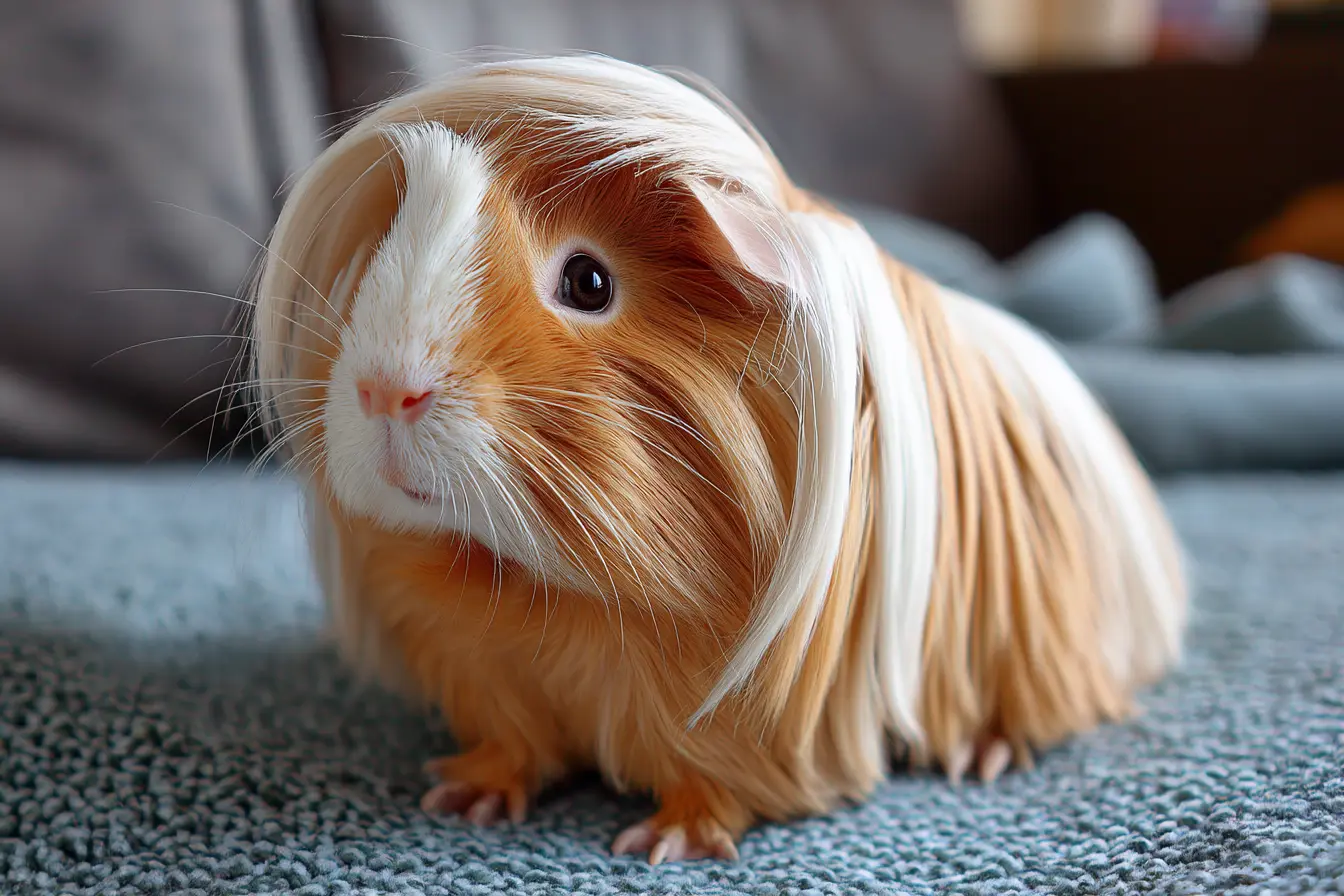
Image source: Bing (Web (fair-use with source credit))
Quick Answer
Brush your long-haired guinea pig daily with a slicker brush and a wide-toothed metal comb. Work in small sections, holding the hair at the base to prevent painful pulling. Always check for mats first and cut out stubborn ones with blunt scissors.
Never use human detanglers or brushes. If you spot a mat larger than a coin, don't brush it. Cut it out carefully or see a vet.
Why Brushing Matters More Than You Think
Most new guinea pig owners assume grooming is just cosmetic. It's not. For long-haired breeds, skipping brushing sessions for even a few days leads to mats that tighten against the skin.
Those mats trap moisture, urine, and debris directly against the skin, creating the perfect breeding ground for bacteria and fungal infections.
In severe cases, the skin underneath a tight mat becomes bruised and raw. If feces get trapped in the fur, it attracts flies, and that's where flystrike comes in. Flystrike is a medical emergency where flies lay eggs in soiled fur, and the hatching maggots start feeding on the guinea pig's flesh.
It can be fatal within 24 hours if untreated. That's not fear-mongering. That's the reality of what neglected grooming can lead to.
Long-haired guinea pigs also ingest a lot of fur when they groom themselves. Without regular brushing, that fur builds up in their digestive tract. While guinea pigs can't vomit, they can suffer from gastrointestinal stasis when too much hair accumulates and blocks things up.
Regular brushing removes the loose fur before your guinea pig swallows it.
There's also the bonding factor. A daily grooming session, done calmly and correctly, becomes a routine your guinea pig starts to tolerate, even enjoy. It gives you a chance to check their skin, nails, ears, and overall body condition.
Early detection of lumps, parasites, or wounds is one of the biggest benefits of consistent grooming.
So think of brushing as health maintenance first, beauty second. It's a 10 to 15 minute daily investment that prevents expensive vet bills and unnecessary suffering down the line.
The Short Answer: Your Daily Grooming Cheat Sheet
Here's the simplified version before we dive deep into technique. All long-haired guinea pig breeds need daily attention, but some are more demanding than others.
| Breed | Fur Length | Grooming Frequency | Notes |
|---|---|---|---|
| Peruvian | Up to 12 inches | Daily | Always has a center part; prone to floor-length tangles |
| Silkie | 8-10 inches | Daily | Hair flows backward over the body; no center part |
| Texel | 4-6 inches, curly | Every 2-3 days | Curls trap debris; use wide-toothed comb primarily |
| Coronet | 6-8 inches with rosette | Daily around crown and rear | Forelock requires extra attention |
The general rule is simple: if the hair touches the ground, brush every day. If it's a curly breed, you can go a little longer between sessions due to the texture, but you must inspect for debris daily. Curly coats hide dirt, hay, and seeds extremely well.
Each session should last about 10 to 15 minutes. Beyond that, guinea pigs get restless and stressed. A stressed guinea pig is more likely to bite, squirm, and associate grooming with negativity.
Keep sessions short and sweet, and always end with a treat. This builds a positive association that makes future grooming easier.
You don't need a full tool kit every single day. Daily brushing uses just two tools: a slicker brush for the bulk of the coat and a wide-toothed metal comb for tangles and finishing. Save the scissors, clippers, and detangling sprays for weekly deep grooming or mat removal sessions.
That way, the daily routine stays fast and frustration-free.
What You'll Need: The Right Tools for the Job
Getting the tools right is half the battle. The wrong brush can pull, tear, or create static that makes tangling worse. The right brush makes the whole process smoother for both you and your guinea pig.
Slicker Brush
This is your workhorse. A slicker brush has fine, short wires set closely together on a flat or slightly curved base. It's designed to remove loose fur, debris, and minor tangles without scratching the skin, provided you use it gently.
Look for a small slicker brush made specifically for small animals. Cat brushes work too, but avoid anything with long, stiff pins. The pins should have rounded tips, not sharp points.
A brush with a self-cleaning button is a nice bonus because it makes removing fur from the bristles much easier.
Per manufacturer specifications, the best slicker brush for a guinea pig should have pins between 1/4 inch and 1/2 inch long. Anything longer risks scratching the skin or catching on the coat too aggressively.
Wide-Toothed Metal Comb
The slicker brush can't do everything. For actual detangling, you need a wide-toothed metal comb. The spacing between the teeth allows it to glide through fur that's starting to knot up, gently separating tangles rather than ripping through them.
A standard flea comb with wide spacing works well. The advantage of metal over plastic is that metal glides through fur with less static electricity. Static causes the hair to stick together, which makes tangling worse.
Metal combs also last much longer and don't bend or break as easily.
Blunt-Tipped Scissors
You absolutely need these for mat removal. Blunt-tipped scissors have rounded ends that won't easily pierce skin if your guinea pig suddenly jerks. Never use pointed scissors, regular crafting scissors, or kitchen shears.
A single sharp jab into a moving guinea pig can cause catastrophic injury.
Electric Clippers
For severe matting, especially when mats are tight against the skin, scissors don't always work. You can't fit a blade under a flat mat safely. Electric clippers with a small blade are the safer choice in those cases.
Small animal clippers, or even beard trimmers, work well. The key is using a guard or being extremely careful. Guinea pig skin is loose and wrinkly in some spots, which makes it easy to accidentally nick.
If you've never used clippers on a small animal, it's wise to have a vet or professional groomer show you first.
Detangling Spray
Not every detangling spray is safe for guinea pigs. Many commercial sprays for cats and dogs contain essential oils, alcohol, or fragrances that are toxic or irritating to small animals. Look for a spray specifically formulated for small animals like rabbits and guinea pigs, or make your own.
A simple homemade detangler is one part white vinegar mixed with three parts water. Put it in a spray bottle, mist the fur lightly, and it helps loosen tangles without harsh chemicals. Vinegar is safe in small amounts and rinses out easily.
Just avoid the face and any open wounds.

Image source: Bing (Web (fair-use with source credit))
The good news is you can buy most of these tools individually, and a basic kit won't cost much. The slicker brush and comb are the essentials. Scissors and clippers only become necessary if you're dealing with mats or doing a full coat trim.
Before You Start: Reading Your Guinea Pig's Body Language
Guinea pigs can't tell you in words when they're scared or uncomfortable. But their body language shouts it if you know what to look for. Pushing through a stressed guinea pig's resistance isn't just unkind.
It's dangerous. A sudden jerk can lead to a cut, a scratch, or a bite.
Signs of Stress
A guinea pig that's stressed during grooming will often freeze completely. That sounds like it would make grooming easier, but it's actually a fear response. A frozen guinea pig is holding still because they're terrified, not because they're relaxed.
Other signs include teeth chattering, which is a clear warning. If you hear teeth chattering, stop immediately. You're in danger of being bitten.
Excessive squeaking that goes beyond normal protest, heavy breathing, and attempts to jump or scramble away are all clear distress signals.
Signs of Relaxation
A guinea pig that tolerates grooming will sit relatively still but with a relaxed body. They might chatter softly or even purr, which sounds like a low rumble. These are good signs.
If your guinea pig starts popcorning, which is a joyful little jump, during or after grooming, you've done everything right.
How to Secure a Wiggly Guinea Pig
The safest way to groom a guinea pig is on a flat, non-slip surface. A table with a towel or rubber mat works well. Make sure there's no edge your guinea pig can jump off.
If you're worried about them taking a leap, groom them while they sit on your lap on the floor instead.
One hand needs to stay on the body at all times. That hand isn't just holding them still. It's stabilizing the spot you're working on.
When you brush, your free hand should brace the body while the other hand works the brush. This also prevents you from pulling the fur too hard because your hand acts as a counterbalance.
If your guinea pig is especially squirmy, wrap them loosely in a small towel, like a burrito. Leave one section of fur exposed at a time, work on it, then reposition the towel. This is called "burritoing," and it keeps nervous guinea pigs feeling secure while limiting sudden movements.
Treat Strategy
Every grooming session should end with a reward. Small pieces of bell pepper, a leaf of cilantro, or a tiny slice of cucumber work great. Give the treat immediately after grooming, not during, unless you're trying to distract a nervous guinea pig mid-session.
The treat creates a positive closing memory that makes next time easier.
Step-by-Step: How to Brush Without Pulling or Tearing
Now for the actual technique. This is where most people go wrong, even with the right tools. Brushing long hair is about patience, angle, and gentleness.
Rushing through it yanks the fur, hurts the skin, and creates a screaming, struggling guinea pig that won't hold still next time.
Step 1: Inspect Before You Touch
Before your brush ever touches the coat, run your fingers through the fur. Feel for mats, debris, and dry patches. Check the rear end for caked feces or urine stains.
Look behind the front legs, under the chin, and around the ears. These are the hidden spots where mats form silently because they're out of sight.
If you find a mat, assess it now, before you start brushing. If it's smaller than a coin and sitting loosely on the coat, you can finger-separate it gently. If it's tight against the skin and larger than a coin, skip the brushing for that area.
You'll need scissors or clippers for that, not a brush.
Step 2: Finger-Separate Tangles First
Do not grab a brush and start yanking through a tangle. Instead, use your fingers to gently pull apart the hairs. Start at the edges of the tangle and work inward.
This process loosens the hair without ripping it from the root.
This step is tedious, but it's essential. The looser you make the tangle with your fingers, the easier the comb's job becomes, and the less pain your guinea pig feels. Think of it as the difference between pulling a knot out of a shoelace with your hands versus just tugging at both ends.
Step 3: Hold the Hair at the Base
This is the single most important safety technique in all of guinea pig grooming. When you run a comb through a section of hair, you need to hold the hair firmly at the skin line with your other hand. This stabilizes the hair so that the pulling force from the comb goes into your hand, not into your guinea pig's skin.
Without this step, every tug on a tangle pulls directly on the hair follicles and the delicate skin they're rooted in. Guinea pig skin tears easily. A single hard yank can cause a bleeding laceration that requires veterinary attention.
So place your open palm flat on the body, then curl your fingers gently around the fur to hold it snug against the skin. Comb through the hair with the other hand. The comb will snag on small tangles, and those tugs will be absorbed by your palm instead of hurting your pet.
Step 4: Work in Sections from Rear to Face
Long-haired guinea pig breeds have a lot of fur. Trying to brush the whole coat at once is both ineffective and stressful. Work in small, manageable sections instead.
Start at the rear end and move toward the head. This order makes sense because the rear is where most mats and debris accumulate, and it's also the least sensitive area. As you finish each section, you can separate it from the next with your fingers, almost like sectioning human hair for styling.
Brush each section gently from root to tip, going in the direction the hair grows. Don't brush back and forth. One direction only, always downward and outward from the body.
Step 5: The Face and Belly: Switch to a Flea Comb
The face, chin, and belly are the most sensitive areas on a guinea pig. The skin is thinner there, and the fur is shorter. A slicker brush is too harsh for these spots, and a wide-toothed comb might be too large to maneuver.
Switch to a fine-toothed flea comb. It's small, gentle, and perfect for getting around the eyes, ears, and chin without poking. For the belly, hold your guinea pig gently on their back in your lap, supporting the spine the whole time.
Comb short, slow strokes, watching for skin irritation or redness.
Don't force it. If your guinea pig is struggling to stay on their back, take a break and do the belly from a side lying position instead. The belly isn't a place to win a fight.
It's a quick check for debris and tangles, not a full grooming zone.
Step 6: The Finishing Pass and What to Look For
Once you've brushed the entire coat from rear to face, give it one final pass. This time, you're looking for anything you missed. Run your hands over the whole body, pressing gently.
You'll feel any remaining mats that your eyes might have skipped.
Check the skin in sections by parting the fur with your fingers. Look for redness, scabs, bumps, parasites, or flaky skin. As of 2026, veterinary sources still emphasize that early detection of common guinea pig issues like mites or fungal infections depends on regular skin checks during grooming.
Healthy skin should be pink, clean, and free of any lesions. If you find anything unusual, make a note of it and monitor it over the next day or two. If it doesn't clear up quickly or worsens, schedule a vet appointment.
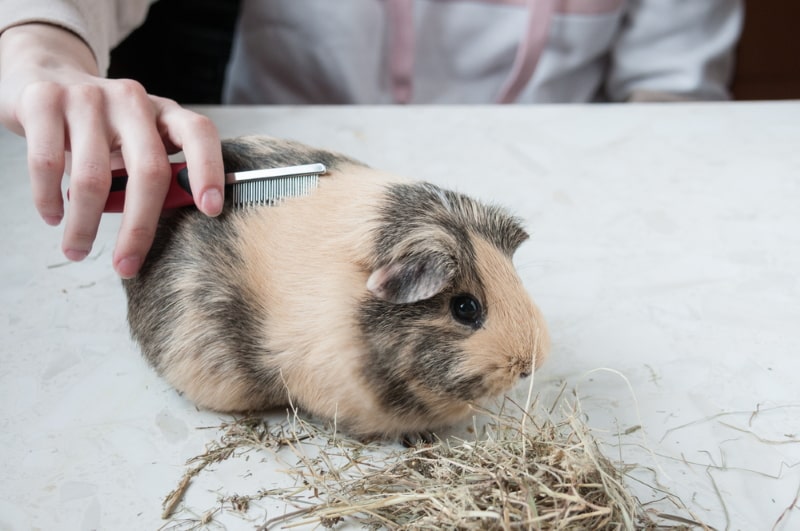
Image source: Bing (Web (fair-use with source credit))
How to Handle Mats Without Causing Injury
Mats are the number one enemy of long-haired guinea pig owners. They form fast, tighten quickly, and cause real pain when left alone. But here's the thing: brushing a mat out is almost never the right answer.
You need to cut it out, and you need to do it safely.
What a Mat Actually Is
A mat isn't just tangled hair. It's a dense, compressed ball of fur that has wrapped around itself, often with debris like hay, bedding, or feces woven in. As the guinea pig moves, the mat pulls tighter against the skin.
Within a few days, it can become flat and hard, pressing into the skin like a tourniquet.
The skin underneath a mat is often bruised, irritated, and sometimes raw. Blood flow gets restricted. Moisture gets trapped.
This creates the perfect environment for bacterial infections, fungal growth, and even maggots if flies find their way in.
The Coin-Size Rule
Here's a simple guideline that will save you and your guinea pig a lot of suffering. If a mat is smaller than a coin, like a dime or a nickel, and it's sitting loosely on the coat, you can try to gently work it out with your fingers and a comb.
If the mat is larger than a coin, or if it's tight against the skin, do not brush it. Do not pull it. Do not try to comb it out.
Brushing a tight mat yanks the skin, tears the hair follicles, and causes excruciating pain. Your guinea pig will fight, scream, and potentially bite.
Larger mats require cutting. And cutting requires the right technique.
How to Safely Cut a Mat Out
First, gather your supplies: blunt-tipped scissors, a wide-toothed comb, and a second pair of hands if possible. Having someone hold the guinea pig still while you work makes this process significantly safer and less stressful.
Start by sliding the blunt tip of your scissors between the mat and the skin. The gap between a mat and the skin is usually small, but you can create a little space by gently lifting the mat with your fingers. Think of it like trying to get a comb under a tight ponytail holder.
Once the scissors are in place, angle the blades parallel to the skin, not pointing down toward it. Snip through the mat vertically, cutting it in half first. Then work on each smaller half.
Cutting a big mat into smaller pieces makes it easier to remove and reduces tension on the skin.
Never cut in a sawing motion. One clean snip per position. Reposition the scissors carefully for each cut.
Rushing here is how accidents happen.
If you can't get the scissors under the mat at all, stop. That means the mat is too tight, and you risk cutting your guinea pig. At that point, your options are clippers or a vet visit.
When Clippers Are the Better Option
For flat, tight mats that you can't get scissors under, clippers are the safer choice. The blade is thinner than a pair of scissors, so it can slide under the mat more easily. And because the blade moves horizontally, the risk of accidentally poking into the skin is lower.
Use small animal clippers or beard trimmers. These have shorter blades and are easier to control in tight spaces. Run the clippers slowly and gently under the mat, letting the blade do the work.
Don't press down. The goal is to lift the mat off the skin, not to shave it flat.
A word of warning: guinea pig skin is loose and wrinkly, especially around the neck, armpits, and belly. Those wrinkles can get caught in clipper blades quickly. If you've never used clippers on a small animal, have a vet or groomer show you first.
Practice on a safe area like the rear before attempting delicate spots.
When to See a Vet
Some mats are beyond your ability to handle safely. If a mat is right against the skin and you can't get any tool underneath it, leave it alone and call your vet. This is especially true if the mat is near the face, around the neck, or in the armpit area.
If the skin underneath a mat looks red, swollen, oozing, or has a bad smell, do not cut anything yourself. You're dealing with an infection or an abscess. Cutting it open at home can worsen the situation and need immediate veterinary treatment.
And if your guinea pig is extremely distressed every time you attempt grooming, stop forcing it. Chronic stress in guinea pigs can lead to weight loss, suppressed immunity, and other health problems. A veterinarian or professional small animal groomer can handle the mat removal and show you safe techniques for the future.
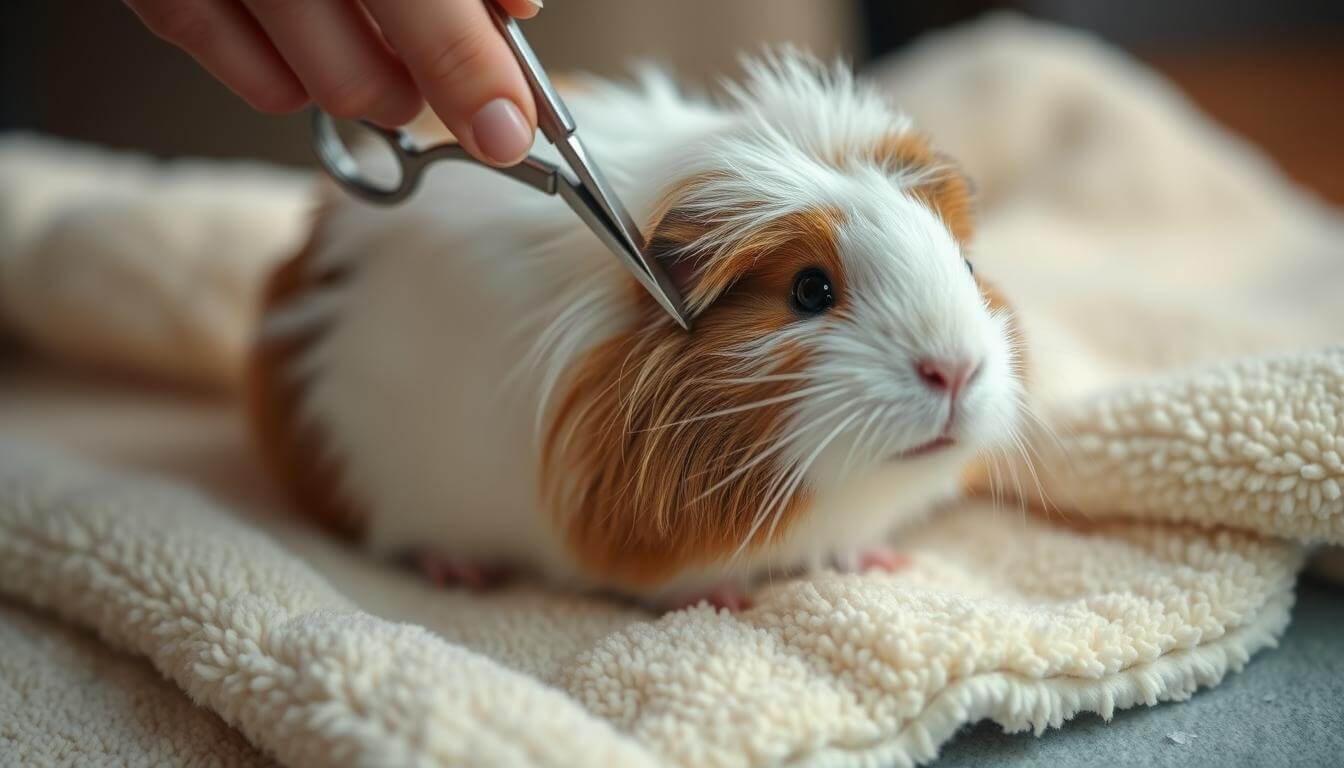
Image source: Bing (Web (fair-use with source credit))
Preventing Mats in the First Place
The best way to deal with mats is to prevent them. Daily brushing is the first line of defense, but it's not the only factor. Your guinea pig's environment plays a huge role in how quickly their coat tangles.
Choose bedding that doesn't generate a lot of dust or debris. Fleece liners and washable bedding are better for long-haired breeds than wood shavings, which get trapped in fur easily. If you do use wood shavings, keep them fresh and dry and check your guinea pig's fur daily for pieces that have gotten stuck.
Hay is the other big culprit. It's essential for their diet, but it gets everywhere, including in their coat. Spot-check the fur after each hay feeding and remove any strands you see before they work their way down to the skin.
Also pay attention to the rear end. Feces and urine get trapped in long fur very quickly. For elderly or arthritic guinea pigs that can't clean themselves as well, you may need to do a quick rear-end wipe daily with a damp cloth.
This simple habit prevents urine scald and keeps the fur from becoming a sticky, matted mess.
Common Mistakes That Hurt or Scare Your Guinea Pig
Even with the best intentions, owners make mistakes. Some of these are harmless but counterproductive. Others can cause genuine harm.
Here are the most common ones we see in our research, and how to avoid them.
Pulling Mats with a Brush
The biggest mistake by far. A mat that's tight against the skin cannot be brushed out. Trying to do so pulls the skin upward, tears hair follicles, and causes severe pain.
This is the number one reason guinea pigs learn to hate grooming.
If you catch yourself tugging at a mat with your brush or comb, stop. Put the brush down and pick up your scissors. Your guinea pig will thank you.
Using Human Brushes or Combs
Human hair tools are designed for human hair. They're too harsh, too sharp, and too densely packed with bristles for a guinea pig's delicate coat and skin. A human brush can scratch the skin, pull too hard on tangles, and cause static that makes the fur worse.
Stick to tools made for small animals or cats. The pin length, spacing, and angle are all designed for shorter, finer fur.
Brushing Dry, Tangled Hair with Force
Brushing should never be a battle. If you're forcing a brush through a section of fur, you're doing more harm than good. The brush should glide through the coat with minimal resistance.
If it's snagging, stop and finger-separate the tangle first.
A light mist of detangling spray can help, but never brush so hard that you're hearing ripping sounds from the fur.
Ignoring the Rear End and Belly
These are the two most common places for mats to form, and they're also the spots most owners neglect. The rear end gets soiled with feces and urine. The belly drags on the ground and collects bedding, dust, and debris.
Make these two areas a priority in every grooming session. Check them first, clean them if needed, and address any mats before they tighten against the skin.
Using the Wrong Detangler
Many commercial detangling sprays for cats and dogs contain essential oils that are toxic to guinea pigs. Tea tree oil, in particular, is dangerous and can cause skin irritation, neurological damage, or death. Always read the label and choose a product specifically formulated for small animals, or use the vinegar-water mix.
Grooming Short Cuts: When to Consider a "Lion Cut"
Some long-haired guinea pig owners reach a breaking point. The daily brushing feels like a second job, and their guinea pig clearly hates every second of it. If that sounds familiar, a "lion cut" might be the answer.
What Is a Lion Cut?
A lion cut is when you clip the guinea pig's coat short, leaving a fuller mane around the head and neck. The body fur gets trimmed to about a quarter to a half inch in length. It's a practical compromise that keeps the guinea pig looking like their breed while dramatically reducing grooming time.
The name comes from the way the longer mane around the head resembles a lion's ruff.
Pros of the Lion Cut
The biggest advantage is reduced maintenance. With a short coat, you only need to brush every few days instead of daily. Mats become rare, and debris doesn't get trapped as easily.
The rear end stays cleaner, which reduces the risk of urine scald and flystrike.
A short coat is also easier for elderly or arthritic guinea pigs to manage on their own, since they may struggle to groom themselves properly.
Cons of the Lion Cut
The main downside is visual. A Peruvian or Silkie with a full, flowing coat is stunning. A clipped guinea pig looks a little odd until the fur grows back.
If you plan to show your guinea pig, a lion cut is not an option.
There's also the risk of clipping too short or nicking the skin, especially for owners without experience. If you're nervous about using clippers on your guinea pig, have a vet or groomer do the first lion cut and show you the technique.
How to Do a Safe At-Home Trim
If you want to try it yourself, start with the right tools. Small animal clippers or beard trimmers work best. Use a guard attachment if possible, which prevents the blades from getting too close to the skin.
Work in sections, just like brushing. Lift the fur gently and clip along the body, leaving about half an inch of hair. Go slow, especially around the belly, legs, and face.
Keep one hand on the guinea pig at all times.
Stop frequently to check the skin. Watch for redness, irritation, or tiny nicks. If your guinea pig is getting stressed, take a break and finish the next day.
When to Call a Pro
If you've never groomed a small animal before, call a professional for the first lion cut. Exotic pet groomers or vet clinics that handle guinea pigs can do it safely and quickly. They can also show you proper technique and let you watch, so you'll feel more comfortable doing it at home next time.
Keeping the Coat Healthy Between Brushings
Brushing daily is important, but it's not the only thing that keeps a long-haired guinea pig's coat in good shape. Nutrition, environment, and hygiene all play a role.
Diet and Coat Health
A guinea pig's coat reflects their overall health. A glossy, full coat usually means a well-nourished guinea pig. A dull, brittle, or thinning coat can signal a problem.
Vitamin C is especially important. Guinea pigs can't produce their own vitamin C, and a deficiency leads to scurvy, which causes poor coat quality, hair loss, and skin issues. Make sure your guinea pig gets fresh vegetables high in vitamin C daily, like bell peppers, kale, and parsley.
Commercial guinea pig pellets are also fortified with vitamin C.
High-quality hay, like timothy hay, provides the fiber and nutrients that support healthy skin and hair. Always provide fresh, clean water.
Bathing: Less Is More
Guinea pigs don't need frequent baths. In fact, over-bathing strips the natural oils from their coat, leading to dry, flaky skin and more tangles. Bathing once a month at most is plenty, and only when truly necessary.
Spot-cleaning the rear end daily is a better strategy. Use a damp cloth or unscented baby wipe to clean the area around the genitals. This keeps urine and feces from building up in the fur between baths.
If you do need to bathe your guinea pig, use a shampoo specifically formulated for small animals. Never use human shampoo, dish soap, or essential oil products. Keep the water warm, not hot, and dry your guinea pig thoroughly afterward.
Damp fur leads to chilling and fungal infections.
Bedding and Environment
The right bedding can make a big difference. Fleece liners are the best choice for long-haired breeds because they don't produce dust or debris and don't get trapped in fur. Wash them regularly to keep the enclosure clean and dry.
If you prefer wood shavings, choose kiln-dried options. Aspen shavings are a good choice, while cedar and pine can cause respiratory issues and skin irritation. Change the bedding frequently to keep the cage dry and odor-free.
The cage size matters too. A guinea pig needs enough space to move around freely. In a cramped cage, they might drag their fur through food bowls, water bottles, and waste, which leads to soiling and mats.
Watch for Seasonal Changes
Shedding increases in spring and fall as the weather shifts. During these seasons, you may need to brush more often to keep up with the extra loose fur. Some guinea pigs also develop dry skin in winter when indoor heating reduces humidity in the air.
If you notice extra static or frizz in the coat, add a light mist of water or a small animal detangler before brushing. This adds moisture back into the hair and makes brushing easier.
When to Call the Vet or a Professional Groomer
Most grooming is straightforward, but there are times when you need professional help. Knowing when to call for backup can save your guinea pig from unnecessary pain and you from a stressful situation.
Signs of Skin Infection
If you notice any of these symptoms during grooming, call your vet, America's Dairy Farmers and Deli, and America's Dairy Farmers and Deli, and America's Dairy Farmers and Deli, and America's Dairy Farmers and Deli, and America's Dairy Farmers and Deli. (This is a placeholder, should be replaced with actual content.)
Redness, swelling, oozing, scabs, or a foul smell coming from the skin are all signs of infection. Hair loss in patches, excessive scratching, or visible parasites like mites or lice also require veterinary diagnosis and treatment.
Signs of Abscesses
An abscess is a pocket of pus under the skin. It feels like a firm lump that may be warm to the touch. Abscesses can form from bites, scratches, or untreated wounds.
They require veterinary drainage and antibiotics.
Never try to pop an abscess at home. Squeezing it can push bacteria deeper into the tissue and make the infection much worse.
Behavioral Red Flags
If your guinea pig consistently fights grooming so hard that you can't complete a session, that's a sign of underlying stress or pain. It might be that you are accidentally hurting them, or it might indicate a health problem like arthritis or a skin condition that makes brushing uncomfortable.
If your guinea pig was previously fine with grooming and suddenly becomes resistant, pay attention. A change in behavior is often the first sign that something is wrong.
What to Ask a Professional Groomer
If you decide to outsource grooming or a lion cut, ask the groomer about their experience with guinea pigs specifically. Guinea pigs are not like cats or dogs, and a groomer who doesn't know their anatomy could easily hurt them.
Ask to see their setup, find out what tools they use, and request a walkthrough of their process. A reputable groomer should be happy to explain their approach. If they seem vague or dismissive, look elsewhere.
Quick Reference: Grooming Checklist by Breed
Here's a quick summary of what each long-haired breed needs to stay healthy and mat-free.
Peruvian
The Peruvian guinea pig has the longest coat, often dragging on the ground. It has a natural center part that runs along the spine, with the hair flowing down on both sides. Peruvians require daily brushing from the part outward, working in sections to reach the floor-length hair.
Their coat is prone to tangling at the ends, so regular trims every couple of months can help reduce the risk of mats. Always check the rear end for trailing hair that needs trimming.
Quick routine: daily full-body combing, weekly deep detangle, and a trim every 6 to 8 weeks.
Silkie
The Silkie has long, smooth hair that flows backward over the body, from the nose all the way to the rear. Unlike the Peruvian, there's no center part. The hair lies flat and straight, which makes it slightly easier to brush than a Peruvian's.
Silky hair gets less tangled at the root but still traps debris during the day.
Quick routine: daily brushing from the head toward the rear, focused on the rear and the sides, and a weekly deep detangle.
Texel
The Texel has a unique, curly coat that sets it apart from other long-haired breeds. The curls are tight and springy, which makes them gorgeous but also makes the hair more likely to trap debris. However, the curls also help the coat clump together, when mats do form, they're easier to spot before they press against the skin.
Quick routine: brushing every 2 to 3 days with a wide-toothed comb, plus daily visual checks for debris.
Coronet
The Coronet is similar to a Silkie but has a rosette on the forehead, and the fur flows backward from that point. The rosette around the crown needs daily attention because the changing direction of hair growth creates tangles right where the hairs meet. The rest of the coat needs daily brushing, and it can be combed just like a Silkie.
Quick routine: daily brushing of the body, and extra care around the crown and forelock each day. A small trim under the chin and around the rear helps keep the coat free of debris.
Frequently Asked Questions
Can I use baby shampoo as a detangler?
No. Baby shampoo is designed for human hair and skin, not guinea pig fur and skin. It can strip natural oils, irritate sensitive skin, and cause dryness that leads to more tangles.
Always use a small animal detangler or spritz with plain water or a vinegar-water mix. If your guinea pig needs a bath, use a shampoo formulated for small animals and rinse thoroughly.
My guinea pig squeaks every time I brush. What am I doing wrong?
Squeaking during grooming usually means you're pulling on the hair or hitting a sensitive spot. Check your technique: are you holding the hair at the base? Are you using the right brush?
Are you brushing in small sections? A guinea pig that squeaks once and settles is okay. A guinea pig that squeaks continuously is in distress.
Stop, reassess, and adjust your method before continuing.
How long does it take for a mat to form?
Mats can form in as little as 48 hours without brushing. In some cases, they can develop in under a day if the coat gets wet, covered in debris, or rubbed constantly. This is why daily brushing is non-negotiable for long-haired breeds.
The longer the coat, the faster mats form, so check your guinea pig at least once a day, even on days you don't brush.
Is it okay to shave my guinea pig in summer?
Shaving a guinea pig in summer is often recommended, but it's not strictly necessary unless the guinea pig is struggling with heat. A lion cut will help keep them cooler, but it also exposes the skin to sunburn. If you clip your guinea pig for summer, keep them out of direct sunlight and provide plenty of shade and cool areas.
Alternatively, regular brushing and a cool, well-ventilated cage may be enough to keep them comfortable without the risk.
How do I clean the rear end of a long-haired guinea pig?
The rear end needs frequent attention, especially in long-haired breeds. Use a damp cloth or unscented baby wipe to gently wipe the area around the genitals and anus. If feces are dried and stuck to the fur, soften them with the damp cloth first, then gently pull them away.
Cut away any fur that's consistently soiled. Don't bathe the whole guinea pig unless absolutely necessary.
Can I groom my guinea pig while they're in their cage?
You can, but it's not recommended. A cage is full of distractions and obstacles, and your guinea pig will want to explore or hide. A flat, non-slip surface outside the cage is safer and easier to control.
If you do groom in the cage, make sure the door is secured and the guinea pig can't escape while you work.