
Your cat's face is probably the last place you think about cleaning. But if you've ever noticed crusty eye corners, food stuck to a chin, or that milky tear trail running down a white cat's cheeks, you know exactly why this matters.
Learning how to clean a cat's face isn't hard, but doing it wrong can cause real harm. A too-wet cloth, a panicked cat, or the wrong cleaner can turn a two-minute routine into a scratched-up mess with a vet visit at the end. That's why this guide focuses on doing it safely, gently, and in a way your cat will tolerate.
As of 2026, veterinary ophthalmology guidelines still emphasize that most routine facial cleaning needs nothing more than warm water, a soft cloth, and a calm approach, but there are critical exceptions.
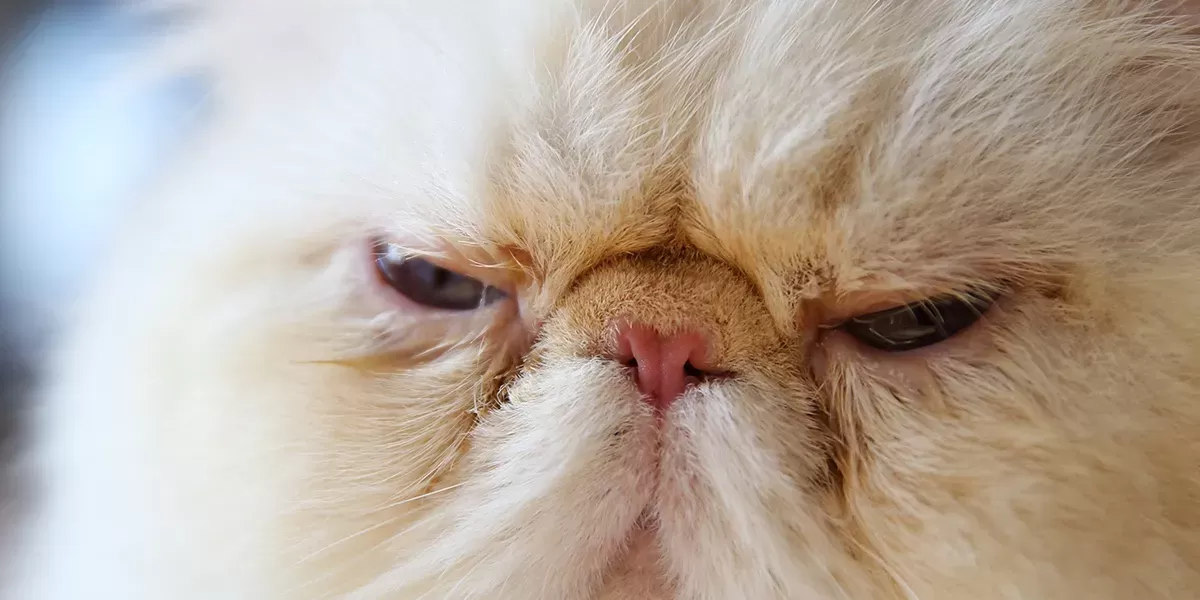
Image source: Bing (Web (fair-use with source credit))
Quick Answer
Wipe your cat's face with a warm, damp cloth, moving from the inner eye corner outward. Use a fresh cloth section for each eye. Dry the area completely afterward.
Clean flat-faced breeds daily. Clean other cats weekly or as needed. Stop cleaning and call the vet if you see redness, swelling, pus, or if your cat squints.
Why Cleaning Your Cat's Face Matters More Than You Think
Most cats groom themselves beautifully. They spend up to 50 percent of their waking hours on it. But their face is the one spot they simply cannot reach properly.
Watch a cat try to wash its own cheek. The paw gets there, sure, but it's a clumsy swipe. The eyes, the chin, the nose, those deep skin folds on flat-faced breeds, none of them get the thorough attention they need.
That's where you come in.
What Happens When You Don't Clean
Leave dirt and discharge alone and a few things start happening. Tear stains set in. Skin folds trap moisture.
Bacteria multiply in the warm, damp creases. What started as a cosmetic issue becomes a medical one.
Feline chin acne, for example, is a direct result of clogged hair follicles on the chin and lips. It looks like black specks, similar to human blackheads, but it can progress to red, swollen, painful pustules if the area stays dirty. Flat-faced breeds like Persians and Himalayans have skin folds around their eyes and nose that collect tears and debris all day.
Without regular wiping, those folds can develop a condition called intertrigo, a skin inflammation that's uncomfortable and prone to infection.
Regular face cleaning prevents all of this. It also gives you a chance to check your cat's eyes, skin, and nose for changes. Early detection of an eye infection, a small scratch on the cornea, or a growing lump is one of the biggest advantages of this routine.
You'll catch it before it becomes a costly, painful problem.
The Grooming Gap
Cats can't groom their own faces completely. Their tongue reaches the front paws but not the eyes. Their rough tongue can't get into tight skin folds.
And as cats age, this problem gets worse. Senior cats lose flexibility. Overweight cats can't bend.
Arthritic cats stop bothering. A cat that could manage its own face at age three simply can't at age twelve.
That's a transition worth noticing. If your cat's face is consistently dirty, that's not a cleaning failure on your part. It's a sign your cat needs help, and it may also signal a mobility or health issue worth mentioning to your vet.
Regular face cleaning is also a bonding experience, when done gently. You're handling your cat. You're touching sensitive areas.
Your cat learns that your hands near its face aren't a threat. That makes future vet visits, medication administration, and eye drop applications dramatically easier.
For more on feline grooming and handling best practices, the American Veterinary Medical Association provides guidance on low-stress handling techniques.
First, Look Before You Wipe
Some eyes need cleaning. Some eyes need a vet. Knowing the difference is the single most important skill in this entire process.
A quick visual check takes ten seconds. Do it before you pick up a cloth. You're looking for three things: the amount of discharge, its color, and any other signs of irritation.
What's Normal
Normal cat eye discharge is minimal. You might see a tiny crust in the inner corner, usually clear or slightly brown when dried. That's just old tears, dust, and dead cells.
It's not painful. It's not infected. It's normal.
You might also see what's called tear staining, that reddish-brown streak under the eyes. It's more common in white or light-colored cats. It comes from tears overflowing onto the fur.
It looks alarming but is often harmless, though it can also signal blocked tear ducts.
Normal chin appearance is clean skin with no visible bumps or black specks. Normal nose is slightly moist, free of crust.
What's Not Normal
Anything colored deserves attention.
Yellow or green discharge suggests infection. Pus has a distinctive thick consistency. If you see it, do not scrape it off.
Make a vet appointment.
Red or rusty-colored discharge can indicate a corneal ulcer or trauma inside the eye. This is an emergency.
Other Red Flags
Beyond discharge, check for these signs:
- Squinting or holding the eye half-closed
- The third eyelid visible in the inner corner
- Cloudiness over the surface of the eye
- Swelling around the eyelid
- Red, swollen eyelids
- Hair loss around the eye
- Excessive tearing that soaks the face
- Discharge with a foul odor
- Persistent pawing or rubbing at the face
- Behavioral changes, like avoiding being touched near the head
Any one of those means stop the home cleaning and call a veterinarian.
Runny Eyes That Won't Quit
Some cats just have chronically weepy eyes. This is common in flat-faced breeds, where the shallow eye socket and pushed-in nose cause tears to spill over. It's a breed trait, not an illness.
But if your cat suddenly starts tearing up excessively and it's not a breed trait, something is wrong. Allergies are a common trigger. So are viral infections, like feline herpesvirus.
Foreign material stuck under the eyelid can do it. A blocked tear duct can do it.
If the tearing is sudden, persistent, or accompanied by any other symptom, a vet check is the right call. Home cleaning alone won't fix the underlying problem.
The Decision Framework
Here's a simple decision tree:
| Symptom | Action |
|---|---|
| Tiny dry crust, clear or light brown | Normal, clean at home |
| Tear staining on white fur | Normal for flat-faced breeds, clean daily |
| Yellow or green discharge | Vet visit, do not clean aggressively |
| Squinting or half-closed eye | Emergency vet visit |
| Cloudiness or visible third eyelid | Emergency vet visit |
| Black specks on chin | Chin acne, home cleaning can help |
| Red swollen pustules on chin | Vet visit, likely needs medication |
| Sudden excessive tearing | Vet visit |
When Cleaning Makes It Worse
Here's a counterintuitive fact. Aggressive cleaning can cause the very problems you're trying to prevent. Scrubbing at a crusty eye can scratch the cornea.
Pushing a cloth toward the inner corner can drive debris into the tear duct. Repeated wiping can dry out the skin, causing flaking and irritation.
If the eye looks inflamed, don't touch it. Leave it alone completely until a vet has examined it. Your job in that moment is to protect the eye from further damage, not to improve its appearance.

Image source: Web (Bing) / simplybirding.com (Web image (fair-use with source credit))
The Supplies You Actually Need (And What to Skip)
You don't need a drawer full of specialty products. You need a handful of basics, plus the knowledge of what to avoid.
The Safe List
Here's what works, researched across veterinary guidelines and manufacturer specifications:
Warm water. This is the safest and most effective solvent for routine facial cleaning. It's pH-neutral. It won't sting.
It rinses clean. No residue, no fragrance, no chemicals.
A soft washcloth. Cotton flannel or microfiber works. The key is softness and a smooth surface. Anything textured or scratchy can damage the delicate skin around the eyes.
Cotton balls. Good for smaller, targeted areas, provided they don't shed lint. Some cheaper cotton balls fall apart, leaving fibers in the eye. If that's a risk, skip them.
Cotton pads. These are more reliable than cotton balls. They're flat, dense, and less likely to shed. They come in all sizes and are cheap enough to toss after one use.
Gauze pads. The best option for the eye area specifically. They're smooth, non-shedding, and sterile when you buy them in packets. Each pad is single-use, so there's zero risk of spreading bacteria between eyes.
| Item | Best Use | Why It Works |
|---|---|---|
| Warm water | General cleaning | Safe, pH-neutral, no residue |
| Soft washcloth | Cheeks, chin, forehead | Soft and reusable |
| Cotton pad | Small areas | Dense, no shedding |
| Gauze pad | Eye area specifically | Sterile, smooth, single-use |
| Sterile saline solution | Eye crusts | pH-balanced for the eye |
| Chlorhexidine wipes (vet-sourced) | Chin acne | Medicated, anti-bacterial |
Sterile saline solution. Available at any pharmacy, this is the same saline used for contact lenses and wound rinsing. It's pH-balanced for delicate tissue. It can loosen stubborn eye crusts without the friction of rubbing.
Just make sure it's plain saline, no "contact lens solution" with cleaning additives.
Cat-safe wipes. There are commercial wipes designed for cat facial cleaning. Most are water-based, unscented, and alcohol-free. They're convenient for travel or quick touch-ups.
Vet-approved brands that contain chlorhexidine can help manage chin acne.
A dry towel. The finishing step. Wipe the face dry after cleaning. A damp face is a breeding ground for bacteria and fungus.
What to Absolutely Avoid
This list is just as important. Some of these are dangerous. Some are flat-out toxic.
| Item | Why It's Dangerous |
|---|---|
| Human facial cleansers | Wrong pH, can be toxic if licked |
| Shampoo or soap | Strips natural oils, irritates eyes |
| Alcohol | Stings, dries out skin, toxic if licked |
| Hydrogen peroxide | Causes tissue damage |
| Vinegar | Stings, disrupts skin pH, toxic if licked |
| Essential oils | Toxic to cats, especially tea tree oil |
| Eye drops for humans | Wrong formulation, can damage cat eyes |
| Contact lens solution | Contains preservatives, not for eyes |
| Q-tips or cotton swabs | Can puncture the eye or push debris deeper |
| Paper towels | Too rough, leaves fibers behind |
| Baby wipes | Fragrances and chemicals not safe for cats |
The critical rule is simple. If a product wasn't made for cats, don't put it on a cat's face.
Does My Cat Need a Special Cleaning Product?
Most of the time, no. Warm water and a soft cloth cover 90 percent of routine facial cleaning needs.
The exceptions are:
- Feline chin acne. A chlorhexidine wipe or gel from your vet can treat the bacterial component.
- Persistent tear staining. Tear stain removers exist, but they're cosmetic. The staining usually returns because the underlying cause, facial anatomy, hasn't changed. Address the cause with daily wiping. Avoid products containing antibiotics, which promote bacterial resistance.
- Post-surgical cleaning. Your vet will give you specific instructions. Follow those exactly.
The Fresh Cloth Rule
Never use the same cloth area for both eyes. Each eye gets its own clean surface. If you use a washcloth, fold it so you have four clean surfaces, and use one per corner.
This prevents spreading infection from one eye to the other.
This rule matters most when one eye looks suspicious. If you see any discharge that isn't normal clear tearing, use a fresh pad for that eye and don't touch the other eye with leftover moisture.
How to Hold a Cat That Hates Having Its Face Touched
This is where most attempts go wrong. The cat squirms. The owner tightens their grip.
The cat squirms harder. Claws come out.
The fix isn't more force. It's a better hold.
Step One: Choose the Right Moment
Pick a time when your cat is calm. Post-nap or pre-meal usually works best. A cat that's just woken up is groggy and less likely to fight.
A cat that knows food is coming is motivated to cooperate.
Never attempt facial cleaning when your cat is already stressed. If your cat just ran from the vacuum cleaner or had a fight with another cat, wait. Forcing the issue now only makes future attempts harder.
Step Two: The Simple Restraint
Start with the easiest approach. Place the cat on a non-slip surface, like a towel on a table or counter. Stand on the side of your cat's dominant paw.
Use one hand to gently but firmly hold the scruff of the neck. Not hard enough to cause pain, just enough to limit head movement. Your other hand holds the cloth and does the cleaning.
This works for confident, tolerant cats. If your cat pulls away even slightly, move to the next technique.
Step Three: The Purrito
The towel swaddle is the gold standard for reluctant cats. It works because it restricts movement without crushing the cat.
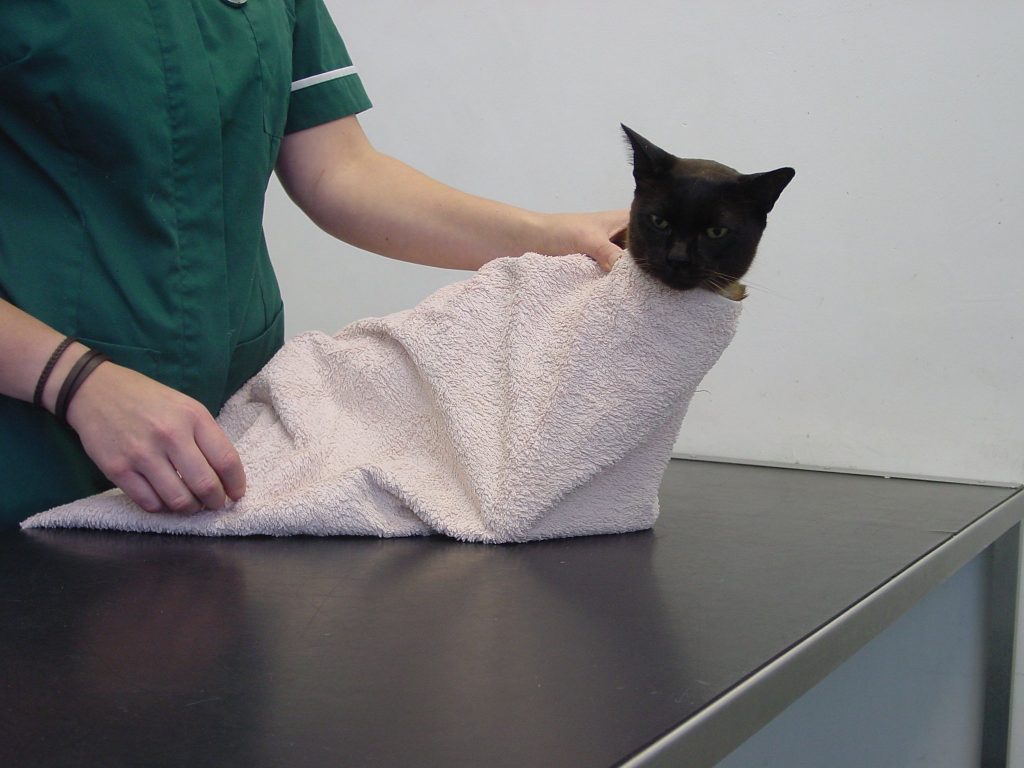
Image source: Bing (Web (fair-use with source credit))
Here's how to do it:
- Lay a towel flat on the table.
- Fold it in half lengthwise.
- Place the cat in the center, facing one of the short ends.
- Pull the left side of the towel over the cat's body, tucking it under the opposite armpit.
- Pull the right side over the top, tucking it under the cat's chin.
- Gather the loose fabric at the cat's back and fold it over the rump.
- The cat's head stays free. The body stays wrapped.
The key is the fold. The cat's front legs are trapped against its body by both towel layers. Its hind legs are covered.
All you're holding is a burrito with a cat head at one end.
If the cat tries to back out, the gathered fabric behind the rump stops them.
Step Four: Two-Person Hold
For truly uncooperative cats, call in backup. One person holds the cat in the purrito. The other person cleans.
This is safer than either person trying to do both jobs alone.
Step Five: The Head Tilt
Once the cat is wrapped, you need access to the face. Tilt the head slightly upward. This keeps tears and cleaning water from running into the nose.
Hold the head with your non-cleaning hand, fingers along the cheeks and thumb on the forehead. This gives you control without squeezing the throat.
What Not to Do
- Never scruff a cat and lift it. Scruffing for restraint is fine, but the cat's full weight should never hang from the scruff.
- Never grab the ears. They're sensitive and this causes pain.
- Never press on the throat. It triggers panic and can cause injury.
- Never lay the cat on its back. This threatens them and triggers the "belly attack" reflex.
- Never hold so tightly the cat can't breathe. You'll know if you're too tight, the cat will struggle harder, not less.
Signs Your Cat Is Reaching Its Limit
Watch the tail. A twitching tail is the first warning. A thumping tail means agitation.
Growling, hissing, and flattened ears are next. A cat that's about to bite will often pull its head back and become very still, a moment of stillness, then the strike.
If you see any of these signs, stop. End the session. Set the cat down.
Reward with a treat if the cat has been at all tolerant. Try again later, perhaps with a better hold, perhaps with a second person, perhaps just on a better day.
Building Tolerance Over Time
Most cats hate having their faces touched at first. That's normal. They'll get used to it if the experience is consistently positive.
Start with just touching the face. No cloth, no water. Just gentle strokes along the cheeks and under the chin.
Reward with treats. Do this for a few days.
Then introduce the cloth. Show it to the cat, let it sniff it. Then touch the cloth to the cheek, a quick touch, treat.
Then try a full wipe. One gentle pass over the chin. Treat.
Build slowly. Ten short sessions over two weeks will usually produce a calmer cat than one long stressful session.
Step-by-Step: How to Clean Your Cat's Face
Now for the actual process. This is the core of everything, and it's worth getting right.
What You Need Ready
- Two soft washcloths or four gauze pads
- Warm water in a small bowl
- A dry towel
- A treat for afterward
Prepare everything before you pick up the cat. You don't want to be fumbling for supplies mid-swaddle with a squirming cat under your arm.
Step 1: Prepare the Water
Fill a small bowl with warm water. Test it on the inside of your wrist. It should feel lukewarm, not hot.
You're aiming for about 90 to 100 degrees Fahrenheit. Cat body temperature is about 100 to 102.5 degrees Fahrenheit, so the water should feel tepid, cooler than the cat's body but not cold.
Hot water is dangerous. It can burn the skin and even the cornea. Cold water is uncomfortable and triggers resistance.
Step 2: Wet and Wring the Cloth
Dip the washcloth in the water. Wring it out thoroughly. The cloth should be damp, not dripping wet.
Excess water running into the eyes or nose will cause your cat to panic and sneeze.
The damp cloth should glide over the fur without leaving it soaked.
Step 3: Swaddle Your Cat
Use the swaddle or simple restraint technique from the previous section. Get the cat securely positioned before you touch its face.
Step 4: Clean the Eyes First
The eyes are the most sensitive area. They come first. Do them first.
That puts your cat's tolerance at its peak.
The correct motion is from the inner corner outward, toward the ear. This pushes debris away from the tear duct instead of into it.
Use a fresh section of cloth or a fresh pad for each eye. Never reuse the same surface on both eyes.
Gently press the damp cloth against the inner corner of the eye. Let it sit for a few seconds to soften crust. Then wipe outward in one smooth, gentle motion.
Repeat if needed.
Do not rub. Do not scour. One gentle pass per pad.
If the crust doesn't come off with gentle pressure, it needs more time to soften.
Step 5: Clean the Nose
Gently wipe the outer surface of the nose with the cloth. Wipe downward, away from the nostrils. Never push water into the nostrils.
Step 6: Clean the Cheeks and Forehead
Wipe the cheeks with soft, outward strokes. Then the forehead, from the top of the head down toward the nose.
Step 7: Clean the Chin and Lips
This area gets food residue, saliva, and oil buildup. Use a gentle circular motion. Pay special attention to the lip line and the area under the chin.
Step 8: Clean the Skin Folds (If Your Cat Has Them)
Flat-faced breeds, like Persians, Exotics, and Himalayans, have deep skin folds around the eyes, nose, and mouth. These folds trap moisture and debris.
Gently lift the fold with one hand. Wipe inside with the damp cloth. Make sure you dry thoroughly with the dry towel.
Moisture trapped in folds is a leading cause of skin infections in these breeds.
Step 9: Dry Everything
This step is non-negotiable. Use a separate dry towel or cloth to pat the cleaned areas dry. Focus on any folds or crevices.
A damp face is a bacterial breeding ground. The drier you keep the face, the lower the infection risk.
Step 10: Reward Your Cat
End every session with a treat. A high-value reward, freeze-dried chicken, tuna, or their favorite treat, reinforces that face cleaning is positive. Your cat will cooperate more each time.
How Long It Takes
The entire process, from water prep to final dry, should take two to five minutes. If you're spending longer, you're either cleaning too thoroughly or your cat is resisting. Adjust your approach.
| Step | Time |
|---|---|
| Prepare supplies | 30 seconds |
| Swaddle | 30-60 seconds |
| Clean eyes | 60-90 seconds |
| Clean nose and cheeks | 30 seconds |
| Clean chin | 20 seconds |
| Clean skin folds | 30 seconds |
| Dry | 30 seconds |
| Reward | 10 seconds |
The One-Eye Rule
Never clean both eyes in the same pass. Always use a fresh surface for the second eye. Even healthy-looking eyes carry different bacteria.
What About Stubborn Crust?
Some crusts are rock-hard. Soaking is the answer. Press a damp, warm cloth against the crust for 10 to 15 seconds.
That's long enough to soften it. Then wipe gently. Do not pick or pull.
If a crust is stuck to hair, it will eventually release once softened.
What If the Crust Won't Budge?
Stubborn crust that won't release with gentle pressure may indicate the discharge is dried deep into the skin or the eye itself. Stop trying. Let a vet handle it.
Forcing it off can tear tissue.
For more on feline eye discharge and when to seek veterinary care, Cornell University's Feline Health Center offers reliable, evidence-based guidance.
Cleaning Chin Acne and Skin Folds

Image source: Bing (Web (fair-use with source credit))
Chin acne and skin folds need special attention. These are the two areas where routine cleaning turns into medical treatment.
What Is Feline Chin Acne?
Feline chin acne is a common condition. It happens when hair follicles on the chin and lips get clogged with oil and dead skin cells. It looks like black specks or dirt that won't wipe off.
Many owners mistake it for flea dirt or just a dirty chin.
The exact cause isn't fully understood, but several triggers are known. Plastic food bowls are a common culprit. Bacteria can accumulate in scratches on plastic surfaces.
Poor hygiene plays a role. Stress and hormonal changes can also contribute.
How to Clean Chin Acne
If your cat has mild chin acne, you can manage it at home. Here's the process:
- Warm water and a soft cloth are your first line of defense.
- Gently wipe the chin in circular motions.
- Use a fresh section of cloth for each pass.
- Dry the chin thoroughly.
- Repeat daily until the blackheads clear.
For stubborn cases, your vet may recommend chlorhexidine wipes. These are antibacterial and help reduce the bacterial load on the skin. Apply them once or twice daily as directed.
When Chin Acne Gets Worse
Mild blackheads can progress to red, swollen pustules. That's a bacterial infection. Home cleaning won't fix it.
Your vet will likely prescribe a topical treatment or oral antibiotics.
Never pop chin acne pustules. That pushes bacteria deeper into the skin and leads to scarring.
What About the Skin Folds?
Brachycephalic breeds have deep skin folds around their eyes, nose, and mouth. These folds are warm, dark, and damp. That's exactly what bacteria and yeast love.
The cleaning process is the same but requires extra care:
- Lift the fold gently with one hand.
- Wipe inside with a damp cloth.
- Dry thoroughly.
- Repeat daily or as recommended by your vet.
The drying step is critical. Moisture left in the folds leads to intertrigo, a painful, itchy inflammation. If you notice redness, odor, or discharge in the folds, see your vet.
You may need a medicated wipe or cream.
How Often Should You Clean Your Cat's Face?
The right frequency depends on your cat's breed, age, and lifestyle.
Flat-faced breeds (Persians, Exotics, Himalayans, British Shorthairs): Daily cleaning is recommended. Their anatomy causes tears and debris to accumulate constantly. A daily two-minute wipe prevents staining and skin fold infections.
Normal-faced breeds: Weekly cleaning is generally sufficient for routine maintenance. You can increase frequency if you notice visible dirt or discharge.
Kittens: Check their faces after meals, especially during weaning. Food residue on the chin and cheeks needs prompt removal.
Senior cats: They often can't groom themselves effectively. Check their faces daily and clean as needed.
Outdoor cats: Check after every time they come inside. Grass seeds, dirt, and bugs can get trapped in their fur.
Cats recovering from surgery or illness: Follow your vet's specific instructions.
That said, the rule is simple: if you see dirt, clean it. If you see discharge, assess it. If you see redness or swelling, stop and call a vet.
Real Scenarios: What to Do in Specific Situations
The Food-Smeared Kitten
Kittens are messy eaters. After weaning, they end up with food paste on their chins and cheeks. Clean it immediately after every meal with a warm, damp cloth.
Dry it thoroughly. Leaving food residue promotes chin acne and skin irritation. Over time, your kitten will start grooming the area itself, but until then, you're on duty.
The Elderly Cat That Can't Groom
Some senior cats stop grooming completely. Arthritis makes it painful to reach their own faces. Dental disease causes mouth pain.
Cognitive decline makes them forget.
If this is your cat, you're now their grooming partner. Clean their face daily. Keep the eye corners clear.
Watch for chin acne. And use this time as a wellness check. A senior cat that suddenly develops a dirty face may have a health issue that needs addressing.
The Persian With Chronic Tear Stains
Persians and other flat-faced breeds have a conformational issue. Their shallow eye sockets and shortened noses cause tears to spill onto the fur. The tears contain porphyrins, iron-containing pigments that stain white fur reddish-brown.
Daily wiping helps but doesn't eliminate the stain. That's because the underlying anatomy hasn't changed. Some owners use tear stain removers, but these are cosmetic.
The stain returns within days of stopping.
The best approach is daily gentle wiping to keep the skin healthy, plus regular grooming of the stained fur. In severe cases, have your vet check for blocked tear ducts.
The Cat With a Foreign Object in Its Eye
If you see something stuck in your cat's eye, do not attempt to remove it. Do not wipe. Do not rinse.
Leave it completely alone and go to the vet immediately. Attempting to remove a grass seed or other object can scratch the cornea or push the object deeper.
Mistakes That Can Hurt Your Cat
Some errors cause immediate harm. Others cause problems that build up over time. Here's what to avoid.
Using the Wrong Products
Human facial cleansers, soaps, and shampoos disrupt the pH balance of cat skin. Cat skin is more alkaline than human skin. Products designed for humans can strip natural oils and cause dryness and irritation.
Worse, anything you put on a cat's face will eventually get licked off. Many common ingredients in human products are toxic to cats.
Using Q-Tips
Cotton swabs are dangerous near cat eyes. One sudden movement is all it takes to scratch the cornea or push debris deeper into the eye canal. There is no safe way to use a Q-tip on a cat's eye area.
Use a damp cloth or gauze pad instead.
Wiping Toward the Inner Corner
Always wipe from the inner corner outward. Wiping toward the nose pushes debris into the tear duct and can cause blockages or infections.
Reusing the Same Cloth
One cloth, one eye. Reusing the same cloth surface across both eyes spreads bacteria. If one eye has an infection, you've just given it to both.
Scrubbing Instead of Soaking
Hard crusts need soaking. Press a damp cloth against the crust for 10 to 15 seconds. If it doesn't come off with gentle pressure, stop.
Scrubbing can tear the delicate tissue around the eye.
Over-Cleaning
Too much cleaning dries out the skin and causes irritation. A cat that experiences discomfort during cleaning will resist every future attempt. Stick to the recommended frequency for your cat's breed and situation.
Ignoring the Drying Step
A damp face is an invitation for bacteria and yeast. Dry the face thoroughly after every cleaning. Focus on skin folds and crevices where moisture collects.
Mistaking Illness for Dirt
Yellow or green discharge is not something to wipe away. It's an infection. Squinting, cloudiness, and a visible third eyelid are medical emergencies.
Home cleaning won't help, and it can make things worse.
When to Stop Cleaning and Call the Vet
There's a clear line between routine cleaning and medical treatment. If you cross it, stop what you're doing and call your vet.
Symptoms That Require Immediate Veterinary Attention
- Squinting or holding the eye closed
- Excessive tearing that soaks the face
- Yellow or green discharge
- Red or rusty-colored discharge
- Cloudiness in the eye
- Visible third eyelid
- Swelling around the eye
- Red, inflamed eyelids
- Foul odor from the eye or mouth
- Persistent pawing at the face
- A visible foreign object in the eye
- Sudden changes in the appearance of the eye
If you see any of these, your cat needs medical care. Protect the eye from further irritation, keep the cat calm, and call your vet immediately.
Your Cat's Tolerance Is a Sign
If your cat has tolerated facial cleaning for months and suddenly resists, pay attention. That's not a behavioral problem. That's your cat telling you something hurts.
Sudden resistance is a common early sign of dental disease, eye pain, or facial injury.
Stop the cleaning and schedule a vet exam.
The Bottom Line
Cleaning your cat's face is a simple, important part of cat ownership. It prevents infections, keeps your cat comfortable, and helps you spot health problems early.
Here's the checklist:
- Use warm water and a soft cloth.
- Check the face before you clean it.
- Skip any area that looks infected or injured.
- Wipe from the inner eye corner outward.
- Use a fresh cloth section for each eye.
- Dry everything thoroughly.
- Clean daily for flat-faced breeds, weekly for others.
- Never use Q-tips or human products.
- Stop and call the vet at the first sign of trouble.
You're not just wiping away dirt. You're protecting your cat's health, bonding with them, and staying on top of their wellbeing. That's worth two minutes a day.
Frequently Asked Questions
How often should I clean my cat's face?
Clean flat-faced breeds daily. Clean other cats weekly or as needed. If you see visible dirt, discharge, or food residue, clean it immediately.
Frequency may increase for senior cats that can't groom themselves or outdoor cats that bring in debris.
Can I use baby wipes on my cat's face?
No. Baby wipes contain fragrances and chemicals that are not safe for cats. They can cause skin irritation and are toxic if licked.
Use only warm water with a soft cloth, or cat-safe wipes specifically formulated for feline use.
Why does my cat have brown stuff in their eyes?
That's dried tear fluid mixed with dust and dead cells. It's normal. Wipe it gently with a damp cloth.
If the discharge turns yellow, green, or red, see your vet. Those colors indicate infection or injury.
How do I clean my cat's eyes without hurting them?
Use a damp, warm cloth or gauze pad. Wipe from the inner corner outward. Use a fresh section for each eye.
Do not rub or scrub. If crust is hard, hold the cloth against it for 10 to 15 seconds to soften it, then wipe gently.
What can I use to clean my cat's chin acne?
Warm water works for mild cases. Gently wipe the chin daily with a damp, soft cloth. For persistent acne, ask your vet about chlorhexidine wipes.
Never squeeze the blackheads. If you see red pustules or swelling, the acne is infected and needs veterinary treatment.
Is it normal for my cat's eyes to water?
Some tearing is normal, especially for flat-faced breeds. Sudden or excessive tearing is not. It can signal allergies, an infection, a blocked tear duct, or a foreign object in the eye.
If the watering is new, persistent, or paired with other symptoms, call your vet.