
You're staring at a cockatiel that looks like it's been through a flour fight, and you're wondering if you should just dunk the poor thing under the tap. Don't. The way you handle bath time can mean the difference between a happy, trust-building ritual and a stressed-out bird that bolts every time you reach for a water dish.
Learning how to bathe a cockatiel properly isn't complicated, but it does require understanding their unique physiology and respecting their boundaries. These birds come from the arid regions of Australia, where they bathe in shallow puddles after rain, not in streams or waterfalls. They're delicate creatures with sensitive respiratory systems, and the wrong approach can cause everything from hypothermia to lasting behavioral damage.
In our research across avian veterinary guidelines and behavioral studies, the consensus is clear: lukewarm water, shallow depth, and zero force.
Quick Answer
Offer a shallow dish of lukewarm water (85, 95°F) for 10, 15 minutes. Let your cockatiel approach on their own terms. Mist gently from above if they prefer rain-style bathing.
Never use soap. Dry them in a warm, draft-free room. Bathe 2, 4 times weekly.
Skip baths if your bird shows stress or illness signs.
Why Getting This Right Actually Matters
Here's the thing about cockatiels: they're masters at hiding discomfort. In the wild, showing weakness gets you eaten. So by the time you notice something's wrong, it's often been wrong for a while.
Bathing mistakes fall into that same category. A bird that's too cold after a bath might not show it immediately. Twenty minutes later, they're fluffed up and shivering.
The stakes go beyond just comfort.
- Hypothermia risk: A wet cockatiel loses body heat up to 20 times faster than a dry one. If the room is below 75°F with any draft, that's a genuine medical emergency in the making.
- Respiratory issues: Cockatiels have highly efficient lungs and air sacs. Spraying water directly at their face can cause aspiration, leading to pneumonia. Misting above them mimics natural rain and avoids this entirely.
- Feather damage: Soap strips the natural oil coating that keeps feathers waterproof and insulated. Once damaged, feathers don't heal until the next molt. That leaves your bird vulnerable to temperature swings and skin irritation.
- Trust erosion: A forced bath is a memorable trauma. One bad experience can make your cockatiel fear water for years. Birds have excellent long-term memory for negative events.
There's also the behavioral side. Cockatiels that bathe regularly on their own terms tend to preen better, show brighter feather condition, and display more confident body language. It's not just hygiene; it's enrichment.
Wild cockatiels spend a significant portion of their day foraging and bathing. Recreating that in captivity keeps their instincts sharp and their minds engaged.
As of 2026, the Association of Avian Veterinarians continues to emphasize that bathing should be offered as an opportunity, not an obligation. Your job is to provide the setup and let the bird make the choice. That single shift in mindset changes everything about how bath time goes.
What Your Cockatiel Needs From a Bath
Let's talk about what's actually happening when a cockatiel bathes. It's not just getting wet. There's a whole sequence of behaviors that serve specific biological purposes.
The Science of Feather Maintenance
Cockatiels produce a special powder down from specialized feathers, mostly around their rump and chest. This powder acts as a natural waterproofing agent and keeps feathers flexible. When your bird bathes, water helps distribute this powder evenly across the feather shaft.
Then, during preening, they run each feather through their beak, realigning the barbs and barbules, zipping everything back into place.
Without regular bathing, that powder can build up and cake. Feathers become brittle, lose their insulating properties, and look dull or dusty. That's why you'll often see cockatiels with a grayish, powdery cast if they haven't bathed in a while.
It's not dirt; it's an excess of powder down that water would normally help distribute.
How Bathing Supports Molting
Molting is exhausting for a cockatiel. They're growing dozens of new feathers simultaneously, each one packed with blood and nutrients at the base. These new feathers, called pin feathers, are itchy and uncomfortable as they emerge.
Bathing during a molt does two things:
- Moisturizes the sheath: The keratin sheath around each new feather hardens when dry. Wetting it softens the sheath, making it easier for your bird to crack and remove during preening.
- Soothes irritated skin: The new feather growth stretches the skin, which can feel tight and itchy. Lukewarm water provides direct relief.
Most owners notice their birds bathe more enthusiastically during a molt. That's their body telling them what they need. Increase bath frequency to 4, 5 times weekly during these periods, assuming your bird is interested.
How Often Should You Offer a Bath?
The short answer: 2, 4 times per week for most cockatiels.
| Situation | Recommended Frequency |
|---|---|
| Normal adult cockatiel | 2–3 times per week |
| During molting | 4–5 times per week |
| Hot, dry climate | 4 times per week |
| Cold, drafty climate | 1–2 times per week |
| Sick or recovering bird | Hold off until healthy |
| Baby or juvenile | 2 times per week, supervised |
Watch your bird's response. If they're enthusiastic and preening well afterward, you've hit the right frequency. If they seem stressed or avoid the dish, back off.
Some cockatiels genuinely prefer bathing only once a week. That's fine.
The Golden Rules: Non-Negotiable Safety Basics
Before we get into the step-by-step methods, there are hard rules that apply to every single bath, every single time. These aren't suggestions. They're the difference between a safe bathing routine and a veterinary emergency.
Rule #1: Water Temperature is Non-Negotiable
Use lukewarm water, approximately 85, 95°F (29, 35°C). Test it on the inside of your wrist. It should feel neutral, neither warm nor cool.
Cold water causes shock, which can trigger a dangerous drop in heart rate. Hot water strips the natural oils from feathers and can cause burns on sensitive skin.
Rule #2: Never Use Soap, Shampoo, or Cleansers
Cockatiel feathers have a delicate structure designed to interlock tightly. Soap breaks down the natural oil film that maintains feather integrity. Once compromised, feathers flatten, lose their waterproofing, and stop insulating.
Your bird can literally get cold because its feathers stopped working.
The only exception is a medicated rinse prescribed by an avian veterinarian for a specific condition like mites or a fungal infection. Even then, you'll dilute it exactly as instructed and rinse thoroughly afterward.
Rule #3: Read Your Bird's Body Language First
Here's what a relaxed cockatiel looks like before a bath:
- Smooth, sleek feathers held close to the body
- Bright, alert eyes with normal-sized pupils
- Head tilted slightly, curious posture
- Soft vocalizing or quiet chattering
Here's what a stressed cockatiel looks like:
- Feathers held tightly against the body but wings slightly dropped
- Panting or rapid breathing
- Dilated or pinning pupils
- Frantic attempts to climb away
- Hissing or lunging at the dish
If you see stress signals, stop immediately. Do not push through. A cockatiel forced into a bath will likely panic, thrash, and potentially injure themselves trying to escape.
Pick the dish up, offer it again tomorrow, and adjust your approach.
Rule #4: Skip Baths Entirely in These Situations
- Illness: If your bird is fluffed up, lethargic, has discharge from eyes or nostrils, or is breathing heavily, do not bathe them.
- Recent injury: Any open wound, bleeding, or visible trauma means no water until a vet clears them.
- Cold room: If your home is below 70°F or there are drafts near their cage, wait for a warmer day.
- Extreme stress: Recent cage move, new pet in the house, or a recent trip to the vet. Let them settle for a few days first.
Rule #5: Always Supervise
A cockatiel can drown in water just an inch or two deep if they tip over and panic. That's not an exaggeration. It happens.
Never walk away from a bathing bird, even for a minute. The entire bath session should be 10, 15 minutes maximum, and you should be watching the entire time.
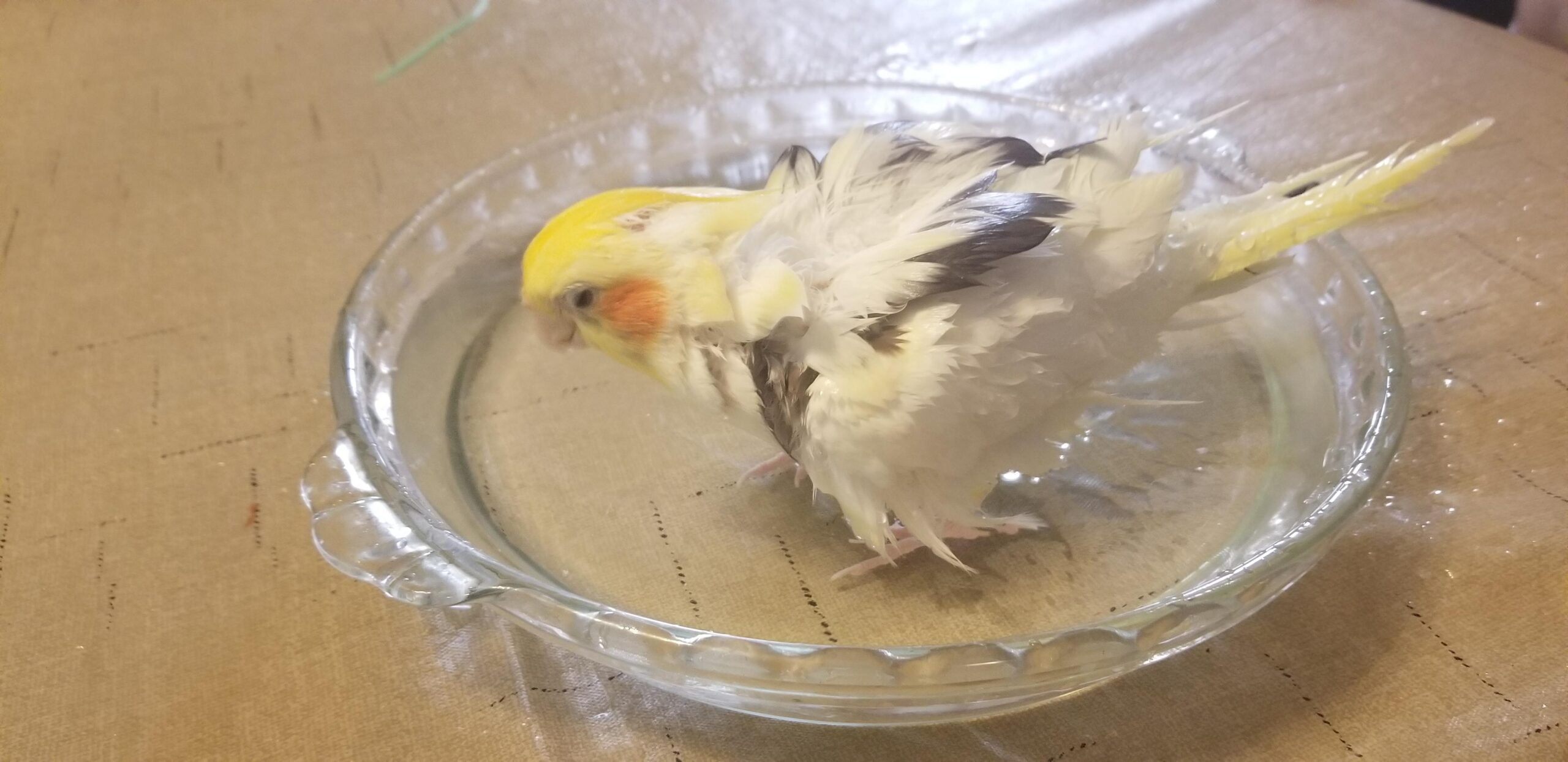
Image source: Bing (Web (fair-use with source credit))
Method #1: The Shallow Dish Bath (Safest for Most Birds)
This method tops the recommendations from avian veterinarians for good reason. It gives your cockatiel complete control. They can approach, retreat, or ignore the dish entirely.
There's no pressure, no surprise, and no way to accidentally spray water into their face.
What You'll Need
| Item | Spec | Notes |
|---|---|---|
| Shallow dish or pie tin | 6–8 inches wide, 1–2 inches tall | Ceramic or stainless steel, no plastic |
| Water | Lukewarm, 85–95°F | Fill to 0.5–1 inch depth |
| Non-slip surface | Silicone mat or towel | Prevents dish from sliding |
| Room | Draft-free, 75°F or warmer | Warm bathroom or kitchen |
Step-by-Step Process
Step 1: Prepare the space.
Choose a warm, quiet room. Lay down a towel or silicone mat, then place the dish on top. Make sure it's on a stable, flat surface.
A wobbly dish will scare your bird before they even get close.
Step 2: Fill with lukewarm water.
Run your wrist under the tap to test the temperature. Fill the dish to about half an inch to an inch deep. For a first attempt, go with half an inch.
You can add a little more if your bird shows interest and seems comfortable.
Step 3: Place the dish and step back.
Set the dish inside the cage or in a familiar area where your bird feels secure. Then physically step back. Sit down, look at your phone, do something quiet.
Do not hover over the dish. Birds see hovering as a predator behavior. Give them space to investigate.
Step 4: Wait. Don't force.
Some cockatiels will hop right in within seconds. Others will eyeball it for five minutes. Some won't touch it for three days of offering.
That's normal. Leave it for 10, 15 minutes, then remove it regardless.
Step 5: Observe and respond.
- If your bird hops in and splashes: great, let them do their thing.
- If your bird dips their head in and sips: that's fine, they might be drinking.
- If your bird stands at the edge and just stares: try splashing a few drops with your finger to show what it is.
- If your bird flies away or shows stress: remove the dish and try again tomorrow.
What Normal Bathing Behavior Looks Like
When a cockatiel actually bathes, you'll see a distinctive sequence:
- They step into the water, maybe just one foot at first.
- They lower their chest into the water, flattening their body.
- They flick water onto their back by shaking one wing at a time.
- They duck their head and splash water over their face and neck.
- They flap their wings hard enough to mist water everywhere.
This whole sequence might last 60 seconds or it might last five minutes. It's messy. Water will end up on your floor, your furniture, possibly your face.
That's a good sign. That means your bird is genuinely enjoying it.
What If They Won't Go Near It?
This happens with many cockatiels, especially rescued or rehomed birds that didn't get bathing opportunities early in life. Try these adjustments in order:
- Switch to a clear glass dish. Some birds are less spooked by glass. They can see the water from all angles.
- Add a smooth stone or pebble. Some birds like standing on a stable surface while splashing.
- Move the dish to different locations. Try the floor of the cage, a tabletop, or a play stand.
- Add a green leaf. A washed lettuce leaf floating on the water can trigger a natural bathing response.
This last trick works surprisingly well for nervous birds. They start nibbling at the leaf, notice the wetness, and before they know it, they're splashing around.
Method #2: Gentle Misting for Birds Who Hate Dishes
Some cockatiels flat-out refuse to step into a dish, and that's okay. They might prefer a rain-style bath. In the wild, cockatiels bathe in light rain, spreading their wings and letting water roll off their backs.
Choosing the Right Spray Bottle
This matters more than you think. Many spray bottles produce a coarse, harsh spray that feels like impact rather than rain. You want a fine mist nozzle that breaks water into tiny droplets.
| Feature | What to Look For |
|---|---|
| Nozzle | Continuous fine mist, not a jet stream |
| Material | BPA-free plastic or glass |
| History | Never used with chemicals or cleaners |
| Size | 8–16 ounces, easy to grip one-handed |
| Trigger | Smooth, easy squeeze for consistent pressure |
It's worth buying a dedicated spray bottle just for your bird. Label it clearly so no one accidentally uses it for cleaning products. Trace amounts of bleach, ammonia, or even dish soap can seriously harm a cockatiel who breathes them in.
Step-by-Step Misting Process
Step 1: Test the spray before any bird contact.
Fill the bottle with lukewarm water and spray it into the air a few times. Check that the mist is fine and even, not spitting or producing droplets. If it's uneven, adjust the nozzle or replace the bottle.
Step 2: Position yourself at the right distance.
Hold the bottle 12, 18 inches away from your bird. Any closer and the mist feels like a wave crashing. Any farther and it looks like nothing's happening.
Step 3: Mist above the bird, not directly at them.
This is the most important step. Aim above your cockatiel's head, letting the mist drift down naturally like rain. If you spray directly at their face or body, they'll interpret it as a threat.
The falling mist also avoids any risk of water entering their nostrils.
Step 4: Do a short burst, then pause.
Give one or two quick squeezes of the trigger, then stop. Watch your bird's reaction. Some will immediately start fluffing and spreading their wings.
Others will just sit there, curious. A few will fly off.
Step 5: Build up duration gradually.
On the first misting session, keep it to 5, 10 seconds of light misting. On subsequent attempts, you can extend to 15, 20 seconds. Over several weeks, most cockatiels learn to associate the mist with the sensation of bathing, not fear.

Image source: Bing (Web (fair-use with source credit))
Why Some Birds Respond Better to Misting
There's a behavioral reason this works for shy birds. The spray bottle doesn't require the bird to approach anything. There's no step onto an unfamiliar surface.
The mist just arrives from the sky, and the bird gets to choose whether to accept it. It's a passive experience that requires zero courage.
Birds that are naturally cautious or nervous, including many hand-raised or rescue cockatiels, tend to respond better to this method. They can participate at their own level. A bird might just sit under the mist with folded wings for the first few sessions, then gradually start flicking water onto their back as they relax.
What Misting Is Not
Misting is not an excuse to soak your bird until they're dripping. The goal is a light, even dampening of the feather surface. If water is running off your bird in streams, you've used too much.
Stop misting at the first sign of water beading and running off. Your bird only needs the outer feather layer dampened. They'll preen the moisture through the rest.
Never mist a bird that's already stressed, panting, or trying to escape. Stop immediately. Give your bird a break, and try again in a few days with a different approach.
Method #3: The Leaf Bath (For the Picky or Nervous Cockatiel)
Sometimes you have to get creative. The leaf bath taps into your cockatiel's natural instincts in a way that dishes and misting bottles simply can't. In the wild, cockatiels don't always have access to open water.
After a rainstorm, they'll find moisture collected on broad leaves and bathe by rubbing against the wet surface.
Why This Works for Shy Birds
The leaf bath is the most passive bathing method you can offer. There's no open water to approach, no spray bottle to fear. The water just appears on a familiar object.
Many nervous birds who panic at the sight of a dish will happily investigate a wet leaf that's already part of their environment.
The key is that the leaf feels safe. It's green, it's natural, and it's something they'd normally interact with anyway. You're not asking your bird to do anything unusual.
You're just adding water to an everyday object.
How to Set Up a Leaf Bath
Step 1: Choose the right greens.
Wash a large lettuce leaf, a spinach leaf, or a fresh dandelion leaf thoroughly. Make sure it's free of pesticides or residues. Organic produce is ideal, but regular produce works fine after a good rinse.
Step 2: Keep it wet, don't soak it.
Shake off excess water, but leave the leaf damp. You want a light sheen of water across the surface. Some water droplets collecting in the leaf's natural crevices are perfect.
Step 3: Attach it to the cage or place it on a perch.
Clip the leaf to the cage bars near a favorite perch, or lay it flat on a play stand. Make sure it's stable and won't fall when your bird steps on it.
Step 4: Let curiosity do the work.
Step back and wait. Your cockatiel will likely approach the leaf to nibble or inspect. When they feel the wetness, their natural bathing response often kicks in.
They'll start rubbing their head and chest against the damp surface, then progress to full bathing movements.
When to Reach for This Method
The leaf bath is your best option when:
- Your bird is a recent rescue with unknown history
- You've tried dishes and misting with zero success
- Your bird is young and still building trust
- Your bird seems interested in water but won't commit
- You want a low-pressure introduction before moving to other methods
It's also a fantastic enrichment tool even for established bathers. Offering a wet leaf alongside a dish gives your cockatiel choices, and choice drives engagement.
Realistic Expectations
The leaf bath won't produce the dramatic wet bird that a dish bath will. Your cockatiel will get lightly dampened at best. That's fine.
The goal here isn't a full bath. The goal is positive association with water. Once your bird learns that water feels good, you can gradually transition to more traditional methods.
Some birds take to the leaf bath immediately. Others will just eat the leaf and move on. That's okay too.
You've still given them fresh, enriching produce and reinforced that your interactions are safe and rewarding.
Drying Your Cockatiel Safely
Getting your bird wet is only half the process. How you dry them matters just as much, and honestly, most people mess this up.
Why Drying Is Critical
A wet bird loses body heat at a frightening rate. Feathers that are soaked provide zero insulation. The air trapped between feathers is what keeps your bird warm, and water displaces that air completely.
Research on avian thermoregulation shows that a wet bird can drop its core body temperature by several degrees within minutes.
That's why a bath in a warm room is non-negotiable, but it's only half the equation. The drying phase needs the same attention.
The Ideal Drying Environment
| Factor | Ideal Setting |
|---|---|
| Room temperature | 75°F or warmer |
| Air movement | None (no fans, no open windows) |
| Humidity | Moderate (40–60%) |
| Time | 30–60 minutes |
| Light | Natural or bright indoor light |
Move your bird to their cage or a quiet perch in a room that meets these conditions. Place them somewhere they feel secure. Avoid windowsills, doorways, and anywhere near heating or cooling vents.
What You Should and Shouldn't Do
Do let them air dry in a warm room. This is the safest option. Your cockatiel will fluff up their feathers and shake them out individually. This is their natural drying mechanism.
It works. Give them space and let them handle it.
Do offer a clean towel as a perch. Some birds like standing on a soft, dry towel while they preen. The towel absorbs excess moisture from their feet and chest. Just make sure it's a dedicated bird towel that's been washed with fragrance-free detergent.
Don't rub them with a towel. Rubbing damages the feather structure at the microscopic level. The barbs and barbules that zip feathers together are delicate. Rubbing breaks them, leaving feathers looking frayed and ruining their insulation properties.
Don't use a hair dryer. Ever. The noise alone is terrifying for birds. The heat can burn their sensitive skin under wet feathers.
And the force of the air can push water into their nostrils or ears. This is one of the fastest ways to create a bird that fears bathing forever.
What Normal Drying Behavior Looks Like
Your cockatiel will go through a predictable sequence after a bath:
- Initial shake: They'll ruffle their entire body to shed large water droplets.
- Perch and fluff: They'll sit with feathers puffed out, trapping warm air against their skin.
- Individual feather preening: They'll methodically run each feather through their beak, from the shaft to the tip.
- Head and face attention: They'll use their foot to scratch and wipe their face, removing moisture from that area.
- Final smoothing: They'll slick their feathers back down, returning to their normal streamlined profile.
This entire process takes about half an hour for a lightly damp bird. Heavily soaked birds might take closer to an hour. If your bird is still wet after 60 minutes, the room isn't warm enough or the air is too humid.
Move them to a warmer spot.

Image source: Bing (Web (fair-use with source credit))
What If It's Cold in Your House?
If you live in a climate where your home struggles to stay above 70°F, adjust your bathing schedule. Only bathe during the warmest part of the day. Move the bird to a warm bathroom with the door closed.
Run a space heater in the room for 30 minutes before bath time to pre-warm the space.
Never place the bird directly in front of a heat source to dry. A space heater, radiator, or heat lamp can cause burns or overheating. The goal is ambient warmth in the room, not targeted heat on the bird.
Mistakes to Avoid: What Can Hurt Your Bird
You've heard the right way to bathe a cockatiel. Now let's talk about what can go wrong. Some mistakes are just uncomfortable for your bird.
Others can be genuinely dangerous.
The Temperature Trap
Guessing water temperature is the most common mistake new owners make. Room temperature water feels cold to a bird's smaller body. Hot tap water can burn.
The "test on your wrist" method works because the inside of your wrist has sensitive skin that approximates what your bird would feel.
If you think the water is too warm, it probably is. Err on the side of slightly cooler rather than warmer. Cool water is uncomfortable.
Hot water is tissue damage.
The Force Trap
Picking up a reluctant bird and setting them in water is never acceptable. Neither is holding them under a gentle stream while they try to escape. This is how birds get injured.
Their wings flap frantically, and they can hit cage bars, walls, or your hands with force.
A forced bath also destroys trust in a way that's hard to rebuild. Cockatiels are long-lived birds. They remember negative experiences for years.
One forced bath can set back your relationship for a decade.
The Soap Trap
We've covered why soap is bad for feathers. But there's another layer here. Cockatiels preen themselves constantly.
Anything left on their feathers gets ingested during preening. Soap residue means your bird is consuming whatever chemicals were in that soap.
Even "gentle" or "natural" soaps aren't safe. The surfactants that create lather strip the lipid layer from feathers just as effectively as harsher detergents. And fragrance compounds are especially problematic for a bird's sensitive respiratory system.
The Timing Trap
Bathing at night is a mistake that's easy to make. You come home from work, it's 7 PM, and you think, "Let me offer a bath."
Your cockatiel's internal clock says night is coming. Their body is preparing for rest. A bath at this hour means their feathers are still drying when their metabolism starts to slow down.
The result is a chilled bird. You're asking for respiratory issues.
The Association of Avian Veterinarians recommends morning bathing as the standard practice. This gives feathers maximum time to dry during the active part of the day.
The Shallow Water Trap
"Shallow" isn't just a suggestion. It's a safety requirement. A cockatiel that panics in water can flip onto their back.
If the water is deep enough to cover their face, they can aspirate water into their lungs. Even an inch of water is dangerous if the bird is facing the wrong way.
Keep water depth at half an inch to one inch. That's enough for a bath and shallow enough that a bird on their side can still lift their head clear.
The Distraction Trap
You start a bath session. Your phone buzzes. You look away for thirty seconds.
That's all it takes.
Accidents during bathing happen fast. A bird that slips off the edge of the dish, the dish that tips over, a bird that flies into a window while startled. You need to be present for the entire session.
Bath time is 10 to 15 minutes. Put the phone down.
How to Turn Bathing Into a Bonding Routine
Bathing can become something your cockatiel genuinely looks forward to. The secret is consistency and positive association. Birds are creatures of routine.
Once they figure out the pattern, they'll start anticipating bath day.
Building a Predictable Routine
Choose a specific time and stick to it. Morning is ideal. Your cockatiel will learn that after morning chop or before the cage cleaning, bath time happens.
They'll start showing signs of anticipation, like bobble-heading or flying to the front of the cage.
The routine also helps you remember to offer baths regularly. When it's attached to an existing habit, you're far more likely to follow through.
Making Bath Time Positive
Every bath session should end well. That's the key to long-term success. If the session goes badly, don't force it.
Pack it up, try again tomorrow. One good experience is better than five mediocre experiences followed by a negative one.
Here are some ways to build positive association:
- Speak softly during bath time. A low, calm voice reassures your bird.
- Offer treats after the bath. A favorite snack creates a lasting positive memory.
- Don't loom. Sit at a comfortable distance. Move slowly.
- Limit sessions. Ten to fifteen minutes is enough. Don't drag it out.
Recognizing Your Bird's Preferences
Over time, your cockatiel will show clear preferences. Some birds always want the dish. Others want misting.
A few will want a combination of both. Learn what your bird likes and lean into it.
Birds that prefer misting often do the same wing-flicking motion they'd use in rain. Birds that prefer dishes will step in with one foot first, testing the depth. Birds that prefer leaves will rub their head against the wet surface repeatedly.
The Trust Payoff
Birds don't do something just because you want them to. They do something because they feel safe doing it. When your cockatiel chooses to bathe in front of you, it's a genuine sign of trust.
They're at their most vulnerable, wet and off-balance, and they're allowing you to be there.
That's not something birds do casually. Over time, bath time becomes a ritual that reinforces your bond. Your bird learns that you provide good things, that you won't force them into situations they don't like, and that they can relax in your presence.
That trust carries over into every other part of your relationship.
When to See an Avian Vet
Most bathing issues resolve with adjustments at home. But some situations require professional help. Knowing the difference between a behavioral quirk and a medical problem can protect your bird's health.
Signs That Warrant a Vet Visit
Excessive bathing: A cockatiel that bathes obsessively, multiple times daily, might have a skin condition. Allergies, external parasites, or liver disease can cause intense itching. The bird bathes frantically to find relief.
Refusal to bathe alongside other symptoms: A bird that won't bathe but also shows signs like squinting, cough, ruffled feathers, or reduced appetite needs attention. The bathing refusal is a symptom, not the problem.
Feather damage after bathing: If your bird's feathers look frayed, tattered, or broken after a bath and preen session, something's wrong. This could indicate malnutrition affecting feather strength, or a condition called feather damaging behavior.
Scaly skin or crusty patches: Redness, flaking, or crust formations on the skin or beak can indicate mites, fungal infections, or nutritional deficiencies. Bathing won't fix these.
Persistent scratching after drying: A bird that's still scratching aggressively hours after a bath might have contact dermatitis. Something in your water, dish, or spray bottle is irritating their skin.
Image source: Web (Bing) / pinterest.com (Web image (fair-use with source credit))
What to Tell Your Vet
When you call the avian vet, come prepared with specifics:
- How often your bird bathes
- What method you use (dish, mist, leaf)
- Water temperature and source (tap, filtered, bottled)
- When the behavior started
- Any other changes in appetite, droppings, or vocalization
This information helps the vet distinguish between a behavioral pattern and a medical cause.
What's Normal vs. What's Not
| Normal | Not Normal |
|---|---|
| Bathing 2–4 times weekly | Bathing every few hours |
| Preening after bath | Aggressive feather chewing after bath |
| Light water flicking | Constant head shaking after bath |
| Soft vocalization during bath | Crying or distress calls |
| Normal appetite after bathing | Refusing food after bathing |
First Aid for Bathing Accidents
If something goes wrong during a bath, act fast:
If water enters the nostrils: Tilt your bird's head downward slightly. Gently dab with a soft tissue. Watch for sneezing, which is normal and helps clear water.
If breathing becomes labored, call your vet immediately.
If your bird is chilled: Wrap them in a warm towel, just loosely. Move to a warm room. Offer a shallow dish of lukewarm water for them to stand in, which warms them from the feet up.
Call your vet if they don't warm within 10 minutes.
If your bird inhaled water: Place them in a warm, quiet area. Watch for coughing, wheezing, or gurgling sounds. Any sign of water in the lungs requires immediate veterinary attention.
If your bird panicked during a forced bath: Stop the session immediately. Provide a quiet, dark space to recover. Don't attempt another bath until they've fully settled.
Consider a different method next time.
FAQs: Quick Answers on Bathing Cockatiels
Can I use tap water or does it need to be filtered?
Tap water is generally fine for most household settings. Municipal water supplies are treated and safe for human consumption. However, some birds are sensitive to chlorine or fluoride.
If your bird shows skin irritation, switch to filtered or bottled spring water. Let the water sit in an open container for a few hours before use to allow chlorine to dissipate.
How do I know if the water is the right temperature?
Test it on the inside of your wrist. The water should feel neutral, neither warm nor cool. If it's comfortable to hold your wrist under for 30 seconds, it's safe for your bird.
When in doubt, err on the side of slightly cooler rather than warmer.
Can two cockatiels bathe together?
Yes, if they're bonded and share space regularly. Pairs that naturally preen each other will often bathe together. Provide a larger dish or a bigger misting area.
Watch for any competitive or aggressive behavior. Separate them if one bird dominates the bath.
How do I clean the bath dish properly?
Wash the dish after every use with hot, soapy water. Rinse thoroughly to remove all soap residue. Air dry completely before storing.
Use a dedicated scrub brush that's only used for bird dishes. Never use harsh chemicals or abrasive scrubbers that could scratch the surface and harbor bacteria.
What if my bird only wants to drink the bathwater?
That's normal behavior. Cockatiels will drink from any available water source. The bathwater is fresh and clean at the start of the session.
If your bird is drinking actively, that's a sign they're using the dish for multiple purposes. Just ensure they still have fresh drinking water available throughout the day.
How long should a bath session last?
Ten to fifteen minutes is plenty. Longer sessions don't mean a better bath. They just mean a wetter bird and a colder environment.
Remove the dish or stop misting after 15 minutes. Let your bird dry thoroughly before interacting more.
Is it okay to bathe my cockatiel during winter?
Yes, with caution. Ensure the room is warm and draft-free. Use lukewarm water.
Provide a warm drying area afterward. If your home stays below 70°F, reduce bath frequency or only bathe on particularly warm days. Skip baths entirely if your bird seems cold or fluffed up already.
Final Verdict: The Best Bathing Approach for Your Bird
There's no single right way to bathe a cockatiel. The best method is the one your bird accepts willingly and consistently. That said, some approaches work better for most birds.
Quick Decision Guide
- If your bird is curious and bold: Start with the shallow dish method.
- If your bird is shy or nervous: Start with the leaf bath, then progress to misting.
- If your bird loves misting: Stick with the fine mist bottle, sprayed from above.
- If your bird refuses everything: Keep offering different options. Don't force it.
- If your bird shows health concerns: Skip bathing and see an avian vet.
The Safest Default Routine
For the average cockatiel owner, here's the routine that research and veterinarian guidance consistently support:
Morning, 2, 3 times weekly:
- Prepare a shallow dish with lukewarm water, half an inch deep.
- Place it on a stable, flat surface in a warm, draft-free room.
- Let your bird approach on their own terms. Watch for 10, 15 minutes.
- If your bird ignores the dish, offer a gentle mist from above.
- After bathing, move your bird to a warm spot to air dry.
- Offer a favorite treat after the session to build positive association.
The Long-Term Payoff
Bathing isn't just about clean feathers. It's about health, trust, and enrichment. A bird that bathes regularly maintains better feather condition, has healthier skin, and shows more natural behaviors.
A bird that learns to trust you during bath time brings that trust into every other interaction. Handling becomes easier. Training becomes smoother.
The bond deepens in ways that go far beyond hygiene.
Take it slow. Watch your bird. Let them lead.
The routine that works for your cockatiel is the one that respects their personality and preferences.
That's the secret to getting bathing right. Not a perfect method, but a willing bird.