
If you're wondering how to stop cat hair everywhere, the honest answer is that cleaning more often isn't the fix. Hair keeps landing because it's still leaving your cat. Most people chase hair after it settles, which is the slowest way to fight it.
Homes that stay genuinely clean run a system instead.
That system has three moving parts: removing loose hair before it drops, containing where your cat sheds, and filtering what goes airborne. Cat hair measures roughly 30 to 50 microns across, light enough to ride room air currents and settle on surfaces you never touch. A lint roller was never going to win that fight.
Before you buy a single brush, you need to know why your cat is shedding in the first place.

Image source: Bailey Brush
Quick Answer: Catch It at the Source, Not on the Sofa
Stop cat hair everywhere by removing it at the source. Brush your cat with the right tool for its coat type. Contain shedding to washable beds, throws, and one closed bedroom.
Vacuum twice weekly with a sealed HEPA machine. Run a HEPA air purifier for airborne hair and dander. Rule out fleas or skin disease before blaming normal shedding.
Why Your House Is Covered in Cat Hair (And Why Cleaning Harder Isn't Working)
Here's the thing nobody tells you. Once a hair leaves your cat, it's already lost. It has three possible destinations, and you only control one of them well.
Some of it lands on the nearest surface, which is the hair you can see and vacuum. Some works into fabric weaves and carpet pile, where it anchors and needs mechanical force to lift out. The rest goes airborne, drifts for minutes, then settles on shelves, skirting boards, and the inside of your wardrobe.
That last category is why your black jumper is covered in hair even though your cat has never been in that room. It's also why the house looks hairy again two hours after you cleaned.
The four levers that actually change the outcome
In our research across veterinary grooming guidance and aggregate owner reports, the households that solve this pull all four levers, not one:
- Source control. Loose hair you remove with a brush never reaches your sofa. Highest return of the four.
- Containment. Deciding where your cat sleeps and sheds, then making those spots washable.
- Capture. Cleaning tools that lift embedded hair instead of pushing it around.
- Air management. Filtration and humidity, which handle the fine airborne fraction nothing else catches.
Skip source control and you're cleaning forever. Skip containment and you're cleaning everywhere. Skip air management and fine hair keeps re-settling on freshly cleaned surfaces.
| Where the hair ends up | What most people do | What actually works |
|---|---|---|
| Loose on hard floors | Sweep or dry dust | Damp microfibre mop, or vacuum with a sealed bin |
| Embedded in carpet | Vacuum once over | Rubber carpet rake first, then vacuum in two directions |
| Woven into upholstery | Sticky lint roller | Rubber squeegee or pumice stone, then vacuum |
| Airborne and settling | Nothing | HEPA purifier, better HVAC filter, 40 to 50 percent humidity |
| Still on the cat | Nothing | Coat-appropriate brushing on a schedule |
Look at that last row. Everything above it is damage control.
How Cat Shedding Actually Works: Coat Cycles, Undercoat, and Why Indoor Cats Shed All Year
Cats don't shed on a switch. Each hair follicle runs its own independent cycle, which is why a healthy cat drops hair steadily rather than losing patches at once.
The cycle has four stages. Anagen is active growth. Catagen is the transition when growth stops.
Telogen is the resting phase, where the hair sits fully formed but dead. Exogen is the release, the moment the hair lets go.
Because cats shed in a mosaic pattern, neighbouring follicles sit at different stages at any given time. That's why there's no clean shedding season you can just wait out.
Guard hairs, awn hairs, and undercoat explained
Most cats carry three hair types, and they behave completely differently in your home.
- Guard hairs. The long, coarse, water-shedding outer coat. Stiff, visible, and they stick into fabric like tiny needles. Fewer shed, but they're the ones you feel in your socks.
- Awn hairs. Mid-length bristle hairs forming the bulk of the middle coat. They shed moderately.
- Undercoat, also called down or secondary hairs. Soft, fine, crimped, and densely packed. This is the fluff that goes airborne, forms tumbleweeds under the sofa, and mats behind the ears.
If your problem is fine drifting fluff, you have an undercoat problem. If it's stiff hairs woven into your jeans, you have a guard hair problem. The tool you need is different for each.
Why daylight matters more than temperature
Shedding is driven mainly by photoperiod, the length of daily light exposure, not by how warm the room is. Changing daylight signals the coat cycle to shift. That's why outdoor and indoor-outdoor cats moult hard in spring and again in autumn, usually across a four to eight week window.
Indoor cats live under artificial light almost year-round. Their daylight signal is muddled, so seasonal peaks flatten into constant, moderate shedding. Central heating and air conditioning make it worse by keeping the temperature signal flat too.
That's not a defect. It's the cost of an indoor cat, and it means your routine has to be year-round rather than seasonal.
Shed hair vs dander vs Fel d 1: three different problems
These get lumped together constantly, and it leads people to buy the wrong solution.
Shed hair is the visible stuff. Heavy enough to settle fast, and a good vacuum handles it.
Dander is dead skin flakes, far smaller than hair, and it stays suspended in air much longer. Vacuuming barely touches it. Filtration does.
Fel d 1 is the main cat allergen, a protein produced in saliva and sebaceous glands. Cats spread it over their coat while grooming, so it rides on both hair and dander. If someone sneezes around cats, brushing helps, but air filtration and washing soft furnishings help more.
The Cornell Feline Health Center is a solid reference for how feline skin and coat health tie into all three.
Before You Buy a Single Brush: Is This Normal Shedding or a Health Problem?
This is the branch point of the whole workflow. Grooming advice is useless if the shedding is a symptom.
Normal shedding is diffuse and even. The coat thins slightly all over, the skin underneath looks clean and pale, and the hair you pull out has a tiny white bulb at the root end. Nothing is bald, nothing is sore, and your cat isn't scratching.
Abnormal shedding looks different in ways you can spot without a vet degree.
Red flags that mean a vet visit, not a grooming session
If any of these are present, stop and book an appointment. Brushing harder will make several of them worse.
| What you see | Likely direction | What to do |
|---|---|---|
| Bald patches or thinning strips | Fleas, allergy, ringworm, endocrine disease | Vet visit before any grooming |
| Symmetrical hair loss on flanks or belly | Overgrooming, often stress or itch driven | Vet visit, discuss behaviour and pain |
| Scabs and crusts, especially neck and back | Miliary dermatitis, often flea allergy | Vet visit plus flea treatment review |
| Circular scaly patches, broken hairs | Possible ringworm (dermatophytosis) | Vet visit, isolate, disinfect brushes |
| Greasy, clumped, or dull coat | Skin disease, obesity, arthritis, illness | Vet visit |
| Sudden heavy shedding over days | Stress, illness, fever, endocrine change | Vet visit |
| Weight loss with big appetite | Hyperthyroidism | Vet visit, thyroid bloods |
| Cat stopped grooming its back end | Arthritis, obesity, dental pain | Vet visit, then assisted grooming |
Ringworm deserves a specific warning. It's a fungal infection, it's contagious to people, and shared brushes spread it fast between cats in the same house. The Centers for Disease Control and Prevention publishes clear public guidance on zoonotic ringworm.
The flea comb and white paper test
Fleas are the most common cause of "my cat suddenly sheds everywhere", and plenty of owners never see an actual flea. Here's the check that catches them.
- Sit your cat on a sheet of white paper or a white towel.
- Run a fine-toothed flea comb through the coat at the base of the tail and along the lower back. That's where flea dirt collects.
- Tap the comb onto the paper after each pass.
- Look for tiny black or dark brown specks that look like ground pepper.
- Add a drop or two of water to the specks and wait ten seconds.
If the specks smear reddish brown, that's digested blood. You have fleas, even if you never saw one. Treat every pet in the house with a vet-recommended feline product and deal with the environment too.
Never use a dog flea product on a cat. Permethrin-based dog treatments can be fatal to cats, and it's one of the most common preventable poisonings vets see.
Sudden shedding, bald patches, and overgrooming: what each one points to
These three get confused constantly, and the fix for each is different.
Sudden diffuse shedding across days rather than weeks usually follows a systemic event. A fever, an illness, a house move, a new pet, a cattery stay. Hairs in telogen release at once.
It often shows up two to three months after the stressful event, which is why the timing feels random.
Bald patches mean hair is coming out or breaking off in specific places. Check for fleas first, then think allergy, ringworm, or overgrooming.
Overgrooming has a distinctive clue. Part the coat and look at the hair tips in the thin area. Blunt, stubbly ends mean the cat is chewing hair off, not shedding it.
That's an itch, a pain, or a stress problem, and no brush will fix it.
Simple rule. Hair coming out at the root is shedding. Hair breaking mid-shaft is the cat doing it.
Only the first belongs in the grooming workflow.
Step One in the Workflow: Identify Your Cat's Coat Type
Assuming your cat is healthy, this is where the real branching starts. Coat type decides your tool, your technique, and your frequency. Get it wrong and you'll either achieve nothing or damage the coat.
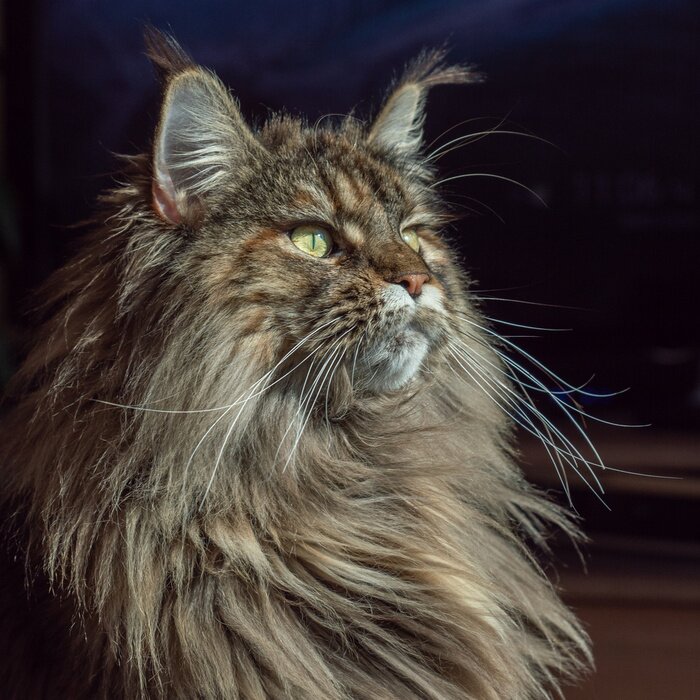
Image source: Myloview
There's a fast physical check that beats guessing by breed. Part the coat on your cat's shoulder with your fingers and look down at the skin.
- Skin visible almost immediately, one uniform layer of hair. That's a single coat.
- A dense layer of soft fluff under the longer hairs, and the coat springs back when you press it. That's a double coat.
- Coat longer than about 5 cm with a visible ruff or trousers. That's longhair or semi-longhair, and it's almost always double.
Now match yourself to one of these four branches.
Single coat: Siamese, Oriental Shorthair, Bengal, Abyssinian, Burmese
These cats have little to no undercoat. The hair lies flat and close, and the coat feels sleek rather than plush.
They shed less by volume, but the hairs are fine, stiff, and brilliant at working into fabric. They're also the cats most often ruined by aggressive tools. Without an undercoat to remove, a stripping blade just cuts guard hairs and irritates skin.
- Best tools: rubber curry brush, grooming mitt, soft slicker, damp hand
- Frequency: once or twice a week, three to five minutes
- Avoid: de-shedding blades, undercoat rakes, hard-pinned slickers
Dense double coat shorthairs: British Shorthair, Russian Blue, Chartreux, Exotic Shorthair, American Shorthair
Short hair, huge undercoat. These cats look tidy and produce astonishing amounts of fine fluff. British Shorthairs in particular can carpet a room.
The coat feels like a plush cushion. Push your hand against the lie of the hair and it stands up rather than falling flat.
- Best tools: slicker brush, then a fine-tooth metal comb, plus a de-shedding tool used lightly during moults
- Frequency: two or three times a week, more in spring and autumn
- Watch for: loose fluff at the tail base and britches, which owners routinely miss
Semi-longhair and longhair: Maine Coon, Ragdoll, Persian, Siberian, Norwegian Forest Cat, Birman
Long guard hairs, thick undercoat, and mat-prone zones. Shed volume is high, but the bigger risk is matting, which becomes a welfare issue rather than a housekeeping one.
Persians and Himalayans need daily attention. Ragdolls and Maine Coons have less cottony undercoat and can sometimes cope with every other day, though daily is safer.
- Best tools: greyhound comb, undercoat rake, slicker for finishing, mat splitter only if you know what you're doing
- Frequency: daily, 10 to 15 minutes
- Mat hotspots: behind the ears, armpits, groin, tail base, and the trousers on the back legs
Rex and hairless coats: Devon Rex, Cornish Rex, Selkirk Rex, Sphynx
Rex cats have short, curly coats with fragile hairs. They shed very little, and brushing can snap the hair. A soft chamois or a hand wipe-down is usually enough.
Sphynx cats shed essentially no hair, but they still produce sebum and dander. Their problem isn't your sofa, it's oil buildup on skin and in nail folds. That's a bathing routine, not a brushing one.
And no cat is truly hypoallergenic. Sphynx and Rex breeds still produce Fel d 1. If allergies are the driver, filtration and cleaning matter more than breed choice.
| Coat type | Undercoat | Shed volume | Brushing frequency | Main risk |
|---|---|---|---|---|
| Single coat | Minimal | Low to moderate | 1 to 2 times weekly | Tool damage to guard hairs |
| Dense double shorthair | Heavy | Very high | 2 to 3 times weekly | Airborne fluff everywhere |
| Longhair / semi-longhair | Heavy | High | Daily | Painful matting |
| Rex | Sparse, fragile | Very low | Weekly wipe-down | Breaking hairs by brushing |
| Sphynx | None | None | Bathing, not brushing | Sebum buildup and dander |
Matching the Right Tool to the Coat: Why the FURminator Ruins Some Cats
The de-shedding tool problem is worth spelling out, because it's the most common expensive mistake in this whole topic.
A de-shedding tool like the FURminator uses a fine stainless steel blade to reach through the topcoat and pull loose undercoat out. On a British Shorthair mid-moult, it's brilliant. On a Siamese with no undercoat, that blade has nothing to grab but guard hairs, so it cuts and thins the coat and can leave the skin sore.
Feline skin is also far thinner than dog skin, which is why dog tools transfer badly. Light pressure, short sessions, and the right tooth spacing matter more than the brand on the handle.
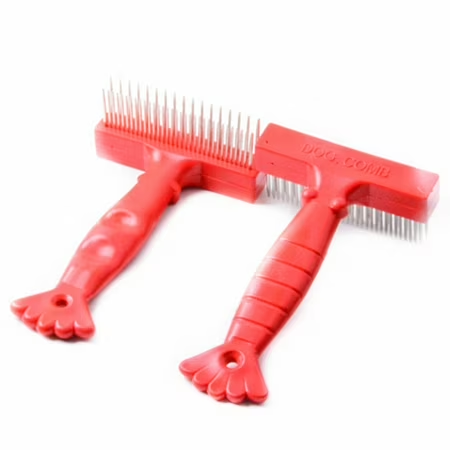
Image source: Walmart
Slicker brush vs rubber curry vs de-shedding blade vs undercoat rake
Each tool does one job. Owning the right two beats owning six.
Slicker brush. Fine angled wire pins on a flat or curved head. It lifts loose undercoat and works through light tangles. Look for coated pin tips or a flexible head.
Self-cleaning models with an eject button save real time on longhairs.
- Best for: double coats, longhairs, general everyday work
- Risk: pressing too hard causes brush burn on thin skin
Rubber curry brush or grooming mitt. Soft silicone nubs that grip hair by friction and massage the skin. Cats generally love it, which makes it the entry point for cats that hate being brushed.
- Best for: single coats, short coats, nervous or sensitive cats
- Limitation: it won't reach deep undercoat on a Maine Coon
De-shedding blade tool. A stripping blade behind a comb guard. Powerful and specific.
- Best for: dense double coats during a seasonal moult
- Never use on: single coats, Rex coats, matted areas, or bare skin
- Rule: two or three light passes per area, then stop. Repeat passes with no hair coming out means you're just cutting coat
Undercoat rake. Long, widely spaced rounded pins that sink past the topcoat without cutting it. Gentler than a de-shedding blade and better for regular use on thick coats.
- Best for: Maine Coons, Siberians, Norwegian Forest Cats, dense British Shorthairs
- Choose: shorter pins for shorthaired double coats, longer pins for longhairs
Greyhound comb. A solid stainless steel comb, half fine teeth and half coarse. The least glamorous tool here and the most useful.
- Best for: everything, as a checking and finishing tool
- Bonus: it finds mats and flea dirt before they become problems
The greyhound comb test that tells you if you're done
Here's how you know a session is actually finished instead of just feeling finished.
Take the coarse end of a metal comb and run it root to tip in three or four places: the shoulder, the flank, the britches, and behind the ears. The comb should glide the whole way without snagging.
If it snags, you've got a tangle forming. If it stops dead, you've got a mat. If it comes out loaded with fluff, keep brushing that area.
The comb doesn't lie. A slicker can skate over the surface and pull out a satisfying cloud of hair while leaving the deep undercoat untouched. That's the hair that ends up on your sofa two days later.
Tools to skip entirely
Some things aren't worth your money, and a couple are genuinely risky.
- Human hairbrushes. Wrong pin spacing, wrong flex, no undercoat reach.
- Human clippers. They overheat and cause blade burns on feline skin.
- Scissors for mats. Cat skin tents up into the mat, and vets treat scissor lacerations from well-meaning owners regularly. Use a mat splitter, or hand the job to a groomer or vet.
- Cheap slickers with bare sharp pin tips. They scratch, and a scratched cat never lets you brush it again.
- Shared brushes across multiple cats. That's how ringworm spores and flea eggs move between pets.
- Anti-shed shampoos as a standalone fix. As of 2026 there's no shampoo that stops hair leaving a follicle. A good bath loosens dead coat so you can remove it, but the removal still has to happen.
One more practical point. Clean your tools. A slicker packed with old hair grips nothing, and a comb with hair wedged between the teeth just drags.
The Grooming Routine That Actually Removes Loose Hair
Most people brush the back and call it done. The back is the easiest part to reach and the least important part of the job.
Loose undercoat collects where the cat can't reach with its own tongue, and where hair gets compressed by lying down. That means the chest ruff, armpits, belly, britches, and tail base. Those five zones produce most of what ends up on your furniture.
Session length and frequency by coat type
Short and frequent beats long and rare. Every time. A cat that gets three minutes daily stays ahead of shedding better than one that gets twenty minutes on a Sunday.
| Coat type | Session length | Frequency | Peak moult adjustment |
|---|---|---|---|
| Single coat | 3 to 5 minutes | 1 to 2 times weekly | Add one session weekly |
| Dense double shorthair | 5 to 8 minutes | 2 to 3 times weekly | Daily for 4 to 6 weeks |
| Semi-longhair | 10 minutes | Daily or every other day | Daily, non-negotiable |
| Longhair (Persian type) | 10 to 15 minutes | Daily | Daily plus comb checks |
| Rex | 2 minutes, soft cloth | Weekly | No change |
That peak moult column matters more than people expect. Spring and autumn moults run four to eight weeks. Skipping brushing during those windows creates the "why is there suddenly hair on everything" panic in April.
The body order most owners get wrong
Work in a fixed order every time. Cats settle faster when the routine is predictable, and you stop forgetting zones.
- Shoulders and upper back. Easy, safe, and it lets the cat relax into the session.
- Flanks and sides. Long strokes with the lie of the coat.
- Chest and ruff. Tip the chin up gently. This is where longhairs mat first.
- Britches. The fluffy trousers on the back of the thighs. Massive hair reservoir, almost always skipped.
- Tail base. Loose undercoat piles up here. Go light, many cats are twitchy about it.
- Armpits and groin. Short, gentle passes. Skin is thinnest here.
- Belly last. Only if your cat tolerates it. A belly-up cat with a brush near it is one bad move from biting.
Direction matters too. On double coats, brush with the lie of the coat first to clear surface hair. Then make a few light lifting passes against the lie to bring undercoat up.
Finish with the grain so the coat lies flat.
On single coats, stay with the grain throughout. Against-the-grain work on a Siamese or Bengal just irritates skin for no gain.
Line brushing for long coats
This is the technique professional groomers use, and it's the difference between a Maine Coon that mats and one that doesn't.
Instead of brushing over the surface, you work in horizontal sections from the skin outward.
- Start low on the body, near the belly line.
- Push the coat upward with one hand so a clean horizontal parting shows the skin.
- Brush or comb only the hair below that parting, root to tip.
- Release a thin new layer, about 1 cm, and repeat.
- Work upward to the spine, then move to the next body panel.
It sounds slow. It isn't, once you have the rhythm. And it's the only way to reach undercoat lying flat against the skin on a coat that's 8 cm long.
Surface brushing on a longhair does something worse than nothing. It makes the top look tidy while dead undercoat compacts underneath into a felted layer.
What to do about mats, and when to stop
Mats aren't a grooming failure to muscle through. They're painful, they pull on skin with every movement, and severe ones hide sores and infection underneath.
Here's the decision.
If the mat is small, loose, and you can slide a comb tooth under it: work it from the outer edge inward with your fingers and the coarse end of a comb. Hold the base of the hair between the mat and the skin so you're not pulling the follicle. Two minutes maximum, then stop for the day.
If the mat is tight against the skin, larger than a 2p or a quarter, or the cat flinches when you touch it: stop. Book a groomer or a vet.
If there are multiple mats, or a felted plate across the back or flanks: stop immediately. That's a professional job, often needing clipping, and sometimes sedation.
Never cut a mat out with scissors. Cat skin lifts into the mat, so the skin sits higher than you think.
Severe neglected matting in outdoor or unwell cats can also conceal maggot infestation in warm weather. Foul smell, damp coat, or the cat reacting badly to touch means same-day vet, not a grooming plan.
If Your Cat Hates Being Brushed: A Desensitisation Plan That Works
Plenty of cats swat, bite, or bolt at the sight of a brush. That's usually learned, not innate, and it's fixable with patience.
The core rule is counterintuitive. Stop before your cat wants you to stop. Ending a session while the cat is still happy is what builds tolerance. Pushing until it swats teaches it that brushing ends in conflict.
The two-week build
Work at whatever pace your cat allows. Some cats fly through this in four days, others take a month.
- Days 1 to 3. Leave the brush out near a favourite spot. Don't use it. Let the cat sniff it. Feed a treat or a lick of wet food near it.
- Days 4 to 6. Touch the cat with the back of the brush for two or three seconds during normal stroking. Treat. Stop.
- Days 7 to 9. Three or four actual strokes on the shoulders only. That's the whole session. Treat, then walk away.
- Days 10 to 12. Extend to 30 seconds. Shoulders and one flank. Still finish early.
- Days 13 onward. Add one new body zone per session. Build toward the full order above.
Practical fixes for specific problems
The cat bites the brush. Switch to a grooming glove. The cat can't easily distinguish it from a hand, and the reaction usually disappears.
The cat runs when it sees the tool. Brush during a moment the cat already loves. On your lap in the evening, in a sunny window spot, right after a meal.
The cat tolerates 20 seconds then explodes. Time it. Whatever the number is, subtract five seconds and always stop there. Extend by five seconds a week.
The cat only lets you do the back. That's fine for now. A back-only session done consistently still removes real hair. Add zones later.
Two-person households. One person offers a lickable treat while the other brushes. Same principle vets use for cooperative care.
Nothing works at all. Consider pain. Arthritis in older cats makes handling around the spine, hips, and tail base genuinely sore. A cat that used to accept brushing and now doesn't is telling you something.
The American Association of Feline Practitioners publishes handling guidance built around exactly that idea.
One thing to avoid entirely: scruffing or restraining a cat to force a full groom. It works once. Then you've lost brushing forever, and the mats get worse every year.
Zone Defence: Containing Hair to Places You Can Wash
Even with perfect grooming, a cat sheds. The second lever is deciding where.
Cats aren't random about where they sleep. They pick warm, elevated, quiet spots and use the same three or four every day. That predictability is your advantage.
Put washable fabric on those spots and a large share of your shed hair lands somewhere you can throw in a machine. Ignore them and it lands on your mattress, your sofa arms, and the back of every dining chair.
Where cats actually shed most
Watch your cat for a couple of days and you'll spot the pattern. In our research across owner reports, the highest-deposit zones are consistently:
- Sun spots. Warmth relaxes the coat and cats stretch out fully, maximising contact area.
- Radiators and heat vents. Same effect, year-round in cold climates.
- Window perches. Long stays plus a hard edge that combs hair out as the cat climbs off.
- The back of the sofa. Cats love the elevated ridge, and it's the fabric you can least easily wash.
- Your bed. Warm, soft, smells like you. Usually the single biggest deposit point in the house.
- Doorways and corridor corners. Cats brush against edges, and guard hairs snag on paint and skirting boards.
Cover the top four with something washable and you've solved a surprising share of the problem before you touch a vacuum.
The bedroom door policy
This is the highest-impact single decision in the whole article, and it's free.
A cat sleeping on your bed deposits hair into bedding, mattress, pillows, and the wardrobe you keep opening. It also puts Fel d 1 next to your face for eight hours, which matters enormously if anyone has allergies or asthma.
If you keep the bedroom closed:
- Do it consistently from day one, not on and off. Intermittent access creates door-scratching.
- Give the cat a better option elsewhere. A warm covered bed near a radiator usually wins.
- Expect three to seven nights of protest, then adjustment.
If you can't bear closing the door, use a washable throw or duvet cover over your bedding and wash it weekly. That's the compromise, and it works reasonably well.
Washable layers that earn their place
Not all covers are equal. The ones that work are the ones you'll genuinely wash.
- Cotton or poly-cotton throws on sofa seats and backs. Machine washable, dries fast, cheap to own three of.
- Slipcovers for full coverage on a sofa a cat dominates. More faff to remove, so people wash them less often.
- Fleece cat blankets in the top two nap spots. Cats prefer them, which is exactly what you want.
- Removable cat tree covers or a folded blanket on the top platform.
- Waterproof mattress protector even if the cat is allowed on the bed. Hair on the surface is manageable, hair worked into a mattress isn't.
Rotate two sets so there's always a clean one going on while the other washes. Households with only one cover skip washes, and the system quietly collapses.
Hair-magnet fabrics vs hair-resistant fabrics
If you're replacing furniture anyway, fabric choice changes your life more than any tool you buy.
| Holds hair badly | Releases hair easily |
|---|---|
| Velvet | Leather and faux leather |
| Chenille | Tightly woven microfibre and microsuede |
| Bouclé | Cotton canvas and duck cloth |
| Corduroy | Denim |
| Wool and tweed | Performance fabrics (Crypton, Sunbrella type weaves) |
| Fleece and sherpa | Tight-weave synthetics with a flat face |
| Loose knits and open weaves | Smooth-faced tight weaves |
The principle is simple. Hair needs somewhere to anchor. Loops, pile, and open weaves give it a grip.
Flat, tight, smooth surfaces don't.
Same logic applies to flooring. Hard floors show hair more but release it instantly. High-pile and shag carpet hides hair, then holds it so tightly that only a carpet rake and repeated vacuum passes get it out.
Low-pile carpet sits in the middle and is the practical compromise for renters.
Colour matters cosmetically. Mid-tone flecked or heathered fabrics camouflage hair from both light and dark cats. Solid black and solid cream are the worst choices in a multi-coloured cat household.
The Cleaning System: Floors, Upholstery, Clothes, and Air
Now the capture layer. The goal isn't to clean more often. It's to clean with tools that lift hair rather than redistributing it.
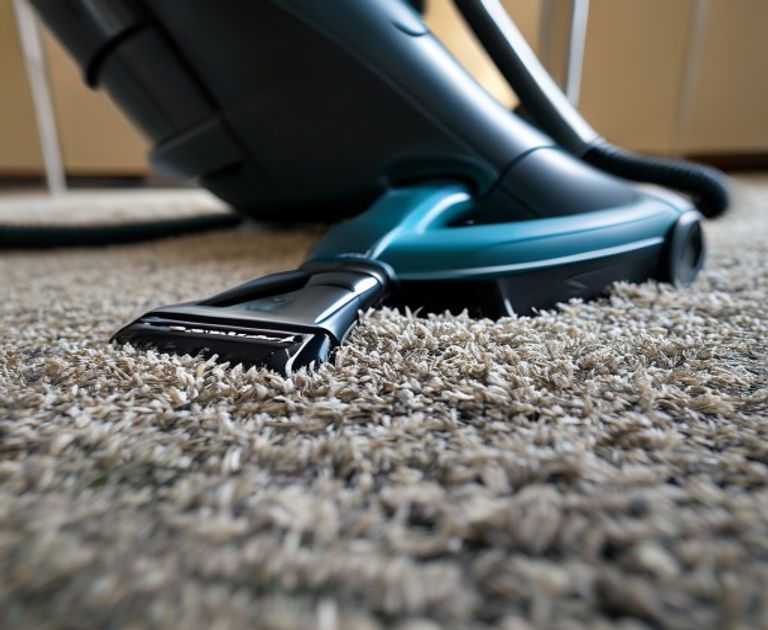
Image source: Bing
Vacuum choice: rubber roller, sealed HEPA, bagged vs bagless
Three specs matter for cat hair. Everything else is marketing.
Anti-tangle rubber roller. A traditional bristle brushroll winds hair around itself within minutes. Once wrapped, the bristles lose contact with the floor and suction drops. Rubber comb or fin rollers shed hair into the airflow instead of trapping it.
This one spec changes daily usability more than raw suction does.
Sealed filtration. True HEPA filtration captures 99.97 percent of particles at 0.3 microns. That figure only means something if the machine's body is sealed. An unsealed vacuum with a HEPA filter leaks fine dander through housing gaps and blows it back into the room.
Manufacturer specs usually state "sealed system" explicitly. If it doesn't say so, assume it isn't.
Bagged vs bagless. Bagged wins for allergen containment, because emptying a bagless bin releases a cloud of dander at chest height. Bagless wins on running cost. If anyone in the house has cat allergies or asthma, bagged is worth the consumables.
Robot vacuums are excellent as a supplement and poor as a sole defence. They're strong on hard floors and open plans, running daily so hair never accumulates. On medium or high-pile carpet, they lack the agitation to pull embedded hair, and cat hair jams their brushrolls faster than almost any other debris.
Filter maintenance isn't optional. A loaded filter kills suction and pushes fine particles back out. Wash or replace per the manufacturer schedule, typically every one to three months, and more often in a multi-cat house.
Rubber brooms, squeegees, and pumice for carpet and upholstery
Vacuums are bad at embedded hair. These are the tools that dig it out.
Rubber broom or carpet rake. Drag it across carpet in one direction and static plus friction pull woven-in hair up into visible rolls. Rake first, then vacuum. That order matters.
Rubber squeegee. Short firm strokes across upholstery pull hair into rows. Works on sofas, car seats, and stair carpet. Cheap and unreasonably effective.
Pumice or lava stone. For flat-weave upholstery and low-pile carpet. Light pressure only. Test on a hidden area first, because it can pill delicate fabrics.
Slightly damp rubber gloves. Wipe your hands across cushions and hair balls up instantly. The fastest ten-second fix before guests arrive.
Hard floors. Never dry-sweep. A broom launches fine hair into the air where it drifts and lands somewhere else. Use a damp microfibre mop or a vacuum.
Damp traps, dry scatters.
Removing hair from clothes without a lint roller
Adhesive lint rollers work, but they run out at the worst moments. Better options:
- Reusable fabric roller. A directional-pile roller that traps hair in an internal chamber, emptied with a click. No refills, works indefinitely.
- Damp hands. Wet your palms, shake off excess, wipe downward. Works on jumpers and coats.
- Rubber glove. Same principle, more grip.
- Cold tumble dry, 10 minutes. Best for clothes with hair driven deep into the fibres.
- Anti-static spray or a light mist of water. Reduces the static charge holding hair on synthetics, then brush off.
Prevention beats removal. Keep work clothes behind a closed wardrobe door, and don't leave a jumper on the sofa arm where the cat will nap on it.
The dryer-first laundry trick and protecting your washing machine
This is the most useful laundry tip in the whole topic, and almost nobody does it.
Tumble dry pet bedding and hairy laundry for 10 minutes on air fluff or no heat before washing it. The tumbling shakes hair loose and the lint trap catches it. Then wash as normal.
Washing hairy items first does the opposite of what you want. Wet hair mats into fabric and recirculates onto everything else in the drum. It also travels straight into the drain pump.
The rest of the protocol:
- Wash pet bedding separately from human laundry. Always.
- Wash at 60°C (140°F) where the fabric allows. That's the temperature that deals with flea eggs and larvae.
- Add wool dryer balls to help hair release during drying.
- Use half a cup of white vinegar in the rinse instead of fabric softener. Softener coats fibres and makes hair cling harder.
- Clean the dryer lint trap between every load.
- Check the washing machine drain filter monthly. Cat hair plus lint is a classic cause of drainage faults.
- Run an empty hot cycle monthly to flush hair from the drum and hoses.
Skip fabric softener and dryer sheets around cats generally. Used sheets left in the machine or on the floor carry cationic surfactant residue, and cats sometimes chew them.
Air purifiers, MERV filters, and humidity control
This layer handles what you can't see, and it's the difference between a house that looks clean and one that feels clean.
HEPA air purifiers. Look for true HEPA, not "HEPA-type" or "HEPA-like", which are unrated marketing terms. Size the unit by room. The number that matters is ACH, air changes per hour, and 4 to 5 ACH is the practical target for allergen control.
Manufacturer coverage ratings often assume 2 ACH, so a unit rated for your room size is frequently half the machine you want.
Check the CADR rating, tested to the AHAM AC-1 standard, and match dust CADR to your room. Run it continuously on low rather than in bursts on high. Constant low airflow captures far more over a day and is quiet enough to sleep through.
Avoid anything that generates ozone. The US Environmental Protection Agency is direct about ozone generators being unsuitable for occupied spaces. Look for CARB certification.
HVAC filtration. With forced-air heating or central air, upgrade the return filter to MERV 11 to 13. That range captures pet dander effectively without straining most residential systems. Check your system's tolerance first, because very high MERV ratings restrict airflow on older units.
Change every 60 to 90 days, closer to 60 in a multi-cat house.
Humidity. Keep indoor relative humidity between 40 and 50 percent. Dry air builds static charge on synthetic surfaces. Static is what makes hair cling to your TV screen, your curtains, and the side of the fridge.
A humidifier in the driest months genuinely reduces how much hair sticks.
Don't forget vertical surfaces. Curtains, lampshades, chair backs, ceiling fan blades, and the wall at cat-rub height all collect hair. Add them to a monthly pass with a vacuum brush attachment or a damp microfibre cloth.
A Realistic Weekly Schedule: Single Cat vs Multi-Cat Homes
Systems fail when they're too ambitious. Here's what's actually sustainable.
Single cat, shorthaired, hard floors
Easy mode. Total time, roughly 45 minutes a week.
| Task | Frequency |
|---|---|
| Brush, 5 minutes | 2 times weekly |
| Vacuum or robot pass, main rooms | 2 times weekly |
| Damp mop hard floors | Weekly |
| Wash cat blankets and throws | Weekly |
| Squeegee sofa | Weekly |
| Filter check, vents, curtains | Monthly |
Single cat, longhaired, mixed carpet and hard floor
Total time, roughly 2 hours a week, most of it grooming.
| Task | Frequency |
|---|---|
| Brush and comb, 10 to 15 minutes | Daily |
| Mat check with metal comb | Daily, part of brushing |
| Vacuum high-traffic zones | 3 times weekly |
| Full-home vacuum | Weekly |
| Carpet rake before vacuuming | Weekly |
| Wash cat bedding at 60°C | Weekly |
| Squeegee upholstery | Weekly |
| Curtains, vents, fan blades | Monthly |
Three or more cats
Hair load doesn't scale linearly. It compounds, because cats groom each other and redistribute hair, and because they occupy more spots.
- Grooming: stagger it. One cat per evening rather than all three on Saturday. Ten minutes a night is manageable, thirty is not.
- Separate brushes per cat, cleaned and disinfected. This matters for ringworm and flea control.
- Vacuum three to four times weekly, plus a daily robot run on hard floors.
- Two air purifiers if the living space is open plan, rather than one large unit fighting the whole floor.
- Two full sets of washable covers in rotation, washed twice weekly.
- HVAC filter every 60 days, no exceptions.
The 80/20 version for people with no time
If you only do four things, do these:
- Brush with the correct tool for the coat type, twice a week minimum.
- Put washable throws on the two spots your cat sleeps most, and wash them weekly.
- Vacuum twice weekly with a rubber-roller, sealed-HEPA machine.
- Run a HEPA purifier continuously in the main living room.
That's around 90 minutes a week for a typical single-cat household. Everything else in this article is refinement on top.
Does Diet Change Shedding? Omega-3s, Hydration, and What's Overhyped
Diet won't stop a cat shedding. What diet changes is coat quality, hair anchoring strength, and how much flaking comes with the hair.
A cat on a poor diet sheds hair that's dry, brittle, and comes away too easily. Skin barrier function suffers, dander increases, and you get more of the fine airborne fraction. Fix the diet and shedding volume normalises rather than disappearing.
What actually helps
Complete and balanced protein. Hair is roughly 95 percent protein, mostly keratin. Cats are obligate carnivores and route a large share of dietary protein into coat maintenance. A diet meeting AAFCO nutrient profiles for the cat's life stage covers this.
Cheap food heavy on plant protein doesn't, and coat is one of the first places it shows.
Omega-3 fatty acids. EPA and DHA support the skin's lipid barrier and have a mild anti-inflammatory effect. Fish oil is the usual source. Aggregate veterinary guidance points to softer coat and reduced flaking within four to eight weeks, roughly one hair cycle turnover.
Omega-6, specifically linoleic acid. Often forgotten because omega-3 gets the headlines. Linoleic acid is essential for feline skin barrier integrity, and a deficiency shows up as a dull, scurfy coat.
Hydration. Dehydrated skin flakes more. Cats have a weak thirst drive and many chronically under-drink on dry food alone.
- Add wet food, even one pouch a day alongside kibble
- Use a pet water fountain if the cat ignores still water
- Place bowls away from food and litter, which cats naturally avoid drinking beside
Zinc and biotin. Both matter for skin and coat. Any complete commercial diet supplies them. Supplementing on top rarely adds anything unless a vet has identified a deficiency.
What's overhyped
Supplements marketed as "stops shedding". They don't. As of 2026, no supplement halts the hair cycle. Read the label and most are fish oil at a premium price.
Raw feeding as a coat cure. Owners often report shinier coats on raw. That's usually the fat and moisture content, not the rawness, and the same result is achievable with a good wet food and no pathogen risk.
Coconut oil, olive oil, and butter. Popular home remedies with no meaningful evidence for feline coat health. They add calories, and obesity makes self-grooming harder, which makes matting worse.
Hairball formula foods as a shedding fix. They add fibre to move swallowed hair through the gut. Useful for hairball-prone cats. Zero effect on how much hair leaves the follicle.
Dosing and safety
Never eyeball fish oil dosing. Excess omega-3 can cause loose stools, and at high doses it affects platelet function and vitamin E status. Cod liver oil is a particular risk because of vitamin A and D content, and vitamin A toxicity in cats is a real clinical condition.
Ask your vet for a dose based on body weight. A 4 kg cat and a 7 kg cat need different amounts, and concentration varies enormously between products.
The World Small Animal Veterinary Association publishes global nutrition guidelines that help you judge whether a food is genuinely formulated by qualified nutritionists.
One practical note. If you change diet, give it eight weeks before judging. Hair already in telogen will shed regardless.
You're only affecting hair currently growing.
Costs, Specs, and Timelines at a Glance
Here's what the system costs and how long each part takes to show results. Prices reflect typical mid-market ranges as of 2026.
Grooming tools
| Item | Typical price | Who needs it |
|---|---|---|
| Rubber curry brush or grooming mitt | £8 to £15 / $10 to $18 | Single-coat cats, nervous cats, everyone as a starter |
| Slicker brush, coated pins, self-cleaning | £10 to £30 / $12 to $40 | Double coats and longhairs |
| Greyhound comb, stainless steel | £10 to £25 / $12 to $30 | Every cat. The checking tool |
| Undercoat rake | £12 to £25 / $15 to $30 | Dense double coats and longhairs |
| De-shedding blade tool | £25 to £45 / $30 to $55 | Dense double shorthairs, moult season only |
| Flea comb | £3 to £8 / $4 to $10 | Every cat |
| Mat splitter | £8 to £15 / $10 to $18 | Longhairs only, used carefully |
Total realistic kit: £30 to £60 for a shorthair, £50 to £90 for a longhair. One-time cost, and the tools last years.
Cleaning and air equipment
| Item | Typical price | Notes |
|---|---|---|
| Rubber broom or carpet rake | £10 to £20 / $12 to $25 | Highest value per pound in this table |
| Rubber squeegee | £5 to £10 / $6 to $12 | Upholstery and car seats |
| Reusable fabric roller | £20 to £30 / $25 to $35 | No refills, pays back within a year |
| Pet-specific HEPA vacuum | £180 to £600 / $200 to $800 | Rubber roller plus sealed system is the spec that matters |
| Cordless stick vacuum | £150 to £550 / $180 to $750 | Better for daily quick passes |
| Robot vacuum with rubber roller | £150 to £500 / $180 to $650 | Supplement, not a replacement |
| Room HEPA air purifier | £80 to £350 / $100 to $450 | Size by CADR, not marketing claims |
| Replacement HEPA filter | £20 to £60 / $25 to $75 | Every 6 to 12 months per manufacturer specs |
| MERV 11 to 13 HVAC filter | £10 to £25 / $12 to $30 | Every 60 to 90 days |
| Humidifier | £30 to £120 / $35 to $150 | Winter static control |
| Washable throws, set of three | £30 to £60 / $35 to $75 | Buy two sets and rotate |
Professional services
| Service | Typical price | When you need it |
|---|---|---|
| Groomer de-shed treatment | £45 to £90 / $60 to $120 | Seasonal, dense double coats |
| Full groom with bath and force dry | £55 to £110 / $70 to $140 | Longhairs, two to four times a year |
| Dematting surcharge | £15 to £45 / $20 to $60 extra | Charged by time, avoided by combing daily |
| Sedated groom at a vet practice | £150 to £400 / $200 to $500 | Severe matting only |
| Vet consult for coat or skin issue | £50 to £120 / $60 to $150 | Before diagnostics |
How long before you see results
Different levers pay off on different timescales.
| Action | When you'll notice a difference |
|---|---|
| Rubber broom on carpet | Immediately, first pass |
| Washable throws on nap spots | Within 3 to 4 days |
| Regular brushing routine | 1 to 2 weeks for visible reduction |
| HEPA air purifier running continuously | 3 to 7 days for surface dust and dander |
| Bedroom door closed | 1 week, dramatic on bedding |
| Humidity raised to 40 to 50 percent | 1 to 2 weeks, less static cling |
| Diet or omega-3 change | 4 to 8 weeks, coat quality not volume |
| Treating fleas | 2 to 4 weeks for shedding, longer for skin healing |
| Seasonal moult ending naturally | 4 to 8 weeks from start |
If you've done everything and seen no change in three weeks, the problem probably isn't your routine. Go back to the health branch.
Mistakes That Make Cat Hair Worse
Some of these are simply ineffective. Others actively increase how much hair ends up in your house.
Grooming mistakes
Using a de-shedding blade on a single coat. It cuts guard hairs and creates broken, stubbly coat that sheds more, not less.
Pressing too hard. Feline skin is thin, roughly 0.4 to 2 mm. A slicker used with dog-level pressure causes brush burn, which shows as red irritated skin the next day. The cat then associates brushing with pain.
Brushing only when the house looks bad. Reactive grooming means you're always removing hair that's already dropped onto your furniture.
Repeating passes until nothing comes out. With a de-shedding tool, that means you've moved from removing loose undercoat to cutting live coat. Two or three passes per zone, then move on.
Bathing too often. Stripping natural sebum triggers a rebound in oil production and increases flaking. Most cats need bathing rarely, if at all. Sphynx cats are the exception.
Sharing one brush across multiple cats. Ringworm spores and flea eggs move between cats on grooming tools.
Forcing a full session on a resistant cat. You get one groom and lose all future ones.
Cleaning mistakes
Vacuuming with a loaded filter. Suction collapses and fine dander gets pushed back into the room air. Filters are the most neglected maintenance item in pet households.
Dry-sweeping hard floors. You're relocating hair and putting the fine fraction into the air.
Using a lint roller on a whole sofa. Slow, expensive, and it only picks up surface hair. A squeegee does more in a tenth of the time.
Vacuuming carpet in one direction only. Hair lies with the pile, so one pass with the nap misses most of it. Go in two directions, and rake first.
Washing hairy bedding before drying it. Wet hair mats into fabric and clogs the drain pump.
Relying on a robot vacuum alone on carpet. It maintains, it doesn't deep clean.
Ignoring vertical surfaces. Curtains, chair backs, ceiling fan blades, radiator grilles, and the wall at rub height. Hair accumulates there and drops back down.
System-level mistakes
Buying tools before diagnosing the cause. Spending £300 on a vacuum when the real problem is flea allergy dermatitis.
Doing one lever perfectly and ignoring the others. Immaculate grooming plus a cat sleeping on an unprotected duvet still equals hair everywhere.
Choosing velvet or bouclé furniture in a cat household. A design decision that costs you hours every month for the life of the sofa.
Letting humidity drop below 30 percent in winter. Static turns every synthetic surface into a hair magnet, and nothing you clean stays clean.
Cleaning after the moult rather than during. Waiting until it's over means eight weeks of accumulation.
Safety Warnings: Shaving, Essential Oils, Cleaners, and Flea Products
This is where mistakes stop being an inconvenience and start being a vet bill.
Shaving and clipping
Don't shave a cat to reduce shedding. A cat's coat regulates temperature in both directions and protects against sunburn. Clipped cats, especially white or pale-skinned ones, can develop solar dermatitis and, over time, skin cancer on exposed areas.
Regrowth after clipping is also unpredictable in some cats. Texture can change permanently, and in a minority of cases regrowth is patchy or very slow.
Shaving is a legitimate medical decision when matting is severe enough that dematting would be painful or impossible. That's a vet or professional groomer call, not a shedding strategy.
Never use human clippers on a cat. They run hot, the blades aren't designed for feline coat, and blade burns on thin skin are painful and slow to heal.
Sedation risk
Sedated grooming carries genuine anaesthetic risk. It's higher in senior cats, and in cats with heart disease including hypertrophic cardiomyopathy, chronic kidney disease, or hyperthyroidism.
If your cat needs sedation for matting, ask for pre-anaesthetic bloodwork. Treat it as a signal to rebuild the daily grooming routine, because a second sedation next year is avoidable.
Essential oils and diffusers
Cats lack sufficient glucuronyl transferase, a liver enzyme most mammals use to process phenols and certain compounds. That makes them uniquely vulnerable to essential oil toxicity.
Avoid these entirely in sprays, cleaning products, and diffusers around cats:
- Tea tree (melaleuca), among the most dangerous
- Citrus oils, including d-limonene
- Pine and pine-derived cleaners
- Eucalyptus
- Peppermint
- Wintergreen
- Cinnamon, clove, thyme, oregano
Passive and active diffusers both deposit oil droplets on the coat, which the cat then ingests while grooming. If your purifier has a scent function, turn it off.
The ASPCA Animal Poison Control Center maintains current toxin references worth checking before bringing any new product into a cat household.
Cleaning products
Phenol-based and pine-based disinfectants are a hazard for the same enzyme reason. Check labels on floor cleaners, especially concentrated ones.
- Let mopped floors dry fully before letting the cat back on them
- Store bleach and concentrated cleaners where a cat can't brush past an open bottle
- Rinse surfaces the cat walks on, because it grooms its paws afterward
- Avoid carpet powders and deodorising sprinkles, which get inhaled and tracked
- Keep used dryer sheets out of reach
Flea and parasite products
Never apply a dog flea product to a cat. Permethrin, common in dog spot-ons, causes tremors, seizures, and death in cats.
This includes indirect exposure. A cat that grooms or sleeps against a recently treated dog can be affected. Separate them until the application dries fully, and follow the product instructions on timing.
Use only vet-recommended feline-licensed products, and dose by current body weight, not last year's.
Air purifiers and ozone
Skip anything that produces ozone, including ionisers that generate it as a byproduct. Ozone is a respiratory irritant in occupied spaces, and cats spend far more hours at floor level than you do. Look for CARB certification.
Vacuum stress
Some cats panic at vacuum noise. Chronic stress affects coat condition and can trigger overgrooming, so this isn't purely a welfare nicety.
- Give the cat an escape route to another room before you start
- Never chase or vacuum near a cornered cat
- Introduce the machine switched off first, with treats nearby
- Consider a quieter model, since many current vacuums run around 60 to 70 dB
Keep loose clumps of brushed-out hair off the floor too. Cats sometimes eat them, and a large ingested hair mass can contribute to gastrointestinal obstruction.
Seasonal Playbook: Spring and Autumn Moult Management
Even indoor cats show some seasonal shift, and outdoor-access cats show a big one. Knowing when it's coming turns a crisis into a scheduled task.
Why the timing shifts by location
Moulting tracks daylight length, so the further from the equator you live, the sharper the seasonal swing. Cats in the UK, Canada, and Scandinavia typically show pronounced spring and autumn moults. Cats in consistently warm, low-latitude regions shed more evenly year-round.
Typical windows in the northern hemisphere:
- Spring moult: March to May, dropping winter undercoat. This is the heavy one.
- Autumn moult: September to October, shedding summer coat and thickening for winter. Usually lighter but still noticeable.
Southern hemisphere households shift both by six months.
The spring escalation, step by step
Start two weeks before you expect it, not after you notice hair on everything.
- Double the brushing frequency. A twice-weekly shorthair goes to four or five sessions. A longhair adds a second short session.
- Bring in the undercoat tool. This is when a de-shedding blade or undercoat rake earns its keep on dense double coats. Light passes, moult season only.
- Consider a professional de-shed treatment. A clarifying bath followed by high-velocity drying blows out an enormous volume of loose undercoat in one go. For a Maine Coon or a British Shorthair, one early-spring session cuts weeks of household hair.
- Vacuum an extra day per week and rake carpet before every pass.
- Wash cat bedding twice weekly instead of once.
- Check purifier filters early. They load faster during a moult and lose efficiency quietly.
- Comb-test daily on longhairs. Mats form fastest during a moult, because shed undercoat has nowhere to go.
The autumn routine
Lighter, but there's an extra job. As heating comes on, indoor humidity drops and static climbs.
- Keep the moult-season brushing schedule for four to six weeks
- Start the humidifier when heating starts, targeting 40 to 50 percent
- Swap the HVAC filter at the start of the heating season
- Expect cats to move to radiators and heat vents, so shift washable covers to follow them
- Watch for winter-coat matting behind the ears and in the ruff on longhairs
What's not seasonal, and what that tells you
If your cat sheds steadily in December and June with no seasonal pattern, that's normal for a strictly indoor cat.
What isn't normal is a spike that doesn't match the calendar. A big shed mid-winter in an indoor cat, with no recent stressor, is worth a vet conversation.
The same applies to a moult that runs far past eight weeks. Normal moults finish. A shed that just keeps going, especially with thinning or skin change, belongs back at the health branch.
Real Scenarios: Three Households, Three Different Fixes
The same problem, three completely different routes through the workflow. These are composite examples drawn from common patterns in owner reports and veterinary guidance, not individual case files.
Overweight senior who stopped self-grooming
The situation. A 14-year-old domestic shorthair, 6.8 kg on a frame that should carry 4.5 kg. Hair everywhere for the first time in years. The owner assumed old age.
What was actually happening. The coat along the lower back, tail base, and hind end was greasy and clumped. Everywhere the cat could still reach looked fine.
That's the classic signature of a cat that physically can't groom itself. Obesity limits how far a cat can twist. Arthritis in the hips and lumbar spine makes the movement painful.
Both are common over age 12, and feline osteoarthritis is badly underdiagnosed because cats hide it well.
The branch taken. Vet first, not a brush. Bloodwork ruled out hyperthyroidism and kidney disease. Radiographs showed spinal and hip arthritis.
The cat went onto a vet-directed weight plan and pain management.
The grooming adaptation.
- Three-minute sessions, cat standing on a non-slip mat rather than being lifted or turned
- Soft slicker only, no de-shedding blade, because skin over an arthritic spine is sensitive
- Focus almost entirely on the neglected zones: lower back, tail base, britches
- Clumped greasy patches cleared by a groomer first, then maintained at home
- Never asking the cat to twist or lie on its side
Outcome pattern. Coat condition improves within four to six weeks once pain is controlled, partly because the cat resumes some self-grooming. Household hair drops sharply as the ungroomed reservoir finally clears.
The lesson. A senior cat that suddenly sheds everywhere is usually a mobility or pain problem wearing a grooming costume.
Two Maine Coons and a carpeted rental
The situation. Two semi-longhairs, mid-pile beige carpet throughout, a tenancy agreement with a pet deposit tied to carpet condition. Hair visible within an hour of vacuuming.
Where the plan went wrong first. The owner bought a powerful upright vacuum and used it four times a week. Hair still appeared constantly. That's a containment failure, not a suction failure.
The rebuilt system.
| Lever | What changed |
|---|---|
| Source | Daily line brushing, 12 minutes per cat, staggered evenings. Separate greyhound comb and undercoat rake per cat |
| Containment | Two cat trees with washable platform covers at the two window spots. Fleece blankets on both sofa ends. Bedroom door closed |
| Capture | Rubber carpet rake pass before every vacuum. Vacuum twice weekly instead of four times, but properly |
| Air | One HEPA purifier in the living room, running continuously on low |
| Laundry | Two sets of covers rotating, 10-minute no-heat tumble before each wash |
The carpet-specific detail that mattered most. Raking before vacuuming. A carpet rake lifts hair woven down into the pile where suction alone can't reach it. Vacuuming a raked carpet removes several times more hair per pass.
On the deposit. Embedded pet hair is generally treated as normal wear if the carpet cleans up. A professional hot-water extraction clean at end of tenancy is the usual insurance, budgeted at £80 to £200 for a small flat.
Outcome pattern. Two cats going from four vacuum sessions weekly to two, with a visibly cleaner carpet. Time saved on vacuuming roughly matches time added to grooming, but the house looks and feels different.
The lesson. With longhairs on carpet, source control and raking do the heavy lifting. A bigger vacuum solves the wrong half of the problem.
One short-haired Bengal and an allergy sufferer
The situation. Single Bengal, single coat, low shed volume. One household member with diagnosed cat allergy and mild asthma. Hair wasn't really the complaint.
Symptoms were.
The key distinction. This isn't a hair problem. It's a Fel d 1 and dander problem, and the two need different solutions.
Bengals shed relatively little because they have minimal undercoat. Aggressive de-shedding tools would have been actively harmful, cutting guard hairs on a coat with nothing else to give.
The plan.
- Grooming: rubber curry mitt twice weekly, plus a damp microfibre wipe-down. Wiping physically removes surface allergen rather than just hair
- Bedroom: permanently closed, no exceptions. The highest-impact single change for an allergy sufferer
- Air: true HEPA purifier in both bedroom and living room, sized for 4 to 5 air changes per hour, running 24/7. Not one big unit for the whole floor
- HVAC: MERV 13 return filter, changed every 60 days
- Soft furnishings: cushion covers and throws washed weekly at 60°C, curtains monthly
- Hard surfaces: damp-cloth dusting only, never dry dusting
- Vacuum: bagged, sealed HEPA, emptied outdoors
- Hand washing after handling the cat, and no face-to-face contact
What didn't help. Hypoallergenic shampoos and allergen-neutralising sprays. Evidence for these is weak and any effect is short-lived. Filtration, washing, and the closed bedroom door carried the result.
Medical note. Allergy and asthma management belongs with a doctor. Environmental controls reduce exposure, they don't replace treatment.
The lesson. Match the intervention to the actual particle. Visible hair responds to brushing and vacuuming. Dander and Fel d 1 respond to filtration, washing, and separation.
Frequently Asked Questions
How often should I brush my cat to reduce shedding?
It depends on coat type. Single-coated cats like Siamese or Bengals need one or two sessions weekly, three to five minutes each. Dense double-coated shorthairs need two or three sessions weekly.
Longhairs like Maine Coons and Persians need daily brushing, ten to fifteen minutes. Double the frequency during spring and autumn moults.
Why is my cat suddenly shedding so much?
Sudden heavy shedding usually points to fleas, stress, illness, or a diet change rather than normal moulting. Run a flea comb test over white paper and check for reddish-brown flea dirt. Shedding triggered by stress or fever often appears two to three months after the event.
Any bald patches, scabs, or weight loss means a vet visit.
Do air purifiers actually help with cat hair?
Yes, but mainly for the fine airborne fraction. Cat hair at 30 to 50 microns settles fast, so a purifier catches less of it than dander, which stays suspended far longer. A true HEPA unit sized for 4 to 5 air changes per hour makes a real difference to surface dust and allergy symptoms.
Run it continuously on low.
Does a FURminator work on all cats?
No. De-shedding blade tools pull loose undercoat, so they only suit cats with a dense undercoat. On single-coated breeds like Siamese, Bengals, or Rex cats, the blade cuts guard hairs and irritates thin skin.
Use two or three light passes per area on double coats, moult season only, and stop when hair stops coming.
What's the fastest way to get cat hair off a sofa?
A rubber squeegee. Short, firm strokes across the fabric pull embedded hair into visible rows in seconds, far faster than a lint roller. Slightly damp rubber gloves work almost as well.
Follow with a vacuum upholstery tool to lift what's loosened, then use washable throws to stop it happening again.
Will changing my cat's food stop the shedding?
No food stops shedding, but a better diet improves coat quality and reduces flaking. Look for a complete diet meeting AAFCO nutrient profiles, plus adequate omega-3 (EPA and DHA) and linoleic acid. Add wet food to improve hydration.
Give any change eight weeks before judging, since hair already in the resting phase sheds regardless.
Your Decision Guide: Pick Your Branch and Start Here
Work through these in order. Each step depends on the one before it.
Step 1. Is the shedding normal?
If there are bald patches, scabs, symmetrical thinning, blunt broken hair tips, a greasy coat, weight loss, or flea dirt, stop here. Book a vet appointment. No grooming routine fixes a medical cause, and some will make it worse.
If the coat is thinning evenly with clean skin underneath and no itching, continue.
Step 2. What coat type do you have?
Part the coat at the shoulder and look.
- Skin visible fast, one layer of hair: single coat. Rubber curry, mitt, or soft slicker. Never a de-shedding blade.
- Dense fluff under longer hairs, coat springs back: double coat. Slicker plus undercoat rake, de-shedding tool during moults only.
- Coat over 5 cm with ruff and trousers: longhair. Greyhound comb, undercoat rake, line brushing, daily.
- Short curly or wavy coat: Rex. Soft cloth weekly, minimal brushing.
- No coat: Sphynx. Bathing routine, not brushing.
Step 3. Will your cat let you brush it?
If yes, run the full body order and finish with the comb-through test.
If no, start the two-week desensitisation build. Grooming glove, 30-second sessions, always stop early. A back-only session done consistently beats a perfect session you never manage.
Step 4. Where does your cat actually sleep?
Name the top three spots. Put something washable on each one. Decide the bedroom door policy now, and stick to it from day one.
If you can't close the bedroom, add a washable throw over your bedding and wash it weekly.
Step 5. What are your floors and furniture?
- Hard floors: damp microfibre mop, never dry sweeping. A robot vacuum earns its money here.
- Low or medium-pile carpet: rubber carpet rake first, then vacuum in two directions.
- High-pile or shag: rake plus a sealed-HEPA vacuum with a rubber roller, twice weekly minimum.
- Velvet, chenille, or bouclé upholstery: squeegee weekly, and cover it.
Step 6. Does anyone in the house react to cats?
If yes, make filtration a priority rather than an afterthought. HEPA purifiers in the bedroom and main living room, MERV 11 to 13 on the HVAC return, weekly hot washes on soft furnishings, and a bagged vacuum emptied outdoors.
Step 7. What season is it?
If you're heading into March to May or September to October in the northern hemisphere, escalate now rather than reacting later. Double the brushing, bring in the undercoat tool, and consider one professional de-shed treatment for a dense double coat.
If it's winter, add a humidifier and hold humidity at 40 to 50 percent. Static is doing more damage than you think.
If you only have time for four things: brush with the right tool twice a week, cover the two main nap spots with washable fabric, vacuum twice weekly with a rubber-roller sealed-HEPA machine, and run a HEPA purifier continuously.
That's roughly 90 minutes a week. It won't make your cat stop shedding, because nothing does. It will stop the hair arriving on everything you own.