
Image source: Bing (Web (fair-use with source credit))
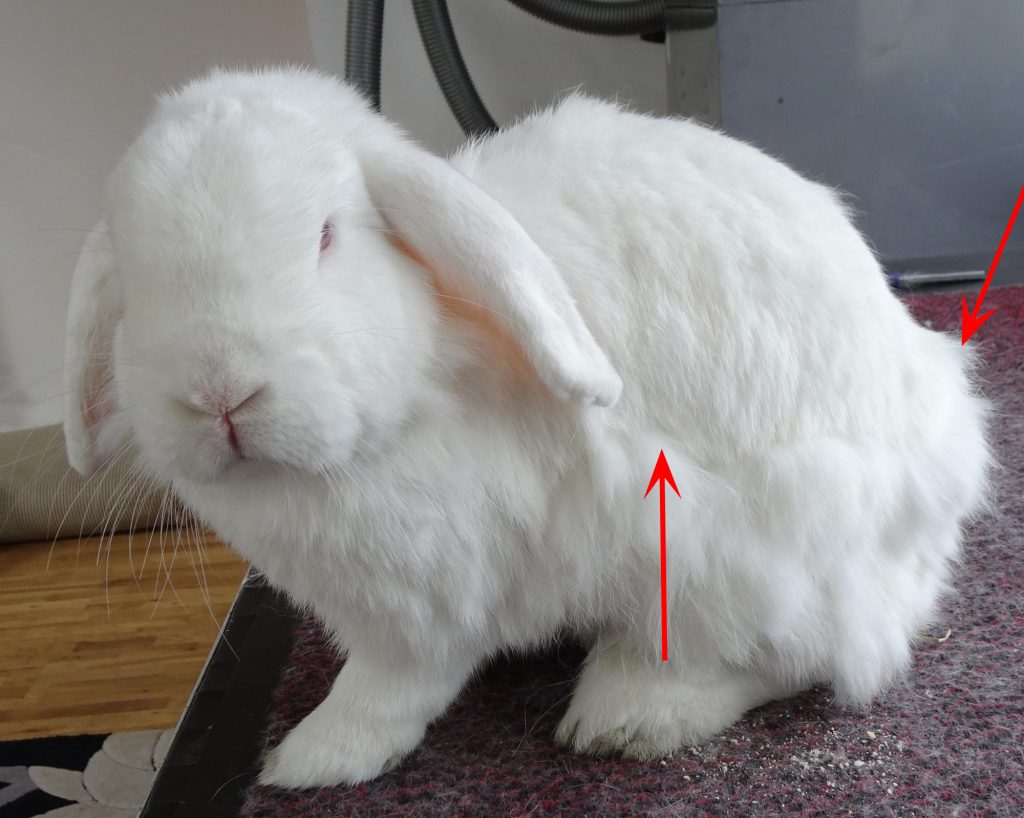
If you've ever run your hand along your rabbit's back and come away with a fistful of fur, you already know the drill. Rabbit shedding season isn't a subtle event. It's a full-blown, fur-everywhere, "did a cloud explode in my living room?" kind of moment.
And if you're new to rabbits, it can feel genuinely alarming the first time it happens.
Here's the truth: shedding is completely normal, but it's also the single most overlooked health risk for pet rabbits. As of 2026, veterinary sources consistently report that gastrointestinal stasis from ingested fur is one of the top reasons rabbits end up in emergency clinics. But with the right knowledge and a simple daily routine, you can keep your bunny safe, comfortable, and healthy through every single shed.
Let's walk through exactly what you need to know.
Quick Answer
Rabbit shedding season happens primarily in spring and fall, triggered by changing daylight hours. Indoor rabbits may shed lightly year-round. Most sheds last 2 to 6 weeks.
Daily brushing prevents dangerous fur ingestion. Watch for reduced appetite or small droppings. Those are emergency warning signs.
Never bathe a rabbit to remove loose fur. Hay and water are your best tools.
Why Rabbit Shedding Season Isn't Just About Mess
Let's get one thing straight right away. The fur on your couch is annoying. The fur inside your rabbit's stomach is dangerous.
Rabbits are fastidious groomers. They clean themselves constantly, just like cats do. But there's one critical difference that changes everything.
Cats can vomit up hairballs. Rabbits cannot. They physically lack the ability to vomit at all.
So when your rabbit swallows loose fur during a shed, that fur has exactly one way out. Through the digestive tract. And if too much fur accumulates, it can form a matted mass that blocks the stomach or intestines entirely.
This condition is called wool block, and it leads to a life-threatening emergency called gastrointestinal stasis, or GI stasis.
Here's what makes it even trickier. Rabbits are prey animals. They hide weakness and pain until they're seriously ill.
By the time you notice something's wrong, the situation may already be critical.
This isn't meant to scare you. It's meant to reframe how you think about shedding. It's not just a housekeeping problem.
It's a health management task. And you're fully capable of handling it. You just need to know what to look for.
How Rabbit Shedding Actually Works: Photoperiod, Molt Lines, and Coat Cycles
Rabbits don't have a calendar. They have light. The amount of daylight in a 24-hour period, called photoperiod, drives nearly every aspect of their coat cycle.
Here's how it works in nature. As spring approaches and days get longer, your rabbit's body gets the signal to shed that heavy winter coat. The thick undercoat comes out in patches, making way for a lighter summer coat.
In autumn, the reverse happens. Days get shorter, and your rabbit grows a denser coat to prepare for cold weather.
This isn't a gradual, even process. It's patchy and uneven, and that's exactly what confuses new owners. Your rabbit might look like it's losing fur in random clumps.
You might worry it's mange or a skin infection. It's not. It's just the natural molt pattern.
Rabbits shed in a distinct pattern called a molt line. It starts at the head, typically around the nose and eyes, then progresses backward across the body. If you look closely, you'll see a visible line where the old fur meets new fur.
The old coat sits duller and slightly raised. The new coat underneath is sleek and healthy.
The entire shed takes 2 to 6 weeks, depending on the rabbit. Some finish in two weeks flat. Others drag it out for a month and a half.
Both are normal.
Why Indoor Rabbits Are Different
Here's where things get interesting. Indoor rabbits don't experience natural photoperiods the way outdoor rabbits do. Your home has artificial lighting, heating, and air conditioning.
That changes things.
An indoor rabbit's pineal gland, which regulates the coat cycle, still responds to light. But it's getting mixed signals. Your living room lamp at 10 PM might mimic an early summer sunset.
Your TV glow might confuse things further.
The result? Some indoor rabbits follow the classic spring and fall shed. Others shed lightly all year round with a few bigger blowouts mixed in.
Still others seem to shed constantly, which, honestly, is a bit of a lottery. Any of these patterns can be completely normal.
The key takeaway is this. Don't obsess over the calendar. Watch your rabbit's coat.
When you see tufts of fur sticking out slightly from the rest of the coat, that's the signal. A shed is starting.
When Does Shedding Season Happen? Indoor vs. Outdoor Rabbits
Let's break this down by environment, because the answer genuinely differs.
Outdoor Rabbits
If your rabbit lives outside in a hutch, or has access to natural light, the pattern is predictable:
- Spring (March to May): The big one. Heavy shed lasting 3 to 6 weeks.
- Fall (September to November): A lighter shed as the winter coat comes in.
Outdoor rabbits follow the natural rhythm closely because their bodies receive consistent daylight signals.
Indoor Rabbits
Indoor rabbits are a different story. Because of artificial lighting, their coats respond to a mix of natural and artificial cues. Common patterns include:
- Two larger sheds per year, roughly aligning with spring and fall
- One major shed in spring, then a steady light trickle all year
- Three or four mini-sheds spread across the year
- Constant low-level shedding with occasional peak periods
All of these are normal. The important thing isn't when your rabbit sheds. It's how you respond when you notice it happening.
Breed Differences Matter
Your rabbit's coat type plays a huge role in what shedding season looks like for you.
| Breed Type | Shed Frequency | Shed Intensity | Grooming Needs |
|---|---|---|---|
| Short-haired (Rex, Dutch, Lionhead) | 2 major sheds/year | Moderate | 2-3 times weekly |
| Medium-haired (Holland Lop, Mini Rex) | 2 major sheds/year | Moderate to heavy | Every other day |
| Long-haired (Angora, Jersey Wooly) | Multiple sheds/year | Heavy | Daily, sometimes twice daily |
| Woolly breeds (English Angora, French Angora) | Continuous | Very heavy | Daily, full grooming sessions |
Woolly breeds are a commitment. Their long, fine fur mats easily and gets swallowed in dangerous quantities. If you have an Angora, daily grooming isn't optional.
It's essential.
How Long Does a Normal Shed Last? Timelines by Breed and Coat Type
We touched on this earlier, but let's give you concrete numbers to work with.
A typical shed lasts 2 to 6 weeks. Here's the general timeline:
- Days 1 to 3: You notice the first tufts sticking out. The molt line appears around the nose and eyes.
- Days 4 to 14: Peak shedding. Fur comes out in clumps. You'll brush out impressive amounts daily.
- Days 15 to 28: Shedding tapers off. The coat returns to a normal appearance.
- Days 29 to 42: Final stragglers. You'll still find loose fur, but it's much more manageable.
Some fast-shedding rabbits finish in 2 weeks. Others, especially woolly breeds, can go for 6 weeks or longer. All of this falls within normal range.
What to Expect at Peak Shed
During the peak, you might be surprised by just how much fur comes off your rabbit. A single brushing session can produce a fur ball the size of your fist. Maybe larger, if you have a big breed.
Here's a helpful comparison. A standard house rabbit has roughly 10,000 to 20,000 hairs per square centimeter. During a heavy shed, they lose a significant percentage of that.
When you multiply that across their entire body, it's a staggering amount of loose fur.
That fur goes one of two places. You brush it out, or your rabbit grooms it in. There's no third option.
When a Shed Isn't Normal
Most sheds follow the timeline above. But sometimes, a shed goes wrong.
- Bald patches with no new fur: A normal shed leaves healthy undercoat behind. If you see bare skin, that's a red flag.
- Scabs, redness, or crusting: This points to a skin infection, mites, or a fungal issue.
- Excessive scratching or fur pulling: Rabbits sometimes over-groom when stressed. This can cause actual fur loss beyond normal shedding.
- Shed that never ends: A shed that persists for months, or restarts immediately after finishing, deserves attention.
If any of these apply, a vet visit is warranted. Don't wait. Skin issues don't resolve on their own.
The Real Danger: Wool Block and GI Stasis Warning Signs
Here's where we get serious, because this is the part that genuinely matters.
Wool block isn't a theory. It's a real, documented veterinary emergency that kills rabbits every year. The mechanism is straightforward.
Your rabbit grooms itself, swallows loose fur, and that fur doesn't pass through the digestive system the way food does. It accumulates. Eventually, it forms a matted mass that blocks the stomach or intestines.
When that happens, food can't move through the digestive tract. The rabbit stops eating. The gut stops moving.
This is gastrointestinal stasis, and it's fatal without prompt veterinary intervention.
The connection to shedding season is direct. More loose fur means more swallowed fur. That's why the risk spikes during heavy sheds.
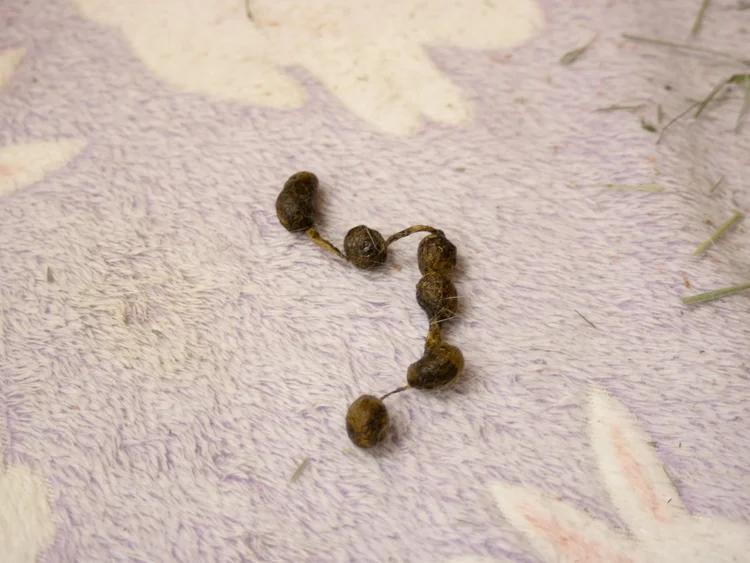
Image source: Bing (Web (fair-use with source credit))
The Warning Signs You Must Know
Rabbits hide illness. It's an evolutionary survival instinct. By the time symptoms are obvious, the rabbit is often critically ill.
So you need to know the subtle signs.
Watch for these during shedding season:
| Warning Sign | What It Means | Action Required |
|---|---|---|
| Smaller or fewer droppings | Gut motility is slowing | Check again in 6 hours |
| Droppings strung together with fur | Fur is passing, but slowly | Increase hay and water |
| Reduced appetite for hay | Possible early blockage | Monitor closely |
| Lethargy or sitting hunched up | Pain or discomfort | Vet immediately |
| Teeth grinding | Pain signal, not contentment | Vet immediately |
| No droppings for 12 hours | GI stasis likely | Emergency vet now |
That "string of pearls" sign deserves special attention. If you see droppings connected by visible fur strands, your rabbit is passing fur, but not efficiently. This is an early warning.
It's your chance to intervene before things get worse.
When to Act Immediately
Some signs are non-negotiable. You don't wait. You don't "monitor." You call a rabbit-savvy vet.
- No droppings at all for 12 hours
- Complete refusal of food, especially pellets and treats
- Hunched posture with eyes half-closed
- Audible teeth grinding
- Cold ears or paws
- Stomach that feels tense or hard
If you see any combination of these during a heavy shed, treat it as an emergency. Call your vet. Explain the situation.
Ask about GI stasis.
The Role of Hydration
Water is your unsung hero during shedding season. Fur that's well-hydrated moves through the digestive tract more easily. Fur that's dry and matted gets stuck.
Make sure your rabbit always has fresh, clean water. Some rabbits prefer bowls over bottles because bowls allow for more natural drinking. The exact delivery method matters less than consistent access.
You can also increase water intake through leafy greens. Fresh romaine, cilantro, and parsley have high water content. Adding these during shed season supports healthy digestion.
The Hay Connection
Hay is not just food. It's medicine.
The long fibers in timothy hay, orchard grass, and other grass hays stimulate gut motility. They push everything through the system, including swallowed fur. That's why hay should be the cornerstone of your rabbit's diet, especially during a shed.
A good rule of thumb: your rabbit should eat a pile of hay roughly the size of its body every day. If you're scooping less than that, you're not offering enough.
Safe Grooming Tools and Techniques for Every Coat Type
Now let's talk about the practical side. You've got a shedding rabbit and a growing pile of fur. What tools actually work?
The short answer is: it depends on your rabbit's coat. Different coats need different approaches.
The Essential Tool Kit
Here's what you need and why:
| Tool | Best For | Why It Works |
|---|---|---|
| Rubber grooming mitt | Short-haired breeds | Grabs loose fur without scratching skin |
| Fine-toothed comb | All breeds | Removes tufts before they fall |
| Undercoat rake | Thick or woolly coats | Reaches the dense undercoat |
| Flea comb | Tiny areas, face | Precision removal around eyes and ears |
| Lint roller | Your clothes | Post-grooming cleanup |
The rubber grooming mitt is the safest starting point for most rabbits. It's gentle, effective, and rabbits usually tolerate it well. The silicone nubs grab loose fur without pulling on skin.
Skip the slicker brushes with wire bristles. Seriously. Rabbit skin is incredibly thin, much thinner than dog or cat skin.
Wire bristles can scratch and irritate it, causing more problems than they solve.
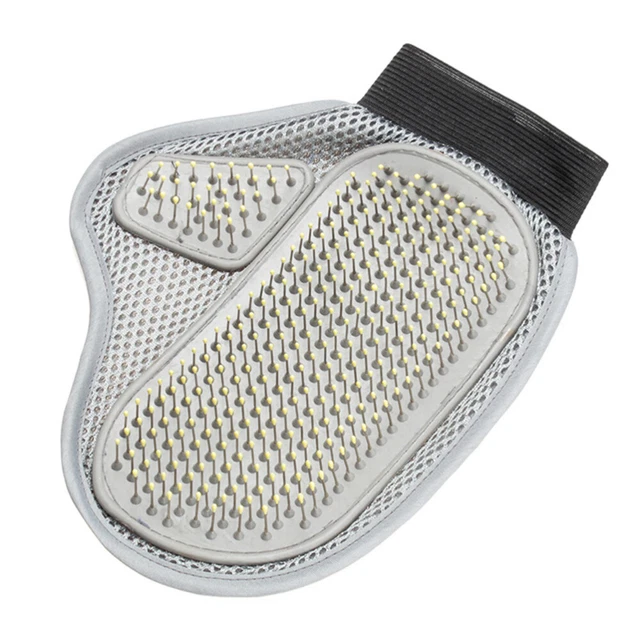
Image source: Bing (Web (fair-use with source credit))
How to Brush Without a Fight
Grooming doesn't have to be a wrestling match. Most rabbits learn to tolerate, even enjoy, a good brushing session. The trick is technique.
Start with short sessions. Five minutes is plenty for the first few times. Set your rabbit on a towel on your lap or a table.
Speak softly. Offer a treat before you even begin.
Use gentle, firm strokes along the back. Work from head to tail. Don't press hard.
You're removing loose fur, not scraping the coat.
Here's a critical tip: don't pull on tufts that are still attached. If a tuft resists, leave it. It'll loosen in a day or two.
Pulling hurts and can damage the hair follicle.
End every session with a treat. Your rabbit will learn that brushing leads to something good. That positive association makes future sessions dramatically easier.
Grooming by Coat Type
The frequency and tools differ based on what your rabbit is packing.
Short-haired breeds (Rex, Dutch, Mini Lop):
- Brush 2 to 3 times per week during normal times
- Daily during peak shed
- Rubber mitt and fine comb work well
- Sheds are shorter and less intense
Medium-haired breeds (Holland Lop, Mini Rex):
- Every other day during normal times
- Daily during peak shed
- Fine comb plus rubber mitt
- Watch for mats behind the ears and on the rear
Long-haired and woolly breeds (Angora, Jersey Wooly):
- Daily grooming is non-negotiable
- Undercoat rake is essential
- Watch for matting on the belly and hindquarters
- Trimming may be necessary in severe cases
What to Do With All That Fur
You'll be amazed at how much fur comes off a single rabbit. A heavy shed can produce a fist-sized clump every day for a week.
Don't just throw it in the trash. Rabbit fur is excellent for composting. It breaks down slowly and adds nitrogen to the soil.
You can also offer it to wild birds in the spring. They love lining their nests with soft fur.
If you're crafty, you can even spin rabbit fur into yarn. Angora wool is a legitimate textile fiber. But that's a deeper rabbit hole for another day.
The Two-Minute Grooming Routine
If you're short on time, here's a bare-minimum routine that still protects your rabbit:
- Spend two minutes brushing the back and sides
- Check the rear and belly for mats
- Offer treats afterward
- Repeat daily during peak shed
It's not perfect, but it's better than nothing. The key is consistency. A two-minute daily brush beats a 20-minute session once a week.
Step-by-Step: Your Daily Shedding Season Routine
Let's put it all together into a simple, repeatable routine. This is what your daily life looks like during a heavy shed.
Morning: The Health Check
Before anything else, check the litter box. This tells you everything about your rabbit's digestive health.
Look for:
- Normal-sized, round droppings
- A good quantity from overnight
- No fur strings connecting droppings
- Urine that's normal in color and amount
If droppings look normal, you're off to a good start. If they're small, fewer, or strung with fur, adjust your plan. You'll need to increase grooming, hay, and water today.
Mid-Morning: Grooming Session
This is your main grooming window. Ten to fifteen minutes, depending on your rabbit's coat.
Work through the body systematically:
- Start at the head, moving backward
- Brush the back and sides thoroughly
- Check the belly and rear for mats
- Finish with a fine comb for any stubborn tufts
- Offer a treat
Watch your rabbit's body language. If they're getting anxious or fidgety, take a break. You can always finish later.
Throughout the Day: Hay and Water
Check the hay rack multiple times. Refill as needed. Your rabbit should be eating hay constantly.
Fresh water should always be available. If you use a bottle, check the ball bearing works. If you use a bowl, rinse and refill daily to keep it fresh.
Add some fresh leafy greens to the daily diet. Romaine, cilantro, parsley, and dandelion greens are all excellent choices. Avoid iceberg lettuce, which has almost no nutritional value.
Evening: Quick Check
Do a quick evening assessment:
- Has your rabbit been eating and drinking normally?
- Are droppings forming at a normal rate?
- Does your rabbit seem comfortable and active?
Give one more quick brush if your rabbit tolerates it. Five minutes is enough. This catches any fur that loosened during the day.
Weekly: Deep Inspection
Once a week, do a full inspection. Part the fur all over the body, checking the skin underneath. Look for:
- Redness or inflammation
- Flaky, dry patches
- Tiny black specks (flea dirt)
- Bald spots where no fur is regrowing
- Unusual bumps or lumps
This inspection is your safety net. It catches skin issues early, before they become painful problems.
Adjusting the Routine for Different Situations
The routine above works for the standard shedding rabbit. But different situations call for adjustments.
First-time rabbit owners: Keep the routine simple. Focus on daily brushing and watching the droppings. Don't overcomplicate things.
Senior rabbits: They may have arthritis that makes grooming position uncomfortable. Use a soft towel for padding. Keep sessions shorter and more frequent.
Pregnant or nursing rabbits: Extra gentle with brushing. Try to use the softest tools available. Check with your vet about any special considerations.
Rabbits in outdoor housing: They shed on the natural schedule. Routine is the same, but you'll deal with more environmental factors like heat and dust.
Mistakes to Avoid: Bathing, Pulling Fur, and Skipping Hay
Let's talk about the things you should never, ever do during shedding season. Some of these mistakes are common. All of them are dangerous.
Mistake 1: Bathing Your Rabbit
This is the biggest one, and it deserves emphasis. Never bathe a rabbit. Ever.
Not for shedding, not for messes, not for anything.
Rabbits can't regulate their body temperature the way we do. They're extremely sensitive to temperature changes. Bathing can send them into shock, cause severe stress, and lead to fatal hypothermia.
The old advice about bathing rabbits is wrong. It's dangerous. If your rabbit is dirty, use a damp cloth to spot-clean.
If your rabbit is covered in loose fur, brush it out. Don't reach for water.
Mistake 2: Pulling Fur That Isn't Ready
Remember the molt line? That visible boundary between old and new fur? Those old tufts look loose and tempting.
Resist the urge to pull them.
Attached fur hasn't released yet. Pulling it hurts. It damages the hair follicle and can cause bald patches.
It can also trigger a stress response in your rabbit.
Wait. It'll loosen on its own within a few days. Brush gently.
Let the fur come out naturally.
Mistake 3: Skipping Hay Because "She's Eating Less"
Some rabbits eat less hay during a shed because they're grooming more. That's a dangerous pattern. Less hay means less fiber.
Less fiber means slower gut motility. Slower gut motility means higher risk of wool block.
Never let hay consumption drop during a shed. If your rabbit is turning down hay, that's a red flag. It might be the first sign of a developing blockage.
The House Rabbit Society recommends unlimited grass hay as the foundation of every rabbit diet. That advice becomes even more critical during shedding season. Hay isn't optional.
It's your rabbit's first line of defense.
Mistake 4: Using Cat Hairball Remedies
Almost every rabbit owner has been tempted by this one. If cats get hairball medicine, why can't rabbits?
Because those products contain petroleum jelly and other ingredients that are toxic to rabbits. They're designed for feline digestive systems. They'll do more harm than good.
The safe way to pass fur is fiber. Hay. Fresh greens.
Water. That's it. There's no shortcut.
Mistake 5: Ignoring the Litter Box
We said it before, but it bears repeating. Your rabbit's droppings are a health dashboard. They tell you what's happening inside.
Many owners only check the litter box every few days. That's too infrequent, especially during shedding season. Check daily.
Pay attention to size, quantity, and consistency.
If something seems off, you catch it early. Early intervention is the difference between a quick fix and an emergency surgery.
Mistake 6: Grooming Too Roughly
Rabbit skin is incredibly delicate. It's thinner than a cat's or dog's skin, and it tears easily. Rough grooming can slice the skin without you even noticing until later.
Be gentle. Use soft strokes. If you see the skin turn pink or red, you're pressing too hard.
Back off.
Mistake 7: Forgetting That Indoor Rabbits Shed Too
Some owners think indoor rabbits don't shed because they don't experience seasonal changes. That's simply not true. Indoor rabbits shed, just on a less predictable schedule.
The risk of wool block exists for all rabbits. Indoor rabbits are actually at higher risk because they might shed at unexpected times. This means you're not prepared for a shed in December, so you don't groom daily.
Then one appears.
Stay vigilant year-round. Even if your rabbit isn't visibly shedding, a quick daily check costs you nothing.
Mistake 8: Assuming One Brush Session Is Enough
A single thorough brushing doesn't solve the problem. Shedding is a continuous process. New fur loosens every day for weeks.
Think of it like this. Your rabbit is producing loose fur constantly during a shed. You brush once and remove what's loose at that moment.
But more fur is already loosening in the follicles. By tomorrow, there's a fresh batch ready to come out.
That's why daily grooming matters. You're staying ahead of the curve. You're removing fur before your rabbit swallows it.
Mistake 9: Neglecting the Rear End
The back and sides get all the attention. The belly and rear are easy to ignore.
But those areas are critical. Rabbits groom their bellies and hindquarters extensively. Loose fur there gets swallowed just as easily as fur from the back.
During your grooming session, flip your rabbit over gently. Check the belly, the underside of the tail, and the inner thighs. These areas are prone to matting, especially in longer-haired breeds.
Mistake 10: Panicking and Over-Grooming
Here's the flip side of the coin. Some owners respond to shedding by grooming obsessively. Three or four times a day.
Every day.
That's too much. Over-grooming can irritate the skin and strip natural oils from the coat. It can also stress your rabbit out.
Once a day is sufficient for most rabbits. Twice a day is fine for long-haired breeds. Beyond that, you're doing more harm than good.
Skin Checks During Shed: What's Normal vs. What Needs a Vet
Shedding gives you a unique opportunity. It's the one time you're looking closely at your rabbit's skin on a regular basis. Take advantage of that.
What Normal Skin Looks Like
Healthy rabbit skin is pale pink. It's smooth and supple, with no obvious flakes or lesions. The fur underneath is clean and even.
When your rabbit is mid-shed, you'll see new fur growing in. It might look slightly different from the old coat. That's normal.
What's Normal During a Shed
Let's be clear about what belongs in the "don't panic" category:
| Finding | Normal? | Why |
|---|---|---|
| Patchy fur distribution | Yes | Molt lines create uneven patterns |
| Slightly dull-looking old fur | Yes | Old coat is ready to shed |
| New fur that looks shorter | Yes | Regrowth happens gradually |
| Mild dandruff | Sometimes | Dry skin is common in winter |
| Pink skin under thin fur | Yes | New fur is sparse initially |
What Needs a Vet
Now, the red flags. These findings deserve professional attention:
| Finding | Potential Cause | Action |
|---|---|---|
| Bald patches with no regrowth | Ringworm, mites, hormonal issue | Vet visit |
| Red, inflamed skin | Infection, allergy, irritation | Vet visit |
| Crusty or scabby areas | Mites, fungal infection | Vet visit |
| Tiny black specks | Flea dirt | Vet visit |
| Open sores or wounds | Self-trauma, injury | Vet visit |
| Lumps or bumps | Abscess, tumor | Vet visit |
| Excessive scratching | Mites, fleas, allergy | Vet visit |
How to Do a Skin Check
You don't need special equipment. Just your eyes and hands.
Set your rabbit on a towel. Start at the head. Part the fur with your fingers, exposing the skin underneath.
Work your way down the back, then check the sides, belly, and rear.
Look for anything that doesn't fit the "normal" pattern. Feel for bumps or irregularities. If something looks off, note it and monitor for 24 hours.
If it doesn't resolve, call your vet.
The Ringworm Question
Ringworm is a fungal infection that's common in rabbits. It's highly contagious to humans and other pets. And it can be mistaken for a bad shed.
Ringworm appears as circular patches of hair loss with scaly, crusty edges. The skin underneath might look red or irritated. These patches don't regrow fur on the normal timeline.
If you suspect ringworm, isolate your rabbit from other pets. Wash your hands thoroughly after handling. Call your vet for a proper diagnosis.
The Mite Problem
Mites are microscopic parasites that burrow into the skin. They cause intense itching, hair loss, and scaly patches.
Rabbits with mites scratch constantly. They might develop dandruff that looks like flaky skin. Heavy infestations can cause visible crusting, especially around the ears and face.
Mites require veterinary treatment. Over-the-counter products are rarely effective and can be dangerous. Get a proper diagnosis.
When to Call the Vet
You don't need to call for every little thing. Minor flakes and patchy shedding are normal. But you should call if you see:
- Bald spots that persist for more than a week
- Any sign of open skin or sores
- Persistent scratching or grooming
- Changes in appetite or droppings alongside skin issues
- Any lump you can't identify
Your vet is your partner in rabbit care. Don't hesitate to call with questions. It's better to ask and learn it's nothing than to wait and wish you'd called sooner.
Common Questions About Rabbit Shedding, Answered Straight
Let's tackle the questions that come up again and again. Some of these might seem basic. But they're the ones that genuinely confuse new rabbit owners.
My Rabbit Is Shedding in Weird Patches. Is That Normal?
Yes. Rabbits shed in a pattern called a molt line. It looks like a stripe of fur that's shedding while the rest of the coat stays intact.
The molt line starts at the head, typically around the nose and eyes. It moves backward across the body over several weeks. This creates a visible boundary between old and new fur.
That patchy, uneven look is completely normal. It's not a skin condition. It's not mange.
It's just how rabbits shed.
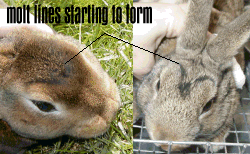
Image source: Bing (Web (fair-use with source credit))
Can I De-Shed My Rabbit at a Groomer?
You can find groomers who handle rabbits, but honestly, you don't need to. Rabbits don't need professional de-matting the way dogs do.
A daily brush at home is more than adequate. Professional grooming adds stress and expense without meaningful benefit. Save your money.
The only exception is severe matting. If your rabbit's fur has become so matted that it's pulling on the skin, a groomer might help. But that's a management failure.
It shouldn't happen with regular grooming.
Should I Give My Rabbit Hairball Remedies?
If you mean the cat hairball remedies, absolutely not. They contain ingredients like petroleum jelly and sugars that are dangerous for rabbits.
The best "treatment" is prevention through brushing and hay. If you're already doing those things consistently, your rabbit shouldn't need anything extra.
Some vets recommend fresh pineapple or papaya for their enzymes, but research doesn't strongly support this. Stick with hay and water. They work.
Why Is My Rabbit Shedding in Winter?
Indoor rabbits don't follow the outdoor light cycle perfectly. If your home is warm and lit, your rabbit might shed lightly year-round.
That's normal. But if the shed is extremely heavy in winter, check your thermostat. Overheated houses can trigger a false "spring" signal.
Keep your home between 60 and 70 degrees Fahrenheit for optimal rabbit comfort. That range supports a natural coat cycle.
My Rabbit Is Eating Less. Should I Worry?
Yes, you should worry. A decrease in appetite during shedding season is a red flag.
Rabbits should eat constantly. If they're turning down hay, that's the first sign of trouble. Watch closely for 12 hours.
If appetite doesn't improve, contact your vet. Don't wait until the rabbit stops eating entirely. That's already a late-stage sign.
How Much Fur Is Too Much?
A heavy shed produces a fist-sized clump of fur per day. That's a lot, but it's normal.
The real question isn't how much fur comes out. It's whether your rabbit is passing it through the digestive system normally.
If droppings look normal, you're fine. If you see fur strings or smaller droppings, increase grooming and hay. Monitor closely.
Final Verdict: What a Healthy Shed Looks Like
Let's bring it all together. Here's what a healthy shed looks like from start to finish.
Week One: The Beginning
You notice tufts of fur sticking out slightly from the coat. The molt line appears around the nose and eyes. Fur comes out easily when brushed.
Droppings remain normal. Appetite stays consistent. Your rabbit seems comfortable and active.
Weeks Two to Four: Peak Shed
Fur comes out in clumps. Daily brushing produces impressive piles. The molt line moves backward across the body.
Droppings might show a few fur strands, but they're still well-formed. Appetite remains strong. Hay consumption stays consistent.
Weeks Five to Six: Tapering Off
The molt line reaches the hindquarters. Fur volume slowly decreases. The coat starts looking sleeker and more uniform.
Droppings return to normal. No fur strings. Your rabbit looks healthy and content.
The Healthy Shed Checklist
Here's your final checklist for every shedding season:
- Daily brushing during peak shed
- Unlimited timothy hay available at all times
- Fresh water daily, monitored consistently
- Daily litter box check for droppings quality
- Weekly full skin inspection
- No bathing ever
- No pulling attached fur
- Vet consulted at the first sign of trouble
The Takeaway
Rabbit shedding season isn't something to fear. It's something to manage. With daily grooming, plenty of hay, and careful observation, your rabbit will sail through every shed without complications.
The fur will accumulate. The lint rollers will get a workout. But your rabbit will be safe, healthy, and comfortable.
That's what matters.
And remember, if anything seems off, trust your gut. You know your rabbit better than anyone. Call your vet.
Ask questions. Be proactive. It's always better to be safe than sorry when your rabbit's health is on the line.
Now grab your grooming mitt and get to work. Your rabbit is counting on you.