
How often should you brush a cat is one of those questions with a tidy-sounding answer that's wrong for about half the cats out there. The usual line is "weekly for short hair, daily for long hair," and it ignores the single biggest factor: whether your cat can still groom itself properly. A chubby ten-year-old shorthair often needs more brushing than a lean young Ragdoll.
Cats spend a large share of their waking hours grooming themselves, and that tongue does most of the work for you. When self-grooming drops off, mats can form in a dense coat within three to seven days. So the real skill isn't memorising a schedule.
It's learning to read your own cat and adjust.

Quick Answer
How often should you brush a cat depends on coat type and health. Healthy shorthairs need one or two sessions a week. Longhaired cats need daily brushing to prevent mats.
Overweight, senior, or unwell cats need daily help no matter the coat. During spring and autumn moults, double your usual frequency for four to six weeks.
Why "Once a Week for Short Hair, Daily for Long Hair" Gets Most Cats Wrong
That rule assumes every cat is a healthy adult with normal flexibility. Plenty aren't.
A cat grooms its own back and hindquarters by twisting the spine and reaching over. Two things break that motion. One is body fat.
The other is joint pain.
Veterinary imaging studies consistently find degenerative joint disease in the majority of cats over twelve, and in many middle-aged cats too. Most of those cats never limp. What they show instead is a scruffy patch above the tail and along the lower back, exactly where the reach is hardest.
Obesity does the same thing by different means. A cat carrying an extra kilo can't fold in half the way it used to. That lower-back scurf is one of the earliest signs owners notice, often before a vet does.
So a nine-year-old British Shorthair at a body condition score of 8 may need brushing every single day. Meanwhile a two-year-old Balinese with a silky single coat and no undercoat might sail through on twice a week. Coat length is a starting point, not the answer.
There's a second reason the flat rule fails. It treats brushing as a chore with a fixed dose. It's actually a feedback loop.
You brush, you check for tangles, and the tangles tell you whether you're brushing often enough.
The Six Things That Actually Set Your Cat's Brushing Frequency
Run through these six before you pick a number. Each one either pushes your frequency up or leaves it where it is.
Coat length and coat type
Length matters less than density. Mats come from a soft, cottony undercoat trapped under longer guard hairs.
- Single-coated longhairs (Turkish Angora, Balinese, many Ragdolls) have silky hair and little undercoat. They tangle slower than people expect.
- Double and triple coats (Persian, Himalayan, Maine Coon, Siberian, Norwegian Forest Cat) are the high-maintenance group. Persians and Himalayans are hardest, because the undercoat is fine and clings.
- Plush shorthairs (British Shorthair, Russian Blue, Chartreux) rarely mat but shed enormously. Frequency here is about hair volume in your house and hairballs in your cat.
- Sleek shorthairs (Siamese, Bengal, Abyssinian, most domestic shorthairs) are genuinely low-effort.
- Rex coats (Devon Rex, Cornish Rex, LaPerm) have fragile, sparse hair. Over-brushing thins it. Hands or a very soft tool, once a week at most.
- Hairless (Sphynx, Peterbald) need no brushing at all. They need skin care instead.
Whether your cat can still groom itself properly
This is the variable most owners never check, and it overrides everything above.
A cat that has stopped grooming its rear half needs daily help regardless of coat length. Causes include dental pain, mouth ulcers, arthritis, obesity, cognitive decline, and general illness. A cat that suddenly stops grooming isn't being lazy.
It's telling you something hurts.
Body condition and weight
Use the 1 to 9 body condition score most vets work from. Ideal sits at 4 or 5, where you can feel ribs under a thin fat layer and see a waist from above.
| Body condition score | What it means for brushing |
|---|---|
| 4 to 5 (ideal) | Coat-based schedule is fine |
| 6 to 7 (overweight) | Add 2 to 3 extra sessions a week, focused on the back half |
| 8 to 9 (obese) | Daily brushing, plus a vet conversation about weight |
Age, arthritis, and mobility
Frequency should climb as your cat ages, even if the coat never changes.
- Kittens: short, frequent, playful sessions. The point is desensitisation, not hair removal.
- Adults (1 to 7): coat-based schedule.
- Seniors (7 to 10): start checking the lower back and tail base weekly.
- Geriatric (11+): assume reduced flexibility. Daily short sessions, gentle pressure, and never force a joint into position.
Arthritic cats also dislike being held in place. Brush them where they're lying, in the position they chose.
Season and indoor heating
Outdoor-exposed cats moult hard in spring and autumn. Indoor cats under central heating and artificial light shed steadily all year instead, with softer peaks.
Either way, you'll see it. Loose hair comes away in clumps and the undercoat feels loose under your fingers. Double your frequency for that four to six week window, then drop back.
How much your cat tolerates being handled
A cat that tolerates two minutes is a two-minute cat. Fighting that gets you scratched and gets the cat frightened of the brush.
The fix isn't longer sessions. It's more of them, split into zones across the week.
The Self-Grooming Test: How to Tell If Your Cat Is Keeping Up
Do this once a week. It takes about thirty seconds and it's the most useful habit in this whole guide.
Run your fingers through the coat against the lie of the hair. You're feeling for texture, not looking for mats. A well-groomed coat parts cleanly and springs back.
A neglected one feels tacky, clumped, or slightly gritty.
Where to check first
Skip the back and shoulders. Cats groom those easily, and they'll look fine long after the rest has gone downhill.
Check these five spots instead, in this order:
- The base of the tail and lower back. The hardest place for any cat to reach. First to go scurfy.
- Behind the ears. Constant head movement plus fine hair equals fast tangles.
- The armpits. Friction zone. Mats here form quickly and hurt.
- The groin and inner thighs. Rarely checked, often matted.
- The britches (the trousers of long hair on the back legs). Also where faecal soiling shows up in longhairs.
If any of those feel rough while the back feels fine, your cat has stopped reaching. Increase frequency now, before mats form.
What a greasy, clumped coat is telling you
A greasy, spiky coat means dead hair and skin oil aren't being lifted away. Cat hair sheds naturally through the exogen phase of the growth cycle. Grooming pulls it out.
Without that, shed hair stays woven into the coat and starts felting.
You may also see a waxy, dark patch on top of the tail near the base. That's stud tail, or supracaudal gland hyperplasia. It's more common in unneutered males but happens in any cat.
One important flag: a sudden drop in self-grooming is a veterinary sign, not a brushing problem. The Cornell Feline Health Center at Cornell University College of Veterinary Medicine lists grooming changes among the behavioural signs worth investigating, alongside appetite and litter box changes. Book the appointment, then adjust the brushing.
The opposite matters too. A cat that grooms one patch bald is overgrooming, and brushing won't fix it. That's barbering, and it points to pain, skin disease, fleas, or stress.
Find Your Cat's Schedule: The Decision Tree
Work down this list in order and stop at the first branch that matches your cat. The branches are ranked deliberately, because health beats coat type every time.
If your cat has recently stopped grooming itself, or has bald or scurfy patches, then book a vet check first. Brush daily and gently in the meantime, and don't tackle existing mats yourself.
If your cat is obese (BCS 8 to 9) or has diagnosed arthritis, then brush daily. Keep it to three to five minutes, concentrate on the lower back, tail base, and hind legs, and let the cat stay lying down.
If your cat is post-surgery, wearing a cone, or in hospice care, then brush daily. This is comfort and monitoring more than grooming.
If your cat is a Persian, Himalayan, or Exotic Longhair, then brush daily, five to ten minutes, with a comb-through as well as a brush. This coat mats in under a week without fail.
If your cat is a Maine Coon, Siberian, Norwegian Forest Cat, Ragdoll, or Birman, then brush daily to every other day. Focus on the ruff, britches, armpits, and belly.
If your cat is a medium-haired domestic, then brush three to four times a week, and daily during a moult.
If your cat is a plush-coated shorthair like a British Shorthair, Russian Blue, or Chartreux, then brush twice a week with a rubber curry, and every other day during shedding season.
If your cat is a lean, healthy, sleek shorthair under seven, then once or twice a week is genuinely enough. Three to five minutes.
If your cat is a Devon Rex, Cornish Rex, or LaPerm, then once a week with a soft tool or grooming mitt. Nothing aggressive.
If your cat is a Sphynx or Peterbald, then skip brushing entirely. Wipe the skin folds weekly and bathe as advised by your vet.
If it's spring or autumn and your cat sheds seasonally, then take whichever answer you landed on and double it for four to six weeks.
If your cat won't tolerate more than a minute or two, then keep the frequency and cut the session length. Split the body into zones and rotate: front half one day, back half the next.
Here's the same logic as a quick reference. As of 2026, this sits in line with general frequency guidance from feline-focused veterinary bodies including International Cat Care.
| Your cat | Baseline frequency | Session length |
|---|---|---|
| Lean shorthair, under 7 | 1 to 2 times a week | 3 to 5 min |
| Plush shorthair | 2 times a week | 5 min |
| Medium hair | 3 to 4 times a week | 5 to 8 min |
| Longhair, single coat | 3 to 4 times a week | 5 to 10 min |
| Maine Coon, Siberian, Ragdoll | Daily to every other day | 8 to 12 min |
| Persian, Himalayan | Daily | 5 to 10 min |
| Overweight, any coat | Daily | 3 to 5 min |
| Senior or arthritic | Daily | 2 to 5 min |
| Rex coats | Weekly | 2 to 3 min |
| Sphynx, Peterbald | None (skin care instead) | Weekly wipe |
| Any cat, moulting season | Double the baseline | Same or shorter |
Hold onto one thing as you use this. The schedule is a starting point. Your weekly finger-check is the correction.
If you're finding tangles at the tail base, you're not brushing often enough, whatever the table says.
Brushing Frequency by Coat Type and Breed
Coat type is the second filter, after health. Here's how the common breeds actually behave, based on coat structure rather than reputation.
| Breed or coat group | Coat structure | Brushing frequency | Mats form in |
|---|---|---|---|
| Persian, Himalayan | Dense triple coat, fine undercoat | Daily | 3 to 5 days |
| Exotic Shorthair | Plush double coat, short | 2 to 3 times a week | 2 to 3 weeks |
| Maine Coon | Long, water-resistant double coat | Daily to every other day | 5 to 7 days |
| Norwegian Forest Cat | Woolly undercoat, oily topcoat | Every other day | 5 to 7 days |
| Siberian | Triple coat, heavy seasonal moult | Every other day | 5 to 7 days |
| Ragdoll | Semi-long, light undercoat | 3 to 4 times a week | 7 to 10 days |
| Birman | Silky, minimal undercoat | 2 to 3 times a week | 10 to 14 days |
| Turkish Angora, Balinese | Single silky coat | 2 times a week | Rarely |
| British Shorthair, Chartreux | Very dense plush shorthair | 2 times a week | Rarely, sheds heavily |
| Russian Blue | Dense double shorthair | 2 times a week | Rarely |
| Siamese, Bengal, Abyssinian | Short, close-lying single coat | Weekly | Almost never |
| Domestic Shorthair | Varies, usually light double | 1 to 2 times a week | Rarely |
| Domestic Longhair | Varies widely | 3 to 5 times a week | 5 to 10 days |
| Devon Rex, Cornish Rex | Sparse, fragile curls | Weekly, soft tool only | Not applicable |
| Selkirk Rex, LaPerm | Loose curls, can tangle | Weekly, wide-tooth comb | 2 to 3 weeks |
| Sphynx, Peterbald | Hairless or near-hairless | No brushing | Not applicable |
A note on the Rex breeds. Their hair is thinner and more brittle than a normal cat's, and slicker brushes break it. Fingers, a soft rubber mitt, or a wide-tooth comb only.
A note on Maine Coons too. The problem area isn't the back. It's the ruff around the neck, the trousers on the hind legs, and the belly.
Owners who brush the back daily and never turn the cat over still end up with mats.
When Shedding Season Doubles the Schedule
Two things drive shedding in cats: daylight hours and temperature. Outdoor and indoor-outdoor cats respond strongly to both, which gives them clear spring and autumn moults. Indoor cats live under artificial light and stable heating, so they shed steadily all year with milder peaks.
You'll know a coat blow when you see one. Loose hair lifts away in visible tufts, the undercoat feels soft and detached under your fingers, and the amount you collect in one session doubles or triples.
What to change during a moult:
- Double the frequency, not the length. Daily short sessions beat marathon ones.
- Add a de-shedding tool or undercoat rake, but only once or twice a week.
- Finish with a comb-through so you know the undercoat is actually clear.
- Expect more hairballs and watch for repeated retching.
- Wipe the coat with a slightly damp cloth afterwards to lift the last of the loose hair.
Typical UK and northern US timing runs March to May and September to November. Cats in hot, humid regions like the Gulf states, northern Australia, or Southeast Asia often shed year-round with no clean season. In those climates damp coats also mat faster, so build in an extra weekly check.
Dry winter air causes a different problem. Static builds, the coat crackles, and hair breaks more easily. A light spray of cat-safe detangling spray on the brush (not the cat) sorts it out.
Cats That Need Far More Brushing Than Their Coat Suggests
These are the cats the standard rule fails hardest. A shorthair in any of these groups can need more brushing than a healthy Ragdoll.
Overweight and obese cats
An overweight cat physically cannot reach the base of its own tail. The coat there gets scurfy, greasy, and eventually clumped, while the shoulders and chest stay perfectly clean.
Brush daily, spending most of the time on the back half. Keep the cat lying down and don't lift or twist it into position. Treat the coat as a symptom, because a weight plan with your vet fixes the cause.
Senior and arthritic cats
Feline arthritis is common, underdiagnosed, and mostly silent. Cats don't limp much. They just stop jumping, stop stretching, and stop grooming their back end.
For these cats:
- Brush daily, two to five minutes.
- Use a soft slicker or rubber tool. Skip rigid metal pins on bony areas.
- Work where the cat is already lying, in the position it chose.
- Never press on the spine, hips, or elbows.
- Watch for flinching, which often marks a painful joint rather than a grooming complaint.
Cats with dental pain or recent surgery
Grooming requires a comfortable mouth. Cats with resorptive lesions, gingivostomatitis, or a fractured tooth stop licking because it hurts. The coat goes downhill within a couple of weeks.
Post-op cats have the same problem for a different reason. A cone blocks access entirely, and ten days in one can leave a genuinely rough coat. Brush daily through recovery, keeping well away from the incision.
Longhairs with soiled britches
Long trousers plus soft stools equals faecal matting around the back end. It's uncomfortable, it smells, and it hardens fast.
Check the britches and around the anus daily in any longhair. Many owners keep a permanent sanitary trim there, which removes the problem outright. A groomer can do it in a few minutes.
Cats That Need Less Brushing, or None at All
Not every cat benefits from more brushing, and a few are actively harmed by it.
Sphynx and Peterbald. No coat to brush. Their skin produces oil that would normally coat the hair, so it builds up instead. They need a weekly wipe-down of the folds, ears, and nail beds, plus baths at the interval your vet recommends.
Devon Rex and Cornish Rex. Their hair is fine and breaks easily. Frequent slicker brushing thins the coat and can leave bald patches on the chest and belly. Once a week with a mitt, or just your hands.
Young, lean, sleek shorthairs. A healthy two-year-old Siamese or Bengal keeps itself immaculate. Once a week is plenty, and that's mostly for bonding, tick checks, and reducing hair on the sofa.
Cats with existing skin disease. Broken skin, hot spots, or active dermatitis need veterinary treatment first. Brushing over inflamed skin makes it worse.
There's also a real problem called brush burn. Repeated slicker work over the same patch, especially with bare wire pins and firm pressure, abrades the skin. You'll see pink or red skin under thinned hair.
Stop brushing that area and switch to a softer tool.
The Tools That Match Your Frequency: Slicker, Comb, Curry, and De-Shedder
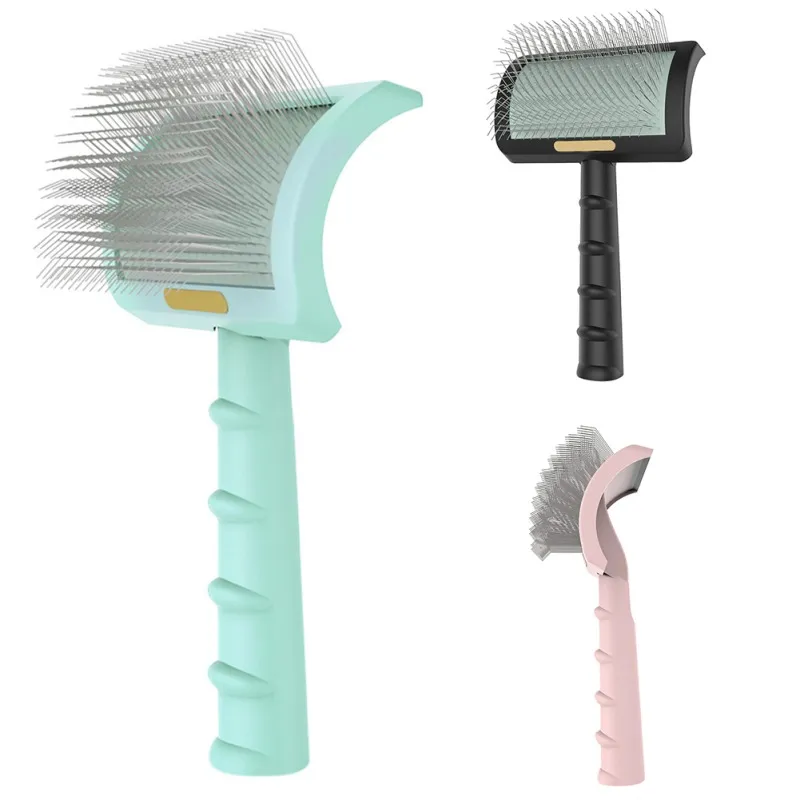
The tool you use changes how often you need to brush. A rubber curry on a longhair does almost nothing about mats, so you'll be brushing daily and still finding tangles.
| Tool | What it does | Best for | How often |
|---|---|---|---|
| Rubber curry or grooming mitt | Lifts loose surface hair, massages skin | Shorthairs, nervous cats | Every session |
| Soft slicker brush | Pulls dead undercoat, separates hair | Medium and long coats | Every session |
| Stainless steel greyhound comb | Finds tangles, verifies the coat is clear | All coats, longhairs especially | Every session, final pass |
| Flea comb | Detects flea dirt and fine tangles near skin | All cats, outdoor cats especially | Weekly |
| Undercoat rake or de-shedding tool | Strips loose undercoat in bulk | Double coats during moult | 1 to 2 times a week, moulting only |
| Pin brush | Gentle finishing on long silky coats | Angoras, Balinese, Ragdolls | Every session |
| Mat splitter | Breaks small mats into sections | Longhairs, small mats only | As needed |
Three notes that make a real difference.
Get a comb, not just a brush. A slicker glides over the top of a mat and leaves it sitting against the skin. A steel comb catches it. The comb is your test, not your main tool.
Choose coated-tip or soft-flex slickers. Stiff bare wire designed for dogs is harsh on thin feline skin. Manufacturer specs on cat-specific slickers usually list finer, more flexible pins and a shorter head.
Use de-shedding blades sparingly. They strip undercoat efficiently, which is exactly why weekly use outside a moult thins the coat. Aggregate user reviews of these tools mention this constantly, usually as "it works too well."
How to Run a Session: Zones, Order, and Stop Signals
Frequency only works if the sessions themselves go well. A cat that associates the brush with pain will hide from it, and then your schedule collapses.
The order that keeps cats calm
Start where cats like being touched and finish where they don't. This order works for almost every cat:
- Cheeks, chin, and forehead. Scent glands live here. Most cats lean into it.
- Neck and shoulders. Easy, safe territory.
- Along the back, following the lie of the coat. Short strokes, light pressure.
- Flanks and sides. Still comfortable for most cats.
- Tail base and rump. Sensitive. Watch the reaction.
- Britches and hind legs. Higher risk of complaint.
- Armpits, chest, and belly. Only if the cat allows it. Never force this.
If you run out of tolerance at step 4, stop at step 4. Do steps 5 to 7 tomorrow.
Line brushing for dense double coats
This is the technique that separates people who never get mats from people who fight them constantly. It matters on Persians, Maine Coons, Siberians, and similar coats.
- Part the coat down to the skin with your free hand.
- Brush the exposed layer only, working outward from the parting.
- Move the parting up about a centimetre and repeat.
- Work in horizontal lines up the body until you reach the spine.
It's slower than surface brushing. It's also the only way to reach the undercoat where mats start.
The comb-through test that proves you're done
Take the steel comb, start at the coarse-tooth end, and run it from skin outward in each zone you brushed. If it passes cleanly, that zone is done. If it snags, you've found a tangle the brush missed.
Test all five friction zones every session: behind the ears, armpits, groin, britches, tail base. That's the whole test, and it takes under a minute.
Stop signals to respect immediately:
- Tail flicking or thumping
- Ears flattening or rotating back
- Skin rippling along the back
- Pupils widening
- A low growl, or a sudden still, tense body
- Head turning toward your hand
Stop before the bite, not after it. One painful session can undo months of progress.
Two Minutes Daily Beats Fifteen Minutes Weekly
If you take one practical idea from this guide, make it this one.
Fifteen minutes once a week means seven days of tangles forming, followed by a long session where you have to pull through them. The cat learns that brushing hurts. You learn that your cat hates brushing.
Both of you are right.
Two minutes daily means you never hit a tangle, so the brush never pulls. The cat learns that brushing is a short, pleasant thing that happens near dinner time.
The maths works out fine too. Two minutes a day is fourteen minutes a week, about the same total. The difference is entirely in how it's distributed.
Zone rotation for cats with short fuses:
| Day | Zone |
|---|---|
| Monday | Head, neck, shoulders |
| Tuesday | Back and flanks |
| Wednesday | Tail base and rump |
| Thursday | Britches and hind legs |
| Friday | Chest and armpits |
| Saturday | Comb-through check, all zones |
| Sunday | Rest |
Two minutes a day, whole cat covered, and no session long enough to trigger a complaint. This is also the best pattern for arthritic and obese cats who can't hold a position for long.
Timing helps as well. Aim for the sleepy window after a meal, or when the cat has already settled somewhere warm. Never during the evening play-drive spike, and never right after a stressful event.
Building Tolerance in a Cat That Hates the Brush
Plenty of cats arrive as adults with no grooming history, or with one bad memory attached to a brush. You can change that, but not by pushing through.
The approach vets and behaviourists use is cooperative care: the cat gets to say no, and saying no is respected. Counterintuitively, that's what makes them stop saying it.
The seven-step build:
- Leave the brush out. On the floor, near a favourite spot. Nothing happens for a few days. It becomes furniture.
- Pair the brush with food. Put a treat next to it. Then on it.
- Touch and treat. Touch the brush to the shoulder for one second. Treat immediately. Stop.
- One stroke. A single stroke along the shoulder. Treat. Stop, even if the cat seems fine. Especially if the cat seems fine.
- Build to thirty seconds. Add a stroke or two per session over a week or two.
- Add zones slowly. Shoulders first, then back, then the sensitive areas last. Weeks, not days.
- Always end early. Finish while the cat is still relaxed, never after it's had enough.
A lickable treat tube works well here, because the cat stays occupied for exactly as long as you need. A plate of wet food does the same job.
Two things to avoid outright. Don't scruff a cat to hold it still. And don't use towels or restraint as a routine method, because the cat learns that being picked up leads to being trapped.
If the cat genuinely can't cope, that's useful information rather than a failure. Some cats do better with a groomer who works quickly, and a few need light sedation at the vet for a periodic clip. Both are kinder than a weekly wrestling match.
Mat Zones: Where They Form and How Fast

Mats don't appear randomly. They form where hair rubs against hair, where limbs move constantly, and where the cat can't reach.
| Zone | Why it mats | Speed in a dense longhair |
|---|---|---|
| Armpits | Constant limb friction, fine hair | 3 to 5 days |
| Behind the ears | Head movement, fine soft hair | 4 to 7 days |
| Groin and inner thighs | Friction, rarely brushed by owners | 5 to 7 days |
| Britches | Long hair, friction, soiling | 5 to 7 days |
| Tail base and lower back | Cat can't reach it | 7 to 10 days |
| Ruff and chest | Volume of hair, collar friction | 7 to 14 days |
| Belly | Lying position, soft undercoat | 7 to 14 days |
Add a collar and you speed everything up around the neck. Add a cat that's been outside in wet weather and you speed everything up full stop.
A mat starts as a soft tangle you can tease apart with your fingers. Within a few days it tightens into a firm knot. Given a couple of weeks it becomes a hard plate sitting flat against the skin.
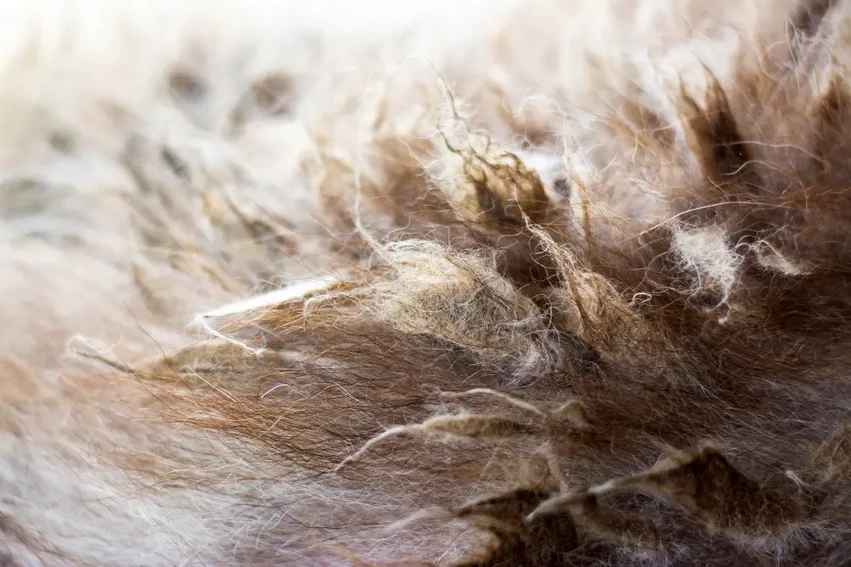
The end stage is pelting, where separate mats fuse into a continuous layer that lifts away from the body like a shell. Under a pelt the skin is often red, damp, and sore, because air can't circulate and moisture gets trapped. Pelted coats are a clip-down job under veterinary supervision, not a home project.
Here's the practical takeaway. If you find a mat, your interval is too long by roughly the age of that mat. Tighten the schedule and re-check in three days.
Mistakes That Turn a Simple Routine Into a Vet Visit
Most grooming disasters come from a handful of predictable errors. Here they are, ranked by how often they end badly.
Cutting a mat out with scissors. This is the most common owner-caused grooming injury. Cat skin is thin, and a mat pulls it up into a tent. What looks like a lump of hair often has skin folded inside it.
The cut goes through both.
Brushing only the top coat. The brush glides over the surface, the coat looks fine, and mats build underneath. This is why the comb-through matters.
Skipping the back half. Owners brush what's easy to reach: back, shoulders, head. The problem zones are all on the rear and underside.
Marathon weekly sessions. Long enough to hurt, infrequent enough to guarantee tangles. The worst possible combination.
Stopping because the cat protested once. Two weeks off in a Persian coat means mats. Reduce the session length instead, never the frequency.
Using dog tools and dog products. Stiff dog slickers abrade feline skin. Far more seriously, dog flea treatments containing permethrin are toxic to cats and can be fatal. The ASPCA Animal Poison Control Center lists permethrin exposure among the most common serious feline poisonings, and it usually happens when an owner grabs the wrong bottle.
Over-using a de-shedding blade. Weekly use outside moulting season thins the coat and can cause brush burn.
Ignoring a sudden change in grooming. A cat that stops washing itself, or licks one patch bald, has a medical problem. Brushing more won't fix it.
Bathing a matted cat. Water tightens mats. It turns a manageable tangle into a solid felted knot. Always demat before any bath, never after.
Never Use Scissors on a Mat: Safety Rules Worth Repeating
This section is short and blunt because the stakes justify it. Emergency vets see mat-removal lacerations regularly, and almost all of them are preventable.
The hard rules:
- Never use scissors, seam rippers, or razor blades on a mat.
- Never cut toward the skin, even with blunt-tipped scissors.
- If a mat won't lift freely away from the skin with your fingers underneath it, stop.
- Never bathe or wet a matted coat.
- Never use dog flea products, dog shampoo, or human shampoo on a cat.
- Never scruff a cat as a routine restraint.
- Stop immediately if you find heat, swelling, moisture, discharge, or a bad smell under a mat.
What to do instead, in order of escalation:
- Work the mat apart with your fingers, holding the hair at the base so you're not pulling the skin.
- Use a mat splitter or the coarse end of a comb, working from the outer edge inward, a few hairs at a time.
- If it's tight to the skin, use clippers with a #10 blade, sliding the blade flat underneath the mat.
- If it's pelted, large, or over a joint, book a groomer or vet.
There's a welfare dimension too. Under the UK Animal Welfare Act 2006, owners have a legal duty of care that includes protecting an animal from pain and suffering. Severe, long-standing matting that causes skin damage can form part of neglect cases.
Most owners never get near that line, but it's a reminder that coat care isn't cosmetic.
Mats also hide parasites and infection. Cheyletiella mites (walking dandruff) and ringworm both spread through shared brushes, so clean tools between cats in a multi-cat home.
What Brushing Costs You vs. What Neglecting It Costs
The economics here are lopsided, which is why groomers push prevention so hard.
| Item | Typical cost (UK) | Typical cost (US) |
|---|---|---|
| Rubber curry brush or mitt | £5 to £12 | $6 to $15 |
| Cat slicker brush | £8 to £25 | $10 to $30 |
| Stainless steel greyhound comb | £10 to £30 | $12 to $35 |
| Flea comb | £3 to £8 | $4 to $10 |
| De-shedding tool | £20 to £45 | $25 to $50 |
| Mat splitter | £8 to £15 | $10 to $18 |
| Full home kit | £35 to £80 | $45 to $100 |
| Professional cat groom | £40 to £90 | $50 to $120 |
| Sedated dematting or full clip at a vet | £150 to £400 | $200 to $500 |
| Vet treatment for skin damage under mats | £80 to £300+ | $100 to $400+ |
A one-off kit purchase covers years. A single sedated dematting costs more than the kit, a groomer visit, and a few tubs of treats combined.
Pet insurance rarely helps. Routine grooming is almost never covered, though treatment for a skin condition caused by matting sometimes is, depending on the policy.
The time cost is smaller than people expect. Two minutes a day is roughly twelve hours a year. A single dematting session at a vet takes a morning off work plus the recovery afternoon.
When to Stop Brushing and Call a Groomer or Vet
Knowing when to hand over is part of doing this well. These are clear handover points.
Call a vet if you see:
- A sudden stop in self-grooming, or a marked drop over a few weeks
- Bald patches, or hair coming out in clumps with skin attached
- Overgrooming on the belly, flanks, or inner legs
- Red, weeping, hot, or smelly skin under a mat
- Pain, flinching, or aggression when you touch a specific area
- Widespread scaling, crusting, or scabs
- Black gritty specks at the tail base despite flea prevention
- A pelted coat of any size
Call a groomer if:
- You have two or more firm mats you can't finger-separate
- The cat is longhaired and you've fallen a few weeks behind
- Britches are soiled and you'd rather have a permanent sanitary trim
- You want a comb cut to reduce the workload year-round
- The cat tolerates a fast professional better than a slow amateur
A comb cut, where the coat is clipped to a uniform short length rather than shaved, is an underused option for Persians and elderly longhairs. It cuts the daily requirement without leaving the cat bald.
One caution on choosing a groomer. Cat grooming isn't a licensed profession in the UK or most of the US. Look for cat-specific training, a quiet cats-only environment or separate area, and a policy of stopping rather than restraining.
Practices certified under Cat Friendly Clinic or Cat Friendly Practice schemes are a good benchmark for handling standards.
Real Scenarios: Four Cats, Four Very Different Schedules
Milo, 3, domestic shorthair, healthy, indoor. Sleek coat, body condition score 5, grooms himself thoroughly. Schedule: rubber curry twice a week, four minutes. Bumped to every other day for six weeks each spring.
Total effort: about ten minutes a week.
Nala, 6, Maine Coon, indoor-outdoor. Long double coat, big ruff, heavy britches. Schedule: slicker plus comb every other day, ten minutes, line brushing on the flanks and britches. Daily during the autumn moult.
The armpits get checked every session, because that's where her mats always start.
Bramble, 11, British Shorthair, body condition score 8. Short plush coat that should be easy, except he can't reach his lower back anymore and his hips are stiff. Schedule: daily, three minutes, rubber curry and soft slicker, done while he's lying on the sofa. Rear half only, most days.
A weight plan runs alongside it.
Poppy, 9, Persian, rehomed with existing mats. Arrived with tight mats behind both ears and in both armpits. Those were removed by a groomer, not at home. Schedule now: daily, six to eight minutes, line brushing, full comb-through of all five friction zones.
Sanitary trim maintained every eight weeks.
Same species, same question, four completely different answers. That's the point.
Brushing vs. Bathing: When Water Actually Helps
Most cats never need a bath. The tongue plus a brush handles it. But there are cases where water earns its place.
If your cat is a healthy shorthair or a well-maintained longhair, then skip bathing entirely. You'll strip coat oils and stress the cat for no gain.
If your cat is a Sphynx or Peterbald, then bathe on a schedule your vet sets, often every one to three weeks. Skin oil has nowhere to go without hair, so it builds up in the folds and around the nail beds.
If your cat is an oily-coated longhair or a show Persian, then a bath every four to eight weeks keeps the coat from going greasy and clumping at the roots.
If your cat has fleas, has rolled in something toxic, or has soiling that wipes won't shift, then bathe, carefully.
The rule that matters most
Never wet a matted coat. Water shrinks and tightens felted hair. A soft tangle you could have teased apart on Tuesday becomes a hard plate by Wednesday.
Demat first. Bathe second. No exceptions, including for professional grooms.
Bathing without making the coat worse
- Comb the whole cat through before any water touches it.
- Use a cat-specific shampoo. Dog and human products sit at the wrong pH and can irritate.
- Water at roughly body temperature, around 38°C.
- Rinse twice as long as you think you need to. Residue causes itching and dulls the coat.
- Dry thoroughly. A damp undercoat mats fast, especially on a Maine Coon or Siberian.
- Comb again while drying, not after.
Waterless and no-rinse cat shampoos are a reasonable middle ground for spot cleaning. They work on a soiled patch of britches without a full bath. They don't replace brushing and they won't touch a mat.
Brushing removes dead hair. Bathing cleans. They solve different problems, and a bath never makes up for a missed week of brushing.
Grooming in a Multi-Cat Household
More cats means more variables, and the schedules almost never line up. A Bengal and a Persian in the same house need completely different routines.
Mutual grooming between bonded cats complicates it further. They groom each other's head and neck, which can mask a problem. A cat that's stopped grooming its own back end may still look immaculate around the face.
How to run multiple schedules without losing track:
- Set a fixed anchor for the highest-maintenance cat first, then fit the others around it.
- Keep a separate tool set per cat if any cat has skin issues.
- Do the friction-zone comb check on every cat weekly, even the easy ones.
- Groom in a room the other cats can't wander into, if one cat gets defensive.
| Household mix | Practical approach |
|---|---|
| Two shorthairs | Both on the sofa, two minutes each, twice a week |
| Shorthair plus longhair | Longhair daily, shorthair twice weekly, same time slot |
| Three or more mixed | One cat per evening, zone rotation across the week |
| One cat resents the brush | Groom that cat alone and last |
Tool hygiene between cats
Share brushes and you share whatever's living in them. Most people skip this part.
Two conditions travel this way. Cheyletiella mites spread easily on combs and bedding. Ringworm (Microsporum canis) is worse, because spores survive on tools for months and it transmits to humans.
Clean tools after every session. Pull the hair out, wash with hot soapy water, rinse, and dry fully before storing. If any cat is under treatment for a skin condition, use dedicated tools and don't rotate them.
Watch for grooming competition too. Some cats crowd in and shove the other one aside. Separate them, because a cat that gets barged mid-session learns to leave the room when the brush appears.
Flea Combing: The Weekly Check That Isn't Brushing
A flea comb does something no brush can. Its teeth sit close enough together to trap adult fleas and flea dirt against the skin.
Run one weekly, even on indoor cats and even on cats already on prevention. Products fail sometimes, and finding fleas early is the difference between a quick treatment and a three-month house problem.
How to do it properly
- Sit the cat on a white towel or a light sheet of paper.
- Comb against the lie of the coat, right down to the skin.
- Focus on the tail base, lower back, neck, and behind the ears.
- Wipe the comb on damp white paper after each pass.
- Look for small black specks. If they smear reddish-brown, that's flea dirt, which is digested blood.
Black specks that stay black are usually just dirt or scurf. The smear test tells you the difference in five seconds.
Why dark shorthairs get missed
Flea dirt disappears against a black or dark tortoiseshell coat. Owners of dark cats often only find out when the cat starts overgrooming its flanks. For those cats the white towel isn't optional.
Escalate if you find:
- Flea dirt despite up-to-date prevention
- Scabby, crusty bumps along the back and neck, which suggests flea allergy dermatitis
- Hair loss on the belly or inner thighs from overgrooming
Treat the cat and the home together. Adult fleas on the animal are a small fraction of the total population, with the rest sitting in carpets and bedding as eggs and larvae.
The warning bears repeating here. Never use a dog flea product on a cat. Permethrin-based dog spot-ons cause severe, often fatal poisoning, and it happens most in multi-pet homes where the bottles sit side by side.
Keeping Your Tools Working: Cleaning, Replacing, and Storing
A worn brush stops doing its job long before it looks broken. That's usually why a routine that worked for two years quietly starts leaving tangles behind.
Signs a tool needs replacing
- Slicker brush: bent or splayed pins, missing protective tips, pins that no longer spring back.
- Steel comb: loose teeth, rough or burred edges, visible corrosion. Run it across your inner forearm. It should glide, not drag.
- Rubber curry or mitt: hardened, cracked, or flattened nubs. Rubber perishes, especially somewhere warm.
- De-shedding tool: dull blade that tugs instead of cutting. Cats notice immediately.
- Mat splitter: any nick or roll in the blade edge. Replace rather than sharpen.
| Tool | Typical replacement interval | Failure sign |
|---|---|---|
| Slicker brush | 2 to 3 years | Bent pins, lost tips |
| Steel greyhound comb | 5+ years | Loose or burred teeth |
| Rubber curry or mitt | 1 to 2 years | Hardened, cracked nubs |
| Flea comb | 2 to 3 years | Splayed teeth |
| De-shedding tool | 2 to 4 years, blade sooner | Tugging instead of gliding |
Cleaning and storage
Clear hair after every session, not weekly. Trapped hair reduces how deep the pins reach and turns a slicker into a surface-only tool.
Wash tools in hot soapy water once a month, or after any session where you found flea dirt or scurf. Dry metal parts fully to stop rust, and don't leave a wooden-handled brush soaking.
Store somewhere dry and out of direct sunlight. UV degrades rubber and plastic, which is why brushes kept on a sunny windowsill go brittle within a year.
Keep the kit near where you actually groom. A brush that lives in a cupboard upstairs gets used half as often as one beside the sofa.
Diet, Omega Fatty Acids, and How They Change Your Brushing Load
Coat quality is built from the inside, and it directly affects how much work brushing is. A cat on a poor diet sheds more, mats faster, and grows a duller, drier coat that tangles.
Hair is mostly protein. Cats need high-quality animal protein and specific amino acids to grow it. A cat that's underfed or on an unbalanced homemade diet shows it in the coat within weeks.
What actually helps
- Complete, balanced commercial food meeting AAFCO or FEDIAF nutritional profiles. This covers protein, taurine, zinc, and the B vitamins involved in skin and coat health.
- Omega-3 and omega-6 fatty acids. Veterinary dermatology research supports fatty acid supplementation for improving coat condition and reducing skin inflammation.
- Adequate water intake. Chronically dehydrated cats often have flaky, dry-feeling coats. Wet food helps more than a fountain does.
- Fibre or hairball-formula diets. These help hair pass through the gut rather than come back up. They reduce hairball frequency, not shedding.
What doesn't
Supplements won't fix a coat problem caused by pain, obesity, parasites, or allergy. If a coat has gone downhill fast, food is rarely the answer. Look for the underlying cause.
Coconut oil, olive oil, and butter get recommended online for hairballs. They add calories without solving anything, and greasy hands make the coat worse.
The frequency link
If your cat's coat improves after a diet change, then you may be able to ease off slightly. The friction-zone check still governs the schedule.
If your cat sheds heavily despite a good diet and regular brushing, then check for hyperthyroidism, allergies, or parasites. Excessive shedding is a clinical sign, not just an inconvenience.
If your cat has recurrent hairballs on a long coat, then a hairball diet plus daily brushing works far better than either alone. The diet moves what's already swallowed. The brush stops it being swallowed.
Talk to your vet before adding any supplement, especially fish oils. Dose matters, and high doses can affect clotting and add calories to a cat already carrying extra weight.
Grooming a Cat You Can't Touch Yet
Some cats arrive with no handling history at all. A brushing schedule is meaningless until the cat lets you near it, so the first job is trust, not hair.
Set expectations properly. Rescue and shelter guidance puts the timeline for a semi-feral adult at weeks to months, not days. A cat that has never been touched may take six months before it tolerates a brush, and some never do.
If the cat is hiding and won't take food from your hand, then do nothing with a brush. Sit in the room, ignore the cat, and let it eat while you're present.
If the cat takes food near you but flinches at contact, then leave a brush beside the bowl at mealtimes. No touching.
If the cat accepts a scratch under the chin, then try one stroke with a soft grooming mitt on the shoulder. Stop straight away, whatever happens next.
If the cat has visible mats and still can't be handled, then this is a veterinary conversation, not a grooming one. A single sedated clip resets the coat and buys you months to build trust.
Stopgaps that work without handling:
- Self-groomer wall corner brushes. Cats rub against them voluntarily and lift a surprising amount of loose hair from the cheeks, flanks, and hips.
- Bristle strips on furniture legs or the corner of a scratching post.
- A soft brush head on a long handle, used from a comfortable distance for the first few passes.
None of these reach the friction zones, so they don't prevent mats. They keep the total hair load down while you work on trust.
One thing not to do: never trap or towel a semi-feral cat to brush it. You'll get one session and lose six months of progress.
Nail Trims, Ear Checks, and Teeth: What to Bundle Into a Session
Once a cat accepts brushing, you've built the handling tolerance that makes everything else easier. Use it.
| Task | Interval | Bundle with |
|---|---|---|
| Brushing | Per your coat schedule | The anchor session |
| Nail trim (front) | Every 2 to 4 weeks | End of a calm session |
| Nail trim (back) | Every 4 to 8 weeks | Separate day if needed |
| Ear check | Weekly | Start of session, cheeks stage |
| Tooth brushing | Ideally daily | Separate slot, before food |
| Weight and body check | Monthly | During the friction-zone comb pass |
Nails
Trim only the clear tip. The pink quick inside the nail carries blood and nerve, and cutting it hurts and bleeds. Two or three nails at a time is plenty for most cats.
Older and overweight cats need this more often, for the same mobility reasons that drive their brushing schedule. Cats that can't stretch to scratch don't shed the outer nail sheath properly, and overgrown claws curl into the pads.
Ears
Look, don't poke. Healthy cat ears are pale pink, clean, and odourless.
Dark, crumbly, coffee-ground debris usually means ear mites. A yeasty smell or brown waxy discharge points to infection. Both need a vet, and neither is fixed with cotton buds.
Teeth
Dental disease is one of the top reasons cats stop grooming themselves, so this loops straight back to your brushing load. Use a cat toothpaste and a finger brush or soft child's brush. Never human toothpaste, because fluoride and xylitol are toxic to cats.
Build it the same way you built brushing tolerance. Touch the lip, treat, stop. Weeks, not days.
Skin and body check
While you're doing the friction-zone comb pass, run your hands over the whole cat. You're feeling for lumps, scabs, ticks, thin patches, and changes in muscle over the shoulders and spine.
Owners who handle their cats weekly find these things months earlier than owners who don't.
What Professional Groomers Do Differently
A good cat groomer can finish a matted Persian in about forty minutes. Understanding why helps you improve at home, and helps you judge whether a groomer is any good.
They demat dry, always. No water goes near the coat until every tangle is out. This is the biggest difference between a professional job and a home attempt gone wrong.
They work in a fixed sequence. Same order, every cat. Nothing gets missed and the cat isn't handled twice in the same place.
They use a high-velocity dryer. Forced air blows out loose undercoat no brush reaches, and it dries a double coat fully rather than leaving a damp layer to felt.
They clip rather than fight. If a coat is more than lightly tangled, a professional clips it and starts fresh. Hours of dematting is painful and pointless when the coat regrows anyway.
They work fast and stop early. Speed reduces stress. A groomer who takes ninety minutes on a nervous cat isn't being gentle, they're extending the ordeal.
Comb cut vs. lion cut
A comb cut clips the coat to a uniform length, often around half an inch, leaving the cat looking like a plush shorthair. A lion cut takes the body right down and leaves the head, feet, and tail tip.
For most longhairs struggling with mats, a comb cut every eight to twelve weeks is the better option. It cuts your daily workload without leaving the cat cold. Lion cuts make sense for severely pelted coats, or cats who genuinely cannot be brushed.
Ask one question that sorts the good groomers from the average: what do they do when a cat says no? A good answer involves breaks, a shorter session, or rebooking.
Grooming Through Illness, Recovery, and End of Life
Sick cats stop grooming almost immediately. It's one of the earliest behavioural changes vets ask about, alongside appetite and litter box habits.
That means your brushing frequency should go up exactly when the cat is least able to enjoy it. The trick is changing what a session is for.
If your cat is recovering from surgery or on a course of treatment, then brush daily for two to four minutes. Keep clear of incisions, drains, and shaved patches. The goal is comfort and monitoring, not a perfect coat.
If your cat has chronic kidney disease, hyperthyroidism, or diabetes, then expect a duller, drier, sometimes clumped coat. Brush daily with a soft tool. Watch for weight loss you can feel over the spine before you see it.
If your cat is on chemotherapy or immunosuppressants, then handle gently and check skin closely. Coat changes and slow healing are common.
If your cat is in hospice or end-of-life care, then keep sessions very short and entirely about comfort. Two minutes of gentle strokes with a soft mitt, in whatever position the cat has chosen.
Practical adjustments for a poorly cat:
- Switch to the softest tool you own. Never a de-shedding blade.
- Groom where the cat already is. Don't move it.
- Keep pressure light over bony areas. Sick cats lose muscle over the spine, hips, and shoulders.
- Do the back end first while the cat still has patience, since hygiene matters most there.
- Keep the rear clean and trimmed if the cat has soft stools or is incontinent.
- Stop at the first sign of discomfort, without exception.
For cats confined to a bed or heated pad, matting appears fast on whichever side they lie on. Check that side daily. Pressure plus warmth plus no self-grooming is the fastest mat combination there is.
Gentle grooming is often one of the few things a very sick cat still visibly enjoys.
Making the Schedule Stick
Knowing the right frequency and actually doing it are two different problems. Most owners who fall behind didn't misjudge the schedule. They just stopped.
Anchor it to something you already do
Habits stick when they're attached to an existing routine. Pick a fixed trigger:
- After the evening meal, while the cat is settled
- During a specific TV programme
- Right after you feed, when the cat is calm and slightly sleepy
- Before bed, if your cat is a lap cat in the evening
The specific time matters less than the fact that it never changes.
Set a realistic target, then a floor
Aim for your ideal schedule. Then set a minimum you'll hit even in a bad week.
| Cat type | Ideal | Non-negotiable floor |
|---|---|---|
| Persian, Himalayan | Daily, 5 to 10 min | 2 min daily plus a full comb-through twice weekly |
| Maine Coon, Siberian | Daily to every other day | 3 times a week plus weekly zone check |
| Medium hair | 3 to 4 times a week | Twice weekly plus zone check |
| Shorthair | Twice weekly | Weekly zone check |
| Overweight or senior | Daily | 4 times a week, back half only |
The weekly friction-zone comb check should never slip. Everything else can flex.
Troubleshooting the common failures
- Sessions take too long, so you skip them. Cut the length, keep the frequency. Zone rotation solves this.
- The cat runs when it sees the brush. Go back to short, treat-paired sessions for a fortnight and rebuild.
- You brush regularly but still find mats. You're missing the friction zones, or not combing through afterwards.
- You do fine for a month then stop. The trigger isn't strong enough. Attach it to a daily event you never skip.
- You've fallen weeks behind on a longhair. Book a groomer, reset the coat, and restart from a clean baseline.
Falling behind isn't a failure. It's information. Reset the coat, tighten the interval, and let the weekly comb check tell you when you've got it right.
Frequently Asked Questions
Can you brush a cat too much?
Yes. Daily brushing with a stiff slicker or a de-shedding blade can abrade the skin and thin the coat, a problem called brush burn. Rex breeds and hairless cats are especially vulnerable.
Daily brushing with a soft tool and light pressure is fine for any longhair, and necessary for many senior or overweight cats.
How often should you brush a short haired cat?
Once or twice a week for three to five minutes suits most healthy shorthairs. Increase to every other day during spring and autumn moults. If your cat is overweight, over ten, or has stopped grooming its lower back, brush daily regardless of coat length.
Health beats coat type every time.
How often should you brush a kitten?
Brush kittens briefly every day or two, even if they don't need it. The goal is desensitisation, not hair removal. Thirty seconds paired with treats builds a cat that accepts grooming, nail trims, and vet handling for life.
Start around eight weeks and keep every session short and positive.
Do indoor cats need brushing more often?
Often yes, though not for the reason people assume. Indoor cats under artificial light and central heating shed steadily all year rather than in two clean seasons. That means no quiet period, and more loose hair swallowed during self-grooming.
Regular brushing reduces hairball frequency noticeably in indoor cats.
How often should you brush a cat to reduce hairballs?
Aim for at least every other day if your cat vomits hairballs regularly. Every hair you remove with a brush is one your cat doesn't swallow. Longhairs and heavy shedders benefit most.
If hairball vomiting happens more than once or twice a month, get a vet check, because repeated retching can signal other problems.
What time of day is best to brush a cat?
Pick the sleepy window, usually after a meal or when your cat has already settled somewhere warm. Avoid the evening play-drive peak and any time straight after a stressful event. Consistency helps more than the specific hour, because cats settle faster into a routine they can predict.
Your Brushing Schedule at a Glance
Set your baseline from the coat, then adjust upward for health, age, weight, and season. Check the five friction zones weekly with a steel comb, and let what you find correct your schedule.
If the comb passes cleanly, you're brushing often enough. If it snags, you're not. That's the whole system, and it works on every cat regardless of breed.