
If you've ever stood in a stall at 7 a.m. with a sleepy horse and wondered if skipping the hoof cleaning today really matters, the answer is a firm yes. Learning how to clean horse hooves properly is one of the most important skills you'll develop as an owner, and it takes less than five minutes per hoof once you get the hang of it.
The routine itself is simple, but the stakes are higher than most people realize. Research from the American Association of Equine Practitioners indicates that hoof-related issues are among the top reasons horses develop lameness, and many of those issues start with neglected daily care. As of 2026, veterinary costs for treating advanced thrush or abscesses routinely reach several hundred dollars, while a simple hoof pick costs less than twenty.
The math is clear, and so is the path forward.
Quick Answer
Clean each hoof daily. Use a hoof pick to remove dirt from heel to toe. Check the frog and sole for stones, odor, or discharge.
Brush away loose debris. Inspect for heat, cracks, or swelling. Call your farrier or vet if something looks off.
Why Cleaning Hooves Actually Matters
Skipping hoof cleaning isn't just a hygiene issue. It's a direct line to lameness, expensive vet bills, and a horse that's uncomfortable in ways you might not immediately notice.
Your horse's hoof is a living structure. The sole, frog, and white line are all sensitive tissues that need airflow and regular inspection. When dirt, mud, and manure pack into the hoof, they trap moisture against the frog.
That moisture creates the perfect environment for bacteria and fungi to thrive, which leads to thrush. Thrush eats away at the frog and can penetrate deeper into the hoof if left untreated.
Abscesses are another common result of neglected hooves. A small stone wedged against the sole can work its way in and cause a painful infection that literally blows the hoof apart from the inside. Horses with abscesses are often non-weight-bearing lame, and recovery can take weeks.
There's also a financial angle that's hard to ignore. A routine farrier visit for trimming typically runs between $40 and $80 depending on your region. An emergency vet call for a severe abscess or advanced thrush can easily hit $500 or more.
Daily cleaning is arguably the cheapest insurance you'll ever buy for your horse.
The routine also builds trust. Horses that get their feet handled gently and consistently learn to pick up their hooves willingly. That makes farrier visits easier, vet exams less stressful, and your daily barn work safer for everyone involved.
What a Healthy Hoof Looks Like (So You Know What You're Aiming For)
Before you can spot problems, you need to know what a normal, healthy hoof looks and feels like. This is where most new owners get lost, because a clean hoof still looks pretty gnarly if you don't know what you're looking at.
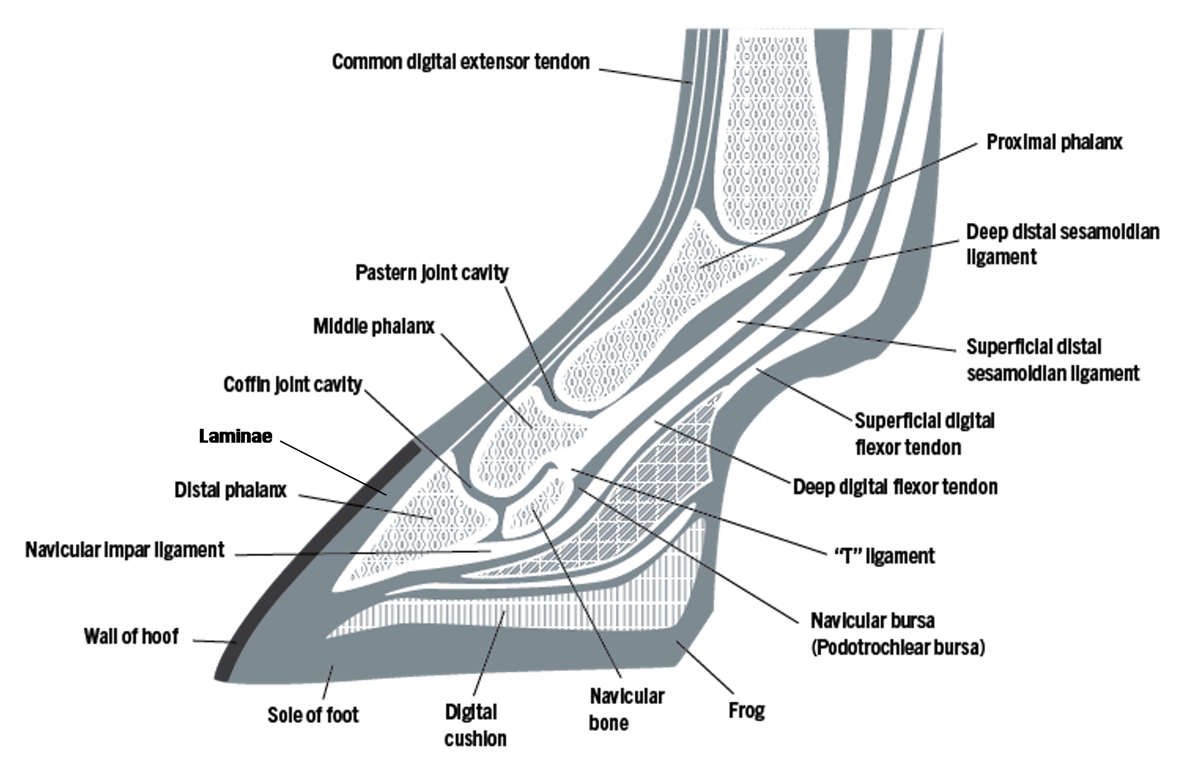
Image source: Bing (Web (fair-use with source credit))
The Sole
The sole is the concave, tough area you see when you lift the hoof. In a healthy hoof, it's slightly cupped and firm to the touch. It should be a light gray, pale yellow, or even slightly pinkish color, depending on your horse's pigment.
The sole is relatively insensitive to pressure, but it's still vulnerable to bruising if you dig in too hard with a hoof pick.
The Frog
The frog is the V-shaped triangular structure in the middle of the sole. It acts as a shock absorber, pumping blood back up the leg with every step. A healthy frog is firm but slightly springy, like thick rubber.
It's usually darker than the sole, ranging from gray to almost black.
Here's where a lot of owners get confused. A dark frog is normal. A frog with a black, foul-smelling discharge is not.
That smell, which you'll never forget once you've encountered it, is the hallmark of thrush.
The Bars
The bars are the two ridges that run along the edges of the frog, extending from the heel toward the toe. They are part of the hoof wall that folds inward. Healthy bars are firm and clearly defined.
Soft, crumbly bars are often a sign of thrush or poor hoof health.
The Heel Bulbs
The heel bulbs are the soft, rounded areas at the back of the hoof, right where the leg meets the foot. They are mostly cartilage and skin. They should feel pliable and free from cracks or scabs.
The White Line
The white line is the thin, pale seam where the hoof wall meets the sole. It's technically the attachment point between the insensitive and sensitive parts of the hoof. In a healthy hoof, it's tight and uniform in width.
If you notice separation, widening, or chalky debris in the white line, that's an early warning sign for white line disease, which is a serious condition that requires veterinary attention.
The easiest way to remember all of this is simple. A healthy hoof is firm, clean, and has no odor beyond a mild earthy smell. Any moisture beyond a slightly damp sole, any visible debris packed into the crevices, any heat, or any foul smell warrants a closer look.
The Right Tools for the Job
You do not need a truckload of expensive gear to clean horse hooves. The list is short, and most items cost less than a tank of gas.

Image source: Bing (Web (fair-use with source credit))
Hoof Pick
This is the non-negotiable tool. A hoof pick consists of a handle and a curved metal or plastic tip designed to dig out packed dirt and debris.
Metal picks are the most common and generally the most durable. They handle caked-on mud and frozen ground with ease. The downside is that a careless hand can scratch the sole or frog.
That's less of a problem than it sounds, since you control the pressure, but it's worth noting.
Plastic picks are lighter and gentler on the hoof. They're a great choice for horses with sensitive soles or for children learning the routine. The trade-off is durability.
Plastic picks bend and snap more easily, especially in cold weather.
Composite picks sit somewhere in between. They're stiff enough for serious cleaning but softer than metal on the foot.
Whichever you choose, look for a comfortable grip. An ergonomic handle matters more than you'd think when you're crouching down and holding a hoof for several minutes.
Hoof Brush
A stiff-bristled brush is essential for removing the last bits of dust and loose debris after you've picked the hoof. Many hoof picks come with a built-in brush on the opposite end, which is convenient. If you buy a separate one, go with a natural fiber brush like tampico or a stiff nylon brush.
Keep it dedicated to hooves only, since it will be covered in manure dust.
Hoof Stand
A hoof stand is a luxury, not a necessity. It's a small platform that holds the horse's hoof up so you don't have to balance it between your knees. If you have back issues, this tool is worth every penny.
They run anywhere from $30 to over $100.
Gloves
Not a requirement, but practical. You'll have your hands close to the ground, picking through mud and manure. A pair of sturdy work gloves protects your hands and keeps them clean.
Choose a pair that still lets you feel the hoof and grip the pick firmly.
Lighting
If you're cleaning hooves in the winter or early morning, a headlamp or a bright work light is invaluable. You cannot spot cracks or thrush in the dark. Trust me, you'll miss things.
Optional Treatments
Keep a small supply of thrush treatment and hoof conditioner on hand, but don't overuse them. More on that later.
Step-by-Step: How to Clean Horse Hooves Safely
Now for the actual process. This is where the article earns its keep, so pay attention to the details. The order of operations matters, as does your physical positioning.
Step 1: Secure the Horse
Before you attempt to lift a single hoof, make sure your horse is safely restrained. Use a lead rope tied with a quick-release knot to a solid fixture, or use cross-ties in a barn aisle. Never wrap the lead rope around your hand or body.
If the horse spooks and bolts, you do not want to be attached to it.
Stand in a well-lit, dry area. Wet concrete or mud underfoot is asking for a slip, and you don't want to be falling while holding a horse's leg.
Step 2: Approach and Lift the Hoof
Stand at the horse's shoulder, facing the rear of the horse. This position keeps you out of the direct line of a backward kick.
Run your hand down the horse's leg from the shoulder to the knee, then down to the fetlock. Apply gentle pressure at the fetlock joint and say "up." Most horses will lift their foot when they feel that pressure and hear the cue.
If your horse doesn't lift, shift your weight against the shoulder and repeat the pressure. Some horses just need a moment to think about it. Be patient.
Never reach down and yank the leg up.
Once the hoof is off the ground, hold it properly. Cradle the hoof in one hand and use the other hand to work the pick.
Step 3: Position the Hoof
If you're working without a hoof stand, rest your thigh against the horse's leg with the hoof cradled between your knees, sole facing you. This position gives you both hands free and keeps the hoof stable.
Some horses, especially larger drafts, have heavy hooves that are hard to hold for extended periods. In those cases, a hoof stand is a genuine help. Position the stand under the hoof and rest it there.
Step 4: Pick from Heel to Toe
Here's the correct technique. Start at the heel, at the back of the frog. Work the hoof pick into the grooves on either side of the frog.
Use a scooping motion, moving from heel toward toe. Dig the pick tip into the packed dirt and pull it out, dragging debris with it.
Don't dig straight down into the sole. That can bruise the sensitive tissue. Angle the pick so you're scraping parallel to the sole surface, not perpendicular to it.
Work methodically. Clear the frog itself first, then the two collateral grooves on either side of it, then the bars, and finally the sole. The white line is the last stop.
Step 5: Brush Away Loose Debris
Once you've picked out the big chunks, take your stiff brush and sweep away the remaining dust and small particles. This is also the time to brush off the hoof wall and the heel bulbs to get a clear view of the whole structure.
Step 6: Inspect Everything
With the hoof clean, you now have a clear canvas. Look at the frog for any black, tarry discharge. Check the sole for stones that might have been wedged in.
Run your fingers along the hoof wall to feel for cracks or chips. Note any heat coming from the hoof, any swelling at the coronary band, or any unusual odor.
Step 7: Lower the Hoof Gently
Set the hoof back down in a controlled manner. Don't drop it. A horse that feels its foot dropped carelessly will learn to resist lifting it next time.
That's it. That's the whole routine. Repeat for all four hooves, and you're done.
For the front and back pairs, the technique is identical, but your body position shifts slightly. For front feet, you're naturally at the shoulder. For hind feet, stand at the horse's hip, facing the rear.
Keep one hand on the horse's hip as you run the other down the leg, so you don't get caught by a surprise kick.
Spotting Problems While You Clean
The cleaning process itself is just step one. The real value is in what you spot while you've got the hoof in your hands.
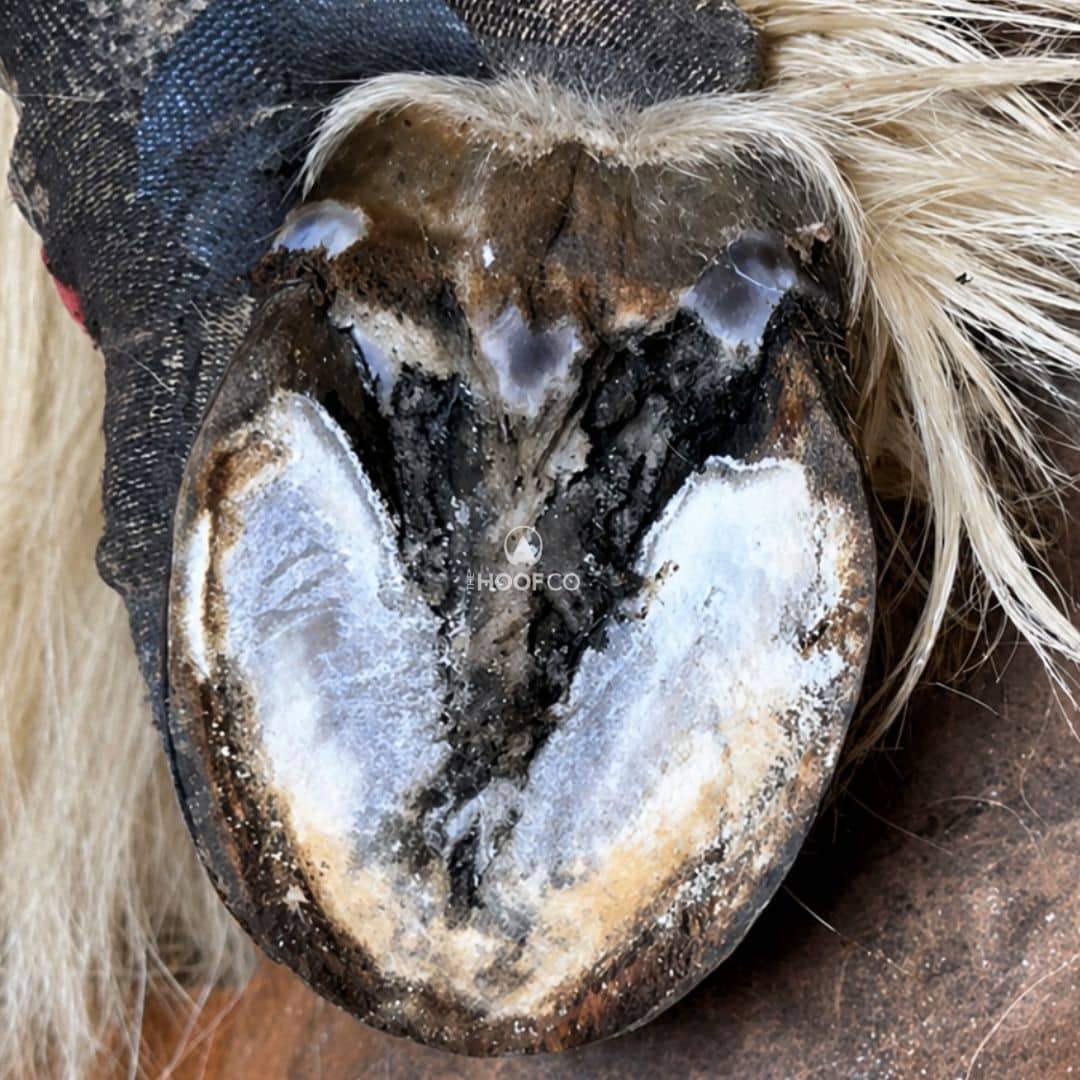
Image source: Bing (Web (fair-use with source credit))
Thrush
This is the most common hoof problem you'll encounter, and the most treatable when caught early. Thrush is a bacterial or fungal infection that attacks the frog and the collateral grooves.
The signs are unmistakable once you know them. There's a strong, foul odor that smells like rotting flesh. You'll see black, tarry discharge in the grooves of the frog.
The frog itself may appear spongy or crumbly and may bleed when you clean it.
If you spot thrush, start treatment right away. Clean the hoof thoroughly and apply an over-the-counter thrush treatment containing copper sulfate or iodine. Keep the hoof dry and clean.
Reapply per the product instructions. If the infection shows no improvement within a week, or if the horse is lame, call your vet.
Stones and Bruises
Stones are sneaky. A small pebble can wedge into the white line or the sole and sit there for days. By the time you find it, the horse might already be tender-footed.
When you're picking, be methodical about the white line. Run the pick tip along it to dislodge anything that's wedged in there. If you find a stone, remove it and check the area for bruising afterward.
A bruise looks like a reddish or purplish spot on the sole. It's tender to the touch. You'll often find them after a horse has been ridden over rocky or uneven terrain.
Mild bruises resolve on their own with rest. If the horse is limping or the bruise is accompanied by heat, give the vet a call.
Cracks in the Hoof Wall
Cracks can start small and go unnoticed if you're not looking for them. Run your hand down each hoof wall every time you clean. Feel for any sharp edges or gaps.
A superficial crack that stops above the coronary band is often cosmetic. A crack that extends deep into the hoof wall or reaches the sensitive tissue is a serious issue. It can cause lameness and requires farrier intervention.
Heat and Swelling
Heat in the hoof is a red flag. Run the back of your hand over the hoof wall and the heel bulbs. If one hoof feels noticeably warmer than the others, that's a sign of inflammation.
It could indicate an abscess brewing, laminitis, or an infection.
Swelling at the coronary band, low-grade lameness, and a strong digital pulse are all reasons to call your vet.
When to Act
The rule of thumb is simple. If something looks off and the horse is acting normal, monitor it. If the horse is lame, off its feed, or showing signs of pain, call the vet immediately.
Daily cleaning gives you a baseline. When you know what your horse's feet look like when they're healthy, you'll spot the early signs of trouble quickly. That's the real advantage of this routine.
Common Mistakes Even Experienced Owners Make
Even seasoned horse owners slip up on hoof care. Some of these mistakes are minor, but plenty of them contribute directly to lameness and chronic hoof problems.
Picking Too Deep
The sole and frog are more sensitive than they look. Digging too forcefully with the hoof pick can bruise the tissue, cause bleeding, and open the door for infection.
Use firm but controlled pressure. If you're scraping material that resists, it might be healthy tissue, not packed dirt. Ease off and reassess.
Mistaking a Normal Dark Frog for Thrush
This one sends a lot of owners into panic mode. A healthy frog can be almost black in color, especially on dark-hoofed horses. If the frog is firm and odorless, it's fine.
Thrush is diagnosed by smell and texture, not color. If there's no foul odor and no crumbling, you're looking at a normal, healthy frog.
Forgetting the White Line
The white line is narrow, and many owners focus on the frog and sole, skipping right past it. That's a mistake.
Stones, sand, and debris love to lodge in the white line. Over time, that leads to separation and white line disease. Spend a few extra seconds running the pick tip along the white line on every hoof, every time.
Overusing Hoof Conditioners
There's a belief that slathering hoof conditioner on every day keeps hooves healthy. The truth is more complicated.
Hoof conditioners add moisture. In a dry climate, that can help prevent cracking. But in a wet climate, adding moisture softens the hoof wall and makes it more prone to damage.
The equine hoof naturally sits at a moisture content of roughly 20 to 25 percent. The goal is to maintain that balance, not soak the hoof in oil.
Use conditioner sparingly if you live in a dry area. Skip it entirely if you live in a wet one.
Cleaning Too Much
Yes, that's a thing. Washing hooves with water every day strips away the natural protective barrier and leads to excessively soft hooves.
Stick to dry picking unless the hooves are caked in mud. If you do wash them, dry them thoroughly afterward.
Not Catching Lameness Early
A slight head bob, a shortened stride, or a reluctance to turn is easy to dismiss. That's often the horse telling you something is wrong.
Trust the baseline you've built. If your horse is moving differently or acting out, check the hooves first.
Daily Cleaning vs. Extra Care: What Your Horse Actually Needs
Here's the plain truth. A daily dry pick-out is the foundation of all hoof health. Everything else, including conditioners, treatments, and special routines, builds on top of that base.
The Mud Factor
If your horse lives in a muddy paddock, expect to deal with more moisture. Mud packs into the hoof, traps water, and creates the perfect environment for thrush.
Clean mud-caked hooves more diligently. Consider a dry lot or a run-in shed with good drainage to give your horse's feet a break from standing in wet conditions.
The Dry Ground Factor
Horses living on dry, rocky, or sandy ground face a different problem. Hard ground can bruise the sole, and sand can work its way into the white line.
Pick hooves daily to remove sand and small stones before they wedge in. That extra attention to the white line pays off.
Stall vs. Pasture
Stall-bound horses have their hooves sitting in bedding, which often contains ammonia from urine. That ammonia breaks down the hoof wall and predisposes your horse to thrush and soft hooves.
Clean stalls daily. If you have a boarder who doesn't, you'll notice it in the hooves within weeks.
The Barefoot Question
Barefoot horses wear their hooves naturally, which stimulates the frog and promotes healthy blood flow. They also tend to have harder soles because they're in contact with the ground more directly.
Shod horses have less natural wear. Their feet are protected by the shoe, but that also means the frog and sole get less stimulation. Daily cleaning is even more important for shod horses, because debris and stones can pack around the shoe and work their way underneath.
When to Add Treatments
Thrush treatment is for thrush. If your horse's hooves are clean, firm, and odorless, you don't need to apply anything.
Hoof conditioner is for dry, brittle hooves. If you live in a dry climate or your horse grows chipped, cracked hooves, a weekly application of conditioner helps. If you live somewhere wet, skip it.
The bottom line. Keep it simple. A good pick, a good brush, and a consistent daily routine are worth more than a shelf full of fancy products.
Keeping Hooves Healthy Between Farrier Visits
Daily cleaning isn't a replacement for a farrier, it's a supplement to one. Here's how the two work together.
Why the 6 to 8 Week Schedule Matters
Horses' hooves grow continuously, roughly a quarter to a half inch per month. Over 6 to 8 weeks, that adds up to several inches of new hoof wall that needs reshaping.
Your farrier trims off the excess, balances the hoof, and corrects any wear patterns or structural issues. Skipping trimming appointments doesn't save money, it causes long-term damage. Overgrown hooves change the angle of the bones in the foot, leading to joint pain and lameness further up the leg.
Set a Reminder
Mark your calendar the day your farrier leaves. Count forward 8 weeks and set a reminder to book the next appointment. That simple step prevents you from falling into the "I'll call when I have time" trap.
The Pre-Farrier Clean
Your farrier is busy, and they appreciate a horse that's been prepped. Give the hooves a quick pick-out before the appointment. It saves your farrier time and lets them focus on the actual trim instead of diggering out a week of mud.
What Daily Cleaning Supports
When you pick hooves daily, you remove the debris that causes thrush, abscesses, and white line disease. That means your farrier is working with a healthy foot, not a damaged one. You'll also be able to tell your farrier exactly what's been going on between visits.
That kind of communication helps them tailor their work to your horse's needs.
Frequently Asked Questions
How often should you clean horse hooves?
Ideally, daily. That's the gold standard for horses in any living situation. At a minimum, pick hooves every time you see the horse and at least several times per week.
The more time a horse spends in wet, muddy, or shod conditions, the more often hooves need attention.
Can you clean hooves too much?
Yes, if you're washing them. Excessive washing strips natural protective oils and leads to soft, weak hooves. Dry picking multiple times a day is fine.
Washing more than a couple of times a week is too much, especially in wet environments. Always dry hooves thoroughly if they get wet.
What do you do with a horse that won't lift its feet?
Start with patience. Build trust by running your hands down the legs first, without asking for anything. Practice picking up the hoof and setting it down immediately, rewarding the horse for compliance.
If a horse is truly dangerous, work with a professional trainer or veterinarian to address the behavior. Never wrestle with a horse's leg.
Is it okay to use water when cleaning hooves?
Yes, for occasional cleaning. Use water when hooves are caked in mud or after a hard ride. But don't make it a daily habit.
Wet hooves are soft hooves. If you use water, dry the hooves thoroughly afterward. Rely mainly on dry picking for your daily routine.
How do I know if my horse needs the vet instead of just the farrier?
Call the vet if your horse is lame, especially if it's non-weight-bearing. Also call if you see heat in the hoof, swelling at the coronary band, a strong digital pulse, or a penetrating wound. These are signs of serious issues like abscesses, laminitis, or infections that require medical attention.
The farrier is great for maintenance, but the vet handles emergencies.