
If you've ever stood in the pet aisle wondering whether a slicker brush is the same as a pin brush, or stared at a pair of clippers and questioned if they'd ruin your dog's coat, you're not alone. Learning how to groom a Jack Russell correctly is less about fancy tools and more about understanding the unique biology of this breed. The moment you grasp why their coat works the way it does, every grooming decision becomes obvious.
The Jack Russell Terrier is a working breed with a double coat designed for harsh weather and rough terrain. Their harsh, wiry topcoat sits over a soft, dense undercoat that acts as insulation. According to the American Kennel Club's breed standard, this combination makes them naturally water-resistant and dirt-repellent.
That means the worst thing you can do is treat their coat like a Labrador's or a Poodle's. As of 2026, the most common grooming mistake vets see in this breed isn't neglect, it's well-intentioned owners using the wrong techniques that permanently damage the coat's natural function. Let's break down what actually works.
Quick Answer
Groom a Jack Russell by brushing daily with an undercoat rake, bathing every 6 to 8 weeks, and hand-stripping the coat 2 to 4 times per year. Never use clippers on the double coat. Grind nails every 3 to 4 weeks.
Check ears weekly. Use breed-appropriate tools and respect the terrier's thrash reflex with proper restraint.
Why Grooming a Jack Russell Is Different from Any Other Dog
Every breed has its quirks, but Jack Russells come with a specific set of grooming challenges that catch new owners off guard. If you treat them like a Golden Retriever or a Shih Tzu, you're going to hit problems fast.
The Double Coat Reality
A Jack Russell's coat has two distinct layers. The outer coat is harsh and wiry, designed to repel water and protect against thorns and underbrush. The undercoat is soft, dense, and acts as a thermal layer that keeps the dog warm in winter and cool in summer.
Here's the critical part: these two layers shed independently and on different schedules. The undercoat blows out seasonally, usually in spring and fall. The topcoat sheds slowly year-round but holds dead hairs in place until they're physically removed.
That's why you can brush a Jack Russell daily and still find hair everywhere. You're only getting the loose topcoat. The dead undercoat stays trapped beneath the surface, which leads to itching, matting, and a dull appearance if you don't address it properly.
The Thrash Reflex
The second reason this breed is different from a Golden Retriever is temperament. Jack Russells were bred to chase foxes underground and hold their ground. That's a dog with zero patience for being restrained.
Anyone who's tried to brush a Jack Russell knows the "terrier thrash." They twist, squirm, and wriggle the moment they sense they're being held still. It's not aggression, it's pure instinct. This makes grooming at home genuinely hazardous if you're not prepared, both for the dog and for you.
A sharp pair of scissors or a stripping knife in the hands of a wriggling dog is a recipe for injury. Grooming a Jack Russell requires more than the right tools. It requires a system for keeping them calm and secure.
Why Generic Grooming Advice Fails
Most online guides treat grooming as a universal routine: brush, bathe, trim nails. That works for low-maintenance breeds. For a Jack Russell, that's insufficient and often harmful.
Generic advice will tell you to clip your dog's coat when it gets too long. For a Jack Russell, that's a serious mistake that damages the coat's natural structure. We'll dive into that in the next section.
Generic advice also assumes your dog will stand still for a nail trim. Jack Russells rarely do without proper desensitization.
The short version? Grooming this breed is about working with their biology and their temperament, not against it. Once you understand both, the process becomes far easier and even enjoyable.
First, Know Your Dog's Coat Type
Not all Jack Russells look the same. The breed standard recognizes three distinct coat types, and the grooming routine varies significantly depending on which one your dog has. Most litters produce a mix, so it's worth learning to identify what you're working with before you buy any tools.
Smooth Coat
The smooth coat is the easiest to identify. The hair is short, flat against the body, and has that classic glossy sheen. It feels dense and slightly coarse to the touch.
Grooming needs: Minimal. A weekly brush to remove loose hair and a monthly bath is plenty. These dogs shed year-round, but the hairs are short and don't mat easily.
Best tools: A soft bristle brush or grooming mitt. You can also use a rubber curry comb, especially during shedding season.
Watch out for: Smooth coats still have an undercoat, even if it's harder to see. They'll blow their coat twice a year, and you'll see a sudden increase in shedding for a few weeks. A de-shedding tool helps speed up the process, but it's optional.
Broken Coat
The broken coat is what most people picture when they think of a "wire-haired" terrier. The hair is longer and wavier, with a rough texture. You'll notice distinct furnishings, which are the longer hairs on the face, eyebrows, and chin.
Grooming needs: Moderate. Weekly brushing is essential to prevent tangles, especially around the neck, behind the ears, and on the rear. Broken coats benefit most from hand-stripping, which we'll cover shortly.
Best tools: A slicker brush for the body, a pin brush for the furnishings, and an undercoat rake for seasonal shedding.
Watch out for: The broken coat is the most prone to matting. Those longer, wavy hairs trap dead undercoat and dirt, which creates knots if you skip brushing for more than a week. Pay extra attention to the "pants" area on the back legs, it's a hotspot for mats.
Rough Coat
The rough coat is the longest and most textured of the three. The hair is dense, wiry, and often stands away from the body. The furnishings are prominent, giving the dog a distinctly scruffy appearance.
Grooming needs: High. This coat requires regular hand-stripping to maintain its texture and prevent it from becoming soft and woolly. Daily brushing is ideal, but every other day is acceptable if you're staying on top of it.
Best tools: A slicker brush, a stripping knife, and a wide-tooth comb for the furnishings.
Watch out for: Rough coats are the most work. If you allow the coat to grow without stripping, it becomes over-soft and loses its weatherproofing. Worse, it starts to feel woolly and will mat incredibly quickly.
How to Tell What You Have
If you're unsure which coat type your Jack Russell has, run your hand against the grain of their fur. A smooth coat feels like sandpaper. A broken coat feels slightly rough but has some wave.
A rough coat feels thick and wiry, almost like a bottle brush.
Look at the face too. Smooth coats have minimal facial hair. Broken coats have visible eyebrows and a beard.
Rough coats have the most exaggerated furnishings.

Image source: Bing (Web (fair-use with source credit))
Your grooming schedule and tool purchases depend entirely on this identification. Getting it right from the start saves you money and prevents accidental coat damage.
The Golden Rule: Never Clip a Jack Russell's Coat
This is the one piece of advice every Jack Russell owner needs to hear, ideally before they ever pick up a pair of clippers. Clipping a double-coated breed is a mistake that can permanently ruin the coat's function and appearance.
What Clipping Actually Does
When you run clippers over a Jack Russell's coat, you cut through both the harsh topcoat and the soft undercoat in a single pass. The resulting regrowth is not the same as the original coat.
The topcoat grows back softer and more prone to matting. The undercoat grows back denser, which leads to overheating in summer and a constant damp feeling in wet weather. The coat loses its water resistance and its dirt-repelling properties.
What's worse, some Jack Russells experience "clipper alopecia." The hair regrows patchy, thin, or not at all in some areas. The skin can also become irritated and prone to folliculitis.
The AKC breed standard forbids trimming except for minimal tidying around the ears, feet, and tail. This isn't just about looks. The breed standard reflects the functional requirements of a working terrier.
How Long It Takes to Recover
If you've already clipped your Jack Russell, don't panic. The coat can recover, but it takes time.
A clipped coat takes anywhere from 12 to 16 weeks to fully regrow. During that time, it will go through an awkward, fluffy stage. The hardness returns gradually, and you can help it along with regular hand-stripping of the regrowth.
The bigger risk is that the undercoat outgrows the topcoat. This creates a soft, woolly texture that mats aggressively. If that happens, you'll need to hand-strip the entire coat to remove the damaged hairs and encourage proper regrowth.
What to Do Instead
If you're clipping because the coat is too long, hand-stripping is the breed-correct alternative. It's more labor-intensive, yes. But it preserves the coat's texture and actually reduces shedding at home.
If you're clipping because of matting, there's a deeper problem. Matting means you're not brushing frequently enough to remove dead undercoat. Fix the brushing routine, and you won't need to clip in the first place.
When Clipping Is Acceptable
There are very few situations where clipping a Jack Russell makes sense. The most common is a medical one: skin infections, surgical sites, or severe matting that prevents proper skin inspection.
Veterinarians sometimes need to clip areas for treatment, and that's fine. The damage is localized and the coat regenerates eventually.
Some owners also choose to use a breed-appropriate trim for show or field work, but this is typically done with scissors or stripping knives, not clippers.
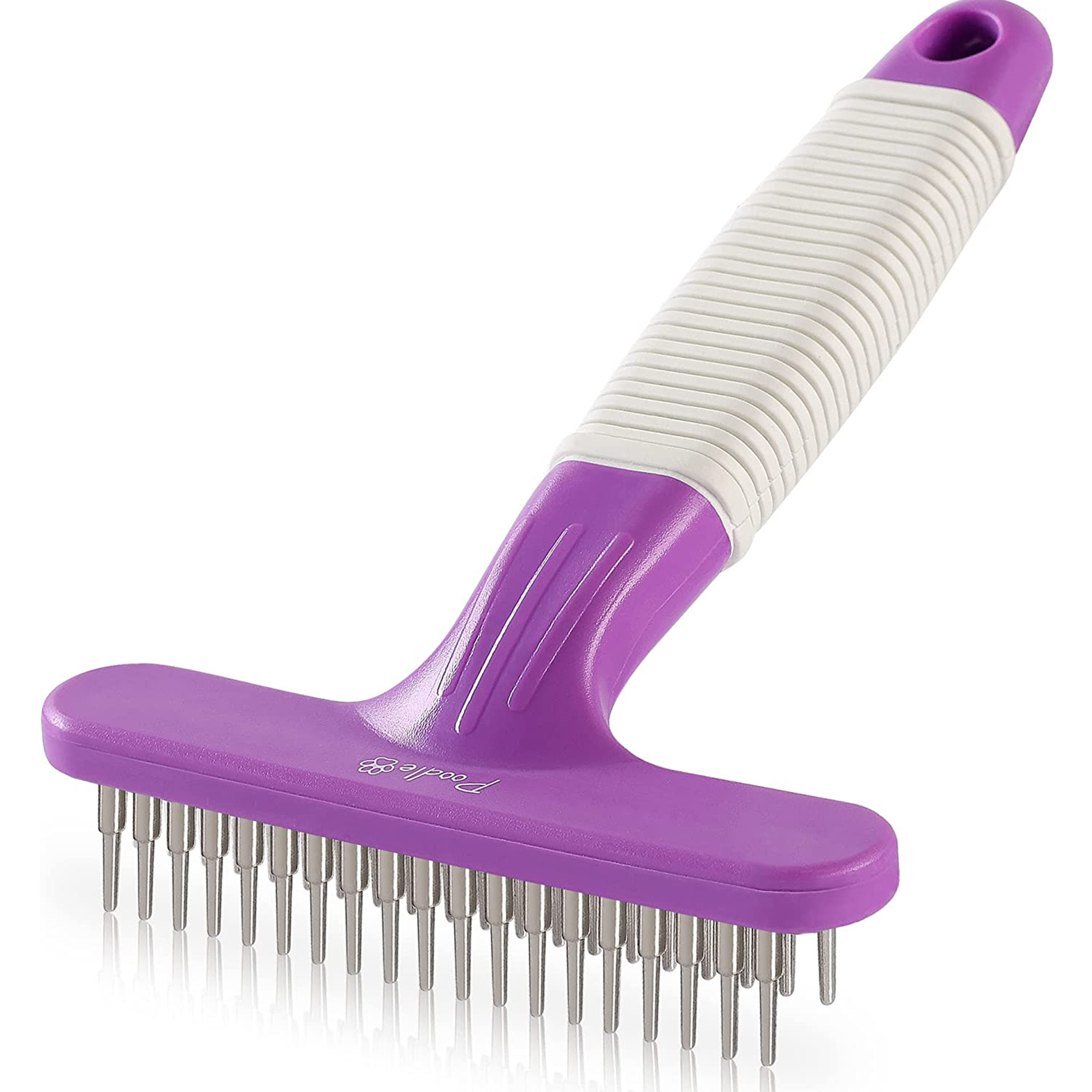
Image source: Bing (Web (fair-use with source credit))
Here's the bottom line: clippers are not part of a healthy Jack Russell grooming routine. If you own a smooth coat, you don't need them at all. If you own a broken or rough coat, hand-stripping replaces clipping entirely.
Brushing 101: Tools You Actually Need (and Ones to Skip)
Let's clear up a common confusion about dog grooming tools. The pet aisle is packed with brushes, combs, and specialty gadgets that look nearly identical. They are not the same, and using the wrong one can either be useless or actively damaging to a Jack Russell's coat.
The Undercoat Rake
This is the single most important tool in your Jack Russell grooming kit, regardless of coat type. It features a handle with a curved metal head and between 7 and 12 teeth, each with a slight bend at the end.
The purpose is straightforward: it reaches through the harsh topcoat and pulls out the loose, dead undercoat that sits beneath. This is the tool that actually reduces shedding in your home.
Look for one with rounded tips to avoid scratching the skin. Stainless steel teeth are preferable to plastic because they glide through the coat more effectively.
The Slicker Brush
A slicker brush has a flat or slightly curved head with fine, tightly packed wire pins. It's excellent for removing tangles, loose hair, and debris from the topcoat.
Use it gently. The fine pins can scratch the skin if you press too hard or use a vigorous back-and-forth motion. The correct technique is short, light strokes in the direction of hair growth.
The slicker brush is essential for broken and rough coats. For smooth coats, it's optional but useful during the seasonal blow.
The Pin Brush
A pin brush looks similar to a slicker brush, but the pins are wider apart and have little balls on the tips. It's designed for detangling longer hair without pulling on the skin.
This tool is primarily for the furnishings, the longer hair on the face, chest, and legs. It's not effective at reaching the undercoat, so it's a supplementary tool rather than a primary one.
Owners of smooth coats can skip it entirely. Owners of broken or rough coats should have one for the furnishings and the feathering on the rear legs.
De-Shedding Tools
De-shedding tools like the Furminator are popular, but they're a double-edged sword for a Jack Russell.
They work by cutting through the undercoat with a stainless steel blade. This is effective at reducing shedding, but it also cuts the topcoat if used too frequently. Over time, that dulls the coat's harsh texture and damages its weatherproofing.
If you use one, limit it to the coat-blowing seasons in spring and fall. Use it no more than once a week, and use a gentle hand. For most Jack Russell owners, the undercoat rake is sufficient and safer.
Tools That Aren't Worth Your Money
Flea combs: The teeth are too fine to penetrate a Jack Russell's double coat. Spot-checking for fleas is better done with your fingers.
Dematter tools with blades: The blade is designed to slice through mats, but it's dangerous on a thin-skinned breed like a Jack Russell. The risk of cutting the skin outweighs the convenience.
Waterless shampoo sprays: These are convenient for quick touch-ups but are never a substitute for a proper bath. Some leave a residue that attracts dirt.
What About Scissors?
You'll need a pair of blunt-tipped grooming scissors for tidying the hair around the feet, the anus, and the ear edges. That's it. Never use them to cut the main body coat.
Curved scissors are useful for shaping the furnishings, but they're not essential for a beginner.
A Quick Tool Summary
| Tool | Purpose | Smooth Coat | Broken Coat | Rough Coat |
|---|---|---|---|---|
| Undercoat Rake | Removes dead undercoat | Essential | Essential | Essential |
| Slicker Brush | De-tangles & smooths topcoat | Optional | Essential | Essential |
| Pin Brush | Detangles long furnishings | Skip | Recommended | Recommended |
| De-Shedding Tool | Heavy seasonal shedding | Optional | Caution | Caution |
| Blunt Scissors | Tidying feet, face, rear | Recommended | Recommended | Recommended |
The investment for a complete Jack Russell grooming kit is around $60 to $100 for good-quality tools. That's less than one session with a professional groomer, and the tools will last you years if you clean them regularly.
Hand-Stripping: The Breed-Correct Way to Manage Shedding
Hand-stripping is the traditional method of grooming wire-coated terriers like the Jack Russell. It's the exact technique groomers used before clippers were invented, and it remains the gold standard for maintaining this breed's coat.
What Hand-Stripping Actually Is
Hand-stripping is the process of plucking dead hairs out of the coat by hand or with a small serrated knife called a stripping knife. The goal is to remove the entire dead hair from the root, not cut it mid-shaft.
When you pluck the hair from the root, the hair follicle receives a signal to grow a new, healthy hair. This maintains the harsh texture and the coat's natural cycling.
When you cut the hair with clippers, the hair grows back soft and weak. The follicle doesn't get the same signal, and the coat's structure degrades over time.
Does It Hurt the Dog?
This is the most common question first-time owners ask. The honest answer is that it's not painful for a dog who's desensitized to the process.
The hair being stripped is dead. The root is essentially detached, which is why tugging it out shouldn't cause pain. Many dogs actually seem to enjoy the sensation, especially after the first few sessions.
The key is proper technique. If you're pulling live, healthy hairs or tugging at crooked angles, you can cause pinprick bleeding and discomfort. A calm, confident approach makes all the difference.
The Roll vs. The Strip
Experienced groomers use two primary hand-stripping techniques:
The Roll: This strips only the longest, deadest hairs and leaves the shorter, newer hairs in place. It's a maintenance technique performed every few weeks. The coat never looks patchy, just constantly neat.
The Full Strip: This removes the entire coat down to a layer of short, dense hair. It's more dramatic and usually done two to four times a year. The result is a fresh, harsh coat that regrows over the next several weeks.
For most pet owners, the roll is more practical. It's less labor-intensive per session and avoids the "my dog looks bald" period.
When to Hand-Strip
Jack Russells generally need a full strip two to four times per year, depending on their coat type and whether you use the roll in between.
Smooth coats don't require stripping at all. Broken and rough coats do.
You'll know the coat is ready when it looks dull and starts feeling slightly greasy. The dead hairs will pull out easily with minimal resistance.
How to Strip: A Basic Walkthrough
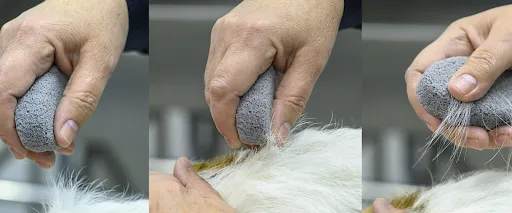
Image source: Bing (Web (fair-use with source credit))
Start with a clean, dry coat. Dirty hair is slippery and hard to grip.
Hold the skin taut with one hand. With the other, grip a small tuft of dead hair between your thumb and the stripping knife. Pull firmly in the direction of hair growth.
Work in small sections, starting at the head and moving down the neck, back, and sides. The belly and legs are more sensitive, so go gently there.
Avoid stripping the furnishings on the face and legs. Those are left longer for expression and protection.
After each pull, you should see the hair come out cleanly from the root. If you feel resistance, you're pulling live hair. Stop and move to another area.
A Little at a Time
Novice owners often try to strip large chunks at once. That's a mistake. Large chunks pull on neighboring live hairs and cause discomfort.
Work with small tufts, about a pencil-width each. It's slower, but it's painless and produces a much better result.
When to Skip Hand-Stripping
If you can't commit to the learning curve, professional groomers charge $80 to $120 for a full hand-strip. That's a fair price for the time and skill involved.
You can also compromise: brush regularly, use the undercoat rake to manage shedding, and get a professional hand-strip twice a year. This keeps the coat healthy without demanding constant maintenance from you.
Step-by-Step: The Full Home Grooming Session
This section walks you through a complete grooming session from start to finish. Once you know the order, each step flows into the next with minimal stress for you and your dog.
Plan for 30 to 45 minutes. Finding a dedicated time when your dog has already burned off some energy makes a significant difference in cooperation.
Step 1: Pre-Groom Check
Before touching any tools, run your hands over your dog's entire body. Press gently through the coat with your fingertips.
You're looking for:
- Lumps and bumps. Tiny cysts and fatty lipomas are common in terriers. If you find a new lump, mark its location and monitor it.
- Ticks and burrs. Jack Russells love exploring, and they pick up hitchhikers. Remove any ticks carefully with tweezers.
- Scratches, hot spots, or rashes. The skin of a Jack Russell can look pink, but any angry red or weeping areas need veterinary attention.
This check takes 60 seconds and gives you an early warning system for emerging health issues.
Step 2: Brushing and De-Matting
Start with the slicker brush or undercoat rake, depending on your coat type. Work in sections, moving from the head to the tail.
Brush in the direction of hair growth with short, firm strokes. Pay special attention to the neck, behind the ears, and the rear legs. These are the spots where mats form first.
If you encounter a mat, don't pull it out with the brush. That just hurts. Try to tease it apart gently with your fingers, then brush it out.
If it's too tight to tease apart, carefully cut it out with blunt-tipped scissors, holding the skin flat with your other hand.
A ball of hair that's left alone for two weeks becomes a skin-hot, painful mat. Prevent this by brushing every other day if your dog has a broken or rough coat.
Step 3: Hand-Stripping
If your dog is due for a strip, do it now, before the bath. Dead hair comes out easier when the coat is dry.
Warm the stripping knife in your hands to make it less shocking on the skin. Work in small sections as we covered earlier. Take breaks if the dog gets restless.
A full strip takes patience, 30 to 60 minutes depending on the dog and coat. For a beginner, split it across a few days if needed.
Step 4: Bathing the Right Way
Jack Russells do not need frequent baths. Bathing strips the coat of its natural oils, leaving the skin dry and itchy.
A general rule is every 6 to 8 weeks, but use your judgment. If the dog rolled in something foul or smells like a swamp, wash them. Otherwise, let it ride.
When you do bathe:
- Use lukewarm water (90 to 100°F / 32 to 38°C)
- Use a shampoo specifically formulated for dogs, ideally oatmeal-based for sensitive skin
- Dilute the shampoo with water before applying, this makes rinsing easier
- Massage lather into the coat thoroughly, being careful to avoid the eyes and ears
- Rinse, rinse, and rinse again
Residual shampoo is a major cause of itching in terriers. A proper rinse takes twice as long as the lather.
Step 5: Drying Without Causing Tangles
The drying routine is where many owners make mistakes.
First, lay the dog on a large towel and gently blot the excess water. Don't rub vigorously, that creates tangles, especially in broken and rough coats.
Then, use a high-velocity dryer set to low heat. Direct the airflow from front to back, against the direction of hair growth. This fluffs the coat and prevents matting as it dries.
For smooth coats, a towel dry is often sufficient. For broken and rough coats, the forced air drying is important to lift the undercoat and keep it from clumping.
Let the dog air-dry the rest of the way in a warm room, away from drafts. A wet Jack Russell in a cold room is a recipe for a chill.
Step 6: Ear Cleaning Done Safely

Image source: Bing (Web (fair-use with source credit))
Jack Russells have floppy ears, which means they're prone to trapped moisture and wax buildup. Weekly ear checks are essential.
Moisten a cotton ball with a pH-balanced dog ear cleaner. Lift the ear flap and gently wipe the visible surface of the inner ear.
Never insert anything into the ear canal. The ear canal is an L-shape, so you can't see the eardrum. Inserting a cotton swab pushes wax deeper and can rupture the eardrum.
If you notice a bad odor, dark discharge, or your dog repeatedly shaking their head, see a vet. That's a sign of an infection that needs prescription treatment.
Step 7: Nail Grinding Without Fear
Nail care is the most feared grooming task for many owners, and for good reason. A nail cut too short causes pain, bleeding, and a dog who hates having their paws handled.
Use a grinder rather than clippers for the best control. Grinders offer precision and avoid the risk of a sudden "crunch" that pinches the quick.
Identify the quick, the pink blood vessel inside the nail. In light-colored nails, it's visible as a pink line. In dark nails, it's harder to see.
Work in small increments, stopping as soon as you see a small gray or pinkish circle in the center of the cut surface.
Make a tiny cut at a time. It's infinitely better to take 3 minutes on one nail than to hit the quick once.
Keep styptic powder or cornstarch on hand. If you do hit the quick, press powder onto the nail and apply light pressure for a minute. The bleeding stops quickly, and your dog forgives you faster than you'd expect.
Step 8: Paw Pad Care and Checking Between Toes
While you're down there, inspect the paw pads. Look for cracked or hyperkeratotic (excessively hardened) pads.
Apply a dog-safe paw balm to cracked pads. This prevents splitting and discomfort on rough terrain.
Check between the toes for burrs, grass seeds, and small stones. These cause abscesses if left in place. Remove anything you find carefully with tweezers.
Step 9: Teeth Brushing Basics
Dental health is a critical part of grooming. Jack Russells are prone to dental disease, and plaque buildup leads to early tooth loss.
Use a dog-specific toothbrush and an enzymatic toothpaste. Human toothpaste is toxic to dogs because it contains xylitol.
Angle the brush at 45 degrees toward the gumline. Use small circular motions on the outer surfaces of the teeth and gums. Aim for 30 seconds per side.
If your dog has significant tartar, brushing alone won't fix it. You'll need a professional dental cleaning under anesthesia. The American Veterinary Dental College recommends annual oral examinations and professional cleanings as needed for small breeds.
The Terrier Thrash: How to Handle a Wriggly Jack Russell
Every Jack Russell owner eventually faces the same wall. You've got the right brush, you've set aside the time, and your dog has decided that today is the day they'll test your patience. The thrash is real, but it's also predictable.
Once you understand why they do it, you can work around it.
Why They Thrash
Jack Russells are working terriers. They were bred to chase foxes into underground dens and hold their ground. That requires independence, stubbornness, and a complete disregard for being told what to do.
When you hold a Jack Russell still for grooming, their instinct screams "danger." They don't understand that you're brushing out dead fur. They just know they're restrained, and their genetics tell them to fight it.
This isn't aggression. It's not spite or a lack of training. It's a breed trait that you can't train away entirely, but you can absolutely manage it.
The Physical Restraint Approach
A grooming table with a noose is the gold standard for professional groomers. The noose wraps around the dog's neck and attaches to the grooming arm, keeping the dog in place while you work.
If you're grooming at home, you have a few options:
| Restraint Method | How It Works | Best For |
|---|---|---|
| Grooming Table + Noose | The dog stands on a non-slip mat with a loop around the neck | Full grooming sessions |
| Bathtub with Non-Slip Mat | The tub walls naturally contain the dog | Bathing and drying |
| Lap Grooming | The dog lies on their back between your legs | Nail trims, ear cleaning, teeth brushing |
| Two-Person Hold | One person holds the dog, the other grooms | Nervous dogs, first sessions |
The key to any physical restraint is never to fight the dog. If they yank, you hold steady. If they lunge, you wait them out.
An exhausted terrier is a cooperative terrier.
The Desensitization Game
The longer-term solution is desensitization. This isn't a one-day fix, but it transforms grooming from a battle into a routine.
Start by showing your dog the brush without using it. Give them a treat. Touch their back with the brush and immediately treat.
Repeat this for a few days.
Then move to a single stroke with the brush, followed by a treat. Then two strokes. Then three.
Over the course of a week, your dog learns that grooming equals treats.
The same applies to each grooming tool individually. The grinder gets its own introduction. The stripping knife gets its own introduction.
Go slow, and you'll build a dog who tolerates grooming without drama.
The Best Time to Groom
Timing is everything. Grooming a Jack Russell who's just woken up from a nap is easier than grooming one who's been staring out the window at squirrels.
Plan grooming sessions after a long walk or a heavy play session. A tired terrier has less energy for thrashing. The ideal window is 30 to 60 minutes after peak exercise, when they're relaxed but not asleep.
When to Call It
There's no shame in stopping a grooming session early. If your dog is thrashing to the point of being dangerous, you're better off stopping and trying again later.
Pushing through just teaches the dog that grooming is a miserable experience. End the session on a positive note. Give a treat, offer praise, and try again tomorrow.
The Panic Button
Sometimes you need to finish the job, whether it's trimming a nail that's too long or removing a mat that's causing pain. When that happens, use the two-person method.
One person holds the dog securely but gently. The other person does the work. The key is not to grip so hard that the dog panics.
A loose but firm hold is more effective than a crushing one.
Common Grooming Mistakes That Hurt Your Jack Russell
Even well-intentioned owners make mistakes that can harm their dog. Some of these errors are minor and easy to fix. Others can cause lasting damage to the coat, skin, or relationship.
Clipping the Double Coat
We covered this earlier, but it deserves a second mention. Clipping a Jack Russell's double coat is the single most damaging grooming mistake you can make.
The regrowth comes in soft, wavy, and prone to matting. The coat loses its water resistance and dirt repellency. Some dogs develop clipper alopecia, where the hair regrows patchy or not at all.
If you've already clipped your dog, focus on regular hand-stripping of the regrowth. It takes time, but the coat can recover.
Cutting the Quick
Nail trimming is the most fear-inducing grooming task for both owner and dog. Hitting the quick is painful for the dog and creates a lasting aversion to nail care.
The solution is simple: grind instead of clip. A rotary grinder lets you work in small increments. You can feel the nail change texture as you get close to the quick, and you can stop before you hit it.
If you do hit the quick, don't panic. Apply styptic powder or cornstarch with firm pressure for one minute. The bleeding stops, and your dog will forgive you faster than you'd expect.
Over-Bathing
A Jack Russell's coat has natural oils that protect the skin and repel dirt. Bathing too frequently strips these oils, leaving the skin dry, itchy, and prone to irritation.
The general guideline is every 6 to 8 weeks, but adjust based on your dog's activity level. A dog who rolls in mud daily needs more frequent baths than a couch potato.
When you do bathe, use lukewarm water and a high-quality dog shampoo. Oatmeal-based formulas are gentle on sensitive skin. Rinse thoroughly, as residual shampoo is a common cause of itching.
Ignoring the Ears
Jack Russells have floppy ears that trap moisture and wax. This makes them prone to ear infections, especially after swimming or baths.
Weekly ear checks are essential. Wipe the visible surface of the inner ear with a cotton ball moistened with a pH-balanced ear cleaner. Never insert anything deep into the ear, as the L-shaped canal can be easily damaged.
If you notice a bad odor, dark discharge, or your dog shaking their head, see a vet. Ear infections are painful and need prescription treatment.
Using Human Products
Human shampoo, human toothpaste, and human skincare products are all dangerous for dogs. Our skin and hair have a different pH balance, and our products can cause irritation and allergic reactions.
Human toothpaste contains xylitol, which is toxic to dogs even in small amounts. Human shampoo dries out their skin and causes itching.
Always use products specifically formulated for dogs. The few extra dollars are worth the prevention of discomfort and vet bills.
Brushing Too Hard
The wire pins on a slicker brush are effective, but they can scratch a dog's skin if you press too hard. This causes redness, irritation, and a dog who hates being brushed.
The correct technique is short, light strokes in the direction of hair growth. Let the brush do the work. You're not scrubbing a pot, you're gently removing dead hair.
Forgetting the Paw Pads
Paw pads are easy to overlook, but they're vulnerable to cracking, hyperkeratosis, and embedded debris. Regularly inspect your dog's pads and apply a dog-safe balm if they look dry or cracked.
Check between the toes for burrs, grass seeds, and small stones. These cause abscesses if left in place.
How Often Should You Actually Groom? A Realistic Schedule
Consistency beats marathon sessions. A Jack Russell groomed regularly for 10 minutes a day looks better and behaves better than one groomed for two hours once a month.
Here's a realistic schedule that fits into a busy owner's life.
Daily Maintenance (5 to 10 Minutes)
A quick daily brush keeps the coat free of loose hair and prevents mats from forming. It's also a great bonding time with your dog.
- Brush the coat from head to tail
- Check the eyes, ears, and nose for visible issues
- Give a treat at the end to reinforce the routine
This daily interaction also helps you spot early signs of skin issues, lumps, or ticks before they become bigger problems.
Weekly Tasks (15 to 20 Minutes)
Once a week, go deeper into the grooming routine.
- Use the undercoat rake to remove dead undercoat
- Check and wipe the ears
- Brush the teeth
- Inspect the pads and between the toes
- Give the whole dog a once-over for any unusual bumps or scratches
If your dog has a broken or rough coat, weekly brushing is essential to prevent mats. Smooth coats can get away with every other week.
Monthly Deep-Care (30 to 45 Minutes)
Once a month, schedule a full grooming session.
- Nail grind (or every 3 to 4 weeks, depending on growth)
- Bath, if due
- Ear cleaning
- Paw balm application
- Hand-stripping, if due
This is the session we covered in the step-by-step guide. Set aside a specific time and minimize distractions.
Seasonal Coat Cycles
Jack Russells blow their undercoat twice a year, typically in spring and fall. This is the "blow coat," a natural response to changing daylight and temperature.
During the blow, you'll notice a dramatic increase in shedding. This is when the undercoat rake becomes your best friend. Daily brushing during the blow helps remove the dead hair faster and reduces the amount that ends up on your furniture.
Hand-stripping is especially useful during the seasonal blow. It removes the dead coat efficiently and accelerates the regrowth cycle.
When to Adjust the Schedule
Every dog is different. Some Jack Russells have thicker coats than others. Some are allergic to certain grasses and need more frequent baths.
Watch your dog's coat condition. If it looks dull or feels greasy, it's time for a strip. If it's shedding hair everywhere, step up your brushing.
If the skin is flaky or itchy, consider a different shampoo.
The schedule above is a starting point, not a rigid rule. Adjust based on what you see on your dog.
Grooming Costs: Home vs. Professional
The cost of grooming a Jack Russell varies wildly depending on your approach. Home grooming requires an upfront investment in tools but costs almost nothing per session. Professional grooming is convenient but adds up fast.
Let's break down both options honestly.
Home Grooming Startup Costs
The initial investment for a complete Jack Russell grooming kit is significant but manageable.
| Tool | Price Range | Typical Lifespan |
|---|---|---|
| Undercoat Rake | $15–$25 | Several years |
| Slicker Brush | $10–$20 | Several years |
| Pin Brush | $10–$15 | Several years |
| Nail Grinder | $25–$40 | 2–3 years |
| Dog Shampoo (1 bottle) | $15–$20 | 2–3 months |
| Ear Cleaner | $10–$15 | Months |
| Toothbrush + Toothpaste | $15–$25 | Months |
| Blunt Scissors | $10–$15 | Years |
| Paw Balm | $10–$15 | Months |
| Total Initial Investment | $120–$190 |
After the initial setup, ongoing costs are about $30 to $50 per month for consumables like shampoo, toothpaste, and balm. That's a fraction of what professional grooming costs.
Professional Grooming Costs
Professional grooming for a Jack Russell typically runs $60 to $120 per session, depending on your location and what services you request.
| Service | Price Range |
|---|---|
| Bath + Brush | $50–$70 |
| Bath + Nail Trim | $60–$80 |
| Full Groom (Bath + Nails + Ear Cleaning) | $70–$90 |
| Hand-Strip (Full Coat) | $80–$120 |
| Teeth Brushing (Add-on) | $10–$20 |
If you take your Jack Russell to the groomer monthly, you're looking at $720 to $1,440 per year. That's a noticeable budget line for most families.
The Hybrid Approach
The smartest option for most owners is a hybrid approach. Do the daily and weekly maintenance at home, and take your dog to a professional for the difficult tasks.
Here's what a realistic hybrid schedule looks like:
- Weekly at home: Brush, ear check, paw inspection
- Monthly at home: Nail grind, teeth brushing
- Every 3, 4 months: Professional hand-strip and full groom
This approach keeps the annual professional cost around $240 to $480 while ensuring the coat gets the breed-correct care it needs.
Hidden Costs to Watch For
Mats and tangles are the biggest hidden cost in Jack Russell grooming. A severely matted coat often requires sedation at the vet, which costs $200 to $400. That's more than a year of home grooming supplies.
The fix is prevention. Consistent brushing, even just 5 minutes a day, prevents mats and keeps your dog comfortable.
Is Professional Grooming Worth It?
Professional groomers bring skill and experience that no home owner can replicate overnight. They can read a coat's condition, identify early health issues, and handle difficult dogs with confidence.
The hand-strip alone is worth the professional fee for most owners. It's a physically demanding skill that requires practice to master.
If you have the time and patience, home grooming is perfectly fine for daily maintenance. Just recognize the limits of your skills and seek professional help for the advanced tasks.
When to See a Vet or Professional Groomer
There's a fine line between a grooming issue you can handle at home and a health issue that needs professional attention. Knowing the difference protects your dog and your wallet.
Skin Issues That Need a Vet
If you encounter the following during grooming, stop and schedule a vet visit:
- Open sores or hot spots: These are painful and can worsen quickly
- Red, inflamed skin: Often a sign of allergies or a skin infection
- Excessive flaking or dandruff: Could indicate a nutritional deficiency or skin condition
- Unexplained hair loss: Patchy hair loss can signal hormonal issues or parasites
- Lumps that change size: Any lump that grows, changes shape, or becomes painful needs a fine-needle aspiration
Ear Issues That Need a Vet
We covered basic ear cleaning, but some symptoms warrant a professional examination:
- Persistent head shaking: A sign of discomfort or infection
- Foul odor from the ears: Often a bacterial or yeast infection
- Dark, coffee-ground discharge: Could indicate ear mites
- Redness or swelling: Ear infections can be painful and need treatment
Nail Issues That Need a Vet
Most nail problems are manageable at home, but a few require veterinary attention:
- Ingrown nails: Where the nail curls into the pad, causing pain and infection
- Cracked or split nails: These can bleed and become infected
- Nail bed infections: Look for swelling, redness, or discharge around the nail
Behavioral Signs That Grooming Is Causing Pain
Dogs are masters at hiding pain, but grooming reveals it. If your dog reacts aggressively during grooming, they're not being "bad." They're telling you something hurts.
- Growling or snapping: A serious warning sign that demands attention
- Flattened ears and tucked tail: Signs of extreme stress
- Excessive licking of a specific area: Could indicate a localized pain or irritation
- Refusing to sit or lie down: Could indicate joint pain or a spinal issue
When to See a Professional Groomer
Some grooming tasks are best left to the pros, even with the best tools and intentions:
- Severe matting: If mats are tight against the skin, removing them safely requires professional tools and technique
- Heavy shedding that won't stop: A professional hand-strip can reset the coat's regrowth cycle
- Grooming fear or aggression: A professional groomer has handled hundreds of difficult dogs and has techniques to calm them
- Your own inexperience: If you're unsure about a technique, a professional can teach you
The Takeaway
Your vet isn't a groomer, and your groomer isn't a vet. Regular grooming sessions are the perfect opportunity to catch problems early, but they're no substitute for professional veterinary care.
If something seems off, trust your instincts. A quick check with a professional is always better than waiting for an issue to spiral.
Quick Answers to Common Jack Russell Grooming Questions
Let's tackle the questions that come up again and again. These are the ones owners actually search for, the ones that cause confusion, and the ones where the wrong answer causes real problems.
Does a Jack Russell Shed a Lot?
Yes, but not in the way you might think. A Jack Russell sheds year-round, but the shedding is manageable with the right routine.
Smooth coats shed the most visibly. The short hairs get into everything, and you'll find them on your clothes, your couch, and your floor.
Broken and rough coats shed less visibly because the dead hairs get trapped in the coat until you brush them out. That's why hand-stripping is so important for these coat types.
The seasonal blow coat happens twice a year, typically in spring and fall. During those few weeks, shedding increases dramatically as the undercoat releases.
How Do I Get Rid of That "Doggy Smell"?
A doggy smell usually means one of three things: dirty coat, skin infection, or ear infection.
Start with a proper bath using a high-quality dog shampoo. Rinse thoroughly, then dry completely. Wet coats breed bacteria, which causes odor.
If the smell persists after a bath, check the ears. A foul odor from the ears is a classic sign of an infection. That needs veterinary treatment, not more bathing.
If the skin smells yeasty or musty, you're likely dealing with a skin infection. See your vet for a proper diagnosis.
Can I Use a Regular Dog Clipper on My Jack Russell?
Technically yes, but you should never do it. Clipping a double coat causes permanent damage to the coat's texture.
The regrowth comes in soft and prone to matting. The coat loses its water resistance and dirt repellency. Some dogs even develop clipper alopecia, where the hair regrows patchy or not at all.
If you want to manage the coat length, hand-stripping is the breed-correct method. It preserves the coat's function and appearance.
My Jack Russell Hates Grooming, How Do I Fix That?
Desensitization is the only long-term fix. Take it slow, use high-value treats, and never force a session.
Start by showing the brush without using it. Treat. Touch the brush to their back.
Treat. One stroke. Treat.
Build up over days, not hours. Grooming should always end with a positive experience.
If your dog is genuinely aggressive during grooming, work with a professional groomer or a veterinary behaviorist. They can help you identify the underlying fear and create a plan.
Is Hand-Stripping Painful for My Dog?
No, not when it's done correctly. The hairs being stripped are dead and ready to release from the follicle.
Dogs who are properly desensitized often seem to enjoy the process. Many groomers report that terriers settle down and even appear relaxed during a stripping session.
If your dog yelps or pulls away, you're likely pulling live hairs. Stop and adjust your technique. You want to grip the hair close to the skin and pull firmly in the direction of growth.
Can I Bathe My Jack Russell More Than Once a Month?
You can, but you shouldn't. Bathing strips the coat's natural oils, which protect the skin and repel dirt.
Over-bathing leads to dry, itchy skin. That leads to scratching, which leads to hot spots and infections.
The exception is when your dog gets into something foul. Mud, swamp water, or a dead animal deserves a bath. Just wait as long as possible between baths to let the skin recover.
Should I Shave My Jack Russell in Summer to Keep Them Cool?
No. This is a common misconception that harms double-coated breeds.
The undercoat acts as insulation. It keeps the dog warm in winter and cool in summer. Shaving it removes that protection and exposes the skin to sunburn.
A properly groomed coat actually helps regulate body temperature. Brush regularly to remove the dead undercoat, which allows better airflow without removing the protective layers.
How Do I Know If My Dog Needs a Hand-Strip?
Look at the coat. A coat that needs stripping looks dull and feels greasy to the touch.
Run your hand against the grain. Dead hairs will pull away easily. If you can pull a tuft of hair out with a gentle tug, it's ready.
Most Jack Russells need a full hand-strip two to four times per year. Broken and rough coats need it more often than smooth coats.
When Should I Start Grooming My Jack Russell Puppy?
Start immediately, but keep sessions short and fun.
Puppies have learning windows that close quickly. If you introduce grooming tools and handling early, your pup will accept it as normal. If you wait until adulthood, you'll fight years of suspicion.
Handle their paws, ears, and mouth daily. Let them sniff the brush. Give treats during and after.
These early experiences shape their lifelong attitude toward grooming.
What Is the Best Brush for a Jack Russell?
The undercoat rake is the most important tool. It reaches through the topcoat and removes the dead undercoat that causes shedding.
The slicker brush is essential for broken and rough coats. It detangles and smooths the topcoat.
The pin brush is useful for furnishings, the longer hair on the face, chest, and legs.
Skip the de-shedding tools for regular use. They cut the finish of the coat and damage its texture over time.
The Bottom Line: A Smarter, Breed-Specific Grooming Philosophy
We've covered a lot of ground, from coat types to hand-stripping to nail grinding. Now let's step back and talk about the overarching philosophy that makes all of it work.
Understanding Beats Technique
Every grooming mistake we've discussed comes from the same place. Treating a Jack Russell like a generic dog.
You don't groom a Jack Russell the way you groom a Poodle. You don't groom a Jack Russell the way you groom a Labrador. Each breed has specific needs based on their coat, skin, and temperament.
Research your breed. Understand why their coat looks and behaves the way it does. The techniques follow naturally from that understanding.
Consistency Beats Intensity
A 10-minute brushing session every day is more effective than a 2-hour grooming marathon once a month.
Daily brushing prevents mats from forming. It removes dead hair before it spreads around your home. It also builds a routine your dog learns to tolerate and expect.
A marathon session, by contrast, stresses your dog and leaves you exhausted. It's a fight every time.
Less Is More
Jack Russells need less bathing, less clipping, and less intervention than most owners think.
The coat is self-cleaning to a degree. It repels dirt and water. Over-grooming damages the coat's natural functions.
Trust the breed's design. Groom to maintain, not to transform.
Early Detection Is the Real Payoff
The most valuable thing you get from a regular grooming routine isn't a shiny coat. It's the ability to spot problems early.
A lump you find during a weekly brushing can be treated cheaply and effectively. The same lump discovered six months later might require surgery.
A tick removed within 24 hours has a much lower risk of transmitting disease. A mat caught early takes minutes to address, not a sedation appointment.
That daily 10-minute check is the best health insurance you can give your Jack Russell.
The Warning About Quick Fixes
Beware of anyone selling a quick fix for coat care. There is no spray that replaces brushing. There is no shampoo that replaces hand-stripping.
There is no tool that replaces consistent effort.
The breed's coat has been designed by centuries of natural selection to do its job. Your job is to maintain it, not to reinvent it.
A Final Word on Professional Help
There's no shame in seeking professional help. Hand-stripping is a skill that takes time to develop. Some owners never feel comfortable doing it themselves.
A good professional groomer is worth their weight in gold. They can handle the difficult tasks, teach you the techniques, and spot issues you might miss.
The goal is not to become a professional groomer yourself. The goal is to keep your Jack Russell healthy and comfortable.
The Most Important Thing
Grooming is not a chore. It's a conversation between you and your dog.
Your dog communicates through their coat, skin, and behavior. A dull coat says something. An itchy skin says something.
A dog who thrashes during grooming says something.
Listen. Adjust. Learn.
The more you understand your dog, the easier grooming becomes.
The owners who succeed with Jack Russell grooming all share one trait. They treat grooming as a partnership, not a battle. They learn their dog's preferences, respect their limits, and build trust over time.
That relationship, not the tools or techniques, is what makes the difference.