
For mud, first decide whether the safest cleanup is dry-brushing, a paw-and-belly rinse, a full bath, or stopping. Unknown mud source, chemical smell, oily residue, road runoff, fertilizer or pesticide concern, wounds, limping, parasites, pain, severe mats, panic, or unsafe handling should not be treated as normal home grooming.
This guide is for routine outdoor mud only. If the mud may contain chemicals or your dog seems hurt, stop and get professional guidance instead of trying to solve it with brushing or bathing.
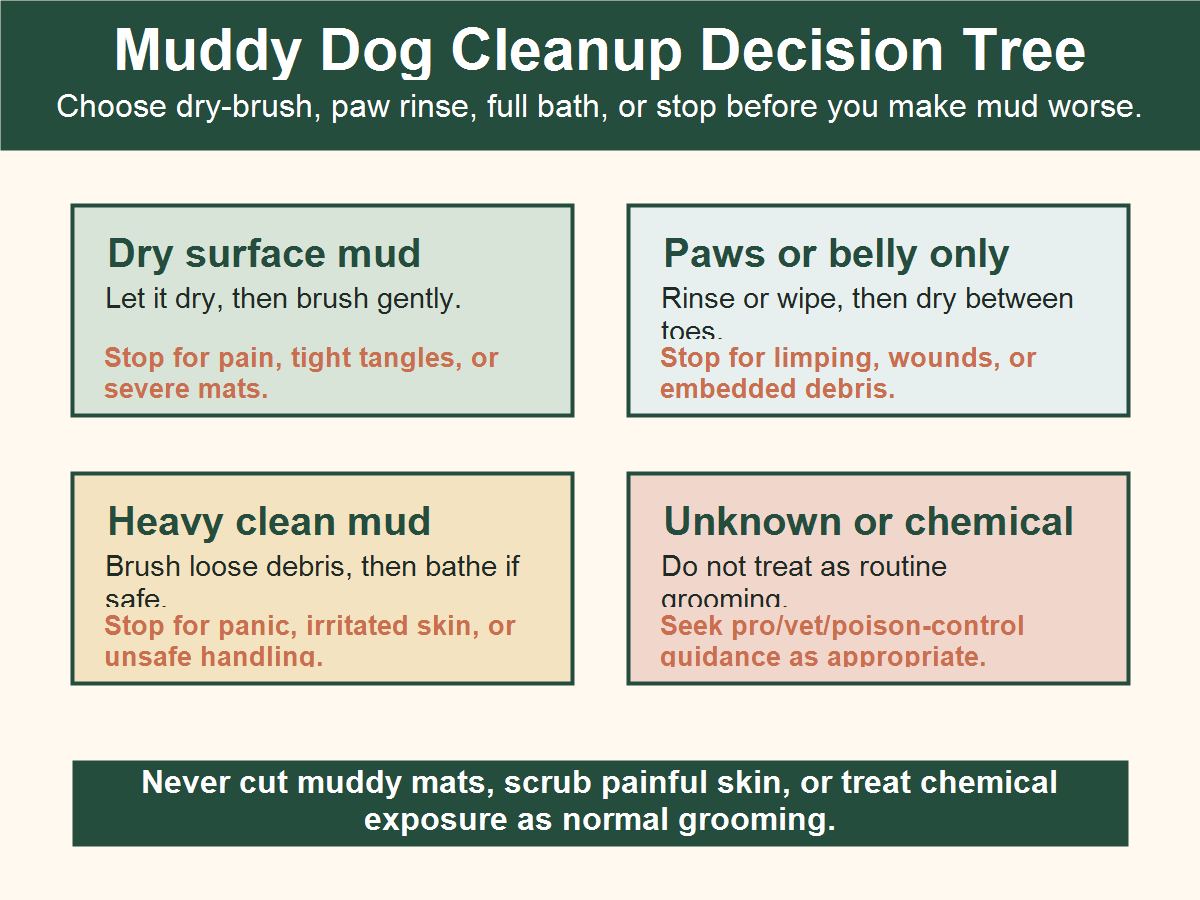
Mud Cleanup Decision Tree
| What you see | Routine branch | Stop branch |
|---|---|---|
| Dry surface mud and loose coat | Let it dry, then brush gently. | Pain, tight tangles, or severe mats. |
| Muddy paws, toes, legs, or belly only | Rinse or wipe, then dry between toes. | Limping, embedded debris, wounds, swelling, or pain. |
| Heavy clean-source mud on the coat | Brush loose debris first, then bathe if safe. | Skin irritation, panic, unsafe handling, or packed mats. |
| Unknown source, chemical smell, oily residue, road runoff, pesticide, or fertilizer concern | Do not treat it as routine grooming. | Stop and seek professional guidance. |
When To Let Mud Dry And Brush
If the mud is ordinary surface dirt and the coat moves comfortably, letting it dry before brushing can reduce smearing. Work lightly, use short passes, and stop if the coat pulls or the dog reacts.
The ASPCA grooming tips support brushing before a bath to remove loose hair and mats. For mud, that means brushing only loose, comfortable debris before water touches the coat.
Do not force a brush or comb through muddy tangles. If you are unsure whether you are seeing a simple tangle or a mat, use the dog matting vs tangles guide before continuing.
When To Rinse Paws And Belly
If mud is limited to paws, toes, lower legs, or belly, a rinse or damp cloth may be enough. The AKC notes that dog-safe wipes or a warm soapy washcloth can help with muddy paws, and more serious paw messes may need a warm washcloth.
After rinsing, dry between toes and check pads, nails, and paw edges. For a normal after-walk routine, use how to clean dog paws after a walk.
Stop for limping, embedded objects, wounds, swelling, or pain. Do not dig into the paw or keep handling a painful foot.
When A Full Bath Makes Sense
A full bath may make sense when mud is widespread, the source is known to be routine dirt, your dog can be handled calmly, and there are no pain, skin, mat, or chemical stop signs. Brush loose debris first when safe, then use lukewarm water and rinse until the coat feels clean.
Keep the bath simple. The most common mistakes are leaving shampoo residue, scrubbing irritated skin, or rushing drying. Use how to rinse dog shampoo completely and how to dry a dog after a bath if the mud cleanup turns into a bath.
Outdoor Context Matters
Mud after a trail walk is different from mud after a dog park or swimming spot. After hiking, check burrs, ticks, paws, and coat friction zones. After a dog park, add a quick skin and smell check. After swimming, rinse and dry with moisture in mind.
For related routines, see dog grooming after hiking, dog grooming after the dog park, and dog grooming after swimming.
Unknown Mud Or Chemical Concern Is An Automatic Stop
Unknown mud source, chemical smell, oily residue, road runoff, fertilizer, pesticide, wounds, limping, parasites, pain, severe mats, panic, or unsafe handling should not be handled as a normal grooming chore.
This page does not give chemical exposure treatment, wound care, parasite treatment, pain management, dematting, cutting, or restraint instructions. When those signs show up, stop and contact the right professional resource for the situation.
Stop Signs
| Stop sign | Why it matters | What to do |
|---|---|---|
| Chemical smell, oil, road runoff, fertilizer, or pesticide concern | Normal grooming advice may be unsafe. | Stop and seek professional guidance. |
| Wounds, swelling, limping, embedded debris, or pain | The dog may need medical care, not grooming pressure. | Stop handling the sore area. |
| Severe mats or packed coat | Water and force-combing can make the problem worse. | Use a qualified groomer or veterinarian. |
| Panic, snapping, or unsafe handling | Stress can make cleanup unsafe for the dog and person. | Pause and use a calmer plan later or get help. |
Cleanup After The Cleanup
Once your dog is safe and dry, rinse tools, set aside muddy towels, wipe the tub or floor, and wash your hands. Keep the routine short so the dog does not stay wet, chilled, or stressed longer than needed.
FAQ
Should I let mud dry before brushing my dog?
Sometimes. Let routine surface mud dry only when the coat is comfortable and loose. Do not brush painful tangles, tight mats, or irritated skin.
Should I rinse or bathe a muddy dog?
Use a paw-and-belly rinse for limited mud. Use a full bath only for widespread routine dirt when your dog is calm and there are no pain, skin, mat, or chemical stop signs.
Can mud cause mats?
Mud can hide or worsen tangles, especially in long, curly, dense, or feathered coats. Stop for tight, painful, or severe mats.
How do I clean muddy paws?
Rinse or wipe routine mud, check between toes, and dry the paws. Stop for limping, wounds, embedded debris, swelling, or pain.
When should muddy coat cleanup stop?
Stop for unknown mud source, chemical smell, oily residue, road runoff, pesticide or fertilizer concern, wounds, limping, parasites, severe mats, pain, panic, or unsafe handling.